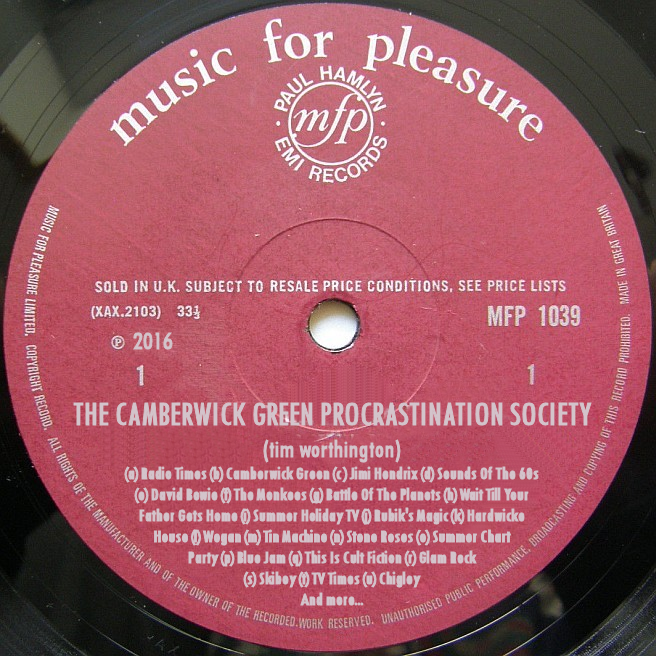
Although it is reliably never short of bewildering to discover yet further of proof of the seemingly infinite extent to which unlikely and unsuitable pop cultural and historical ephemera that should not by anyone’s standards of any description have inspired a board game nonetheless somehow did, all the way from Sir Francis Chichester to Journey To The Unknown – and no, I have not made either of those up for a joke – sometimes it is equally fascinating to inadvertently stumble across what seemingly ought to have done but didn’t. In lone sanctioned Fab Four dice-roller MB Games’ The Beatles Flip Your Wig Game, each individual ‘Beatle’ has to traverse the board collecting cards with items of stage equipment sketched on them, with it has to be said very little in the way of wig-flippage involved. Poor old Chigley, always the unwanted ‘third’ instalment in the Trumptonshire trilogy, barely managed to inspire anything other than a handful of jigsaws with Lord Belborough’s steam train Bessie very much front and centre in a desperate bid for viewer recognisability in toy departments awash with Trumpton-liveried bagatelle games. A board game in which Willie Munn had to get some of Mr. Farthing’s clay from the biscuit factory to Mr. Bilton’s lawnmower shed was always going to be something of a tall order, even if he would inevitably have to have done so via steam engine and the time flying by thereof, but then again even Chigley‘s two more illustrious geographical neighbours seemed to struggle to attract the commercial interest of Triang and company. In fact, the only actual board game that appears to have accompanied the original broadcasts, as opposed to the decades of repeats, is Topsail Games’ Camberwick Green Snakes And Ladders, which pitted the vertically-inclined sets of rungs that in fairness did at least occasionally form part of the storyline with the gigantic yellow and purple venomous serpents presumably only ever glimpsed in an unbroadcast episode in which they doubtless proved no match for Windy Miller’s previously derided traditional home-made snake repellent. Rather than the dedicated if uniformly ‘race through time’-themed board games bearing the visages of Jodie Whittaker, Matt Smith, David Tennant and Someone’s Mate Pretending To Be Christopher Eccleston – which incidentally you can hear Paul Abbott talking about in Looks Unfamiliar here – Peter Capaldi’s tenure yielded only a branded tie-in variant of Cluedo which nobody has ever actually played but presumably involved Amy Pond murdering The Shrivenzale in The Shadow’s ‘Funereal Domain’ with the Occuloid Tracker. Meanwhile, ironically for a service so dependent on PRESS REVEAL-enabled interactive puzzles, Ceefax never did inspire a board game although the BBC did issue one based on The News. No, really. It was from 1987 too so presumably the aim was to find something remotely interesting or worthwhile to say about Colin Moynihan.
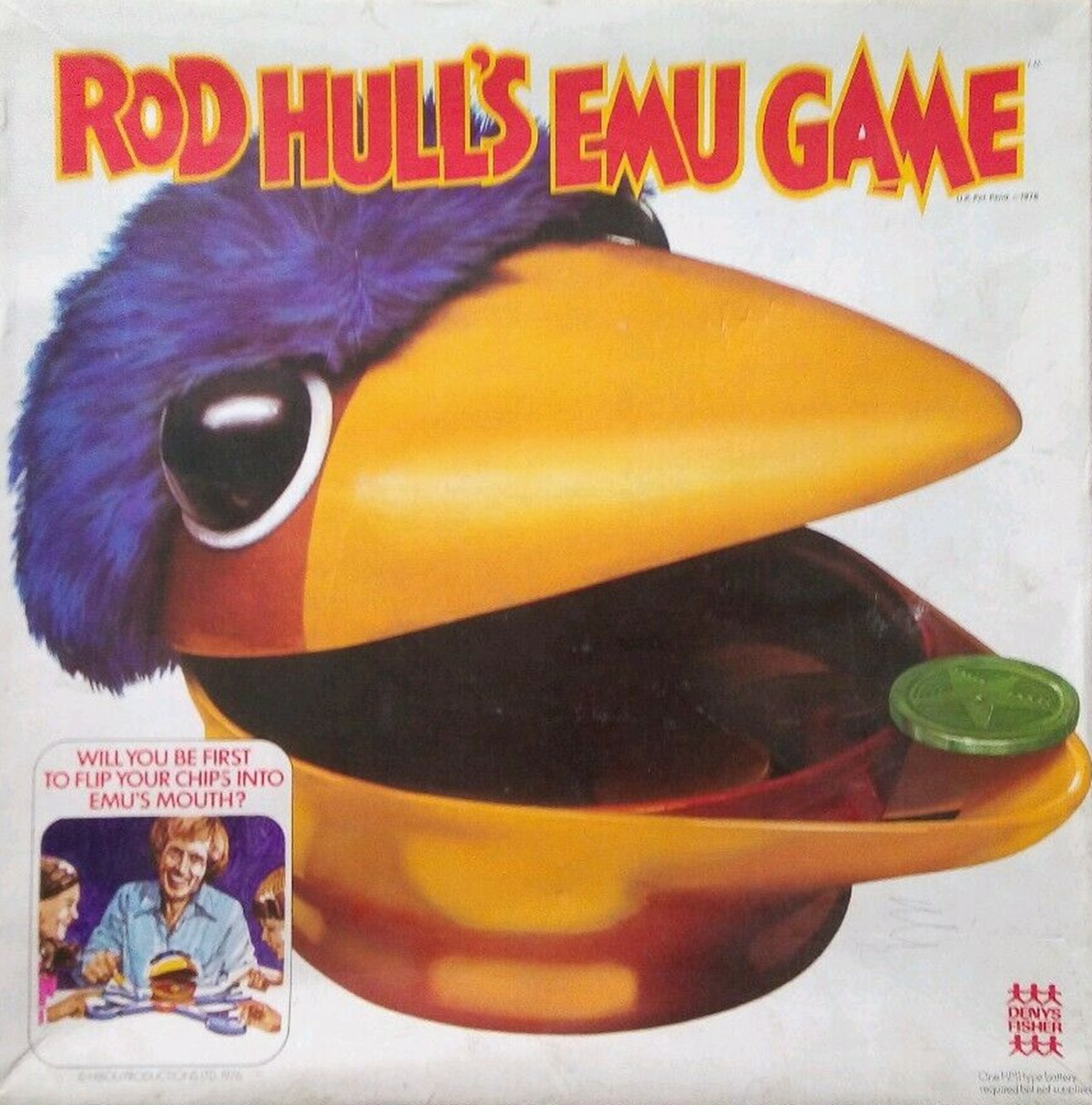
That all said, it was nonetheless always inevitably the shoddy tie-ins that nobody asked for, and which invariably just took a superficially flashier version of Ludo and slapped a poorly chosen quasi-representative airbrushed photo on the box art in the hope of presenting the illusion that the gameplay was in some way remotely related to whatever it putatively tied in with, that found their way into a million pillowcases on Christmas Eve, and no one toy manufacturer excelled further in this art than Denys Fisher. The extraordinary story of what happened when more for my own amusement than anything else I decided to catalogue some of their more unlikely TV and movie tie-in efforts understandably – or at least understandably from where I’m standing – dominates this particular collection of highlights from the archives, alongside thoughts on The Beatles and Peter Capaldi-era Doctor Who and a couple of editions of Looks Unfamiliar; there are also, incidentally, some words about a much-missed friend here though I’ve chosen to highlight it in the introduction rather than the main ‘listings’ as he would have found that hilarious for arcane reasons that are too abstract to properly explain here. Especially as there was a story about him once trying to play the FASA Doctor Who role-playing game entirely by himself. You can probably work out for yourselves how well that reportedly turned out. Anyway, I’ve not quite worked out how a Looks Unfamiliar board game might work as yet, but if you want to help crowdfund some sort of a variant on Ludo but with more mentions of Big John, Little John then you are more than welcome to buy me a coffee here. Right, it’s your turn. Erm… to click on some links?
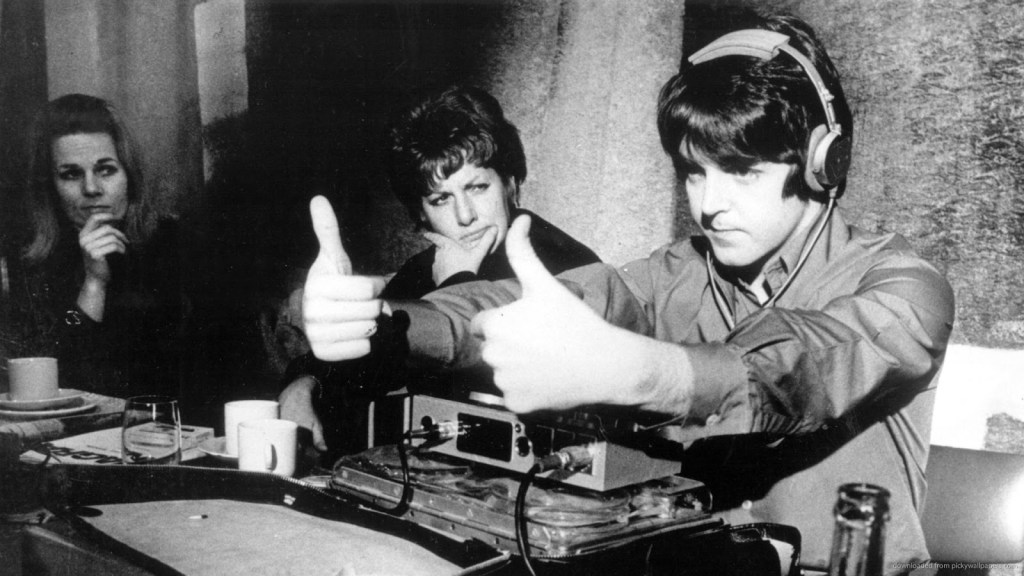
On 5th January 1967, The Beatles entered Studio 2 at Abbey Road to record a semi-improvised – in that they contributed existing ideas rather than musical motifs – musique concrete-inspired avant-garde sound collage to be used as part of The Million Volt Light And Sound Rave, an electronic light and sound art installation held later that month at emergent ‘underground’ venue the Roundhouse; during which time, incidentally, the ticket office was staffed by a young actor named Sylvester McCoy. Following its fortnight playing as visitors walked around a series of refractive sculptures and colour-clashing liquid lanterns, Carnival Of Light as it came to be titled was quietly consigned to the EMI tape archive and apparently entirely forgotten about until Mark Lewisohn began to research the band’s recording history several decades later. The resolute and persistent failure of Carnival Of Light to appear in any form in any gear-adjacent retrospective or reissue is almost as fascinating as the background to the original recording and indeed the original exhibition themselves, and there are plenty of fans not just of The Beatles but of the sixties arts and music scenes in general who are desperately keen to hear it; although not quite as many, apparently, as there are of those who have decided for them that they do not need to hear it after all. Any mention of Carnival Of Light, even if you have explicitly, exasperatedly and even swearily made it abundantly clear that you have no interest in reading responses of this nature, will immediately attract thousands of rejoinders from individuals stating that in their humble opinion – in apparent blithe unawareness that the stating of such an opinion immediately negates any humility and that as they have not heard it they are in no position to proffer such an evaluation anyway – it is ‘best left in the vaults’. Even aside from the rank hypocrisy on the part of individuals who have almost certainly forked out more than once for an album with 12-Bar Original on it, and even occasionally on the part of individuals who otherwise profess themselves to be some variety of authority on the BBC Radiophonic Workshop, this position not only displays a profound misunderstanding of and lack of interest in the varied cultural and artistic possibilities and the overall context that made The Beatles into a ‘great live band’ or whatever it is we’re all supposed to be saying this week, it also suggests a lack of imagination in a manner that you could certainly not accuse Paul McCartney in 1967 of. Perhaps it might not be – as is my own personal suspicion – exactly Take Up Thy Stethoscope And Walk, but even if so, the idea of The Beatles drawing inspiration from what was going on around them and not quite getting it right is at the very least more interesting than yet another demo of an essentially fully finished song apparently recorded on Ryvita rather than magnetic tape. It’s also quite astonishing to think that somewhere in an only very slightly different alternate universe, there’s a mid-1967 Beatles album with both Carnival Of Light and Step Inside Love on it. Partially inspired by this baffling and frankly selfish ignorance, this attempt at working out what exactly went on in and with Carnival Of Light apparently led to some speculation that I did in fact secretly own a copy – I can assure you that I do not, and not for that matter do I have access to the full ‘band’ version of Shirley’s Wild Accordion, and neither do any of the rest of us even following the release of Anthology 4, DO WE BEATLES? – and, of course, a large number of boring fuckers telling me that in their humble opinion it is best left in the vaults. What is even wrong with you? Anyway. You can find the original version of Can We Hear It Back Now? here and an expanded version with much more on the background to The Million Volt Light And Sound Rave in Can’t Help Thinking About Me here.
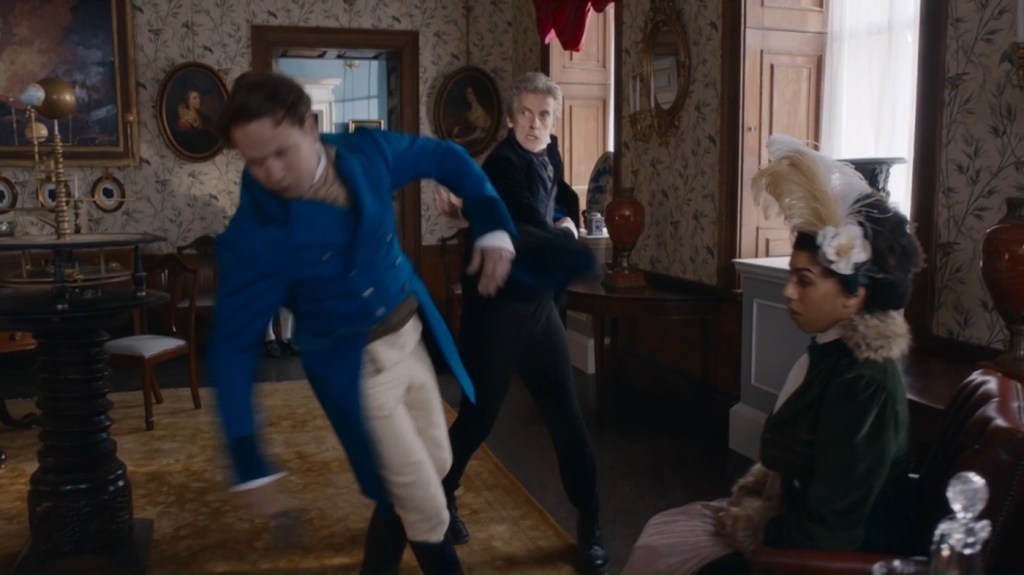
By this point, I had not reviewed any ‘new’ episodes of Doctor Who in quite some time; not necessarily on account of the fact that I somewhat slightly possibly was not enjoying the more recent episodes quite as much – although that did of course have some degree of bearing on my overall lack of interest in so doing – but primarily as the actual act of reviewing them had essentially ceased to prove either interesting, diverting or fun. Particularly since Steven Moffat had taken over as showrunner – and this is not any form of criticism in and of itself – production and promotion had become so streamlined and of such a consistently robust standard that it had become difficult to approach any new episodes from any sort of amusing or asynchronous perspective, and there is scant enjoyment to be found either in writing or indeed reading assessments that just starkly evaluate how quite good anything purportedly is or isn’t. Put it this way, there was no Ken Dodd exclaiming “and this time they’re going back to 1959 – the rock’n’roll years!” with accompanying rock’n’roll-averse hip swivel. This time around however I was finally persuaded to review an episode of the new series again, and found myself pleasantly surprised by how enjoyable an experience it was. Not only had a small degree of distance from Doctor Who put me in a position I had probably not been in since 1989 in that I knew as good as nothing about the new series ahead of broadcast – which significantly and not entirely unironically gave me a fresh perspective to approach it from – the randomly assigned Thin Ice also turned out to be a genuinely good and genuinely interesting episode, wringing underwater horror out of a vibrant Christmas Card-style Dickensian London and the excitement of the industrial revolution, and more importantly featuring The Doctor wasting no time in delivering a punch directly to the face of a character who addressed Bill in a disgracefully racist manner with for once no wishy-washy excuse made for the attitudes of the historical setting nor indeed The Doctor shushing everyone to just let it go and we’ll all get along fine and dandy. Not only did this make Thin Ice a welcome anomaly at a moment when the ‘you can’t say anything any more’ crowd were actually being allowed to say more and indeed more unimpeded but still complaining that they were being incrementally denied free speech, it also served as an effective contrast to certain commentators repeatedly tediously rolling out tiresome Doctor Who-related assertions that ‘you big ninny sillies – it’s always been right wings, bibbly bi bi-beeeee’. Actually, they were all pretty quiet on this occasion, oddly enough. Maybe someone had already punched them. You can find Doctor Who And The Thin Ice here.
Looks Unfamiliar: Chris Hughes – The Mr. Wilmott-Brown Of Chocolate Bars

As one of the TV Cream editors Chris was always going to come up with some gloriously offbeat choices for Looks Unfamiliar, but even I found myself astonished at the sheer depth and extent of widely and indeed in some cases wisely forgotten nonsense he managed to dredge up from the very fringes of popular culture, especially The Gillette Video Show and the accompanying still unidentified cinematic short about The Real Thing, the ‘rave’ version of the Inspector Morse theme and the fact that Hector The Help The Aged Dog actually ‘visited’ his school. Surprisingly little more than a few vague and fragmentary snippets of evidence have emerged to confirm that the spectacularly unexcitingly-named One-Two Bar did actually exist, although it is slightly disconcerting to reflect that since this was originally recorded, the manufacturers of Wispa, Yorkie and many others have come to adopt its once commercially disastrous business model as a direct selling point across the board, apparently with little aim or intention other than to allow them to elevate their prices accordingly. Our primary motivation for recording this however was as an opportunity to discuss our hazy pixilated recollections of a longstanding shared obsession, the BBC’s one week only ‘Ceefax presents Saturday Morning Television’ gambit Buzzfax, which had been a continual reference point in the now-defunct TV Cream Update monthly mailout under our respective editorships; which is why I was more than a little surprised to receive unsolicited messages from several individuals whom I had not considered and had no intention of considering as Looks Unfamiliar guests complaining bitterly that I had not thought ahead and reserved Buzzfax for them. Unless you’re Scarlett Johansson, that’s not how it works. Though I would be surprised if she did remember Buzzfax but she’s welcome to reserve it regardless. You can find the full show here and the chat about the British Banknote Keyring in a collection of Looks Unfamiliar highlights here.
A Fast Exciting All-Action Game
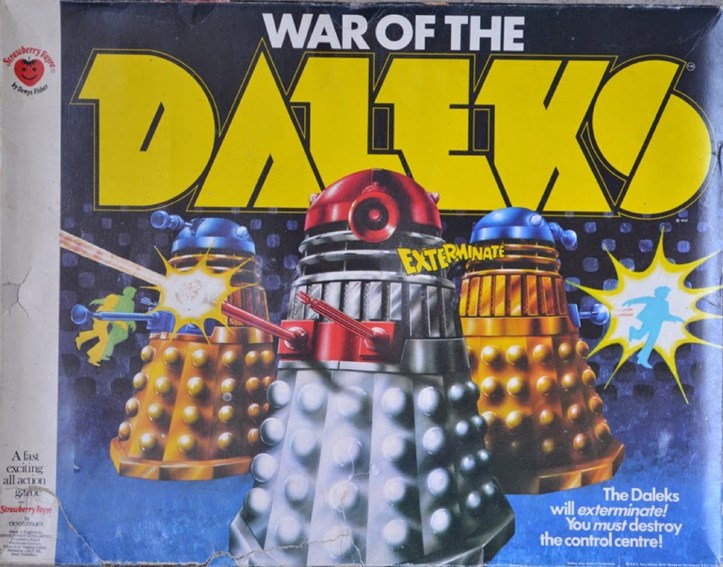
This all began with a chance mention one day of the Multicoloured Swap Shop board game and how, despite the cover art-hogging presence of the owner-driver of NOEL 1 himself, the actual gameplay did not in fact allow you anywhere near the rarefied position of presenter – or even of John Craven doing one of his ‘extra school’ bits – and instead expected you to revel in the opportunity to pretend to be one of ‘the girls’ operating the switchboard and co-ordinating the swaps, giving rise to suspicion that it was in actuality another unsold pre-existing game that simply had a unit-shiftingly large volume of Noel slapped all over it. Multi-Coloured Swap Shop turned out to be the work of Denys Fisher Toys, also responsible for War Of The Daleks, The Morecambe And Wise Game, The Guinness Game Of World Records and countless other fondly if bemusedly remembered examples of board games that somehow managed to balance out costly licensing agreements with repurposed gameplay that bore scant contrived relation to the actual licensed properties and yet still somehow worked, and when a cursory look around revealed that there were dozens of them – including one or two that nobody in their right mind would want to stumble across – the temptation to put together a decidedly irreverent feature highlighting their glossily packaged logistical shortcomings was too strong to resist. At first nobody really seemed to notice it – other than one crank on Twitter who appeared to think that it represented some sort of arrogant affront to artistic integrity – but all of a sudden it just took off in a way that Harvey Smith’s Showjumping didn’t and was being shared so widely and rapidly that I couldn’t keep up with it. By lunchtime a caller had mentioned it on BBC 6Music and from there it essentially went thrillingly out of control, with ex-pat Hollywood stars flagging it up to their followers, and by the evening I was being interviewed on the radio about it myself. It didn’t exactly harm sales of Well At Least It’s Free either. My only real regret is that if I had known it was going to take off in the way that it did I might have put moderately more critical and analytical effort into it, but then again it’s not as if the feature on Dr. FInlay’s Casebook exactly went viral. Anyway I now just hope that – unlike most of the games themselves – this is actually as entertaining as I may have inadvertently made it sound. A little like Denys Fisher themselves come to think of it. You can find A Fast Exciting All-Action Game here.
The Best Of Looks Unfamiliar: I Personally Blame Mr. Brackett For That
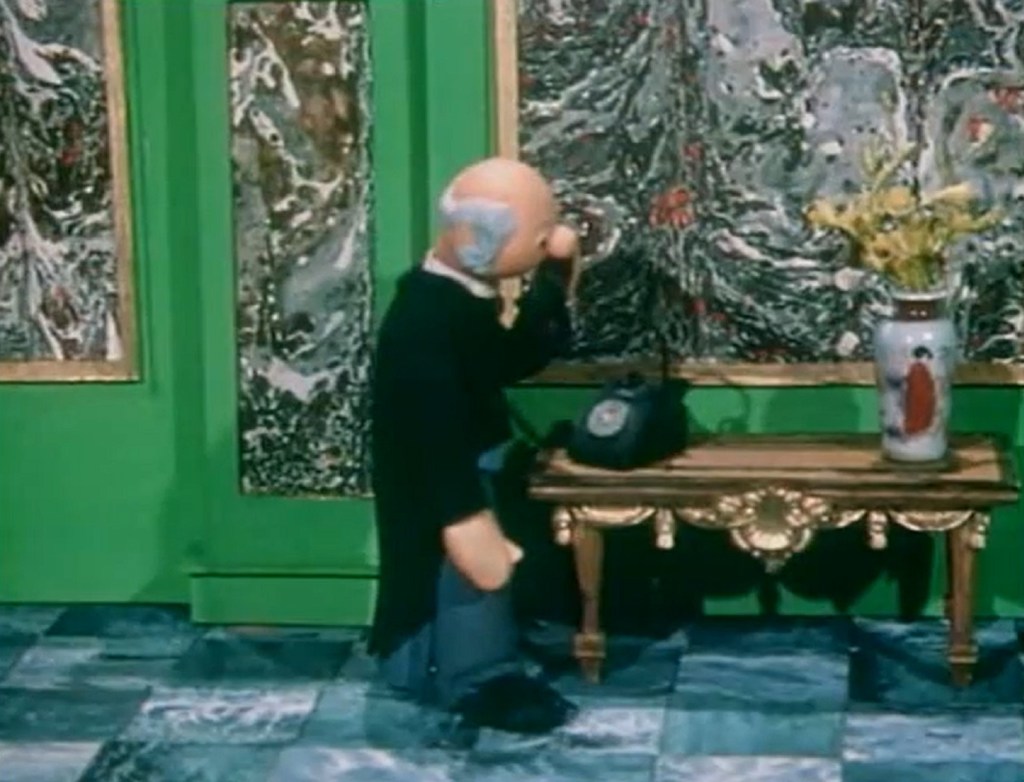
Another collection of highlights from Looks Unfamiliar, this time featuring Bob Fischer on Giant Hogweed, Gillian Kirby on Teletext After Hours, me on Patterson, Chris Shaw on Rock School, Paul Putner on Treborland and Andy Lewis on Vintage Anti-Enoch Powell Graffiti. The ‘extra’ on this occasion was an extract from my guest appearance on Round The Archives talking to Lisa and Andrew about an episode of Chigley which turned out to be surprisingly devoid of enormous purple and yellow snakes. Anyway you can find the full show, speculation on just how many different flavours of ice lolly Mr. Antonio actually had in stock and all, here.
It may not yet have inspired its own jazzed-up Ludo variant but you can find much more about many of the television shows that did in Well At Least It’s Free, available in paperback here or from the Kindle Store here.
Mystery Link! If you want to just go straight to a surprise page completely unrelated to any of the above, click here.

© Tim Worthington.
Please don’t copy this only with more italics and exclamation marks.

