There have been many actors – and indeed actresses – who we could very nearly have found ourselves talking about whilst sarcastically revisiting the history of Doctor Who in place of Richard Hurndall and company. Geoffrey Bayldon, Hugh David, Alan Webb, Cyril Cusack and Leslie French were all as good as offered the part by stuffed shirts at the BBC who would not stand for that uppity young lady who had been appointed producer without their express written consent and her determination to cast William Hartnell. Ron Moody’s humming and harring over committing to a long-running series saw him deftly elbowed aside once interest was expressed by a pushy Jon Pertwee. Michael Bentine was all set to sign on the dotted line when he declined to compromise on his insistence on script approval, with the role eventually going to Tom Baker instead. How little they knew. Sylvester McCoy’s casting, as we shall be returning to in surprisingly short order, essentially involved a risky deployment of sham auditions, any one of which could potentially have seen a less suitable actor cast at the insistence of a ‘higher up’ instead. Pretty much every character actor working in the UK was screen-tested for the 1996 TV Movie, Hugh Grant turned down the opportunity to relaunch the series in 2005 although no two individual accounts of what happened there seem to add up, Chiwetel Ejiofor, Patterson Joseph and Catherine Zeta-Jones were all considered ahead of Matt Smith, his eventual casting doubtless a cause of incessant frustration to those who like to spend their entire waking hours crying about ‘woke’, and a still unidentified other actor was essentially being ushered through the casting process before the production team chanced upon an auditioning Ncuti Gatwa and changed their plans on the spot. A single anecdote from a single member of the production team given to recounting ‘amusing’ behind-the-scenes stories that everyone else just sort of shrugged at and assumed you had to be there – and one which has grown in the telling – more or less had it that Richard Hearne, TV’s Mr. Pastry, was as good as carted off in a straitjacket halfway through his lone call from the Doctor Who production office, and tedious sycophantic fans keep adding David Walliams and Ricky Hervaid to the Wikipedia page on actors considered for Doctor Who in the presumed hope of manifesting their singular hope and dream as reality and becoming ‘besties’ with them in the process. On four occasions, however, it appears that no alternatives were ever seriously considered. David Tennant was lined up before anyone even knew Christopher Eccleston was leaving, again throwing further confusion into the entire Hugh Grant business, alternatives to Peter Capaldi were only considered in the event that he declined to accept, and despite all of those petitions demanding the immediate installation of Sue Perkins and/or Susan Calman, Jodie Whittaker was the first and only real choice for the first female Doctor. In 1984, however, a decision was taken that would make even Chris Chibnall look like a hapless prevaricator. It was a decision that was quite possibly the most ill-judged one in Doctor Who‘s entire history – against some stiff and recent competition – though albeit not for the reasons that most onlookers might assume.
In January 1983, shortly after recording his guest appearance in Arc Of Infinity – which of course you can find much more about here – Colin Baker attended the wedding of Doctor Who‘s Assistant Floor Manager Lynn Richards. By all accounts the ever-ebullient actor was a genuine hit on the day, charming and amusing everyone he was introduced to and even feeling moved to remark to his wife later that evening that he had considered himself on fine form. Unbeknownst to him, however, John Nathan-Turner had been observing his garrulousness from a very different perspective; aware that Peter Davison fully intended to leave Doctor Who at the conclusion of the forthcoming new series, the sight of an experienced and acclaimed character actor, already well known to mainstream television audiences from his stint as the ‘villainous’ Paul Merroney – who of course was not actually that ‘villainous’- in mid-seventies BBC blockbuster boardroom drama The Brothers, working the room so effectively and quite possibly even relating his anecdote about watching the very first episode of Doctor Who as he went, seemed to suggest a potential replacement lead actor to him. The only issue with this was that he essentially made his mind up there and then. Whilst certainly not opposed to the idea of casting Colin Baker, script editor Eric Saward had considerable reservations about the role being offered to him sight unseen, and even Baker himself, who had coveted the role so closely that he had even considered lobbying for the part in 1980, felt uneasy at not even having to audition. The most generous interpretation of events here is that having scored an unqualified success with his long-formulated plans to overhaul Doctor Who on his own terms when he took over as producer in 1980, JNT presumably simply assumed that all of his decisions would ‘work’ this time around too; for many involved on the production side, however, alarm bells were already ringing, and in retrospect it is difficult to credit that he was apparently unable to hear them himself as well.
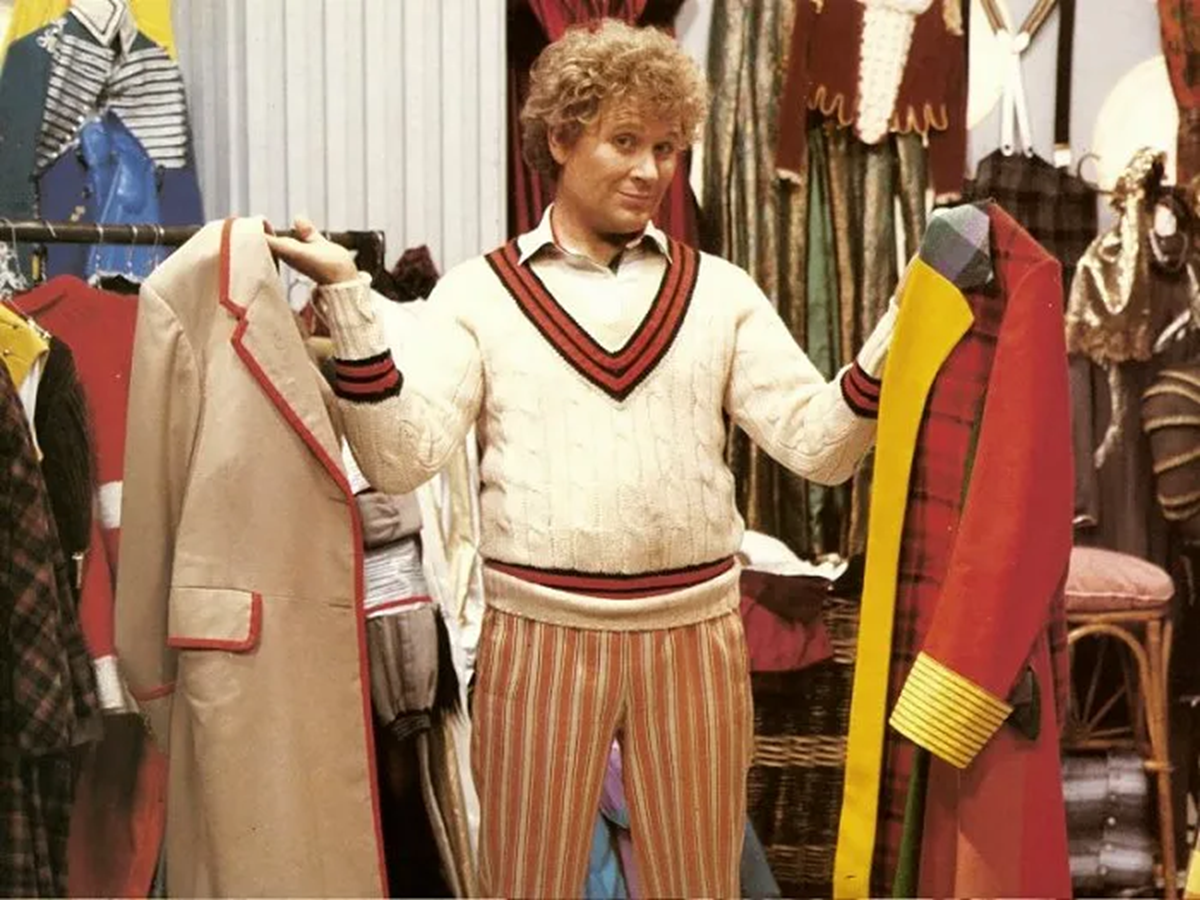
One early and very strong indication that all was not entirely well came courtesy of what ordinarily should have been the casual and straightforward process of devising the new Doctor’s ‘look’, a famously lengthy and torturous ordeal previously arrived at through such convoluted and circuitous routes as spotting a photo of Peter Davison at a charity celebrity cricket match and Jon Pertwee turning up to his casting announcement photocall in essentially his own clothes. Wary of the lasting impression cast by his more flamboyant forebears and indeed by Pertwee’s predilection for frilly shirts and smoking jackets in particular – and it is worth bearing in mind that at this point every Doctor Who parody everywhere from Spitting Image to The Krankies’ Electronic Komik to all intents and purposes still depicted Tom Baker – Colin Baker had suggested a break with tradition and in effect an opportunity to reset viewers’ perceptions with a dark casual jumper and jeans and a long black leather coat; essentially, as he subsequently wryly noted, what would later become Christopher Eccleston’s costume at a similarly reinvention-necessitating moment. JNT on the other hand had arbitrarily decided that his costume should be – in a phrase that would arguably deservedly come back to haunt him – ‘totally tasteless’ and declined to countenance any suggestion to the contrary, to the extent of repeatedly rejecting Pat Godfrey’s designs on the basis of still retaining traces of tastefulness, until in an understandable fit of indignation she submitted a chaotic collision of different colours, styles and fabrics that looked as though The Doctor had careered through Emily’s Shop from Bagpuss after emerging from a vat of Copydex. Instead of hammering home any kind of point about professionalism, however, it almost belief-beggaringly proved to be exactly what he wanted, saddling poor old Colin Baker with a costume that not only literally made him resemble a garish chucked-together facsimile of previous Doctors but which continues to provoke ocular irritation – and derision – to this day.
Added to this, almost in an apparent desire to show off the hideous ensemble to the world as soon as possible, it was essentially unilaterally decided that rather than concluding the series with the cliffhanging debut appearance of a new face in the manner that had served Doctor Who perfectly well for pretty much its entire existence up that point – Patrick Troughton was arguably only introduced ‘mid-season’ in the sense that Doctor Who effectively ran all year round at that point – Colin Baker would be introduced to viewers with a four-part story at the end of the current run. What was worse, it was to take the form of the increasingly tediously over-relied upon concept of a regeneration ‘gone wrong’, alienating viewers who did not understand it and trying the patience of many who did. What was even worse still was that the story was written by an untested new writer, was disliked by both Eric Saward – who felt that a more unconventional and less big bad-outwitting storyline would better serve the character he had in mind – and assigned director Peter Moffatt, and ended up having to be rushed through production due to industrial action and the ensuing loss of studio days. In short, a colossally self-defeating display of style over substance that left the production team with little opportunity to refine the new Doctor’s character and the audience with plenty of time to decide that they didn’t like him and then entirely forget he had taken over anyway. Colin Baker appears to have been the very last consideration throughout all of this.
There will be more to say about it in due course, but suffice it to say for the moment that this monumental misstep looms so enormously over Doctor Who‘s history that it is easy to forget that there were an entire twenty – or twenty two, depending on your point of view on a certain scheduling matter – episodes still starring Peter Davison ahead of it; and perhaps thankfully, that’s where we’re picking up the staggering saga of the change-averse Police Box. Well, we say thankfully…
If Your Seabase 4 Needs Deep-Warrioring Just Call… Actually, Don’t
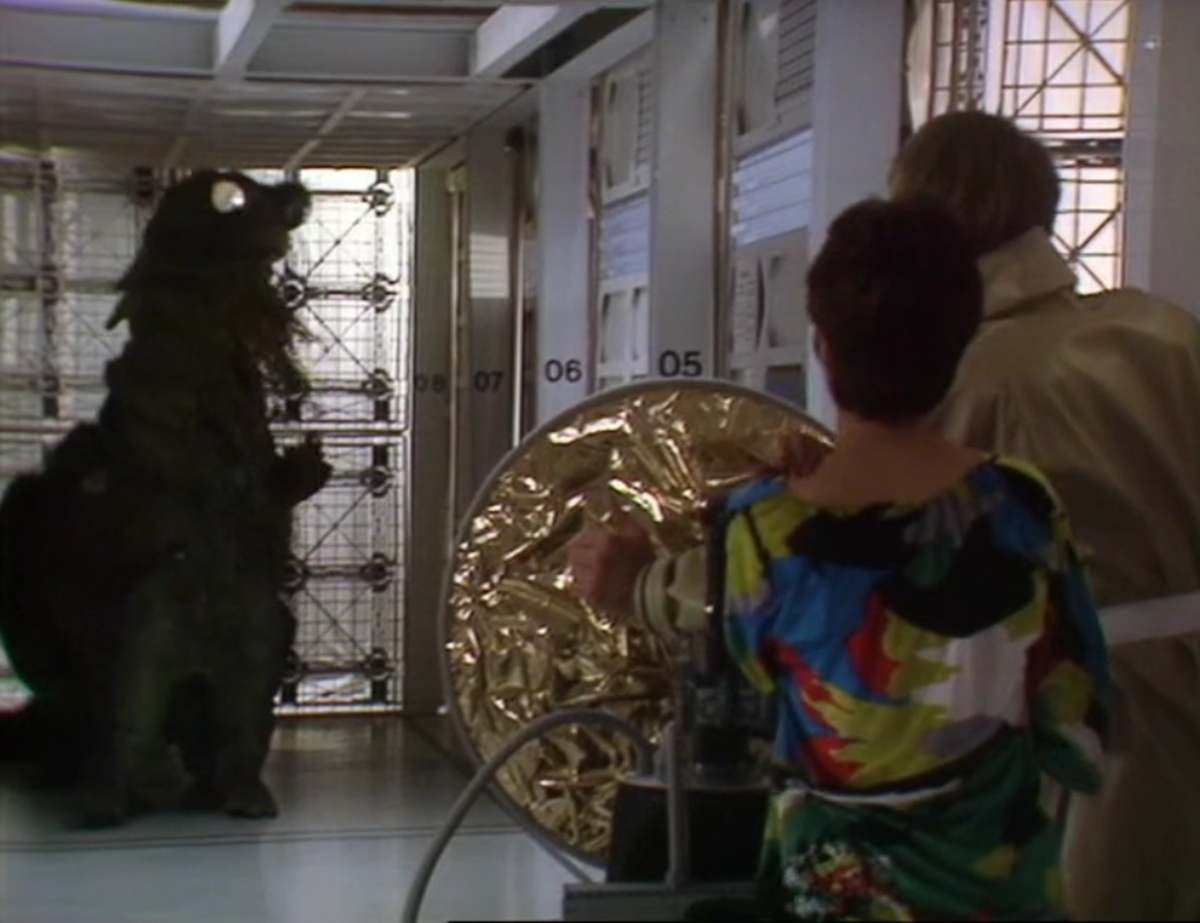
From Tom Baker and Lalla Ward’s tempestuous relationship to Tom Baker’s prevarication over appearing in The Five Doctors to essentially pretty much everything involved at any point with Meglos including Tom Baker, it is fair to say that John Nathan-Turner was already well used to finding himself bombarded with unexpected setbacks and pressures whilst working on Doctor Who. On certain if not indeed on many occasions, he would even manage to somehow turn such headaches at least semi-spectacularly to his advantage. Warriors Of The Deep, the opening story of the twenty first run of Doctor Who, was not one of those occasions. In fairness, if we were to list every spanner both metaphorical and literal thrown into the path of this most troubled of four-parters, we would probably be here until the Sea Devils and Silurians saw fit to revive themselves again but even just the handful of essential obstacles demanding to be surmounted would probably be sufficient to dissuade more or less anyone from pursuing a career path in television production. Writer Johnny Byrne, communication-confoundingly based in the USA, had delivered scripts of wildly varying length – one of which ran to almost twice the number of pages that it ought to have done – leaving Eric Saward to essentially restructure them entirely on his own and against the clock; complicating matters still further, official Doctor Who thingy Ian Levine had felt that the original scripts had not captured the true character depth of some people in rubber suits with juddery voices and as such had thrown in some additional recommendations. Byrne in turn disliked the amendments, particularly on account of how brutal his more thoughtful original storyline had been rendered, and declined to cooperate any further. Director Pennant Roberts cast Ingrid Pitt in a role written for an older male actor, seemingly with little amendment made in concession to this, and ever-reliable visual effects designer Mat Irvine was delayed from joining the production when a more prestigious drama serial he was working on ran way behind schedule. Peter Davison was putting it mildly less than delighted to discover he would be appearing in one less story than he had been contracted for, and Eric Saward was equally put out at his lack of involvement in the casting of Davison’s replacement. The atmosphere as the story’s studio recording dates approached was already less than harmonious when news broke that Margaret Thatcher had called a snap election, which for still unclear reasons somehow necessitated the commandeering of the BBC water tank at Ealing. If the series opener was to actually make it to air in January 1984, there was no remaining option other than to bring production forward a week, with the unfortunate but unavoidable consequence that the Silurians and Sea Devils wound up looking like they had been made with their ensuing Fine Art Castings figurines in mind, and the costume for their four-legged seabase-botherer The Myrka had not even been finished before it was due on set. The BBC had now rolled over to using the relatively flat and colourless 1″ videotape format across the board, which would have proved enough of a visual and aesthetic compromise in and of itself even without the studio staff setting the lights on full blast and refusing all entreaties from everyone from Peter Davison downwards to at the very least take the edge off them a little. The cast having to keep their staging-stifling distance from the glue and paint-shedding Myrka did not exactly help matters to progress with confidence either. Although the script itself is hardly an issue, Peter Davison, Janet Fielding and Mark Strickson are doing their absolute best as ever and especially considering the limited resources and tight turnaround some of the model effects work is surprisingly decent, Warriors Of The Deep is one of those rare occasions on which you really do have to admit defeat. Whatever defence can be mounted of it – and there are plenty of approaches to defend it from – there is simply no getting away from the fact that it looks, sounds and quite possibly even smells like the dictionary definition of everything that everyone else has otherwise mostly largely erroneously claimed is laughable about Doctor Who, to the extent that it was used as an illustrative clip when Michael Grade attempted to send Doctor Who in to Room 101 in 2002; presumably production values do not bother him quite so much now given his petulant insistence that everyone who isn’t him and his close friends should be forced to watch GB News out of ‘fairness’, despite the fact that even aside from its wrongheaded and poisonous space-filling headline-baiting political ego-massaging diet of horseshit it maintains a consistent level of programming quality some degree below that of Ingrid Pitt ‘karate’-kicking a sort of electric amphibious two-man tent. Whether this was sufficient to warrant it being more recently ‘improved’ on account of having the temerity to look like an underfunded and indeed overlit television programme from 1984 is, however, a debate for another time. What is of more immediate concern is who was engaged to play The Myrka, and why. Classically trained dancer William Perrie spent the majority of his career immersed in stage work, although he can also be glimpsed in productions as diverse as Absolute Beginners and Blake’s 7. Actor John Asquith, in contrast, was well known for playing costumed parts on television, enjoying a lengthy association with Children’s BBC which saw him once actually literally playing the pianner in the strangest manner in slapstick-abundant Clive Dunn vehicle Grandad. In 1978 – although it ended up not being broadcast until 1979, and you can find out exactly why here – Asquith and Perrie were engaged to pool their creative resources in portraying Dobbin, a pantomime horse costume brought to life by mischief-prone medieval jester Timothy Claypole for the inevitably counterproductive facilitation of onstage panto antics in Rentasanta, the feature-length Christmas Special of long-running Children’s BBC sitcom Rentaghost. So popular did the over-affectionate teleportation-prone clodhopper prove that they and Dobbin would remain with Rentaghost – to the bemusement of viewers who had missed his origin story – for the remainder of its run. This is almost certainly the reason why they found themselves called upon to do the costume-donning honours as The Myrka – whom it has to be said is even less graceful than Dobbin – and although they admittedly went uncredited on the transmitted episodes, it did not take the publicity-hungry production office long to communicate their identities to the information-hungry fan press, and all matters considered, this was almost certainly not the wisest move when the bewilderingly recurrent phrase ‘pantomime embarrassment’ was already being widely deployed as a denunciation to hang any and every criticism of Doctor Who under JNT’s producership on. Not that Warriors Of The Deep especially needed any further perspectives to point and laugh at it from but somehow, for the sake of convenience, they had contrived to make an already shambolic story appear even more so. Also, this really ought to have been sub-headlined Myrka On The Damp Floor. Anyway.
“Looks Like Elton John!”
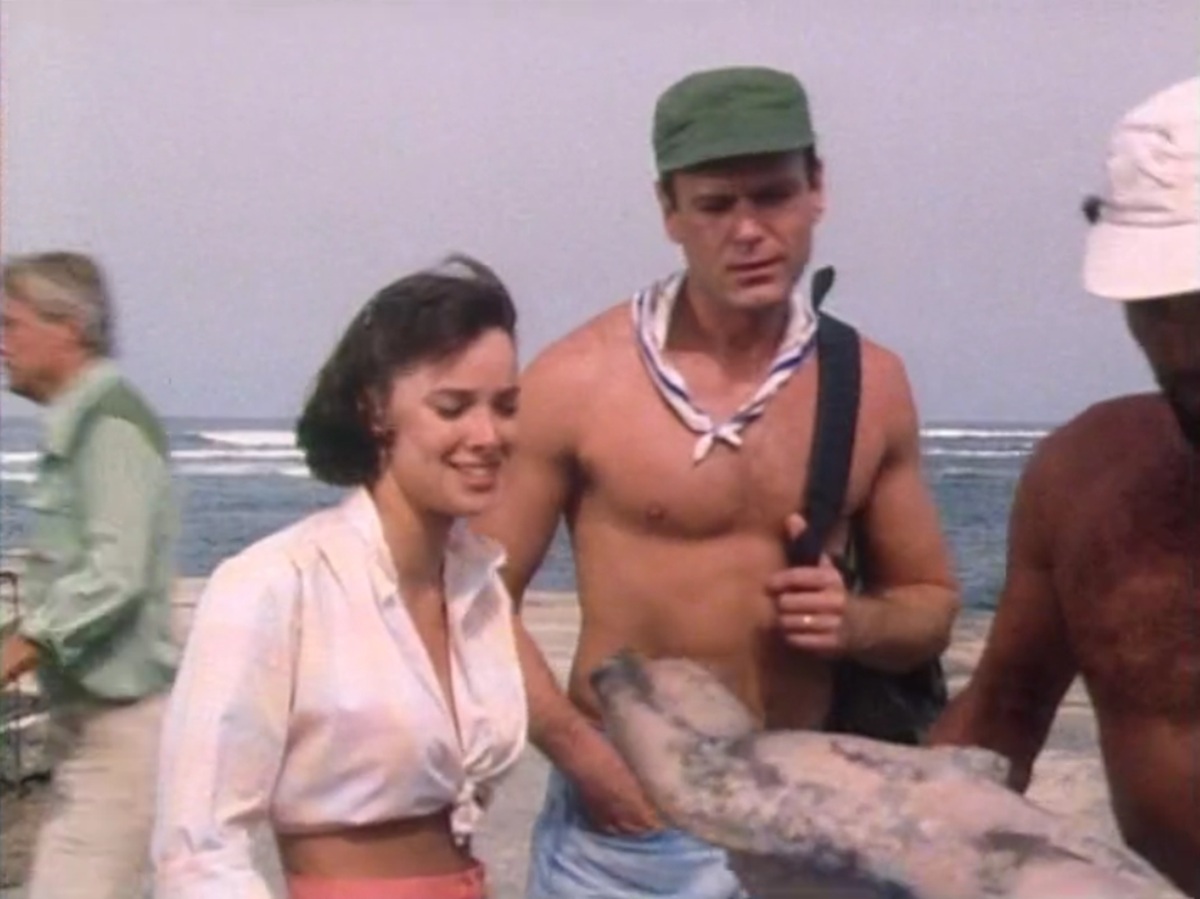
Elton John’s biggest hit of 1984 was Passengers, a naggingly catchy yet virulently angry song castigating the persistence of South Africa’s Apartheid regime – a subject he was far from alone in addressing amongst the big names of mid-eighties rock and pop music – in the face of near-unanimous global condemnation, accompanied by an ingenious video in which he is pursued through the streets by a troupe of dancers superbly choreographed by Arlene Phillips, who switch between blackface and whiteface as they attempt to corner him and force him to step back into line. Pretty much throughout the entirety of the video, even when finally cornered and ‘persuaded’ to concede by that sort of Baron Samedi slash Papa Lazarou slash him out of the Blondie videos ringleader – or is he? – Elton remains resolutely in his early eighties Sad Songs (Say So Much) slash marriage to Renate Blauel slash Watford in the FA Cup Final-era uniform of choice of white leisure suit, ‘showbiz’ straw boater and sunglasses. In an encroaching age of increasingly and intentionally bland stadium rock which would only find itself exacerbated by Live Aid the following year, it is fair to say he was still one of pop’s more distinctive and idiosyncratic figures. In episode one of the 1984 Doctor Who story Planet Of Fire we are introduced to Perpugilliam ‘Peri’ Brown, an American botany student accompanying her archaeologist stepfather Howard on a dig in – in yet another example of JNT deciding on what he believed to be a headline-grabbing location and then expecting everyone else to fit the story around it – Lanzarote. In a bid to establish her actually never quite established – though not for want of effort on poor old Nicola Bryant’s part – character from the outset, we first encounter Peri unexpectedly turning up at the dig site when Howard had expected her to be off sightseeing, underlining her blend of wilful curiosity and irreverence when one of the team carries past what is ostensibly an erosion-embattled ancient statue of Eros but in fact bears a closer resemblance to a sort of cement-plated sealion and she chortlingly remarks to nobody in particular that it “looks like Elton John”. Quite what anyone involved was attempting to suggest here, or whether there was any indeterminate enmity between the production office and Reginald Dwight, or whether they had somehow mistaken one of those sealions that asks for ‘notepaper’ on That’s Life! for an in-studio performance of Kiss The Bride will unfortunately have to remain a matter for conjecture, but then again, it’s quite possible that nobody actually noticed Peri’s witticism anyway. After all, even Doctor Who fans with a disconcerting over-familiarity with Planet Of Fire struggle to remember that this scene was actually her first on-screen appearance…
They Like Big Boobs And They’re Not Even Going To Bother To Acknowledge The Existence Of The Concept Of Lying
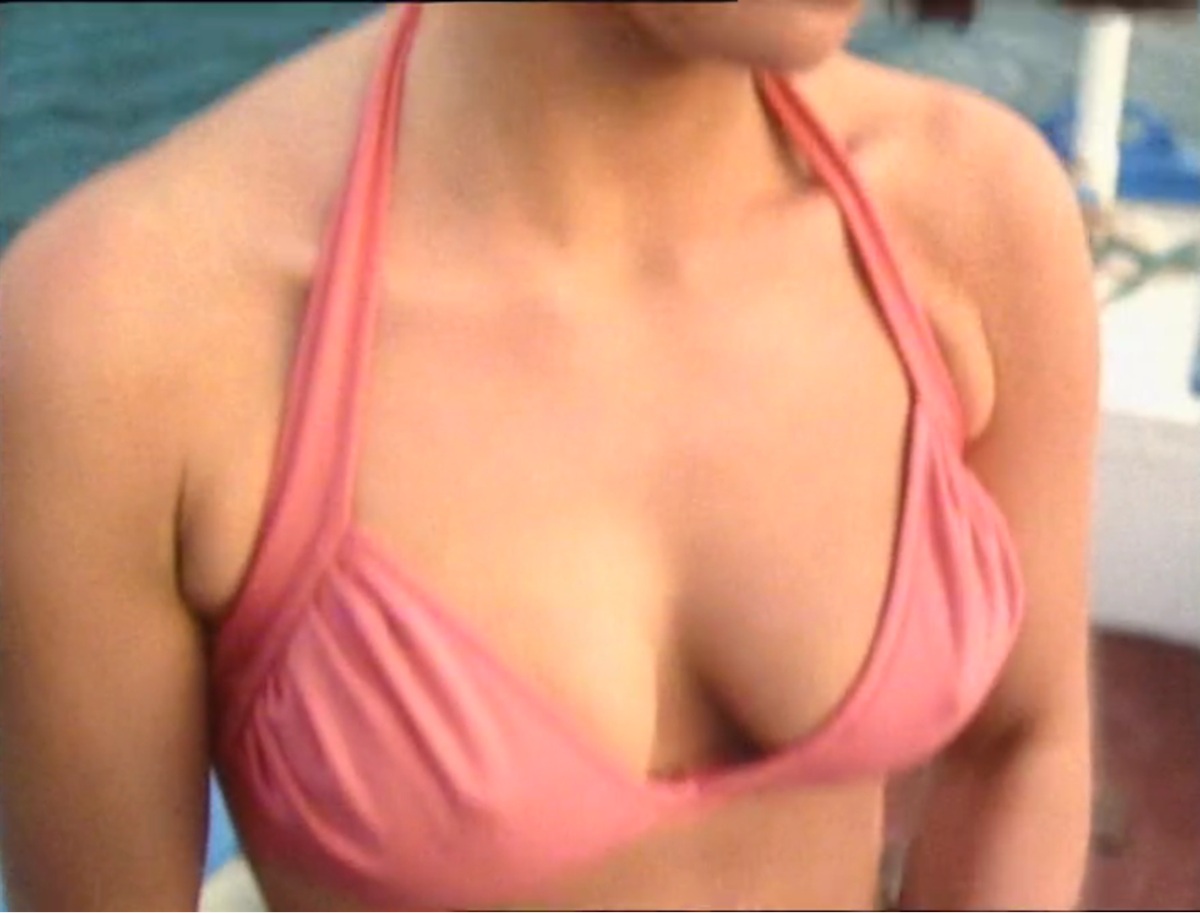
From Barbara Wright to Belinda Chandra – and indeed from Ian Chesterton to Dan Lewis – it is fair to say that in the overwhelming majority of cases, Doctor Who‘s supporting cast has been assembled with at the very least a fraction of one eye on how visually appealing they might prove to viewers. Even if you are a tiresome dullard who insists on calling whether Sara and Katarina, them two off the Dalek films or that bunch of dirty stopouts at Torchwood Three ‘count’ into question, the fact of the matter remains resolutely unchanged – they were there as much to add a confection of eye candy as they were to have the plot explained to them. Sometimes the production team would reflect with weirdly defiant pride that ‘the girl’ was there to get ‘the dads’ watching, other times Amy would bollock The Doctor for referring to her as ‘the legs’, but the basic imperative remains the same; keep the viewers who fancy them watching. Much as with any other property, franchise or pop music genre, anyone who has followed Doctor Who for any length of time will have their own crushes and favourites, and legends are told of certain individuals who still find themselves reduced to babbling inarticulacy when in the presence of Sophie Aldred, but surface level concerns about the predominance of objectification aside, it has mostly always been conducted in a relatively harmless manner. Then, however, there’s Peri. Evidently it had come to the production office’s attention that Nicola Bryant – a recent graduate of the not exactly unprestigious Webber Douglas Academy Of Dramatic Art – had a substantial pair of breasts, as partway into the first episode, the viewing audience are treated, which should be read with or without quote marks depending on your point of view or possibly even both, to a lengthy and entirely gratuitous tracking shot up the length of her scantly pink-bikinied body with particular focus on her chest, with the camera staying approximately three and a half centimetres away from her as she turns and jumps off a boat and into the Atlantic for the purposes of facilitating a plot strand that makes very little sense and has even less relevance. In its context it probably made the intended desired impact, as for a certain generation of adolescent fans those twenty three seconds acted as a rudimentary counterpart to when one of the more literally odious ‘hard’ kids brought an issue of Penthouse that they had somehow managed to steal from a newsagents’ into school and you got to see the lower third of one page over someone else’s shoulder for about twenty three seconds, but from this distance the former, while not quite ratcheting up a similar score on the sleazeometer as the latter, certainly feels through its sheer gratuity and incongruity like it is leaning considerably more towards that direction than it really did back in 1984. Nonetheless, the production team evidently knew a good thing or indeed two when they saw them, and spent the following year squeezing Peri into lycra wraparounds, crop-tops that had undergone potentially illegal degrees of additional croppage and shorts of such tightness and brevity that their existential tangibility could be called into question, usually in a livid shade of neon to boot. They even let her wear boots instead of impractical ‘sexy’ footwear once too. Despite her laudable guardedness when the subject is invariably brought up in interviews, Nicola Bryant was evidently underwhelmed by this sartorial direction, especially when it involved filming in freezing locations in the middle of winter whilst wearing next to nothing, and the following year she was allowed to wear considerably more stylish and sensible outfits; well, for approximately three minutes, but we’re getting ahead of ourselves there. For the moment, that is one of the most jarring and objectionable moments in the entire history of Doctor Who handled fairly and even-handedly with absolutely no capacity for recourse to accusations of hypocrisy. After all, it’s not like there’s anything like this lying around. There are some companions, though, who nobody ever actually found attractive – or at least we can but hope – and who to be honest nobody really even actually liked to begin with…
We May Lose This Valuable Deep-Space Communication Link
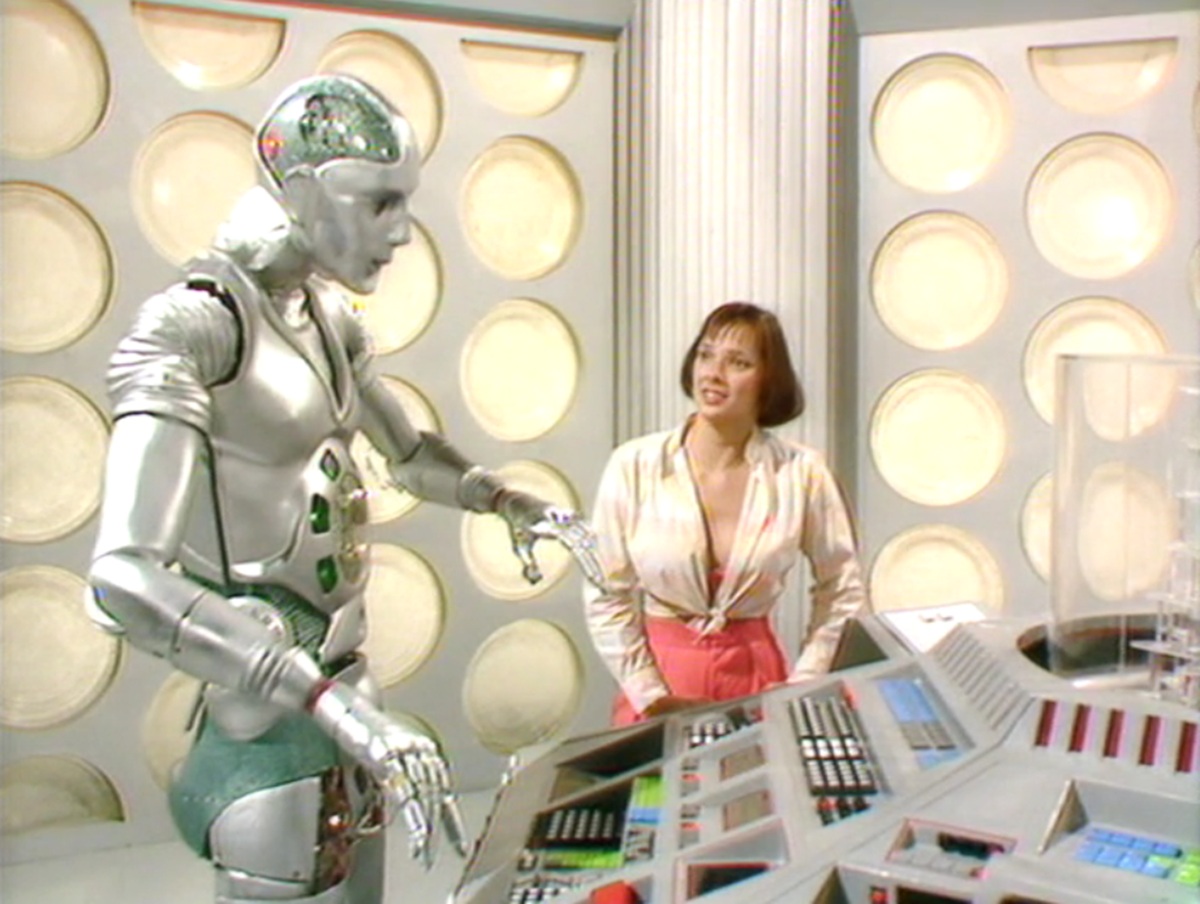
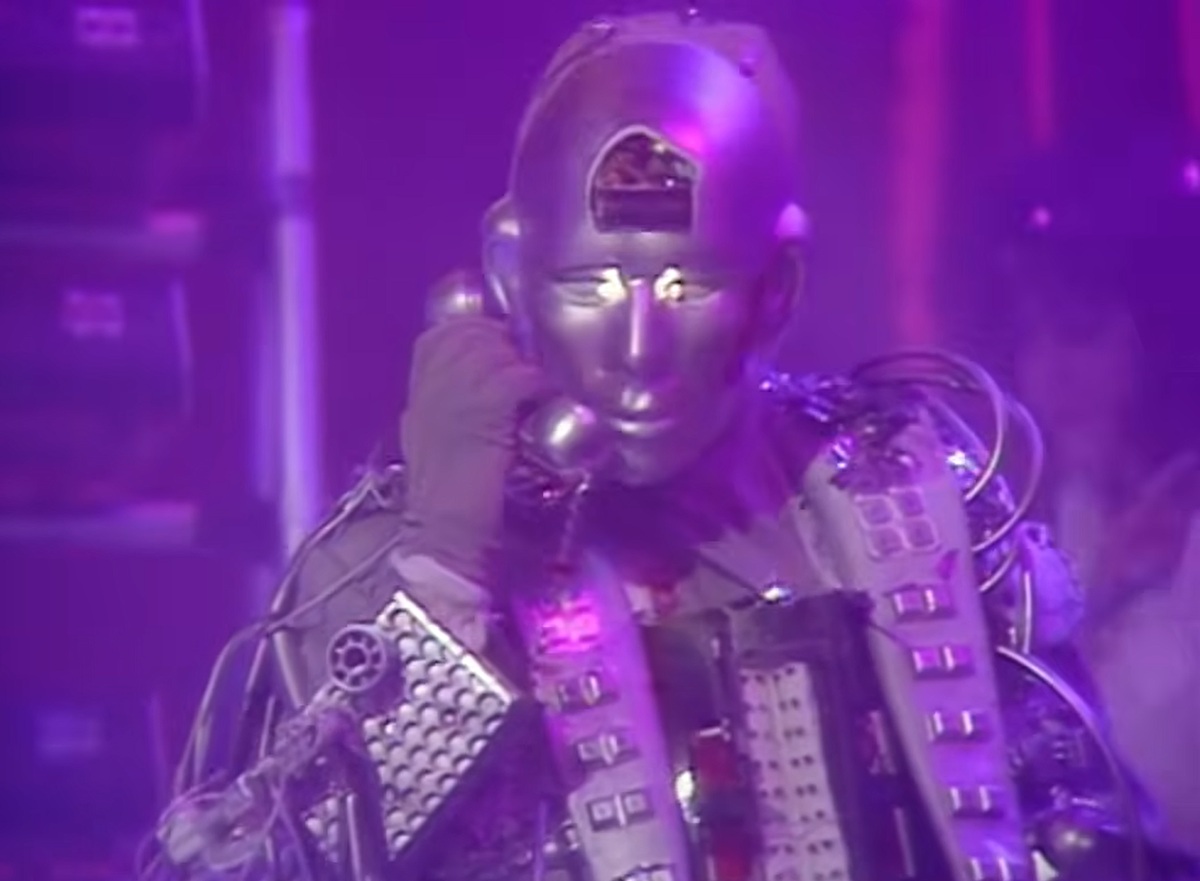
They may have been majestically and unstoppably ubiquitous back when The King’s Demons was broadcast – as of course you can find out more about here – but it is fair to say Culture Club were not having quite so much of a vintage time of it 1984. Much like a certain television programme which had celebrated its thirtieth anniversary in 1983, the public adulation that had greeted Church Of The Poison Mind, Karma Chameleon, It’s A Miracle, Victims and the attendant album Colour By Numbers seemed to have suddenly given way to shrugged surprise that they were still there; meanwhile, mounting personal and professional difficulties within the band appeared to be depleting their otherwise previously astonishing level of creativity. Big comeback single The War Song – which of course clarified that war ‘is stupid’ – could only clock in at number two behind Stevie Wonder’s Blackadder II-anticipating lament for Noel Edmonds’ lost piece of toast I Just Called To Say I Love You, while The Medal Song, essentially the closing theme from Mary, Mungo And Midge with a melody composed when they realised they’d forgotten one on the way to TV-am, barely scraped into the top forty. Like Doctor Who, Culture Club would have harder times ahead, but it’s not untrue to say that while Boy George and company may have been desperately searching for the new Karma Chameleon, everyone else could not wait to see the back – probably very slowly, noisily and generally malfunction-prone – of Kamelion. Introduced just in time for the twentieth anniversary celebrations with a good deal of accompanying excitement – albeit solely on JNT’s part – the walking and talking technologically revolutionary ‘real’ ‘robot’ that once on the studio floor promptly didn’t was immediately conspicuous by its absence from The Five Doctors, and continued to be exceptionally noticeably out of earshot and vision for an entire fourteen – yes, fourteen, we’re getting around to that – episodes until the opening instalment of Planet Of Fire; a brief appearance sticking his arm into one of those now apparently multi-functional ’roundels’ and being called a bad danger by Tegan was in fact recorded for the first episode of The Awakening but as the first edit was overrunning and nobody honestly cared that much anyway it wound up, as fan parlance always had it, ‘hitting’ the ‘cutting room floor’. Thus it transpired that Kamelion’s second appearance was also its last, reduced to transmogrifying into assorted humans of wildly different height, weight and fluidity of movement to itself in between making noises like a Fisher-Price Jack In The Box being shoved back in as part of some utterly unexpectedly spectacularly unclear plot by The Master in what appeared to be a pre-Tell Sid scheme to get his hands on some gas shares which somehow also involves Turlough’s origin story and indeed departure and what fan parlance routinely described as a ‘much trumpeted’ guest appearance by Peter Wyngarde, before finally being put out of its I AM HIM!-voiced misery – and everyone else’s – by The Doctor’s judicious deployment of the confiscated Tissue Compression Eliminator despite being made out of, erm, metal, doubtless musing on how war, war is stupid as he goes. Barring the occasional appearance in spin-off media or pinned to a big noticeboard where everyone was too busy arguing about whether Katarina and Sara should have been on there or not to notice, that was pretty much that for Kamelion. Although subsequent features and documentaries about this ill-advised ambition to afford hours of putative screen time so something that could scarcely cope with a couple of minutes on Tomorrow’s World or even Saturday Superstore at best – and still nobody has identified which programmes were actually being referenced in the ‘As Seen On TV!’ flash across the corner of the original sales brochure – have at least afforded the dignity of actually naming ‘The Man’ who devised the software that drove Kamelion, it is notable that nobody involved, even hardware engineer Chris Padmore, ever seems to have very much in the way of a good word to say about the experience, the intention or even about the Kamelion prop itself. Doctor Who‘s attempt to trailblaze the animatronic revolution had concluded even more mutedly than it began, and perhaps the last word should go to an evidently still exasperated Peter Davison, who has remarked on more than one occasion that he would still be impressed now if a real robot walked into the room, but in 1984, if Steven Spielberg and George Lucas had not achieved it yet, John Nathan-Turner was not going to get there first. That all said, Kamelion’s consignment to one of those Television Centre storecupboards that the likes of Jasper Carrott were always ‘walking past’ on their way to their show was it transpired neither immediate nor absolute. On 25th April 1985 – with Michael Grade’s decision to ‘rest’ Doctor Who for eighteen months already exceptionally public knowledge and shortly ahead of his less uproar-provoking if at the very least Smash Hits-decried reduction of its own running time by an entire quarter – The RAH Band appeared on Top Of The Pops to perform their glittery-wigged space-jazz saga of long-distance lovelorn voice notes Clouds Across The Moon, and who was that affecting to broker some variety of intergalactic telephone exchange during the otherwise unmimeable spoken word interludes? He even moved a bit on that occasion too. Sort of.
Keep Away From Edit Suite 2
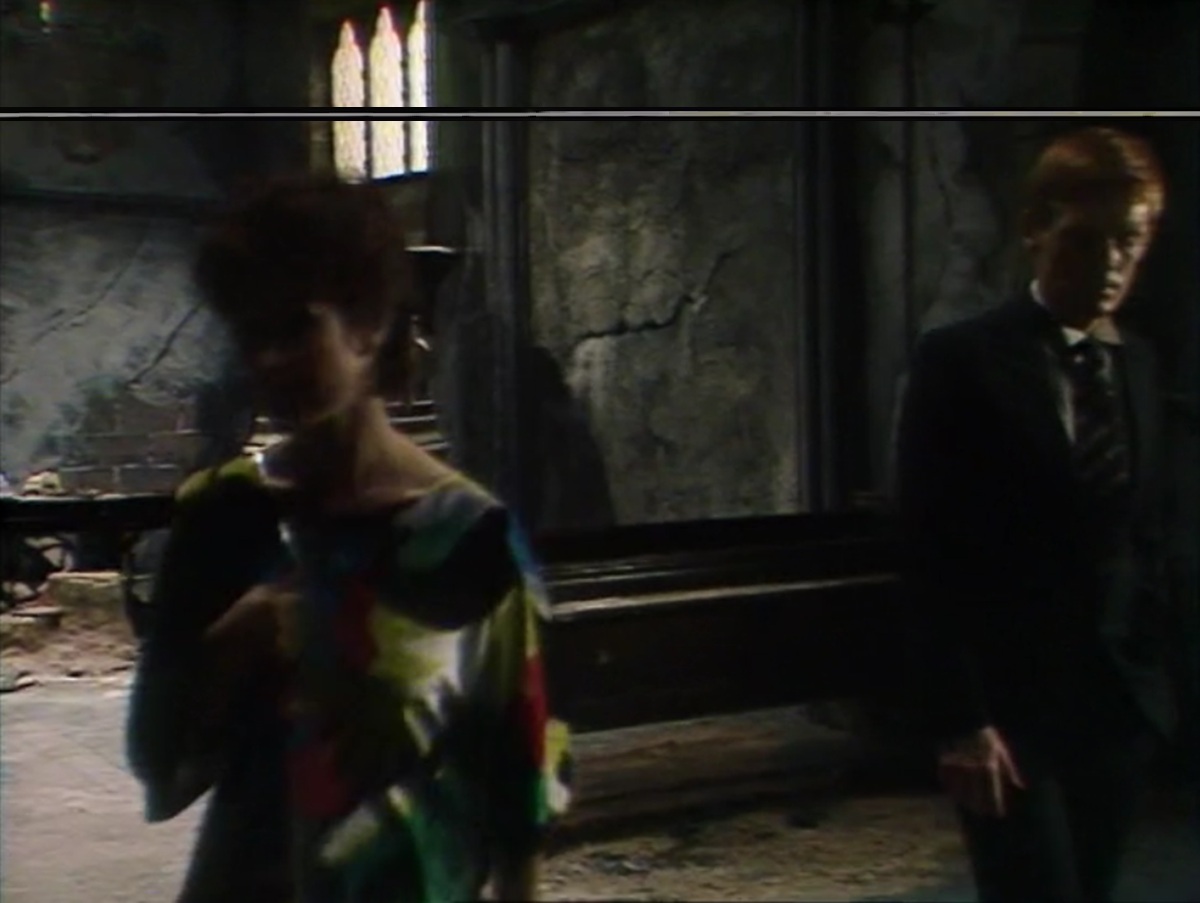
Even in spite of the negligible yet also somehow insurmountable Kamelion quotient, and indeed Warriors Of The Deep and a certain other story that is perhaps best dealt with in its appropriate positioning in the series, what may not be evident thus far especially considering how much inspiration Planet Of Fire alone has provided is that it is actually quite difficult to find very much to say about series twenty one of Doctor Who, primarily on account of the fact that it is for the most part very well made yet with correspondingly very little atypical behind-the-scenes detail or even external influence to comment or observe upon, and as such it is something of a challenge to approach from an interesting, original or indeed fun perspective. Take, for example, The Awakening, an unremarkable but likeable and tautly-realised two-parter that was evidently considered to have sufficiently wide appeal to be given an early evening omnibus format repeat – leading in to The Royal Tournament, no less – over the summer of 1984. From glowing-eyed Twisted Sister-haired folk superstition-engendering TARDIS-interloper The Malus issuing its bafflingly well-remembered ‘green slime’ to the difficult question of whether Keith Jayne’s concurrent appearance as the similarly time-averting title character in Stig Of The Dump hinted at the existence of some sort of historically displaced grubby youth shared universe to the hilariously poor staging of the ‘how did he get so far?’ musing to that clip of the horse and cart knocking over a decorative archway that caused Noel Edmonds such perpetual to-audience merriment immediately before he pulled a big lever for some reason, it is not as though there is exactly a shortage of potential points of semi-comic discourse regarding The Awakening, but there simply is not sufficient imperative or absurdity in either the story itself or its production to inform anything more substantial than a passing mention of any of the above. Although that said, there is what happened to The Awakening after transmission; or indeed according to some sources quite possibly during it. While the omnibus version was being assembled, it was noticed that the master tape of episode one had a whopping great scratch on the reverse side running through from start to finish; as it had not appeared to have caused any undue visual degradation, they went ahead and used it and returned it to the archives, where due to the atypical positioning of the scratch it deteriorated further until by the early nineties it was reportedly unfit for broadcast. It would take a combination of the omnibus edition, the audio track of the damaged tape, the original film elements and the dexterity of the BBC Archives’ Paul Vanezis to recreate an approximation of the original episode one as used on the 1997 home video release, which would of course be later further improved on for the subsequent DVD and Bluray releases but in a world of increasingly unhinged forum threads asking if anyone had made any enquiries about whether Francis Pym might have had episode five of The Space Pirates retained in a ‘civil service vault’ in accordance with his duties as chief whip, it is difficult to convey the quiet but profound impact that a fairly low-key fanzine article in the late eighties reporting that an episode of Doctor Who broadcast within the past five years was irreparably damaged – and it was far from the only scratchee, only admittedly with more severe consequences than the others – and later another one explaining how it had been salvaged by virtue of sheer enthusiasm and skill had on a small but significant pocket of fans who suddenly found themselves burdened with an equally profound awareness of the difference between the wood and the trees when it came to archive media preservation, and indeed it may well be that you have certain of them to thank for certain other discoveries and recoveries in more recent times. Not those who find episodes of lost Watch With Mother shows, though. Boo hiss etc. Why can’t they find The Power Of The Daleks like you want them to? Still, at least The Awakening had that much interesting about it…
And Nothing’s Changed It
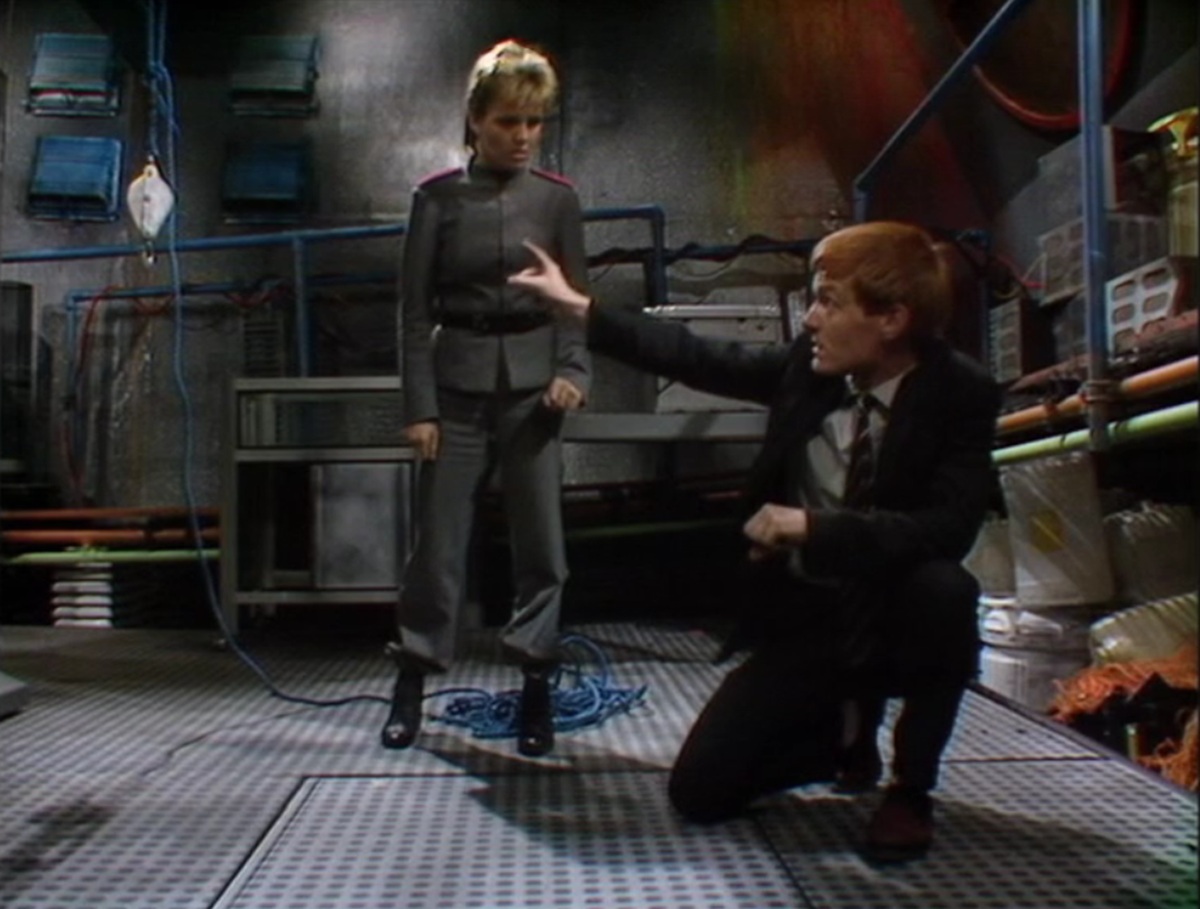
As 1984 drew to a close and Culture Club were mulling over the underperformance of The Medal Song, The RAH Band were readying Clouds Across The Moon for release and the Doctor Who production office were going about their business in blissful unawareness that they would soon find themselves with cause to release a decidedly chart-averse single of their very own, husband and wife duo Nickolas Ashford and Valerie Simpson were steadily climbing the top forty with Solid, a raucous soul duet that asserted that their love had not only achieved the consistency of sedimentary rock but that the thrill was still, crucially, hothothothothothothothot. As Solid was variously worked on in 39th Street Music, Blank Tape Studios, Clinton Recording and Right Track Recording, all of which were very firmly located in New York, early in 1984 and the concurrently shot video featured them miming to it in Central Park, it is far from likely that that they would have in any sense drawn any variety of lyrical inspiration from Frontios, a Doctor Who story about sort of gravity-powered giant woodlice and an unexpectedly resilient hatstand. There is, however, a scene in which Turlough explains to Daphne from Neighbours-haired colonist Norna that the date-labelled rock samples must have been collected through a more subterfugal route than had been suggested as the quarry had supposedly been closed long before many of them were acquired, emphasising his observation by pointing out that the disused mining area has been covered by flooring composed of what he describes as ‘solid, heavy metal’, handily illustrating his correlated suspicion by nimbly lifting up a hinged cutaway section that appears to have the structure and consistency of a workplace dishwashing sponge. None of which of course in any way implicates Ashford And Simpson in Lottery Love Rat Gravis The Tractator’s plan to transform Frontios into a sort of spaceship which they apparently cannot construct despite being able to knock together all manner of other varieties of mechanical contraption, and in fairness this may well appear a trivial and snorting parent slash snorting kid in your class level of observation to make about a series that you should just watch and accept that sometimes the scenery might not entirely support the action – on one or two occasions literally – but in equal fairness, much like The Awakening, Frontios is a story so competently written, acted and directed that it is difficult to find much else to say about it. We should probably be thankful, then, that the next equally comment-challengingly decently done story had to endure more than anyone’s fair share of scheduling chicanery in order to actually make it to the screen…
The First Of Two Double-Length Episodes Of Doctor Who!
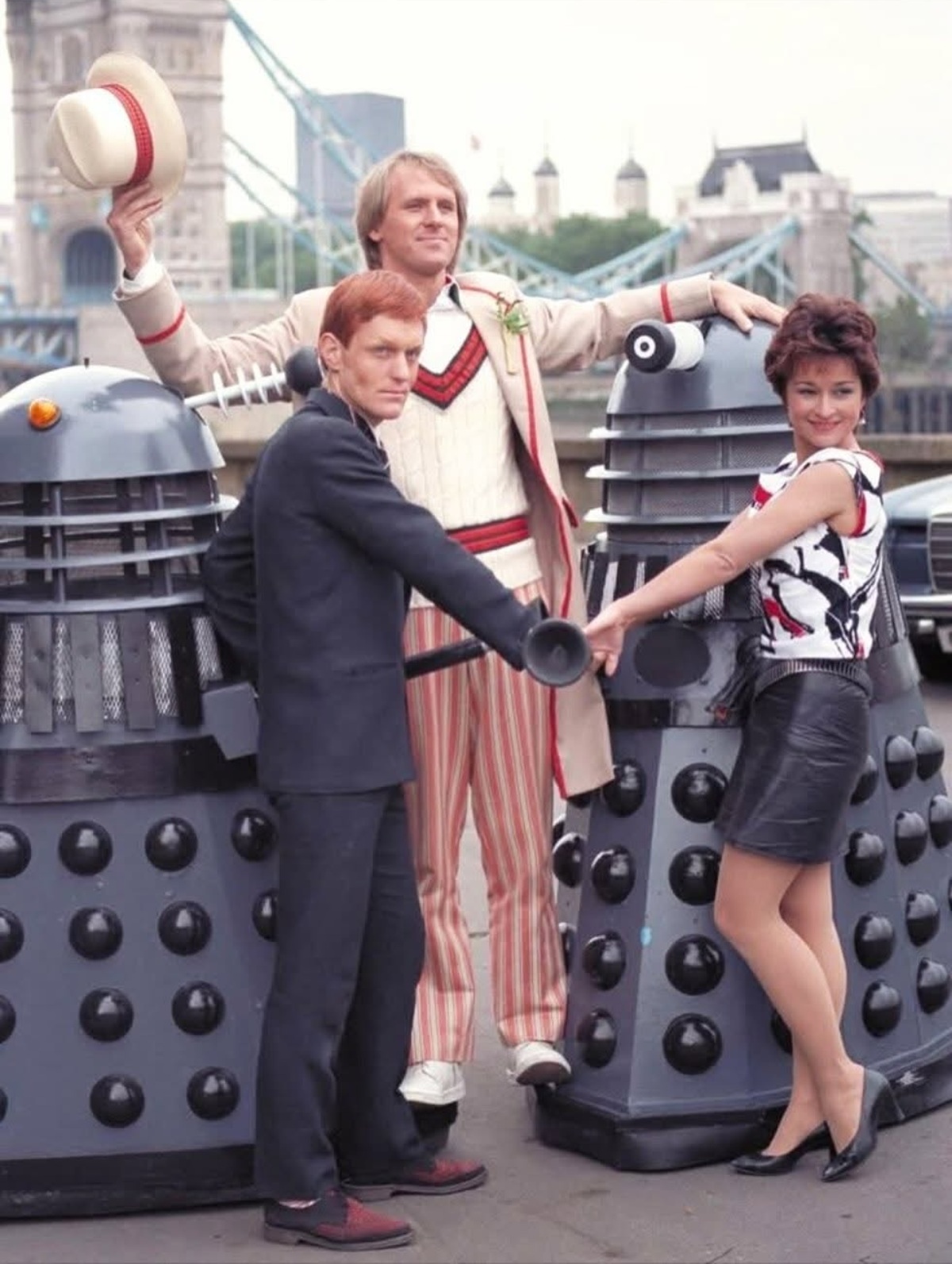
Although, as you can find more about here, most casual viewers will have been more than satisfied with that Dalek that turned up in The Five Doctors sort of impersonating Hartley Hare while Richard Hurndall and Carole Ann Ford spun it around into the John Lewis fitting rooms, other observers may well have pondered on the surprising absence of the series’ most emblematic adversaries from what were purportedly the twentieth anniversary celebrations. What viewers of either Yarvelling-denying persuasion will have been unaware of, however, was that if matters had gone to plan the twentieth anniversary series of Doctor Who would have concluded with a climactic four-part Dalek story written by Eric Saward and not with whatever was actually going on with The King’s Demons after all. Whether Kamelion would have participated to any extent has never quite been clarified, although it would have been entertaining to see him face them down in the manner of Captain Jack in The Parting Of The Ways. Even getting to this stage of pre-production had been something of an obstacle course, involving both Saward readying scripts without any assurance that the relevant clearances would be granted and Nathan-Turner personally appealing to Terry Nation, who was not keen on what other writers had previously done with the Daleks to say the least, at a convention, driven by little other than a determination to give both the viewers and the show itself the landmark celebrations it deserved. A determination that was not shared, in an ominous foretaste of what was to come, by the BBC ‘top brass’, who declined to afford any further studio sessions after the running storyline-resolving Enlightenment had been interrupted by industrial action, forcing it to take up those originally reserved for what was at that point called either The Return, The Return Of The Daleks or The Mutant Survivors From Off Of The Dead Planet Beyond The Sun Brackets Enemy Within Thrown In For Good Measure depending on who you believe. Fortunately they still had the option of simply shunting the more or less ready to run story into the following year’s run of episodes, and with a few tweaks to facilitate Tegan’s exit for reasons more realistic than usual yet also somehow even more improbable than all those sixties characters leaving to marry men they had only just met, the newly and aptly retitled Resurrection Of The Daleks was duly remounted and this time, everything apart from Davros’ plans went to plan. Until, that is, the small matter of when it would actually be broadcast arose. At this point, Doctor Who was sitting quite happily in an early evening post-news slot on Thursdays and Fridays, but the fortnight that had been set aside for the original four instalment version of Resurrection Of The Daleks had the misfortune to coincide with the 1984 Winter Olympics in Sarajevo, which the BBC had only had since August 1979 to prepare for. Their solution was to edit the four episodes into two omnibus editions which were instead broadcast on Wednesdays in, confusingly, more or less the same timeslot. Doctor Who‘s own regular timeslot for the next fortnight was indeed taken up by fifty-minute editions of Olympic Grandstand, although it is worth noting that most other regular early evening shows continued more or less unimpeded with only the most minor variation in timeslot. Rumours that Eric Saward vowed to personally spit in every fiftieth burger sadly cannot be confirmed. So that was how the Daleks’ delicately negotiated and hugely anticipated big celebratory comeback ended up almost being quietly swept under the solid metal floor covering by a BBC who were apparently desperate to emphasise that they were attaining thorough disinterest in all matters Doctor Who at an even keener pace than the general public. Meanwhile, in case you were wondering whether Resurrection Of The Daleks was actually any good in either episode count iteration, consider that when it was first broadcast, all that any fan reviewers determined to find fault with it at any cost found themselves able to castigate it for was that because the cast included poor old Chloe Ashcroft having the temerity to pursue her actual vocation did this mean that from now on Humpty would be showing us the Daleks through the Round Window tee hee hee hee hee oh for crying out loud change the sodding record. Meanwhile, in what accounted for some form of anniversary-related trundling lap of honour, one of the Daleks apparently took a wrong turning and ended up on BBC Schools programme W.A.L.R.U.S., where it promptly exterminated someone for being ‘Welsh’, and it may well have been the case that one young fan witnessed this whilst off school one day and nobody ever believed them about it until it turned up as an extra on the DVD of Resurrection Of The Daleks, although there’s much more about that longstanding battle to be believed here. Tegan and Turlough hightailing it in such rapid succession arguably struck less of a celebratory note, however – even despite the volley of party poppers and blow-out squeaker things and those plastic hats with green and white stripes on them that must surely have greeted Kamelion slinging his hook – and indeed this served as effectively a curtain-raiser for Peter Davision’s own departure; and this time, the moment had been even more prepared for than his arrival…
They’d Seen His Face Before
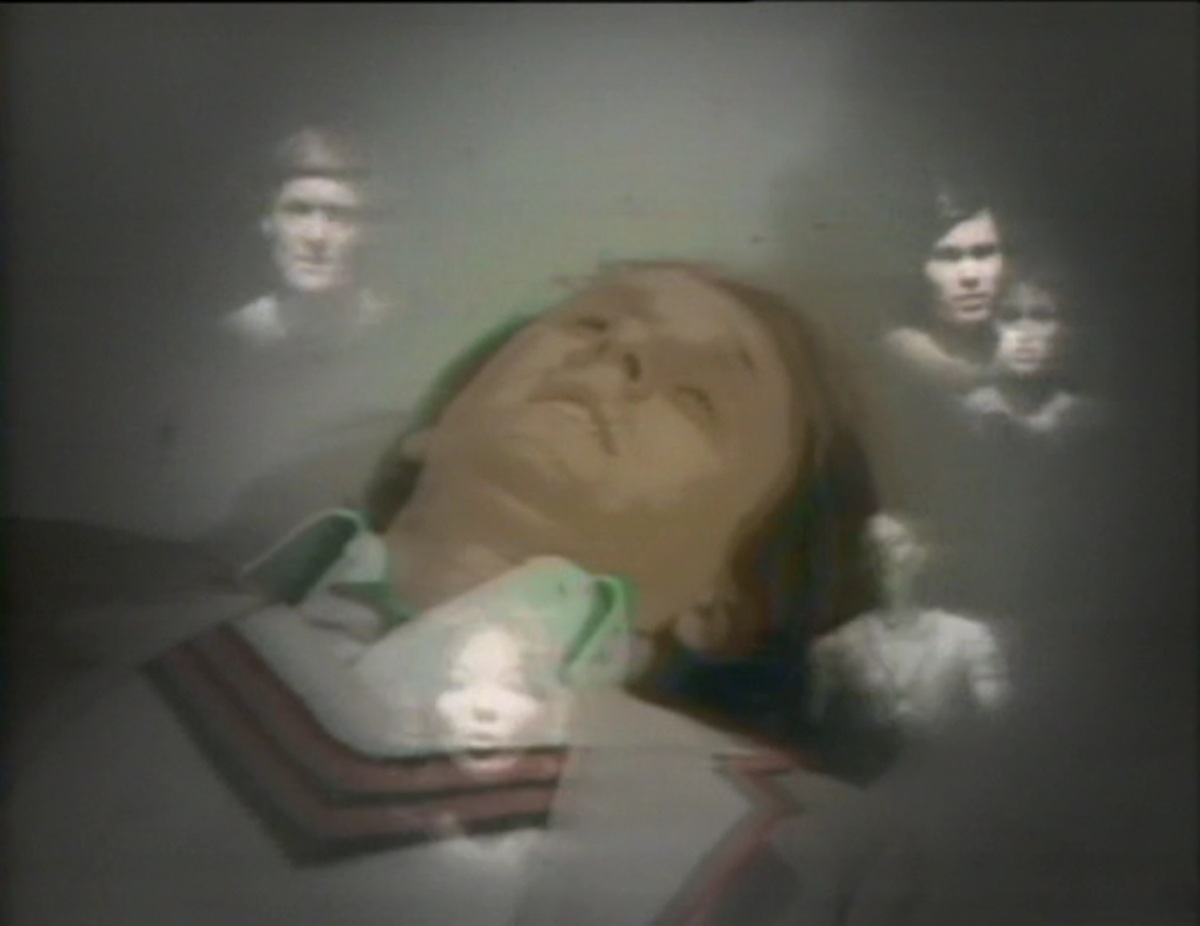
There is no real way of getting around the fact – and nor should there be, especially given its current topicality – that Doctor Who has encountered more than anyone’s fair share of lows over the years, with only an unbalanced handful of hastily moved on from highs to punctuate them; indeed you would be hard pushed to find a more extreme example of this than the sharp contrast in reception and fervour between the twentieth anniversary celebrations and series twenty one. It is also true to say, however – and with one such instance explored in fascinating depth in John Higgs’ superb The KLF: Chaos, Magic And The Band Who Burned A Million Quid, but more about that at the appropriate juncture – that whenever it has found itself in the doldrums, it has also found unlikely friends in even more unlikely places. Although before anyone writes in this is very much on a relative scale, it is not unreasonable to suggest that the early eighties also marked something of a downturn in public profile for The Beatles. At the same time as a line had been drawn under their actual career in the most brutal manner imaginable, their legacy had yet to be fully and properly harnessed and steered on a halfway sensible course – this was, of course, the era of baffling compilations with equally baffling covers like The Beatles Ballads and the notorious The Beatles Movie Medley, an ostensible ‘medley’ apparently forced together with a mallet by someone who had never heard of them or of anything they had ever done apart from Get Back and was labouring under some variety of delusion that Stars On 45 had too much structure – and as a musical entity they were dogged by a faint tint of extended family anniversary party disco nostalgic naffness. Even individually, and even apart from the obvious, at a time when the public were still unused to pop stars ploughing away into middle age they were not exactly in the least precarious of positions. Following a string of singles and albums that pretty much nobody wanted to buy, George Harrison had retreated almost exclusively into film production, and at the time of the handover between Peter Davison and Colin Baker was hard at work behind the scenes on A Private Function and Water, which it has to be said represent two extremities of the being any good scale. Ringo Starr had not even managed to find an international distributor for his 1983 album Old Wave, and was instead immersing himself by all accounts extremely happily in his rapturously received narration duties for Thomas The Tank Engine And Friends. Having been erratically zigzagging between genius and gibberish pretty much since 1970, Paul McCartney spent much of 1984 bigging up his forthcoming Ringo co-starring big screen musical comedy adventure extravaganza Give My Regards To Broad Street, with the deservedly enormous hit single No More Lonely Nights only adding to the mounting excitement, which promptly turned out to be meandering plotless nonsense involving him mostly doing ‘reacting’ faces in Abbey Road which is ultimately revealed to have all been a dream anyway; there’s a whole alternate universe in what might have happened if he had put certain longstanding rivalries aside and trusted George to oversee production. Compounding the lack of any notion of what we were actually supposed to do with Macca, Give My Regards To Broad Street came accompanied by an animated short and accompanying hit single in which he eavesdropped on Rupert Bear encountering a load of frogs going ‘burburbur BURRR bur’, which divided opinion to put it mildly, although there’s much more about his ensuing festive season shenanigans here. As with Doctor Who, matters would get worse before they got better, but again as with Doctor Who, a critical and creative if not necessarily commercial renaissance was not far away, with Flowers In The Dirt, Cloud Nine and The All-Starr Band hovering faintly on the horizon, ultimately leading towards the Anthology project and renewed excitement over and interest in The Beatles’ music and their legacy as a cultural force, roughly around the same time that someone finally decided it might actually be a good idea to bring Doctor Who back. Someone who was listening to The Beatles in 1984, however, was The Caves Of Androzani‘s director Graeme Harper, and one evening whilst trying to figure out how to best represent the story’s climactic regeneration scene, he happened to have A Day In The Life on in the background and inspiration suddenly struck. Although it is debatable how many viewers will have had even the vaguest notion of this at the time, once you are aware of the fact that the mounting cacophony of former companions disinterestedly mouthing platitudes in spinning black and white circles and a snickering Master trying to repeat his one line of dialogue in as many different sentence construction configurations as possible was based on that atonal orchestral buildup – with the Doctor’s ‘…Adric?’ presumably included to represent the stray bits of Mal Evans poking through the mix – right up to the momentary pause before Colin Baker sits bolt upright into frame with the same jarring jolt as that celebrated closing chord was closely modelled on the structure of Sgt. Pepper’s Lonely Hearts Club Band‘s finale, it is impossible to, for want of a more appropriate frame of reference, unhear it. Or if you prefer, there never could be any other way. At the conclusion of an already monumental story boasting a superlative script from Robert Holmes, towering performances from all concerned and Nicola Bryant and Christopher Gable in particular, an appalling monster because it just wouldn’t be Doctor Who without one to undermine everything and an explanation for that ludicrous stick of celery that both works and makes sense, Graeme Harper almost casually threw in a standard-setter that frankly made all of the prior regenerations look somewhere between Kansas City/Hey Hey Hey Hey and 12-Bar Original, and it is difficult to imagine anyone who did make the effort failing to feel at least some degree of excitement at the imminent introduction of a brand new Doctor. Mind you, there’s still that ‘inner groove’ to deal with…
It’s A Long Way From Anywhere
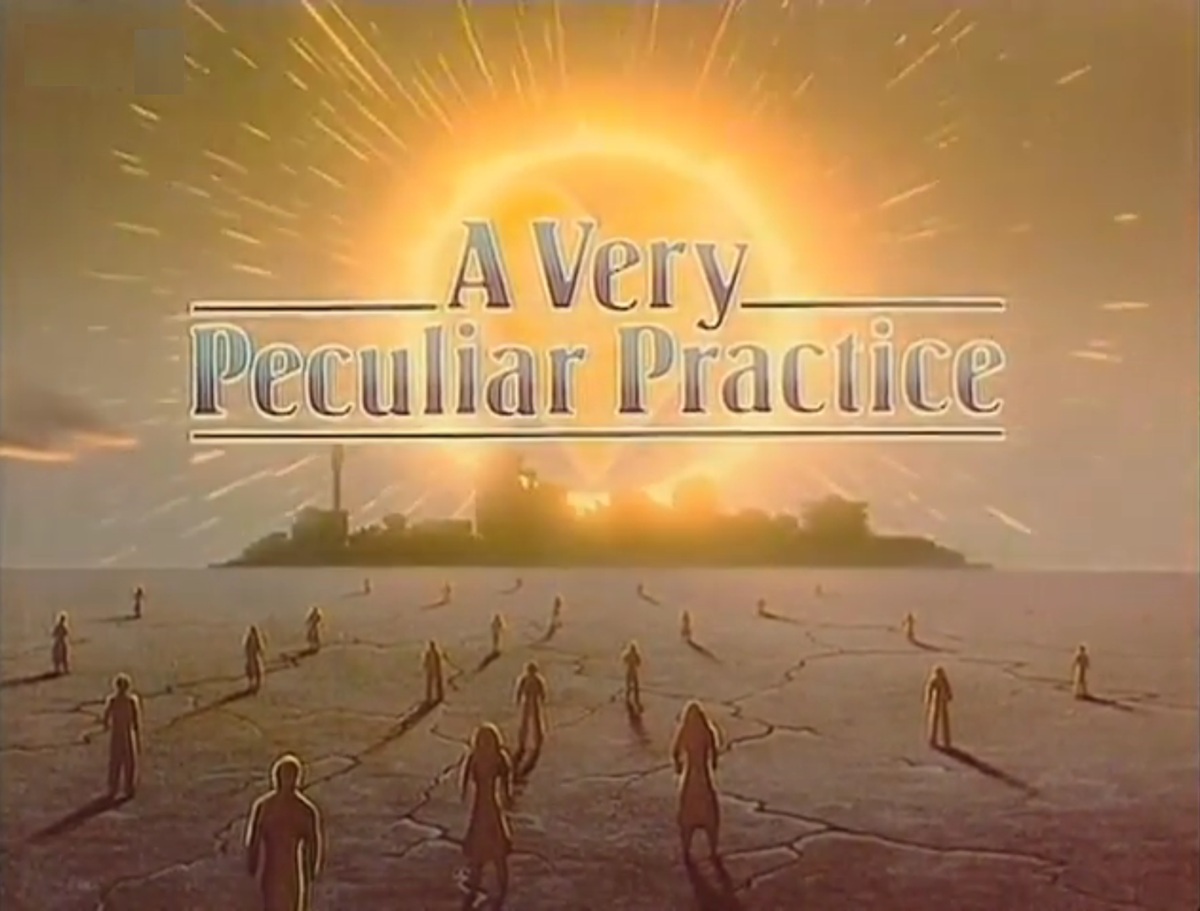
Before we do so, however, it is worth pausing for a moment to consider what the various former Doctors up to this point had done immediately after leaving the show. Already dogged by ill health, William Hartnell more or less retired, only participating in a handful of theatrical stints and television guest roles. Always careful to avoid undue public association with the role, Patrick Troughton had appeared as at least six wildly varied characters in wildly varied television drama productions and horror films before 1970 was out. Although his stint as the host of Whodunnit? which there is of course more about here commenced a matter of days after episode six of Planet Of The Spiders, if we are to take Jon Pertwee’s word for it – which is admittedly not always strictly the most reliable course of action – he was already as good as signed up for what eventually became Worzel Gummidge before he had even left the show. In contrast – and as explored at greater length here – despite his frequently stated desire to play anything but The Doctor, Tom Baker seemed to have tremendous difficulty avoiding securing anything other than what can only be described as a lengthy procession of ‘Doctorish’ roles until he finally managed to get cast severely against type in Blackadder II and The Life And Loves Of A She-Devil almost half a decade later. All of this, particularly following an oft-referenced caution-advising conversation with Patrick Troughton, must have been playing very heavily on Peter Davison’s mind when he took the decision to leave Doctor Who after only three years, albeit admittedly three years characterised by an admirable but doubtless wearing abundance of heavy lifting when obligated to appear in unsuitable, underprepared and unfinished stories – with Time-Flight in particular proving no little source of exasperation – although he would later wearily reflect that if he had been presented with anything as good as The Caves Of Androzani earlier on he would most likely have stayed for a good deal longer. Having already starred in multiple hugely popular light dramas, presented several long-running children’s shows and appeared more than one hit sitcom concurrently, it was perhaps easier for Peter Davison to take his departure from Doctor Who in his stride and concentrate on other areas of work entirely, although it is perhaps notable that his first professional engagement after completing his final studio session was a touring production of Barefoot In The Park alongside his then-significant other Sandra Dickinson. Unsurprisingly, whilst giving sitcoms an unexpected wide berth until 1991 office hilarity oddity Fiddlers Three, he then duly moved back in to popular light drama with Anna Of The Five Towns and a supporting role in the BBC’s acclaimed adaptation of Agatha Christie’s A Pocketful Of Rye, and children’s television with a reading of Dick King-Smith’s The Sheep-Pig for Jackanory as well as narrating Fox Tales, a deeply eerie European folk tale-inspired puppets on a black background ITV lunchtime show which incidentally you can find much more about here. More unexpectedly he also spent a couple of years as Mr. Brown in Radio 4 school staffroom comedy drama King Street Junior and even hopped across the Atlantic – sort of – for a guest appearance in a London-set episode of Magnum P.I., during which he sadly encountered neither Simon And Simon or the Whiz Kids. Oddly, however, his most decisive move away from Doctor Who in public perception at least was paradoxically with a series in which he played a character who was ‘Doctorish’ – or at least in relation to his interpretation of The Doctor – in all but name, except for the fact that the character was a doctor so technically it was even in name too. Written by Andrew Davies in mischievous response to a situation where he had somehow ended up owing the BBC money over a series they had not actually made and running to two series on BBC2 between 1986 and 1988 – there was also a one-off special in 1992 that while hardly This Life +10, is still not entirely worth dwelling on – A Very Peculiar Practice was a gleefully absurdist comedy drama about Dr. Stephen Daker, a hapless everyman general practitioner who arrives to take up a post at the possibly not as fictitious as some of the real life inspirations might have hoped Lowlands University, only to discover he is surrounded by venal, backstabbing and eccentric colleagues, immature even if they’re mature students and a pair of not remotely suspicious nuns up to lord knows what, invariably somehow always finding himself inadvertently saving the University from plans both external and internal to simultaneously monetise, privatise, radicalise and obliterate it. Compounding matters still further, he then went as good as straight into BBC1’s series of high profile adaptations of Margery Allingham’s Campion novels, in which he played a whimsical 1930s detective – oddly enough, previously portrayed on BBC Radio by one Richard Hurndall – who it is safe to say would not exactly have had very much difficulty in outsmarting the Urbankans. They didn’t let him sing the theme music after series one though. So perhaps sometimes, the best way to move on from Doctor Who is by… not really moving on from it? A lesson that Doctor Who itself was evidently yet to learn…
Whether You Like It Or Not
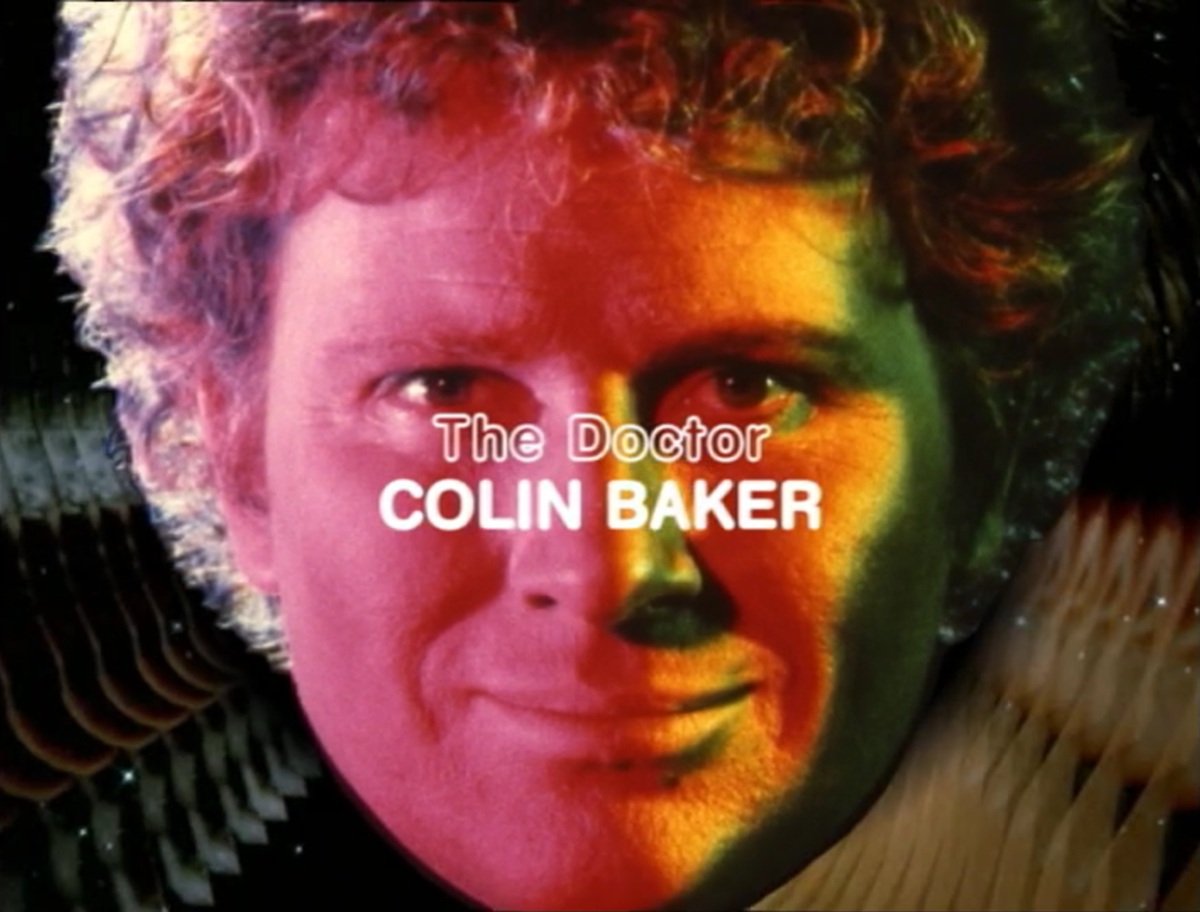
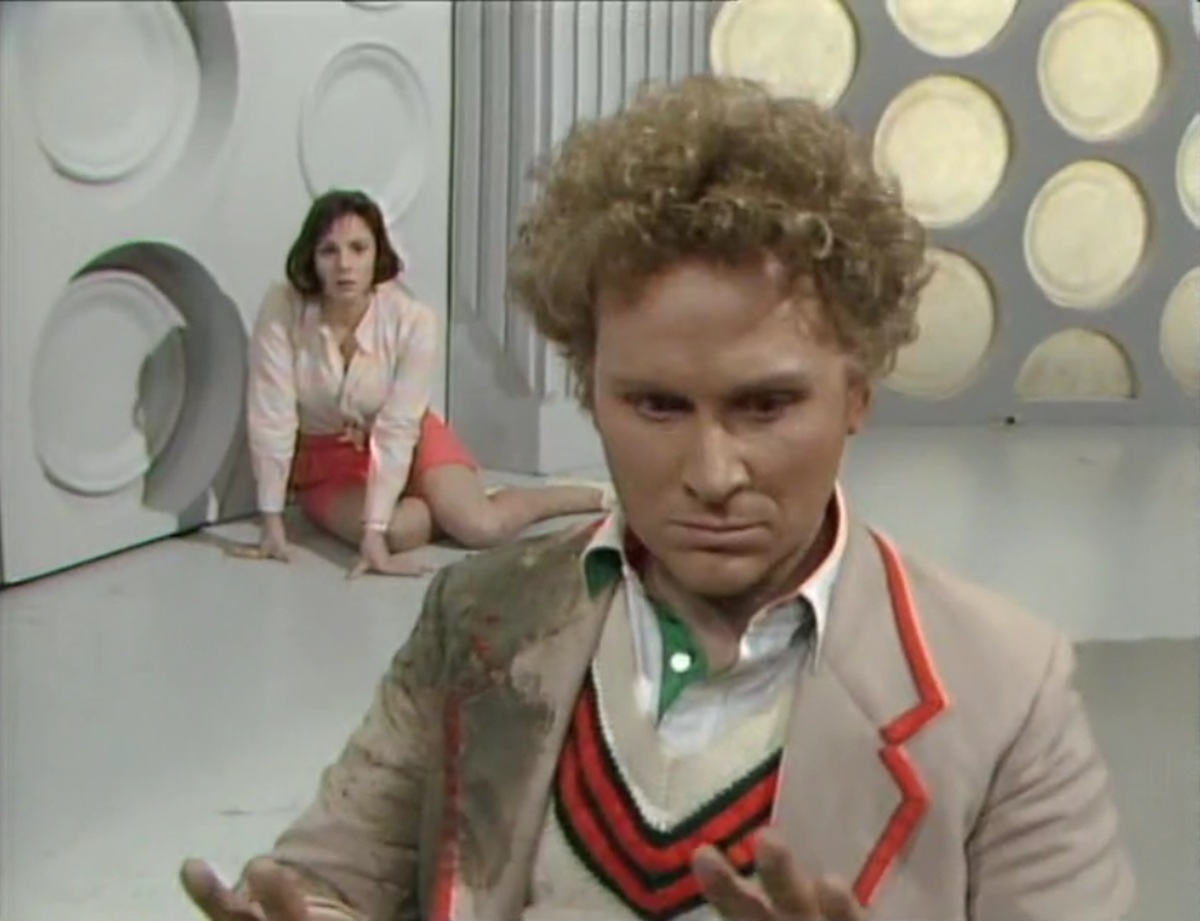
The Twin Dilemma, Colin Baker’s first story in the lead role of Doctor Who, is by pretty much universal consent not very good. It has consistently come last out of hundreds upon hundreds in all of Doctor Who Magazine‘s Best Story polls, the DVD release conspicuously failed to incorporate an extra called something like Best Or Mestor? in which Clayton Hickman or someone offered some vague comments sort of possibly in its defence if you didn’t think about it too deeply whilst their general demeanour suggested that if they had declined to comply their favourite museum would be bulldozed while they watched, and it has even drawn outright criticism from Russell T. Davies and David J. Howe, neither of whom are otherwise exactly renowned for their lack of underdog-espousing even-handedness. This is, it must be emphasised, far from a retrospective reputation, and the litany of tale-telling extras included on its various home media releases reveal a distinct lack of enthusiasm meeting The Twin Dilemma everywhere from Points Of View and Question Time to Children’s BBC’s famously unforgiving viewer correspondence show Take Two. Perhaps none of this should be altogether surprising considering that we are talking about a story in which an alien insect that would have looked comically unconvincing in a sketch on Your Mother Wouldn’t Like It in cahoots with some sort of silver Charles I blokes that everyone describes as ‘bird-like’ even though they weren’t and yet another not remotely tedious dithering ‘eccentric’ renegade Time Lord attempt to do something too cosmologically preposterous for words with the aid of two mathematical genius adolescent twins whose acting probably even failed to convince themselves but who would apparently far rather spend their time designing that ‘clever’ kid in school’s idea of new computer generated Play School opening titles and ‘bouncing’ equations which are apparently dangerous for never entirely clarified reasons while The Doctor behaves in the most viewer-alienating manner possible including throttling Peri, Peri does her at best moderately convincing best to compensate for this ill-advised abrasiveness even including the throttling, Kevin McNally changes his coat and nobody is quite sure why, and otherwise somehow a lot happens and absolutely nothing whatsoever happens both at the same time and nobody either really noticed nor cared. Anyone who was left underwhelmed and confused by The Magical Mystery Tour after the excitement of Sgt. Pepper’s Lonely Hearts Club Band really ought to try sitting through this sometime. What’s more, BBC1 was actually broadcasting in colour by 1984 too so nobody can even make that nonsense argument in its defence either. The Twin Dilemma was less a grand welcome for Colin Baker than it was an invitation for everyone to point and laugh at him, but even if it hadn’t been such a woeful mess that should have been abandoned outright before a single frame had even been recorded, it should have been abandoned outright before a single frame had been recorded regardless. The decision to sidestep the usual and thus far considerably effective practice of holding the audience’s first real glimpse of the new Doctor in action back to the Radio Times-overhyped excitement of the ‘New Season’ makes no sense and serves no purpose whichever perspective you approach it from, and what was more, doing so with a story as woefully inadequate on every level as The Twin Dilemma – which, tellingly, always seems to feel like it was broadcast over the summer rather than in March – gave the distinct impression to viewers and management alike that nobody involved could really be that bothered, and were even less bothered about whether the audience were actually entertained or not. It was the first of many credulity-challenging decisions – well, second if you count that coat – that would follow over the next couple of years, and poor old Colin Baker, who doubtless was the last person that anyone listened to about anything related to Doctor Who must have been wondering what he had got himself into. As it would turn out, he should have been more concerned about what he was getting himself out of…

Anyway join us again next time – if you must – for ‘Foodbabble’, an unexpected My Husband And I/Blake’s 7 crossover and, regrettably, you and you and ba-ba=baaaaaaa…
Buy A Book!
There’s lots more about the early eighties version of the Doctor Who theme – and plenty more about tons of other of Doctor Who-related releases besides – in Top Of The Box, the story behind every single released by BBC Records And Tapes. Top Of The Box is available in paperback here or from the Kindle Store here.
Alternately, if you’re just feeling generous, you can buy me a coffee here. One for Doctor Daker too, please. He’s a teetotaller, never touches a drop!
Further Reading
You can find more about what exactly went on and didn’t in the twentieth anniversary run of Doctor Who – and about Colin Baker’s actual first appearance in the series – It’s Still A Police Box, Why Hasn’t It Changed? Part Twenty Two – When You Feel Your Body Shake, Snakedance Snakedance, Then You Know You’ve Got The Break here. There’s also much more about Clouds Across The Moon, and why it’s a great record even in spite of Kamelion, in 2 Hours Of Wicked Mixes To Keep You Dancing All Night Long here.
Further Listening
If you really want to know what it was like to see that Dalek show up on W.A.L.R.U.S. on an unexpected day off school and then have everyone else accuse you of making it up for literal decades, you can find a look at some long-forgotten Doctor Who-associated spin-off side projects and oddities in Doctor Who And The Looks Unfamiliar here.
© Tim Worthington.
Please don’t copy this only with more italics and exclamation marks.

