
There are those who would argue – as indeed someone not a million miles from here did only with more mentions of Jimmy Tarbuck than anyone might have reasonably expected or indeed considered reasonable here – that Doctor Who‘s actual twentieth anniversary series was more of a celebration for the fans than it was for the casual audience that the show was increasingly dependent on yet also increasingly ill-advisedly blasé about. Arguably further still only a certain continuity-fixated subsector of fandom with long memories for recent events at that. Possibly even just a lone hypothetical individual yet extremely voluble ‘superfan’. Even the most astute observer could have been forgiven for concluding that this was a surprisingly muted manner in which to mark such a rarely achieved milestone in broadcast endurance. After all, back in 1973, they had celebrated Doctor Who‘s tenth anniversary with William Hartnell, Patrick Troughton and Jon Pertwee teaming up for The Three Doctors – itself repeated barely eighteen months previously – before they got on with a remainder of a series’ worth of business as usual. What anyone doing this observing will not have realised, however, was something even bigger and better was on its way. It was just that this time, they did it the other way round.
In August 1981, before Peter Davison’s first story in the role – although it was the fourth in production; there’s more about about that and the never not baffling phrase ‘King Frog – Ruler Of The Universe’ here – had even been recorded, the ever publicity-astute John Nathan-Turner had written to the ‘upper’ ‘echelons’ of the BBC’s drama department suggesting that the next series should be brought forward t0 the autumn of 1982 so that the next but one could be similarly brought forward to the autumn of 1983 to accommodate a feature-length anniversary special on 23rd November. This proposal had to be abandoned due to Peter Davison’s Robert Glenister-wrangling commitments on the upcoming third – and as it would turn out final – run of Sink Or Swim, but the go-ahead was given for a ninety minute standalone special to coincide with that all-important anniversary. Although the idea of reuniting all five Doctors cannot ever have been in any serious doubt, there was an immediate and all-too-obvious problem in that William Hartnell was, putting it mildly, even less available than he had been in 1973. There was also the more immediately practical question of who could even be relied on to write such a by necessity logistically and narratively convoluted special without giving up almost immediately, with original choice Robert Holmes throwing his hands up in despair in extremely short order even when working with an initial decision not to feature the Daleks or K9, causing Eric Saward to cast about for a second script as a backup plan that it seemed increasingly likely would in fact prove nothing of the sort. A solution to the former conundrum came when JNT’s attention was drawn to veteran sort-of Hartnell-resembling-ish character actor Richard Hurndall and his recent appearance in an episode of Blake’s 7, with a clip from The Dalek Invasion Of Earth scheduled to be inserted ahead of the opening titles as a salute to the actor who started it all and preferred walking to any day. The other issue more or less resolved itself once Terrance Dicks came on board, wrangling a monumental collection of characters and motivations still in need of a central mystery into a five-directional quest involving three directions with all parties converging on the same mysterious prohibited Gallifreyan location in search of answers, and insisting to the point where JNT was forced to concede on the inclusion of K9; they did, however, all agree that recently introduced ‘real’ robot Kamelion should be forcibly relieved of any putative serving tea to Richard Hurndall duties and – mercifully – just quietly stay in whichever cupboard he had been cursorily shoved into.
Astonishingly, in spite of all of these setbacks – and there were even greater headaches to come – The Five Doctors emerged as an unqualified triumph, a carefully constructed multihanded riot-running of high adventure hokum that satisfied devotees and detractors alike and few had anything but good words to say about it. Behind the scenes, however, some almost imperceptible rumbles suggested that all was not necessarily quite as well as jubilant outward appearances might suggest; although the wider public would probably not even have noticed, the actual intended 23rd November slot was denied to The Five Doctors – it would wind up occupied instead by an episode of Last Of The Summer Wine entitled The Waist Land, in which the three elderly miscreants plot to sell junk food to patrons of the local health club, doubtless involving the deployment of a home-made hang-glider and subsequent off-screen jettisoning into the world’s shallowest stream – and it would instead find itself scheduled as part of the fourth annual Children In Need appeal, bookended by unhelpfully dismissive remarks from Terry Wogan and a ‘look’ at the ‘total’ complete with that oddly unnerving drawing of a group of children who it has to be said did not look especially in ‘need’. To JNT’s understandable frustration, this delay meant that it was shown in America – and the Target novelisation was in the shops – before it was broadcast over here. Before long, Doctor Who‘s twentieth anniversary began to look less like a triumphant parade than it did a victory lap, and when Warriors Of The Deep ambled onto the screen a little over six weeks later, the irritation and impatience in the voices of people asking if it was still here could be best described as pronounced. For the moment, though, let us concentrate on that November evening two days after the actual twentieth anniversary when William Hartnell gripped his lapels and went on about that door that Susan wasn’t behind unless she was once more, and a million ‘play’ and ‘record’ buttons were simultaneously depressed on home video recorders as everyone kept their fingers crossed that The Shrivenzale might – might – put in an appearance…
The Eye Of Orion, That’s Where I Want To Be
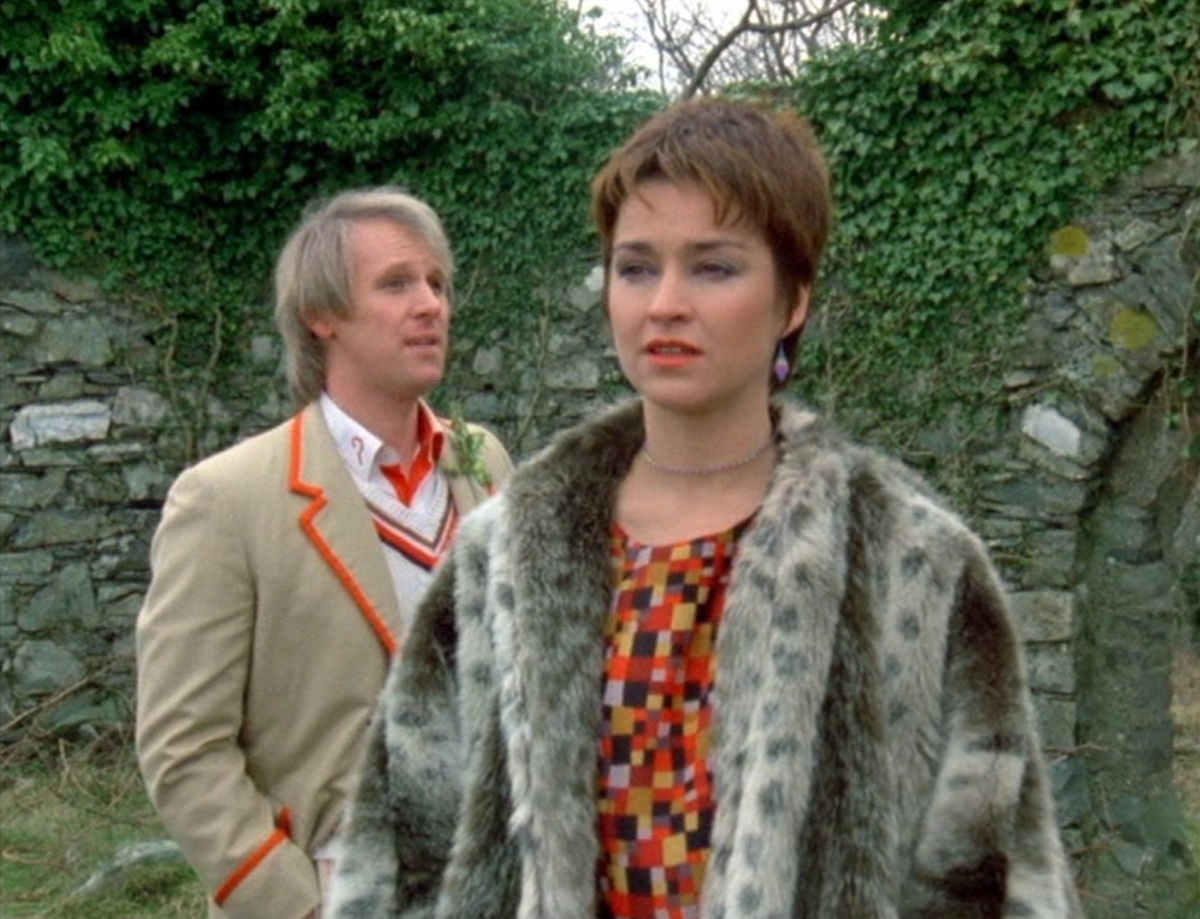
In what many may well consider the definitive example of the sort of intentionally obscure running references that John Nathan-Turner was to say the least enthusiastically keen to incorporate as a ‘reward’ for regular viewers but in fact invariably engendered little other than persistent questions from anyone else who happened to be in the room while Doctor Who was on as to whether ‘it’ had ‘been in’ ‘it’ ‘before’, purported intergalactic area of natural beauty The Eye Of Orion was initially mentioned in The King’s Demons as a suitable post-Kamelion destination for a dash of rest and relaxation, which Turlough confusingly affirms that he has visited before without actually saying so in any meaningful sense. Perhaps unsurprisingly, this is where we find the present-day TARDIS team at the outset of The Five Doctors, with Turlough remarking on its ‘marvellous’ calming and relaxing properties, Tegan adjudging it to be both beautiful and like Earth after a thunderstorm, and The Doctor unwittingly predicting Victoria Wood’s Doctor Who sketch by indulging in some florid waffle about a high bombardment of positive ions. Which must have come as some surprise to viewers who could have been mistaken but were fairly certain they were actually seeing a cold and wet – and that’s actual cold and wet as opposed to what Tegan was implying – and visibly Welsh garden that would shortly prove to look confusingly identical to the locations that the First, Second and Third Doctors made their on-screen arrivals in, and indeed to what subsequently purported to be the wilds of Gallifrey. It should perhaps come as slightly less of a surprise to discover that it actually was a cold and wet Welsh garden – Plas Brondanw in Llanfrothen – and, beggaring credulity, this was not even the first attempt at trying to make the visuals at least go a minute fraction of the way towards matching up with the promises of the dialogue; the footage from the original location shoot had come back with a huge massive scratch across it so there was no option but to remount in equally uninspiring surroundings and conditions. Fortunately The Five Doctors actually began with that clip of William Hartnell reciting the third verse of Wrapping Paper by Cream and the unveiling of the brand spanking new gleaming BBC Micro-ed up overhaul of the central console, so there was at least some sense of razzle-dazzle and occasion, but it has to be said that opening a prestigious anniversary celebration with a scene that not only looks like a Bank Holiday family ‘outing’ but casts the entirety of the rest of the story into some degree of confusion for casual half-viewers may not have been the most advisable option available. Meanwhile, the fact that a sizeable proportion of the intended audience for the original broadcast of The Five Doctors would at that point have immediately associated ‘Orion’ with incompetent ocular caterpillar lens thingymajig-enhanced and textbook declaimer of ‘a-a-aaaaa’ useless second in command to Commander Makara in then-being-shown-by-ITV redubbed tokusatsu series Star Fleet – please don’t write in pointing out that actually you think I’ll find that actually it was actually called バリー・ハーキュリーズへ警告!ボグナー・レジス星団に接近する「句読点なき運命」の宇宙船。 actually, thank you very much – cannot be entirely discounted as an additional hindrance. Still, let’s leave The Eye Of Orion for now, and head straight over to The Eye Of Orion for our first encounter with an oddly unfamiliar familiar face…
And Welcome To You From The Time Lords!
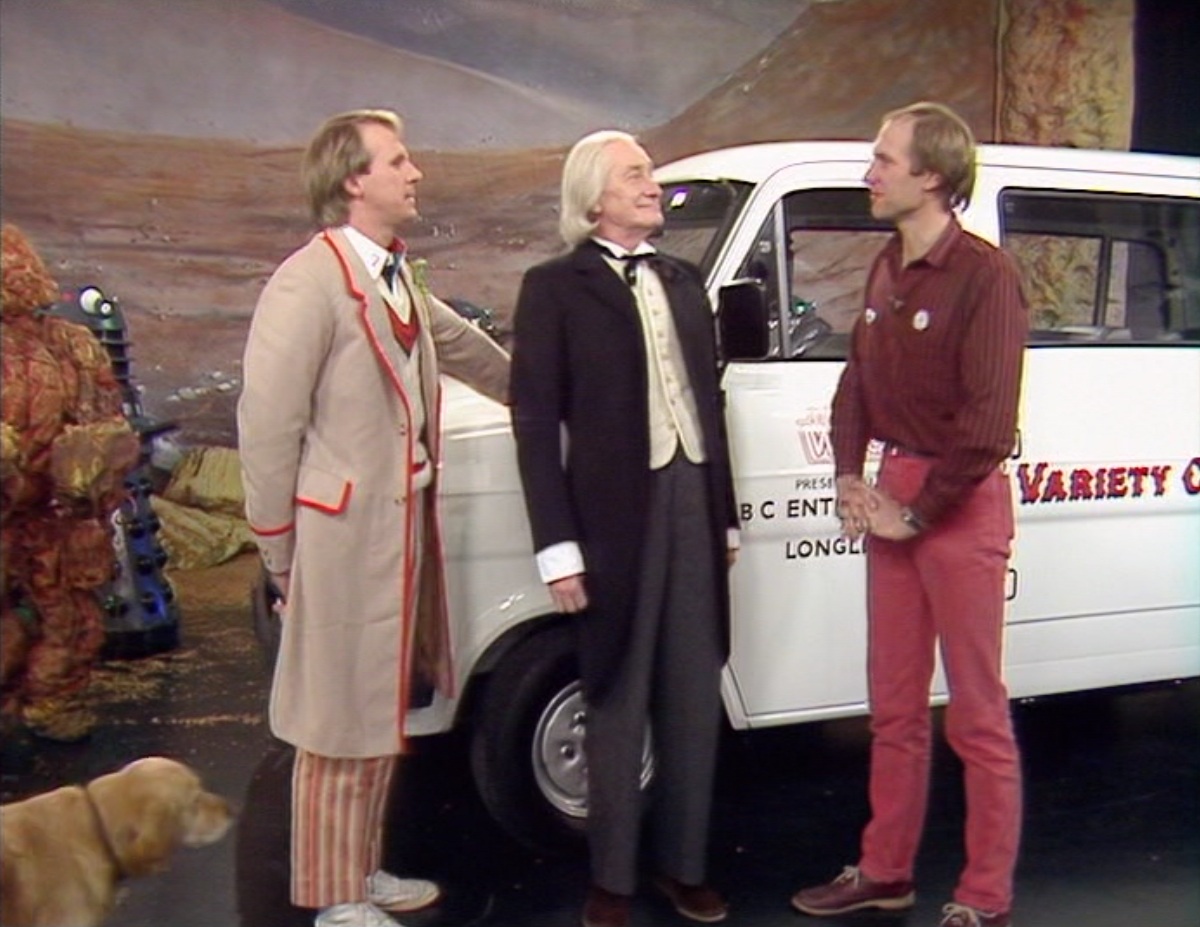
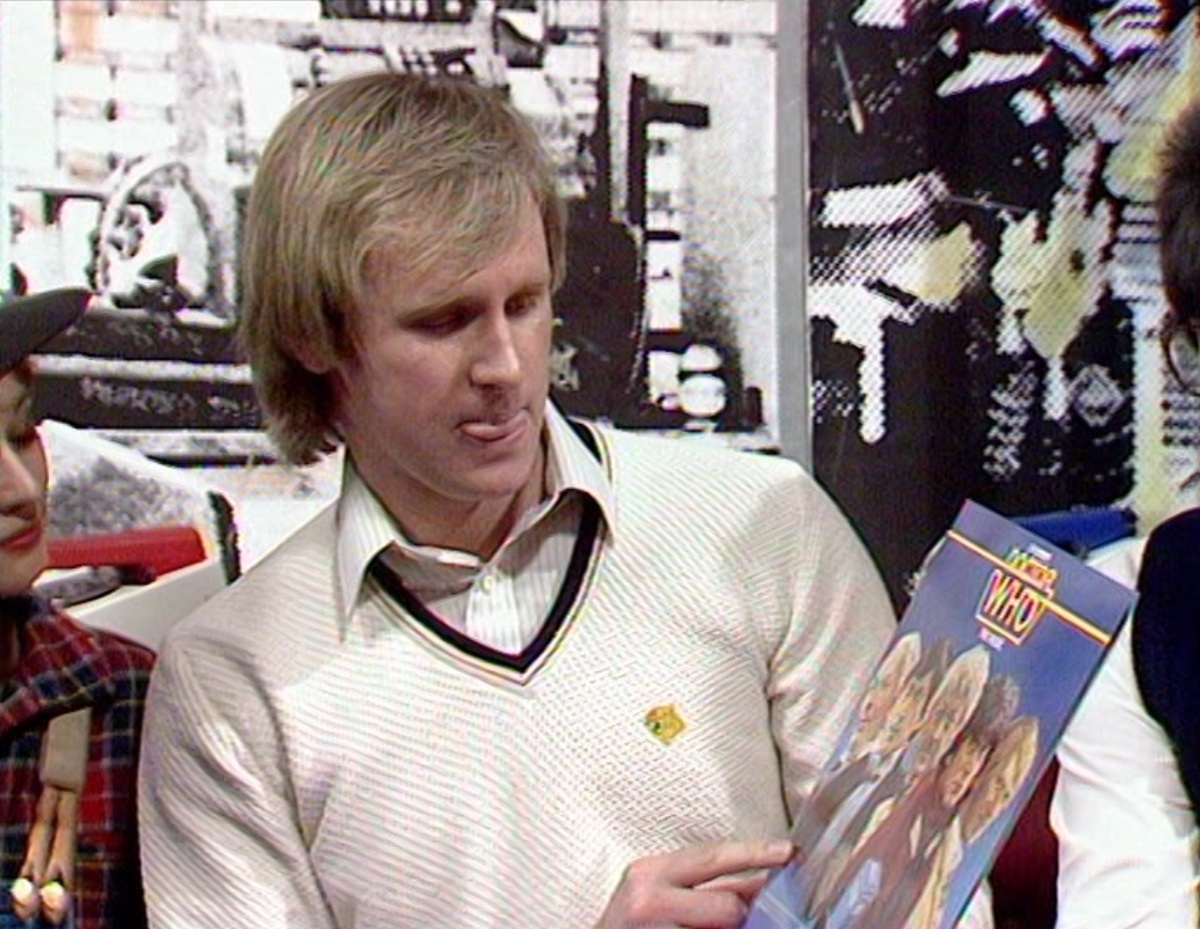
Poor old Richard Hurndall. In his day, he had been one of the UK’s leading character actors, primarily appearing on BBC radio dramas in literally hundreds of productions dating from the early 1930s right up to the early 1980s. Although less prominent on the big and small screen, he still racked up plenty of credits including appearances in The Avengers, The Persuaders!, Bergerac, Steptoe And Son, The Power Game, Callan, Ripping Yarns, The Brothers, Van Der Valk, Hadleigh and dozens of less well remembered television shows besides, including Big Breadwinner Hog precursor Spindoe and the tantalisingly lost 1967 BBC2 Cold War spy thriller The Paradise Makers. He even very clearly had his fans; in 1968, after hearing him reading A Small Piece Of Paradise by Geoffrey Morgan on Radio 4’s Story Time, a J. Sandford of Glasgow wrote to Radio Times asking to hear more of him, while in a 1964 assortment of viewer correspondence under the banner ‘Throbs Galore!’, alongside one female respondent discreetly enquiring whether Vera McKechnie had ever posed for an altogether different variety of Picture Book and another rhapsodising over Tony Bilbow’s dreamy voice – quite how applicable this was to his narration for The Singing Ringing Tree is very much open to question – a Mrs. June Jones of Kidderminster felt move to summate Richard Hurndall with one single emphatic exclamation – ‘COR!’. Perhaps wisely, this was followed by the italicised rejoinder ‘No more ‘throbs’ please! – Editor’. Even now, he can still be heard more often than he isn’t in archive repeats on Radio 4 Extra. He is destined, however, to be forever associated with one single role late in a lengthy and illustrious career – stepping in to the First Doctor’s ankle boots to stand in for William Hartnell in The Five Doctors. Although we are perhaps best not dwelling on his distinctly ‘individual’ approach to nibbling cheese, despite the otherwise-implying default position latterly adopted by Doctor Who fans and indeed some of those who worked on The Five Doctors – the comment in the DVD ‘making of’ documentary about his provision of ‘a complete character’ seems decidedly faint praise-condemnatory -it has to be said that he actually makes a more than creditable effort from a difficult and thankless task, and while as he would quite possibly have accepted himself his performance could never compare to William Hartnell even when struggling to read from massive cue cards on a glinty monitor in The Three Doctors, he delivers a strong screen rapport with Peter Davison and Janet Fielding in particular, and even holds his own in the doubtless ego-riven studio scenes with Patrick Troughton and Jon Pertwee; both of whom, of course, he had encountered professionally on numerous previous occasions. In any case, arguably nobody’s opinion on his performance mattered more than Carole Ann Ford’s, and she has never had anything other than praise for how well he was able to approximate Hartnell’s manner. The only mistake anyone made – and in all honesty it was a fairly major one – was letting him loose on the publicity trail. Take, for example, his in-character appearance with Peter Davison on Blue Peter – arriving in the studio via Variety Club Of Great Britain Sunshine Coach – on 21st November 1983. Well practiced in promotional endeavours and wryly cynical, Peter Davison of course hits the correct balance between publicity-skewed formality and refusal to take himself or either programme too seriously, causing the studio to erupt into stifled chuckles at his impromptu acknowledgement of the presence of “Cybermen… a dog?”. Richard Hurndall, on the other hand, remains so resolutely in character throughout that it would have given Stanley Lebor and Geraldine Newman showing up on Wogan pause for thought. Matters reach their most jarring when an already visibly heavy lifting Simon Groom asks Peter Davison who the Doctor-ferrying coach will be assigned to, duly drawing a sensibly expressed response that it will be the Gurney School in the East End who will be using it for educational outings, smirking to the camera as he suggests that these excursions should incorporate ‘visits to Doctor Who exhibitions’. Then he makes the mistake of asking Hurndall if there will be a special presentation ceremony, eliciting a reply of “oh yes indeed there is – tomorrow morning!” in a manner generally reserved for the broadest Shakespearian witticism. Nobody present quite appears to know how to respond to this. Perhaps he really ought to have taken a lead from his briefly adopted on-screen persona and slowly backed away from promotional appearances muttering ‘this doesn’t concern us’. Although we can only hope he had worked out exactly which direction to slowly back away in first…
I Hope You’ve Got Your Sums Right
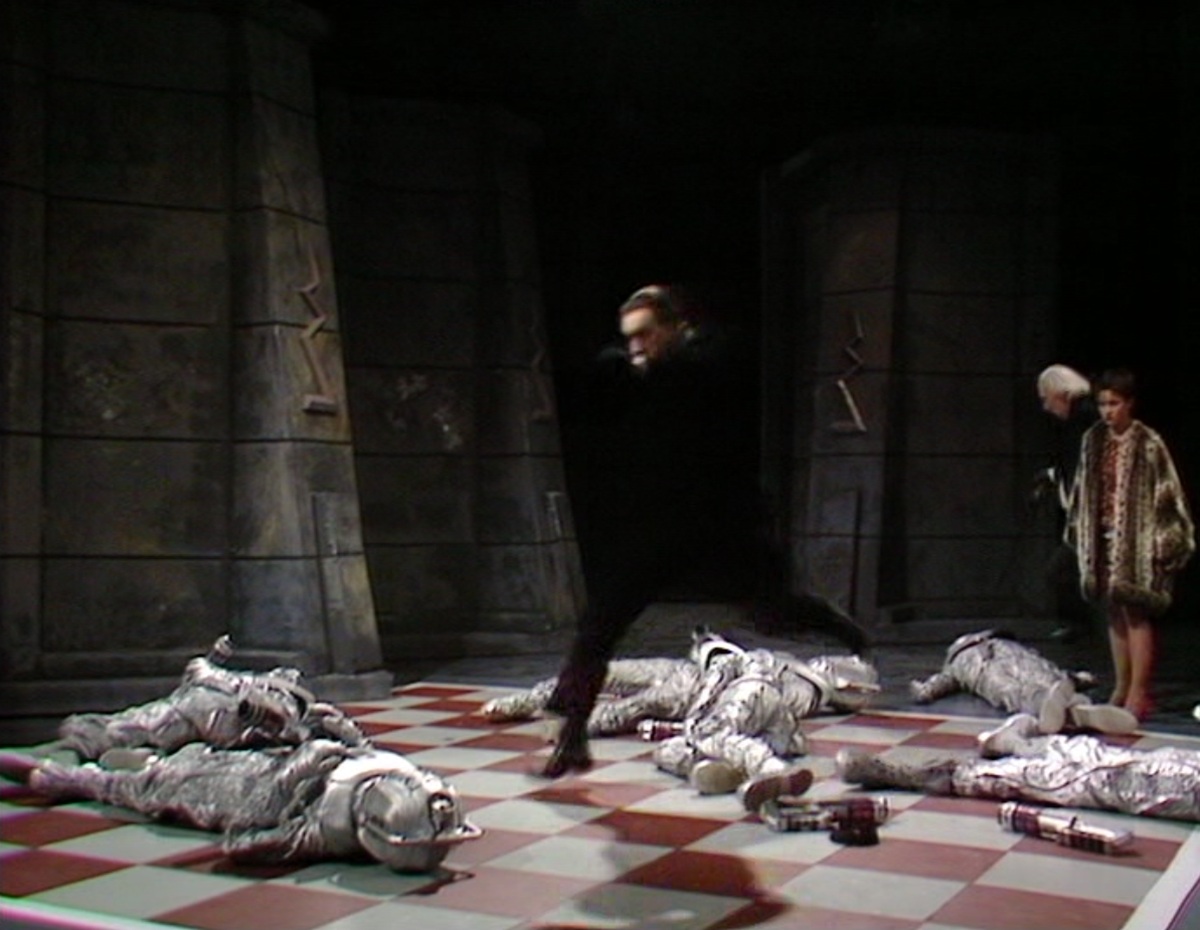
On 1st March 1984, viewers who were still giddy with excitement at the thought of Doctor Who‘s twentieth anniversary and The Five Doctors in particular – and were still caught in blissful unawareness of what of would follow, both in terms of the sharp decline in public goodwill and the literal sight of Ingrid Pitt taekwondo-booting Dobbin off Rentaghost – could have at least partially satiated their desperation for further adventures in rubber walls and cardboard monsters by watching Janet Fielding joining judo champion Neil Adams and antiques expert Nigel Crockett on The Adventure Game, BBC2’s Dungeons And Dragons and Douglas Adams-influenced proto-escape room game show in which a handful of vaguely Children’s BBC-appropriate celebrities were challenged to solve a procession of fiendish puzzles on the planet Arg in the hope of securing the crystals required to fuel their shuttle trip back to Earth. These logical posers would generally involve the likes of navigating balance sheet-level transactions of native currency the ‘Drogna’, attempting to decipher the relevancy of a sign reading ‘Richard Of York Gave Battle In Vain’ and doing that thing where you try to get a key out of a rack of plastic tubes filled with varying quantities of water, shepherded and mocked in equal measure by backwards talking bloke Bill Homewood, genial Blue Peter presenter type Charmain Gradwell – often mistaken by the inattentive for Sophie Aldred – and Chris Leaver as a sort of Hurndall-esque doddery butler type, all of whom had a habit of transforming into pantomime dragons at a moment’s notice, before traversing a gantry over space whilst trying to avoid the BBC Micro-generated ‘Vortex’ in hot pursuit, lest they should find themselves evaporated and having to ‘walk’ home across a shaky starscape as the credits rolled. All of which may well sound like rather too much detail when we are supposed to be talking about Doctor Who‘s twentieth anniversary celebrations, but in fairness the affection that is hopefully evident in writing the above and that many will doubtless feel on reading the above are powerfully indicative of just how much any and every last scrap of what could even only risibly tenuously be considered ‘extra’ Doctor Who was appreciated back then, and indeed just how popular and widely loved The Adventure Game was with its target audience full stop, which is a convenient juncture to mention that you can also find a chat about it here and an entire chapter on the making of The Adventure Game in The Golden Age Of Children’s TV here. Which is all a roundabout way of getting around to mentioning the fact that one of the regular rounds in The Adventure Game was The Drogna Game, in which the contestants had to traverse a patterned floor decorated with multicoloured representations of Drogna pence pieces, using some variety of complex twelve Ningis to one Pu exchange rate mechanism to deduce which square to move on to next lest their misstep should be denoted by a sort of loud squeaking training shoe sound. We have already speculated here on how this aspect of gameplay may well have been informed by The Doctor and Bellal’s attempts to get from one end of an obliquely carpeted corridor to another; for The Five Doctors, however, they apparently elected to just go all out Drogna-pilfering and more or less copied it exactly only with a slightly more consequential ‘squeak’, a squadron of lumbering Cybermen apparently unable to see around doorframes and The Master scampering across chortling to himself about how it was evidently ‘as easy as Pi’, thereby entirely unnecessarily giving the game away to Tegan and the First Doctor – who gleefully cements the ‘borrowing’ from The Adventure Game by using lobbed coins to mark out their safe trajectory – that it is all based around the some variety of calculation involving the smartarse-favoured mathematically infinite Greek letter of the same name. In case you were wondering, despite Tegan’s cynical admonition of the First Doctor for his overconfidence in his mathematical ability, Janet Fielding did not manage to outmanoeuvre The Vortex. Anyway, we can rest assured that fellow early evening BBC2 schedule-hogging ‘outward bound’ puzzler Now Get Out Of That! was not similarly required viewing in the Dicks household…
Oh The Young Cyberman Works On The Lands, Grabs The Brigadier’s Arm With His Hands
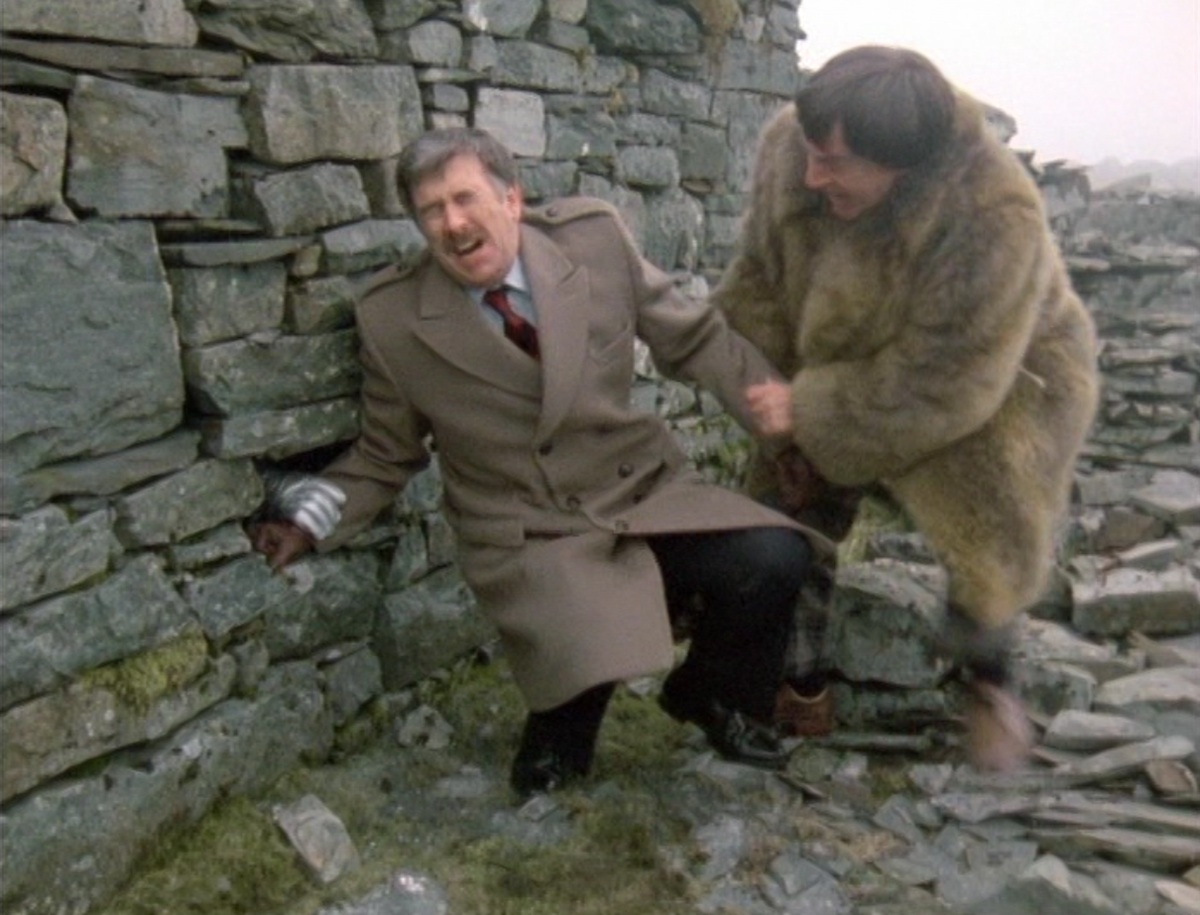
We are of course getting slightly ahead of ourselves here, and indeed ahead of the assorted Doctors, companions monsters and blotchy patches of film dirt making their way across Gallifrey’s unpromisingly-named ‘Death Zone’ in search of whoever it is thumping a gloved fist against a Tesco Checkout ’82 till whilst pushing figurines of them across the set of Orm And Cheep, one of which appears to in fact somewhat incongruously be a miniature representation of Geoffrey Bayldon in the Look And Read serial Sky Hunter. The First Doctor is initially seen in a railing-staircased garden full of hedge-hewn representations of The Toadies from Chorlton And The Wheelies, apparently somewhere on The Eye Of Orion and possibly taking place after the conclusion of the conclusion of The Massacre though nobody is quite sure, before he is whisked away by a sort of superimposed black triangle of the sort more normally seen occasioning Noel Edmonds to chortlingly berate the ‘backroom boys’ for playing on-air pranks on him, and winds up in a sort of pocket approximation of Skaro where he literally bumps into Susan and hoodwinks a Dalek into firing at the mirrored walls which it had apparently never occurred to them would cause their mint and chocolate Death Rays to rebound at inconvenient trajectories, blowing the credulity-baiting edifice straight apart and allowing them to stumble across the present-day TARDIS with, of course, some pretty much immediate ankle-twistage. The Second Doctor meanwhile goes to drop in on The Brigadier’s retirement party at UNIT’s newly-installed HQ on The Eye Of Orion, somehow managing to baffle the incoming head of UNIT with the suggestion of the possibility of time travel, before they are whisked away by an inter-sketch ‘wipe’ from The Russ Abbott Show and deposited, apparently, in The Eye Of Orion. With a distinct lack of songs of joy and tears of laughter evident in their ensuing blame-apportioning bickering, they are suddenly set upon through a convenient hole in a conspicuously small wall by what we are presumably supposed to presume is a Cyberman but in fact appears to be dressed as one of the recruits from BBC1’s The Paras both on duty and in ‘civvies’ simultaneously, which secures a tight grip on The Brigadier’s arm. The Second Doctor’s it has to be said idiosyncratic solution to this is to leap into easy reach of the grabby cyborg and, using an all too conveniently positioned length of stray piping of spectacularly unclear provenance, strike the outstretched arm with the rhythmic precision of Jonathan Cohen exhorting classrooms full of cross-legged schoolchildren to join in with that my donkey walk my donkey talk my donkey eat with a knife and fork thing, apparently with sufficient force to convince one of those Cybermen who could punch through thick metal doors in his era to release the forearm squeezeage-incapacitated military man and permit them sufficient time to flee on foot with equally sufficient spare capacity to do some ‘comedy’ bits, followed by a decidedly un-Jonathan Cohen-like tune-averse rendition of that who unto Rassilon’s tower would go thing. They opt for below and take a torchlit amble through a cave network – encountering both a very oddly positioned stray Yeti who is seen off with a ‘Galactic Glitter’ presumably drawn from the same firework assortment as the Fourth Doctor’s ‘Little Demon’, and an illusory Jamie and Zoe seen off with sudden recollection of events that haven’t even happened yet unless Farmer Glenlock Hogan genuinely is officially ‘canon’ – before they arrive just in time for The Brigadier to punch The Master’s lights out with a swift uppercut aimed squarely at somewhere sort of near-ish to his face. Albeit sadly without any accompanying affirmation that Cadet Rousselle has houses three. If only they had hung on for a couple of minutes – after all, they appeared to have plenty of time to spare whilst eluding some of The Doctor’s most persistent adversaries, they could have bagged a doubtless slightly insult-riven lift…
Come On Over Baby, Whole Lotta Reversin’ The Polarity Of The Neutron Flow Goin’ On
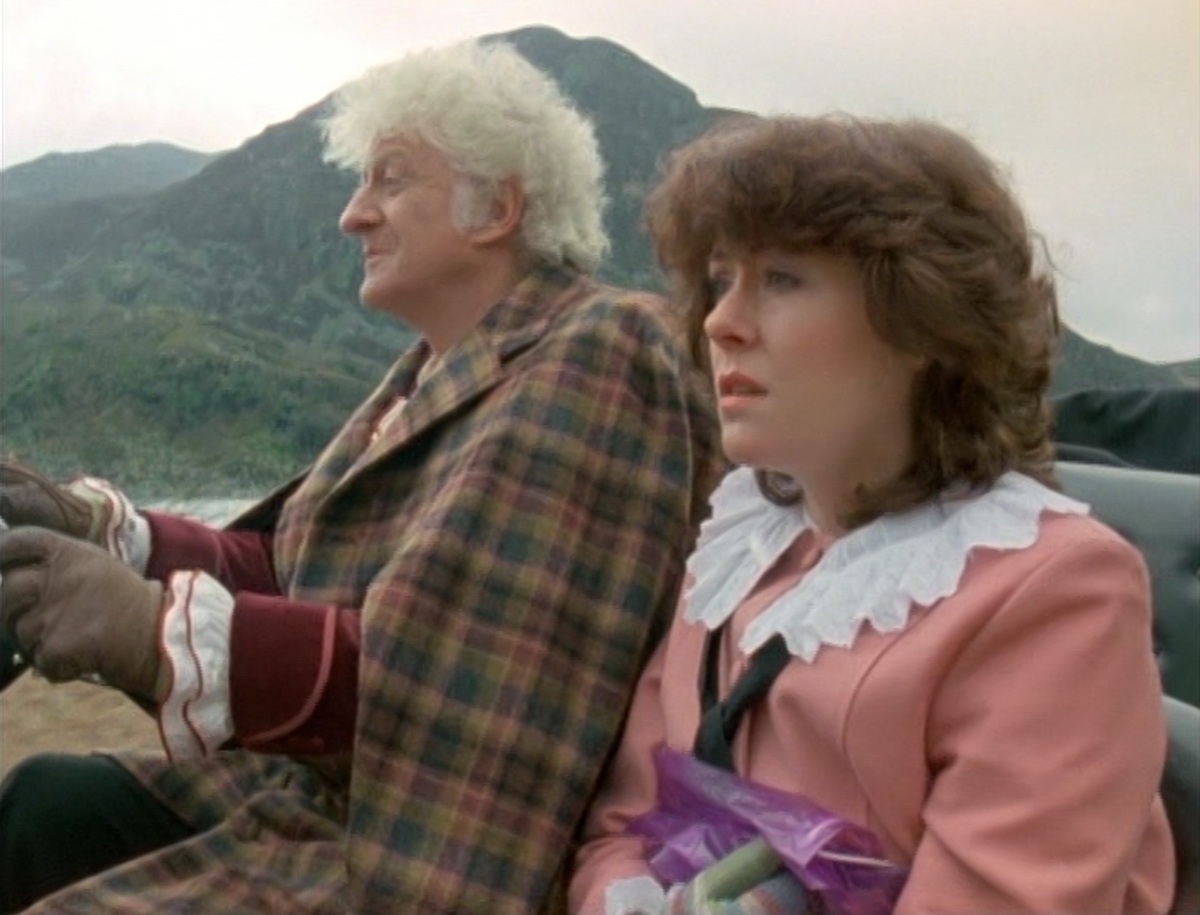
With the Second Doctor and The Brigadier opting for the ‘below’ route, and Tegan and the First Doctor just walking up and knocking on the door apparently sort of constituting ‘between’, the choice to approach Rassilon’s Tower from ‘above’ falls to the Third Doctor, first seen motoring along an Eye Of Orion B Road mercifully in the inevitably designated ‘good old’ Bessie rather than The Whomobile. With an exclamation of ‘Great Balls Of Fire!’ he is of course initially able to outswerve the character actor-nabbing triangle because Jon Pertwee, but soon finds himself duly cast out to a not exactly dissimilar backroute from the RAC Motor Tours Of The Eye Of Orion Guidebook And Map. There he finds himself reunited with a momentarily confused post-regeneration Sarah Jane, having been hauled off in the by now familiar fashion from outside her home apparently situated on the banks of an enormous lake and on the precipice of that bit of torn up concrete that Peter Venkman climbs out from underneath in Ghostbusters, and where K9’s existence is being carefully concealed from the outside world by a sign on the gate – which he is able to trundle up to whilst repeatedly chirruping single word warnings and admonitions – reading ‘BEWARE OF THE DOG’ in ‘calculator’ lettering. How this lines up with K9 And Company‘s all-too-recently established continuity is frankly anyone’s guess. Ahead of hurtling towards the massed rumination over inscriptions via improvised zip wire – apparently replacing an initial suggestion of a cape-fashioned hang-glider, and it probably does not require much in the way of imagination to determine where that suggestion probably originated from- they are forced to contend with the Raston Warrior Robot, a sort of blank-faced cross between Hello Tosh Got A Toshiba and Rondo Veneziano prone to Confuse-A-Cat style leaping into the air and vanishing via jump cut to present the illusion of being able to move too quickly for human perception, who dispenses with a lumbering gaggle of pursuing Cybermen with ruthless shot-putting efficiency whilst leaving all of his artillery of P.E. cupboard equipment unattended and on open display for The Doctor and Sarah Jane to pilfer for their tower-traversing repurposes. Having infiltrated from ‘above’, they similarly encounter an equally illusory Liz Shaw and Mike Yates, whom are immediately determined to be illusory because Jon Pertwee. Although, that said, we have already witnessed unarguable proof of his innate powers of determination…
“Jehoshaphat! It Really Is You!”
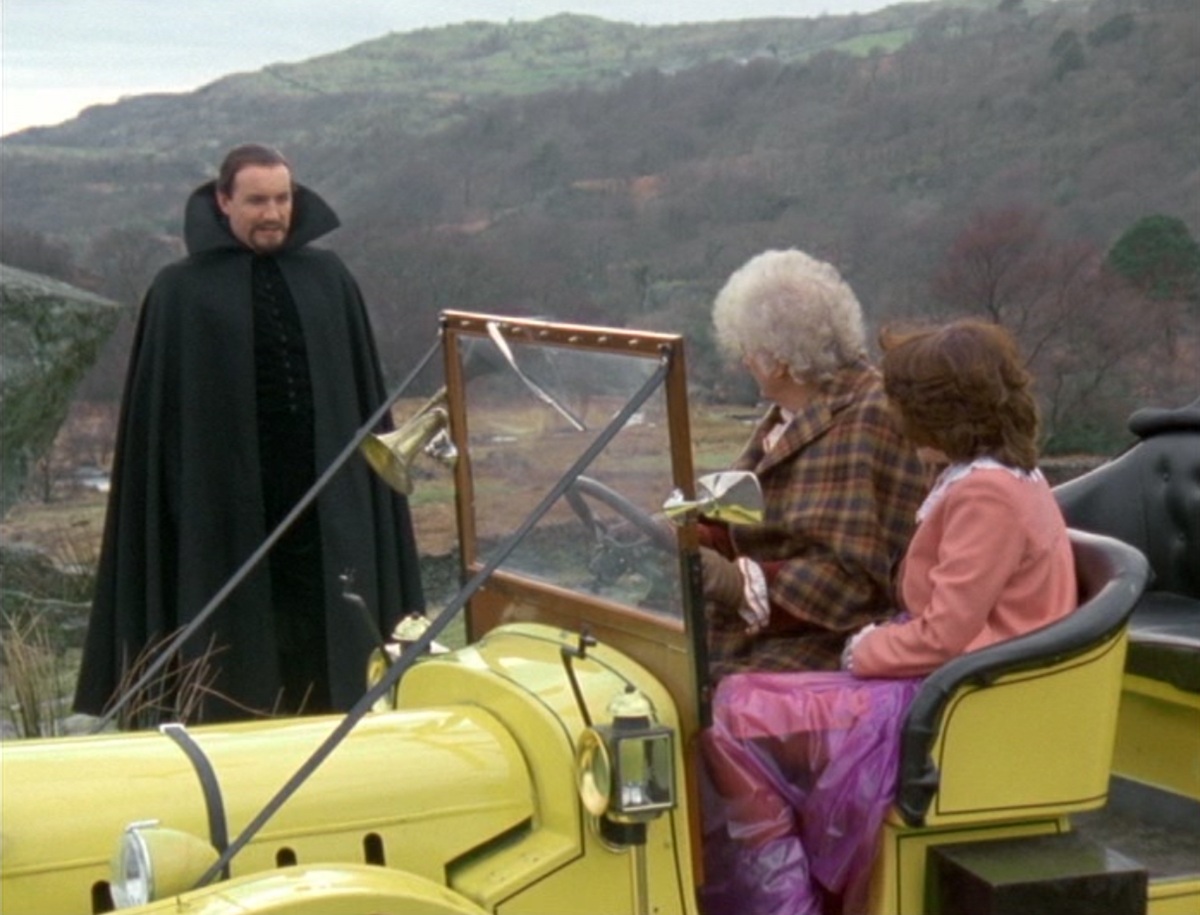
Reigning between 870 and 849 BC and sandwiched between Asa and Jehoram as twentieth in the Biblical line of begats as Richard Herring could doubtless tell you without even having to count them up – although only according Matthew; Luke evidently did not consider him ‘canon’ – Jehoshaphat ‘The Strong King’ is widely credited with bringing prosperity and stability to the Kingdom of Judah, notably fending off and brokering accord with a confederacy led by the Moabites – referred to in some translations as ‘The Levine’ – and subsequently succeeding in encouraging them to assist with his charitable missions to afflicted neighbouring lands. His greatest historical legacy, however, appears to have been lending his name to a widely-deployed exclamation of surprise, with or without an optional adjoining ‘Jumping’. It is the latter variant that the Third Doctor elects to adopt on recognising the long since regenerated The Master, presumably recognising him as The Master and not as Smarmy Emilus from The Pallisers, complete with solemnly intoned ‘an old new enemy I’ve already not met yet’ explanation to his kagouled passenger in a random and superfluous outbreak of florid over-enunciation that found itself leading to widespread nomenclatular confusion amongst the sort of fans who also assume that Monty Python are making stock comedy reference to ‘pork lunch and meat’. While they are still probably otherwise engaged debating whether this is in fact The Master’s ‘real’ name in some godforsaken corner of Gallifrey Base even now, it is worth taking this opportunity to highlight how even in spite of his persistent overuse for no good reason elsewhere at the time, Anthony Ainley works incredibly well here. With no recourse to surprise or disguise, The Master is introduced at the outset as a sort of reluctantly engaged villain who isn’t the actual actual villain, and he is visibly in his element, skipping across the entire otherwise gravitas-fuelled special with the glee of a panto villain and the ease of, well, Pi. Ironically, however, he would not get to share any scenes with his actual first screen Doctor…
Shadas Go So Long Before My Eyes
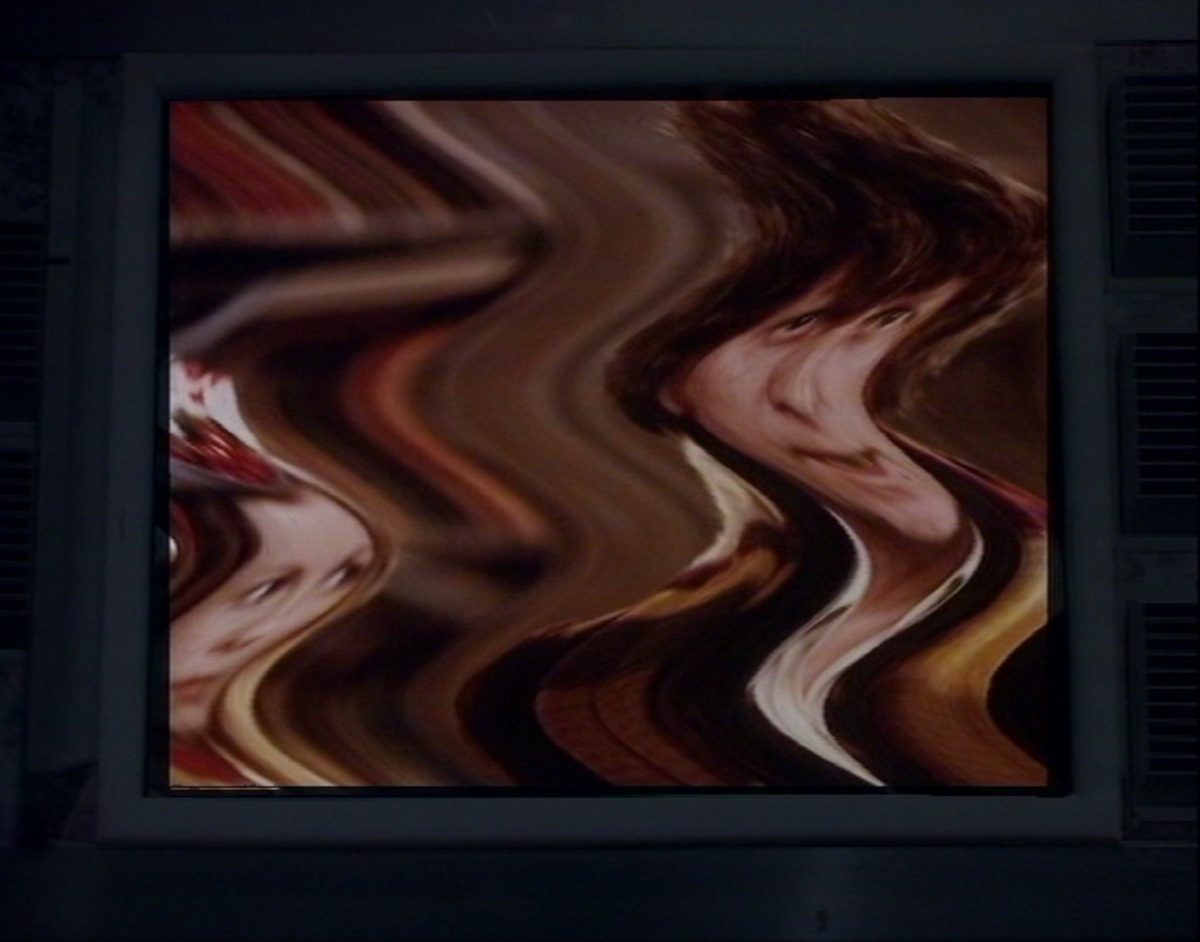
If one notion hangs more knowing resigned laugh-inducingly heavily over the long history of Doctor Who than ‘Because Jon Pertwee’, then it’s ‘Because Tom Baker’. An actor who had done more or less everything in life entirely on his own terms pretty much since early childhood, a self-evident truth borne out everywhere from his riveting autobiography Who On Earth Is Tom Baker? to reducing Sid James to scarcely concealed helpless laughter with a boggle eyed stare-accompanied two-line sitcom walk-on in his earliest surviving television appearance, Tom Baker’s charismatic yet overwhelming wilfulness – which cannot even really be characterised as ‘stubbornness’ as that would necessitate an actual acknowledgement and awareness of the fact that there was indeed anything to react stubbornly against in the first place – has been a simultaneous source of delight and exasperation in equal measure to anyone in any way connected with Doctor Who, from the BBC ‘Top Brass’ all the way down to viewers who didn’t actually watch it but kept going on about megagalactic scarves or whatever it was regardless anyway ever since he first put on that broad-brimmed floppy felt hat. Tom Baker had of course left Doctor Who in 1980 – and there’s more about that tumultuous decision and the extent to which he himself wasn’t directly actively involved in it here – and in the intervening years he had pursued something of an eccentric and uncertain post-Meglos career direction to say the least, so when that cautious enquiry came through on that weirdly too white BBC paper with that weirdly pale blue rendition of the ‘neon’ logo on the letterhead, his corresponding degree of initial caution is not difficult to understand in context. Jon Pertwee and Patrick Troughton, of course, more or less said yes straight away; contingent, that was, on Troughton’s commitments to Foxy Lady, an ITV sitcom attempting to jump on the ‘historical sitcom’ bandwagon that television companies had unilaterally initiated in the wake of the success of Hi-De-Hi! despite no viewers actually asking for one with the sixties-set tales of Diane Keen’s attempts to make her name as a newspaper reporter, about which the only thing that anyone remembers apart from it using Ain’t She Sweet as the theme music was a scene where a cow mooed at her and she replied “same to you with knobs on”, a gag that was later bizarrely reused in its entirety in Flying Lady, an albeit this time Troughton-deficient ITV sitcom attempting to jump on the ‘historical sitcom’ bandwagon that television companies had unilaterally initiated in the wake of the success of Hi-De-Hi! despite no viewers actually asking for one with the sixties-set tales of Frank Windsor’s attempts to make his name as a chauffeur. It appears that he may have kept up a vague expression of half-interest until as late as 29th December 1982, with scripting well underway and filming due to begin in March in, of course, The Eye Of Orion. In fairness, he did visit John Nathan-Turner in person to admit that he could not quite face returning while he was still wrestling with the emotional implications of leaving, which again is understandable but you do have to weigh it against how much fun Pertwee – whom Baker had long professed to be a great admirer of – would have made it, how far a freshly Foxy Lady-circumvented Troughton in particular would have gone to put him at ease, and perhaps more contentiously how much Terrance Dicks would have arranged the original version of the script around his Doctor. While it cannot exactly have been a lightly taken decision, on this occasion it is only fair to speak up for the hapless viewers who will neither have known nor understood about any of this and inevitably and not unreasonably felt cheated of both a significant proportion of anniversary spectacle and indeed of any potential scene where Tom Baker came face to face with Richard Hurndall. In case you were wondering, incidentally, the other roles he was quite happy to take on during his non-participation in The Five Doctors included lead roles in The Passionate Pilgrim and the BBC Sunday Classics adaptation of The Hound Of The Baskervilles, as well as a guest appearance in an episode of Jemima Shore Investigates, all of which are about as far removed from association with the persona of The Doctor as Matt Smith saying “I am The Doctor, Pond!” whilst wearing fifty nine fezes all at once. All was not lost, however, and it was all thanks to a story that itself was, well, lost. Evidently still attached to the unfinished industrial action-clobbered Douglas Adams-scripted Dirk Gently-‘inspiring’ Cambridge-set abandoned series-closer – and you can find the full story of exactly what happened and what didn’t and why here -Tom Baker suggested covering for his absence by repurposing footage from Shada – an idea that the ever-opportunistic JNT, aware that he had a two thirds-complete story sitting around gathering dust, had already scribbled in the margin himself – and so it was that entirely unwitting viewers quite probably including the overwhelming majority of fans got to see The Doctor and Romana punting on the Cam and trading witticisms about having met Isaac Newton before that triangle that didn’t even look as good as the completely absent effects from the raw Shada footage descended just as The Doctor lost his footing, only for the two of them to show up on the unseen gloved miscreant’s monitor as a still from Shada distorting at the upper portion like a fifteenth generation VHS copy of the Shada footage, trapped in what fandom apparently unilaterally decided was a Time ‘Eddy’. Later, when everyone is being returned to their appropriate time streams, we get a bewilderingly context-free shot of a prone Tom Baker in a car park being hastened into the TARDIS by Lalla Ward and dematerialising with his scarf still sticking out of the doors, doubtless to the delight of those chortling masses and their one joke that isn’t actually a joke. This was, it has to be conceded, a more than fair compromise. Less so, however, was Baker promising to turn up to the Doctor-assembling press photocall on 15th March and then not turning up, occasioning JNT to press Madame Tussauds’ waxwork rendering of the Fourth Doctor into awkwardly-armed service. Unusually, Peter Davison has been uncharacteristically magnanimous and tactful about this ludicrous incident, and how much would we all love to know how he genuinely reacted on the day. Speaking of whom…
“After All, That’s How It All Started…”
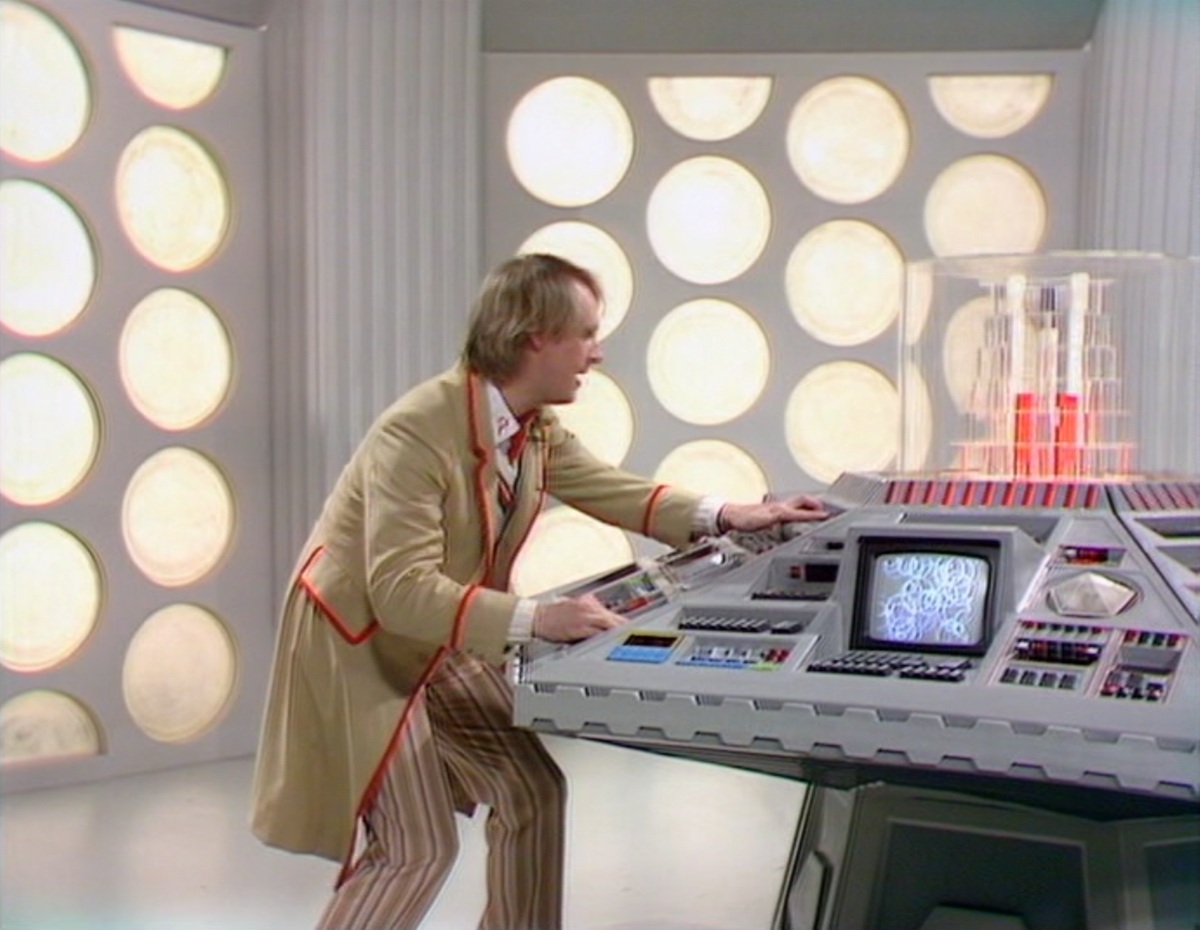
In what must surely be the definitive credit to Terrance Dicks’ skill as a storyteller – although in fairness we could have probably done with a few less shots of the tower exterior accompanied by that sort of Radiophonic horn thing that sounds like a cross between Jon Bernthal doing ’emotional anguish’ and Tidyup off Stoppit And Tidyup – the assorted parties converge on Rassilon’s Tower variously via above, between, below, taking off in the TARDIS just in time after Susan had to stay behind due to twisting her ankle and Turlough had to stay behind due to there not really being anything much for him to do and the Cybermen started very noisily constructing a ‘bomb’ apparently housed in one of those plastic cases that geography teachers kept ‘outward bound’ equipment in with the equally apparent intention of blowing off the unblowoffable TARDIS doors, doing some wordy exposition with the Time Lords and some of those sugary wafer roll things you get in posh restaurants that burst into flames before spotting a painting of someone playing a harp and somehow working out this means you need to pick out the series’ theme tune in order to gain access to the miscreant’s hideout, and not at all thanks to a Time ‘Eddy’, where the assorted companions trade introductions, the assembled Doctors ridicule each other’s dress sense and The Master attempts to leverage the situation to his own personal advantage despite not actually knowing what’s going on, and the treacherous Lord President Borusa reveals he has used the Doctors to secure his safe passage to demand immortality from Rassilon, which he is duly granted in the form of what appears to be a limited collector’s commemorative paperweight of that episode of The Ghosts Of Motley Hall where a documentary maker got an actor to pose as a fake Bodkin called Boddykins. The First Doctor gets to enjoy a good chuckle to himself on account of having already deduced the outcome from a nearby inscripted cracker joke, and they are all sent back to their correct points in time and space complete with a new twist on The Three Doctors‘ admonishment of ‘a dandy and a clown’, leaving the Fifth Doctor, Tegan and Turlough to hightail it from the former’s newly enforced responsibilities as the incumbent Lord President, wryly quipping “after all, that’s how it all started” directly to the audience, and The Five Doctors takes its bows with a smashing together of the Delia Derbyshire and Peter Howell arrangements of the theme music which must surely have had several million cats swivelling their ears in disgruntlement. In gleeful defiance of some seemingly fairly insurmountable odds, The Five Doctors succeeded in delivering a suitably celebratory yet entirely open to all anniversary special that tipped its hat to everything that everyone had loved about Doctor Who from that very first outbreak of ‘Dalekmania’ onwards and that few – even the megagalactic scarf-botherers with the greatest capacity for laughing at their own jokes – can have walked away from disappointed. The problem was, though, that they did walk away. As so many long-running franchises, and indeed long-running franchises on the BBC in particular (and there’s more about another show which enjoyed, if that’s the right word, a remarkably similar trajectory only a couple of years later here), would find out to their peril, having a big huge anniversary bash that everyone was invited to was no guarantee that they would want you to still be hanging around afterwards, and when Doctor Who returned little more than a month later, it seemed that increasingly few people wanted to know. Though even that couldn’t keep The Five Doctors off our screens…
“Fear Itself Is Largely An Illusion!”
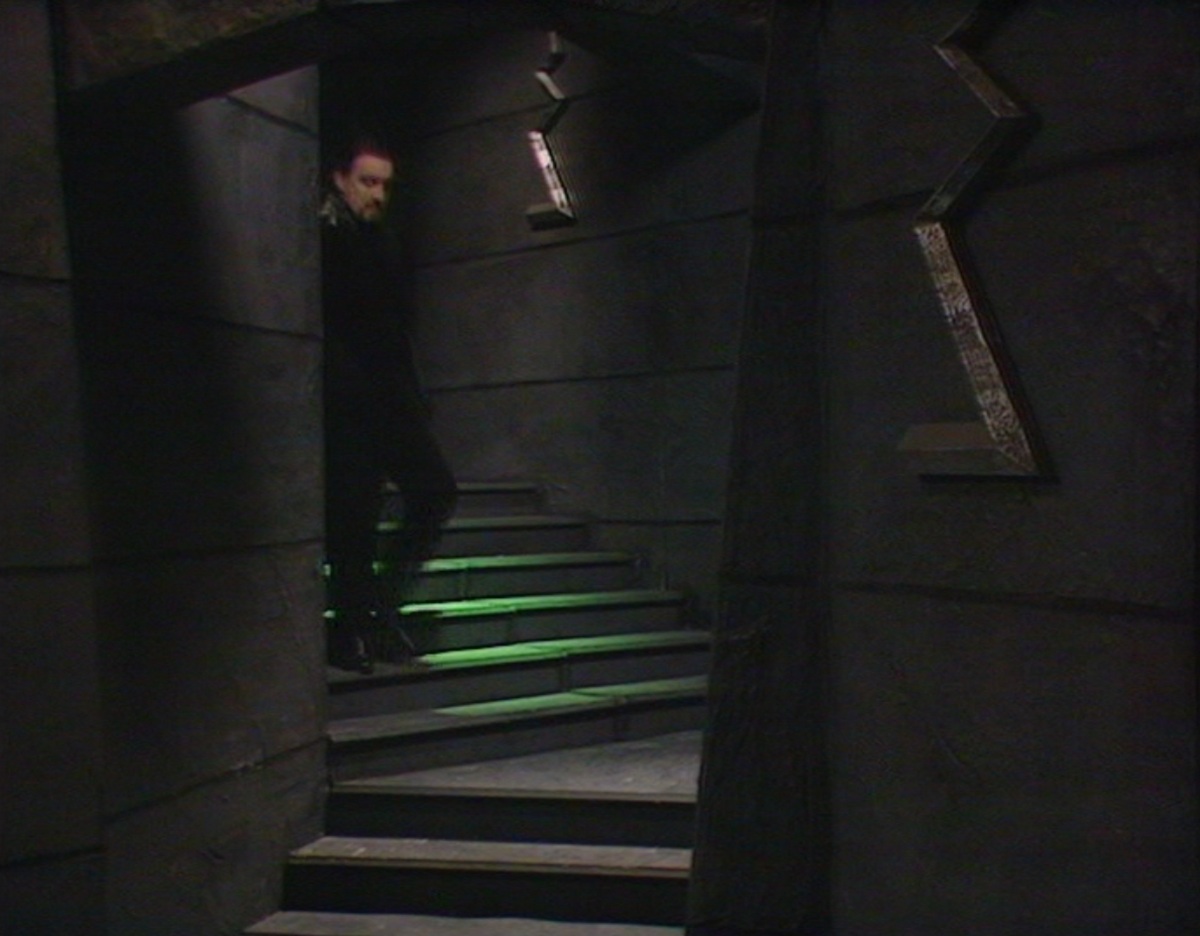
If you were the sort of viewer who considered programmes that had no call to be there but the art lay in the fact that they were to be exquisite, then the BBC’s summer schedules in the eighties were an absolute Big Feast of the mischeduled and the mundane. With the days when Plastic Bertrand appearing on Summertime Special with some balloons falling on him could pull in millions upon millions of holidaymaking viewers long behind them and the rise of international package holidays combined with sporadic threats towards something at least theoretically approaching warm weather depleting their audience base for months on end, they were left with scant option but to pad out their evenings with easily available and decidedly non-seasonally adjacent programming that they could slap a degree of spurious slapdash beachfront razzle-dazzle onto, with continuity announcers gamely attempting to pass off a week of repeats of already purchased Planet Of The Apes films as ‘our Summer Apes season continues…’ a thrillingly absurd regular sight. For a couple of years in the early eighties, in an indication of just how high its default stock was at that point and how sharply it would soon fall, they even tried leveraging Doctor Who into those interminable late afternoons when nobody much was really watching, and between 14th and 17th August 1984, following on from repeats of The King’s Demons and The Awakening they gave an encore outing to The Five Doctors. Split, as David Tennant would later excitedly recount on his guest commentary for the DVD release of the original special, into four distinct parts. In order to facilitate this, they needed to find appropriate cliffhanger points at a suitable duration in each exciting instalment, eventually alighting on in order Sarah Jane sort of deliberately falling over an almost level hill but then crucially landing entirely safely, Turlough and Susan furrowing their brows at some Cybermen untangling a garden hose, and The Master stopping in the middle of the stairs whilst scampering in pursuit of the First Doctor and Tegan. Quite how thrilling this would have proved to Tangle Twister-sated casual audiences is open to question but for all its lack of cliffhanging lustre it was very evidently sufficient to keep the young David Tennant watching, and indeed more or less anyone else who happened to be indoors and tuned in to BBC1, as even divided up into a preposterous episodic format, and regardless of what the not remotely distant future may have held, The Five Doctors was hugely enjoyable celebratory fun whichever way you in this instance literally sliced it. And the fun didn’t even stop there…
Light Cone Begins To Tip
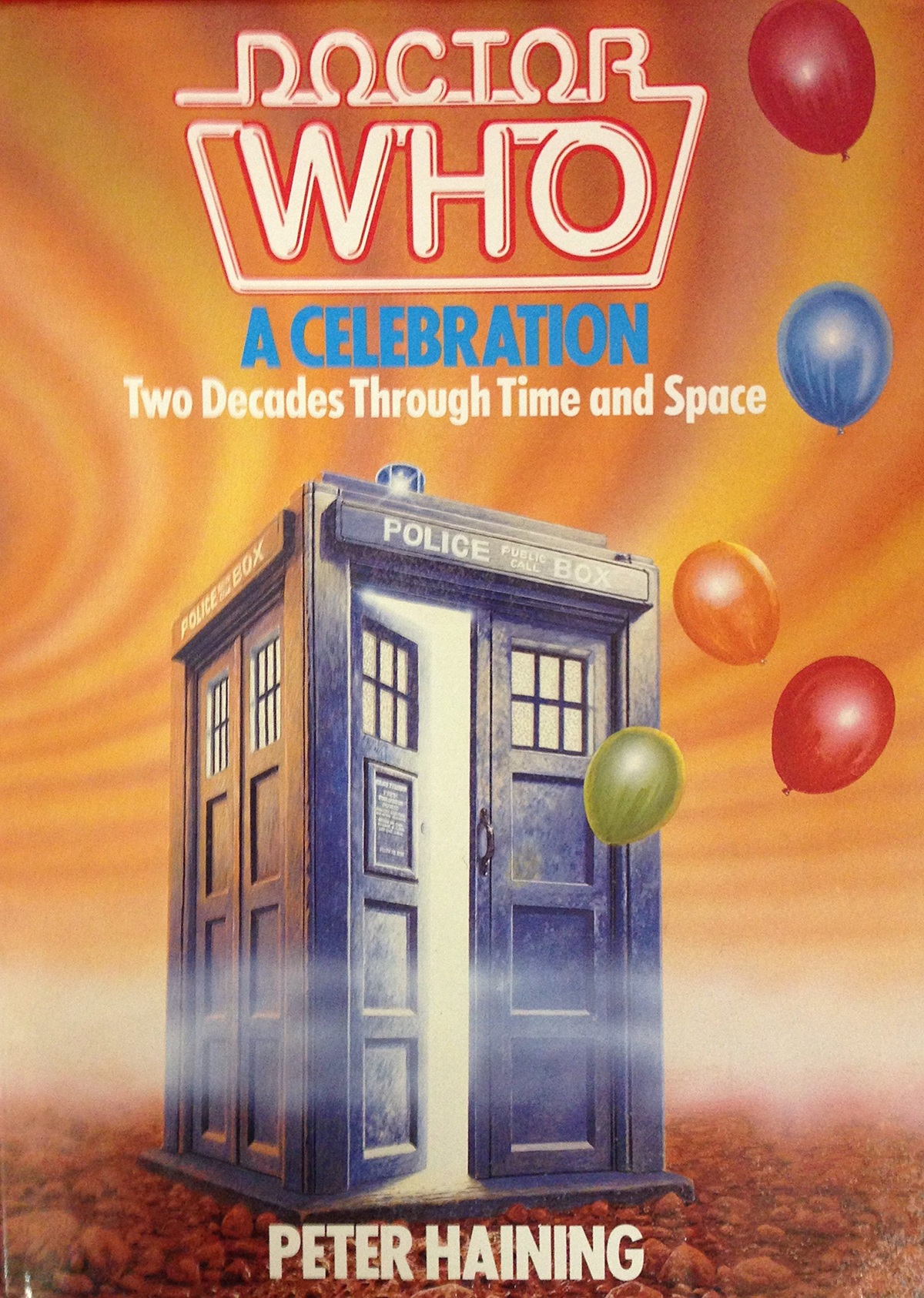
Although the meagre tally of putative Christmas List options that greeted Doctor Who‘s twentieth anniversary would probably look risible next to the avalanche of Moxx Of Balhoon tie and pen sets that flood your Amazon suggestions any time there is the vaguest hint of proximity to an important landmark anniversary like, say, the fourteenth Whit weekend since Sergeant Benton was mentioned in a Big Finish audio, it is also more than fair to say that at least by the standards of the day, those concerned really did pull out at least a sizeable majority of the stops. Despite the cover’s unpromising promise of ‘your full colour pull-out poster of Doctor Who and the monsters’, ‘a chilling, new illustrated adventure’ and ‘Doctor Who’s twenty year journey through eternity’ – although sadly there is no record of who won ‘a day out with Doctor Who’ – the Radio Times Doctor Who 20th Anniversary Special was in fact cover-splittingly full of decent and informative content, and evidently so well read that it is difficult to find an unscuffed copy second hand these days. Despite a reliance by tape locatability and licensability-related necessity on soundtracks by in-house composers for stories from The Leisure Hive onwards, Doctor Who – The Music – which, incidentally, you can find much more on the story behind here – nonetheless found room for both on-screen arrangements of the theme music and Malcolm Clarke’s rescued-from-a-Radiophonic-Workshop-cupboard arrangement of drills duetting with the middle eight of In Yer Face by 808 State that had contentiously accompanied The Sea Devils back in 1972 – again, there’s more about that here – along with more contemporary and conveniently remixable into stereo soundtrack offerings including Nyssa’s Theme, Kassia’s Wedding Music, TSS Machine Attached, Ergon Threat and many other similarly snappily-titled toe-tappers, not all of which sounded like the theme from Pob’s Programme with someone failing to whistle properly behind it. Towering over all of these however, albeit by a couple of centimetres, was an official authorised hardback dustjacketed book saluting ‘Two Decades In Time And Space’, Doctor Who – A Celebration by Peter Haining. With a cover depicting multicoloured balloons indeterminately drifting either in or out of the TARDIS, the weighty tome struck a creditable balance between comprehensive fan-pleasing factual content and somewhat more Family Circle-adjacent nostalgic rambles for the benefit of those given to purchasing ‘coffee table’ books, and found room for reminiscences from all of the Doctors including Peter Cushing and Richard Hurndall, personal perspectives from Verity Lambert, Terrance Dicks, JNT and – with ‘the reason I’m writin’…’, Katy’s ‘fella’ and ‘Holy Flaming Cow!’ all present and you-had-to-be-there correct – Barry Letts, profiles of K9, The Master, The Time Lords and the ‘baddies’, a load of incomprehensible babble about light cones purporting to explain how to build your own TARDIS, and right at the end, Jeremy Bentham’s massive cataloguing every transmitted and indeed untransmitted story, and even after that a sobering list of the meagre tally of pre-1975 episodes that still existed in some form in the BBC’s archives; at the time of writing, thirty nine of the missing ones have been located and a further forty five restored to colour via various means. Released in late September 1983, Doctor Who – A Celebration inevitably found its way into several million pillowcases come the morning of 25th December, and despite its size and weight was studiously lugged around over Christmas week like some indispensable sacred text where you had to flick back and forth about eighteen times before remembering whereabouts that big massive photo from The Tomb Of The Cybermen actually was. Within a couple of years, however, cracks were beginning to appear in the reputation of the in itself fairly crack-withstandable reference work. Peter Haining admittedly did not help his cause by churning out yearly identikit hardbacks founded on increasingly flimsy premises including glorified fan art scrapbook The Key To Time and the inexcusably vacuous The Time-Travellers’ Guide, which somehow managed to fill two hundred and seventy two pages with absolutely nothing whatsoever – although in sharp contrast words against his 1988 return to form 25 Glorious Years, as was afforded a due lengthier celebration here, will not be countenanced – but the ensuing denunciation of the veteran and otherwise fairly well respected assembler of coffee table books as a shameless charlatan huckster making money out of Doctor Who by expecting people to pay for his books was a bit much. Worse still, a new wave of ‘superfans’ and ‘historians’ began to pour scorn on poor old Jeremy Bentham’s efforts, wasting no opportunity to chastise him for incorporating his opinions expressed as his opinions in a gigantic section of a gigantic book founded on his opinions as if they themselves were not dispensing ‘opinions’ left, right and centre and to all and sundry even in an empty room on the volcanic precipice of Bouvetøya. Since then, if anything, Doctor Who -A Celebration‘s reputation has only declined further. It is, according to the sort of tutting gentlemen who Copydex themselves to the perimeters of Doctor Who forums under pseudonymous handles, furiously berating and upbraiding anyone who has had the temerity to be officially published in a book or magazine or contribute to a home media documentary or extra over purported ‘inaccuracies’ that make less sense the more that you read them, pop up like clockwork the second that anyone has gone in print and on the record having had to make educated guesswork about or just plain not mention an elusive detail that they have repeatedly asked about on that very same forum for months on end to a torrent of silence to scoff at them for either making educating guesswork about or just plain not mentioning the detail that they suddenly reveal from nowhere that they purport to know, and harangue the BBC Written Archives staff with demands to access the production file for The Nightmare Of Eden for the eighty four billionth time under the astonishing delusion that they will somehow be able to deduce something from it that Andrew Pixley hasn’t, a woefully unreliable and pointless cash-in that the people in, cuh, the past had the temerity to try to infer was in any way any good. Well, enough of that nonsense frankly. Yes, there has been a lot of Bellal-branded mineral water under the informational bridge since then and many other writers have built and expanded on what we knew back then in all manner of increasingly interesting ways – and many many more than that who haven’t – but to a certain generation, Doctor Who – A Celebration was the Star Wars VHS triple-pack box set, The Beatles’ Red and Blue albums, Giant-Size X-Men #1 and Paperweight all rolled into one, and if you are unable or unwilling to accept and acknowledge this then frankly you are probably not liking Doctor Who for the right reasons. Verity Lambert signed off her contribution to Doctor Who – A Celebration by reflecting that “I can honestly say that Doctor Who will always have a corner of my heart”. There are many, many Doctor Who fans who could say exactly the same of this book.
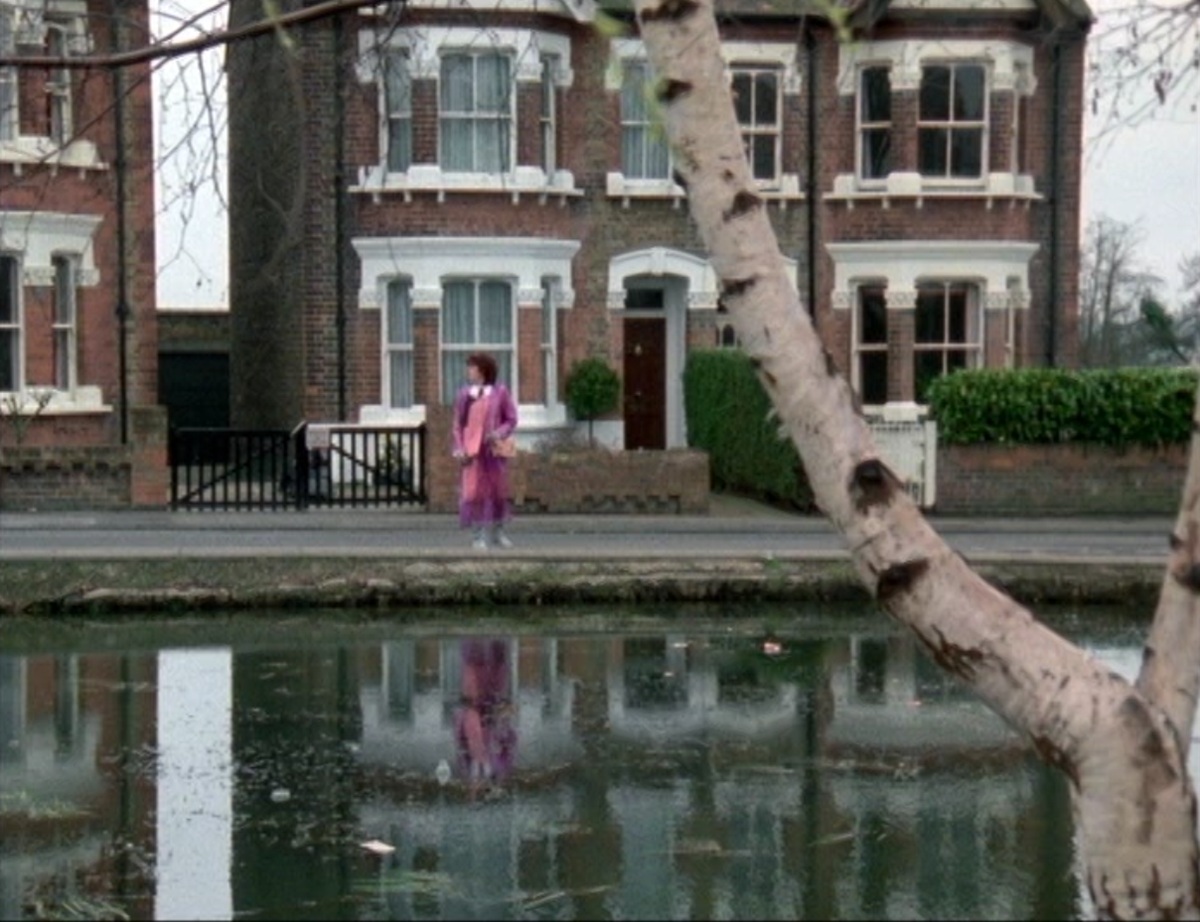
Anyway join us again next time for ‘Mal Evans…?’, an abundance of fiddling small change and what happens when – aaaaaaah – Peri looks at the Clouds Across The Moon…
Buy A Book!
There’s lots more about the early eighties version of the Doctor Who theme – and plenty more about tons of other of Doctor Who-related releases besides – in Top Of The Box, the story behind every single released by BBC Records And Tapes. Top Of The Box is available in paperback here or from the Kindle Store here.
Alternately, if you’re just feeling generous, you can buy me a coffee here. There was probably some next to that pineapple in a giant cocktail tumbler after all.
Further Reading
You can find more about what exactly went on and didn’t in the twentieth anniversary run of Doctor Who itself It’s Still A Police Box, Why Hasn’t It Changed? Part Twenty Two – When You Feel Your Body Shake, Snakedance Snakedance, Then You Know You’ve Got The Break here.
Further Listening
Regardless of whether you see fit to listen to it above, between or below, you can find a look at some long-forgotten Doctor Who-associated spin-off side projects and oddities in Doctor Who And The Looks Unfamiliar here.
© Tim Worthington.
Please don’t copy this only with more italics and exclamation marks.

