Those with memories slightly longer than the length of the Eternals’ ion-powered interstellar sailing race may well recall – and if they don’t, then they can catch up on it here – that our look at Peter Davison’s first run in the title role of Doctor Who concluded with an assertion that no matter how far Concorde-skewed prehistoric gibberish Time-Flight may have lost its direction in pretty much every direction, he at least was giving it his all, gamely ploughing ahead with whatever he had been handed to work with and doing his utmost to lift proceedings via sheer force of will alone. We can only speculate on how delighted he was to gradually discover that when the series returned the following year, he would have a lot more of this sort of heavy lifting to do.
Whichever angle you approach it from, series twenty of Doctor Who is a mess. Incoherent, inconsistent and hazardously certain of its own adequacy, it veered perilously close to everything that John Nathan-Turner had determined to do away with when he took over as producer only three years previously, swamping decent scripts, casts and directors with directionless mediocrity and a total lack of consistency and adherence to any one decision. The series opens with what appears to be an attempt to address the bewilderingly overstated concerns about the ‘Crowded’ TARDIS, with just The Doctor and Nyssa remaining on board following the conclusion of Time-Flight, but Tegan was almost immediately drafted back in, closely followed by Turlough – who came complete with a ‘story arc’ that proved more ‘crowding’ than poor old Adric ever had – and then right at the end… well, let’s save that until we can really go to town on it. As this was ostensibly the twentieth anniversary series, there was a half-invested imperative of some vague description to include something ‘old’ in every story; aside from an in fairness welcome return for The Brigadier – albeit as a last-minute replacement for Ian Chesterton when William Russell proved unavailable, with Harry Sullivan also considered in the interim as well – in actuality this amounted to a couple of ‘big bads’ that only a fan who had watched no other television programmes aside from Doctor Who would nominate, a malevolent entity whose debut appearance had taken place a whole eleven months previously, and of course Anthony Ainley in a disguise that wasn’t with possibly the most smug and irritating ‘witty’ anagrammatical credit yet, with a planned appearance by the Daleks ultimately shelved due to industrial action. Even the absence of the Sonic Screwdriver, destroyed with such self-important showboatingly clunky glee in the previous run of episodes, is ruefully noted by Nyssa. There is not a story amongst them that isn’t at the very least likeable – and two in particular are very good indeed – but nobody seems to have the faintest idea of what they are actually trying to do from one minute to the next. When your notes include the exasperated query ‘are they all fucking stupid?’ and you cannot even work out which story this related to and why, it is safe to say that matters were very much not proceeding on an even keel. Even with all those starbound mariners knocking around.
As if to somehow make matters actively worse, episode two of Enlightenment was followed by a continuity announcement inviting viewers to enquire about a huge celebration of twenty years of Doctor Who scheduled to be held at Longleat later that year. Sense would be hastily seen and an enormous stop-pulling-out special would be made and transmitted to a rapturous reception, but we are getting a little ahead of ourselves there. For the moment, it may have been difficult for some viewers – and of course the inevitable critics still raising a toast to themselves for making yet another joke about the ‘Wet Vet’ – to comprehend how the current run of episodes was could be considered any way celebratory at all, or even how on this basis Doctor Who had managed to stagger on across two entire decades. Especially considering the opening story was a self-consciously lacklustre reflection of the distinctly more jubilant tenth anniversary story…
“I Suppose It’s Another Quotation From Derek Bowie, Is It?”
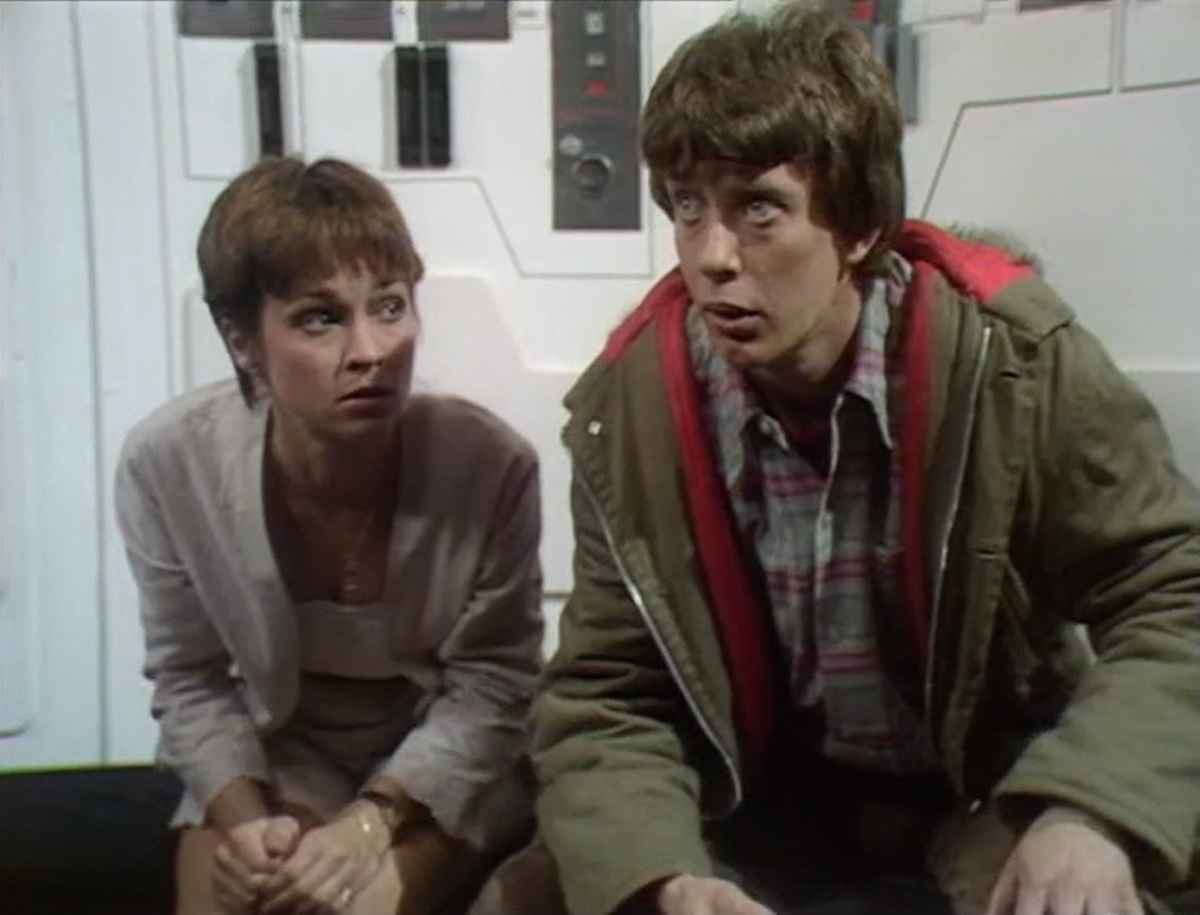
Repeated as recently as November 1981, The Three Doctors – which you can find out much more about here – had celebrated Doctor Who‘s tenth anniversary in what few could dispute was fine style. It may have, as indeed do the majority of Doctor Who stories, its ‘issues’ – although please do pipe down with that desperately unoriginal observation about Omega’s throne room not living up to the mental image of it that you had built up from the description in the subsequent novelisation, as in all honesty that is nobody’s fault but your own – but it succeeded in striking just the right degree of excitement, wit and at worst tolerable visual effects, and boasted a genuinely imposing arch-villain in Omega, the betrayed Time Lord pioneer seeking retribution from his empire of anti-matter while the first three Doctors traded insults in the hope of figuring out how to stop him without abandoning all notions of empathy. From that perspective, it probably made at least something approaching sense to bring Omega back to mark the commencement of Doctor Who‘s twentieth anniversary run a little over a year later, but unfortunately Arc Of Infinity lacked the high-spirited celebratory zinger-trading and brash high adventure of The Three Doctors, taking the form instead of a fairly uneventful story about Omega seeking retribution for his previous failure to seek retribution only with the Galactus-emulating majesty of his previous mug-deficiency covering mask replaced by what appeared to be Sly The Cat from Sally And Jake scoffing a walnut the size of his own head, in cahoots with a rogue treacherous Time Lord who spent much of their co-conspiratorial time moving around what appear to be anti-matter coconut squares and his Professor Yaffle made of Christmas Dinner remnants sidekick The Ergon, culminating in an uneventful chase around Amsterdam after Omega’s attempts to return himself to an anti-anti-matter state bearing a pointlessly inconvenient resemblance to The Doctor cause him to start structurally collapsing into a sort of even more decaying Steve Bannon and gurning at locals who gaze at him sort of pityingly but with a distinct undertone suggesting that they would far rather be breaking into that Hi-Lili Hi-Lo thing and, well, that’s about it really. Apart from a frankly largely incomprehensible subplot about Tegan’s previously unmentioned cousin Colin – who has evidently worked through any lingering trauma regarding Aunt Vanessa exceptionally quickly – and his associate Robin, who are hitchhiking around Europe in parkas to designate that they are ‘youths’ and become embroiled with Omega’s machinations for no evidently clear reason. Colin at least has some surface resemblance to contemporary youth culture in that he is sporting one of those indeterminate ‘jazz’-themed t-shirts referencing no actual musician, album or venue in particular that were all the rage as the mid-eighties loomed. Robin, on the other hand, both looks and sounds so uncannily similar to one of Hugh Laurie’s ‘disaffected youth’ characters that it is not only difficult to take him seriously but also as good as impossible to avoid expecting Stephen Fry to stride into frame bellowing “ON THE STREETS WITH BIBBAH???” at any given moment. Why did anyone on the production team consider this in any way a realistic representation of anyone under the age of thirty? Well, I guess it’s just… a mystery. Although to be honest they would probably have been better advised slapping him on the cover of the accompanying tie-in novel than what did find its way onto there…
Who Designed That? The (High) Council??
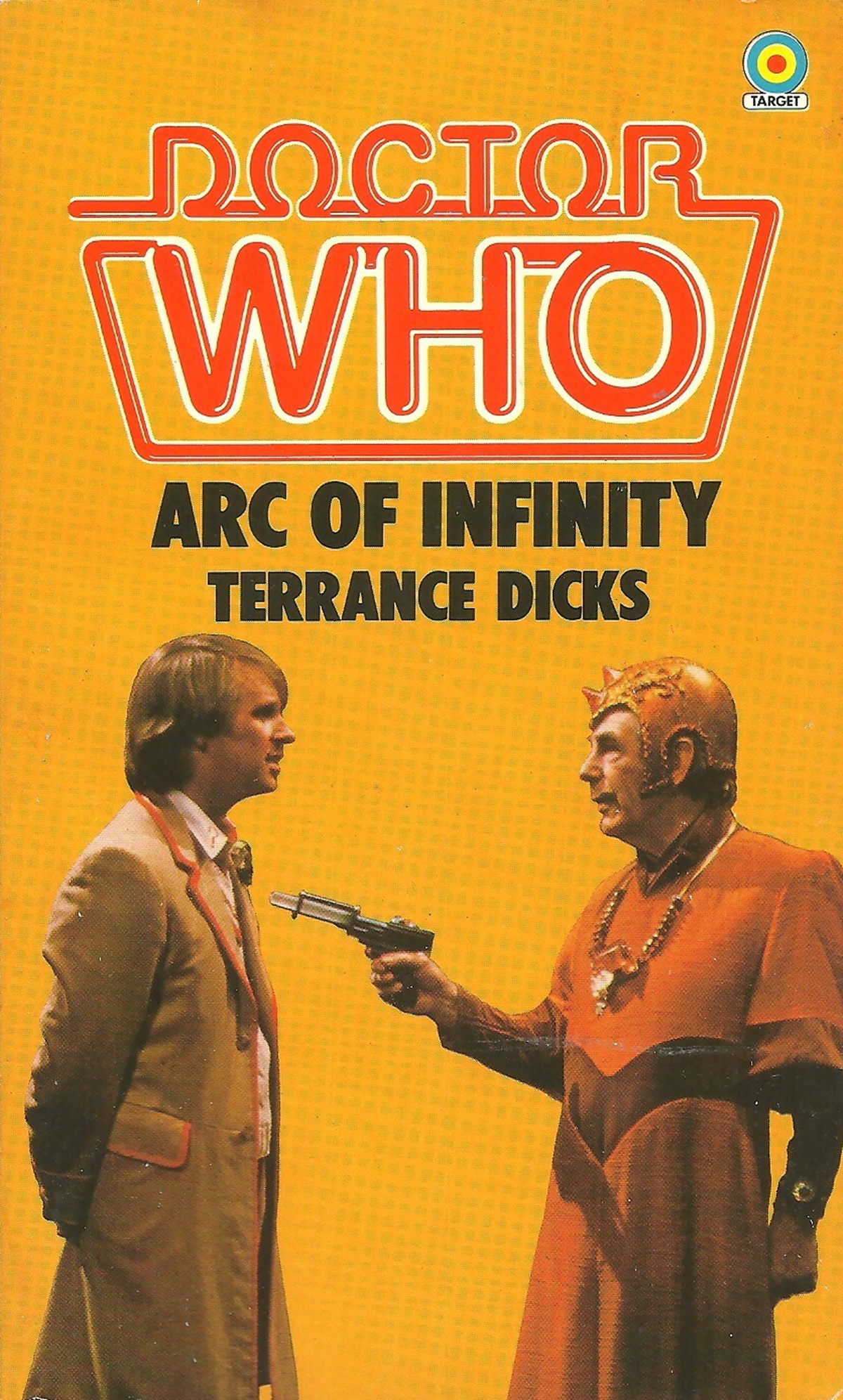
Considering that Target Books would publish more than one hundred and fifty Doctor Who-related tie-in novels, it really is genuinely impressive that – the odd dreadlocked Dalek, purple TARDIS or dinosaur going ‘KKLAK!’ (about which much more here) aside – they managed to so consistently come up with covers that were at the very least a reasonable representation of the prose-related on-screen action and very often constituted strong artwork in and of themselves. That was, however, until the arrival of Peter Davison. Notoriously difficult to draw effectively even if you were tracing publicity photos of him for an unfollowably sporadic comic strip in your Doctor Who Local Group’s newsletter, Target had originally planned to proceed with Doctor-depicting illustrated business as usual but when the commissioned cover for The Visitation arrived, despite artist David McAllister’s best efforts Peter Davison still looked like he had decided to ‘design’ his ‘own’ avatar for Outpost Gallifrey circa 2006, and a decision was taken instead to pivot towards using photographic covers which Target admirably attempted to embrace as an opportunity for a fresh direction. Some of the earlier examples of this new photorealistic approach would in fact prove quite effective, but before long they had become almost uniformly slapdash and uninspiring, giving notorious rise to the dramatic cover image of Mawdryn Undead capturing The Doctor looking very slightly concerned. None would quite achieve the lasting notoriety, however, of Arc Of Infinity, which set a nauseating shade of what can only be described as Parents’ Friends’ Wallpaper Orange behind images of The Doctor and Councillor Hedin seemingly cut out with blunt scissors by someone who could only dream of aspiring to the artistic highs of that bloke tracing Peter Davison. Quite how the infamously exacting John Nathan-Turner could have signed off on this at the same time as getting quite ludicrously tetchy about a perceived suggestion via some casual ad space positioning in Doctor Who Magazine that Hedin was endorsing E.T. Cola Creams is a question for which no answer could possibly suffice. Meanwhile, of course, Sparrow Books were doing just fine in juxtaposing a small photo of the artistically troublesome actor with original artwork for their recurringly Christmas Pillowcase-hogging Davison-collated unrelated short story collections Peter Davison’s Book Of Alien Planets and Peter Davison’s Book Of Alien Monsters, as opposed of course to all those non-alien ones. Not long afterwards, it was back to conveniently Davison-averting artwork all the way. Mind you, they only narrowly avoided the retrospectively awkward inconvenience of inadvertently featuring TWO shoddily-scissored Doctors on the cover…
But I Need To Hear It From A Maxil
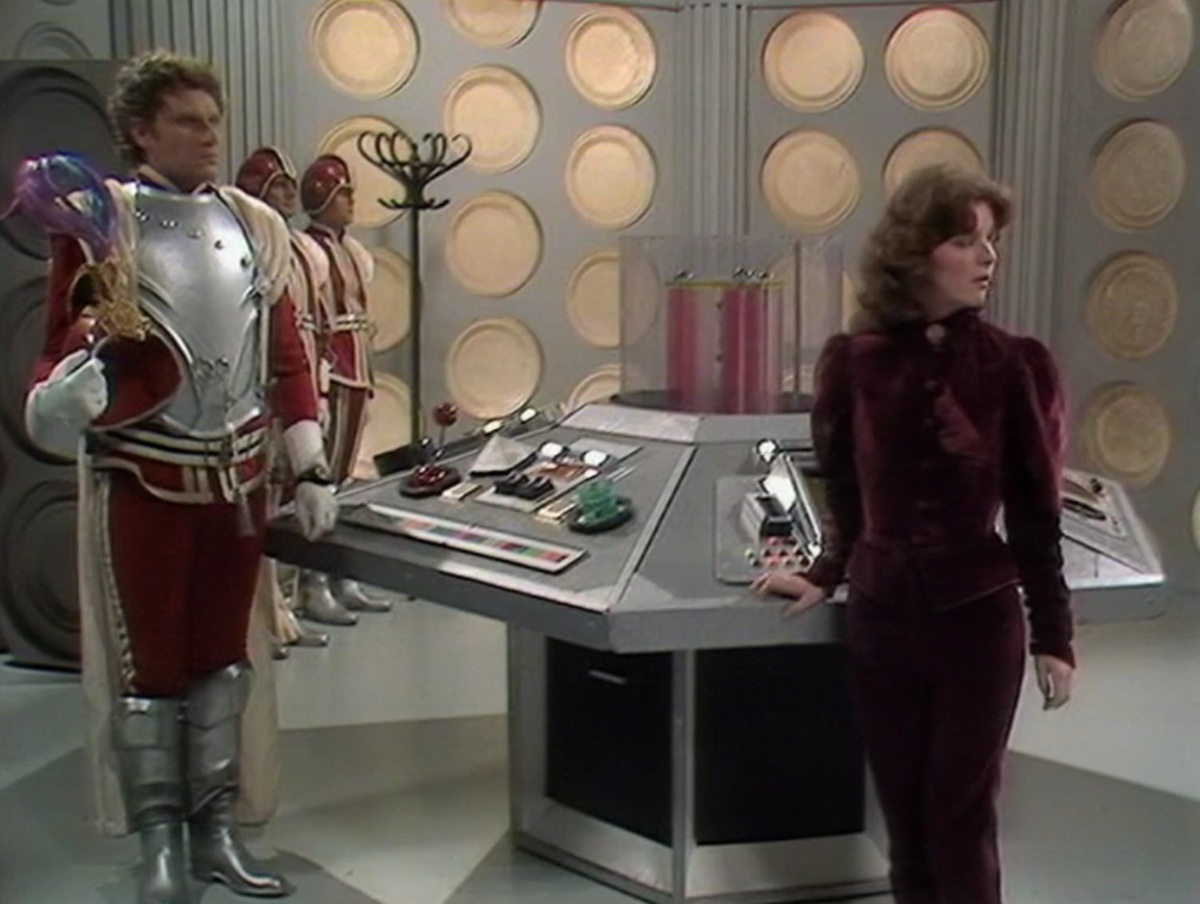
As would later routinely escape the attention of pretty much no clip show producer ever, right at the top of the guest cast list in Arc Of Infinity – a story that appears to be attracting an inverse proportion of attention here to any that has been afforded to it anywhere else and by anyone else since 1983 – is one Colin Baker. There will of course be plenty more to say about Fifth Doctor Colin Baker and all of the epsiodes in which he encountered alines in due course, but it is worth reflecting on the fact that when he was cast as Commander Maxil in what he doubtless assumed would be his lone and solitary role in Doctor Who, he was considered a major audience draw on the basis that he had previously starred as – as it is apparently a legal requirement to refer to the character as – the villainous Paul Merroney in The Brothers, a blockbusting seventies BBC boardroom drama in which, as will rapidly become apparent to anyone who actually watches it, he is not actually that ‘villainous’ in the overall tenor of proceedings. Duped into believing that The Doctor has returned to Gallifrey for the purposes of being up to no good, Maxil enjoys the dubious honour of apparently shooting The Doctor at the conclusion of episode one; a cliffhanger that is resolved, with the sort of ingenious narrative lurch that we should all of course expect from this expertly crafted story, by virtue of the fact that his blaster was only on stun after all. It might not quite be the Seventh Doctor climbing over an ice ledge for no reason, but it’s certainly, well, up there. Thankfully, and quite unlike successive failures to just assert to over-demanding brow-furrowers that sometimes the same actor will just be cast in two roles in the same series just because and they should all move on and grow up and go outside and get some fresh air, there has been no real official attempt to ‘square’ the frankly minor detail that the incoming new Doctor shared a face with another Time Lord and, astonishingly for anything to do with Arc Of Infinity, we are all the better for it. Some smartarse did of course attempt to ambush Colin Baker with it during his inaugural appearance on the Breakfast Time sofa, upon which he occasioned to afford the phoned-in query spectacularly short shrift. What was more, Colin Baker was not the only familiar face making a retrospectively unlikely appearance in this particular run of episodes – although your definition of that may depend entirely on which historical direction you are looking at it from…
Send In The Clunes (Before He Was Famous)
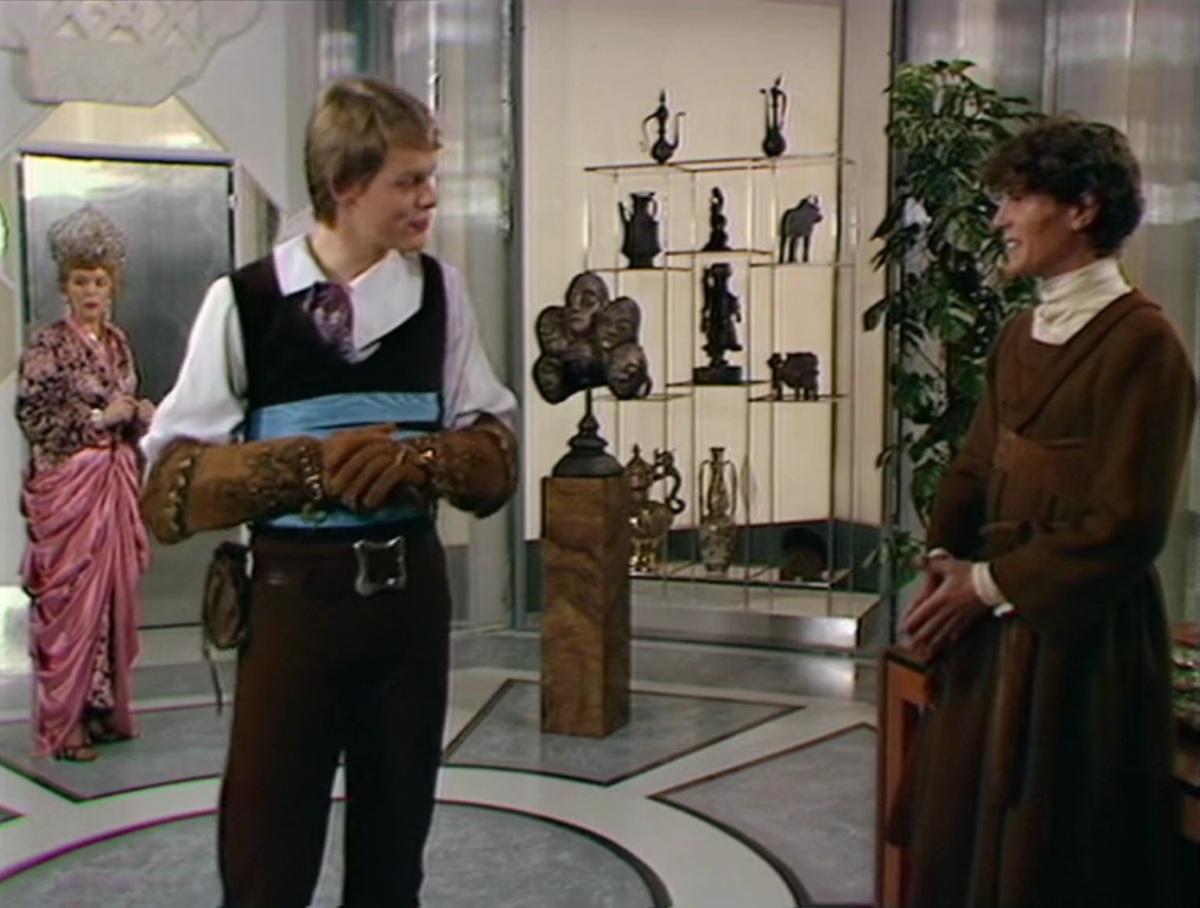
When the studio sessions for Kinda-sort-of-sequel Snakedance commenced in late March 1982, Martin Clunes only had a handful of acting credits to his name; if he had any sort of a recognisable public profile at all, outside of being the son of renowned classical actor and theatrical impresario Alec Clunes, it was probably for his appearance as a model for one of the artworks in Gilbert And George’s collection The Believing World. Shortly after Snakedance was broadcast, he was cast as Nigel Crabtree, the student son of put-upon Arthur and Beryl whose efforts to cope with their four adult children moving back in and ruining their retirement plans in the BBC1 sitcom No Place Like Home which would run to massive popularity between 1983 and 1987. Although it would take the best part a decade for the erstwhile Mara-botherer to become a certified fully-fledged star as opposed to a recognisable television personality, taking in everything from appearing as a regular supporting player in Harry Enfield’s Television Programme and co-starring with Griff Rhys Jones as two ex-servicemen dreaming of performing on BBC Radio in Demob to basically playing more or less every single one of Bertie’s double-barrelled surnamed chums in Jeeves And Wooster, before he finally hit the big time with Men Behaving Badly. Yet even with so many other alternatives to choose from, producers looking for an amusing montage of clips of famous celebrities before they were, well, famous always seem to reach directly for Snakedance, doubtless hoping to cause the audience to snort with hilarity at the sight of him looking uncannily like he is about to take his place in the line-shouting line alongside Marco, Merrick, Terry Lee, Gary Tibbs and Yours Truly. Further down the cast list, however, was Jonathon Morris as Lon, who shortly afterwards would become one of the decade’s most popular small-screen stars as Adrian, the Boswell kid who had got ‘ideas’ through reading those pesky ‘books’, in Carla Lane’s bafflingly popular patronising lachrymose excuse for a comedy painting the residents of the city she always droned on and on and on about being so proud of as divided into loveable DHSS-defrauders and unloveable people trying to prevent DHSS fraud, Bread. While Martin Clunes was still in the ascendent, it was instead Jonathon Morris looking like he had been prevailed upon to wear ‘a dress’ in a bit between the sketches on The Little And Large Show that found its way into such audience shriek-provoking clip parades. It is entirely possible that this could be taken as some sort of a meditation on the transitory nature of fame, except for the fact that Snakedance itself could be taken as some sort of a meditation on the transitory nature of, well, meditation. Oh hang on, Lucy Benjamin’s in Mawdryn Undead, isn’t she? Not entirely clear what effect this does or does not have on the equation. Anyway, a bigger and more unexpected name than either of them was flamboyantly cutting his jib elsewhere in this run of episodes…
Captain Wrack Has Strange Ideas Concerning Entertainment
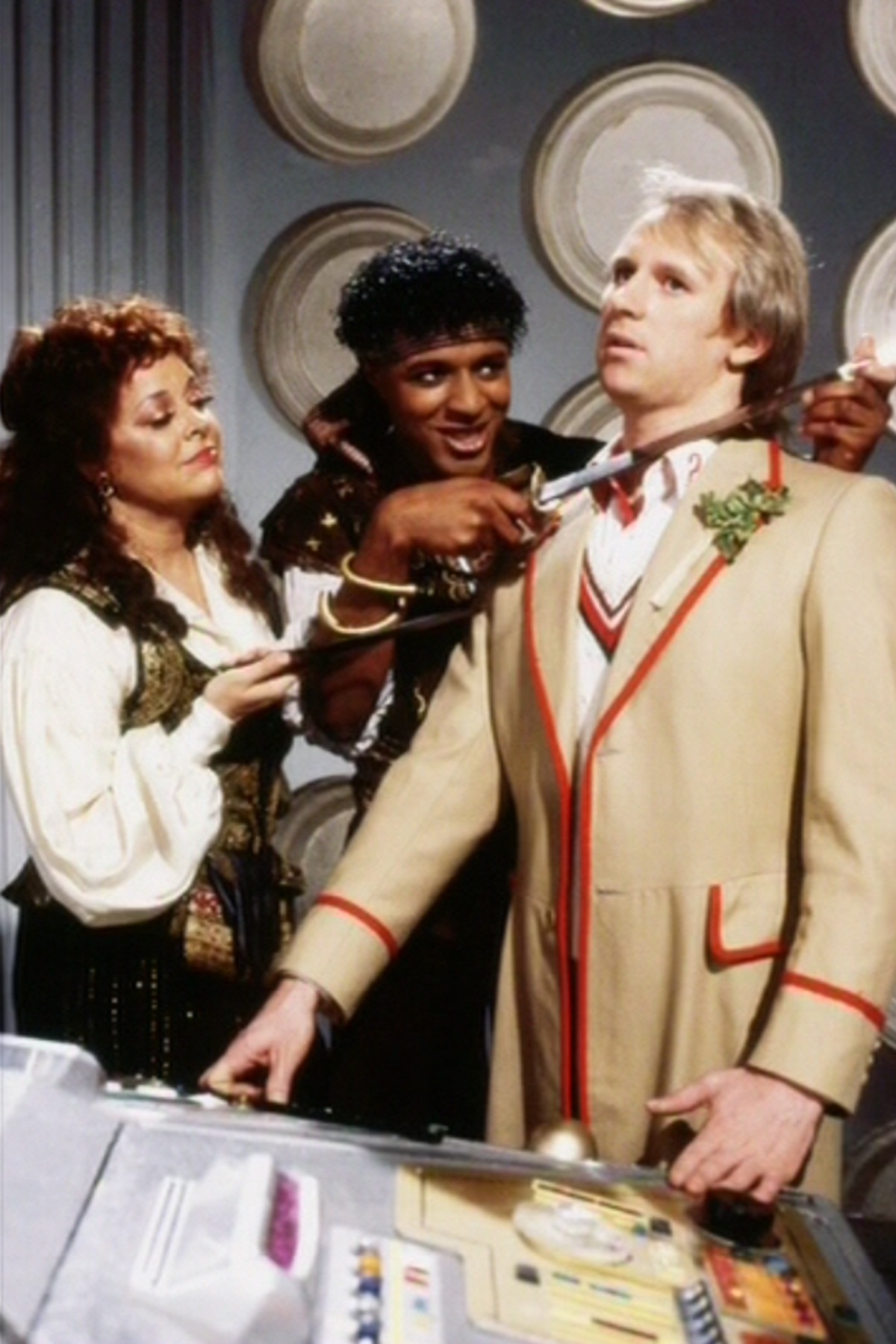
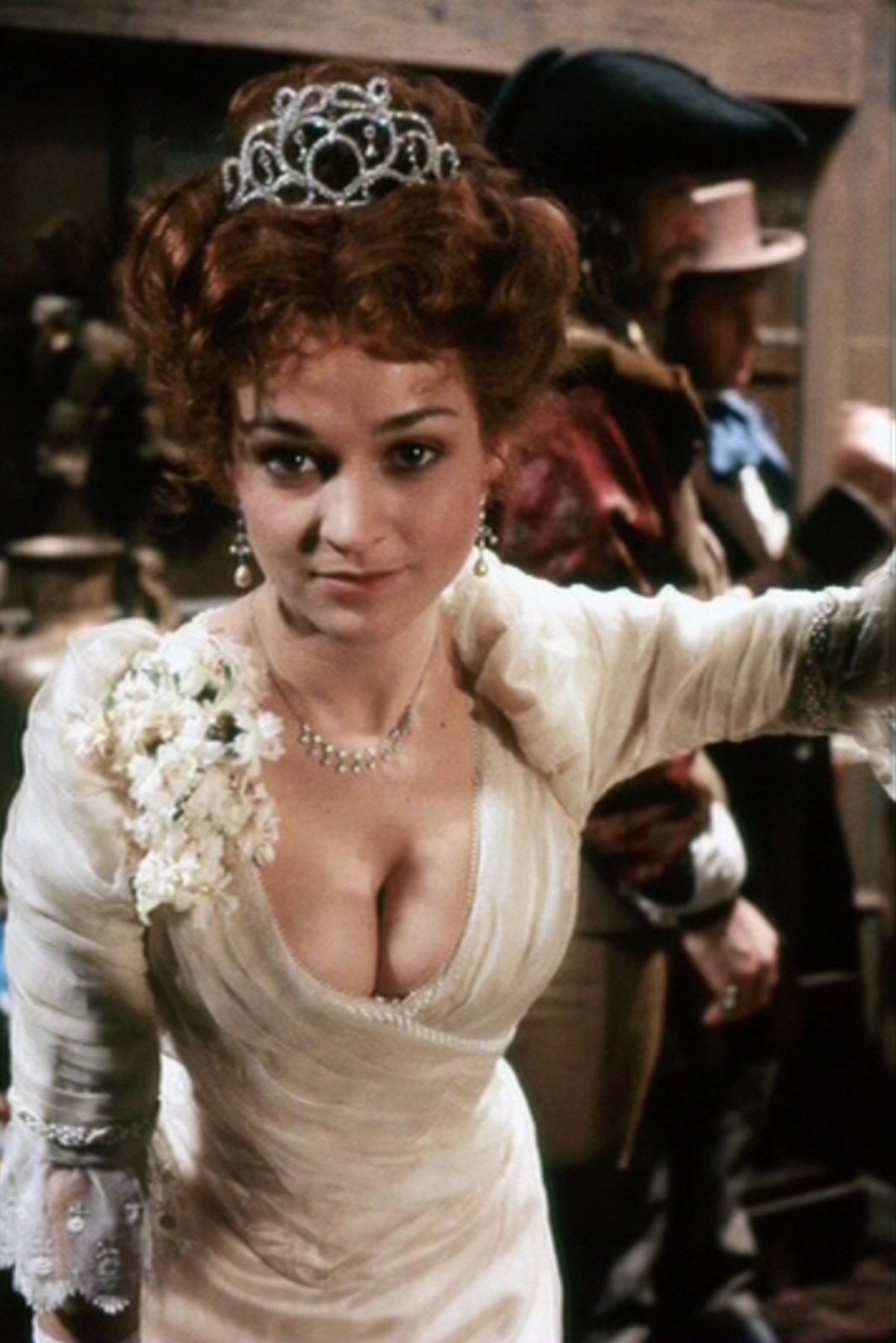
Although the contrivances of clip show producers can never quite be fully accounted for, it is nonetheless fair to say that to the wider public in the eighties, Leee John was more famous than Jonathon Morris and Martin Clunes combined; indeed, there is even a case for arguing that at one particular moment he was even more popular than Peter Davison himself. As the frontman of top ten-hogging Britfunk outfit Imagination, he scored hit after hit with the sophisticatedly sheened likes of Body Talk, Just An Illusion and Flashback, and provoked a steady stream of furious letters to Points Of View objecting to his apparent tendency to forget to bring one leg of his trousers along to Top Of The Pops. By the turn of the decade the hits had inevitably dried up, leading him to embark on a solo career as well as a stint as the host of Leee’s Place, a late-night ITV chat show memorably described by Peter Baynham on Fist Of Fun as “a sort of trendy bar inside a television studio owned by Leee John of Imagination, an American man who spoke a bit like a lady, who sat at the bar then one of his friends from the world of soul music would come in and he’d go ‘Hiiiiiii, Lutherrrrrrr! Pull up a stoool! Wanna drink? So how’s your soul music job going?’, and they’d talk about soul music and sometimes even sing a song, even though there wasn’t a band or anything”, and as the ‘Celebrity Mentor’ in Adam And Joe’s The 1980s House sketches, before as with so many of his peers finding a career renaissance courtesy of revival tours and the nostalgia industry. What is very nearly as much of a mystery as the question of whether the illusion in Just An Illusion could be picture in his mind, however, is exactly how he found himself stepping into the reportedly exceptionally hefty boots of interstellar sail-setter Mansell in Enlightenment, the third instalment in the viewer-baffling ‘Black Guardian Trilogy’ – don’t worry, we’ll be getting around to that – which may or may not have had something to do with a cosmic re-enactment of whatever the ‘Tall Ships’ is exactly but more importantly prevailed upon Janet Fielding to change into a scoopingly-necklined ballgown that caused several million feverish adolescents to bitterly resent their lack of access to purported studio outtakes capturing her lost battles with the containment-resistant garment that the rest of the cast so casually and flippantly chortled about in interviews, when almost the entire supporting cast had to be reshuffled due to industrial action-related delays to production. Despite an extensive background in stage acting, Leee by his own admission was new to television work – at least the sort that did not involve trouser-deficiency in a cloud of neon and dry ice – and found the experience fun but disorientating, although the fact that he was essentially called on to play Leee John arguably made him a more than adequate fit for the role. Presumably notions of star quality and stunt-casting may have had at least some degree of bearing on proceedings, which in that case just raises further questions over why not one single episode of Enlightenment was scheduled directly prior to Top Of The Pops. The BBC evidently believed that his audience pull alone would be sufficient to keep ‘the teenagers’ tuned to Terry And June and Vox Pop; although, albeit if Enlightenment had gone out on a different day and in a different month, they may well have found themselves subliminally influenced to switch over to ITV…
Winner Takes All… All… All
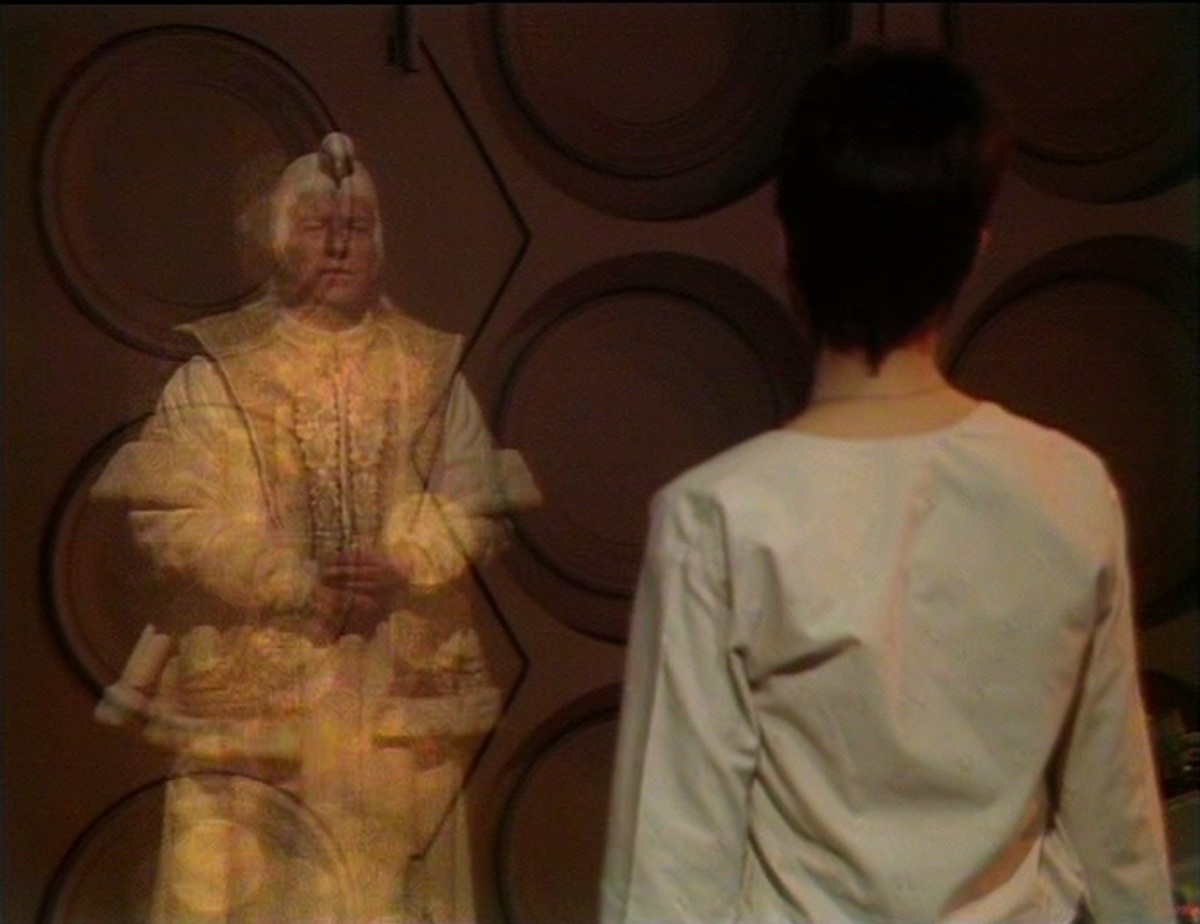
To say that the Black and White Guardians Of Time had last been seen in Doctor Who back in 1978 – as, inevitably, you can find much more about here – would be pushing it slightly as despite their relevance to the series-straddling Key To Time storyline, they were barely actually seen at all. The White Guardian shows up in The Ribos Operation apparently fulfilling a long-held ambition to be some sort of cross between The Man From Del Monte and that CIA bloke from Airwolf, and is heard off-camera essentially repeating what he had already told The Doctor and Romana only in a more panicked tone in The Stones Of Blood, while The Black Guardian only really puts in any kind of an appearance towards the conclusion of The Armageddon Factor as a sort of shouty solarised face on a screen looking distressingly like an inverted Terry Scott; perhaps Enlightenment‘s scheduling wasn’t quite so adversely positioned after all. Nonetheless, they were considered sufficiently foundational to Doctor Who‘s history – almost certainly by a certain ‘unofficial adviser’ and nobody else – to put in a return appearance as story-straddling ‘big bads’ to celebrate the twentieth anniversary; a celebration that even if we include The Five Doctors and Resurrection Of The Daleks and assorted off-the-cuff mentions did not actually feature The Ice Warriors, The Sontarans, The Autons, The Monk, Sgt. Benton, Leela, The Sea Devils and Silurians or Peladon, and in any case the average viewer probably couldn’t care less but they liked it when it was Tom Pertwee and his megagalactic scarf or something. Played by the same actors only with raggedy-looking stuffed birds on their heads, this time around The Guardians Of Time at least get to enjoy a good deal more screen presence, generally swathed in visual and audio effects to emphasise their extra-dimensional nature albeit with one phenomenally jarring exception. Near the start of part one of Enlightenment, The White Guardian translucently manifests in a TARDIS that has gone the colour of Marzipan Roses for some reason and imparts a spectacularly unhelpfully cryptic message for Tegan to pass on to The Doctor, fading from vision with a cautionary reminder that ‘Winner Takes All’. We can only honestly deduce that someone somewhere forgot to push up the correct fader on cue on this occasion, as Cyril Luckham is left to haplessly repeat ‘All… All…’ at a consistent pitch and volume until the console handily fires out a very small shower of sparks and inadvertently rescues him from his overenunciated predicament. Even so, it is likely that several million households reverberated in a way that Cyril Luckham’s voice didn’t to the sound of ‘dads’ exclaiming ‘Winner Takes All!’ as a sort of witty reference to the long-running ITV game show in which Jimmy Tarbuck exhorted contestants to estimate the betting odds on an answer being correct, which in a frankly alarming coincidence would see the presentational reins being handed over to somewhat more off-the-wall choice Geoffrey Wheeler in 1987 and slowly declining in fortunes before it was roundly defeated by Coronation Street – in the sense that its traditional Friday evening slot was handed over to the newly-initiated third weekly episode of the veteran soap opera – late in 1989. Perhaps, what with being a Guardian Of Time and what have you, he may have been better advised intervening in a pointless argument that has been raging between nobody in particular for longer than it ever should have been – in other words, ‘at all’…
Stuff The Jubilee ’88
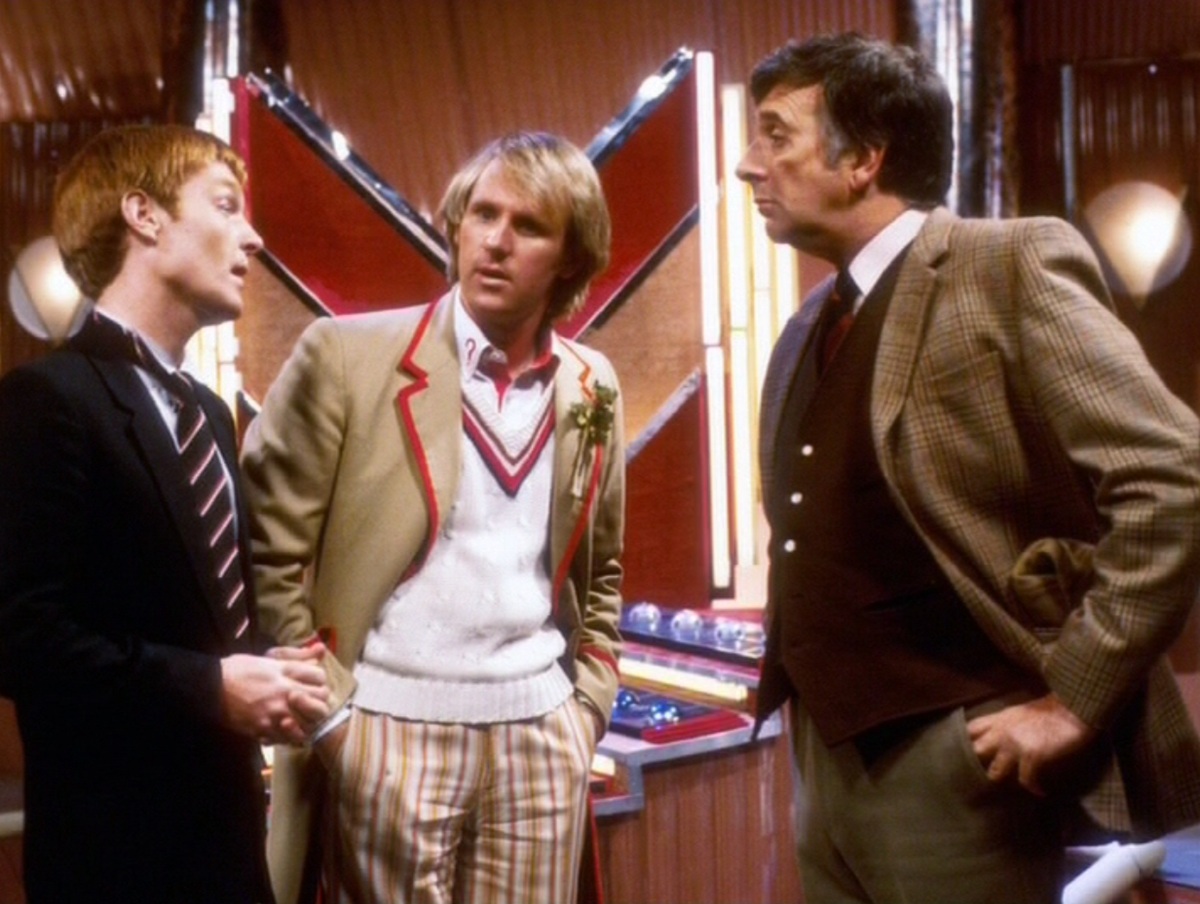
Although that all-important Guardian-dodging ‘Randomiser’ that had been appended to the TARDIS at the conclusion of The Armageddon Factor had been jettisoned as far back as The Leisure Hive in 1980, it would take until Mawdryn Undead for the vengeful and omnipotent Black Guardian Of Time to catch up with The Doctor and company in search of – well here’s a bit of a theme – retribution. In classic for reasons best known to the all-powerful style, this revenge plot somehow cannot be completed without crystal-brandishing assistance from the mysterious Turlough, the world’s oldest schoolboy and inveterate tormentor of his conspicuously slender classmate ‘Hippo’, who is unwittingly inveigled into the TARDIS crew despite the strenuous reservations of a Tegan and Nyssa who have evidently forgotten that barely twelve minutes earlier they believed that aspirant Time Lord energy-nabber Mawdryn was actually The Doctor purely on account of the fact that he said so. Turlough is of course – although we don’t know exactly why yet – posing as a pupil at the exclusive yet entirely fictitious Brendon School, presumably established courtesy of a generous donation by Sarah Jane’s nephew and more than possibly named in reference to Children’s ITV’s then-recent eighty four million episode adaptation of Denys Watkins-Pitchford’s 1944 novel about a trio of adolescent brothers living ‘rough’ under a couple of shrubs and taking to wearing desperately unconvincing animal skins whilst doing absolutely nothing whatsoever, Brendon Chase. Set simultaneously in both contemporary 1983 and the height of Silver Jubilee mania in 1977, a frankly ingenious choice as it felt both distant enough to be ‘the past’ but still too recent for anyone to indulge in dreary nostalgia for it, the story would originally have featured Ian Chesterton, last seen fare-dodging with an up-for-some Barbara in 1966 as you can of course find more about here, as the teacher who inadvertently solved everything by unexpectedly meeting himself twice over in two disparate chronological incarnations. By the time of production, however, this had been redirected to a purportedly ‘retired’ Brigadier Alistair Gordon Lethbridge-Stewart, and here is where the headaches begin for those tiresome pedants still babbling on about ‘U.N.I.T. Dating’. It’s a subject that has largely been avoided during the course of this stroll through Doctor Who‘s original iteration, other than being treated with the Clanger-bolstered disdain it deserves here, and let us just say if you searched this site for ‘U.N.I.T. Dating’, then this may not be quite what you were expecting. Here, however, it is worth commenting on the fact that we have a story straddling not one but two defined points in time that sets the original U.N.I.T. stories in irrefutable contemporaneity with their time of broadcast – as indeed do the fashions, real world cultural references and television and radio programming featured throughout them – and which countless later stories have anchored themselves around even when The Brigadier wasn’t actually in them, and which indeed would subsequently be brushed aside in hilarious yet also profound style by an off-the-cuff remark from David Tennant’s Doctor, and maybe it is time for everyone relentlessly attempting to square a circle to accept that possibly, just possibly, those vague at best allusions to the ‘eighties’ infrequently scattered through seventies scripts may have just been a flight of fancy that the writer thought sounded good at the time without any consideration that it might provoke such unresolvable angst all this time later. If you’re really prepared to go in to bat on this issue, it is worth bearing in mind that even The Prisoner contradicted itself, sometimes even within the same episode, and individuals expressing a hope that George Markestein got fired for THAT blunder are decidedly thin on the ground. Honestly, though, this is all a bit exasperation-heavy, isn’t it? Is there even a good word to say about this ‘anniversary’ jumble of underachievement? Well, you might be surprised…
It’s Not Frothy, Man
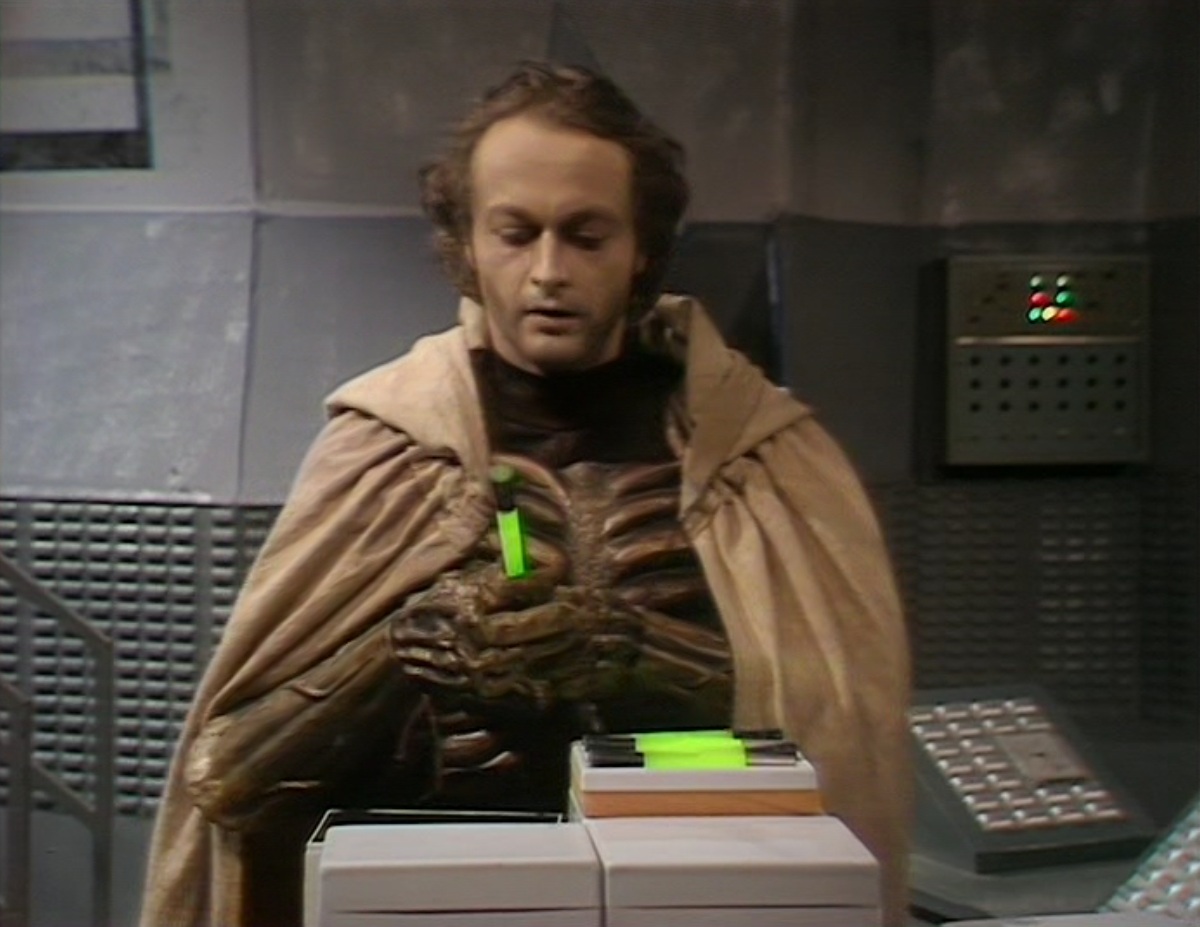
Sometimes, even in the midst of an unrelenting load of at times nigh on unbroadcastable gobbledygook, you can still find a Doctor Who story that is sufficiently decently done that there are no sarcastic observations to make about it and no thought-provoking or culturally abstract diversions to pursue, and in fact is so solidly well written and well realised that – if this actually makes any sort of sense – nobody even really notices it and it never scores as highly in those relentless ‘best story’ polls as it honestly ought to. One such story is Terminus, which even those who are determined to deride never actually seem to be able to find very much in the way negatives to base their arguments on, where a gigantic dog costume that would not have looked out of place on Channel 4’s Chips’ Comic largely passes more or less without snortingly incredulous comment, and where even Sarah Sutton’s decision to discard huge swathes of her clothing in her last handful of scenes before leaving the series does not tend to figure in OMG WHAT WERE THEY THINKING-level chortlefests even within Doctor Who fandom. If pushed to at the very least mention it in this sort of context, the only aspect that even seems vaguely worth commenting on is how the phials of Hydromel, the synthetic drug used by the Vanirs to protect themselves from infection, looks less like they contain a medical serum than they do some sort of virulent cross between a second division supermarket own brand Cream Soda and whatever it was that Alberto Frog had convinced himself could legitimately pass for a ‘lime’ milkshake; and if that’s the ‘worst’ that you can find to say about a story, then everyone involved really ought to count themselves lucky. Yeah, you’d better run, Rings Of Akhaten. Meanwhile, while we’re on the subject of frantically scrabbling around for observations…
Through The Round Roundels
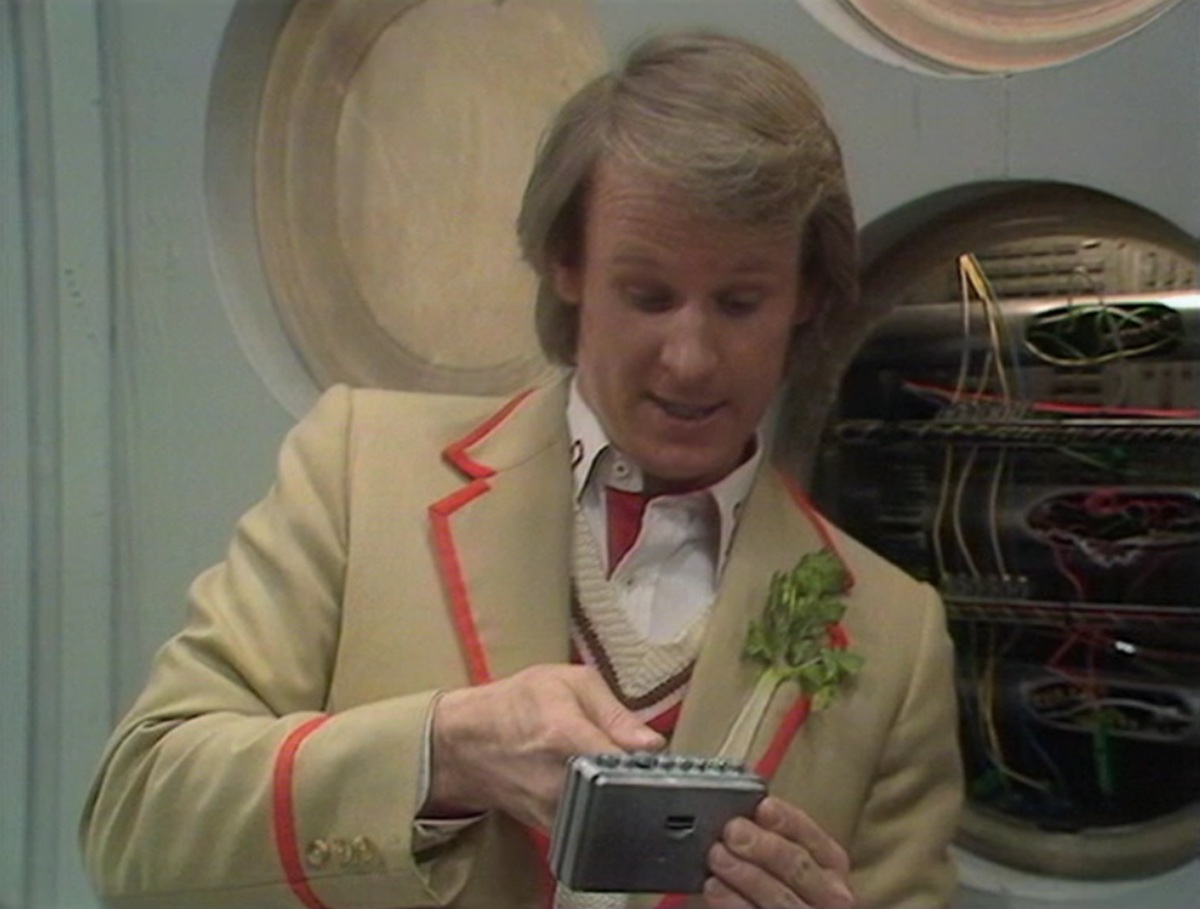
Always present, rarely acknowledged, frequently replaced by exceptionally obvious photographic blow-ups, the ’roundels’ – a word that it is likely nobody else has ever actually used in any context ever – on the TARDIS walls were seemingly there to be referenced by pretty much everyone and pretty much everywhere else apart from Doctor Who. The likes of Bernie Winters might have chortled to the audience that ‘it’s where he keeps his Jelly Tots’, and the likes of Rod Hull and Emu might have come crashing through one while Larry Grayson pulled an over-exaggerated ‘did you ever see the like!!’ face, but within Doctor Who itself, the roundels were literally just part of the scenery. Until the twentieth anniversary series, that is, when roundels are suddenly being levered off left, right and centre to expose ‘workings’ composed primarily of blinking lights and bare wiring, with everyone involved seemingly automatically aware of what is behind where with literal decades of implication that the TARDIS was somehow more organic than mechanical set to one side in favour of the false economy of looking ‘busy’ on set when tinkering with the c0nsole would have done just fine. After all, wouldn’t this imply that the Chamelon Circuit would have been moderately easier to repair if it was just a case of soldering x to y? Oh hang on, we’ve got THAT coming up too, haven’t we. More to the point, we had to say THAT word, didn’t we…
You Come And Go
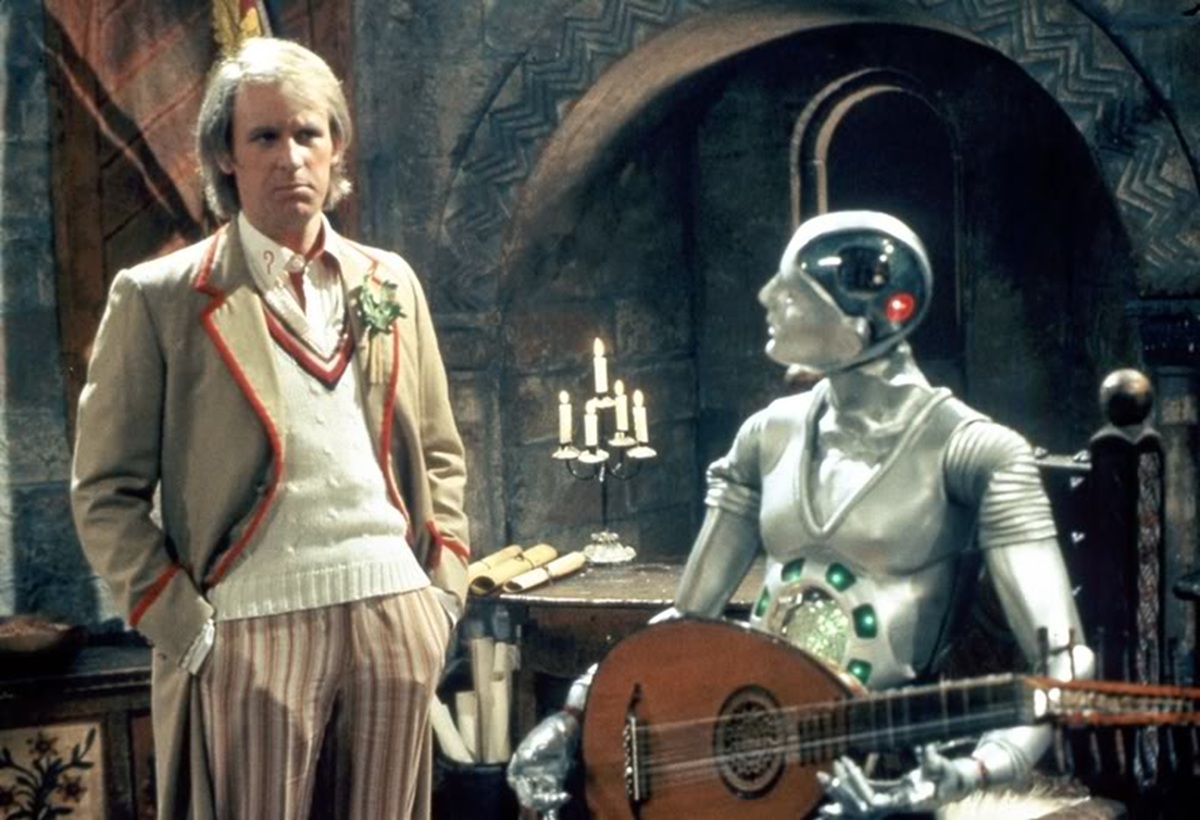
While Doctor Who‘s target audience were resignedly trudging back to school in the autumn of 1983, and indeed while Looking At Midnight by Imagination was still hovering around the lower reaches of the top forty, Karma Chameleon by Culture Club was suddenly everywhere virtually overnight, going on to top the charts for six weeks and eventually become the biggest selling single of the year, and indeed the thirty eighth biggest selling single of all time. Astonishingly, however, this was not even the only notable Chameleon in popular culture in 1983, although the other one was spelt differently and involved considerably less in the way of red, gold and green. The King’s Demons may be whimsical and slight, and The Master’s motives and intentions may yet again be spectacularly unclear and indeed yet again ‘masked’ by the most punchably smug Radio Times anagram yet – as if nobody would realise instantly that the fake-beard-over-real-beard character doing a ‘French’ accent that makes it appear like he is requesting ‘Companion Sheep’ was a less than cursorily disguised Anthony Ainley – but there is nonetheless something charming and likeable about it. Until, that is, Kamelion turns up. Jointly designed by hardware engineer Chris Padmore and software engineer Mike Power – the latter, with the impeccable tact and respect Doctor Who fans are so renowned for only ever referred to for decades as ‘The Man’ – Kamelion was a bold attempt at creating something resembling a genuine robot, and had caught John Nathan-Turner’s eye courtesy of a glossy sales brochure boasting that it was ‘as seen on TV’; as no evidence has ever been forthcoming as to what this pre-The King’s Demons appearance actually may have been, then unless it had flummoxed Windsor Davies in an episode of Never The Twain we can probably safely conclude that it had simply collapsed on top of a television set at some point. Surprisingly, considering how ruthlessly determined he had been to dispense with K9’s services, JNT was instantly taken with the idea of having an actual walking talking robot join the TARDIS crew, and despite the reservations expressed by more or less everyone else involved – including Peter Davison and even, to an extent, Kamelion’s creators – he was duly installed in the regular ‘cast’ after The Master had inexplicably abandoned him in the middle of a plot to have him impersonate Gerald Flood by spinning around and singing Kiss From A Rose or something, upon which Kamelion… promptly disappeared. No, really. There will be more to say about the Silver Surfer-esque interloper and its resolute failure to work to any degree of a consistent standard in due course, but for now, let us just say that the animatronic clank-issuer was more than a little conspicuous by its absence from something on the very close horizon that could easily have had what little in the way of Kamelion Millions there were to be made rolling in…
Anyway join us again next time for a cheese-nibbling ‘complete character’, the long-awaited Doctor Who/Look And Read crossover and a quick marking of Bellal’s maths homework…
Buy A Book!
There’s lots more about the early eighties arrangement of Doctor Who theme – and plenty more about tons of other of Doctor Who-related releases besides, including the anniversary-marking Doctor Who – The Music – in Top Of The Box, the story behind every single released by BBC Records And Tapes. Top Of The Box is available in paperback here or from the Kindle Store here.
Alternately, if you’re just feeling generous, you can buy me a coffee here. Don’t do a Tegan and just ask for two ‘coffees’ without specification.
Further Reading
You can find more about Peter Davison’s somewhat more accomplished Doctor Who debut in It’s Still A Police Box, Why Hasn’t It Changed? Part Twenty One – Deva Loka Is A Female Version Of A Hustla here.
Further Listening
It’s unclear what Jimmy Tarbuck would make of the odds, but you can bet on finding a look at some long-forgotten Doctor Who-associated spin-off side projects and oddities in Doctor Who And The Looks Unfamiliar here.
© Tim Worthington.
Please don’t copy this only with more italics and exclamation marks.

