
In much the same manner as my very much on the record insistence that there would not be a second volume of Top Of The Box cataloguing all of BBC Records And Tapes’ album releases until I eventually realised that it was simply too interesting a ‘story’ to discard on the basis that it would have involved listening to somewhere in the region of fifty four thousand million albums of birdsong, I was initially similarly insistent that there would be no companion volumes to Fun At One – the story of comedy at BBC Radio 1 which is still available from here, Buzzword fans – taking a similar look at all matters humorous or indeed allegedly so on the other national BBC Radio stations. Radio 4’s comedy output – certain of the more prominent examples of which including Lionel Nimrod’s Inexplicable World and On The Hour were of course covered as part of Fun At One – would have been nigh on logistically impossible to catalogue to any degree of completion or satisfaction, and would also have involved listening to a birdsong-drowning-out quantity of shows from the daily half past six slot of which the best that can be said is that they generated essentially the exact literal opposite of mirth; indeed, Fun At One had concluded with a quote from Mark Radcliffe making more or less the exact same point. Radio 2 had featured little more than a smattering of even halfway interesting comedy shows across its long history, the vast majority of the remainder of its comedy output being old-fashioned variety and live audience sketch shows that, with the best will in the world, would scarcely have inspired anyone to feel a compulsion to delve deep into their production history. In fairness, there did at least seem to be a drive towards bringing a little more of a contemporary slant into Radio 2’s comedy programming around the time that Fun At One was published with the likes of That Was Then, This Is Now and The Day The Music Died – although the station appeared to be a little more wary of the Collings And Herrin double act – but considering what the most noteworthy and controversial manifestation of this attempt to infuse more of an element of ‘danger’ into their comedy output would prove to be, in retrospect I am frankly relieved to have given this whole area a wide berth. There are more than possibly certain individuals within Radio 2 – and some who as a direct consequence aren’t any more – who wish they had given that Saturday Night slot to Andrew and Richard too. The Daily Telegraph probably wouldn’t have got quite so exercised over Lion Man. Radio 5’s initial incarnation as a speech radio station rather than the rolling news and sport service it became only lasted for a couple of years, and most of their dedicated comedy shows to one extent or another ended up on Radio 1 anyway and again on account of this mostly featured in Fun At One; there were of course a couple of long-forgotten panel shows and sitcoms that didn’t, although you can hear all about teen-orientated sitcom WICR courtesy of Danny Kodicek – who starred in it alongside a similarly youthful Ronni Ancona and Alex Langdon – in Looks Unfamiliar here. As for Radio 3 comedy, there simply wasn’t enough of it. There was The Half-Open University, The Atkinson People and Why Bother? and that was pretty much it. That’s The Half-Open University, The Atkinson People and Why Bother?, all of which it is fair to say I had substantially more than a passing interest in. Though that still isn’t enough to constitute an entire book. Is it? No, it isn’t. Definitely not. Not a chance. No.
Whilst scrupulously contriving reasons to avoid having to listening to all of those albums of birdsong, however – and usually whilst listening to the BBC Audiobooks release of The Atkinson People instead – I just kept on stumbling across vague references to exceptionally interesting-sounding comedy shows that I either had not realised were originally on Radio 3 or simply had not known about in the first place. There was an arts documentary spoof fronted by Kenneth Williams in the station’s earliest days, and an arts discussion spoof written by John Morton in the late nineties. There were all those abstract and highbrow sitcoms including Patterson, Broomhouse Reach, Blood And Bruises and Such Rotten Luck, which turned out to be driven by wild narratives and even wilder production histories. There were contributions from Ivor Cutler, N.F. Simpson, Leonard Rossiter, The BBC Radiophonic Workshop and – courtesy of his rejected film script for The Beatles – Joe Orton. There was an overlooked National Theatre Of Brent series and – staggeringly – a completely ignored comedy drama anthology jointly written by Peter Tinniswood and Sue Townsend. Perhaps most influential on my decision to actually go ahead with this increasingly irresistible project after all, there were Armando Iannucci’s witty and engagingly enthusiastic Interval Talks, sharing the joy with and taking the rise out of his fellow concert-listeners in equal measure. It had all started to look too interesting and more importantly stylistically – or at least culturally – coherent to resist the temptation to work it into a ‘story’ of the station’s humorous output and that is essentially what became – with the addition of a few extras and an interview with Toby Hadoke, who at that point was the only comedy performer to have had his own show on all five national BBC stations – The Larks Ascending. It was obvious from the outset that this would have somewhat of a niche appeal to say the least, but it was a tremendous amount of fun to research and write and I am still incredibly fond of it despite the correspondingly lower readership, especially the chapters on Patterson and Why Bother?. Although I did somehow manage to overlook The Northern Drift, as well as some thing John Cleese did about sports reports or something just before series one of Monty Python’s Flying Circus which I stumbled across many years later, although he probably thought I just left it out because of ‘woke’. I was especially delighted when David Quantick contacted me to say how much he had enjoyed the book, although I was moderately less delighted when another reader sent me an unsolicited post-publication ‘proofread’ and was indignantly surprised when I responded with something less than enthusiasm, but that’s another story. What is perhaps surprising looking at this particular juncture of our voyage through the archives is how little promotional effort I appear to have gone to for The Larks Ascending whilst seeming to be spending most of the time banging on about Britpop instead, but in fairness there seemed little point in giving away too much of what was already by definition a shorter book than usual and in any case, the Looks Unfamiliar about comedy on Radio 3 was an especially good one and incidentally one of the most listened to editions, even if I did have to re-edit it to make the clips quieter following complaints from listeners. Or, as Collings and Herrin would have it, ‘The Audiophiles’, and we all know what they’re like. Anyway, pausing only to mention that if you would like to buy me a coffee so that I can pretend to be Armando walking home after the concert in Mobile Phones Off! then you can do so here, it’s time to Use Your Ears. Well, sort of.
Things Aren’t So Bad, They’re Just More Wrong Than Right

As a veteran and extremely vocal enthusiast over all matters Scott Walker at any and every point of his career – well, maybe not quite any and every; you might find yourself waiting a while for me to leap to the defence of The Moviegoer and Fetch Armstrong or whatever it was called – I have always been baffled by the fact that so many others seem to humourlessly revere him as some sort of dark existential genius when a lot of his music is, well, actually quite funny. As such, talking about this mystification in the context of my own personal relationship with his discography seemed the ideal approach to take as a tribute to Scott; the various incidents detailed in this including the comment from a bus passenger and being admonished for listening to Tilt at three in the morning really did happen, and when this was published I was quite surprised at how many respondents, including some who I had marked down as taking their music in a positive sense very seriously indeed, expressed evident hysterics in agreement with my observation about the fadeout of The Girls And The Dogs. The title, in case you were wondering, comes from the lyrics of The Girls From The Streets, possibly the most poetic and soul-stirring evocation of a drunken night out culminating in casual sex with the sort of partner you might not take home to meet your parents ever set to music. More recently, incidentally, I was delighted to hear how immediately taken with his output Paul and Garry Abbott were when they came to cover Scott 2 – and in particular The Amorous Humphrey Plugg – as part of their review of all of the chart-topping albums of 1968 in The Big Beatles Sort Out. By all accounts, they found the shouts of ‘NEXT!’ similarly entertaining. You can find the original version of Things Aren’t So Bad, They’re Just More Wrong Than Right here and an expanded version with many further anecdotes about Scott Walker and, erm, Vanilla in Keep Left, Swipe Right here.
London’s So Nice Back In Your Seamless Rhymes
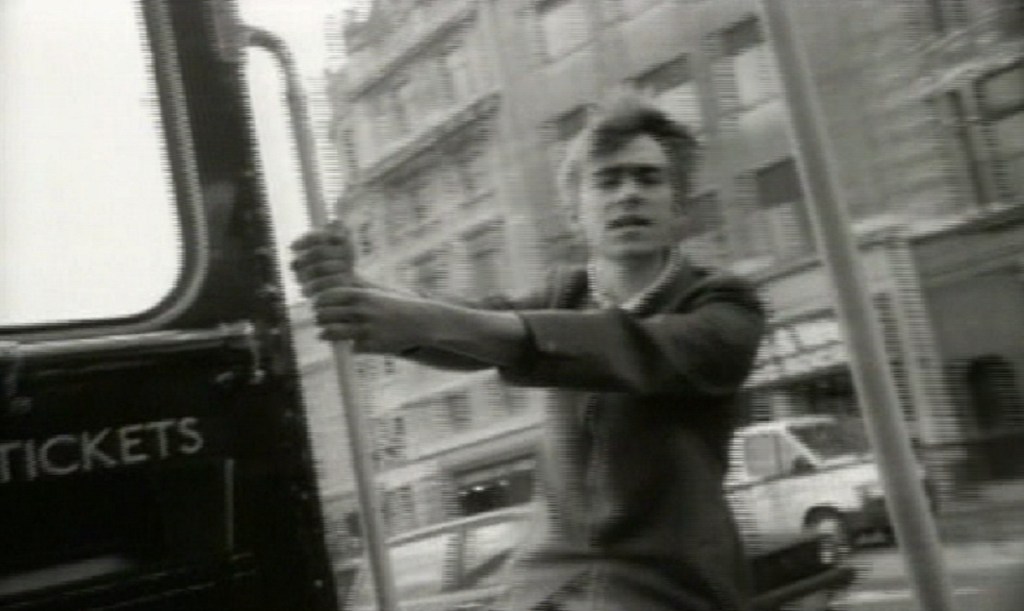
Although Blur’s invariably meticulously and fascinatingly detailed sleeve credits have long thrown up more thrillingly elusive questions than they could realistically possibly answer – there are enough unexplained mysteries behind the artwork for singles that never happened reproduced in The 10 Year Limited Edition Anniversary Box Set to fill a book entirely on their own – the fact that the purported ‘single’ and ‘album’ versions of For Tomorrow were essentially identical had always intrigued me more than any other. Inspired by their own self-professed teenage love of poring over the credits on the back of 7″ singles, it was unlike them to allow an error like this through, and the fact that it did get through – and also did not tally with how the various iterations of For Tomorrow were presented on any subsequent releases – seemed to suggest that it had escaped everyone’s attention on account of an otherwise undocumented change of plan in the throes of the excitement and frustration of the long and fraught evolution of what eventually became their second album Modern Life Is Rubbish, when Blur knew they had something that would connect with an audience desperate for something different but were clinging on to their recording contract like Damon clings on to the bus pole in the For Tomorrow video. Although nobody involved has ever made so much as the slightest reference to the discrepancy – or possibly lack of one; however that works exactly – it is fair to say that it is not beyond the bounds of probability that there was yet another last-minute headache surrounding the song that saved the day but took its merry time about it and what was originally intended as a single edit found itself becoming the definitive version, and using what little clues and conjecture were available to hand, I decided to finally try and work out what had happened and when, only with an added evocation of the excitement and in a sense hope of the very dawn of Britpop to offset – or, depending on where you are standing, enhance – the ludicrously dense trigonometric detail about a pop single from 1993. This was in fact an updated version of a previous attempt at figuring out exactly where For Tomorrow (Visit To Primrose Hill Extended) originally fitted in to plans for the second album, and while I was putting it together an irritating volley of ‘clever’ music journalism thinkpieces smugly blaming Brexit on anyone who so much as tapped their foot to I’ll Manage Somehow by Menswe@r sprang up from seemingly nowhere, prompting the avowedly non-Leave Andy Lewis, the club DJ who played a huge part in inspiring what eventually became Britpop, to pen a furious rejoinder on social media which he generously allowed me to incorporate into the reworked version. We will be hearing more from Andy, and indeed more about why attempting to pin anything connected to any form of resurgence of boneheaded right-wing populism on him is nonsense to the extent of laughability, shortly. You can find the original version of London’s So Nice Back In Your Seamless Rhymes here and an expanded version, with much more on why I found that first ever play of For Tomorrow on The Evening Session such an exhiliarating moment, in Can’t Help Thinking About Me here.

Originally written in response to the terrorist attack on Manchester Arena in 2017, and reused here in light of a general feeling that everyone could probably do with being a little less combative with each other over things that just didn’t matter. I don’t think any more contextualisation is needed than that. You can find Manchester here.
Looks Unfamiliar: Tim Worthington – You Can’t Exactly Wash The Dishes To You Suffer By Napalm Death
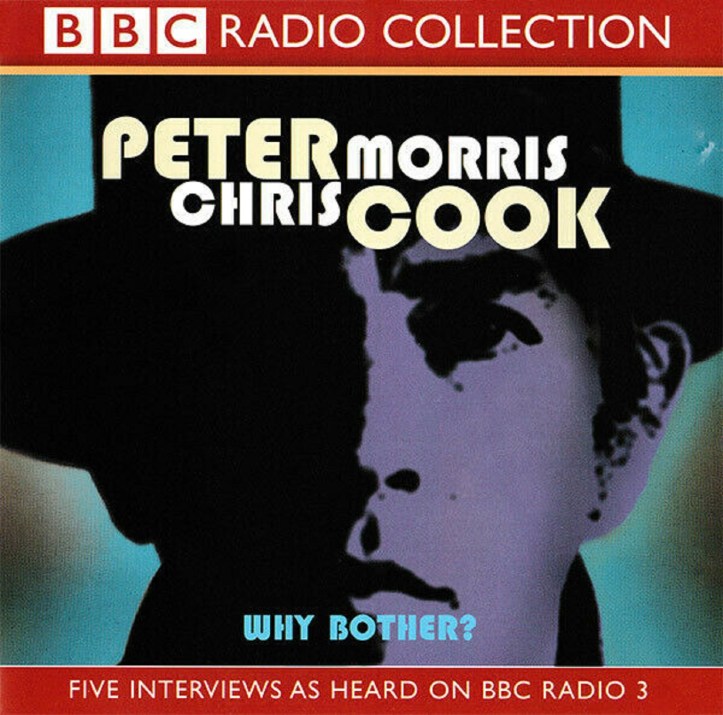
Shortly before The Larks Ascending was published, I sent the second-to-last formatting revision to Garreth Hirons – this version still had a note to myself advising [MORE DETAIL NEEDED] lurking unnoticed in one chapter which thanks to the vagaries of self-publication accidentally found its way into a handful of the initial paperback copies, which depressingly provoked some eagle-eyed grandstanding public guffawing from an even smaller handful of social media bores – and asked him which of the featured shows he would like to talk about if he stood in as host for a tie-in edition of Looks Unfamiliar looking at comedy on BBC Radio 3. Garreth duly singled out The Half-Open University, Blood And Bruises, All The World’s A Globe, Why Bother?, Use Your Ears and the BBC Third Programme’s infamous Radio 3-predating hoax biography of fictitious composer ‘Piotr Zak’, and did an excellent job of steering what could easily have become a dry discussion of an arcane subject towards something more shareable and widely enjoyable. One detail not captured in the eventual edit of the recording, however, was that a Mod on a scooter pulled up on the street outside the window for no clearly evident reason and revved his engine for two minutes solid before haring off again, doubtless in hot pursuit of some faintly audible Northern Soul. Well he wouldn’t have found much of that on Radio 3 in fairness. You can find the full show here and a slightly longer version of the chat about Patterson in a collection of Looks Unfamiliar highlights here.
Recorded shortly after I had appeared as a guest on Andy’s Soho Radio show, and shortly before we retired to an absolutely mindblowingly good authentic Italian café a couple of streets away – perhaps that’s where that Mod that interrupted me and Garreth had actually been headed – I had already suspected that this would be a brilliant edition of Looks Unfamiliar not just on account of Andy’s regular choices including nightmarish Children’s BBC-dubbed steampunk Cold War allegory The Secret Of Steel City, Patrick Moore’s ‘young adult’ sci-fi novels and early ‘real’ robot Sir Galaxy, but also his determination to bring up an incident on a childhood family holiday where he spotted some somewhat blunt and to the point anti-Enoch Powell graffiti while on a canal trip, the wording of which I could only fully concur with. That we were able to discuss this in a levity-fuelled manner whilst remaining entirely serious about making our point and treating the weird quavery-voiced elephant-botherer with the disdain and dismissal he deserved is something I still feel quite proud of, and the fact that this generated a handful of snarky and patronising complaints is in turn something I can only take more pride in still. Heaven forbid a podcast should reflect the personal beliefs of both the host and the guest and not genuflect towards the potential ambiguous sensitivities of some random listener. I was also very pleased that we got in a mention of Pete Paphides’ brilliant Soho Radio show on the music of the Empire Windrush generation, broadcast a couple of days before we recorded this, in which he played Millie Small’s Enoch Power at my very emphatic request. You can find the full show here and the chat about the graffiti telling that pompous rat-faced coward what he could do with his ‘Rivers Of Blood’ in a collection of Looks Unfamiliar highlights here.

Well you don’t have to be a student of Professor Emil Burkiss (HALLELUJAH!) to realise that this is an ideal opportunity to plug The Larks Ascending, a guide to comedy on BBC Radio 3 available in paperback here or from the Kindle Store here.
Mystery Link! If you want to just go straight to a surprise page completely unrelated to any of the above, click here.

© Tim Worthington.
Please don’t copy this only with more italics and exclamation marks.

