
This is an excerpt from “When Custard Stole The Show”, the chapter of The Golden Age Of Children’s TV looking at the five minute animated slot before the BBC’s main evening news bulletin. If you like the look of this, you can get The Golden Age Of Children’s TV from Waterstones here, Amazon here, from the Kindle Store here and directly from Black And White Publishing here, and if you’ve already read it and indeed liked it, why not leave a review to balance out that one complaining that there were shows from the sixties and nineties as well as the seventies and eighties? You can also find a chat with me about The Magic Roundabout on the accompanying The Golden Age Of Children’s TV podcast here.
Advertising executive Serge Danot had created the five-minute animated series Le Manège Enchanté for French television station RTF in 1963, working throughout the year in a makeshift studio in a derelict Parisian house, which was so desperately under-equipped that the studio lights kept blowing the fuses. Enjoying short and simple adventures around a roundabout in a white garden decorated by stylised trees and flowers, Pollux the dog and his friends Ambroise the snail, Flappy the rabbit, Azalee the cow, Pere Pivoine the roundabout operator, human girl Margote and a magical jack-in-the-box named Zebulon were first seen on French television on 5th October 1964. Le Manège Enchanté was instantly popular and new episodes would continue to be made through to 1971, inspiring a slew of toys, games, storybooks and records, but even this was nothing compared what would happen almost by chance when the show caught the eye of the BBC’s Head of Family Programmes Doreen Stephens at a European television trade fair early in 1965.
Attracted by the visuals and convinced that the show would be ideal for a weekday pre-news slot at the end of the children’s schedules, Doreen was less sure about the actual content of the episodes. As the original soundtracks were cluttered and noisy and the storylines simplistic to the point of being negligible – not to mention the associated cost – direct translation did not seem to be a viable option. Instead, Play School presenter Eric Thompson was drafted in with a brief to rewrite the scripts and the characters as he saw fit; similarly unenamoured of the original soundtracks, he opted to simply watch each episode at home with the sound turn down, and make up his own interpretations of what was happening on screen. Pollux became curmudgeonly Dougal, Pere Pivoine the bewildered Mr. Rusty, Margote the quietly underwhelmed Florence, Ambroise the irritatingly positive Brian, Azalee became – supposedly inspired by his wife and fellow Play School presenter Phyllida Law – the chaotically theatrical Ermintrude, Flappy the laconic beatnik Dylan, doubtless named in honour of a certain harmonica-toting troubadour, and Zebulon the mysterious sage Zebedee. The scripts became freewheeling musings on aspects of the modern age, packed with topical gags about The Rolling Stones and ‘I’m Backing Britain’ and frequently with cultural and social references that the younger viewers might not have recognised but would still have understood, and The Magic Roundabout (BBC, 1965-77) made its debut on BBC1 on 18th October 1965. To say it became a success would be pretty much equivalent understatement to what you might have got if you asked Dylan to describe its astonishing, overwhelming and unprecedented level of popularity.
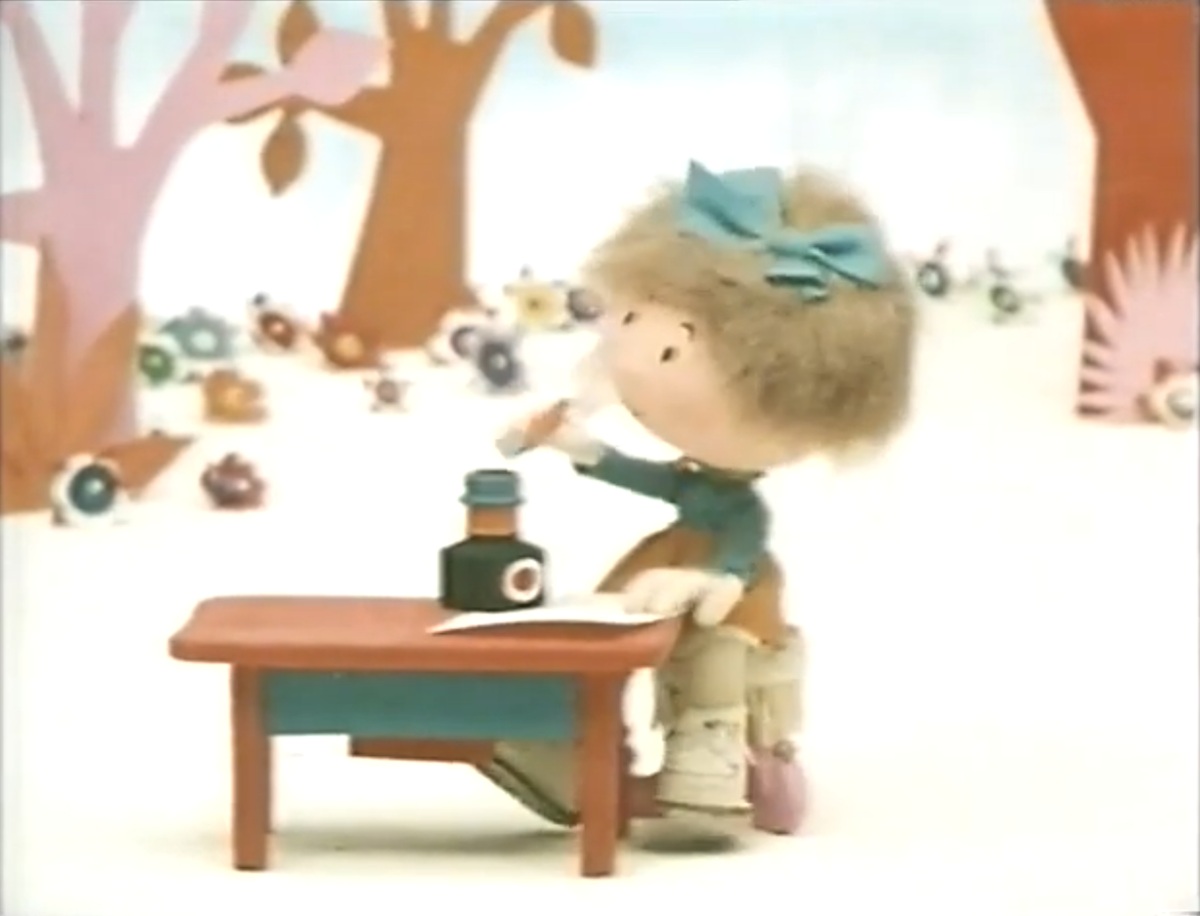
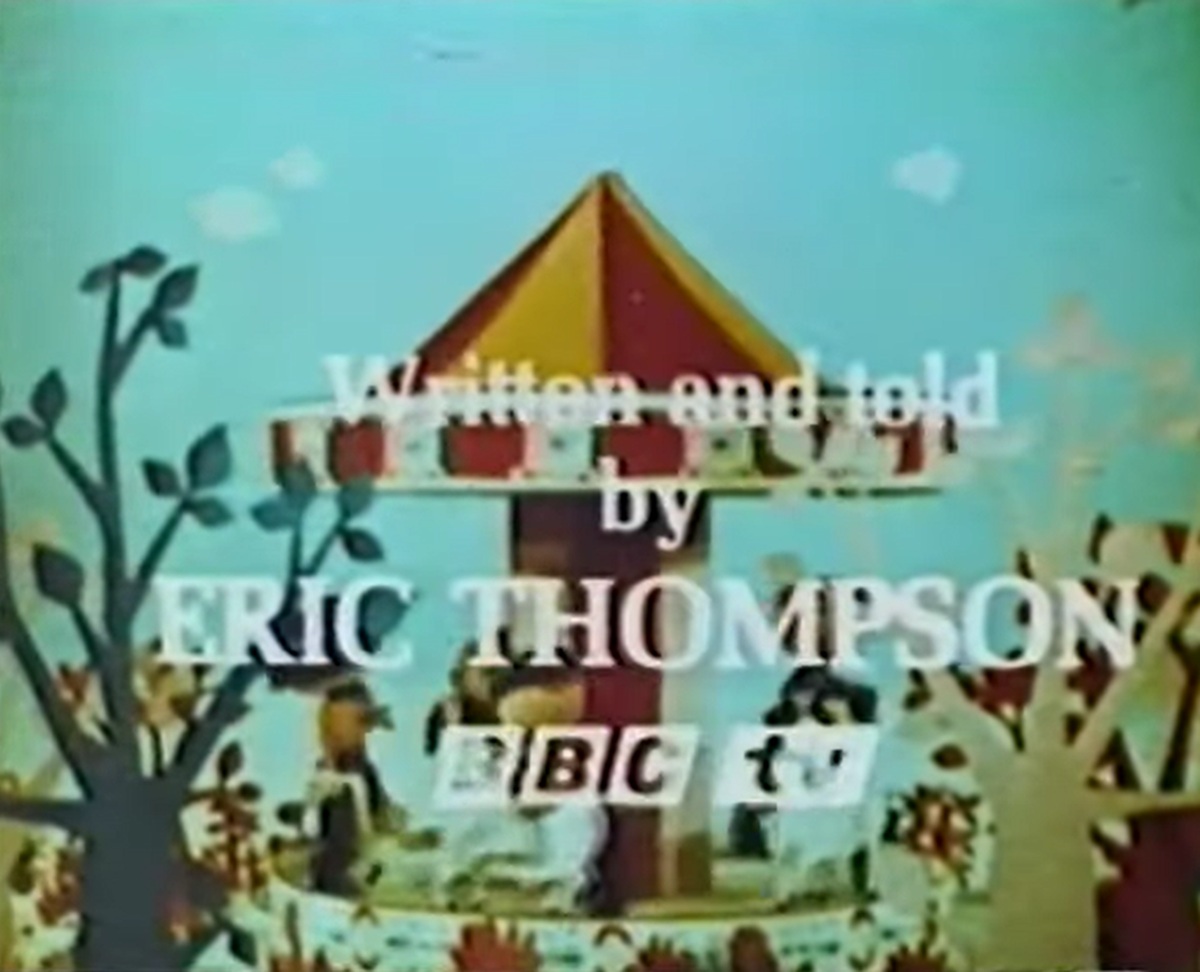
Although it was almost certainly the charming, attractive and quasi-psychedelic look of its inhabitants that initially drew children into the Magic Garden – and almost equally certainly what initially inspired an almost uncatalogueable avalanche of tie-in merchandise – it was Eric Thompson’s dry narration and quirky scripts that really made The Magic Roundabout into the phenomenon it instantly became. His decidedly off-the-wall approximation of what was actually unfolding on screen was infused with dry wit and frequently subversive topical gags that slowly but surely hooked any news-anticipating parents accidentally catching a couple of minutes of it too. Much of this was down to the repositioning of Dougal as a dour and pessimistic snob with ideas above his overly hairy sugarcube-scoffing station, frequently clashing with the impenetrably cheerful Brian, the clumsily high-spirited Ermintrude and the frustratingly laid-back Dylan as they interfered with his ambitions towards cultural and intellectual self-advancement, while Florence and Zebedee acted as the adults in the room and Mr. Rusty was never entirely sure whose side he was on, while the lesser-sighted likes of Florence’s friends Paul, Basil and Rosalie, flower-chomping gardener Mr. McHenry and Penelope the spider just regarded the unravelling nonsense as best they could. A great believer in crediting children with intelligence, who more than once told an interviewer that he wrote his scripts for ‘people’ of all ages, Eric Thompson took great delight in personally refuting any and every objection from parents and educational experts alike; he reputedly once replied to a letter from a mother who complained that he used too many long words with a response using the longest words he could find in the dictionary, and on another occasion sent a strongly-worded rejoinder to another who held him accountable for her children taking to calling each other ‘molluscs’.
They were in the minority, however, as The Magic Roundabout was loved by pretty much everyone else – including Serge Danot, or at least once he had got over his concern that ‘Dougal’ was a punning slight on the name of French President and former hero of The Resistance Charles De Gaulle – and infrequent attempts to move it to an earlier timeslot were invariably met with a flood of letters demanding that it was restored to one where adults could see it too, and when Blue Peter ran a Magic Roundabout-themed competition it generated more than one hundred thousand entries. That said, that very first run of thirty nine episodes was subtly but notably different to what most viewers would probably now recognise as The Magic Roundabout. As well as a slower version of the famously chaotic and naggingly insistent runaway organ theme music, it also has a running storyline; the very first instalment opens with Mr. Rusty more or less on his own for an entire episode, lamenting the fact that nobody visits his roundabout any more until Zebedee suddenly arrives in the post, promising to help him bring a dash of magic back to the miniature funfair. The remaining characters and the four children – who have their own running storyline about building a house in The Magic Garden – are slowly introduced over the following weeks until all of the familiar faces are in place, just in time to celebrate Roundabout Christmas on 22nd December 1965. Following that, each new episode essentially became a free-for-all where saying anything could happen would be doing an understated disservice to Eric Thompson’s apparently limitless imagination. From Brian and Dylan forming a band – sounding uncannily like the recently controversially gone ‘electric’ Bob Dylan – who preferred to play with their sheet music upside down, to uppity flowers demanding to be treated with the due deference conferred by their self-designated social status, to the resident unpredictable and uncontrollable train announcing its intention to compete in The Olympics with no particular individual sport in mind, The Magic Roundabout could and did go anywhere with often not even the mildest concession to conventional logic, all of it dressed up in offbeat gags and humorous cultural references. From books and story records to puppets and kaleidoscopes to pillowcases and board games to biscuits and plastic giveaway cereal toys and from an ingenious playset allowing you to operate card representations of Mr. Henry and company in a mock-television set through to a range of die-cast Corgi models including a full-size Magic Garden playset with a moving roundabout and train, the cast of The Magic Roundabout were staring back at you every time you set foot in pretty much any kind of shop. This did, however, have one ironic unintended effect – mindful of the proven track commercial track record, Serge Danot’s next series Les Poucetofs was as good as priced out of the UK broadcast market, eventually disappearing into contractual headaches following a bidding war between ITV companies, and was ultimately never seen over here.
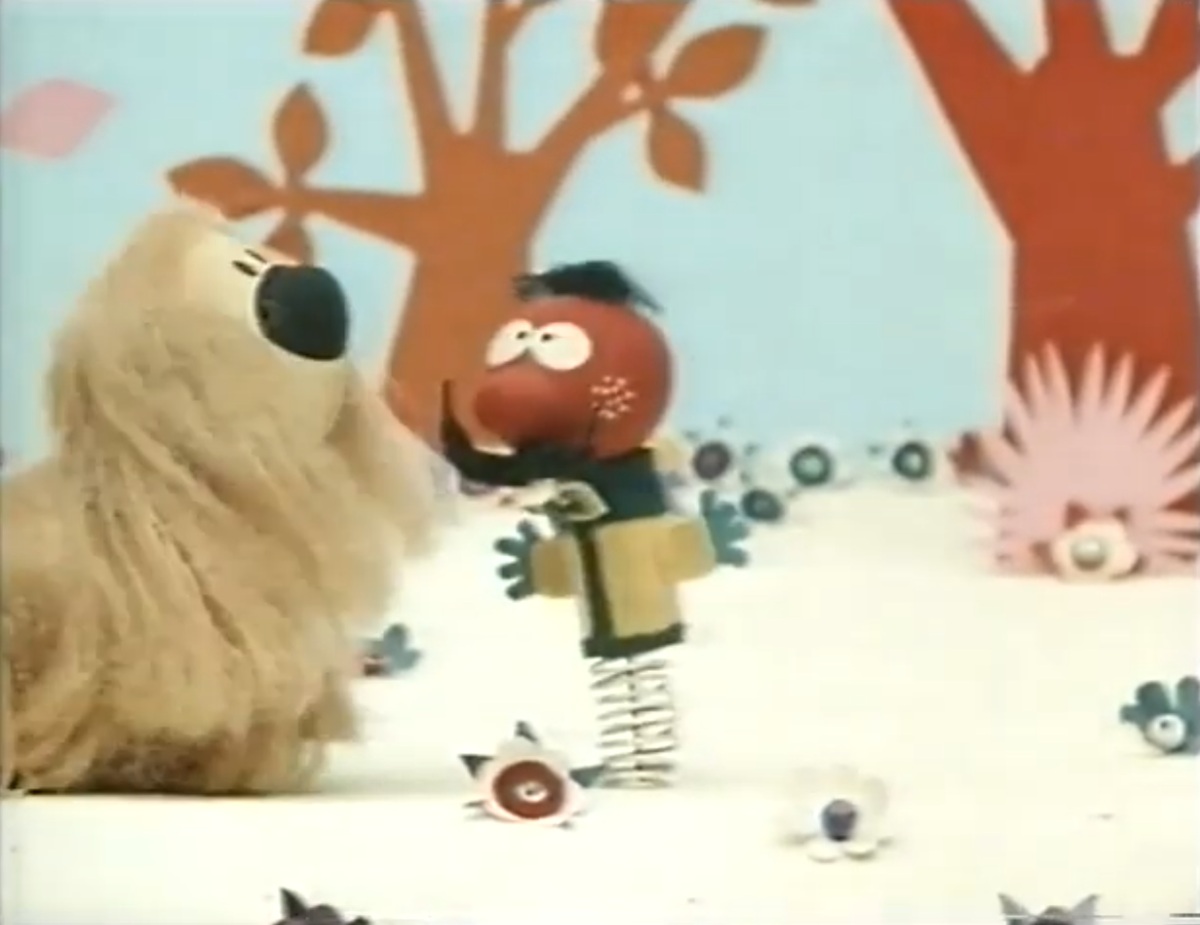
In 1972, the characters even made the leap to the big screen for Pollux Et Le Chat Bleu – Dougal And The Blue Cat – which cast them in a much darker tale about a feline interloper named Buxton who aligns himself with Fenella Fielding’s mysterious ‘Blue Voice’ in a plot to seize control of The Magic Garden and refashion it in his own hue, with only Dougal able to see through his faux-innocent charisma despite his concerns initially being written off by the others as mere jealousy. Drenched in political subtext that pretty much wears its actual colours on its sleeve, and featuring some genuinely terrifying moments where even Buxton appears frightened, Eric Thompson’s translation of Dougal And The Blue Cat noticeably attempted to play down the more extreme elements and lighten them with jokes. Almost certainly not what parents might have been expecting when they took their children to see their pre-news favourites on the big screen, it met with a decidedly muted reception at the time but has since become a cult favourite – albeit generally with adults who were traumatised by it as children. Back in the happier surroundings of the front room, the BBC had begun showing The Magic Roundabout in colour in 1970, and it would continue as a near-constant in the pre-news slot through to mid-1978, with repeats in other timeslots – notably across the school holiday mornings – continuing through to 1985. In 1991, Channel 4 purchased the rights to a batch of episodes of The Magic Roundabout, including some previously untranslated ones, to show as part of their new breakfast programme The Channel 4 Daily. Nigel Planer was brought in to provide the new scripts, and although he did a more than creditable job, somehow managing to capture the essence of Eric Thompson’s version while still adding his own distinctive ‘voice’, it was inevitably never quite afforded the same degree of adulation. The originals may be rarely seen now, largely on account of rights complications, but Eric Thompson and The Magic Roundabout are pretty much indivisible, tellingly underlined by the fact that a big-budget 2005 big-screen revival aimed at an international market stayed true to the spirit and setting of The Magic Roundabout rather than Le Manège Enchanté.
Buy A Book!
There’s lots more about The Magic Roundabout – along with tons of other quirky animated shows from that five-minute slot before the news, and plenty of others that weren’t – in The Golden Age Of Children’s TV, available in all good bookshops and from Waterstones here, Amazon here, from the Kindle Store here and directly from Black And White Publishing here.
Alternately, if you’re just feeling generous, you can buy me a coffee here. Sugar cubes are of course very much optional.
Further Reading
You can find out all about the episode of The Herbs – made by former The Magic Roundabout animator Ivor Wood – that it’s fair to say the BBC weren’t desperately keen on showing in Must Be All This Talk Of Witches… here.
Further Listening
You can find a chat with me about The Magic Roundabout in The Golden Age Of Children’s TV here.

© Tim Worthington.
Please don’t copy this only with more italics and exclamation marks.

