
On 10th August 1979, following the customary Are You Kidding Me O’Clock visit to the Open University for a quick refresher course on The Surface Of Mars, The Chemistry Of Rocks and Yoruban church custom courtesy of Aladura: The Praying People, BBC1 kicked off an unassuming Friday’s programming with the expected round of minimal effort school holidays children’s scheduling. Doubtless introduced by that continuity slide bearing a poorly-cropped photo of the vari-eared dog in a pirate hat, Roobarb was followed by a repeat of June Whitfield’s 1977 reading of A Touch Of Colour by Margaret Greaves under the EIIR-hat-tipping banner Jubilee Jackanory, the silent 1927 Felix The Cat short Flim Flam Films, the inevitable joy vacuum of Why Don’t You…? – evidently having scaled such heights of tedium that Radio Times could not even be bothered listing which regional gang were in the ‘Squashy Grannies’ make-toting hotseat this week – and another outing for dubbed imported serial about Japanese schoolchildren on a skiing trip Children Of The Snow Country. Following a late morning closedown of the sort that would appear unfathomable now, they were back at quarter past one for a news roundup followed by Carmen Munroe and Greg Knowles doing the Watch With Mother honours in musical counting games extravaganza How Do You Do!; in a staggering coincidence, today’s instalment was Finding Out, shown dozens of times in the late seventies and early eighties before being wiped as surplus to requirement in the early nineties, and which I later inadvertently helped to recover and return to the archives, and you can find the full story behind this and how it accidentally upset some Doctor Who fans here. Following another closedown, the transmitters kicked back in at twenty to four for Pawb Yn Ei Fro, a Welsh language game show pitting two teams of regional journalists against each other for the chance to win a Boon bar and a trip in Geraint Pillock’s coracle, followed by Regional News ‘Excluding London’, and a barely any more effort-fuelled afternoon of Children’s BBC composed of the standard repeat of that morning’s Play School, considerably more than second showings for Pixie And Dixie and Asterix The Gaul, Peter Purves and Sue Cook suggesting putative improving summer days out walking and indeed summer nights out stargazing in We’re Going Places, and The Wombles where it was probably the one where Orinoco got something mixed up. The main Evening News was followed by a Nationwide special on Winner Of One Of 1979’s Nationwide Rock And Pop Awards Ian Dury, over three hundred violinists bidding for a similar honour in The Golden Fiddle Awards, a choice between Ask The Family if you insisted on living in Wales and Star Trek pretty much everywhere else, a further choice between It Ain’t Half Hot Mum and turning the television off, Des O’Connor fulfilling the legal obligation of all seventies talk show hosts to feature ‘special guest’ Patti Boulaye, Barry Norman profiling Groucho Marx in Hollywood Greats, another regionally-skewed tossup between Scottish horticulture showcase The Beechgrove Garden, Eisteddfod ’79 in Wales and Spike Milligan quite probably doing a sketch about a Welsh song festival whilst wearing a Tam O’Shanter in Q7 everywhere else, with the evening rounded out by a somewhat disjointedly scheduled showing of the no doubt Barry Norman-enthused over Duck Soup.
Over on BBC2, an alternate reality Open University apparently provided the blueprint for an episode of The Sarah Jane Adventures by juxtaposing The Power Amplifier, Bela Bartok and The Establishment In Britain, but didn’t really get going until eleven o’clock with the time-bending first showing for that afternoon’s Play School with Delia Morgan and Chris Tranchell reading The Big River by Elizabeth Rose. Hopefully Humpty was not allowed to pull the ‘lever’ but they also went straight into another closedown, returning at ten to five with the Open University apparently trying to write its own Manic Street Preachers album with the tracklisting Control Of Education, Maths: The Dodecahedral Group, Private Investment And The Third World, North Sea Oil and Design For Life. Peter Seabrook visited Bedford’s Summer Bedding championships and somewhat more conspicuously Monte Carlo’s Casino Gardens on behalf of Gardeners’ World, Tom Weiskopf outlined how to play Golf My Way, Anna Raeburn chaired Seven To One, a bizarre series in which business analyst Mary Cockcroft, ‘car worker’ Keith Fraser, P.E. teacher Pam Griffin, housewife Lisa Halstead, artist Gary Jackson, actor and later producer of Kilroy John McIlvride and suspiciously named student Mark Renton got to put their questions to a different public figure each week, Scottish Playbill presented Portrait Of My Love by Tom Wright, All Creatures Great And Small jumped ship from the other channel for a public demand-occasioned repeat run, a dramatisation of a nineteenth century curate’s to-do list reached the seventh of eighteen instalments in Kilvert’s Diary, Brian Duncan of Lancashire and Keith Birkett of Cheshire endured the thrills and spills of a Crown Green Bowling smackdown in Top Crown, David Caute presented a suitably fourth wall-skewing theatrical semi-biography in Brecht & Co, and the entirety of BBC Television signed off for the night with Leslie Sands reading I Would Have A Man Live In Manly Fashion from the memoirs of Benedict-Beuern as translated by Helen Waddell.
Even accounting for the traditional unspectacularly lacklustre nature of the summer television schedules, this is a threadbare assortment by anyone’s standards, let alone for a Friday evening. You do have do wonder, however, whether the BBC would have pulled out considerably more of ‘the stops’ if they had known what was coming. 10th August 1979 marked the start of a massive strike that would ultimately put ITV out of action for a whopping three months; eventually they managed to cobble together a caption card asserting in difficult to read white text on a blue background that there would be no programming until further notice – which millions of viewers kept on watching anyway, presumably on account of the fact that it was actually moderately more exciting than Whose Baby? – but initially it was simply a blank screen and all eyes were literally on the BBC. Miss King and her class had never known an audience like it.
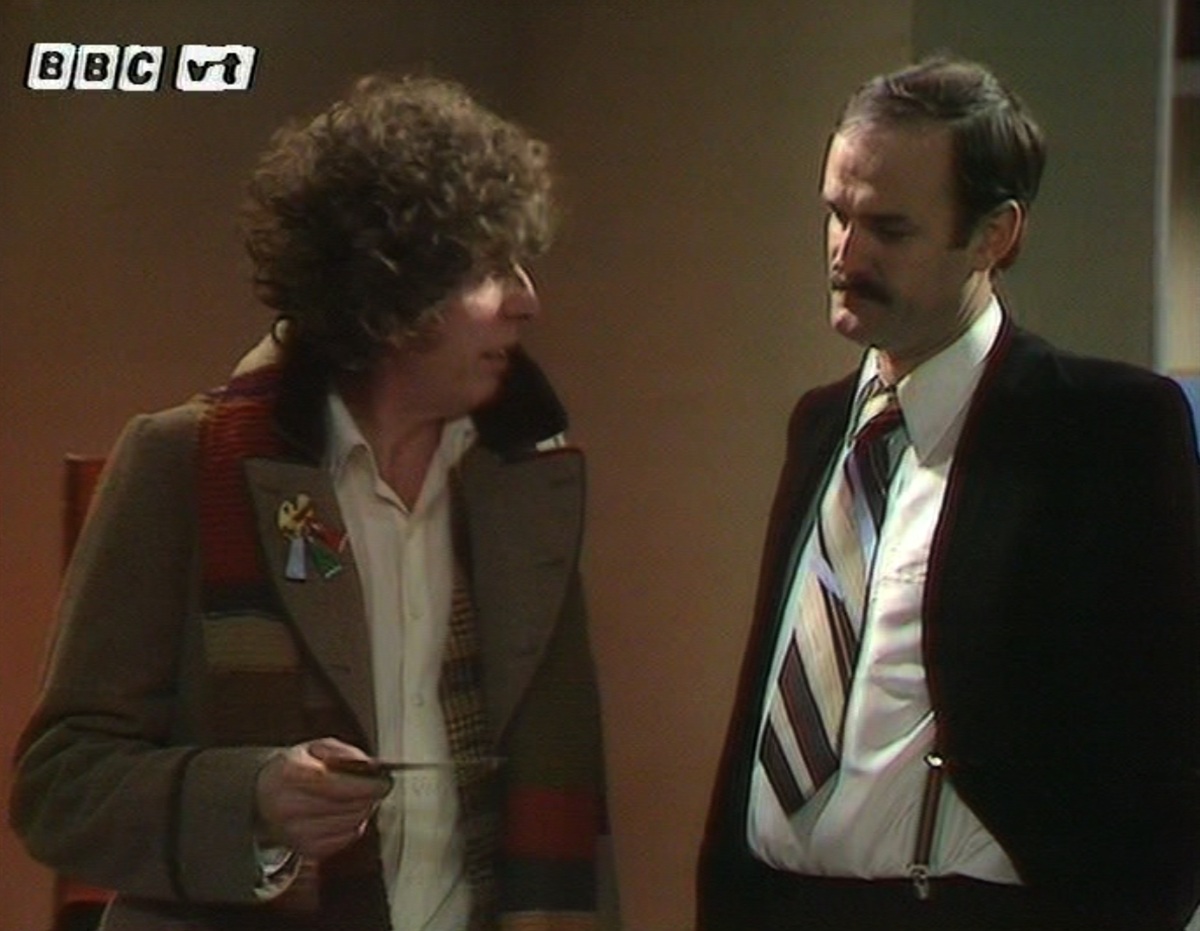
More than a few BBC programmes did of course benefit substantially from this unexpected influx of viewers, and arguably – although Audrey Fforbes-Hamilton would doubtless argue against it – no one programme benefitted more than Doctor Who, which just happened to have what is often cited as the very best story ever made sitting around awaiting a transmission date. Enormous viewing figures followed, but then again so did a story essentially about negotiating with a Fine Fare carrier bag which was hardly exactly likely to maintain them. I’ve contributed a chapter looking at Doctor Who‘s unexpected moment of massive popularity with a captive audience to the Doctor Who Appreciation Society’s new book Doctor Who 70-79, looking at how and why it captured the public’s attention for four weeks to such an unprecedented extent, the chain of coincidences that led to a Douglas Adams-written story filmed in Paris accidentally appearing at the exact perfect moment, what ITV might have tried to counter it with if the threatened industrial action hadn’t actually gone ahead, whether the short term gain was in actuality the root cause of fundamental longer term problems and possibly even the eventual cancellation of Doctor Who itself, what part Dusty Bin might have had to play in proceedings and much more besides. Although it doesn’t quite get around to who won out of Brian Duncan and Keith Birkett. Though it’s not like nobody watched that.

You can get Doctor Who 70-79 here. I can assure you it doesn’t have plans for a pyramid hidden in a secret compartment inside it.
© Tim Worthington.
Please don’t copy this only with more italics and exclamation marks.

