
This is an excerpt from “I Want To Help You, Ro-land”, the chapter of The Golden Age Of Children’s TV looking at drama programmes, and in this particular extract looking specifically at BBC1’s long-running schoolroom drama Grange Hill and its even gritter if less often discussed post-school prospects-charting spin-off Tucker’s Luck. If you like the look of this, you can get The Golden Age Of Children’s TV from Waterstones here, Amazon here, from the Kindle Store here and directly from Black And White Publishing here, and if you’ve already read it and indeed liked it, why not leave a review to balance out that one from a reader who gave it one star and said they were taking it straight to the charity shop, apparently in blissful unawareness of the fact that I would be genuinely thrilled to spot a copy in one? You can also find chats about Grange Hill on the accompanying The Golden Age Of Children’s TV podcast with Emma Burnell here, John Rain here and Ste Brotherstone here.
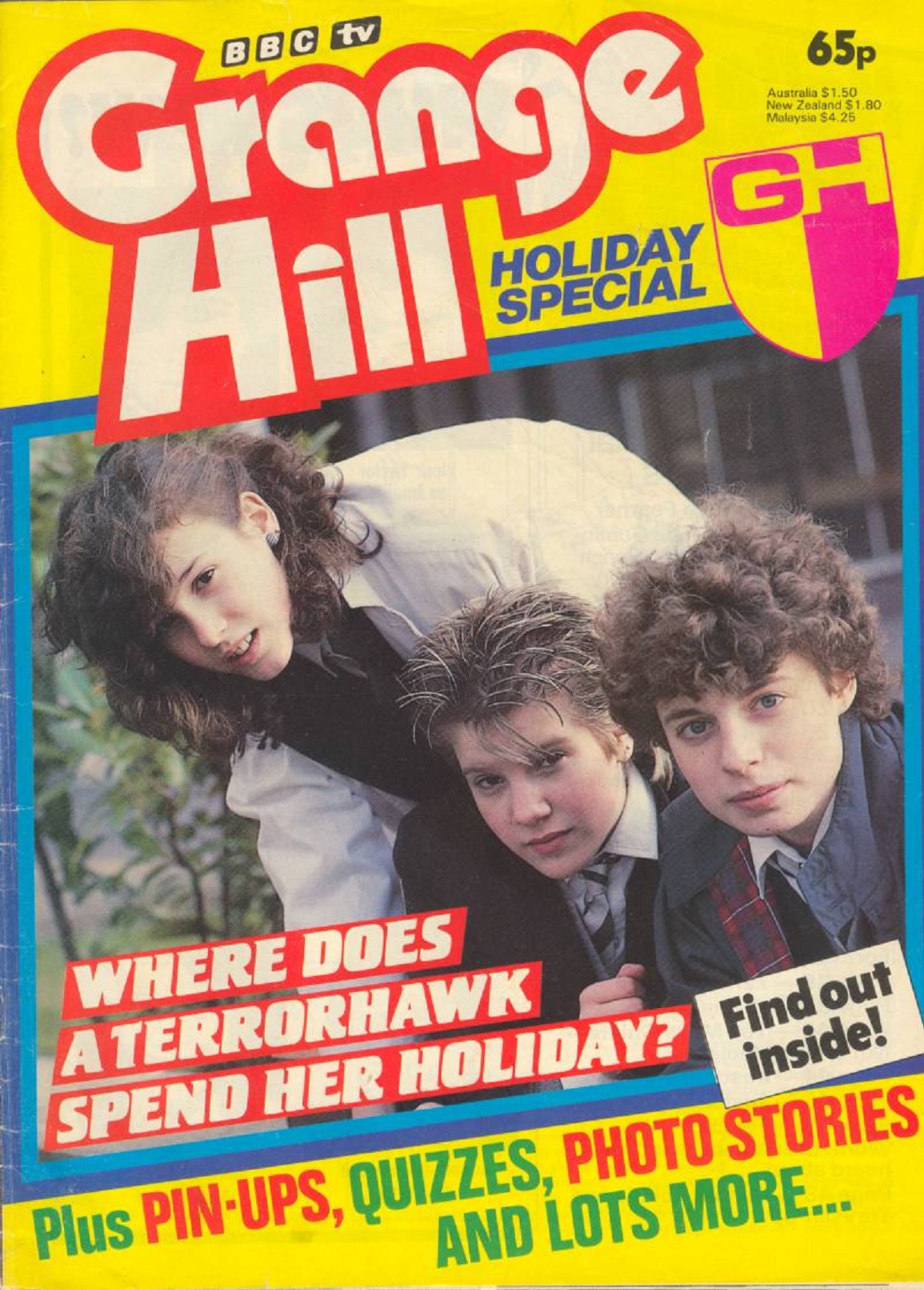
Created by The Kids From 47a’s writer Phil Redmond, Grange Hill (BBC, 1978–2008) was set in a tough North London comprehensive school, with a thoroughly realistic ethnically diverse assortment of pupils ranging from academically promising go-getters to those whose parents couldn’t even afford a uniform, and teachers ranging from strict traditionalist disciplinarians to trendy modern Open University types, with the odd sadistic P.E.-teaching bully boy thrown in for good measure – and that’s where its problems started.
In no mood to do anything other than accurately reflect the schoolday- to- schoolday experiences of a huge proportion of the audience, Redmond fought to show the ups and downs of school life in as simultaneously a dramatic and dull manner as he could possibly get away with, which made Grange Hill an instant flashpoint for complaints and concerns about taste and decency. Endless column inches were devoted to either side of the argument, and the show was more than once very nearly taken off after the volume of objections became too great to ignore, and all the while the audience kept watching in their millions – or at least some of them did. It was not unusual when visiting a friend’s house to be grilled on whether you were ‘allowed’ to watch Grange Hill at home.
The ingenuity of Grange Hill’s format was that the cast literally grew up with the viewers, allowing the characters to deal with maturing emotional and social concerns as they moved up a year while also opening the door to a new younger incoming audience as a fresh register of first years was taken. Well-intentioned mischief maker Tucker Jenkins and his gang Alan Humphries, Tommy Watson and Benny Green, and their rivalry with mouthy Trisha Yates and wannabe gangster Michael Doyle, taunting of weedy sap Justin Bennett and attempts to evade corridor-roaming ‘nutjob’ Booga Benson would progress up the educational ladder – with some difficulty in some cases – to make way for future favourites. These included wheeler-dealers Pogo Patterson, Gonch Gardener and Freddie Mainwaring, school heart-throbs Stewpot Stewart, Claire Scott, Annette Firman and Ant Jones, rule-flouting rebels Suzanne Ross and Danny Kendall, public-spirited wide boy Banksie Banks, good girls tempted by bad behaviour Fay Lucas, Julie Merchant, Cally Donnington, Laura Regan and Julia Glover, Scouse joker Ziggy Greaves and many more favourites than it would be possible to list here. Meanwhile, no-nonsense headmistress Mrs, McCluskey presided over an often irreconcilable roster of staff, ranging from strong-armed firm but fair P.E. teacher ‘Bullet’ Baxter to dishevelled left-wing modern schoolmaster ‘Scruffy’ McGuffy and the legendary Mr. Bronson, an anachronistic leftover from a merger with local private school Rodney Bennett, whose furious shouts of ‘KEN-DALL!’ reverberate to this day. Bronson did, however, go out of his way to encourage pupils he felt had potential even if nobody else could see it, including passionate political activist Ronnie Birtles and overweight target for bullies Roland Browning, whose shy inarticulacy as he was pursued around the playground by constantly rebuffed would-be friend Janet St. Clair, who endearingly called him ‘Ro-land’, masked a genuine gift for the French language.
Another reason why Grange Hill and complaints were never far away from each other came with its willingness to tackle hard-hitting and often shocking and brutal issues. Whether it was violent abuse meted out in the classroom by sadistic Mr. Hicks, a shoplifting contest attracting the attentions of the police, Antony Karamanopolis’ fall from a high wall after a dare, Jeremy Irving coming a cropper whilst showing off in the swimming pool, a grim encounter with a man on the common after a bus conductor refused to allow any Grange Hill pupils on board, or – most famously – a contentious but thoroughly necessary storyline in which previously innocent mischief-maker Zammo Maguire was discovered to be using heroin, the show continually pushed past the line of acceptability with the purpose of opening up important points of debate.
Unrepentant racist bully Gripper Stebson found that while some pupils were intimidated by him, others including Randir Singh, Precious Matthews and Glenroy Glenroy were more than prepared to physically stand up to him, leading to some surprisingly violent scenes. In contrast, Imelda Davies’ all-girl gang – Georgina Hayes, Helen Kelly and Sharon Burton – were initially introduced as a straightforward squadron of bullies, but it soon became clear that Imelda had deeper issues stemming from her neglected home life and was beyond reason or control; this would culminate in the gang turning on her when they felt she had gone too far even for them, Imelda being sent to a school for children with psychological needs, and on a more positive note Helen emerging as an aspirant engineer arguing that she should be allowed to do work experience that had been reserved for boys.
Grange Hill may have traumatised some viewers, but it did so with the best of intentions and in any case, there were always more than enough humorous interludes to compensate for it, from Gonch getting one over on would-be bully Trevor Cleaver with his ‘walled-up ghost’ hoax to Freddie Mainwaring on a school trip being reduced to wearing an Aran sweater and wellies after one mud-bound tumble in flashy clothes too many., Whether politicians and parents liked it or not, Grange Hill was all things to all viewers, and while the writing wasn’t exactly on Danny Kendall’s ‘Speaking Wall’ for traditional drama, it was certainly emblematic of a pronounced change and a willingness to go much darker.
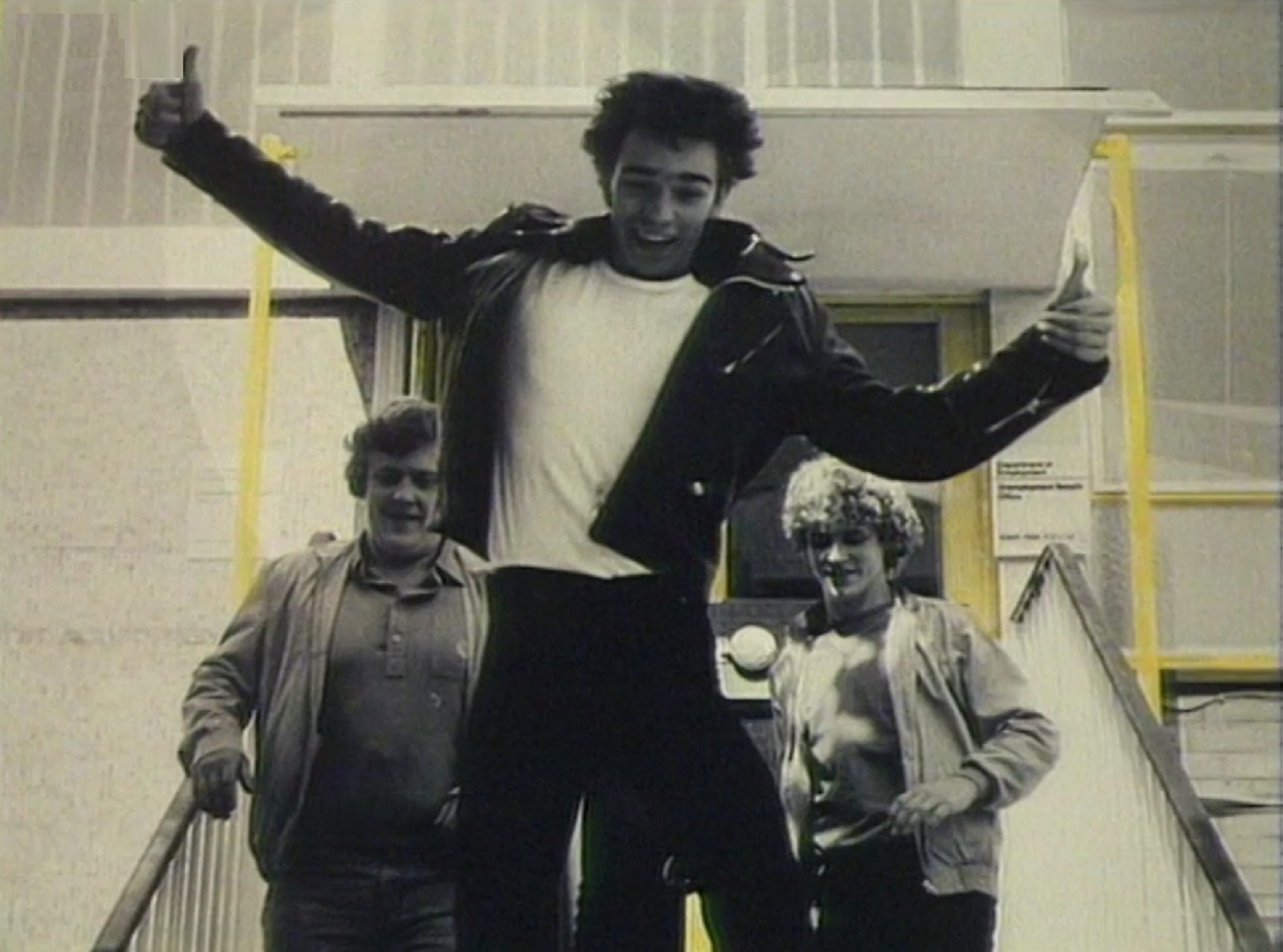
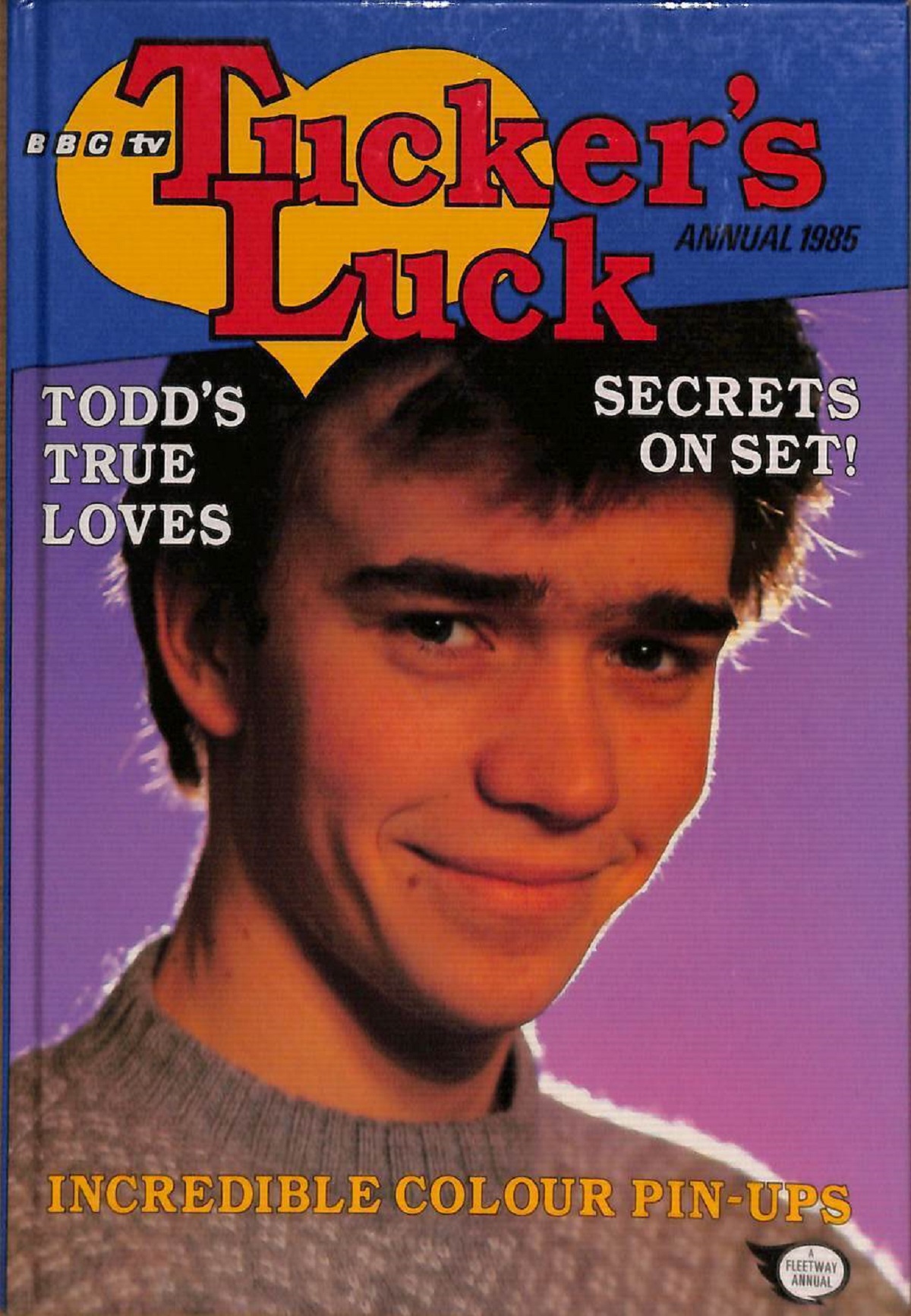
Tucker’s Luck (BBC, 1983–85) saw Grange Hill’s former tearaway defying all of Bullet Baxter’s predictions that he would never amount to anything by throwing himself into adult education and youth training schemes while chasing girls, with threats of thumpings from older brothers never far away. Tucker’s new life drove a wedge between him and the increasingly indolent and prospectless Alan and the increasingly criminal Tommy, but he forged new friendships with misunderstood local skinhead Ralph Passmore and his former classroom arch-enemy Trisha Yates. Set in a world of orange- logoed Job Centres – a point hammered home by the hilarious opening titles shot of Alan forlornly rifling through a handful of coins while dreaming of affording some chips – officious potential bosses and hair-raising railing-vaulting chases across supermarket car parks, it was a hugely underappreciated series that showed hope and possibility while never shying away from the harsh realities of Britain in the early eighties.
Buy A Book!
There’s lots more about the Grange Hill and Tucker’s Luck – along with drama serials like The Owl Service and Moondial that were terrifying for entirely different reasons and others like Jossy’s Giants and Press Gang that weren’t at all – in The Golden Age Of Children’s TV, available in all good bookshops and from Waterstones here, Amazon here, from the Kindle Store here and directly from Black And White Publishing here.
Alternately, if you’re just feeling generous, you can buy me a coffee here. Pending a tirade from Mr. Hopwood about the continual disappearance of staffroom spoons. Let’s face it, Pogo was probably the prime and only suspect.
Further Reading
You can find another extract from The Golden Age Of Children’s TV, this time taking a look at The Adventure Game, in Doogy Rev! here.
Further Listening
You can find chats about Grange Hill in The Golden Age Of Children’s TV with Emma Burnell here, John Rain here and Ste Brotherstone here, and in Looks Unfamiliar with Mitch Benn here, Anna Cale here, Ben Baker here and Richard Marson here as well as Bob Fischer on Tucker’s Luck here.
© Tim Worthington.
Please don’t copy this only with more italics and exclamation marks.

