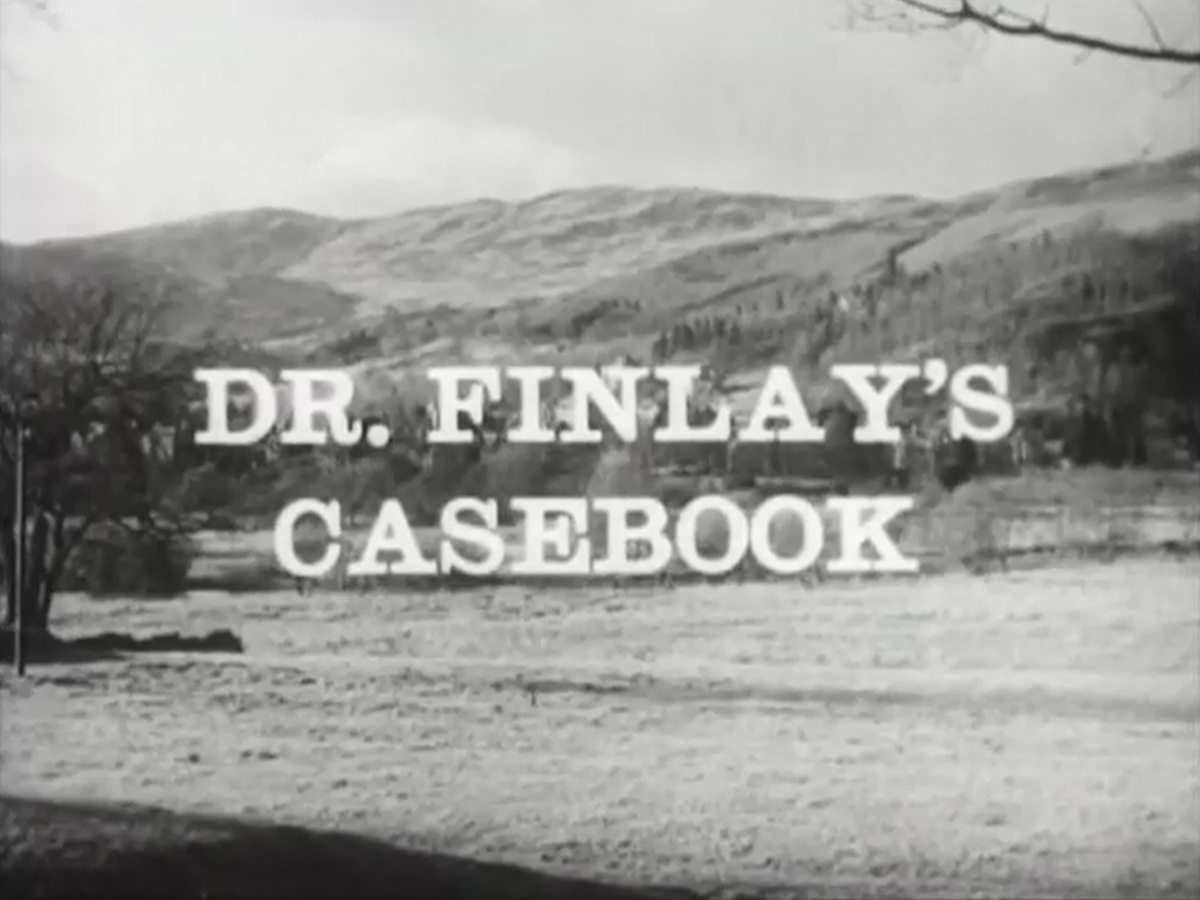
In 1935, doctor turned novelist A.J. Cronin published his sixth book in a career that would span five decades and more than thirty titles – not to mention dozens of magazine and newspaper serials and short stories – Country Doctor. Although he had spent most of his time as a medical practitioner working on Harley Street and in Notting Hill, with spells on attachments to department stores, collieries and inevitably for someone of his generation wartime training hospitals, Country Doctor drew instead on his childhood in the quiet Scottish village of Cardross for his tales of Finlay Hyslop, an idealistic and enthusiastic freshly qualified general practitioner who accepts a job alongside a curmudgeonly veteran at a rural practice. It is far from the best known of A.J. Cronin’s novels – that honour would arguably go to 1937’s The Citadel, a darker drama about industrial injury and medical ethics, which was made into an Oscar-nominated film starring Robert Donat the following year – and unlike the vast majority of the others it does not even have its own page on a certain popular online reference site. It was, however, to find a more unexpected legacy and arguably even greater popularity courtesy of its own television adaptation which many of its many admirers may not even have realised was based on a novel. The popularity of ITV’s nine-part 1960 adaptation of The Citadel had caused television producers to start looking elsewhere in A.J. Cronin’s portfolio for likely source material, and Country Doctor soon caught the eye of the BBC’s Campbell Logan. With Cronin engaged to develop storylines and an astute change of the lead character’s name to Alan, Dr. Finlay’s Casebook made its debut on 16th August 1962 and rapidly established itself as one of the very first hit television dramas as we would understand it today.
Starring Bill Simpson as Dr. Finlay, Andrew Cruickshank as the cantankerous Dr. Cameron and Barbara Mullen as their redoubtable housekeeper Janet, Dr. Finlay’s Casebook would go on to clock up a whopping one hundred and ninety one episodes between 1962 and 1971. Set in the fictional town of Tannochbrae at an indeterminate point in the late 1920s, the combination of occasionally dramatic light medical ‘mysteries’, skirmishes with psychics and alternative therapists and even on one occasion an isolated outbreak of far out crazy psychedelic delusions ultimately discovered to have been caused by inattentively baked bread, the permanently prickly relationship between the three lead characters and their interactions with the bluff and eccentric locals quickly endeared themselves to viewers in a manner that the fledgeling television industry had rarely encountered before then; when Dr. Finlay’s relationship with his love interest Barbara broke down, Bill Simpson reputedly received sackfuls of commiserative letters from viewers, while Andrew Cruickshank was invited to speak as guest of honour at the British Medical Association’s annual dinner. The cast of Round The Horne poked fun at the series in a sketch set in ‘Stomachbrae’, while Andy Stewart of Donald Where’s Your Troosers? infamy just about scraped into the Hit Parade with Dr. Finlay, a novelty Highland reel that suggested he may even have been in the same continent as the show at some point. Over and above any of the above, however, Dr. Finlay’s Casebook‘s appeal was down to two possibly less obvious factors that held everything else together – the perfect casting of the three leads and the sprightly outdoorsy orchestral theme music. Prolific library composer Trevor Duncan had recorded March From ‘A Little Suite’ – the other sections were regularly used in the show as scene-setting incidental music – for Boosey And Hawkes in 1959, and having had no particular influence in mind for it, would later admit to pleasant surprise at how suitably and evocatively ‘Scottish’ it suddenly sounded in its new context.
Following the conclusion of its lone colour series in 1971, Doctor Finlay’s Casebook was considered to have run its course and was quietly retired in a manner that Dr. Cameron would never have countenanced for himself, but it remained widely loved and continued to be recognised as one of the most popular BBC television programmes of all time, with repeated episodes forming a cornerstone of the BBC’s anniversary celebrations Festival 40 in 1976, 60 BBC Years in 1982 and TV50 in 1986. Even late in 1986, Dr. Finlay’s Casebook still held sufficient prominence in audience affection for BBC1 to clear their Sunday afternoon schedules to repeat a black and white episode as a tribute to Bill Simpson; a courtesy that, perhaps tellingly, would not be afforded to Patrick Troughton a couple of weeks later. Yet nowadays, it is rare to find any mention of Dr. Finlay’s Casebook in anything other than passing, and usually only with reference to its erstwhile popularity at that. In some regards, this present day lack of standing is not difficult to understand. There is nothing in Dr. Finlay’s Casebook that could inspire the same sort of enduring interest as a certain other Doctor who made his debut on BBC-TV just over a year later, and while one hundred and twenty two of those one hundred and ninety one episodes are currently missing – and some of them do still resurface occasionally, most recently in 2022 – that still leaves sixty nine present and correct in the archives; an inconveniently substantial amount that denies it the tantalising ‘lost’ mystique of contemporaries like United! and R.3. While this may be arguably understandable, however, it does not feel entirely fair. Even in a world of two channels its elevation to a national talking point still appears a remarkable feat, so what exactly did viewers find so compelling amongst all of those filmed inserts of very slightly out of date motor cars trundling along the gravel driveways of Tannochbrae? Well, there do happen to be ninety plus episodes of it still in existence. Including the one that introduced the eagerly-awaited second series.
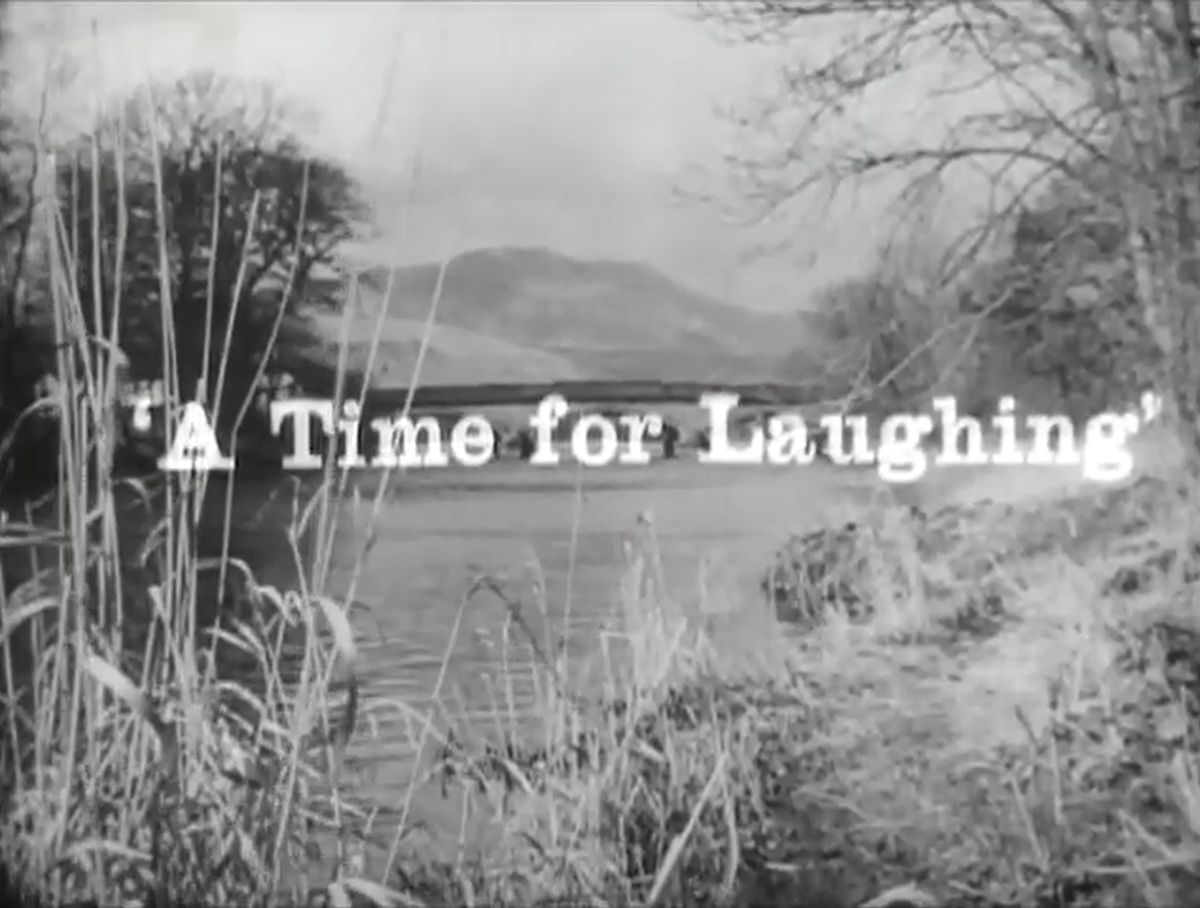
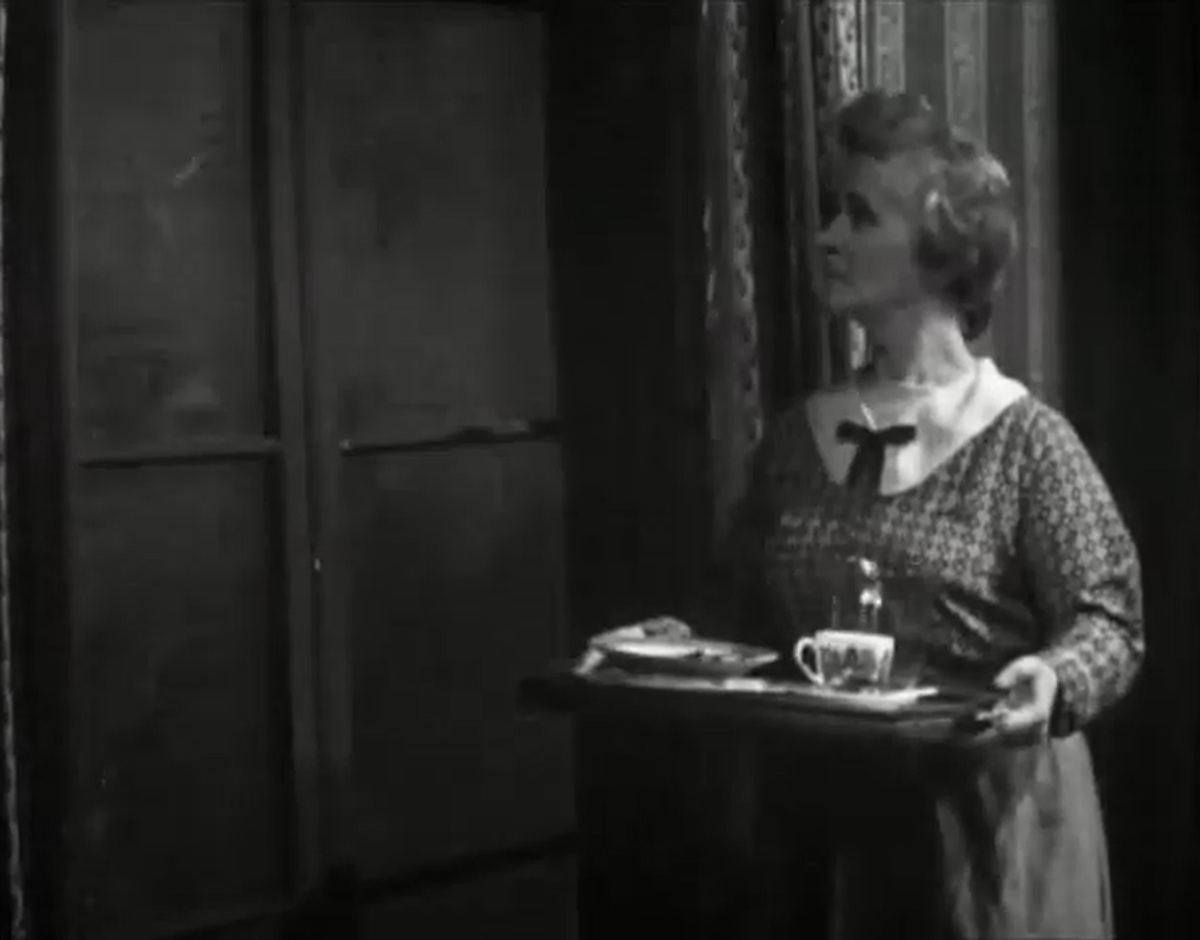
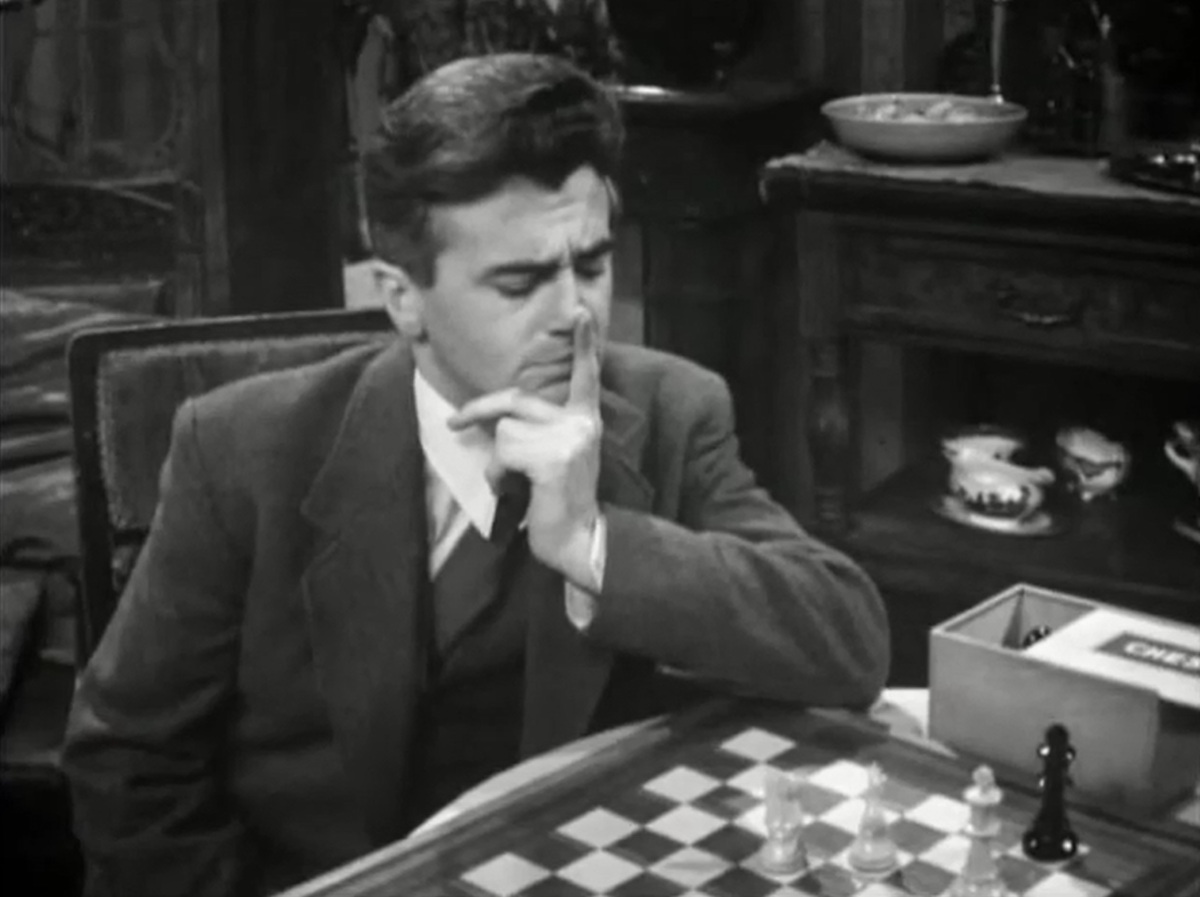
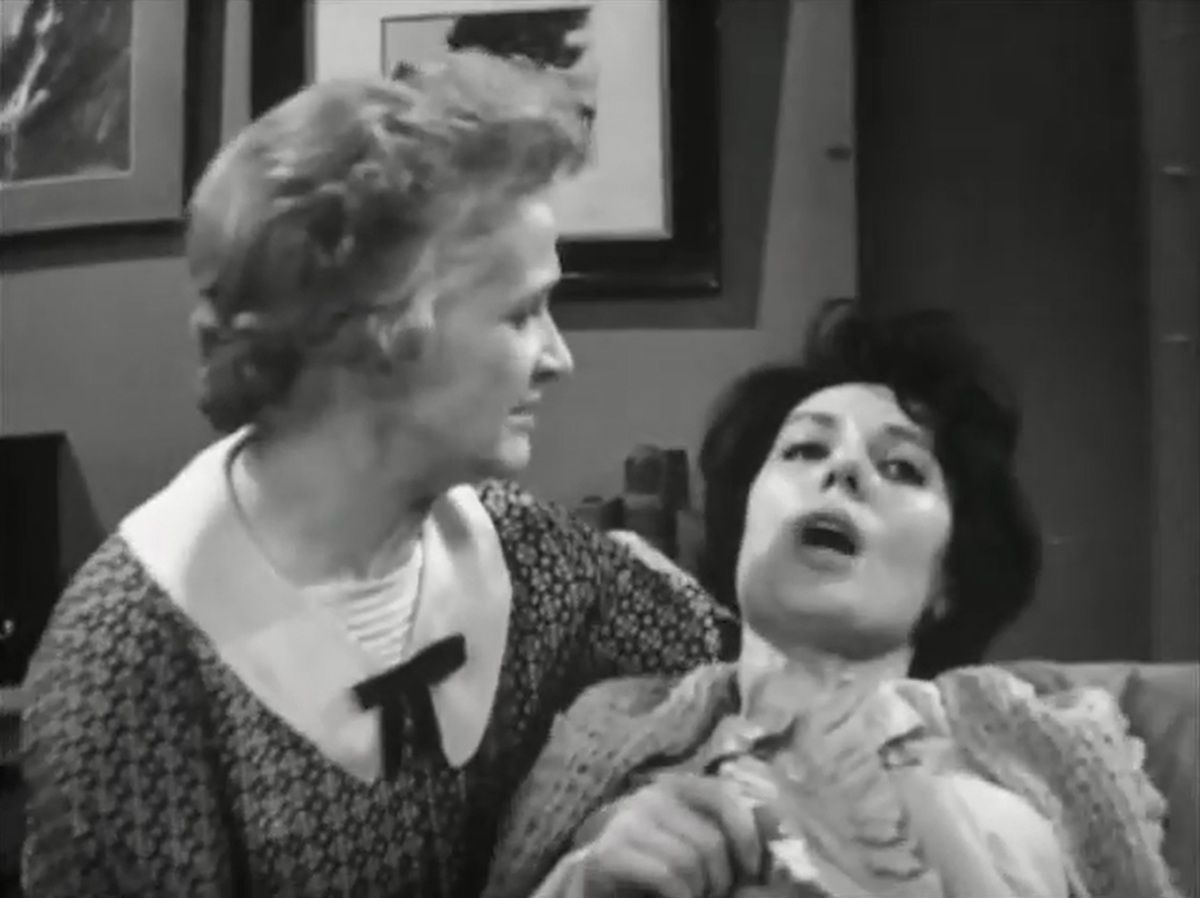
A Time For Laughing, the first episode of the second run of Dr. Finlay’s Casebook, was transmitted by BBC-TV – the launch of BBC2, and by association BBC1, was still seven months away at that point – at 8pm on Thursday 5th September 1963 immediately following an instalment of magazine office-set light drama Compact, itself only now represented by a tantalising four episodes out of three hundred and seventy three, and received its lone repeat on 11th July 1964. Written by Harry Green and Anthony Coburn and directed by Cedric Messina, it opens with an almighty and unusually convincing rumble of thunder as Janet looks anxiously out of the window fearing for Dr. Cameron’s dryness; Dr. Finlay, who is deeply engaged in a game of chess against himself, dismissively points out that his easily rankled practice partner is on medical business in Glasgow rather than out roaming the hills. Conveniently enough, he promptly returns bemoaning the fact that the strong winds almost blew his car off the road, and has just about enough time to casually and mischievously solve the chessboard conundrum that Dr. Finlay has set for himself – “something a wee bit kind of fishy about that brilliant move, Doctor” – before their suppertime bonhomie is interrupted by hammering on the door. “Who the hell’s that?”, queries Dr. Finlay in the first of many surprisingly uncouth for the time interjections, and his inquiry is quickly answered as heavily pregnant local housewife Meg MacBain collapses through the door, visibly having started her contractions some hours ago. Although the doctors are both baffled as to the whereabouts of her husband and why she would have walked seven miles on a night like this and in her condition, there is no time to ruminate further as they are forced to deliver the impatient infant there and then. The mystery soon resurfaces, however, when Janet phones the MacBain farm looking for her husband to relay the good news, only to be told he is away on business, evidently with no awareness of his impending fatherhood.
While Janet busies herself lashing together a makeshift carry-cot, the doctors take the opportunity to break out the decanter and toast young MacBain and inevitably to further speculate on the details of this otherwise routine medical emergency that just do not add up. Dr. Cameron confesses that he does not know Mr. MacBain very well, but had treated him for an adult case of mumps which it was feared would have left him sterile, and that his pride and his desire for a son and heir had subsequently led him to abruptly turn down any suggestions that the couple should enquire about adoption. Presumably his reaction to the joyful news is liable to be similarly abrupt, as Meg begins hysterically shouting that her husband – who she pointedly refers to as MacBain – must under no circumstances be allowed to see her or the baby, eventually tearfully confessing that “he’s not the father”. Ruminating on the conundrum that morally he cannot prevent McBain from seeing the baby but is medically obligated to prevent him from seeing Meg, Dr. Cameron sighs that, in his experience, “women are queer cattle”, earning him a disapproving headshake verging on disbelief from Dr. Finlay to which he can only respond with a thoroughly place put-in rationalisation that “ach, it’s just a figure of speech”.
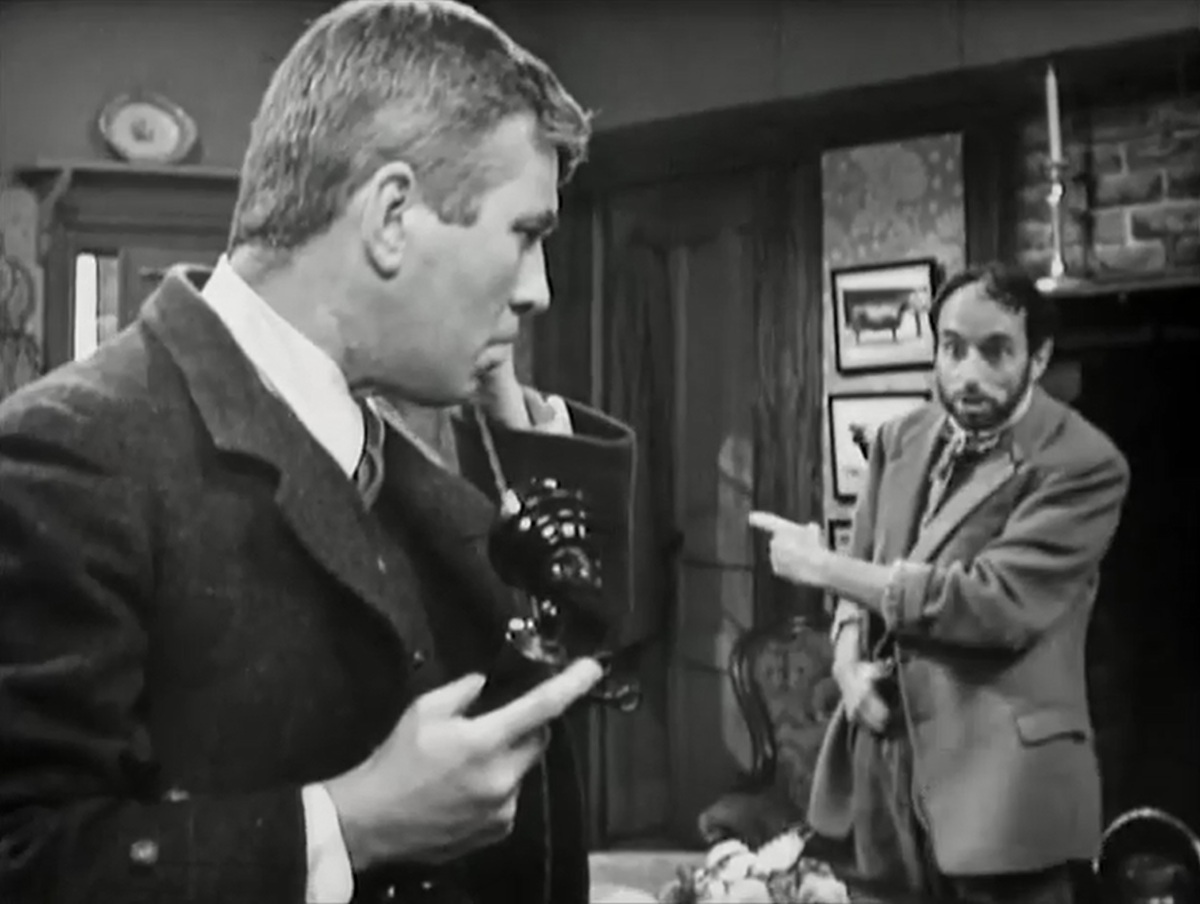
Over at the covertly expanded family farm, Mr. MacBain returns to find his wife absent, and establishes – courtesy of some fairly robust and impatient questioning – through his farmhand Ross that she wasn’t there when he had been expecting his breakfast that morning. Following a deftly handled phone call to Janet, MacBain learns that Meg is at the Cottage Hospital and that the family is now one third larger and thirty three percent more male than it had been when he had set off on business. Janet helpfully voices her suspicions to Dr. Finlay that Meg’s unexpected outburst is nothing more than hysteria provoked by the rigours of childbirth and a rush of blood to the head, but it transpires he had already broached the possibility at the hospital and had found that he very quickly regretted it. When it becomes clear he has no patience for any of her further attempts at common sense-driven diagnosis, Janet sharply users Dr. Finlay out of the surgery so she can complete her dusting duties. His similarly irritated and indignant response is to advise her not to let the blood rush to her head either.
While all of this practice-based passive hostility is huffily unfolding, incongruously modishly Bob Dylan-capped local tinker Tim O’Shea is drawing up outside local tap room The Drovers’ Inn – although you can clearly see on the location sequences that the actual pub used for the exterior shots is called something else entirely – singing something to himself about ‘the fairest fifteen pence’. Dr. Cameron, who happens to have called round to check on landlord Rab McLellan’s mother, displays an uncharacteristic benevolence towards the roving rogue, expressing his fondness for his cheeky blarney and earning himself a suitably leg-pulling complement in return that “if you bottled your company, your fortune would be made”. Tim wastes no time in attempting to sell all and sundry some collar studs that he claims are made from “pure Irish gold, from the same mine, the same mint that knew the Harp of Tara”, but Dr. Cameron’s jocular attempts at querying both their provenance and price tag are derailed when a far from blarney-tolerating MacBain turns up requesting a ‘word’ with Dr. Cameron. He is of course overjoyed at the birth of his son and heir but deeply displeased at the carousing-curtailing fact that Meg is, as Dr. Cameron puts it, ‘not herself yet’. His confrontational attitude is however no match for the elder physician’s fully re-engaged cantankerousness, and he puts the shouty landowner firmly in his place with a stern “you have an unfortunate turn of phrase, Mr. MacBain” and a few placatory if misdirecting medical observations on how childbirth can be a disturbing and disorientating experience for the mother, especially in the circumstances Meg found herself in. Suitably placated and misdirected, a more cheerful MacBain departs with a jaunty observation that “women are queer cattle”. “I’ll never use that phrase again”, observes an exasperated Dr. Cameron to nobody in particular.
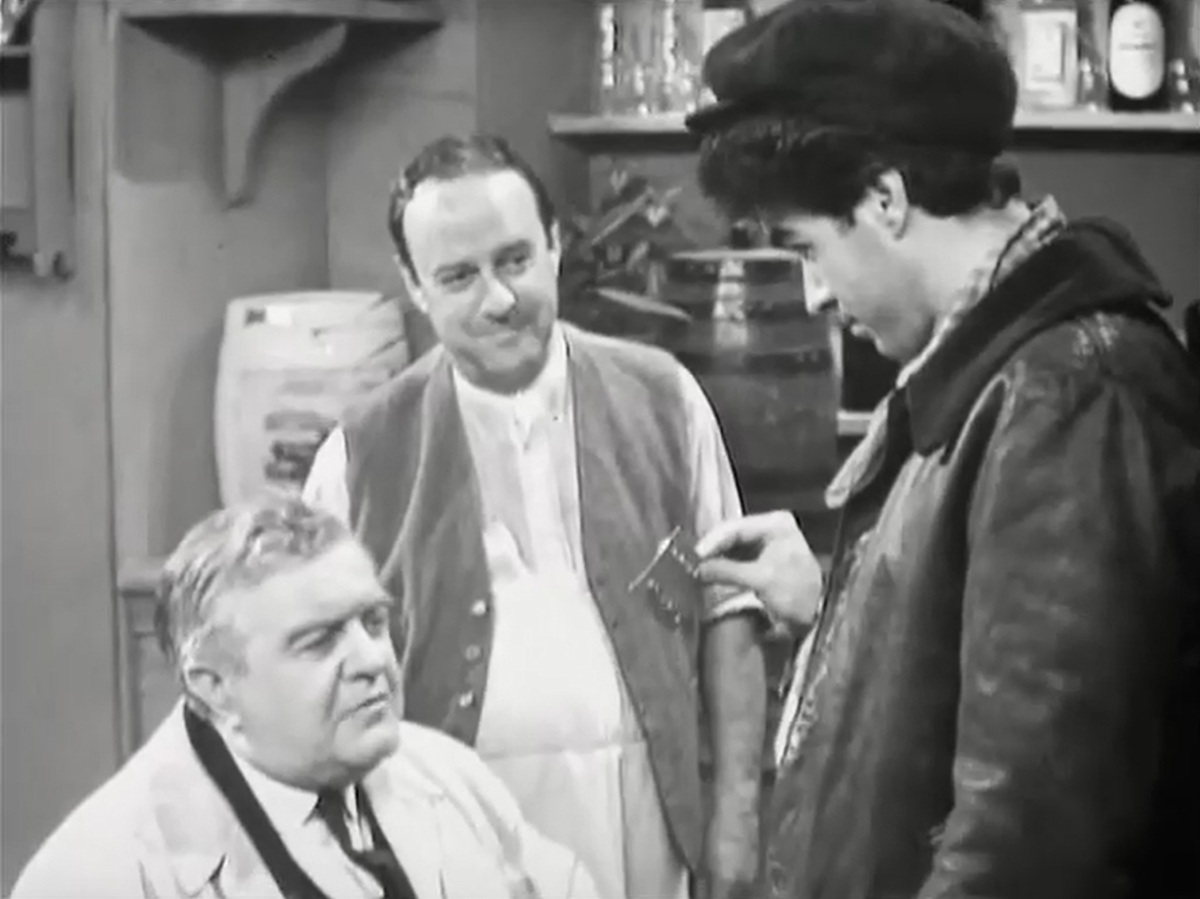
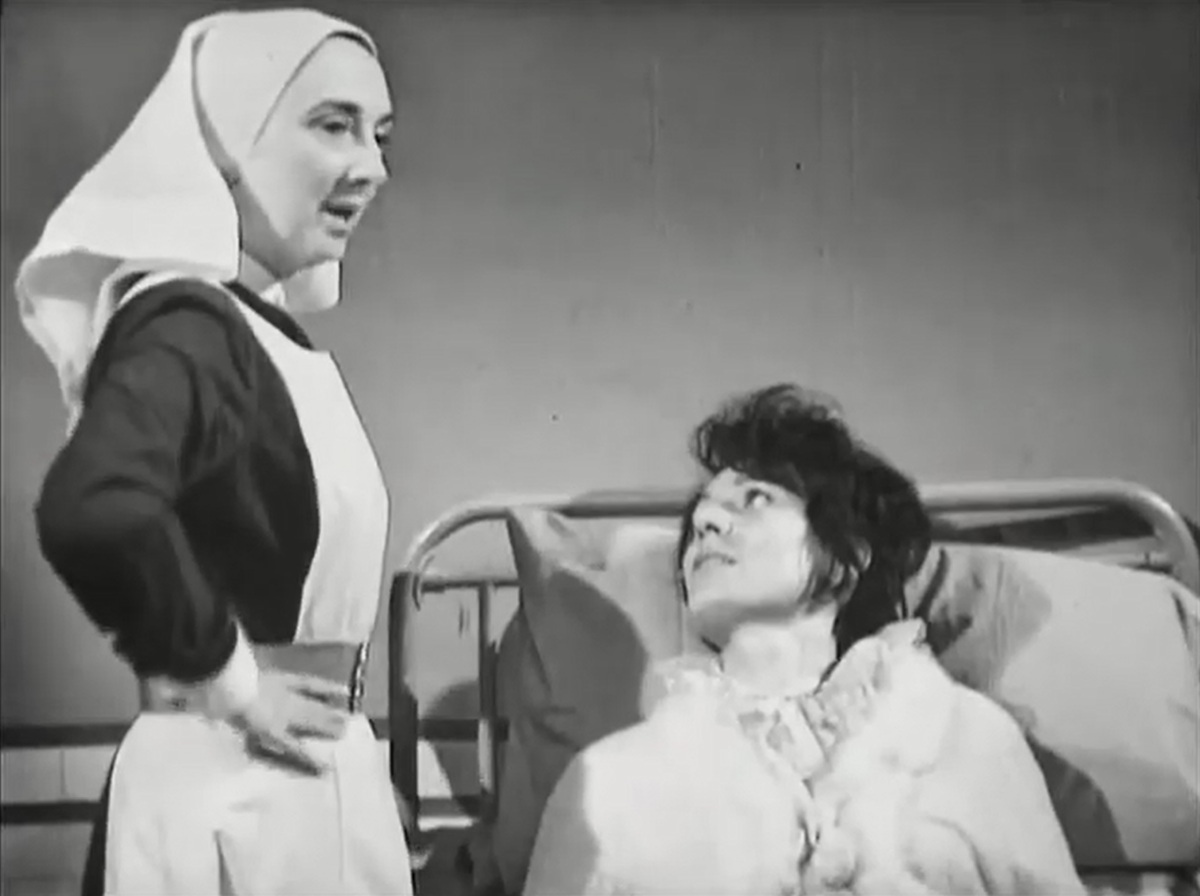
As Rab fills Tim in on what the commotion was all about, causing him to go silent and shifty and very determinedly punt a dart at a conveniently off-screen dartboard, Dr. Finlay is finishing up on his checks on Meg at the hospital and is somewhat less than happy to see MacBain there, who declares himself to be present just in case he is asked for. Dr. Finlay discreetly ushers him in to the Duty Room on the pretext of a quiet chat, but Meg has already overheard his voice and starts panicking. Despite reminding her that babies cannot abide loud noises, the ward sister fails to quell her hysteria and resorts to sternly warning Meg that “there’s nothing wrong with you except a bad conscience and fright – if you let loose again so help me god I’ll belt you one… it’s the routine treatment for hysteria – there’s nothing in the textbooks about my enjoying it but there’s nothing against it either”. If nothing else, this at least has the momentary desired effect. Back at Arden House, the permanently loggerheaded medics are brow-furrowedly debating their own ethical and legal position in the matter. Dr. Cameron asserts that while the father if he indeed isn’t MacBain will have no legal standing or protection, somewhat indelicately emphasising that “she can’t bastardise her own child”, the true identity is nonetheless of more than academic interest to them. Janet is outraged by his suggestion of a dalliance with a farmhand, yet equally dismissive of his consideration that the culprit could be one – and presumably not both – of somewhat more gentrified local farmers McGillivray and Thompson as “they’re over sixty and they couldnae raise a gallop between the pair of them”. A smirking Dr. Finlay suggests the potential involvement of a commercial traveller, chortling heartily at his own joke about them supplying ‘fertiliser’, although Cameron is moved to consider this a more than possible explanation, mooting that Meg may even have been trying to provide MacBain with his much hoped-for son and heir without leaving the kind of gossip-provoking telltale clues that larking around with a local would surely engender. Janet’s response to this drives Dr. Cameron to enquire how she has come to have so much expert knowledge of other people’s potential affairs of the heart, and her response in turn is to exit the room declaring “I may be older, but I had my day” with a knowing smirk. A flustered Dr. Cameron sternly informs Dr. Finlay that he is to effect not to have heard that remark, prompting an even more smirk-fuelled rejoinder that “just one thing, and then it’s forgotten… good for her!”.
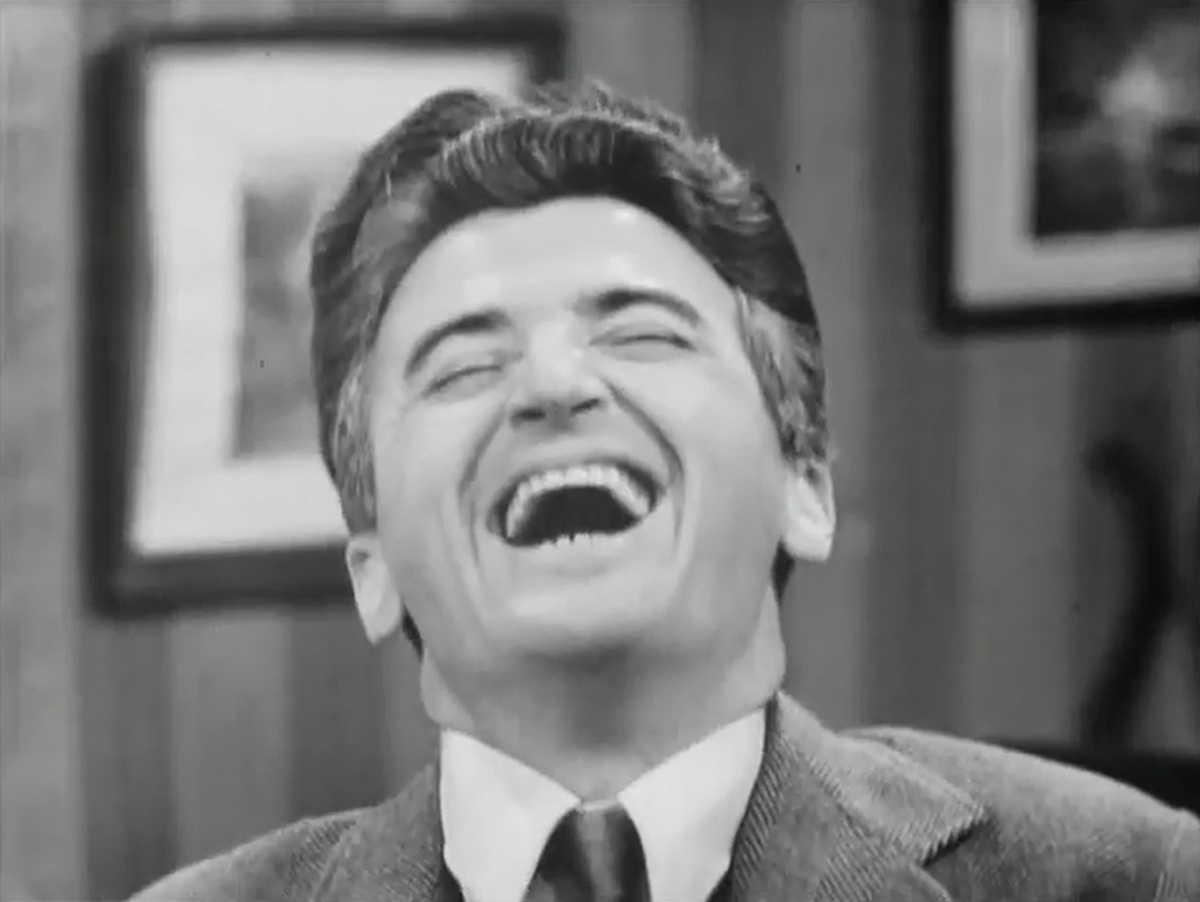
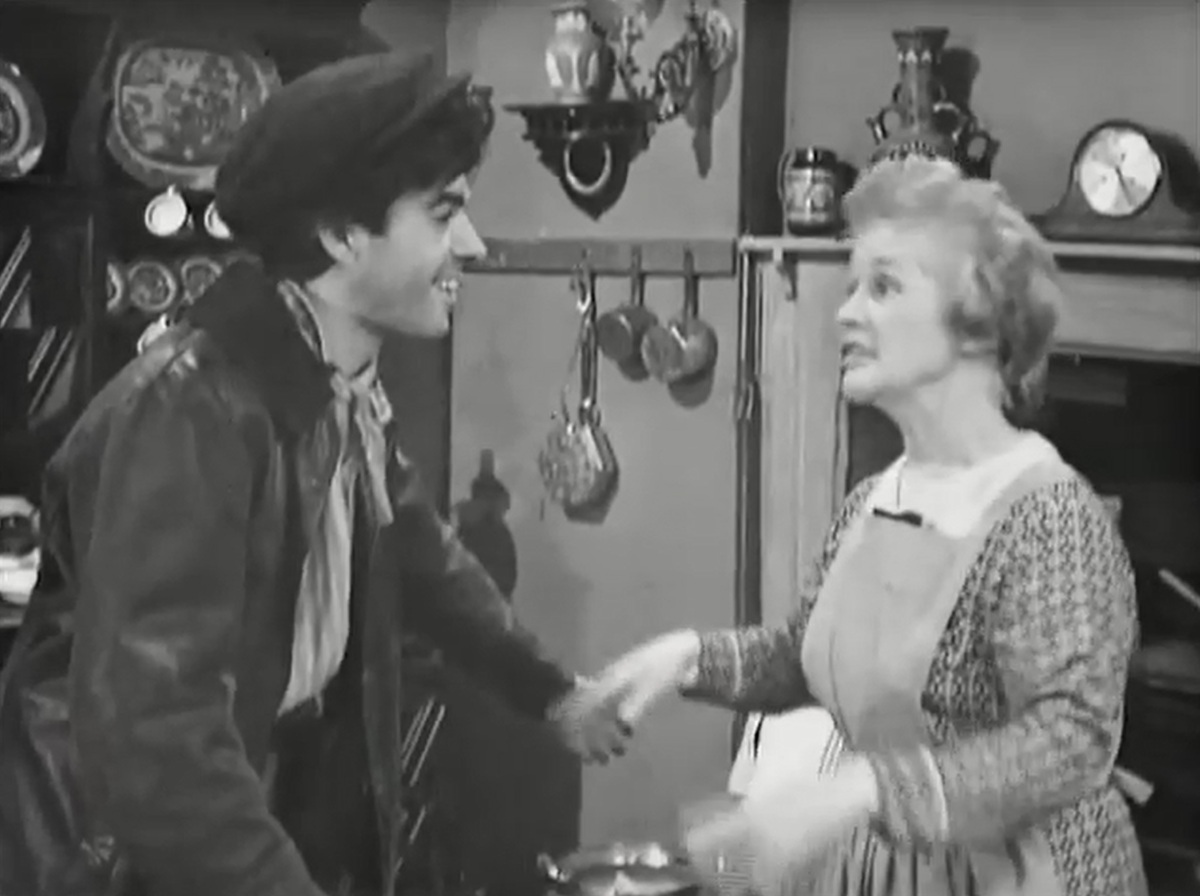
A degree of that day-having is clearly in evidence when Tim O’Shea turns up at the back door, shilling for buttons – “tuppence for studs and ten pence for blarney” – to a clearly smitten Janet, although his usual demeanour once more deserts him when the name MacBain is mentioned. He makes a half-hearted attempt at plausible deniability, but Janet is having none of his nonsense and once she voices her suspicions to him, he confesses on the spot. Janet urges him to come clean and put matters right and leaves him in the kitchen to, apparently, eat some of his collar studs. Dr. Cameron is not slow to express his annoyance at the corresponding delay to the presentation of dessert, causing Janet – much to Dr. Finlay’s amusement – to inform him that there was one name conspicuous by its absence from his list of potential suspects, who could easily get away with a covert visit to a farm without any suspicions being aroused. Although his junior partner roars with delight at the consequences of his ‘tactical error’, Dr. Cameron is quick to remind his housekeeper that “you will bear in mind Janet that I am a Doctor – there are jokes that are not made in a Doctor’s household”, preparing the stage for her to deliver her winning move as she makes a covert allusion to impotence, and only then deigns to inform him that Tim is in the kitchen with something on his mind. “To hell with the pudding”, barks the ageing non-lothario, “bring him in!”. Cutting through the inevitable attempt at diversionary loquaciousness, Dr. Cameron – although Dr. Finlay is still having undue hysterics – thunders “if you’ve come here to find out if you’re in trouble, the answer’s yes”, prompting a further confession with an unexpected twist. Normally careful to confine the flirtatious banter to sales patter and never taking up any of the clandestine invitations that it may engender, Tim had nonetheless gradually developed feelings for Meg; feelings that, he was crushed to post-coitally discover, were not to any degree reciprocated. It is at this point, it has to be noted, that he attempts to make light of his predicament in what can now not really be seen as anything other than regrettable terms, with Dr. Finlay’s by now unstiflable chortles not really helping to alleviate the jarringness, so we can probably be merciful for the fact that Janet’s response to her employer’s mirth is to thump him firmly across the chest. Tim remarks with regretful sincerity that he does not consider himself a suitable parent, but that if Meg had so desired he would have had no hesitation in shouldering his responsibilities; “and for that“, reassures Dr. Cameron, “much would be forgiven you”.
Phoning the hospital to check on Meg, Dr. Cameron discovers MacBain is back and demanding to be allowed in to see her, causing the ward sister to declare that she has had quite enough hullaballoo in her hospital and that it is up to Dr. Cameron to deal with the situation or she will call the police. Arriving post haste, and following repeated interjections of “stop that noise”, “you’re behaving very badly” and “you will apologise to sister in due course”, a stern but sympathetic Dr. Cameron finally subdues the shouting kilted landowner into silence by informing him that in actuality Meg had walked to their house in the storm and they delivered the baby there, and that she had done so on account of her belief that he is not the father. MacBain dismisses this revelation by scoffing that “you’re old enough to know better and you’re too old to know anything at all”; “I’m old enough to treat you courteously”, replies Dr. Cameron, “you are making a disturbance in this hospital, will you please go”. Which MacBain duly complies with, begging the ward sister’s pardon as he exits through a door that, you cannot help but notice, does not close properly. Pausing only to phone Dr. Finlay to ask him to travel to Glasgow to arrange a place on a ward for Meg away from all of this uproar – which Finlay mysteriously remarks suits him anyway – he visits Meg to inform her that MacBain knows what has happened and to ask to hear her side of the story, which he proceeds to listen to with unjudgemental and caring stoicism. Torn between her loyalty to her husband and her desire for children, Meg had taken a calculated risk to reconcile the two but had not accounted for the guilt that would consume her as a consequence. Evidently heavily impacted by the conflicting emotions of all three parties, Dr. Cameron offers to take on the burden of explanation himself.
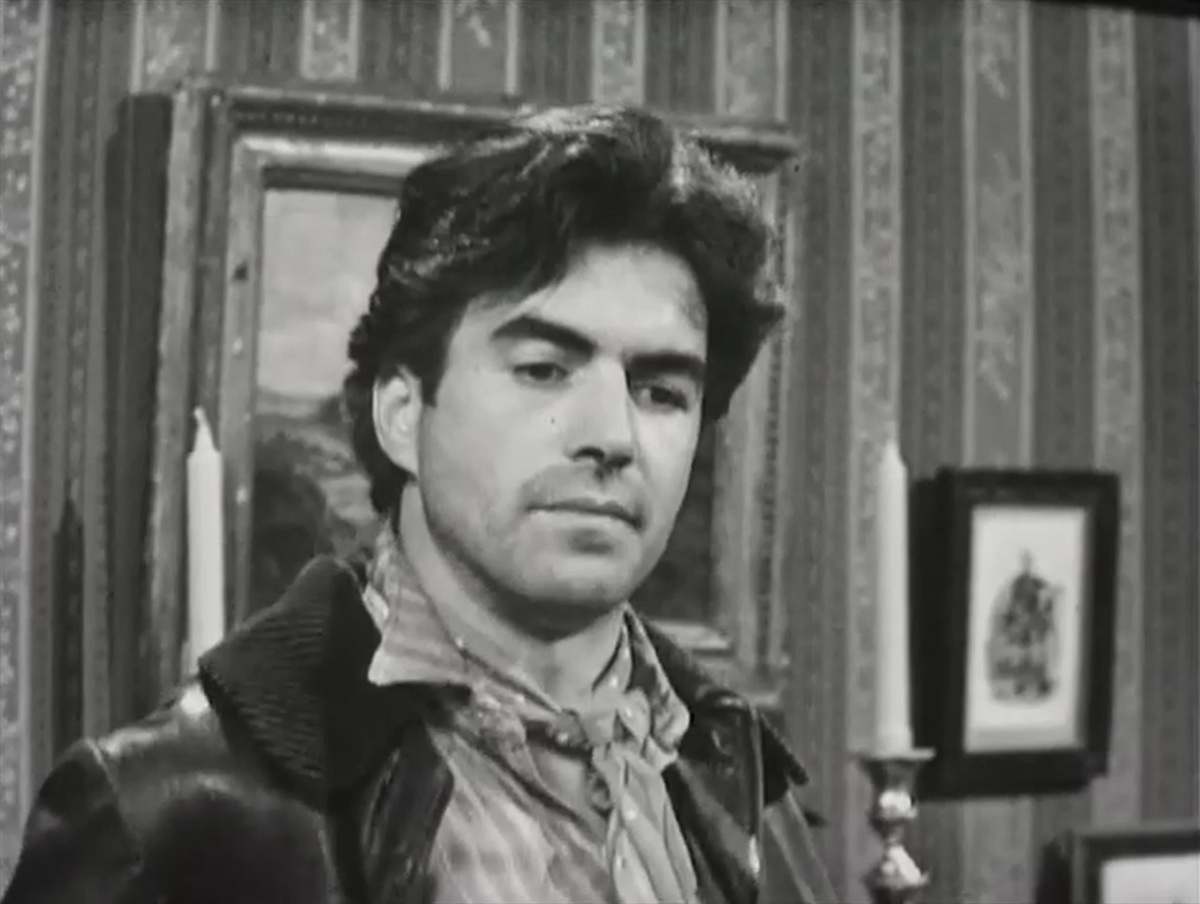
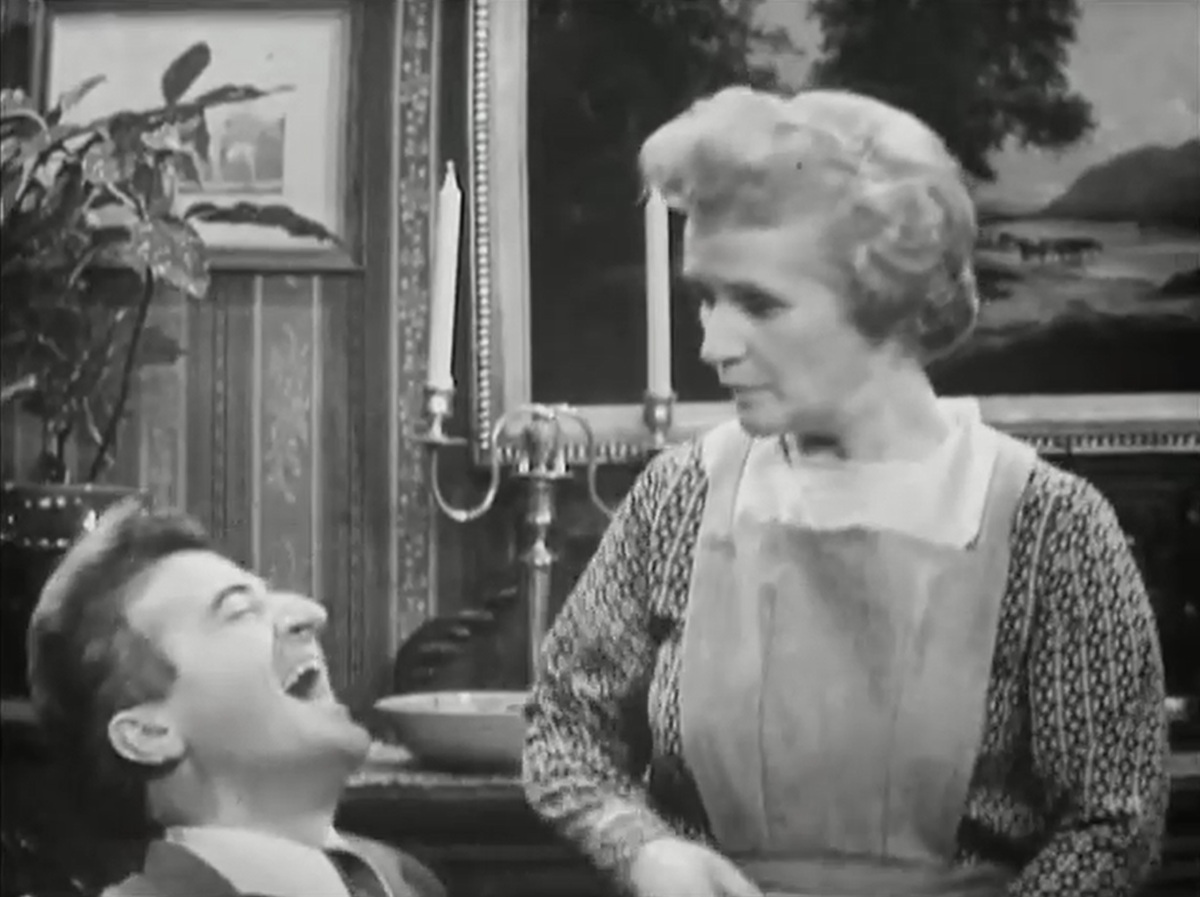
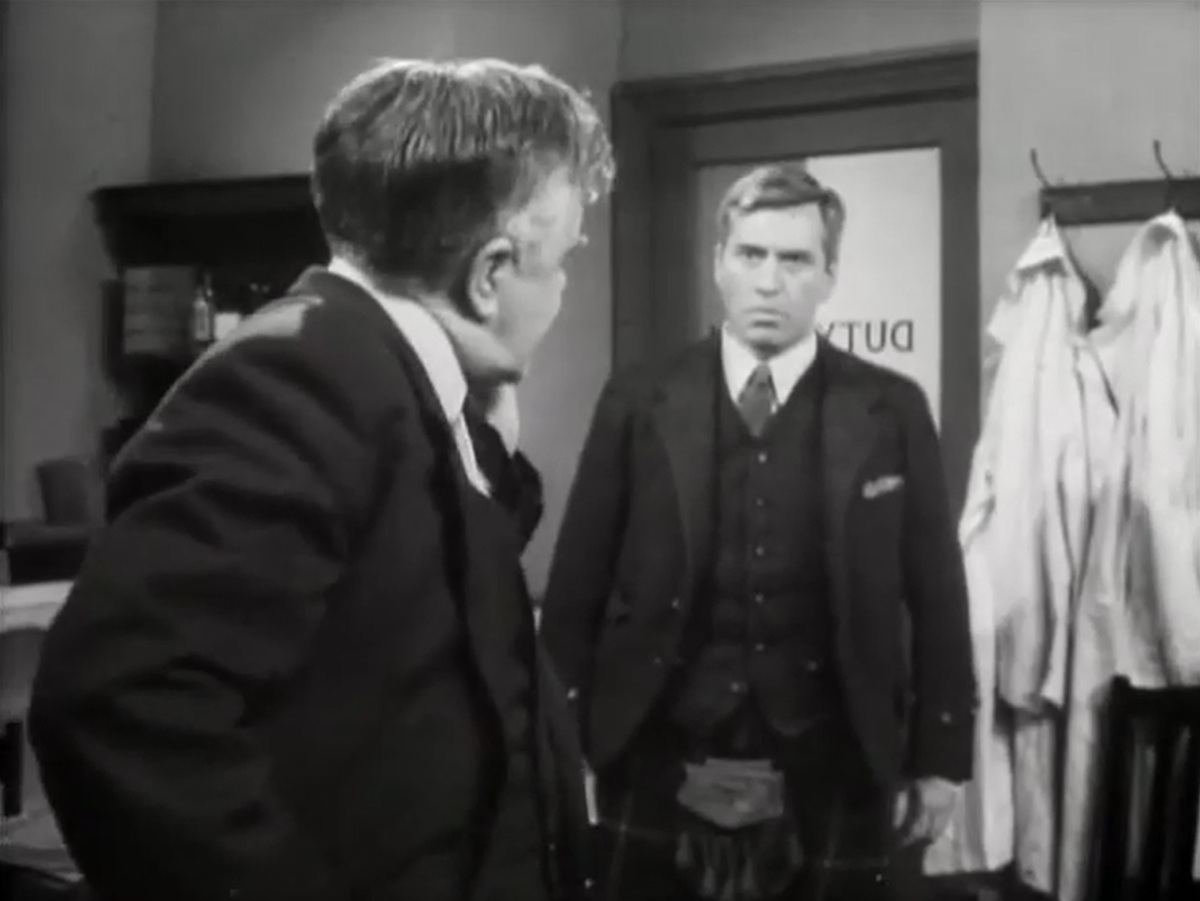
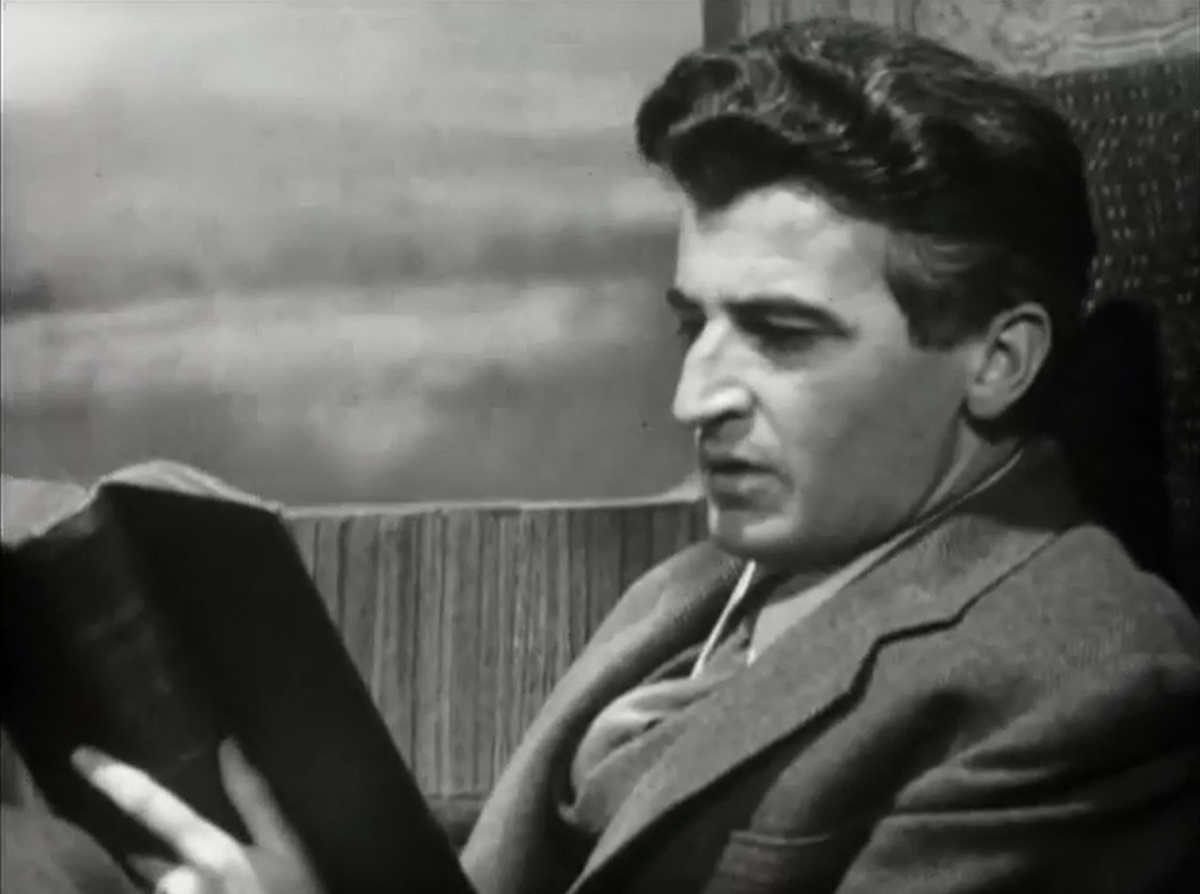
To the accompaniment of Lullaby From ‘A Little Suite’, we are treated to a montage of cutaways to the various implicated characters looking pensive, apart from Dr. Finlay who instead looks with sudden alert quizzicality at a book he is reading on the train. Having been admonished for ‘greeting’ when Ross arrived to inform him that Thompson’s bull had broken down the mountain wall and got into his pasture and was playing hell with his records – which apparently is not befitting of a grown man – a contrite MacBain calls round to see Dr. Cameron for the closest he can countenance to a heartfelt chat about how he can move forward from this shattering disclosure; a consultation that Cameron subsequently describes to Janet as essentially “operating on him without anaesthetic”, tetchily adding “where the hell’s Finlay – would he laugh at this?”. His surprisingly effective approach, whilst unremittingly brusque in his insistence that the facts of the matter cannot be changed and that there is no option but to accept them, is to understandingly convince MacBain to look at his own failings as well as Meg’s and use this as an opportunity for reconciliation. As a distraught MacBain politely accepts a drink, Dr. Finlay returns requesting a quiet word with Dr. Cameron. It transpires that while in Glasgow, after his suspicions were aroused by a leisurely train journey whiling-away read of Landsteiner’s 1924 paper on familial blood groups, he had taken the opportunity to run tests on samples from all three parties – something that it is evidently clear Dr. Cameron regards as new-fangled ‘trendy’ pie in the sky gibberish that he will have no truck with, although the fact that he does not understand the reams of scientific terminology Finlay reels off is of course entirely unrelated to this – and has obtained written proof confirming that MacBain is not the father and O’Shea potentially is. While conceding the importance of medical evidence over the supposition of directly involved individuals with vested interests, and admitting that “I’ve reached the age where I read and forget what is not relevant”, Dr. Cameron is still concerned that Dr. Finlay arranged the analysis without informing him; Dr. Finlay wryly notes his concerns about the potential to look a fool in the absence of actual evidence, prompting Dr. Cameron to loudly repeat the earlier solution to his self-playing chess poser before returning to the parlour to speak with MacBain. Hurrying Janet out of the room with a report that Dr. Finlay is raiding the larder – “we’ll see about that!” – Dr. Cameron instead informs MacBain that he is “about to give you a further cause to dislike me” as the tests had proved that he is indeed the father, apologetically conceding that the confusion and ructions had all been entirely his fault. Departing with a curt “I’ve had enough of your palaver – you’re the old fool who took as truth the delusions of a woman in childbirth”, MacBain storms off to assume his parental duties as Cameron asks an unchastisedly face-stuffing Dr. Finlay to inform Tim O’Shea that he is not the father; news that Finlay is confident will be received with the enthusiasm of a dog with two – following a disapproving glare from Janet – tails.
With Meg fully appraised of – or if you prefer duped by – the face and marriage-saving deception, a considerably more ebullient MacBain arrives with a small hectare’s worth of flowers as the ward sister expresses her own reservations about the flashy new science of blood tests, occasioning an indirectly scientifically chastened Dr. Cameron to retort that “it’s not common yet, but we’re not behind the times in Tannochbrae”. Politely despairing of the previous hoo-hah, the sister concludes that women “do have strange fancies”; an off-guard Cameron once again voices his assertion that “women are queer cattle”, earning him a stern “indeed, but I’m not a cow, Doctor” for his troubles. Nonetheless, Meg quietly lets slip to Dr. Cameron that she would rather that the father had been Tim O’Shea – who at that moment is trotting off into the distance singing something or other about ‘all the men who might have been his daddy’. As he waves jauntily to a passing car, the camera pulls back to reveal the sign hung on the back of his cart – ‘Service With A Smile’.
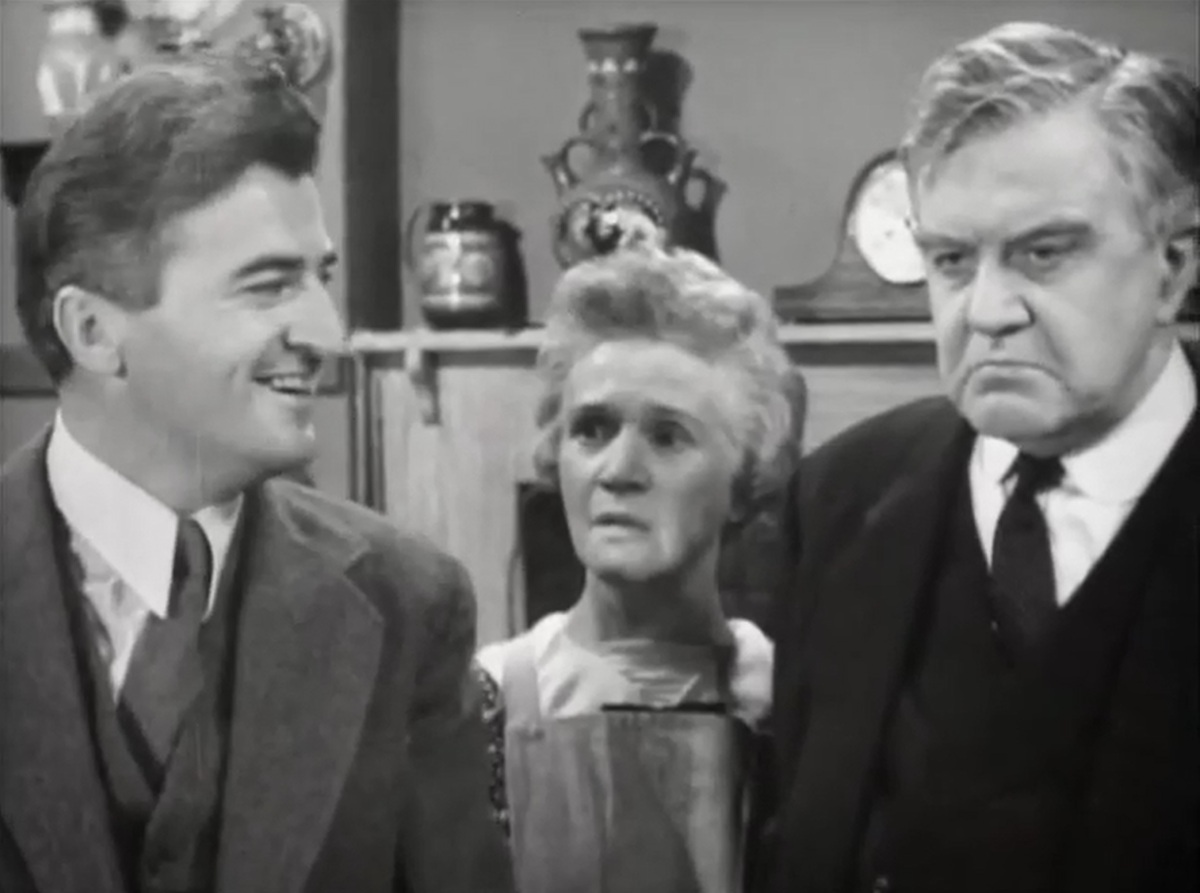

As the first episode of the second run of an established hit series, A Time For Laughing almost certainly drew the same degree of attention and anticipation in that two-channel world as Baby It’s Cold Outside or The Dalek Invasion Of Earth; an analogy which would work better if The Dalek Invasion Of Earth had been the first rather than the second story of the second run of Doctor Who and BBC2 hadn’t launched six months before it was broadcast, and indeed if The Likely Lads hadn’t been on BBC2 to begin with. Nonetheless, the reasons for selecting it as a quasi-random episode to take a look at on that not insignificant basis still stand, yet it has to be said that it does appear by all accounts to take an uncharacteristically downbeat and serious tone for the series – other extant second series episodes that were almost chosen ahead of it include Clean Sweep from 12th September 1962, featuring a rare straight role for Esma Cannon in a story about the local minister insisting that he saw an ‘absent’ relative hiding in a family’s house, and Cup, Hands Or Cards from 26th September 1962 in which Dr. Cameron becomes embroiled in a dispute with a local fortune teller – and even aside from considerations regarding the one line of dialogue that it is barely even possible to contextually justify as ‘of its time’, as amusing as Dr. Finlay might find proceedings throughout it is notably light on the, well, lightness that the series is otherwise remembered for. More to the point, it feels unfair to judge an entire series on the basis of a depiction from more than sixty years ago of characteristic attitudes of over a hundred years ago.
Yet in spite of any of the above noted concerns or misgivings, and even on the basis of an admittedly fairly unrepresentative episode, there is a good deal more to recommend Dr. Finlay’s Casebook than anyone might not unreasonably have expected from a series where, well, nobody really has very much of an idea of what to expect from it. Far from being a creaky old stuffy stagey drama with long pauses and sparse and unstable sets – well, apart from that door – it looks while not exactly contemporary by any stretch of the imagination, a lot closer to the more familiar world of colour studio drama than it does to ‘sidesplitting’ parodies of black and white television; in fact, it in places it reminded this particular writer of both Late Night Horror and the Doctor Who story Terror Of The Autons, although thankfully without electing to pursue either programme’s turn for the macabre. That said, Dr. Cameron and company were never exactly averse to the occasional diversion into realistically grounded spookiness, notably series four’s tremendous rumination on the effects of post-traumatic stress The Phantom Piper Of Tannochbrae. It also cannot be emphasised enough that while it is occasionally made in terms that whilst quite possibly historically accurate are distinctly unpalatable now, there are nonetheless considerable hints of progressiveness for the time; inter-doctor squabbling aside, the episode is entirely focused around Meg and her feelings, desires and emotions and indeed her treatment by everyone else including a wallop-happy ward sister, and the men in her life are very much depicted as a proud bully and a feckless conman who only display what little redeeming qualities they have when they run up against an infuriated Dr. Cameron, and at the very least it is a taboo subject being openly talked about in a high profile and hugely popular family-friendly drama. You do have to wonder how recently anyone dared to use the phrase “women are queer cattle” even in an ironic sense, though.
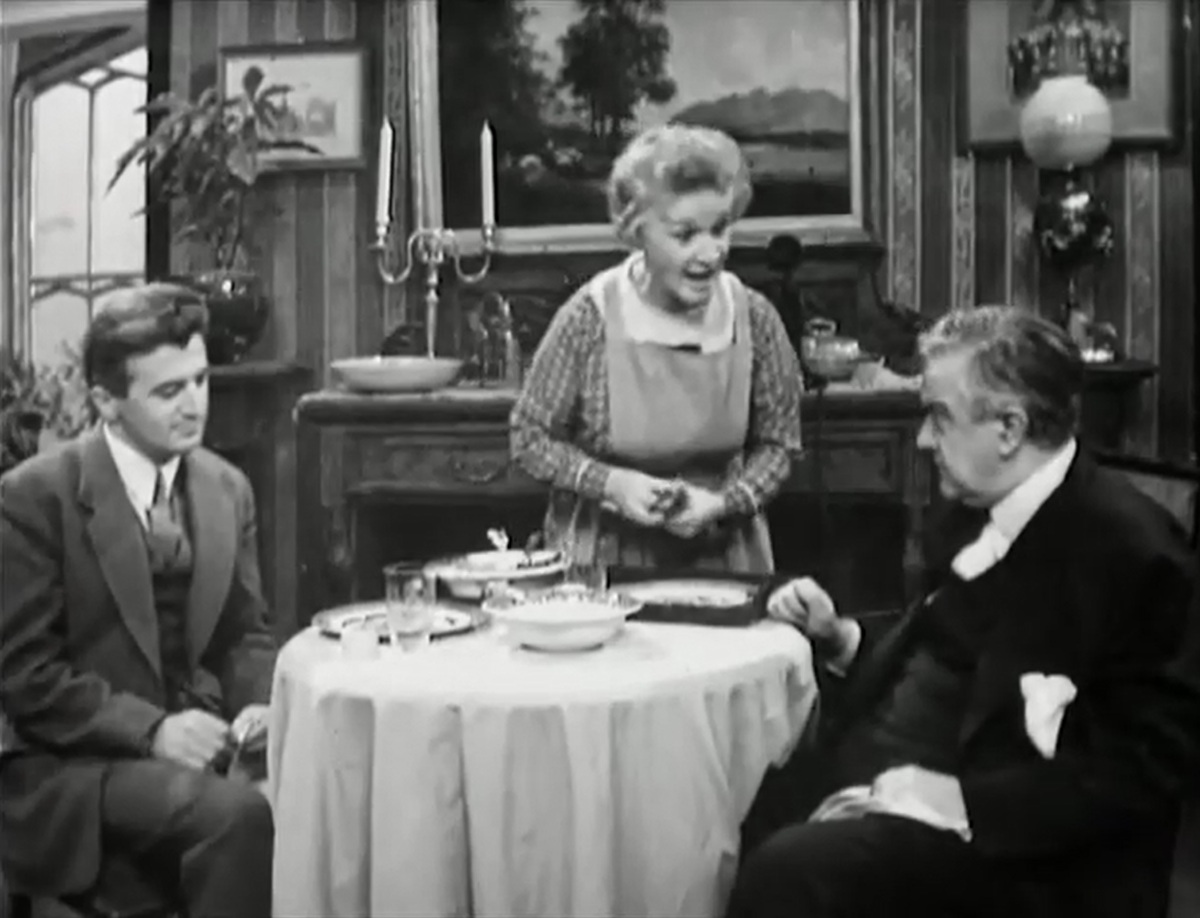
The primary focus of Dr. Finlay’s Casebook is, however – and indeed as even Andy Stewart’s song just about managed to acknowledge – the three exceptionally acted and immensely likeable leads, and as much as the fact that it never really attempts to be anything other than the light historical medical drama that it always set out to be may not exactly help, it is also possible that our present day unfamiliarity with the main cast is a large part of the reason why this once enormously popular show now languishes in relative unloved obscurity. Although Andrew Cruickshank would continue to work prolifically into the late eighties, with his numerous prominent later credits including the BBC’s inaugural outing for Joan Hickson as Miss Marple The Body In The Library and a well-received guest appearance in ITV’s long-forgotten Nigel Planer and Derek Martin-starring debt collection drama King And Castle, Bill Simpson and Barbara Mullen are particularly patchily represented in the archives, the former compromised further still by his career subsequently slowing down due to health issues and indeed his participation in the early seventies BBC Scottish Independence thriller Scotch On The Rocks which has essentially had big massive DO NOT REPEAT stickers slapped on it from that day to this. We should be thankful, then, that we have nigh on a hundred episodes of these brilliant performers and the charmingly antagonistic relationship between the young graduate with a liberal attitude and a carefree sense of humour who finds genuine thrill in the exciting new world of medical science, the curmudgeonly but community-focused doctor from another age who firmly believes that there is much more to wellbeing than proscribing pills, and the prim and proper yet sharply-tongued housekeeper who loves and despises both of them in equal measure.
As for A Time For Laughing itself, it was conspicuous by its absence when the overwhelming majority of the original television scripts were remade by Radio 4 in the seventies with the original cast. It also didn’t manage to bag the cover of Radio Times – that honour went instead to Z-Cars – and instead it was Clean Sweep the following week that was afforded the front cover treatment. Quite how amusing Dr. Finlay would have found that is sadly not on record.
Buy A Book!
You can find plenty of features about long-lost television- enough to make a mid-train journey Dr. Finlay pay very close attention indeed, in fact – in Not On Your Telly, available in paperback here or from the Kindle Store here.
Alternately, if you’re just feeling generous, you can buy me a coffee here. Though do keep an eye out for that ‘Classic TV’ webpage that summarises Dr. Finlay’s Casebook as “A humble coffee shop manager is forced into the world of spies in swinging London”. I’m fairly sure that’s actually the plot of The Intelligence Men.
Further Reading
There’s more on the not quite as stuffy as Dr. Cameron as others would have you believe world of black and white television with looks as The Newcomers in A Story Of A London Family Adapting To Life In A Country Town here, Adam Adamant Lives! in Sing A Song Of Murder here and the Doctor Who story The Space Museum in All We Do Is Stand Around here.
Further Listening
You can listen to some of the festive toe-tappers that hip young teenagers might have been listening to instead of watching the Dr. Finlay’s Casebook Christmas Special The Gifts Of The Magi in Black And White Christmas here.

© Tim Worthington.
Please don’t copy this only with more italics and exclamation marks.

