This is an excerpt from “It’s Friday, It’s Five To Five…”, the chapter of The Golden Age Of Children’s TV looking at variety and game shows, and in this particular extract looking specifically at BBC2’s long-running – well, it was on BBC1 for part of that lengthy run – proto-Escape Room celebrity puzzle-solving sci-fi comedy challenge The Adventure Game. If you like the look of this, you can get The Golden Age Of Children’s TV from Waterstones here, Amazon here, from the Kindle Store here and directly from Black And White Publishing here, and if you’ve already read it and indeed liked it, why not leave a review to balance out all of those indignant ones complaining that it’s ‘just lists’ and the bloke who alleges I paid Rebekah Elmaloglou to endorse it without reading it or whatever it is? You can also find a chat with Martin Ruddock about The Adventure Game on the accompanying The Golden Age Of Children’s TV podcast here.
It may have taken a couple of years and the intervention of Sir Clive Sinclair and his ZX80 to make the home computing boom a reality, but as the eighties dawned and every other magazine show had a breathlessly reported feature on the ‘silicon chip’, it was already obvious that before too long, there’d be a microcomputer in the corner of every living room, more than likely hooked up to the television that had complacently enjoyed corner-dominance for far too long already.
For once, the BBC were surprisingly quick off the mark in exploiting and exploring this new development in home entertainment technology. Their very own chunkily -keyed educationally -slanted 8-bit chipset pioneer the BBC Micro arrived in high street stores and thousands of schools in December 1981, accompanied by an array of programming-related programming. Radio 4’s The Chip Shop explained the ins and outs of the OPENUP and OSCLI commands with a recordable and loadable bit of code at the end of the show, doubtless proving a nerve-soothing listen for businessmen stuck in commuter traffic, while BBC2’s Making The Most Of The Micro and Micro Live presented the latest news from the home computing world in a manner that very heavily implied that the BBC Micro was the only available retail option. This drive towards floppy disc drives even began to inform slightly more established strands of home entertainment, with Doctor Who adopting a pronounced computational slant, complete with juvenile mathematical genius TARDIS traveller Adric on hand to help explain why The Master needed all those equations, and the crew of The Challenger in Radio 4’s EarthSearch never exactly finding themselves short of need for an exchange about logic paths and chipset alignment. Elsewhere on Radio 4, Douglas Adams’ rapturously received The Hitch-Hiker’s Guide To The Galaxy poked fun at the absurdity of the rise of technological evangelism almost as fast as they could rush out a new computer with an extra couple of kilobytes of memory. Meanwhile, throughout it all, a generation of teenagers more or less ignored all of the above and kept right on playing Horace Goes Skiing on their ZX Spectrums, Commodore 64s and to a lesser extent Amstrad CPCs.
Apart from, that is, the ones who preferred to don their metaphorical chainmail and head off along a more paper and dice-based trail, albeit one that they had little predictive control over. Pioneering role-playing strategy game Dungeons And Dragons had arrived in the UK in the late seventies, inspiring small armies of tabletop warriors to take up pencil-equipped arms, and an even larger army of do-gooders fretting about the liable orc-hallucinating effects on youngsters who had the temerity to play and enjoy a game without obtaining written permission first, and teachers who banished issues of White Dwarf from the classroom on the basis that role- playing had ‘been in the news’. Despite their technological disparity, the two would actually find conceptual common ground courtesy of the exciting new art of the text-based Adventure Game, with a randomly reconfiguring pale bulbous eyes-haunted adaptation of The Hobbit and a suitably quirky The Hitch-Hiker’s Guide To The Galaxy complete with a door that wasn’t impressed by a Thing Your Aunt Gave You Where You Don’t Know What It Is leading the trolls’ path to the future. For those who enjoyed such pursuits, it was a fantastic time to be stuck in your bedroom. For those poor old teachers, it was just another reason to hold more assemblies.
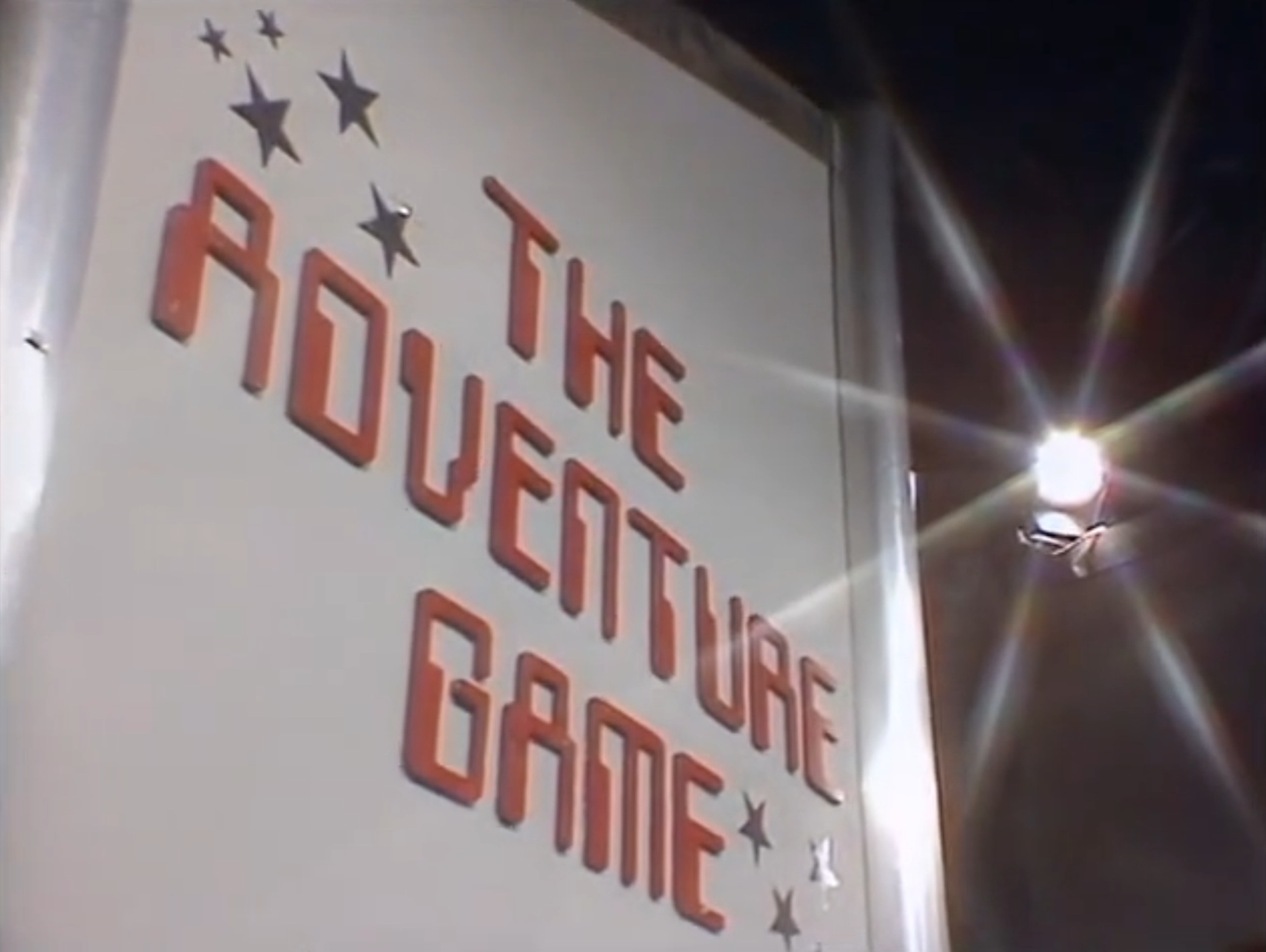
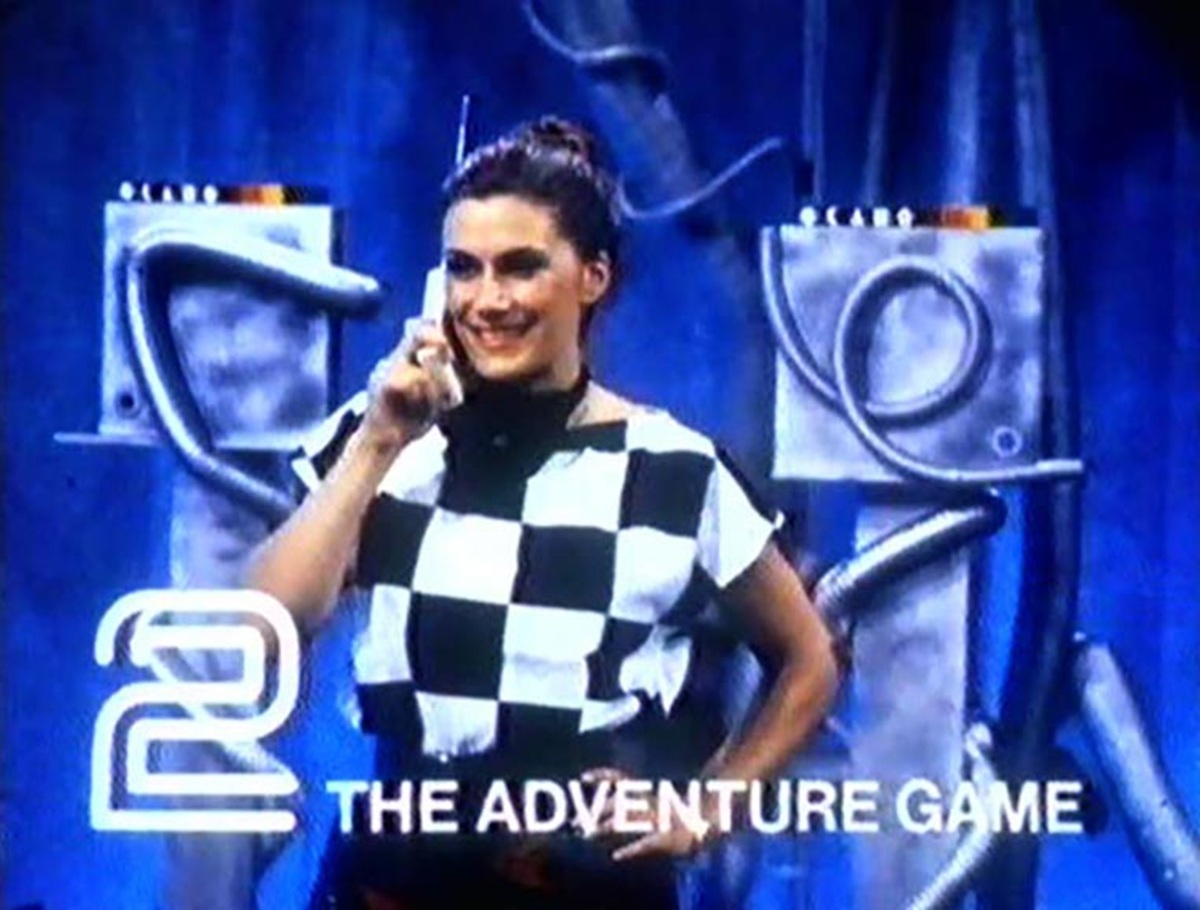
Producer – and previously co-creator of Vision On – Patrick Dowling had all of the above very much in mind while he was devising The Adventure Game (BBC, 1980–86); in fact, he actually attempted to engage Douglas Adams to work on the format with him, only to find that he was already developing The Hitch-Hiker’s Guide To The Galaxy for television and unable to commit to yet another deadline he was likely to miss by several weeks at best. What he came up with, however, was both so good and so original that he evidently didn’t need any help with it. The Adventure Game deposited a trio of contestants – two Children’s BBC-adjacent actors or presenters such as Elizabeth Estensen, Fred Harris, Maggie Philbin, Graeme Garden, Madeline Smith, John Craven, Johnny Ball, Sarah Greene or Richard Stilgoe, alongside an expert in a related field such as Mastermind winner Christopher Hughes or Rubik’s Cube champion Nicholas Hammond – on the planet Arg, where they had to solve a series of puzzles in order to achieve their goal of recovering a vital fuel crystal for their journey home. Aiding and abetting them, although even the aiding generally took the form of politely disdainful teasing, were resident local life form The Argonds, whose names were all based around anagrams of ‘dragon’. This was somewhat convenient considering that their natural form was essentially a dragonlike appearance, with a more human look only reluctantly adopted to aesthetically appease their visitors. Joining their bumbling uncle-like ruler Rangdo – played by Ian Messiter in humanlike form and Kenny Baker in his preferred trundling aspidistra guise – were butler Gandor (Chris Leaver), communications officer Darong (Moira Stewart), hostesses Gnoard (Charmain Gradwell) and Dorgan (Sarah Lam), backwards-talking Australian-accented Rongad (Bill Homewood) – who could always be relied on to encourage the contestants with an exclamation of ‘Doogy Rev!’ – and Lesley Judd, who stayed behind after appearing as a contestant in the first series to become a ‘mole’, throwing in an extra element of confusion for, and indeed some might argue betrayal of, her erstwhile colleagues.

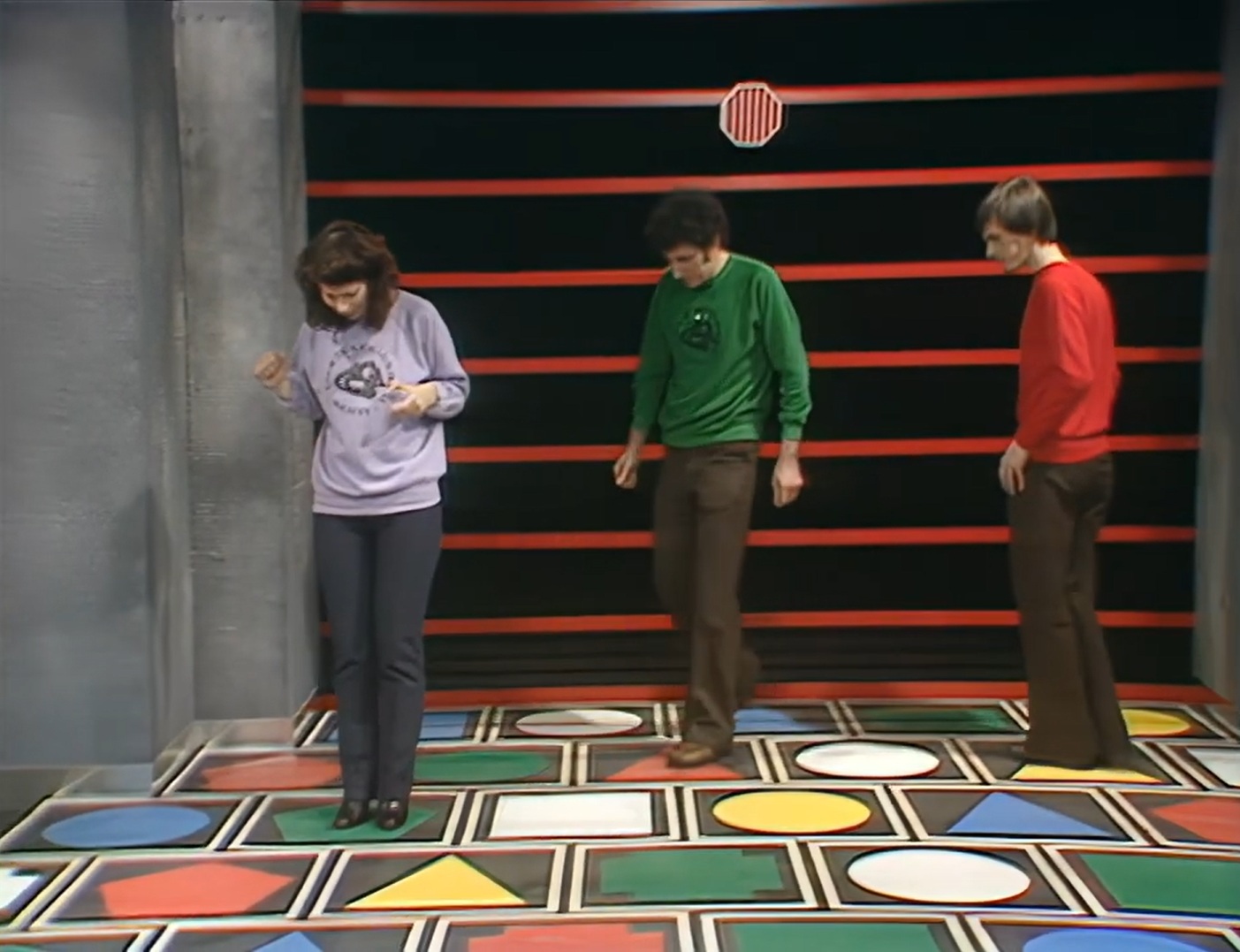
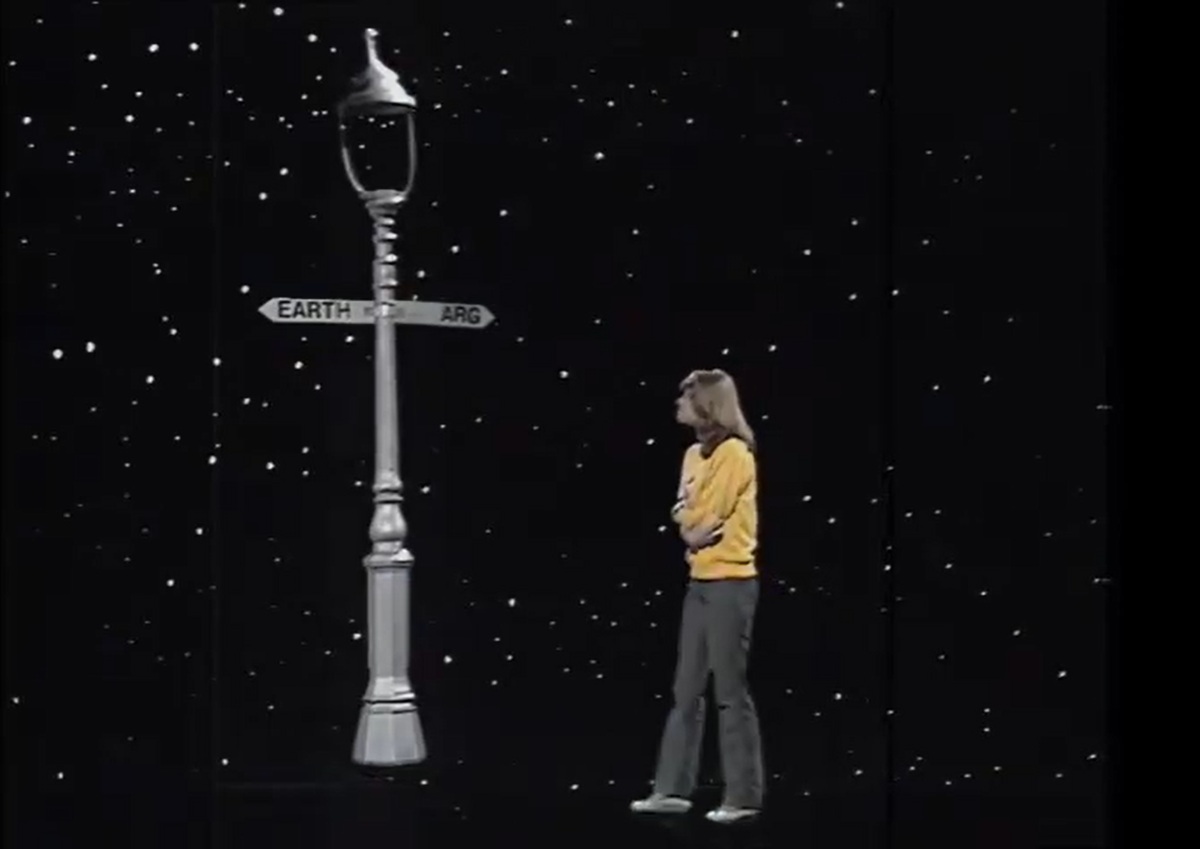
The puzzles were enough to challenge even anyone who knew how to escape from the goblin’s hall even if Thorin did insist on sitting down and starting singing about gold, taking in code-breaking with the aid of a sign reading ‘Richard Of York Gave Battle In Vain’, a complicated geometric puzzle based around the question ‘How many Argonds are around the pond?’, a computer-based maze game involving resident robot dog thing ‘The Dogran’, and the intricate colour-coded electronic blippering floor-based exchange rate mechanism that fuelled local currency Drogna. The most fondly remembered, however, was the concluding challenge The Vortex, requiring the contestants to traverse an open-floored gantry while avoiding an invisible – although very much visible to viewers in the form of a scrolling assortment of BBC Micro vector graphics – opponent capable of ‘vapourising’ them, necessitating a long walk home against a starscape backdrop; their only hope for locating The Vortex and attempting to predict its moves were the conveniently vapourisable green cheese rolls doled out as what appeared to be consolation prizes in earlier games. Perhaps unsurprisingly, The Vortex became an instant popular choice for re-enacting on that bit of the playground where it suddenly went into alternately -shaded paving stones for no readily apparent reason.
Introduced by an extract from Carulli’s Duo In G performed by Julian Bream and John Williams, The Adventure Game first appeared on BBC1 early on Saturday mornings in 1980 – scheduled directly after repeats of The Banana Splits – and immediately captured early morning juvenile imaginations with its sleek calculator-age stylings and the sense that, with presenters who were more normally trying to ‘educate’ you reduced to baffled expressions at a riddle about a frog that was not a tree, you were almost playing along at home by proxy. For the second series, which temporarily saw the contestants transported to Arg via an intergalactic transporter helpfully situated in Patrick Dowling’s house, with an equally temporary replacement use of Grieg’s Norwegian Dance as the theme music, it was relocated to early weekday evenings on BBC2, largely on account of the fact that it had proved too popular and had too wide an appeal to stay so far out of the way. This was perhaps hardly surprising considering that it was the closest that you could get to playing a computer game when you weren’t allowed to use the computer, and even when you did get access to it you would be persistently reminded that it could ‘also help you with studying’; although oddly, the closest that The Adventure Game came to becoming an actual computer game itself was a lone Drogna-themed puzzle for – as you may well have already guessed – the BBC Micro. It may also help to explain the latterday popularity of Escape Rooms amongst a generation of office workers with distant memories of Noel Edmonds and Fern Britton trying to fish a key out of a tube of water using a magnet on a rod.
By the late eighties, regardless of whether or not you’d managed to use yours to calculate how to avoid The Vortex, it’s fair to say that everyone really had made the most of the micro and were looking in bigger and better – and ironically physically smaller – directions. The hot new Christmas presents for the scornfully most up to date data-running kid on the technological block were the Commodore Amiga and the Atari ST and their new generation of souped- up point-and-click adventure games, secure in the knowledge that there was no way they would be obliged to upgrade to a brand new dedicated gaming console eighteen months later and then again and again and again every eighteen months after that. Dungeons And Dragons, meanwhile, had somehow shaken off the initial warlock-averse ‘satanic panic’ to become a huge commercial prospect, even to the extent of inspiring a Hanna-Barbera cartoon series that thanks to the BBC somehow once again became even more popular over here than it was in America. Little dates as quickly as the latest cutting- edge technology, but even so, it’d be nice to see anyone who can finish Sonic The Hedgehog trying to figure out the correct sequence in the Drogna Game.
Buy A Book!
There’s lots more about the The Adventure Game – along with Captain Zep – Space Detective, Starstrider and tons of other game shows and variety shows that didn’t even have the slightest hint of a science fiction slant – in The Golden Age Of Children’s TV, available in all good bookshops and from Waterstones here, Amazon here, from the Kindle Store here and directly from Black And White Publishing here.
Alternately, if you’re just feeling generous, you can buy me a coffee here. Green Cheese Rolls are very much optional.
Further Reading
There’s a pocket calculator-sized celebration of Starships, Earthsearch, Star Fleet and the many other much-loved home computer boom-era ways of filling in time between Star Trek films and series of Doctor Who in The Sci-Fi That Time Forgot here.
Further Listening
You can find a chat with Martin Ruddock about The Adventure Game in The Golden Age Of Children’s TV here.
© Tim Worthington.
Please don’t copy this only with more italics and exclamation marks.

