
If you thought BBC Records And Tapes released a wilfully eccentric assortment of singles and albums of limited to no to downright unmeasurable commercial appeal – to the extent, incidentally, that someone not a million miles from here wrote two hefty books cataloguing their catalogue which you can find here and here – then you quite possibly have not delved particularly far into the obsolete even before they were technologically obsolete titles that extremely politely dominated BBC Video’s earliest days. Apparently considering the notion of just issuing straightforward releases of their most popular television programmes as they were to be somehow beneath the exciting new world of playable ferrous oxide, even the likes of The Fall And Rise Of Reginald Perrin and Fawlty Towers initially had their credits snipped out and clunkily reinserted in long form at the very end so as to resemble if not actually a movie then at the very least a very long television programme that somehow approached an illusion of format worthiness. Relatively recent and relatively prestigious children’s drama productions like Pinocchio, The Moon Stallion and The Baker Street Boys were bundled and compiled into epic-length continuous narratives that with the best will in the world could scarcely compete with Death Race 2000 and Caddyshack, programmes that should logistically have been as good as impossible to release in any form were contorted into cheaply and eerily wraparounded montages of extracts like Blue Peter Makes and some variety of unyieldingly extended Play School themed around ‘the seasons’, a collection of Bloopers was for the most part unamusingly cobbled together from the few even remotely broadcastable outtakes that found their way onto the infamous BBC VT Christmas Tapes, and even a few programmes that challenged pretty much anyone’s definition of commercial viability but had the fortune to clock in at something halfway approaching feature length including Fundamental Frolics, Toyah Live At The Rainbow and Colonel Culpeper’s Flying Circus found themselves prominently pushed in distributors’ catalogues alongside Doctor Who – Revenge Of The Cybermen. Astonishingly, most of them were released not only on VHS and Betamax but on Video 2000 and Laserdisc too. So if you ever wanted to see a jumble of sketches from the first series of Three Of A Kind in what passed for high definition in 1983, then you should probably start scouring the auction sites for any and every spelling variation of ‘David Copperfield’. You’ll also need to track down a Laserdisc player too. To be honest they’re probably cheaper than the discs themselves now.
Even after the determinedly VHS-only release of the first Dalek story in 1989 had proved that punters would in fact willingly fork out for actual television programmes in their actual original structural format after all, they still largely continued with the practice wherever and whenever they could get away with it. The collection of bits of A Bit Of Fry And Laurie was for a long pre-DVD while a commander of whopping closing bids on certain online retail sites, and they even occasionally dabbled in what were to all intents and purposes fully original releases; issued to commemorate the show’s post-‘moving house’ cancellation in 1988, Play School Replay saw Brian Cant commentating over a rambling assortment of extracts through the Archive Window, while 1988’s One On 1 somehow managed to chart a decidedly Bros-saturated fly on the wall’s eye view of a typical day at Radio 1 with minimal interjections from subsequently discredited bad dangers that nobody ever actually liked to begin with. Even as late as 1993 – as Tom Williamson recounted in Looks Unfamiliar here – they saw fit to frame a selection of Mr. Blobby’s most mayhem-fuelled celebrity setups with some original narrative linking bits with Noel Edmonds trying to park his milk float in Television Centre or something. Throughout all of this, however, one incontrovertible fact remained constant – they would never, under any circumstances, have willingly or possibly even unwillingly issued a video based around ‘hobby’-fixated summer holiday filler Why Don’t You…?. You can possibly get some sense of why I am so stridently confident about this assertion from a look at what became of the normal delineated boundaries of space and time whenever Why Don’t You…? hoved into view in this somewhat BBC Video-esque collection of highlights from the archives, and in fact if you wanted to try and help me maintain attention and focus the next time they launch into one of their ‘Squashy Grannies’ makes when BBC Four repeat an edition you are more than welcome to buy me a coffee here. Anyway, if you actually are sittin’ at home watchin’ TV, then turn it off – it’s no good to you – and enjoy some clunkily edited together stuff you might have missed…

Technically, this look at the sudden volte-face of school holiday mornings on BBC1 abruptly switching from programmes that if not always strictly exciting on their own merits at least bore the appreciable novelty of being on while you weren’t at school to programmes so dull that they essentially literally stopped time was originally inspired by CP And Qwikstitch, a tail-end of the schedules animation about two ecologically aware robots which was so cheaply made that it quite possibly actually ended up making money for the production company whilst they were attempting to spend it. However, it seemed unlikely that anyone would actually bother reading it if they did not know who CP And Qwikstitch were, and even less likely if they actually did know who they were, so it wound up being hinged around Why Don’t You…? instead, which in fairness did occasionally and presumably entirely unintentionally provide brief outbursts of something at least approaching entertainment, especially when they were menaced by their unseen stripy sock-averse adversary ‘The Dorris’, but was ultimately still a programme that told you to stop watching television and do something ‘approved’ and improving instead and apparently aspired to achieve this simply by boring you into submission. As such, it evolved into a salute of sorts to the programme that Richard Herring once claimed Fist Of Fun essentially was only with less talking tennis balls – unless they were swearing of course – with a title borrowed from a contemporaneous David Bowie song often unfairly dismissed on account of a purported similar degree of worthy mundanity, and found itself bewilderingly adopted on social media by large numbers of people who remembered Why Don’t You…? with some degree of fondness. I hope they saw the funny side. I also hope they didn’t see CP And Qwikstitch. You can find the original version of Time Will Crawl here and an expanded version which might even go on for nearly as long as an edition of Why Don’t You…? seems to in Can’t Help Thinking About Me here.

This wistful rumination on the once preponderous mysterious and illicitly enticing world of old-skool cryptic railway station graffiti which somehow also managed to involve both Murphy’s Mob and Richard Herring was in fact originally written on the same day as Time Will Crawl – not on a station waiting room wall, I ought to emphasise – and for the version presented here I had originally intended to illustrate it entirely with screengrabs of the memorably graffitied walls from the opening and closing titles of the hard-hitting early eighties Children’s ITV football fanclub drama in question. You can find out exactly why that didn’t work out as planned in the introduction; even allowing for the differing standards and indeed differing attention to detail of different times, some decisions in children’s television of the seventies and eighties really do defy any reasonable attempt at explanation and contextualisation now. Although that said, perhaps part of the reason why such nauseating graffiti was considered entirely suitable for broadcast just before 5pm in the early eighties could be found in the fact that when I originally attempted to promote this by asking on social media for examples of people’s favourite baffling childhood graffiti, hoping for more along the lines of ‘MICK MOPASH ’73’, ‘my bloody v’ and ‘Becky says Do Acid’ and discreetly asserting that I was looking for weird rather than rude stuff, all that seemed to appear in response were gleeful recitations of unimaginative swearing and stomach-turning vulgarities. Nigel Rees would have been so proud. The title, incidentally, was a sort of Monty Python-skewed reference to the predominance of invariably meta-graffitied ‘PUNK’S NOT DEAD’ graffiti in such environs, presumably on the assumption that respectable commuters were the most likely and valuable converts to your The Exploited-propping up cause, which was almost not clever enough to use as a title but luckily someone had written ‘PIS SHT BOLLOCKS’ at the end which saved it. If you don’t understand that reference, I’m not explaining it. You can find the original version of Pining For The Punk Fjords here and an expanded version where someone has crossed out the ‘NOT’ and put an ‘S’ at the start in Can’t Help Thinking About Me here.
Looks Unfamiliar: Paul Abbott – So I Started Writing Stories About Gobots Instead

Recorded on my inaugural visit to Paul’s home studio – where the The Big Beatles Sort Out magic happens – and with the Blurays of Captain Marvel and series ten of Doctor Who perched ambience-enhancingly on an adjacent desk, this was an incredibly enjoyable edition to record and by the conclusion I was already thinking that Paul might well be able to cut the metaphorical mustard as a future guest Looks Unfamiliar host. I was especially pleased that he had chosen the Zeeb books and The Compleat Beatles to talk about, and also when he produced a Narlie seemingly from nowhere to illustrate his self-deprecating point about the extent and limits of his ongoing Transformers obsession. Incidentally Paul did later manage to track down the edition of Going Live featuring his grandmother duetting with Dudley Moore, which I have to say is a charming piece of television of the sort that might well be nigh on impossible to spontaneously achieve in this more rigidly planned and regulated age. You can find the full show here and the chat about The Compleat Beatles in a collection of Looks Unfamiliar highlights here.
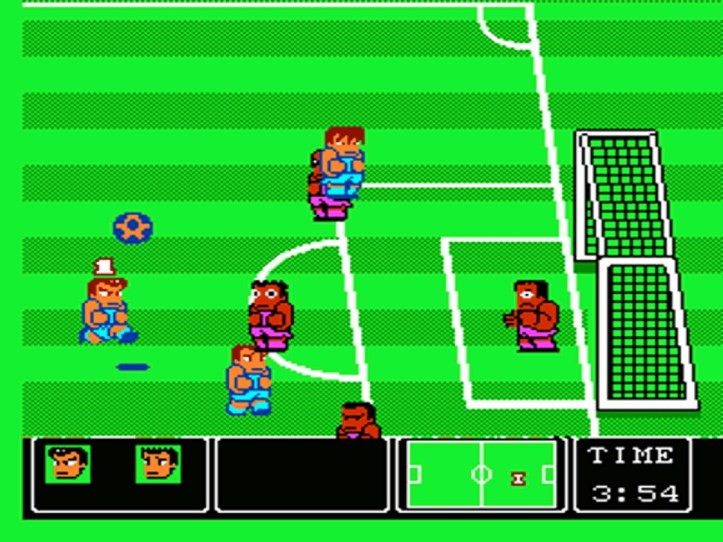
This fond look back at the three free basic games that came bundled with the NES – I never had a SNES, which might well have some bearing on a point I am about to make – and in particular the bewilderingly eccentric Nintendo World Cup was originally largely written during a break in some tedious training, and while I have a good deal of affection for it and feel that the scene-setting contextual early nineties detail is pitched very well indeed, I also felt that it didn’t quite ‘work’ in a wider sense and that perhaps I was not really suited to writing about computer or indeed video gaming dating from at any point beyond the release of Gilligan’s Gold. Until about eighteen months later, that was, when suddenly from nowhere and in true ‘Super Shot’ fashion, it rocketed past every other post on here to clock up around a thousand views a day for about four months solid, before immediately going relatively quiet again. I never could quite figure out what the cause of that was. Maybe I should do that feature on the House M.D. game for the Nintendo DS after all. You can find the original version of A Funny Old Game here.

Although I had fallen in love with the actual album Mike Westbrook’s Love Songs quite some time before I had any idea that there had also been a legendarily wild and disorientating ‘presentation’ of the prog-jazz collective’s equally legendary mixed media stage show to accompany the release of the album on the BBC2 arts show Review, the purportedly long-wiped edition very quickly joined my not inconsiderable list of television holy grails that there seemed little to no hope of ever actually getting to see. Imagine my surprise then when one day – much as would transpire with several other entries on that now considerably if scarcely believably shorter list – I idly typed ‘Mike Westbrook Original Peter’ into YouTube as I wanted to listen to it in the background but couldn’t be bothered going all the way across the room to put the actual album on, only to discover that a matter of hours earlier, the director Tony Staveacre had uploaded a copy of the twenty minute performance that he chirpily refused to disclose the provenance of. It proved to be every inch as disorientating and mind-expanding as I had hoped it would, and I was sufficiently thrilled by its appearance to immediately write a feature on it, which caused an extremely minor sensation admittedly amongst the sort of individuals who would actually have been that bothered about in the first place, although it was interesting to see how a couple of them attempted to frame it as their ‘discovery’ and even in one case as their feature. More pleasingly, I did receive a message from Mike Westbrook himself via his management, who revealed that he had never particularly been satisfied with how the album turned out but that the irony that it had proved to be his most popular and enduring work was not lost on him. Anyway, if you’ve never seen The Original Peter, you probably should make sure you’re entirely prepared for it first. They did not do ‘the arts’ by halves in 1970. You can find the original version of The Original Peter here and an expanded version with even more about the background to this extraordinary moment even by the standards of early seventies BBC2 in Can’t Help Thinking About Me here.
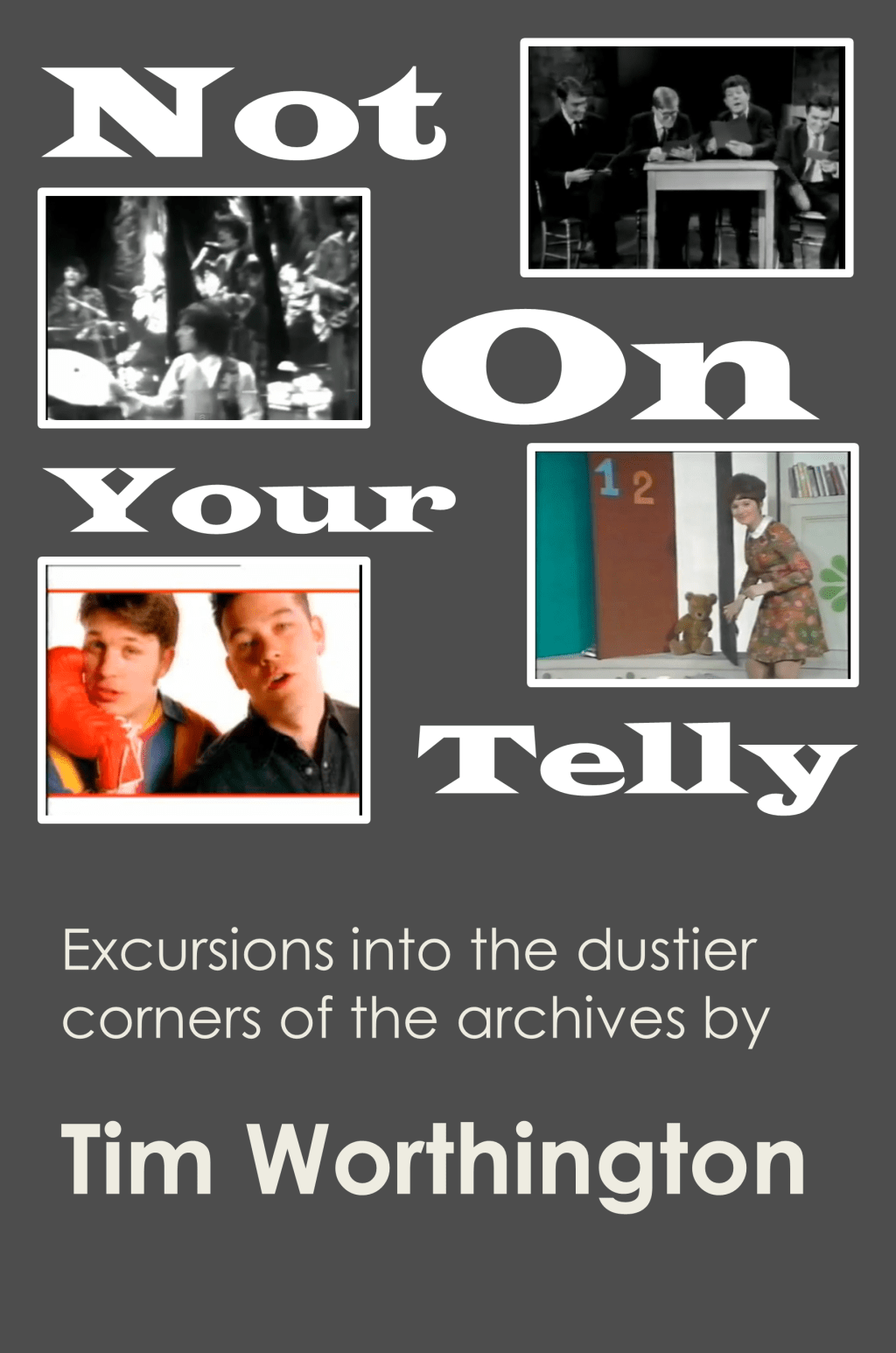
There’s nothing quite as mind-blowingly disorientating as The Original Peter, and nothing quite as mind-numbingly tedious as Why Don’t You…?, but you can find more about plenty of other fascinatingly forgotten television shows in Not On Your Telly, available in paperback here or from the Kindle Store here.
Mystery Link! If you want to just go straight to a surprise page completely unrelated to any of the above, click here.

© Tim Worthington.
Please don’t copy this only with more italics and exclamation marks.

