Stories about stranded space travellers menaced by a malevolent unseen force are not new. In fact there were probably dozens upon dozens for decades before the earliest example that came immediately to mind – the splendid 1959 BBC Light Programme serial Orbiter X, which incidentally you can read much more about here. Then again they aren’t exactly ‘old’ either, as evidenced by the success of 2026’s equally splendid Project Hail Mary, although admittedly and without giving too much away in that case the force in question was considerably more unseen than it was malevolent. They appeared to reach their moment of greatest popularity, however, in the wake of two superior cinematic examples of the artform that were coincidentally released within weeks of each other late in 1979 – The Black Hole and Alien. Suddenly cinemas were full of ‘in space, no-one can hear you plagiarise’ copycat efforts like Contamination, Inseminoid and Xtro, which combined unsettlingly clinical and utilitarian late seventies-styled spaceship and computer designs with visceral body horror and essentially came across as overlong episodes of Space: 1999 guest-directed by Lucio Fulci. Little wonder, then, that when they inevitably found their way towards a more receptive audience in the early home video market, several titles found themselves caught up in the hysteria surrounding ‘Video Nasties’ and the genre, such as it was, fell from favour once more as everyone looked instead towards a far more visually appealing extra terrestrial intent on phoning home. Doctor Who, as ever – and indeed having already been there and done that with 1975’s blood-curdling The Ark In Space – was looking in an entirely different direction, and concerning itself primarily with stories about whether science could go too far in the name of leisure and whether tossing a coin can help you navigate a void between two universes.
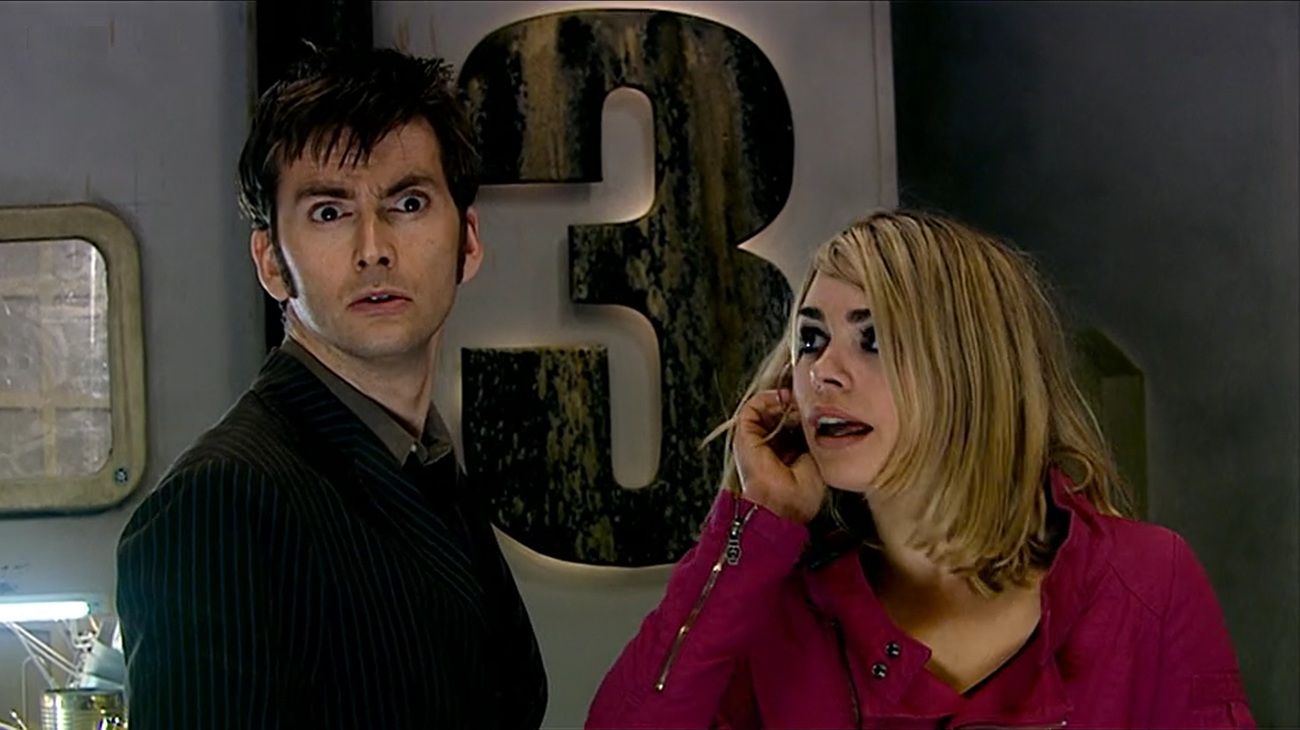
2006 two-parter The Impossible Planet and The Satan Pit, essentially – and with the influence of both Alien and The Black Hole enthusiastically acknowledged by director James Strong – an updated and original twist on the same familiar format, has always enjoyed, if that is actually the appropriate terminology, an unusual status within Doctor Who‘s post-2005 history. Positioned two thirds of the way through that wildly inconsistent second series, it was hugely positively received and even did well against the unfortunate viewer-distracting combination of for once actually seasonably warm weather and an England World Cup fixture, but possibly not well enough to lodge itself in the wider viewing public’s memory with the same momentum as The Empty Child/The Doctor Dances and Human Nature/The Family Of Blood. It was overshadowed in terms of spectacle if not necessarily narrative depth by the two other Dalek and Cybermen-heavy two-parters elsewhere in the run, shunned by tastemakers in favour of the to say the least polarising Love And Monsters, and unlike The Idiot’s Lantern – as you can find out here – it did not cause anyone who had the temerity to afford it a good review to briefly become the focal point of ironically unfocused bewildering Internet ire. Both episodes hold the unusual and unenviable distinction of having been acclaimed and widely liked on transmission and scarcely mentioned since.
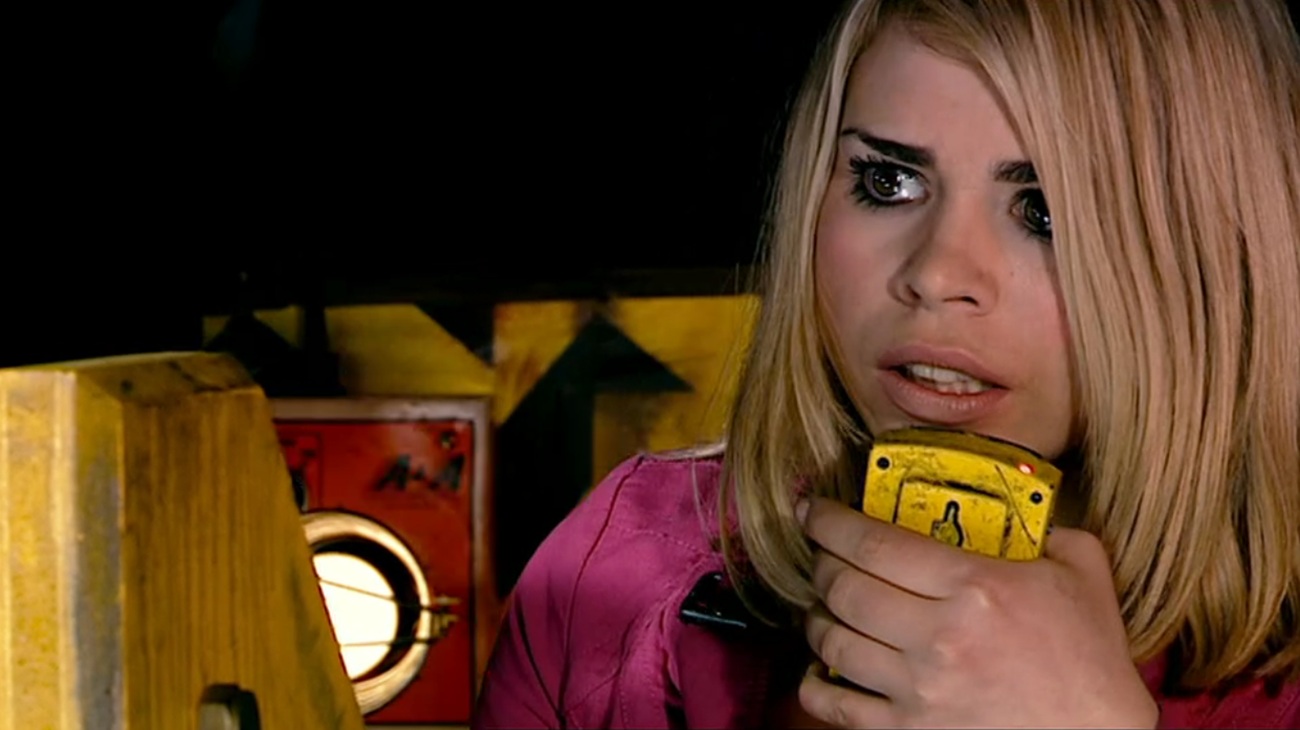
There is perhaps some measure of this paradoxically conspicuously overlooked status in the surprising fact that I appear to have hardly ever written especially much about The Impossible Planet or indeed The Satan Pit at all. In Do The Russell!, an enormous overview of the entire first four series plus specials of brand spanking new Doctor Who – now available in Well At Least It’s Free here – I noted that the neglected two-parter “served up a sinister jolt that left all the right questions unanswered, and it’s just a shame that they’ve somehow felt the need to remake it on several occasions since”, which whilst not inaccurate is scarcely a rigorously academic ‘deep dive’. Whilst rewatching all of the above series and indeed specials during lockdown, I concluded in an ongoing series of character-limited mini-reviews on a partially defunct social media platform that “The Impossible Planet somehow manages to build a sense of mounting evil out of a storyline about a group of bored people in a motionless spaceship; as good as it is, though, it’s a textbook example of an episode that’s so slickly done it’s difficult to find much to say about it” and “The Satan Pit really does capture the same sort of low-level residual trace memory horror as, well, Quatermass And The Pit, but what’s pleasantly surprising watching it again now is just how much Rose drives the narrative; the hard decisions, the emotional arc – all her”, atypically concluding with an additional extra-curricular remark that “Rose is the smartest and most level-headed one in The Satan Pit, even after she’s been threatened by the devil. That’s why RTD was great”. In Keep Left, Swipe Right – which is available from here – as part of an extended look at the story of redubbed French stop-motion bear who found himself in the BBC’s Watch With Mother slot Barnaby, in a diversion that also made reference to Marvel’s Dark Elves, The Strange World Of Gurney Slade, Clare In The Community and, erm, Phil Catterall, I clarified that “The Doctor and Rose Tyler encountered ‘The Beast’, who extremely grumpily claimed to hail from ‘before time’, in The Impossible Planet/The Satan Pit in 2006″. Barring a faint recollection of telling someone at a gig on the evening that The Impossible Planet was broadcast that it was ‘good’, that appears to be pretty much that. Quite why this was chosen out of all the mostly more popular and acclaimed two-part stories from that initial outbreak of Doctor Who mania to be refashioned into a standalone full-length feature in its own right is unclear – there are of course numerous possible reasons why certain other structurally suitable stories might have been discreetly relieved of the honour, some of them more savoury than others – but we really should be grateful that it has been. Above all else, it’s an opportunity and an excuse for everyone to start talking about it again.
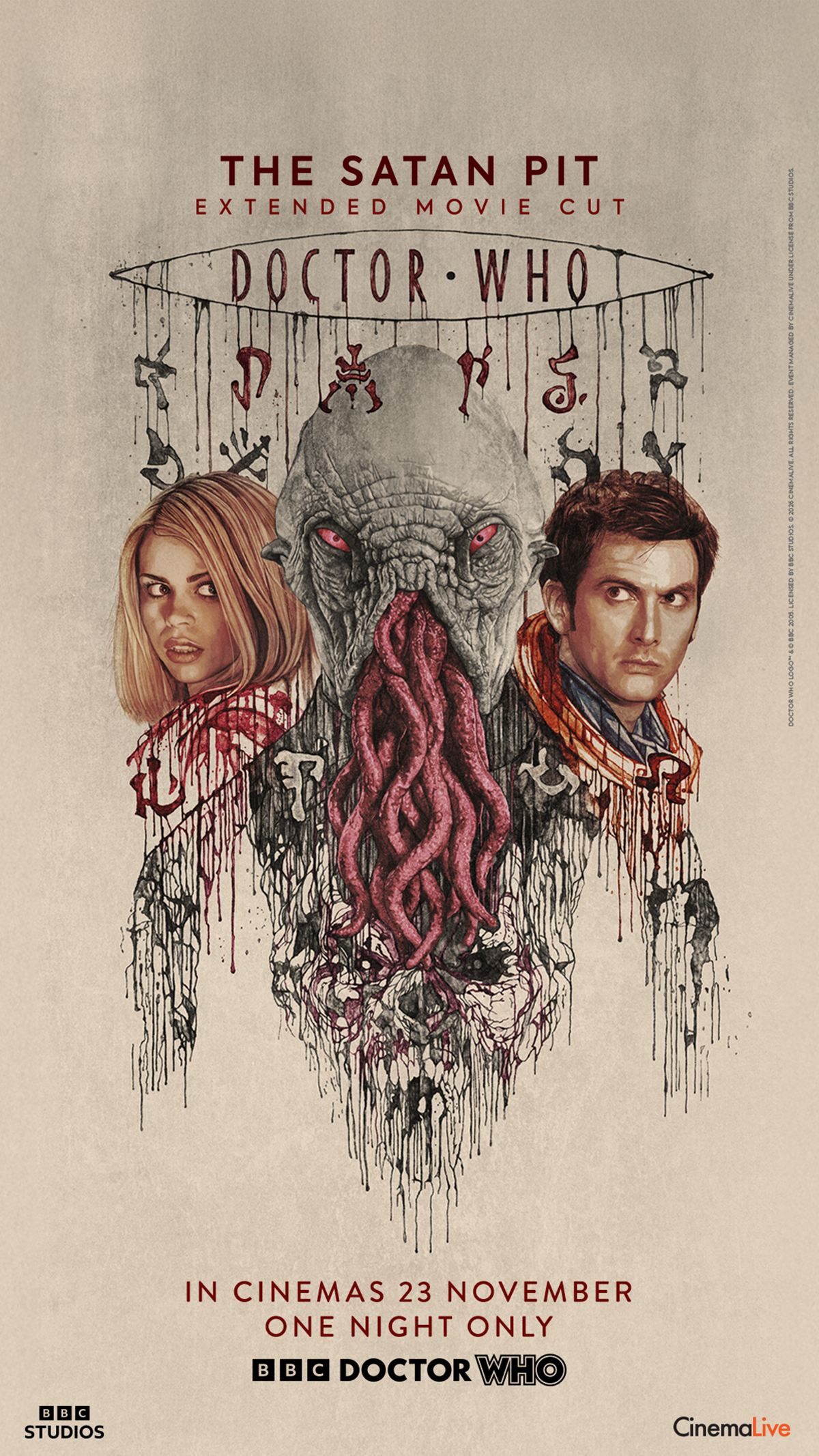
The Satan Pit, as the extended version has been officially retitled, reinstates almost four minutes of material that was previously cut for timing reasons, which may not sound especially substantial but it really is surprising just how much was packed into those presumably reluctantly discarded scenes and asides and how much of a subtle but pronounced tonal difference they make to the story as a whole. In particular there is a good deal of humour, notably what was originally a running joke about the protein drinks but was essentially reduced down to a single and not especially amusing on its own line for Rose in the broadcast edit, and, as with the additional character background for some of the crew of Sanctuary Base 6, rather than undermining the nerve-jangling nature of the story as a whole they actually serve to enhance it by introducing a looser feel and a more relatably ‘human’ angle and making Rose even more of the focus of the narrative. Despite the excellent work in upgrading the original video material for big screen presentation, the actual visuals themselves remain thankfully untampered with – something of a welcome relief in a world where unspeakable AI-driven ‘improvements’ are being forced on Bluray releases of seventies and eighties stories that fans are expected to hand over good money for when they would happily do so even for the originals in their raw state; and yes I hope whoever at BBC Studios is responsible for this decision is reading this – and rather than suffering from the transition to big screen actually winds up looking not a million miles away from a genuine eighties sci-fi film, albeit a somewhat more well-intentioned one than Xtro. The only real issue, as seems to be common with the increasing amount of archive television retooled for cinematic exhibition, is that the sound mix does not necessarily properly ‘work’ on every cinema’s surround setup and occasionally stray lines can find themselves muted to the point of near-inaudibility whilst Murray Gold’s score remains as preposterously overpowering as ever. That said, Gabriel Woolf’s ‘sibilant’ voice, as it was apparently once a legal requirement for fans to describe it as, sounds magnificently unsettling reverberating around the auditorium and serves as a reminder that perhaps this may well have been the only modern-day reference to Sutekh The Destroyer we actually needed after all. Incidentally, if you go to see it at the cinema, you also get an amusing short with an Ood reminding all and sundry not to talk or use their phones during the film – a plea that audience members who had been chortling along to it minutes earlier then inevitably declined to heed – and a short but genuinely illuminating interview with James Strong conducted by the dependable Christel Dee, who actually manages to unearth some new and fascinating production detail about this most documented yet least discussed of Doctor Who stories.
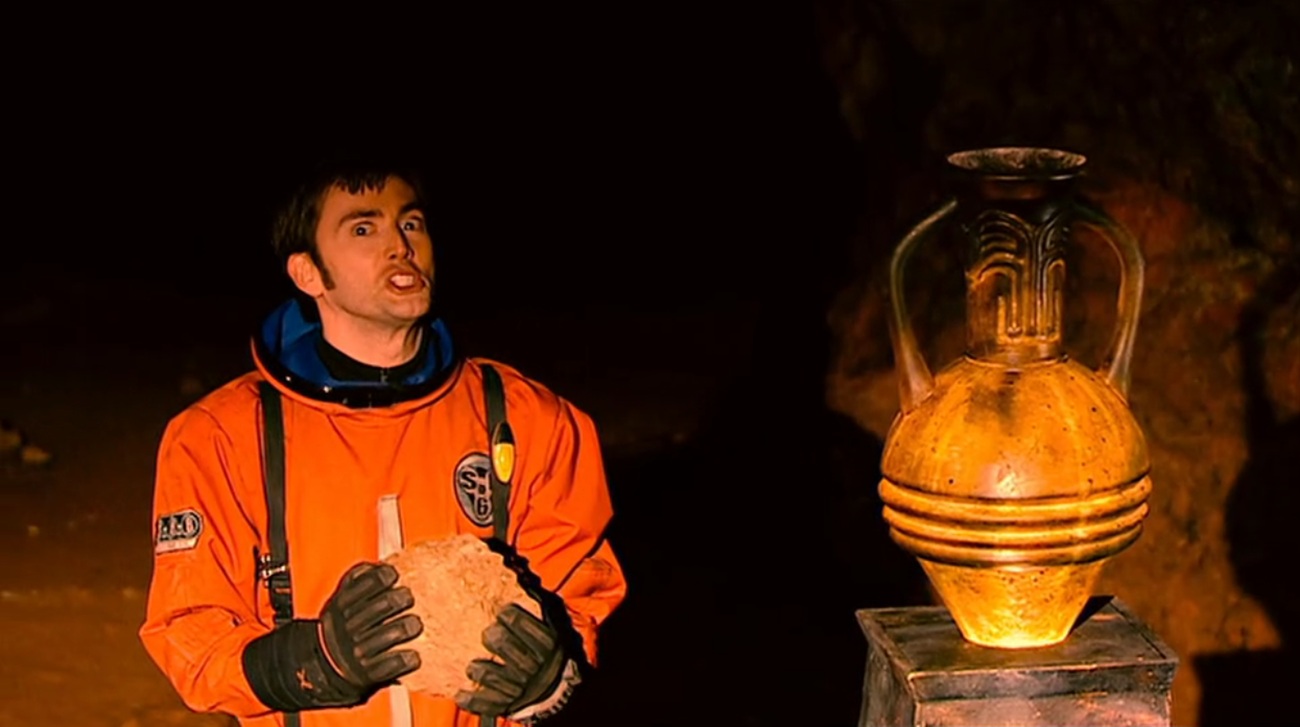
The extended version of The Impossible Planet and The Satan Pit is not, of course, the first occasion on which modern day Doctor Who has found its way onto cinema screens. Those previous occasions, however, always seemed to fall a little flat, seemingly driven by a desire to create an ‘event’ first and foremost rather than provide straightforward entertainment, driven by an incautious hubris long after the initial fervour had abated, and at least partly founded on the expectations of a fairweather audience making lofty claims about the significance of Doctor Who and by extension themselves, much of which now rings more than a little hollow. The Impossible Planet and The Satan Pit of course were made first and foremost to provide curtain-raising Saturday evening entertainment for an in some regards even more exacting audience, and perhaps that is why The Satan Pit stands up so well even out of its original context. In fact, it was in all probability more entertaining than many of the more artistically elevated ‘members’ previews’ showing in adjacent screens of the assorted cinemas it has found its way to; and there will be a home media release if it didn’t find its way to one near you. Anyway, about all of those films about little green men from outer space in Depression-era New York…
Buy A Book!
You can find more of my thoughts on David Tennant and Billie Piper’s tenure with Doctor Who, including several stories remarked on at considerably greater length than poor old The Impossible Planet/The Satan Pit, in Well At Least It’s Free, available in paperback here or from the Kindle store here.
Alternately, if you’re just feeling generous, you can buy me a coffee here. I’ll skip all three of the proteins, thanks.
Further Reading
You can find my bafflingly controversial review of The Idiot’s Lantern, with additional thoughts on what I think about the episode and indeed that controversy now, in Doctor Who And The Idiot’s Lantern here.
Further Listening
You can hear all about just how excited I was when Doctor Who came back – although possibly not quite as excited as I had been about The Ultimate Adventure and the ‘Talking Book’ of State Of Decay – in Doctor Who And The Looks Unfamiliar here.

© Tim Worthington.
Please don’t copy this only with more italics and exclamation marks.

