It would probably not be entirely beyond the boundaries of reasonable fairness to characterise the contents of the average feature on here as somewhat resembling a Radio Times billing circa 1966 that does not know where or when to stop, lengthily-sentencedly unspooling its subclause adjuncted way wildly beyond the physical limits of the small print Regional Variations bit at the foot of the page while Roger Woddis looks on in alarm. Certain observers may well observe this and exercisedly frown that it is ‘overwritten, as these things tend to be’, but frankly, if you’re going to write about anything that has otherwise rarely if ever been written about and you find yourself with plenty to say about it, you may as well say it. Other certain observers may equally well point out with a detectable undertone of indignant impatience that it was in fact TV Times that listed its Regional Variations in small print at the foot of the page, and that Roger Woddis’ programme-skewed and indeed programme-skewering wryly poetic contributions were not in fact a regular fixture in Radio Times until some time around 1978 at the earliest, but it has also always been the case that those contentiously overwritten plentiful sayings have invariably been tempered by deliberately off-centre jokes as a means of both introducing a much-needed note of levity and – horror of horrors – fun to proceedings, and of giving some semblance of a sense of overall aesthetics and a useful entry point of sorts to anyone looking in who is at least moderately interested in the subject matter but not to the extent that they will willingly argue about what precise percentage of a month Charles McHaltenwood was the BBC’s Head Of Administrative Dishmops as opposed to when he was Associate Head Of Administrative Dishmops on a ‘forum’ when he hadn’t even been mentioned in the first place. After all, if you restrict yourself entirely to straightforward unadulterated facts for the sake of straightforward unadulterated facts, you’re only really liable to find yourself upbraiding yourself with hang on no this isn’t really working. Probably needs a few more ‘facts’. Anyway, as a sort of illustration of this point, I once intentionally wrote a feature on here that was full of base-level guesswork, wildly loose factual interpretations and unchallenged repeated third-hand anecdotes as a goadingly deliberate Godfrey Humphrey-style sophisticated satire of all of the above respondents, evidently on a frequency too high for any of them to determine as none of them actually noticed and they all persisted in huffily issuing ‘corrections’ to nobody in particular regardless. Although I’m not telling you which one that was. That’s not how ‘satire’ works. As anyone who worked on ITV’s Get A Grip would be able to tell you, boom boom.
I will tell you, however, that it’s not one of the features that appears in Keep Left, Swipe Right, which is of course available in paperback here or from the Kindle Store here. Nor was it the feature that was actually about Radio Times page layouts which you can find here. Nor indeed was it any of the features that make up this particular instance of archive raiding, all of which to a greater or lesser extent could themselves have come from the pages of a 1966 issue of Radio Times. Apart from Lionel Nimrod’s Inexplicable World, of course, but there was probably one about time travel where Rich accidentally transported Stew back into an episode of Champion The Wonder Horse or something and he decided to stay because the friendship that there’s nothing funny about between a man and a black and white horse would be the cause of shame and ostracisation in the present. Oh and Jailhouse Rock, which wasn’t shown on the BBC until 1977, and come to think of it Belle And Sebastian wasn’t shown over here until 1967 either. Then there’s the inconvenient detail of Doctor Who And The Space Museum actually being on in 1965. They were still listing it as The Boss Cat in 1966 too. You know what? Just read it and get on with it. Also, to make up for all of this pointless pedantry conducted on your behalf and for your benefit, you are welcome to buy me a coffee here. Meanwhile, speaking of reading, astonishingly there is no Looks Unfamiliar amongst this collection of highlights bar a highlights show in and of itself, and nor has an opportunity presented itself to link to one in this introduction – for which I am holding the imaginary battalion of pedants squarely responsible – so I may as well mention this one with me as the guest and a suitably high concentration of Richard Herring-related content here. Anyway, let’s get straight on with it and open the issue of Radio Times dated 24-30 April 1965 at page three for a look at the latest goings on in The Flying Swan and The World Of Richard Rogers…

Much like my earlier look at similarly unloved early Doctor Who story The Sensorites, this attempt to find anything to love in the 1965 four-parter The Space Museum beyond its famously misleadingly spectacularly eerie first episode – the other three, it is not unfair to say, are largely taken up by mild disagreements in corridors – was once again prompted by a dare slash goad from someone who mischievously suggested that my semi-spirited sort-of defence of the lack of action surrounding that door that Susan is behind unless she is not behind it or something on a spaceship indolently orbiting Sense-Sphere was all very well and good but they did not believe it was actually possible to do anything approaching likewise for the corresponding meandering around the Moroks’ lengthy arrangements of randomly assigned glass cases. it is more than probable that this was only ever intended as a bit of a joke and I initially treated it as exactly that, but while listening to the excellent Donovan box set Breezes Of Patchouli and in particular the assorted abandoned early attempts at one of his first attempts at psychedelic pop in Museum a fresh way of looking at the otherwise overlooked story in a somewhat unexplored context began to present itself. Did I indeed manage to find anything to love in those three episodes’ worth of, well, standing around? Well, that would be telling. To an extent to which The Space Museum itself would scarcely bother. You can find the original version of All We Do Is Stand Around here and an expanded version with much more on the historical conundra posed by the story and the less historical conundra posed by the many contemporaneous television shows mentioned in it in passing in Keep Left, Swipe Right here.
Come With Me Now, Into The Swirling Mists Of Human Inadequacy…

Another cut-down extract aimed at drawing attention towards Fun At One, this time concentrating its paranormal energies on Lionel Nimrod’s Inexplicable World, a spoof ‘mysteries of the unknown’ show written by and starring Stewart Lee and Richard Herring, which was technically originally a Radio 4 show but proved to be both sufficiently in line with a mid-relaunch Radio 1’s intended demographic and indeed sufficiently funny that it was rapidly and enthusiastically airlifted and repeated on the hipper music station as if it had always been intended for it, effectively beginning Lee And Herring’s surprisingly lengthy association with Radio 1 and, staggeringly, Top Of The Pops. This time, however, the re-edited extract came with a slightly more personal angle that had not formed part of the original overview in Fun At One – I had actually attended the recording of one of the shows in the second series of Lionel Nimrod’s Inexplicable World, which was essentially recorded on a ‘tour’ of higher education venues, and while there was little remarkable about the mechanics of the making of the show itself other than being quite surprised to see that Armando Iannucci wasn’t actually the swaggering bruiser that his voice had suggested after all, I would still like to think that I managed to adequately convey some of the actual excitement of witnessing this at a time when radio comedy shows rarely ventured beyond the Paris Theatre and if they and you were exceptionally lucky the Edinburgh Festival. Anyway, this one really did seem to drive a good deal of attention towards Fun At One as hoped, largely on account of the number of people reposting the link and remarking on how young Rich and/or Stew looked. You can find the original version of Come With Me Now, Into The Swirling Mists Of Human Inadequacy… here and a full chapter on Lee And Herring’s radio work in Fun At One here.

Elvis Presley’s third feature film, and arguably the darkest out of the three million big screen outings that were always called either Elvis Has A Kiss-Up In Hawaii or Elvis Says It’s Swinging, Pops by some considerable distance – put it this way, there’s no Ito Eats in this one – Jailhouse Rock celebrated its fiftieth anniversary in 2017 with a high profile cinematic re-release. I had suspected that, no matter how many broadsheet thinkpieces may ruminate on Elvis’ ‘fall’ from ‘prominence’, the showing I went to would attract a packed house, but I honestly had not anticipated how many of the attendees would be first time around Elvis fans who even all this time later were still greeting the musical numbers with an aisle-crowding fleetness of foot thrillingly at odds with their advancing age, although thankfully none of them indulged in that seat-slashing that was apparently all the rage for no readily interpretable reason back in 1957. It was essentially as if Monty Python’s ‘Hell’s Grannies’ sketch had come rowdily to life; meanwhile, as if all of this was not surreal enough in and of itself, Charlotte Church was also at the cinema. Anyway, so disorientating an experience was this that I felt compelled to write this jubilant and celebratory review for one of my previous websites; for this new version, I added some new additional context regarding the BBC’s persistent school holidays scheduling of Elvis’ films, which I very much appreciated at the time to the extent of almost literally keeping my fingers crossed when perusing the Radio Times double issue that the elusive likes of Girls! Girls! Girls! and Spin-Out might actually show up over the impending festive season. Thanks to the rolling sea, they eventually did. You can find the original version of 62-39 Was His Number here and an expanded version with more than anyone ever wanted, needed or considered legally permissible about BBC school holidays filler Play Chess in Can’t Help Thinking About Me here.
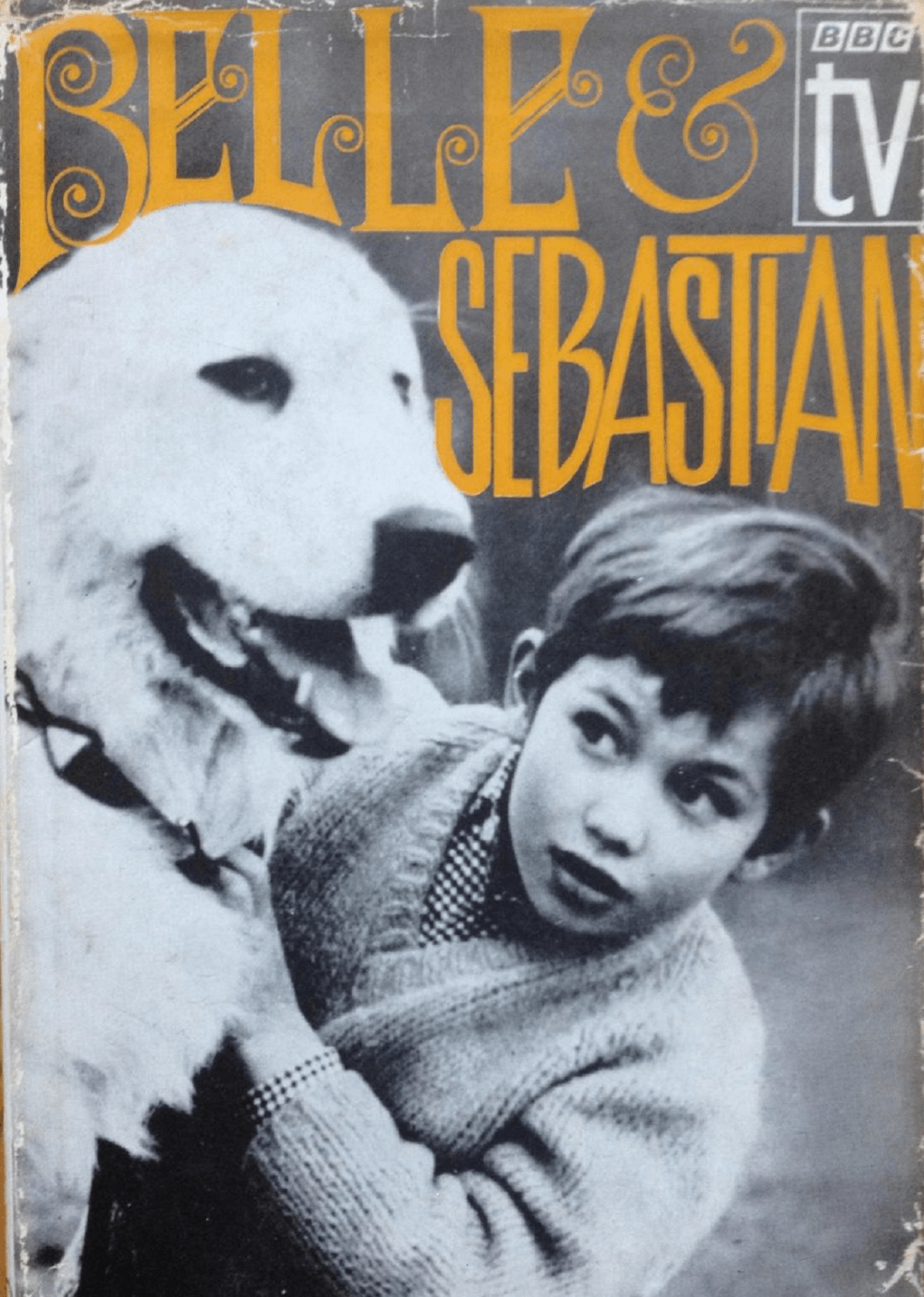
Another feature repurposed from an earlier project – yes there are more than a few of them this time around, but I refuse to offer any variety of an apology for this – this time taking a look at the story behind dubbed French black and white children’s serial Belle And Sebastian, once as much of a fixture of the school holiday schedules as Kid Galahad and Roustabout, which was originally supposed to form part of a series of features on the most popular serials shown in the BBC’s Tales From Europe strand, but although I did also manage to write one about The Flashing Blade, various changes in plans and priorities resulted in corresponding looks at The Singing Ringing Tree, The White Horses and The Adventures Of Robinson Crusoe ended up stranded on a desert island all of their own. Eventually, I would get to write an extensive history of the former for the booklet that came with the Bluray release, and even more eventually still an equally extensive history of all five serials and the entire Tales From Europe strand and all of the other assorted dubbed imports besides would form a substantial chapter in The Golden Age Of Children’s TV. Yes, that’s ‘just lists’ isn’t it, Mr. Snarky Forum Man? For this return outing for the boy and his big massive wronged dog, I added some new context regarding my love of and encounters with a certain band who named themselves after the serial – and from one of whose songs the title of this was taken – causing one particular very strange gentleman to send me a furious message on Twitter berating me for my ‘boring arrogance’ in mentioning my resolutely failing to chat up Isobel Campbell. I would quite like to know what life is like on their planet sometimes. You can find the original version of Wrapped Up In Books here and an expanded version with more on the accompanying hardback novel in Well At Least It’s Free here.
The Best Of Looks Unfamiliar: Top Cat Will Always Be Boss Cat

Another collection of highlights from Looks Unfamiliar, this time featuring Justin Lewis on Neither Fish Nor Flesh by Terence Trent D’Arby, Mark Thompson on Libby’s Moonshine, Stephen Brotherstone and Dave Lawrence on The Lone Ranger by Quantum Jump, Stephen O’Brien on Old Fashioned Christmas by Anne Charleston and Ian Smith, Garreth Hirons on The Ghosts Of Oxford Street, Vikki Gregorich and Jeff Lewis on The Secret Cabaret, Emma Burnell on Melody Radio and Paul Cornell on Terry Wogan’s insistence on playing records that resolutely refused to become hits. The ‘extra’ on this occasion was an extract from my comments on the BBC edits of The Monkees from my appearance on Perfect Night In, although it did also include excerpts from hidden subscriber-only ‘extra’ episodes featuring Stephen, Mark and Emma which you may need to do a bit of scouting around to find but believe me it’s worth your while doing so. Anyway you can find the full show, speculation on which hallucinogenic cutaways the BBC snipped out of The Monkees’ latest encounter with an old inventor nobody will listen to and when and all, here.

There never was a BBC Radio Collection release for Lionel Nimrod’s Inexplicable World, the Belle And Sebastian rheme was released on Phillips, and the Doctor Who theme was initially released by Decca, but there were tons of other iterations of it in its various arrangements on BBC Records And Tapes, and you can read all about them in Top Of The Box Vol. 2. a complete guide to every album released by BBC Records And Tapes, available in paperback here or from the Kindle Store here.
Mystery Link! If you want to just go straight to a surprise page completely unrelated to any of the above, click here.
© Tim Worthington.
Please don’t copy this only with more italics and exclamation marks.

