A version of this previously appeared on my Patreon under the slightly more unwieldly title “If We Fight Like Dull TV ‘Zoo Vet’ Drama One By One, We’ll Get Cancelled Like Dull TV ‘Zoo Vet’ Drama One By One!”, which not only does not really entirely adequately convey the actual intent behind this rumination on Doctor Who‘s original consignment to television history back in 1989, but also succeeded in annoying the surprisingly proliferate and vocal contingent of viewers who actually enjoyed watching variously bearded veterinary surgeon Donald Taylor’s attempts at resetting fractured marmoset paws in a sort of exceptionally well-mannered approximation of rock’n’roll era Dudley. If you’re interested in getting more of this kind of additional content – including recently a look at Republic’s film serials and at how Blackpool Illuminations and Butlin’s attempted to jazz up their advertising to meet public expectations in the exciting new era of Supercar and The Tornados – for a very small monthly contribution, you can find my Patreon here. Anyway, apparently there’s some tea getting cold…
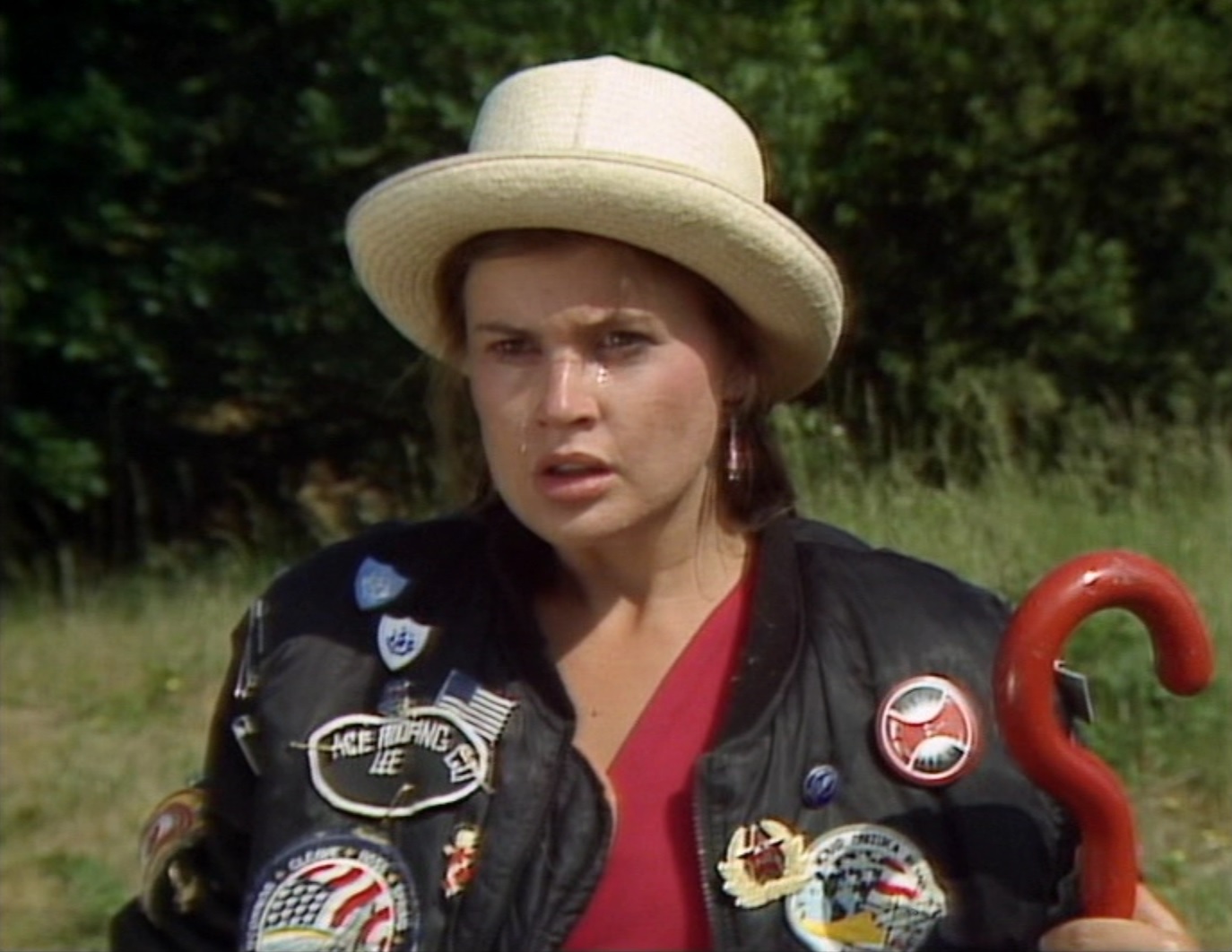
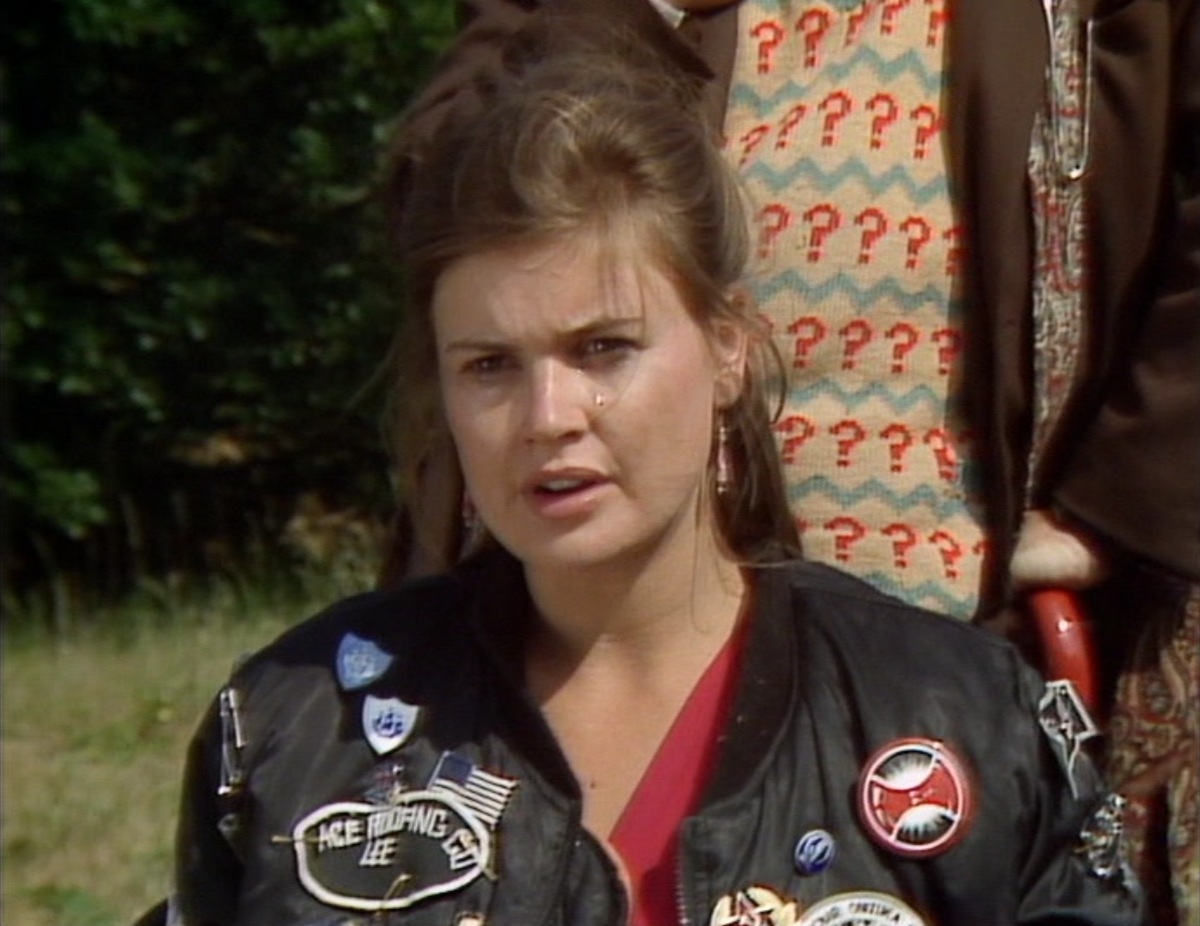
6th December 1989. Everywhere you look, any given columnist, commentator or Clive James is preparing their ‘adieu’ to bid to ‘the eighties’, the decade of Rubik’s Magic, Pac-Man and when Andy Crane had to hastily improvise a partial apology for inadvertently broadcasting a ‘ribald’ interchange from Phil Cool’s rendition of Bridge Over Troubled Water during Broom Cupboard hours. Across the television and radio schedules, gears were already grinding towards big massive retrospectives like BBC2’s split second pop performance clip compilation Eighties, and there was a tangible sense that everyone was ready to move on and indeed ready to greet the promise of a new decade and a culturally cleanish slate. Meanwhile, almost without anyone noticing, Doctor Who took what was to all intents and purposes its final bow as Sylvester McCoy and Sophie Aldred wandered off into some shrubbery whilst muttering something about how the tea’s getting cold unless it isn’t.
Doctor Who‘s quiet cancellation late in 1989 is invariably sold to us as somewhere between a colossally short-sighted lapse of judgement by the BBC and an unpardonable slight and injustice that caused a sort of stock market collapse in fandom or something, but the inconvenient reality of the matter is that at the time – to some observers at least – it actually sort of… made sense? No matter how much the series may have picked up in terms of production values and overall sense of fun and adventure during Sylvester McCoy’s tenure, no matter how superb a performer and what a breath of fresh air in general Sophie Aldred was, and no matter how much those last couple of series may have achieved in terms of reconnecting the show with its actual intended audience and emphatically not with disinterested adults who nonetheless thought it should go back to being like it was when it was Tom Pertwee and the Relpatroids or something – ‘I should know, I used to watch it!’ – the blunt fact of the matter was that by that point, Doctor Who had been running on borrowed time for almost half a decade. The goodwill and congratulatory mood that had greeted the twentieth anniversary in 1983 had almost immediately given way to a tangible and hostile sense of everyone asking ‘…are you still here?’, and when the twenty fifth anniversary rolled around in 1988 – as you can all too exasperatingly find out here – pretty much nobody was interested. A year later the BBC didn’t want to make it any more, the viewing public couldn’t care less – especially once it was scheduled opposite Coronation Street – and fans were hardly doing themselves many favours by chaining themselves to the Newsnight studio dressed as Bellal or whatever it was, so in all honesty Doctor Who was lucky that it managed to last quite as far as it did. As indeed we were lucky that it managed to last quite as far as it did. Wistfully and undramatically winding matters down during the literal closing days of a momentous decade felt like a natural conclusion if anything. It just felt like it was… time. Also, on this occasion nobody saw fit to make a charity record about it.
If you cast even the most casual glance around the Bluray extras for the 1989 run of Doctor Who, it really is glaringly noticeable that while the other eighties collections have a dozen or so tie-in appearances or at the very least mentions on other BBC programmes per story – in some cases so many that they have to have their own separate menu – this time around they are conspicuous by their scarcity. Meanwhile, and perhaps more pertinently, at the same time as the BBC itself was visibly moving on from Doctor Who, it’s a fair bet that a significant number of fans were moving on too. With the anticipation and promise of a new decade, merchandising, home entertainment technology and archive broadcast-related matters were moving fast and ‘fandom’ of anything and everything that any unwitting chat show guest ambushed with a question about Star Trek might splutter had become ‘a cult’ was expanding into the wider and more culturally embraced or at least tolerated behemoth we know it as today, and the appeal of having Doctor Who as just one of a varied set of enthusiasms had and indeed has seldom felt greater. The inaugural top ten of the new decade, of course, resonated with Guru Josh exclaiming that 1990 was ‘Time For The Guru’. He did not mention Doctor Who once.
What came next was in actuality a couple of years in which Doctor Who was essentially a done deal; a measurable known quantity with an identifiable start and end – and that’s when something very interesting started happening. By the BBC, the critics and the general public alike, Doctor Who suddenly started to be taken a lot more seriously. It was now saleable nostalgia, leading to impressively thought-through BBC Video documentaries and collections of otherwise long-unavailable rarities on the one hand, and properly promoted and scheduled repeats on BBC2 and even astonishingly primetime BBC1 for everyone else. Fans who had actually bothered to learn the mechanics of writing, acting, directing, composition and even television production as opposed to just believing they were entitled to be in charge of Doctor Who because they saw The Armageddon Factor once began working on officially sanctioned book and audio adventures, and many of them would ultimately go on to work on actual Doctor Who itself. What was more, the need for guffawing ‘humourists’ to make aimless gags about sink plungers and whatever in the name of sanity megagalactic scarves are abated, replaced by the likes of Harry Hill, Jo Brand, Caitlin Moran, Andrew Collins and Stewart Lee and Richard Herring, former childhood viewers who made observations that were as affectionate as they were accurate. Finally, people who had actually watched Doctor Who were being allowed to make the jokes; and where they joked, viewers were more than likely to follow.
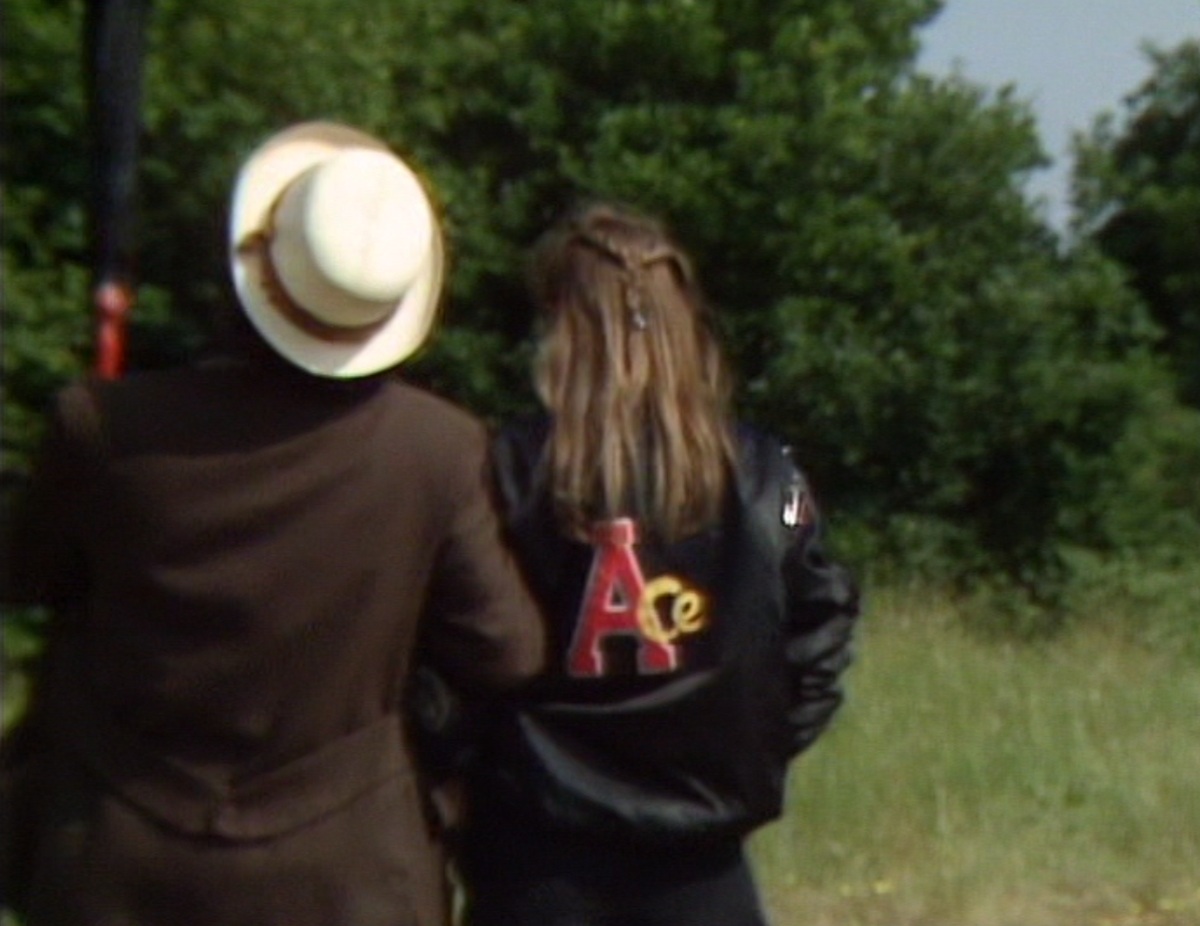
So, as furious as some may well still be about the understandable apathy of December 1989, maybe that needed to happen in order for Doctor Who to be able to come back. So it was all a bit swings and roundabouts really, Which is fitting considering that it essentially signed off with The Doctor and Ace wandering off past some swings and roundabouts.
Buy A Book!
You can find an much more about Doctor Who in the late eighties and the twenty fifth anniversary that wasn’t in Keep Left, Swipe Right, available in paperback here or from the Kindle Store here.
Alternately, if you’re just feeling generous, you can buy me a coffee here. I mean there probably was a Doctor Who coffee grinder in the mid-nineties. With one of those full-page ads in SFX. Priced at a very reasonable £399.99.
Further Reading
You can find out exactly why I love Sylvester McCoy’s debut story Time And The Rani, in more detail than anybody wanted, asked for or needs, in Time And Tide Melts The Snowman, a suitably epic look back at a not particularly epic story starting here. You can also find a look at the events and – let’s be honest – non-events of Doctor Who‘s twenty fifth anniversary in It Would Make Your Tea Sweet? here.
Further Listening
You can find my thoughts on The Paradise Of Death and The Ghosts Of N-Space, the two radio serials made with Jon Pertwee as The Doctor at a time when nobody thought Doctor Who itself was ever coming back, in Doctor Who And The Looks Unfamiliar here.
© Tim Worthington.
Please don’t copy this only with more italics and exclamation marks.

