
This look at the story behind BBC2’s pivotal 1994 comedy series The Day Today – ‘the groundbreaking news show that won an award’ that tweaked current affairs broadcasting techniques for a deliberately pointedly ridiculous view of where it might end up if we allowed it to get out of control, but now in all honesty just looks like a very mild and polite warning of what followed and has long since got even more ludicrous than anything that was ever reported on by Romella Belx and company – was originally written for my late nineties paper and ink and very badly stapled fanzine Paintbox. Although copies of Paintbox still occasionally go for surprisingly large sums of money on second hand sites, which is making me wish that I still had all of those copies of Issue Ten that I ended up giving to Probe Records as a freebie for customers, I’m not sure that much of it really bears revisiting now – in fact when I have done it’s often been carefully selective quoting of good points well made such as in this Nick Drake feature here and this Beach Boys one here – but nonetheless I am still enormously fond of some of its contents including this feature in particular. Although it has long since been factually surpassed by many other writers’ efforts including my own, it has a sense of energy and a keenness to know more that you could really only get back at a time when all you had to hand for research were the two-part VHS release of the series, a couple of newspaper clippings saved from around the time of the original broadcast and a handful of questions answered in letters by Armando, Chris and Rich and Stew. Which may seem laughable now but there was a real sense of fun and excitement in having to physically track down information in the least likely avenues based on little more than guesswork that is more or less almost entirely gone forever now, and sometimes it is difficult not to miss those days. Although it wouldn’t be as easy to find out much about The Tennis Elbow Foot Game, admittedly.
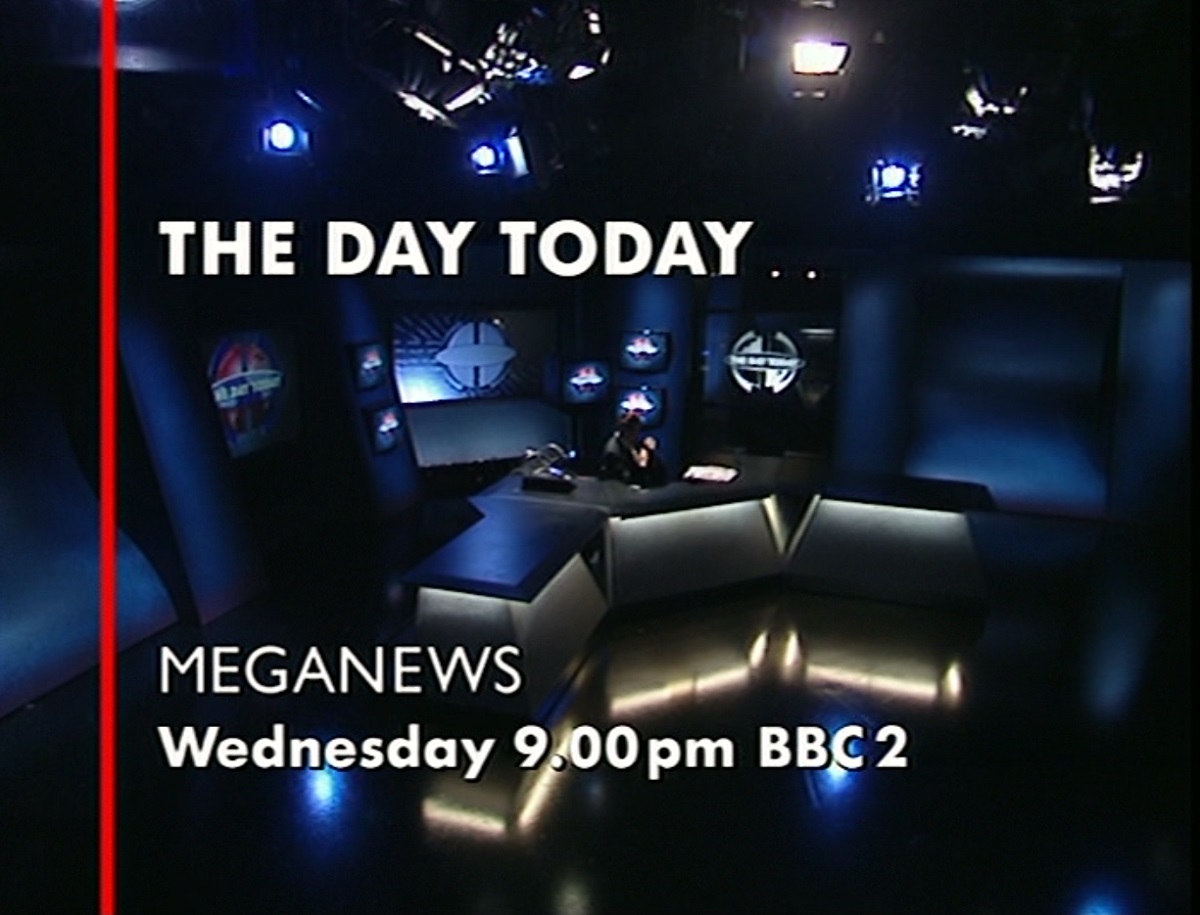
Speaking of having long since been factually surpassed by many other writers’ efforts including my own, you can find much more about The Day Today, On The Hour, Lionel Nimrod’s Inexplicable World, The Chris Morris Music Show and much more besides in Fun At One, the story of comedy at BBC Radio 1, which is available in paperback here or from the Kindle Store here. You can also find a chat with Phil Catterall about the Christmas Specials of On The Hour, The Chris Morris Music Show and Lee And Herring in Looks Unfamiliar here. Incidentally, I had originally planned to illustrate this with the same photos used on the covers of the VHS releases to try and get a sense of that original ‘feel’, but just couldn’t find them anywhere in good enough quality. Funny how something that was once so ubiquitous can just fall so entirely off the radar. Anyway, is that Doctor Fact knocking at the door…?

“Nation shall speak unto nation”, declared the founding fathers of the BBC – but they were wrong. For too many years, the current affairs peasants of Britain were left marooned in a newsless valley, watching haplessly as thin tissues of lies were served up as ‘tonight’s top stories’ while the real important issues of the day escaped unnoticed through some kind of huge journalistic sieve. Then one day in 1991, everything changed. The aimless, meandering lives of the people that news forgot were suddenly given a new sense of purpose and direction as the noble swan of truth soared majestically over the factual horizon, bringing with it a barrier-shattering topicalipackage known as On The Hour. A round-the-clock rolling news service long before BBC News 24 was even a figment of the Test Card’s darkest nightmares, the dedicated reporter presenters behind On The Hour – their species: Homosapinews! -stripped away all of the tish and fipsy to bring us only the choicest, purest chunks of fact. This, in a very real sense, was THE NEWS!
On The Hour was conceived by Armando Iannucci, a BBC Radio producer who had then recently been working on the award-winning BBC Radio 1 comedy show The Mary Whitehouse Experience (which you can find more about here). Iannucci did not join the show’s cast for the television transfer, and instead remained in the radio studio plotting. Eventually he came up with a slick current affairs satire format into which he could work many of his more outlandish comedic ideas. To knock the idea into broadcastable shape, he needed a set of equally sharp collaborators – and fortunately for the news-hungry hordes, Iannucci knew just the individuals.
Fresh out of Oxford University, Stewart Lee and Richard Herring had spent the dawn of the 1990s attempting to forge careers as a writing and performing partnership, but had so far found only limited success on small-scale comedy shows. Iannucci saw far greater potential in the duo’s cruel but accurate parodies, warped surrealism, strange reappropriation of childhood iconography and seemingly limitless capacity to conjure up convincing comic archetypes, and installed them as the writers who would set out strong foundations and then build On The Hour on top of them. Chris Morris, meanwhile, had come into comedy through a far more unusual route. He had initially started working in radio as a straightforward presenter and producer, but his notoriously off-centre sense of humour had broken free of its moorings and transformed him into a formidable loose cannon of a broadcaster. As he moved his way up the local radio ladder with a string of suspensions to his name, he had developed an remarkable talent for subverting the news medium not only in terms of inventing ridiculous yet also faintly plausible stories but also attacking the actual way in which it was presented. Iannucci had heard Morris on Greater London Radio, where he had punctuated stories about unborn babies being accepted at Cambridge and water supplies polluted with truth drugs with the infamous Sock Quiz, ln which he invited children with socks stuffed in their mouths to give answers that sounded suspiciously like obscenities. Iannucci saw Morris not merely as a potential anchorman for the intrepid news service but also as a valuable co-conspirator with years of practice in dreaming up the sort of surreal scenarios that would be at the centre of On The Hour. Morris, who had recently run into trouble with GLR management over his re-editing of The Queen’s Christmas Speech, was only too happy to accept Iannucci’s invitation to work on a no – or, at least, very few – holds barred show on BBC Radio 4.
On The Hour may have found its unpredictable news-obsessed anchor, but more performers were needed to forge the many and varied characters that would appear in the show. For the pilot they were joined by voice artist Steve Coogan, then better known as one of the impressionists behind ITV’s puppet satire show Spitting Image; Patrick Marber, stand-up comedian and aspiring writer; Iannucci’s University double-act partner David Schneider; Rebecca Front, who had worked with Iannucci on The Mary Whitehouse Experience and her own Radio 4 revue show Girls Will Be Girls; and Doon Mackichan, an established theatre performer and student contemporary of Coogan with her eye on a career in comedy. Iannucci also brought in Steven Wells and David Quantick, whose exaggerated parodies of rock star pomposity within the pages of New Musical Express shared many of the qualities that would characterise On The Hour, as well as up and coming writer Andrew Glover, and the world’s most dedicated news gathering and regurgitating service was ready to roll.
Promising “the loudest in news, facts information and pens from round the world and the latest on last week s chair”, On The Hour unleashed itself onto an unsuspecting Radio 4 audience in August 1991. Parodying news and current affairs was nothing new, but it was the style of presentation that made On The Hour into a formidable headline of radio comedy. Both Chris Morris and Armando Iannucci had backgrounds in the preparation and presentation of genuine news broadcasts, and they used their knowledge and expertise to present On The Hour as if it was just another Radio 4 current affairs show. Surreal stories about Ireland bursting, Russia declaring its own independent laws of physics and the Bank Of England losing ‘the pound’ were put forward using the authentic techniques, conventions and language of news presentation. The humour was as much in the subversion of the traditional news format as it was in the actual comic material, and On The Hour was reputedly convincing enough for some listeners to be fooled into believing it to be a real news programme.
The coverage of surreal events and incidents that had missed the mainstream news boat were held together by Chris Morris as the overbearing and vaguely threatening anchor, whose voice was deeply rooted in the BBC but whose mind was more at home in the theatre of the absurd. Conceived as a near-psychotic whose pursuit of ‘the news’ knew no bounds and who had been fired by ITN in 1989 for using makeup on disaster victims, ‘Christopher Morris’ barked out facts and figures in his strident, authoritative voice without giving a single thought to their meaning or validity. His reports and round-ups (“Dinosaurs Died Out On A Tuesday, Claim Experts”, “Blue Giraffe Storms Out Of Peace Talks”, “Thieving Wasp Leaves Thousands Homeless”, “Embarrassed Dog Found Sniffing Wreck Of Titanic”, “Angry Delors In ‘Can Someone Get That Bloody Phone?’ Outburst” and “Dismantled Pope Found Sliding Along Road” to name but a few) screamed insanity , but the sheer natural newsreadery authority of his voice screamed ‘truth’ at an equally ferocious volume. With this man at the helm, you could almost believe that gangs of youths had actually stolen inner cities and driven them around at high speed before abandoning Kidderminster in a hedge (“Home Secretary Kenneth Baker said ‘The Day Of The Yahoo Is Upon Us'”).

Meanwhile over at the Sports Desk, Alan Partridge sat waiting for the latest sports news to hit him in the face like a football. A fusion of ideas developed by Coogan, Lee and Herring, Alan Partridge embodied all of the most inept qualities of all sports reporters and regional news anchors in one uncomfortably-sweatered safe pair of presenting hands. He clearly believed himself to be a world-class broadcaster, but his total lack of anything resembling self-awareness placed him far closer to economy class. Whether reporting on Wimblich City giving one of their star players a free transfer to Chessington World Of Adventure, commentating incomprehensibly on the racecourse progress of Erupted Pension and l Am A Horse, or simply pursuing his worrying obsession with sportsmen and women developing ‘groin strain’, Alan Partridge never failed to deliver the most simultaneously confident and uninformative sports reports on radio.
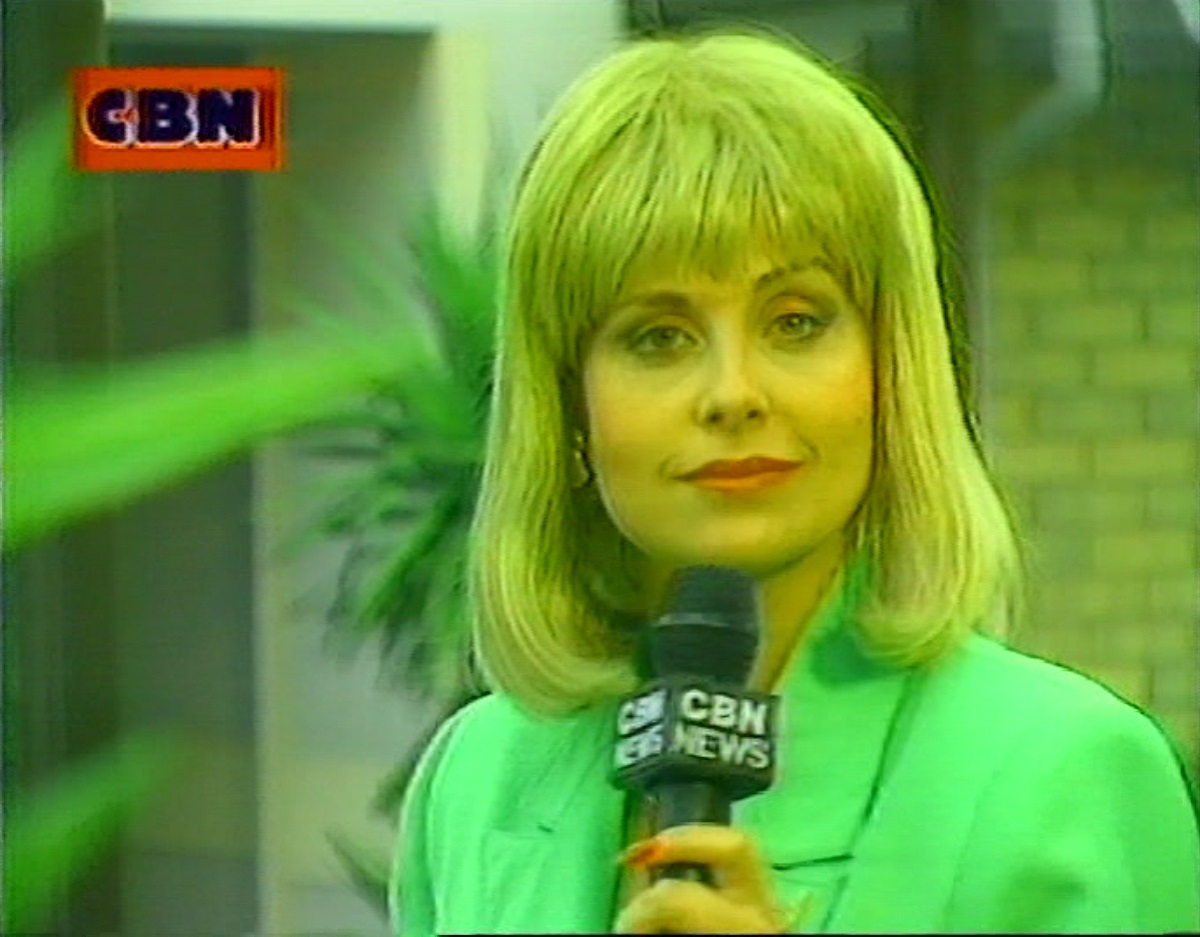
Over in the USA, Barbara Wintergreen (Rebecca Front) filed voyeuristic reports on babies being given plastic surgery while still in the womb and women being banned from Nebraska, taking every opportunity to indulge in an overuse of alliteration and gloriously tasteless puns. The Green Desk was maintained by Rosie May (Front), an ambience-friendly enviromation monitor who brought updates on such pressing issues as the unsolicited dumping of types of wood in Hampshire. Monsignor Treeb Lopez (Patrick Marber) offered ‘thoughts for the day’ which made allusions to Christianity through gambling, raving and smuggling drugs through customs, while Kevin Smear (Doon Mackichan and/or David Schneider) perpetuated a news first by continually changing gender between broadcasts. Throughout all of this, the monumentally useless Peter O’Hanrahahanrahan (Marber) failed to do any research whatsoever before presenting his reports live on air.
The fanatical devotion to detail in Morris and Iannucci’s background work ensured that On The Hour was packed with the sort of soundbites that could be found in any ‘authentic’ news broadcasts. Innocent members of the public were persuaded to give their ‘man on the street’ opinion on such unlikely topics as Beard Economics and 50/50 Car Parks. Telephone link-ups were made to ‘on the spot’ reporters who actually sounded more like extremely confused and vaguely frightened department store employees. Words were put into the existing words of everyone from BBC presenters to world leaders as interview tapes were rearranged into statements and sentiments that were quite different to the speaker’s original intentions, although it was difficult to avoid the suspicion that Margaret Thatcher apparently explaining that she shot all of the Royal Family’s corgis because “they came out in the street in their hundreds of thousands – they weren’t going to let go, they weren’t going to let go” was actually genuine. Chris Morris also worked on his own to write, perform and produce one-man parodies of well-known radio formats, utilising his underrated talents for musical and vocal mimicry to astonishing effect. Radio 4’s travel guide show Breakway was stamped whimsically into the ground with its irritating Charleston theme tune reduced to “Yes it’s time to go away, on a jolly holiday, go away, go away, bloody go away”, while, long-running financial advice show Money Box was chopped around with laughter and applause to make it resemble a comedy panel game, ending with a parody of its chirpy barbershop quartet theme, and Alistair Cooke’s Letter From America was doctored to sound as though it was coming live from Central Park. Out-of-touch Radio 1 presenters were mercilessly lampooned via his ‘wacky’ persona Wayne Carr – who existed, incidentally, before Smashie and Nicey – and local radio presenters fared ever worse. Morris even cast his acute sense of observation overseas, turning in a neat parody of the inane European radio stations that can be found while flipping through the AM frequency.
On one memorable occasion, all of the individual elements of On The Hour were combined into a lengthy and devastatingly accurate parody of war reporting. Clearly informed by the often ludicrously overblown coverage of the 1991 Gulf War, On The Hour reported live from the thick of their own imagined conflict, even if Wayne Carr was prevented from Puff The Magic Dragon in case it reminded people of flamethrowers. A virtual sports commentary of battlefield events was given from the frontline, an American press conference to unveil new weapons was framed by Royal Variety Performance-style music, and a special edition of Our Tune came from behind enemy lines. The report ended on a suitably bizarre note, with official war composer ‘Michael Phillip Annoyman’ giving the first ever performance of his interpretative neo-classical piece War Goes Bang.
The non-stop news-gathering machine that is On The Hour never sleeps, even on Christmas Day, and on the 25th December 1991 Radio 4 crossed back over to their studios for a special report including the latest on moves to combat the growing threat of parental dishonesty over the existence of Father Christmas; and which you can hear more about here incidentally. April 1992 brought a second full series, which mixed more of the same distorted genius with a look back to the ‘very first’ On The Hour from 1959, complete with beatnik jazz versions of the familiar musical stings and rearranged soundbites from post-war public figures. One show included a lengthy item in which Morris and Coogan made a very convincing attempt at selling a faked tape of opposition leader Neil Kinnock acting ‘drunk and disorderly’ to several tabloid newspapers, which they very nearly managed to pull off. All things considered On The Hour was such a giant unstoppable steamroller of current affairs that it could not be contained by the constraints of a mere radio station for much longer, and after a further Christmas Special in 1992 – on Wayne Carr’s spiritual home Radio 1 – plans were already afoot to transfer it to television.
Yet On The Hour and radio weren’t quite done yet, as early 1993 brought a solo venture for Alan Partridge. With his character and background developed by Steve Coogan, Armando Iannucci and Patrick Marber, the hapless sports reporter was recast in Knowing Me Knowing You as an equally clueless chat show host, easily outsmarted by his guests and seemingly unable to follow any coherent line of questioning. His interviewees were played by various members of the On The Hour team, with the notable exception of Chris Morris who was working on his own Radio 3 series Why Bother? (which you can find more about here) at the time. Stewart Lee and Richard Herring weren’t involved either, but that’s another story…
This was originally a two part feature spread across consecutive issues, and I’ve elected to leave in the original ‘cliffhanger’ and recap, for want of better words, as I like them and their inadvertent reflection of what it was like to write for the self-published print medium in those long-lost days too much to go tampering with them. If you want a quick mid-feature break to find out what Rich and Stew were up to during this time, incidentally, then you can find a look at the their Radio 4 series Lionel Nimrod’s Inexplicable World here. And now, roll out the red carpet – news is back in town!
The BBC has always prided itself on its current affairs output, and every time that the merest hint of an anniversary ending in five or zero is on the horizon, they waste no time in seizing the opportunity to celebrate with a week of theme nights detailing their long relationship with the news. Yet it wasn’t until they allowed an edit-crazed producer, a psychotic DJ, two writers with a finely-tuned sense of the absurd, two stand-ups, a couple of serious actresses and a Neil Kinnock impersonator to run riot in a radio studio in 1991 that they really produced a newsarama worth shouting about. On The Hour first started to chase the news hare round the factual dogtrack when producer Armando Iannucci heard Chris Morris inflating the headlines until they burst on his GLR pop music show, and suggested that they do something together for BBC Radio 4. In came writers Stewart Lee and Richard Herring, and performers David Schneider, Patrick Marber, Doon Mackichan, Rebecca Front and Steve Coogan, and from their collective imaginations sprang the slickest and most totally believable current affairs satire that the broadcasting world had ever witnessed. Taking dead aim at the pomposity and self-importance of radio news, On The Hour was distinguished by its careful and deliberate use of the presentation techniques of genuine news broadcasts – some listeners, including a certain Daily Express columnist, actually believed that what they were hearing were genuine news broadcasts – and quickly established itself as the most sophisticated, the most inventive, and above all the most consistently funny comedy series to appear on BBC Radio in years.
Careering around the news sidestreets like a hazardously out-of-control milk float loaded with blue top, silver top and gold top headlines, On The Hour could not be contained by the constraints of a prestigious national radio network for long, and early in 1993 it seized the topical battering ram and forced its way into a television studio to perform its topical gymnastics in front of the cameras. The resulting pilot episode disappointed the team, who felt that it relied too heavily on ‘wordy’ sketches at the expense of clear visual humour, and that the grotesque material that had worked so well on radio just seemed unpleasant and wilfully intended to shock when presented in a visual medium. Nonetheless, it was promising enough for the newshungry BBC to offer them the chance to expand and improve on it over six episodes.
However, the expanding and improving was to be done without Stewart Lee and Richard Herring, whose inventive and tightly-paced scriptwriting had been the glue that had held the entire On The Hour newspackage together. Originally the plan was for them to act as the main writers on the television iteration too, but the duo’s request for a degree of creative control over their characters, which as Lee later explained was not motivated by egotism or jealousy but basically wanting an assurance that “when Coogan and Marber tour the characters we don’t get ripped off”. In theory this should not have been a problem, but a clash of managerial interests led to their absence from the television series; and also, incidentally, from the BBC Radio Collection cassette of On The Hour, from which their material was largely excised. Many of their ideas and characters were retained, though, and as Lee and Herring progressed through hit radio and television shows, a notorious comedy feud developed with Comedy Clown Patrick Marber frequently finding himself on the receiving end of comically sustained attacks in their routines.
Morris and Iannucci had always been as heavily involved with the writing as Lee and Herring, and in any case David Quantick and Steven Wells, who had contributed material to the radio version, were still on board, but it was still felt that new writers were needed to help bring their vision to the small screen and Graham Linehan, Arthur Mathews and Peter Baynham were brought on board. Linehan and Mathews, a writing partnership with a background in music journalism, quickly proved themselves as an efficient writing team, but it was Baynham who really understood the demands and motivations of the projected series with a knack for meeting Morris and Iannucci’s ideas with his own equally outlandish ones, and it is tempting to suggest that it might not have worked quite so brilliantly well without him. With three overactive and worryingly surreal minds churning out frightening ideas at an equally frightening rate of knots, The Day Today went into production in the spring of 1993 and stayed there for practically the rest of the year. The team’s attention to detail when working in a purely sound-based medium had been thorough enough, but now they were also presented with a whole new set of visual characteristics to play with and parody, and they took full advantage of the extra potential for subversion, carefully lampooning the visual absurdities of television news as much as its actual content. Little was revealed about The Day Today until January 1994, when a mysterious trailer alleging that a live antelope had burst from Home Secretary Michael Howard’s stomach appeared on BBC2. Little did the newsless hordes know it, but whether they liked it or not, they were about to come face to face with Ultra-news, Nineties style!
From the opening overabundance of flying graphics and dramatically-delivered headlines (“Bryan Ferry Bathmat Poisonous, Say Lab”, “Crazed Wolves In Store A Bad Mistake Admits Mothercare”, “Teenage Boy Roasts Himself In Sacrifice To Chris Kelly”, “Headmaster Suspended For Using Big-Faced Child As Satellite Dish” and “Elastic Song Strangles Hucknall” to name but a few), to the closing send-ups of the curiosity-arousing actions of newsreaders once the studio lights go down which include stealing pens, pulling off wigs to reveal flowing blonde locks and injecting themselves with heroin apparently, The Day Today flawlessly exploded the pomposity of television news with an astonishingly amusing fusion of satire and surrealism. Among the stories that came under the current affairs microscope were the shocking increase in the number of people using backstreet dentists, claims that the Police had taken to eating suspects, an infestation of horses in the London Underground, the Bank Of England losing ‘the pound’, passengers on a trapped commuter train reverting to Paganism, and an American serial killer being executed by the reanimated corpse of his final victim.


These may have been as far-flung as they were funny, but when such ideas were couched in the language, style and presentation of genuine news broadcasts, you could almost believe that they were real. Some of the tireless reporterpresenters who brought these and other stories to the nation’s attention had already been heard, if not seen, in On The Hour. Rosie May continued to thought-project her dreamily tranced ‘green’ news updates and Peter O Hanrahahanrahan continued to generally allow important stories to slip through his hands like water, while Stateside correspondent Barbara Wintergreen made the transition to television with her grossly insensitive reports presented in gloriously authentically gaudy CNN-style color. There were also a few new regular characters, including ‘physical cartoonist’ Brant (Schneider), robotic finance correspondent Collaterlie Sisters (Mackichan) and Sylvester Stewart (Schneider), a ‘part-graphic’ weatherman only ever sighted as a floating head.
Hopeless sportscaster Alan Partridge had become increasingly popular throughout On The Hour and Knowing Me, Knowing You, but it was in The Day Today that the character really came into his own. Everything starts well enough with his expert commentary over a preview of some of the highlights of the 1994 World Cup, but soon his true ignorance of the wider sporting world became apparent, and he was to pay a very heavy price for this. By the end of the series he had suffered such indignities as being floored by both a judo expert and by his own World Cup match prediction machine, and felt the wrath of newshound from hell Christopher Morris more times than anyone could care to calculate. Yet despite this misfortune, Alan carried valiantly onwards, mixing enthusiasm with ineptitude as he brought viewers all the latest news about horse racing (his tips: Zeinab Badawi’s Twenty Hotels and Trust Me, I’m A Stomach) and football (“the match between Taste Of Dunfermline and Strathcarnage could not be stopped”). Partridge’s finest hour came with his live coverage of a horse race meeting at Marple (“Horses! From Mr. Ed to Silver, that’s the Lone Ranger’s horse, they’re all here”). Apparently determined to do anything but talk about the actual races, instead he swoons over “a lovely girl chomping on a sandwich”; berates some children running around whose ‘tomfoolery’ he worries may degenerate into ‘blind ugly violence’; interviews jockey Mickey Doolan and refuses to believe that he is any older than thirteen; spots what he fears might be a dead horse beneath some tarpaulin; and best of all, when the camera focuses on a distance marker, pauses before muttering “don’t know what that is” in a voice which is as full of primal fear as it is of confusion and a desire that the image he is being asked to commentate on would just go away.
As with On The Hour, it was Chris Morris’ news-obsessed anchorman who held everything together, with his authoritative voice and studied presentational manner lending a calculated tone of plausibility to the bizarre events unfolding in the news studio. The visual medium gave Morris the chance to emulate and grotesquely parody the genuine on-screen style of real-life bombastic news presenters like Jeremy Paxman and Michael Buerk, and there was also a greater opportunity for interaction with other characters than there had been in On The Hour and Morris exploited the latter to the full. His character clearly enjoyed mocking Alan Partridge’s intellectual and cultural inferiority, was obviously having an affair with travel correspondent Valerie Sinatra (Front), and quite simply hated Peter O’Hanrahahanrahan. He also had little patience for anyone who got in the way of ‘real’ news, as London Jam Festival organiser Janet Green found out to her misfortune when he reduced her to tears with his unsubtle questioning of her motives. Not a single link would go by without Morris playing with the conventions of news broadcasting in some way, whether playing along to the background muzak on an organ behind his desk or simply glancing from side to side in an unsettling fashion. Alan Partridge may have been the undisputed star of the series in the eyes of the mass viewing public, but it was Morris’ anchorman, not so much as a wolf in sheep’s clothing as a maniac in newsreader’s Armani, that really gave The Day Today its subversive edge.

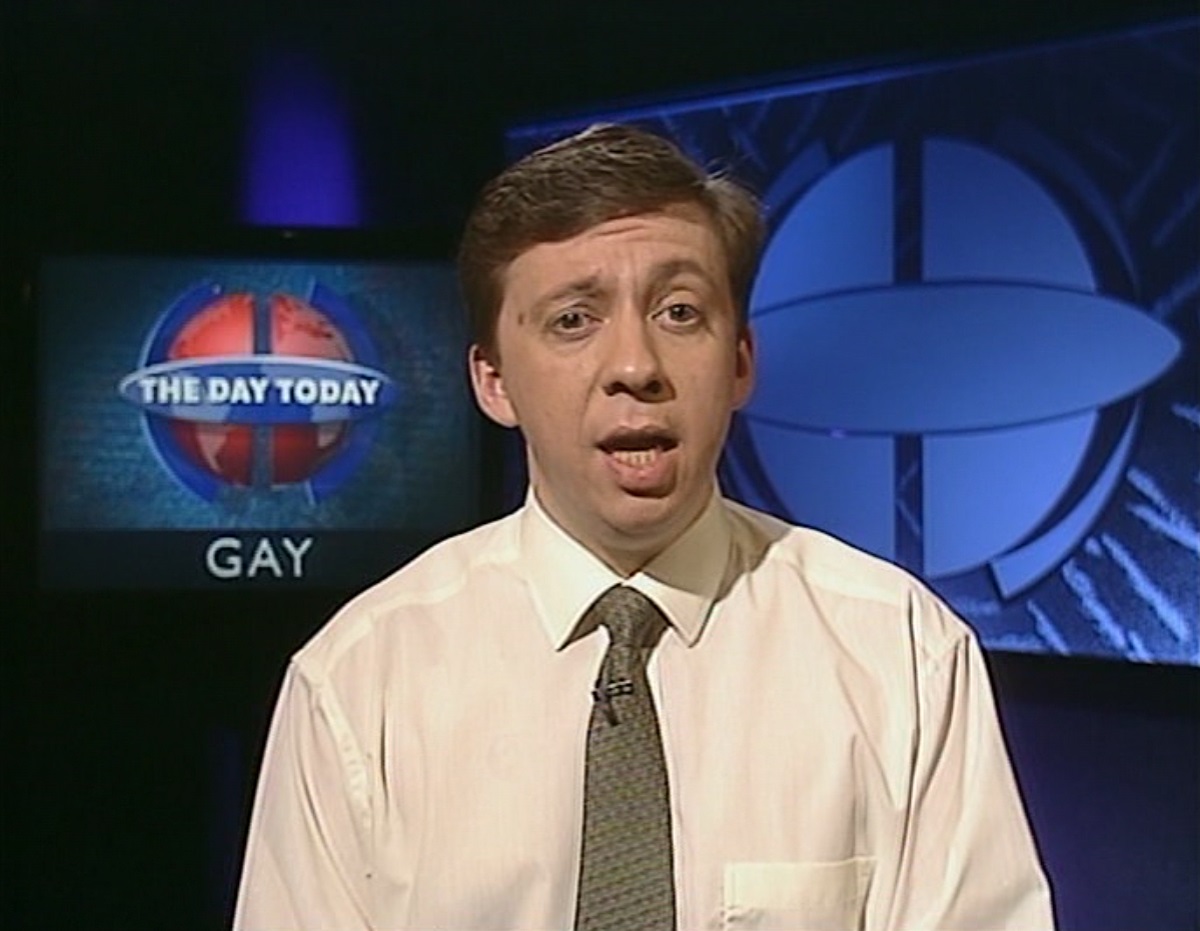

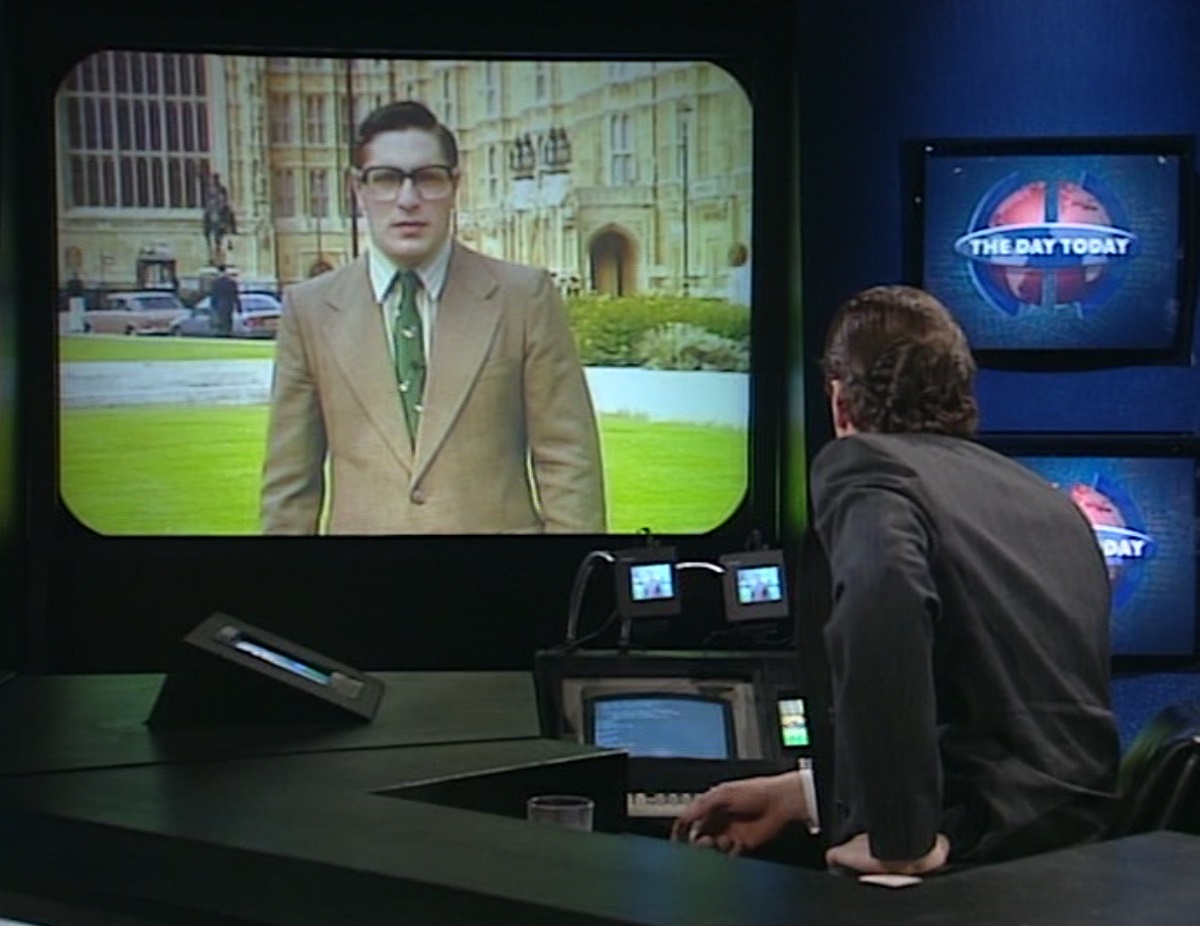
The main cast of The Day Today were totally convincing and character-perfect throughout the series, even in the literally hundreds of less prominent roles that they undertook. There were also cameos from Armando Iannucci as handover-obsessed Parliamentary reporter Hellwyn Ballard, Peter Baynham as Gay Desk’s Colin Popshedd and lower down the cast list, a then-unknown Minnie Driver as a Partridge-bothered tennis ace and a patient at the controversial Natus Clinic. Speak Your Brains saw Chris Morris take to the streets with a microphone and coerce surprisingly gullible members of the public into giving their opinions on a string of implausible mock-‘topical’ subjects, and his elaborate ‘Rok TV’ segment made it impossible to ever watch MTV with a straight face again. The soap opera parody ‘The Bureau’ on the other hand didn’t quite work within the context of the series; it was extremely funny in its own right with some fine ensemble playing, but was undermined by the fact that Eldorado, the programme that it closely parodied, had been off air for seven months by the time that The Day Today saw the light of news. The lengthy fly-on-the-wall documentary about life in a municipal swimming pool, however, still holds uncomfortable resonance even today.
In truth, however, The Day Today was always at its most effective when attacking the conventions and restrictions of news broadcasting. Morris and Iannucci both had backgrounds in the preparation and presentation of genuine current affairs programming, and as such both were acutely aware of what really deserved sendimg up. Nowhere was this better evidenced than in a report on Irish terrorists threatening a wave of ‘dog bombings’ on the British mainland; at that time, representatives of the Irish political faction Sinn Fein were not allowed to be heard speaking on British television, and news reports routinely dubbed the voices of actors over their own. A ridiculous enough situation in reality, but The Day Today took it one step even further by depicting a Sinn Fein spokesman being forced to inhale helium to “subtract credibility from his statements”. At times, The Day Today transcended parody; one of the most memorable episodes of On The Hour had featured a grotesque distortion of the pomposity and patriotic excesses of war reporting, and this was taken even further in The Day Today, which saw the team run around delivering reports between endless explosions and gunning down civilians who refused to let them set up their equipment in their houses. Another lengthy segment parodied the BBC’s increasing trend for increasingly flimsily-conceived ‘theme nights’ with Attitude Night, taking viewers through a selection of extracts from old television programmes dealing with subjects that are now considered taboo, including a televised hanging from the fifties, a sixties documentary on the effects of fellatio, racist seventies sitcom ‘Them Next Door’, and controversial eighties show ‘Kiddystare’. You may not be entirely surprised to learn that the BBC transmitted their own genuine Attitudes Night a couple of years later.
The show’s greatest moment, however, also now looks like an abject warning of things to come. Following reports that The Queen had been involved in an exchange of punches with Prime Minister John Major, The Day Today was taken off air to allow for the broadcast of a special film held in reserve for times of crisis. To the accompaniment of stirring classical music, bankers play on the steps of a financial institution during their lunch-hour, a policeman shares a joint with revellers at a street carnival, direction signs for Manford Thirtysixborough and Wabznasm scroll past, a man with an unlit cigarette is surrounded by children brandishing lighters, grieving relatives are cheered up by a man with a water-squirting flower, and a brutal street brawl comes to a friendly conclusion when the participants catch sight of the Union Jack. “This is Britain”, announces the narrator proudly as the brawlers walk off hand in hand into the sunset, “and everything’s going to be alright”. More than any other, it is this moment that underlines the thought processes and intentions that fuelled The Day Today, absurdly satirising not just the attitudes that the British public are supposed to hold but also the flimsy and transparent manner in which these ideas are propagated.
Editing The Day Today into individual episodes of broadcastable length was by all accounts a fraught affair, and several of the key collaborators have spoken of long nights spent attempting to reduce sketches from twenty minutes to three. However, they didn’t simply abandon the reluctantly jettisoned material; instead they took the best moments, added new linking material, and edited them into six separate three-minute ‘Mininews’ segments which BBC2 transmitted the night before each episode. Much of the material that ended up in these extended trailers is up to the standard of the full episodes, and some of it is arguably even better. Highlights of the news that time forgot include the revelation that Frank Sinatra is not actually famous but achieved the illusion through the use of an elaborate system of pulleys, screens and two-way mirrors; Partridge’s insistence that a Russian sporting star must have been ‘put in a sports camp’ and Morris reviving one of his old radio stunts in a live phone interview with ‘trapped Submacrewman Chesney Christ’ – actually a very confused- sounding employee of an American branch of McDonalds. Subverting even the medium of the promotional trailer, the ‘Mininews’ segments were final proof that The Day Today was, as Morris had it at the end of one instalment, the newsiest mothersucker in the hood right now.

Originally the team had intended to do at least one further series of The Day Today, but ultimately this never materialised. In retrospect, it is difficult to see how a second series would have ‘worked’, particularly as the development of Alan Partridge’s character in Knowing Me, Knowing You would have made him difficult to slot back into the old sports presenter role, while it doesn’t take too much imagination to realise that Chris Morris’ ideas would have become more outrageous and difficult to accommodate. However, four further series did emerge in the aftermath of The Day Today which, while not being direct sequels, did expand on the series in different ways and in different directions. Knowing Me, Knowing You followed barely six months later, and during the course of his brief and turbulent tussle with the world of the mainstream chat show Alan would find himself out of his depth with avant-garde clowns and beaten up by two ten-year-old film directors, but his personal low point came when he discovered that his range of Alan Partridge rubber masks were being used as disguises by bank robbers. Chaos also ensued when Alan tried to chair a conference between local by-election candidates, which collapsed into disarray when Bald Brummie candidate Lieutenant Colonel Kojak Slaphead III made one silly remark too many for his liking. The series ended not exactly on what could be called a high, with Partridge accidentally shooting a guest and the police arriving as the credits rolled. Alan fared even worse in his Christmas special Knowing Me, Knowing Yule, during the course of which he managed to hit the BBC’s Head of Light Entertainment in the face with a turkey, and by 1997’s I’m Alan Partridge his career was in a very steep decline. Separated from his wife, living in a travel tavern and reduced to presenting local radio shows, the ‘real’ Alan Partridge was painfully exposed to viewers as he struggled to make his way back into television, enduring a terrifying encounter with an obsessed fan and a violent dispute with a gang of Chris Morris-led farmers along the way.
Meanwhile, the spirit of The Day Today was very definitely present in The Friday Night Armistice – or The Saturday Night Armistice as it was originally known – a satire show presented by Iannucci, Baynham and Schneider which saw them apply their expertise in news manipulation to real-life topical events. A riotous mix of surreal parodies, outlandish hoaxes and digitally doctored news footage, highlights included a discussion on Euroscepticism which contended that if a car goes past Dover it doth fall off the edge of the world; a series of fake applications to join political parties, which revealed that while the Conservatives would be happy to welcome Darth Vader and Myra Hindley as members, they invariably refused naked men access to the premises; the trio taking to the stage at a comedy club to perform a routine of jokes made in recent political speeches to dead silence; and best of all Iannucci acquiring OJ Simpson’s autograph at the bottom of a sheet of paper reading ‘I Did It!’. There was even a three-hour special on General Election night in 1997, with a tally of the incoming polling results a kept by groups of children on a bouncy castle.
Yet without question the most potent follow-on project was Morris’ Brass Eye, which may in all honesty be the most powerful television comedy series to make it to the small screen (and which you can read much more about here). In fact, the series nearly never made it to the screen at all – the BBC piloted then rejected it, while Channel 4 pulled it from the schedules with less than a day to go to transmission and several months elapsed before they finally relented and allowed a heavily edited version to be broadcast. Whereas The Day Today had conducted its news mockery in an effective fantasy world, Brass Eye dragged grotesquely parodied news stories kicking and screaming into the everyday lives of real people, reaching an unrivalled flashpoint of subversion when the ‘threat’ of Morris’ fabricated killer drug Cake took in enough actual MPs that a motion was tabled in Parliament calling for it to be banned. Plenty of people called for Brass Eye to be banned as a consequence, with one tabloid bizarrely labelling Morris ‘the most hated man in Britain’, but how much of this was motivated by genuine outrage and how much by indignation at having been taken in by his elaborate hoaxes is a debatable point. By allowing Brass Eye to escalate into a news story in its own right, Chris Morris delivered what is surely the last word on news-based comedy. Not that anyone working on The 11 O’Clock Show noticed.
There have been scores of imitators, but none have featured quite the same sort of stellar lineup of stars-in-waiting nor such a breathtaking collision of inventive minds and innovative humour as The Day Today. Some of the reference points may be less familiar, but The Day Today is as brilliantly funny now as it was back in 1994. Incidentally, police are still searching for the actor Burt Reynolds, who stole a dodgem car from a fairground and escaped after a low-speed chase. And in summary then, that’s all the news. Goodnight, bye-bye, cheers, good.
Buy A Book!
There’s much more about On The Hour, The Day Today, Lionel Nimrod’s Inexplicable World, The Chris Morris Music Show, Fist Of Fun and tons more besides in Fun At One – The Story Of Comedy At BBC Radio 1, available in paperback here or from the Kindle Store here.
Alternately, if you’re just feeling generous, you can buy me a coffee here. Tell the barista your name is Lionel Cosgrave. It’ll probably have to be edited out.
Further Reading
Executive Producer: Belinda Carlisle is a look at the strange story of the making of Brass Eye; you can find it here. You can also find Come With Me Now, Into The Swirling Mists Of Human Inadequacy…, a look at Lee And Herring’s Lionel Nimrod’s Inexplicable World, here.
Further Listening
You can find more about the Christmas Specials of On The Hour, The Chris Morris Music Show and Lee And Herring in Looks Unfamiliar with Phil Catterall here.
© Tim Worthington.
Please don’t copy this only with more italics and exclamation marks.
 Tim Worthington