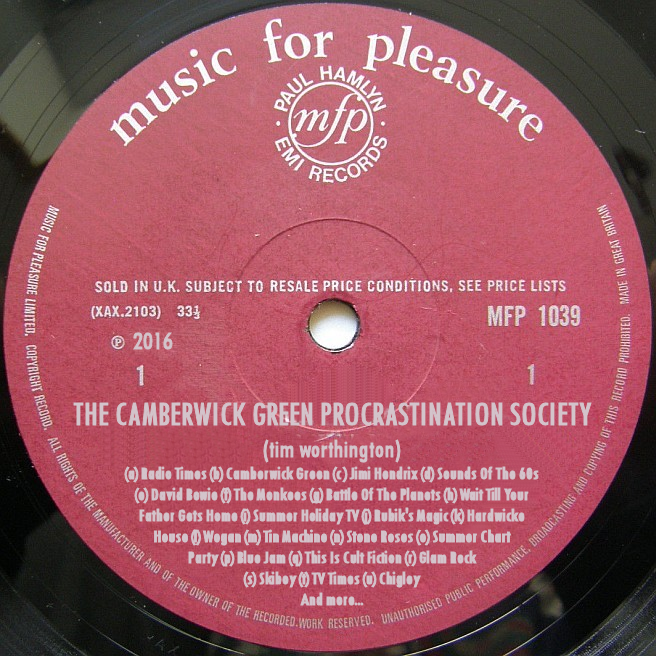

When it came to children’s television, music always knew its place. If it was pop music, it rarely strayed beyond the edges of Cheggers Plays Pop or Razzmatazz. If it was the sort of music you might otherwise be expected to make something approximating a performance of at school, it was rendered live in the studio with a Blue Peter presenter affecting to look impressed. If it was theme music, it went over the opening and closing titles of the actual programmes complete with a massive blunt-scissored name-of-programme removing mid-word edit if it was Boss Cat; yes, that is what it was called, stop arguing. If it was music specially composed for the programme itself, then you heard it sometimes even just the once in the background and that was it. Except that wasn’t always necessarily quite it. Every so often, someone behind the scenes would start to wonder why nobody had tried doing a children’s television programme about a pop group who had actual records in the shops and everything, or a soundtrack would attract such a volume of viewer correspondence enquiring about its availability that a commercial release became pretty much a foregone conclusion, or a dash of ricocheting synth whizzes would find itself appended to forty-odd other tracks to make up that crucial additional sixteen seconds required for a single side of a BBC Radiophonic Workshop album, or a handful of recordings for a music library or even the occasional actual proper extant commercially available piece of music would fall into the hands of the production team and be deemed to fit too perfectly to not be used. Without the administrative wherewithal, the industry interest, the radio support prohibited by factionally-driven inter-ITV/BBC rivalry or even sometimes the administrative permission to advertise your own wares in the first place, however, they were notoriously difficult to promote effectively and – unlike now, where you would probably get a huge line of buffoons eagerly queueing to blow forty quid on a 10″ picture disc of that edited bit of the Boss Cat theme on Record Store Day – they usually averted the radar and disappeared without trace, provoking widespread astonishment that they were even available in the first place even now. That’s the ones that were actually afforded any kind of commercial release as well; some legendarily evocative and esoteric soundtracks would take decades and persistent fan pestering to emerge in any sort of form that didn’t have Professor Yaffle nyerrrrk nyerk nyerk nyerk nyerking all over them. In fact, there was a lot more in the way of music from children’s television programmes that was given a release as music in its own right than you might expect, and some of it is still astonishingly little-known even now, so here’s a collection of pop discs by cartoon teenage girls and range-ridin’ puppets, moody Popol Vuh-informed Radiophonic musings, music to watch Girls and indeed Clowns by and the sound of what happens when a Clanger gets their hands on a conductor’s baton, along with some thoughts on what Mods did when there was no television, what constitutes an Alleged Elephant, whether silver buckles on your knee will make you a ‘wow’ with the ladies and why Captain Scarlet needs to take a quick course in acoustic resonance, and absolutely no mention whatsoever of that record Johnny Morris did about not being able to say Gemini The Sealion’s name or whatever it was. Incidentally there’s lots more about all of these shows and more in The Golden Age Of Children’s TV, available in all good bookshops or from here. And remember -verything, he’s the most tip top – Top Cat!.
Lois Maxwell – Marina Speaks
As later pilfered by Eric B And Rakim, a brief bit of dialogue from a Stingray story record featuring Atlanta Shore taunting her mute love rival Marina by playing her jazz discs and soliciting an opinion she is unable to provide, which might possibly explain why no operatives of the World Aquanaut Security Patrol ever found their way on to Juke Box Jury. In case you were wondering, Marina does not suddenly ‘speak’ by vouchsafing an opinion on the 7″ edit of My Favourite Things by John Coltrane, and in fact does not actually speak at all – she simply leaves a tearjerking letter outlining her for want of a better word origin story lying around to be handily read out loud by an off-narrative Sylvia Anderson, which lends a slightly different perspective to Atlanta’s low-key tormenting. If you want to know more about the seething background love rivalry that informed Marina and Atlanta’s antagonistic interactions, then there’s plenty more about that here.
The Double Deckers – Get On Board
Billie, Brains, Sticks, Doughnut, Scooper, Spring, Tiger and Tiger with the rarely heard full-length version of their Routemaster-riding cut and shut of William Chalker’s Time Machine and Love On A Mountain Top, itself essentially a cut and shut of the opening and closing titles although a little more entertaining than that might actually sound; also some lead guitar seems to have gone missing somewhere along the 55 route too. In fairness everything happened so quickly and so noisily in Here Come The Double Deckers that you could be forgiven for not actually noticing that there were some cast-sung songs in the midst of the general cacophony, but they in fact managed to acquire an entire album’s worth with certain of the Deckers enjoying noticeably more solo spots than others.
The Banana Splits – Wait Till Tomorrow
It’s doubtful whether any serious-minded anachronistically-attired adherents of garage psych would consider retina-searing huge cartoony animal costume ensemble Bingo, Fleegle, Drooper and Snorky a ‘legitimate’ cheap distortion pedal-toting prospect to rank alongside Kenny And The Kasuals and The Blues Project – after all, they did spend most of their non-musical airtime dodging flying mail in between introducing The Arabian Knights, The Three Musketeers and Danger Island – but, well, Lothar And The Hand People never got their own series, did they? Although The Banana Splits’ musical output is something of a mixed bag, it really is surprising that they never managed to score an actual hit off the back of all that television exposure. Perhaps all that constantly spinning around and bumping into each other before one of them got flattened into a cardboard cutout and then suddenly rebounded into three dimensions was a little too far out even for an audience otherwise engaged in blowing their minds to Strawberry Alarm Clock and Vanilla Fudge. Personally if I had control of the television schedules for an evening I would put the episode with Wait Till Tomorrow on instead of Newsnight, but there’s more about that here.
Josie And The Pussycats – Voodoo
More cartoony psych-punk as Archie Comics’ all-girl garage band with long tails and ears for hats indulge in a rare reflection for the multiple single-inspiring animated Hanna-Barbera adaptation of their on-page tendency to find themselves caught up in witchcraft-skewed chicanery by announcing their intention to stick pins in an effigy of a boy until he falls in love with them, with voodoo-doing vocals courtesy of one Cherie Moor, later to find considerably greater recognition under the name of Cheryl Ladd. They should have probably have reused this one for the movie. You never know, it might have helped.
Sylvia Anderson With The Barry Gray Orchestra – Parker
Lady Penelope literally singing the praises of her dodgy geezer chauffeur to bookend a very lengthy comic sketch also involving infrequently-glimpsed Creighton-Ward Manor chef Lilian, with David Graham performing similar honours as Parker on the flipside of a disc issued in tandem with ‘Er Ladyship’s impressively enduring self-titled comic bursting with tales of ‘elegance, charm and deadly danger’ for young girls who were just that bit too savvy to aspire towards being a Tracy Brother and wind up cast out on Thunderbird Five. In fact at the time Lady Penelope-related merchandise frequently threatened to outsell actual Thunderbird-skewed tie-ins, and on occasion actually did, but there’s much more about that in The Golden Age Of Children’s TV here.
The Barry Gray Orchestra – White As Snow
Apparently the only record owned by the Martianically-possessed runaway satellite pirate radio station in the Captain Scarlet And The Mysterons episode White As Snow, which to be honest sounded about five years out of date so how even those squares at Cloudbase somehow didn’t spot anything was amiss will have to remain something of a mystery. The honking instrumental would-be hit was marked out by an unusual minor key twist which left it sounding like The Fabulous Flee-Rekkers having a bit of a ‘moment’, but even so it wasn’t anywhere near as hypnotically malevolent as Barry Gray’s The Mysterons Theme, which there is much more about – along with the never explainable mystery of why Captain Scarlet was apparently so disconcerted at the thought of some boxes falling relatively near to him – here.
The Barry Gray Orchestra – Formula Five
Never mind wishing you were a spaceman or indeed the fastest guy alive, this is the music you would apparently have heard if you actually were flying around the universe in Fireball XL5, and also it has to be said pretty much what you would have heard if you put on Take Five by The Dave Brubeck Quartet and stood in another room whilst someone else in another adjacent room was trying to sing along to it despite neither knowing nor caring how it goes. Actually, come to think of it, that spaceman-wishing theme song had more than a hint of a suspicious similarly to Poetry In Motion too. Yes, of course everyone would have forgotten all about the hits of 1961 by 1962.
Michael Holliday – Two Gun Tex Of Texas
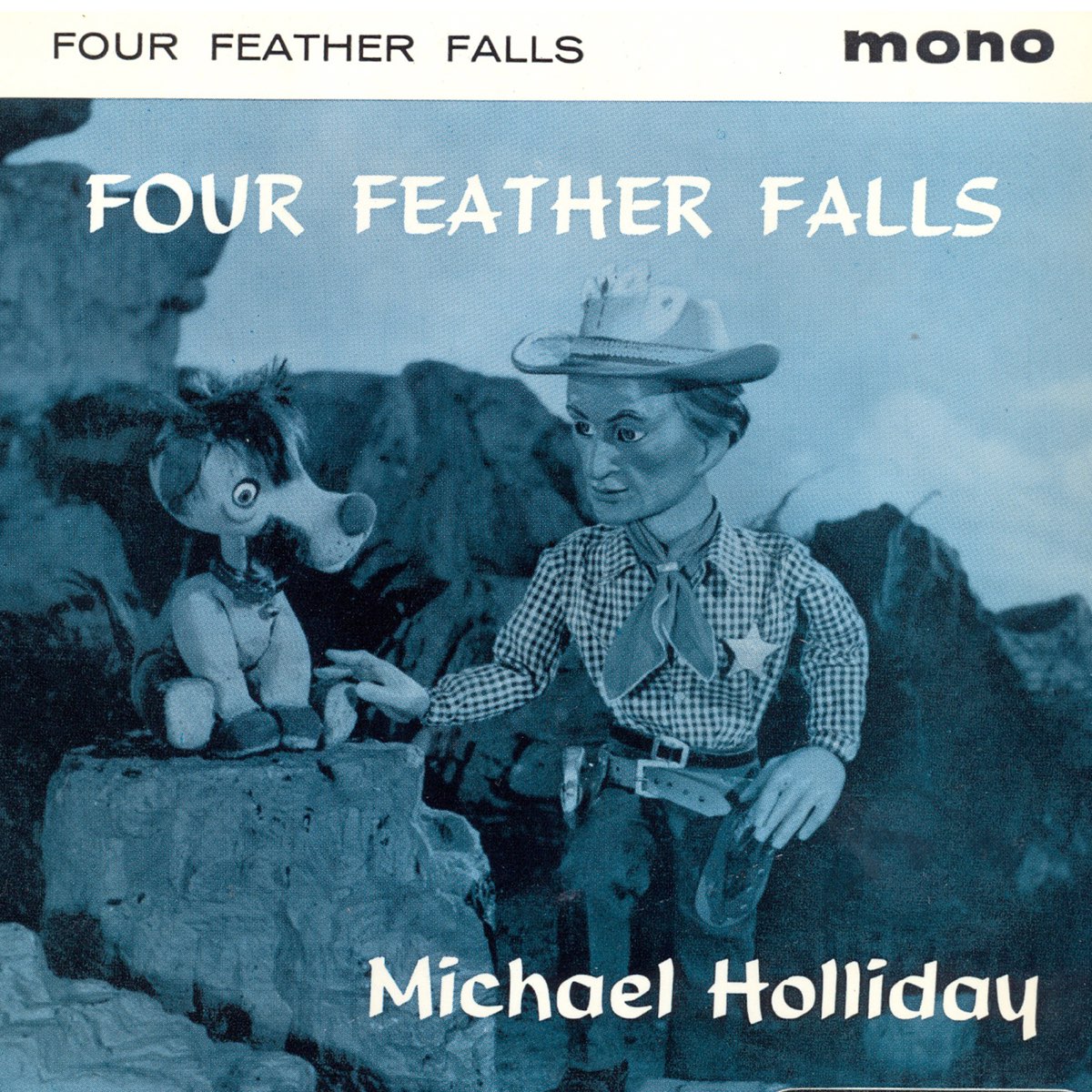
From Gerry and Sylvia Anderson’s long-forgotten magic stetson-fuelled range-riding Western Four Feather Falls, Sherriff Tex Tucker sings the Frank Ifield-adjacent praises of, well, himself courtesy of the Starry Eyed chart-topper who, it has to be said, did not look entirely dissimilar to his Supermarionated counterpart himself. The self-appointed ‘smartest guy in town’ actually released an entire EP of Holliday-facilitated country-tinged skiffle songs of the solenoid-operated West, and there’s much more about that and indeed all of the associated Supermarionation tie-in singles – and there were a lot of them – here.
Peter Howell – Merry-Go-Round
A suitably giddy blast of rebounding Radiophonics generated by around fifty seven million echo units and two and a half synthesiser notes to accompany the queasily spinning letters that introduced BBC Schools And Colleges’ documentary miscellany lucky dip, which if you were off school and really really lucky would be at any given point in the notorious three-part sex education module, related in fairness in an entirely unerotic and decidedly ardour-dampening medically graphic just-the-facts-of-life manner but which juvenile minds and playground legend invariably misappropriated into the ultimate manifestation of freely accessible and comprehensively sanctioned filth.
John Baker – Bobby Shaftoe
Musique Concrète Goes Gear toe-tapping rearrangement of the traditional Northumbrian shanty about the girls in every port having a bit of a nails-out over some bloke who has buckles on his knee for some reason, as regularly played over the old-skool BBC Globe alongside similarly jazzed-up Radiophonic renderings of the likes of Boys And Girls and The Lambton Worm for the post-Test Card mid-cueing up Roobarb edification of anyone who had got up ‘before’ television started.
Paddy Kingsland – The Changes
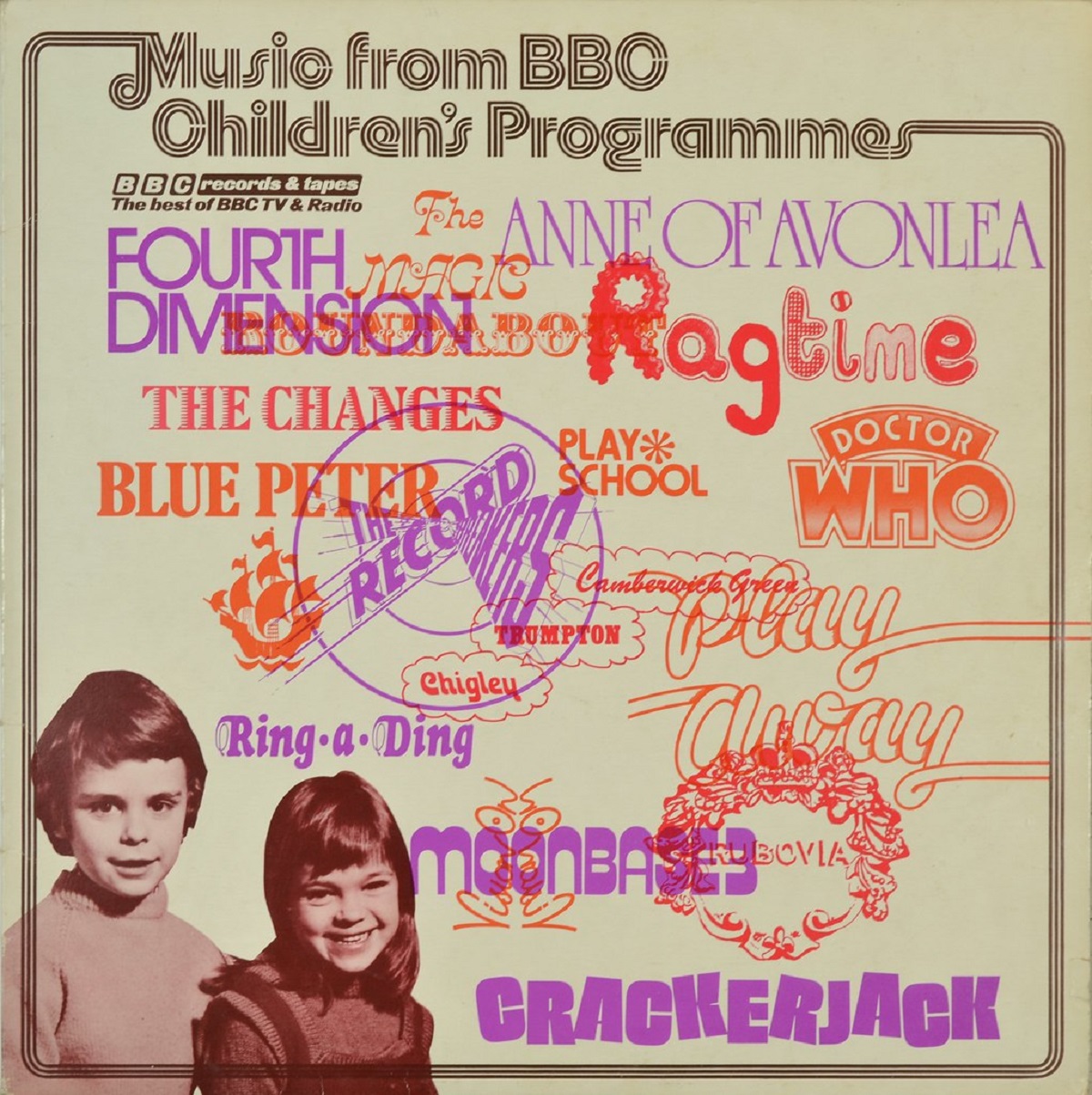
One of many frustratingly incomplete iterations of the Neu!-inflected soundtrack from the Children’s BBC near-future thriller about the tumble dryer-smashing rise of the Modern Luddites – you can find more about the long hunt for the full soundtrack from The Changes here and why a young Samira Ahmed was so gripped by the serial here – this particular suite of downed power line zaps and skewiff sitar plunks was assembled for the legendarily Radiophonically-swamped compilation Music From BBC Children’s Programmes where it admittedly sounded a little out of place next to that troupe of Girl Guides singing on Blue Peter, but virtually top ten-bound bubblegum pop in comparison to the even more baffling inclusion of the theme from adult sci-fact drama Moonbase 3.
Roger Limb – Snowman
One of the many reasons why the BBC’s 1984 adaptation of John Masefield’s festively-frosted tale of the conflict between ‘old’ and ‘new’ magic – and of course ‘possets’ – The Box Of Delights was so heavily acclaimed on its original transmission and indeed remains just as impressive even now is Roger Limb’s superlative thirties-informed score, and although it is usually his opening and closing Radiophonic reappropriation of the Pro Arte Orchestra’s 1966 reading of The Carol Symphony that gets all of the nostalgic attention, this is one of many equally splendid selections to be found elsewhere in the serial, on this occasion accompanying a snowman-making interlude that should by rights come across as idle filler but in all honesty genuinely does not, and the music goes a good way towards conferring that degree of charm. The soundtrack took a considerable amount of time to find any kind of a proper release, though, and you can find the story of the long hunt for the various easily available elements of it here, as well as – potentially at least partially explaining that lengthy unavailability – a look back to what it was like to watch The Box Of Delights on its original transmission when it was essentially little more than just another children’s programme here, and a chat about the intervening years when it was not only essentially little more than just another children’s programme but in fact more or less almost forgotten here.
Inigo Kilborn – A Tune For Lucy
Clocking in at a convenient two minutes precisely, the prog-jazzy music that accompanied the mechanical optical illusory wonder of Glam Rock-skewed psychedelia that was the BBC Schools’ Diamond, a hypnotically pulsating pattern of quadrilaterals that filled in time whilst the ‘backroom boys’ cued up the next secondary schools programme. Also less frequently heard, presumably on occasions when the Diamond-generating contraption had ground to a halt, playing over a static continuity slide of the mid-pulsation Diamond in a sort of bizarre FOLLOWS SHORTLY Follows Shortly gambit.
Mr. Popcorn’s Band – Chelsea Chick
A slow-burning Mod-friendly Hammond Organ-led groover that played somewhat conspicuously over the eternal immobile existential chalkboard duel between ‘Girl’ and ‘Clown’ in the centre of BBC Test Card F, where it sounded decidedly out of place amongst all of the moderately out of tune light big band meanders called Prince Phillip’s Tulips or whatever it was. ‘Mr. Popcorn’, incidentally, appears to have been Johnny Scott, who was subsequently responsible for the themes from Nationwide and Teddy Edward; and now, according to ‘Girl’, you officially Know Too Much. Meanwhile, if you’re bold enough to want to Know even more Too Much, there’s plenty more about the story behind BBC Test Card F here. If you dare.
Henrik Nielsen – Supersoundic
Doubtless borrowing its name from some prominently promised but ultimately purposeless purported additional ‘feature’ on swanky sophisticated hi-fi equipment, this sweeping trebly samba with the sonic consistency of whisked icing sugar found itself acting as the theme music for Paint Along With Nancy, an ITV daytime show in which veteran small-screen watercolour-dabber Nancy Kominsky demonstrated how you too could turn in a reasonable artistic rendition of a vase with three flowers that seemed determined to get away from each other in it, whilst employing a notorious preference for applying her materials with a palette knife. Reminiscent of a sort of jet set cruise ship glamour that the rank and file of the early seventies could only aspire towards, and filmed on a set that itself most certainly did not.
Reg Wale – Fruity Flute
The vibraphone-heavy jazz waltz that always sounded bizarrely ill-suited yet somehow at the same time also entirely and utterly appropriate as the theme to Farmhouse Kitchen, an ITV daytime cookery show in which Dorothy Sleightholme and/or Grace Mulligan took you through the rudimentaries of Shepherd’s Pie and those sort of hard plain oversized biscuits that seemed to exist only to dissuade you from ever favouring any form of confectionary again in a simultaneously chilly yet toasty-looking traditional kitchen full of hefty wooden tables equipped with never used drawers. An entire generation grew up wondering what the rest of the music sounded like, and the answer was, frankly, even more off-script than you expected.
Duncan Lamont – Balloon Music
From the episode of Mr. Benn where he finally selects that sort of stovepipe hat steampunk outfit and heads through The Door That Could Lead To Adventure to find himself locked in a Victorian crowd-entertaining balloon race with notorious twirly-moustached cheating cad Baron Bartram – which you can find more about, and indeed more about my prolonged campaign for some form of a release for the full recording of this music, here – the transcendent Kind Of Blue-inspired brass and Hammond Organ shimmer that accompanies his lead-taking drift through the air and momentary loss of self in the vastness of nature. They’re startled by one of Baron Bartram’s diversionary schemes soon enough though. You’ll never guess which musical motif they use.
John Falkner And Sandra Kerr – The Princess Suite
Gabriel The Toad and Madeleine The Rag Doll’s Marvellous Mechanical Mouse Organ-illustrated spellbinding plainsong about a bored Princess whose relentless suitors are so driven by their determined yet unwanted devotion that they avidly follow her wish for them to evolve into dragonflies, taken from the episode of Bagpuss where Emily brings back some assorted enamel fragments, prompting Professor Yaffle to corner his more explanatorily fanciful shop front associates into a rare admission that they are just making it all up after all. Another piece of music that I spent a very long time attempting to track down – ironically by scouring the sort of real life counterparts to Emily’s shop – as you can find much more about here.
Vernon Elliott – The Music Of The Spheres
Completing the triumvirate of seemingly incidental music from children’s television programmes that I would later invest an inordinate amount of effort into attempting to track down any trace of a stray standalone release of under another guise, this grand stellar orchestra marked the resolution of a Clangers running storyline of sorts, in which Tiny Clanger’s determination to develop a melody she has casually picked out on one of the music trees culminates in grateful interplanetary neighbours The Hoots transforming it into an enormous cosmic symphony, after which the only appropriate response is apparently heading happily home in tranquil anticipation of green soup for tea. As you can probably already deduce, I had much more to say about this here.
John Barry – Florida Fantasy
Originally composed for the scene in Midnight Cowboy where Joe and Ratso ‘imagine’ a high life of having their shoes polished and throwing tiddlywinks with old ladies, the twiddly quacktastic instrumental would arguably find greater recognition as the theme from Wildtrack, a long-running environmentally-fixated Children’s BBC magazine show in which Tony Soper and Su Ingle oversaw a seemingly limitless flock of reports on the ‘seabird invasion’. Despite its popularity, nobody saw fit to repeat the experiment by deploying Old Man Willow as the theme to Treasure Houses.
Freddie Phillips – The Band Concert/Chime And Clock Theme
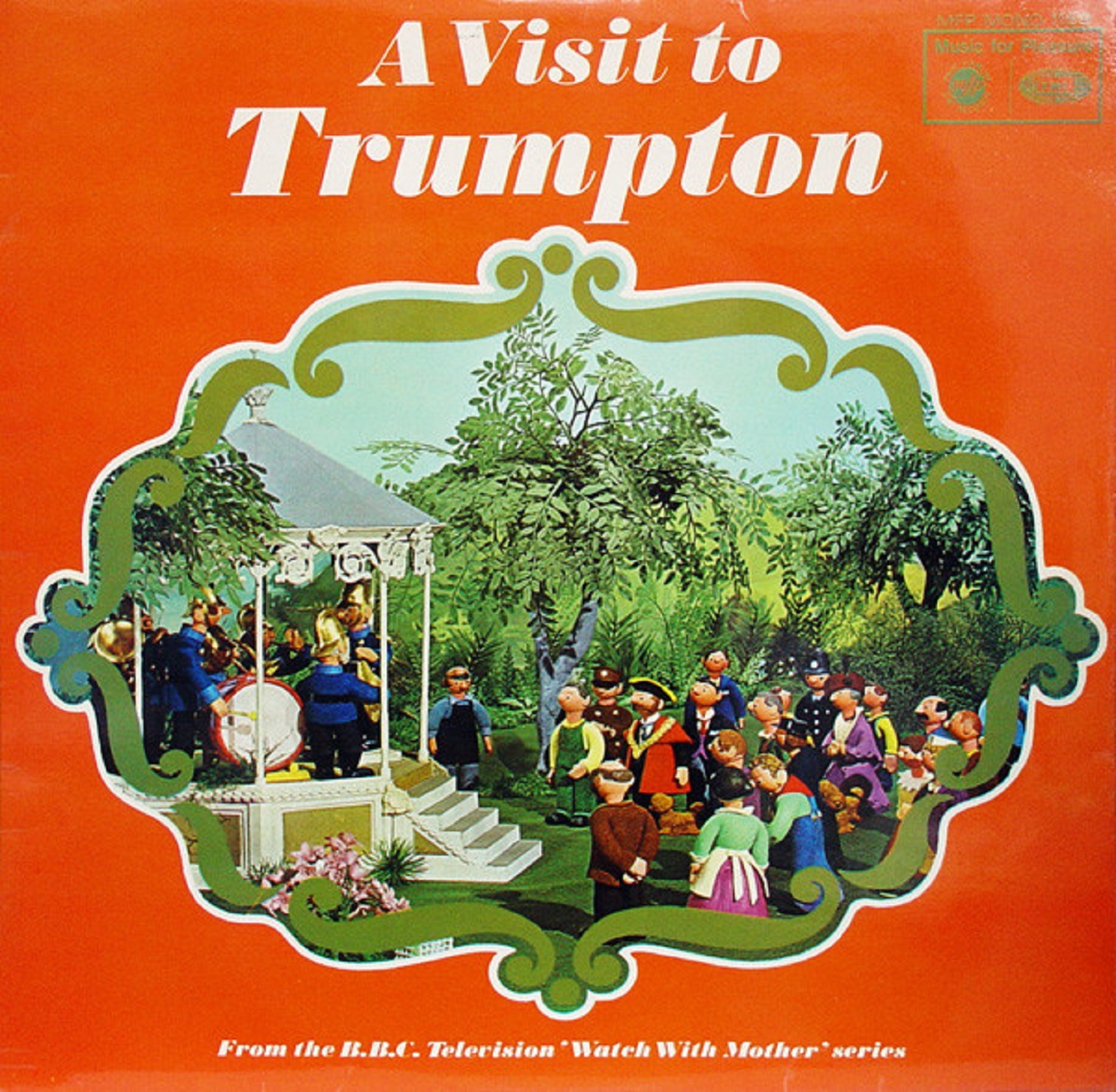
Pugh, Pugh, Barney McGrew, Cuthbert, Dibble and Grub strike up the Fire Brigade band – who despite toting an assortment of brass instruments always seemed to sound like Freddie Phillips’ guitar, a smattering of percussion and absolutely nothing else whatsoever – for the park crowd-entertaining rousing march that saw out every episode of Trumpton, followed by the reprise of the opening clock-striking hourly chime that clanged over the end credits and indeed the end of this collection of rather quite splendid music from children’s television programmes. If you’re still in the mood to read more about the legendary episode of Trumpton where the telephone lines got mixed up, however, then you should head steadily and sensibly here…

Buy A Book!
There’s lots more about Stingray, Here Come The Double Deckers!, The Banana Splits, Josie And The Pussycats, Thunderbirds, Captain Scarlet And The Mysterons, Fireball XL5, Four Feather Falls, The Changes, The Box Of Delights, Mr. Benn, Bagpuss, Clangers, Wildtrack and Trumpton and tons of other shows that in some cases didn’t even have an actual definable ‘theme tune’ whatsoever in The Golden Age Of Children’s TV, available in all good bookshops and from Waterstones here, Amazon here and directly from Black And White Publishing here.
Alternately, if you’re just feeling generous, you can buy me a coffee here. You might well have noticed that the theme from Spatz was not included here. This is not a coincidence.
Further Reading
You can find a complete guide to the various Supermarionation tie-in pop singles here as well as further thoughts on the soundtracks from Mr. Benn here, Bagpuss here, Clangers here, The Changes here and The Box Of Delights here.
Further Listening
You can find Samira Ahmed on Looks Unfamiliar talking about The Changes here as well as Stephen O’Brien on The Box Of Delights here, and Grace Dent on The Golden Age Of Children’s TV talking about Bagpuss here.
© Tim Worthington.
Please don’t copy this only with more italics and exclamation marks.
 Tim Worthington