
Doctor Who does have an unfortunate propensity towards lending itself to cliched – and usually howlingly inaccurate – ramblings about ‘ends’ of ‘eras’, but it’s difficult to think of how else to describe the sixth series in 1968-69. Not only did it mark the departure of both the Second Doctor and his longest serving fellow traveller and indeed longest-serving supporting cast member to that point full stop, it also marked the end of black and white production and a fundamental change in the actual style and structure of Doctor Who itself, as an incoming showrunner tasked with reversing the show’s declining fortunes decided that the best course of action was to more or less entirely ignore everything about how it had been done previously. It is also, significantly, the last series that anything is actually missing of. Though there was inevitably a degree of temporal-cultural give and take on either side, it was almost as if the transmission of episode ten of The War Games on 21st June 1969 marked a decisive severing of Doctor Who‘s ties with its own past.
Even while investing a good deal of energy and effort into poking fun at Doctor Who in strict transmission order, you cannot help but be struck by the significance of this moment. The best part of a decade’s worth of television, starting as a troubled and unwanted production that suddenly took off due to a combination of the strength of its lead actor and the phenomenal overnight success of the first featured aliens, weathering innumerable changes to the regular cast – including the lead actor – and remaining must-watch teatime viewing throughout highs, lows and The Sensorites, more or less comes to an end only to be replaced by what was to all intents and purposes a new programme; it may have been the same, but it wasn’t the same. What’s more, much of what had gone before had already mostly been lost to bulk-erased master tape archival oblivion. Then you remember that everyone who was watching it at the time just thought it was quite good and they were looking forward to seeing it in colour, so it’s time to dispense with the attempts at heavyweight cultural theorising unless they involve either line-stumbling Cybermen or frankly stacked extras and just get on with looking at what actually happens in it. So on your marks and get set for five whole episodes crammed full of hi-tech edge of the seat thrills…
There Is Absolutely No Point To The Dominators Whatsoever

One of the few Doctor Who stories that there is virtually no disagreement about at all is The Dominators. This is because everyone knows and recognises it as the one where those scowly blokes with the big shoulders and their interestingly designed yet risibly useless robot assistants the Quarks arrive on inadvisedly-named planet Dulkis with the intention of… stealing some energy or something? Fortunately for them the sappy Walter The Softy-esque crepe paper tabard-sporting Dulcians are even more banal and inactive than their name implies, and whatever their plot actually was it was foiled virtually single-handedly by The Doctor, Jamie and Zoe. By now you’ve probably already arrived at a vague notion that this isn’t exactly on a par with that episode of Breaking Bad where they hijack the train, but seriously, you have absolutely no idea unless you’ve actually sat through the whole tedious parade of nothingness, which is frankly too mind-numbingly boring even for its fairly nasty and reactionary politics to really register that much. What is even worse it is that everyone involved missed numerous potential opportunities to avoid having to actually make it in the first place. On account of a perceived lack of dramatic content, the story was cut from six episodes to five – we can only guess at what the longer version would have been like, although you do have to worry about anyone who would actually actively want to wonder that – although the idea of replacing it with something else more substantial and indeed broadcastable doesn’t appear to have actually occurred to anyone at any point. Writers Mervyn Haisman and Henry Lincoln were understandably slightly put out by this and resorted to defending their artistic honour via legal sabre-rattling, though clearly not rattlingly enough to actually prevent it from entering production. Perhaps most tellingly of all, the third episode – so tedious that the production team didn’t even notice that they’d forgotten to allocate it an onscreen episode number – is to all intents and purposes an extended argument about whether they should even bother having a storyline. So there you have it – even The Dominators itself was actively trying to prevent its own production. Still, what can you expect from a story where the fact that a sound effect was titled Quark Goes Berserk And Explodes is more exciting than anything that appears in any of the actual episodes?
They Like Big Butts And They Cannot Lie (And Zoe’s In Particular)

Throughout this look at the black and white era of Doctor Who, we’ve seen time and time and time again how the production team’s attempts to at least recognise the dawn of full-strength feminism were repeatedly undermined by the camera crew’s apparent obsession with directing their visual focus towards whichever attractive young female cast member had the most over-upholstered backside. They must have thought all of their Christmases had come at once, then, when the infamously lower-stacked Wendy Padbury joined the regular cast as smug scientist Zoe Heriot. The most intelligent, capable and independent assistant seen in the series thus far by some considerable distance, she was nonetheless literally squeezed into a procession of catsuits and tight trouser-suits, and as you can no doubt imagine the cameras seemed to spend very little time in front of her. Most notorious – or memorable, depending on how you look at it – was the scene in the first episode of The Mind Robber where the Tardis breaks up and the console spins off into nothingness, where the breakdown of reality and logic suddenly takes second place to an alarmingly protracted close-up on her inappropriately-angled arse. This ‘enthusiasm’ wasn’t just confined to the ‘backroom boys’ either; there’s a scene in The Invasion where Zoe walks across UNIT HQ and past a series of admiring glances in entirely the wrong direction from the extras hired to pose as soldiers. This rear-ended fixation had now reached a near J-Lo degree of, erm, critical mass, and frankly it was way past time for change in a more progressive direction. Speaking of which, those soldiers should probably count their blessings that one of Zoe’s mates didn’t notice their wandering eyes…
Society For Cutting Up (Cyber)Men

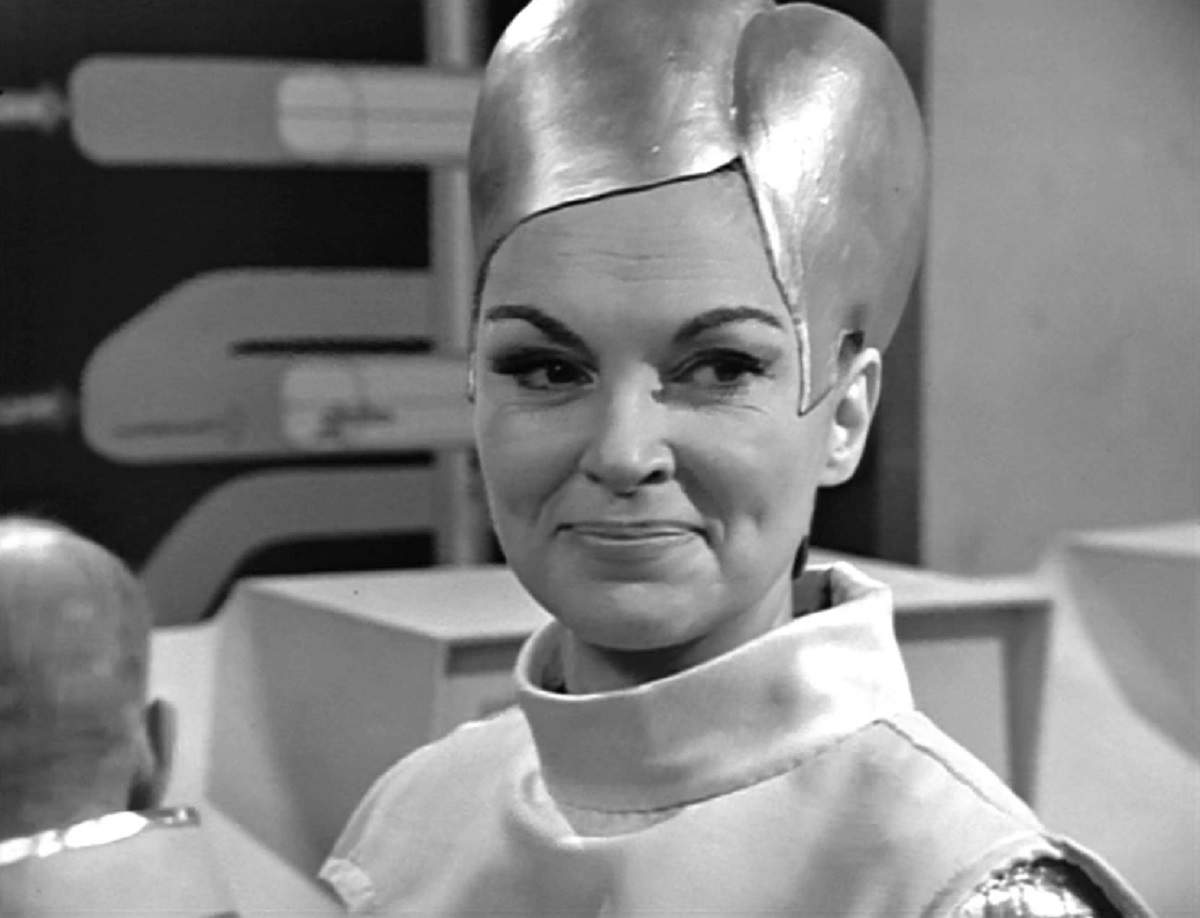
Over the summer of 1968, eight hundred and fifty sewing machinists at the Ford plant in Dagenham went on strike in a bid to get the same wages as their male counterparts, with their actions ultimately leading to the establishment of the Equal Pay Act in 1970. On 15th November, writer Caroline Bird reputedly coined the term ‘sexism’ with the publication of her incendiary speech On Being Born Female. And in December, someone shouted at The Brigadier a bit. We’ve already seen how, despite its many other ‘issues’, sixties Doctor Who was nonetheless packed with strong and forward-thinking female characters; indeed, Anne Travers was singled out in our look at series five here as the strongest indication yet of what was ahead – and that ‘ahead’ arrived in no uncertain terms with her replacement-due-to-unavailability for The Invasion, Isobel Watkins. A photographer with nerves of steel – who also acts as her own model to pay the rent, a situation that she nonetheless still vocally resents – Isobel is tough, fearless and more excited than alarmed by the possibility of Cybermen striding around London streets. Never backwards in expressing her views and independence, and sternly observant of the ‘line’ that smitten U.N.I.T. soldiers should not overstep, her finest moment comes just after outlining a photographically complex method for capturing the Cybermen on film without being spotted. Not only does she have to contend with The Brigadier speculating that this may all be ‘gibberish’, she then has to stand there and be told that she is to stay put and that “this is a job for my men”. Except that standing there is most definitely not on Isobel’s agenda, and a visibly startled Brigadier finds himself lambasted as a cretin, a bigot, an idiot, and – worst of all – “you… man!!”. Women’s Lib had arrived in Doctor Who, and we would be seeing it a lot more of it in the seventies, as well as plenty that was absolutely nothing of the sort. But at least we know what Isobel’s outburst actually looked like…
So When I Hear They Wiped The Space Pirates: 5, Saltwater Wells In My Eyes
The Space Pirates, the penultimate Doctor Who story to be made in black and white, is also the last story that there is anything missing of. Apart from Episode Two, of which ironically multiple copies have turned up – including, hilariously, on a miraculously enduring domestic videotape known to contain an off-air recording of an unidentified Doctor Who episode – absolutely nothing survives of it bar audio recordings and a handful of photographs; and some film trims that appear to last for several centuries, though it’s best not to dwell on them. One consequence of this is that, aside from a costume design sketch, we have no real idea of what Dom Issigri, the missing intergalactic privateer around whom the entire storyline revolved, actually looked like. He’s not alone on this; there’s Paris from The Myth Makers, lots of one-scene wonders from The Reign Of Terror, pretty much everyone from The Massacre, futuristic TV hosts Lizan and Roald from The Daleks’ Master Plan, and that’s the just actual characters. There’s no real way of saying for certain which of The Delegates showed up in which of the non-extant episodes of The Daleks’ Master Plan. Did the cricket commentators in the same story actually appear on screen or not? What really happened at the start of both The Invasion and Fury From The Deep? How exactly did William Hartnell look as The Abbot Of Amboise? What in the name of sanity was actually seen by viewers at any point during the last ten minutes of The Massacre? Most importantly of all, why does Polly have The Doctor’s hat on at the end of The Underwater Menace? We can make educated guesses, but that’s really all we can do, and in some cases it’s not even as easy as that anyway. As we’re about to move into an era that we now know pretty much everything about visually, even what colour the dragon was in The Mind Of Evil, it’s worth reflecting on how sad the loss of so much perfectly good television is, and in balance how joyous it is that so much of it still actually does exist. There’s proportionally way more surviving of early Doctor Who than there is most other sixties programmes, as any self-respecting fan of R.3 will tell you. It’s also worth reflecting on the fact that, for all the know-alls it attracts, there is still so much still to be found out about Doctor Who. Incidentally, if you want to know more about The Space Pirates, a story that seemingly nobody cares about whatsoever, you can find a huge and sort of appreciative feature on it in my book Not On Your Telly. This stuff doesn’t just throw itself together you know. Mind you, not every ignored story is quite as tedious as ‘fan wisdom’ might suggest…
Why Does The Krotons Have Such A Poor Reputation?
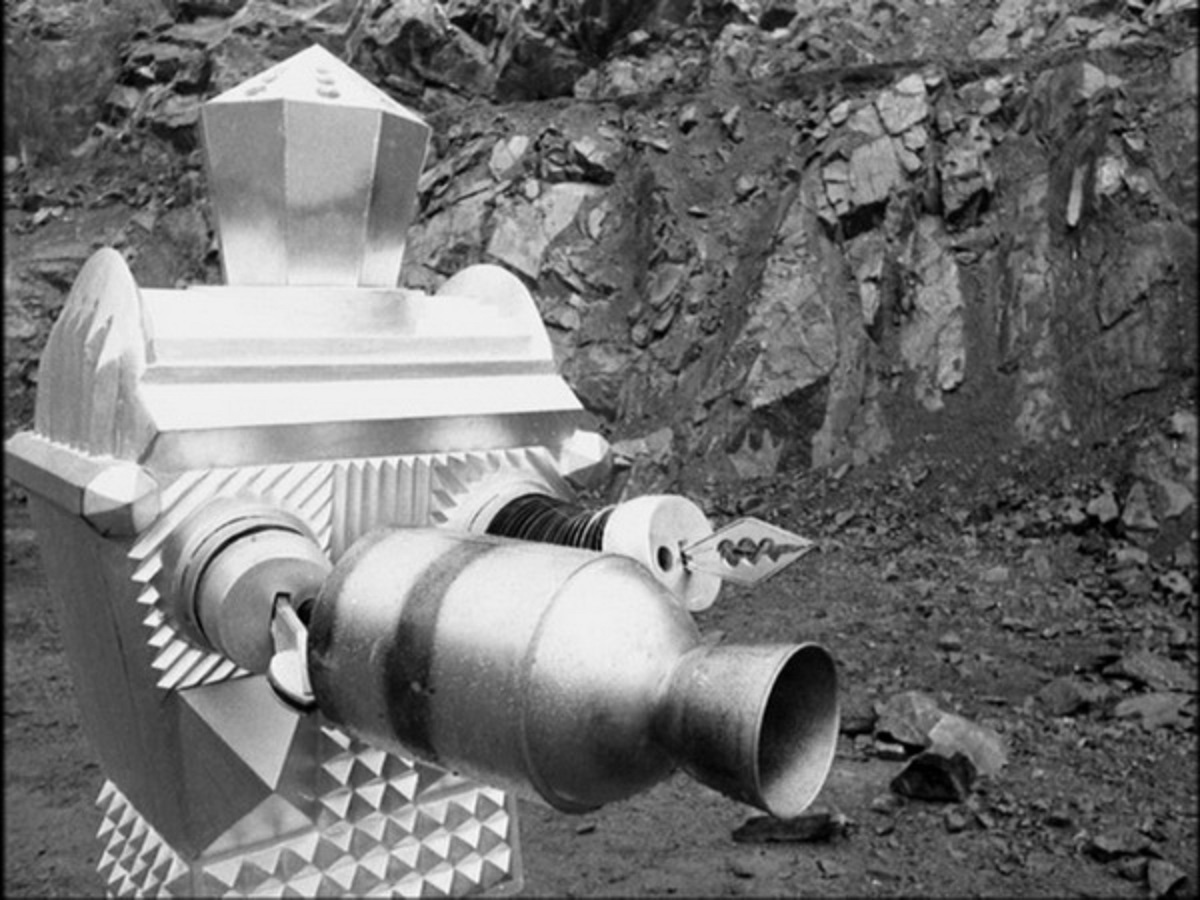
As you may well have the slightest suspicion about by now, series six of Doctor Who isn’t exactly short on what might be most generously identified as ‘misfires’. The Space Pirates is at least an interesting concept with impressive visuals, but struggles to keep up with its hurriedly-written six-episode overlength. The Dominators gives up almost straight away and makes no attempt to disguise its shameless lack of both content and style-over-content. Then there’s strong>The Krotons, which is… actually quite decent? For some reason, The Krotons has always had the reputation of being one of those mysteriously-defined ‘turkeys’ – in any given ‘best story’ poll you can pretty much guarantee that you’ll find it lurking right at the bottom amongst the entirely wiped stories that nobody’s seen, the actual wastes of everyone’s time, and the bulk of the Sylvester McCoy era which people are just too fond of their handy ‘opinions’ on to admit that they’re actually any good – but you’d be hard pushed to find anyone with an actual bad word to say about The Krotons. Non-committal and indifferent words, certainly, but not actually ad. It’s a competently told if over-familiar storyline that uses its four episodes economically, it is energetically performed and directed, it uses the regular cast well, and even the frequently maligned Krotons themselves aren’t that ;bad by the general standard of sixties design. At least their heads spin around and that. The worst thing that anyone could possibly call it is ‘sort of OK’, so how has it ended up being tarred with the same brush as Arc Of Infinity and that thing where there were all the trees? There isn’t really an obvious answer. It doesn’t appear to have been that popular with viewers at the time, it was almost certainly at the forefront of an unimpressed Derrick Sherwin’s thoughts when he set about reinventing the series, it got a bit of a bashing in early fan publications and it’s also entirely possible that some fans took against it when it had the temerity to show up in the early eighties repeat season The Five Faces Of Doctor Who in lieu of any of the more well-regarded Troughton stories that didn’t actually exist any more, but none of this really explains why it is still treated with such disdain when it has been available to rewatch and reassess for so long. Maybe Doctor Who fans just like having a convenient target of ire that they can pour scorn on and use as an all-conquering trump card in arguments without having to actually put any thought into it? No, probably not. It’s not like it’s Meglos or anything. Anyway, perhaps we’d all have liked it a bit more if The Krotons had invested in a handful of sequins…
He’s The Leader, He’s The Leader, He’s The Leader Of The Ice Warriors He Is

The Seeds Of Death, in complete contrast to The Krotons, is generally considered to be one of the brighter offerings of series six and rightly so. Marking the return of the Ice Warriors, now accompanied by their somewhat more svelte and stylish superiors the Ice Lords, it’s a lively and enjoyable story which touches on pollution and the relentless march of technology and centres around a new ways versus old ways smackdown as The Doctor and company try to determine whether they would be better advised repelling the invasion plans with the aid of brand spanking new global teleportation system T-Mat or an ‘antique’ space rocket, amusingly long since consigned to a museum. The fact that computation-devouring technician Miss Kelly is ever so slightly easy on the eye doesn’t exactly hinder matters either. However, there’s always one individual who has to go and lower a story’s batting average, and in this case it’s the newly-introduced third rank of would-be Martian interloper, The Grand Marshal. He may well only ever be glimpsed on a video screen demanding continual ‘updates’ from Commander Slaar, but it cannot realistically escape anyone’s attention that he does so whilst sporting a large metal helmet covered liberally in sequins. Quite why this should have been used to denote his rank is unclear. Was he a member of a post-psych proto-glam pop group later given to ruefully relating how Bolan and Bowie stole his ideas? Do Grand Marshalling duties include leading a formation display team as part of the Ice Warriors On Ice showbiz extravaganza? Did he simply raid Maggie Moone’s ‘battle re-enactment’ wardrobe? Sadly, not even the New Adventures authors ever elaborated on that. Still, at least fashion-wise he was simply ahead of his time. Other stories were far more heavily steeped in the here and now and far out…
One Pill Makes You Larger, And One Pill Makes You Have A Different Face (For Two Episodes)
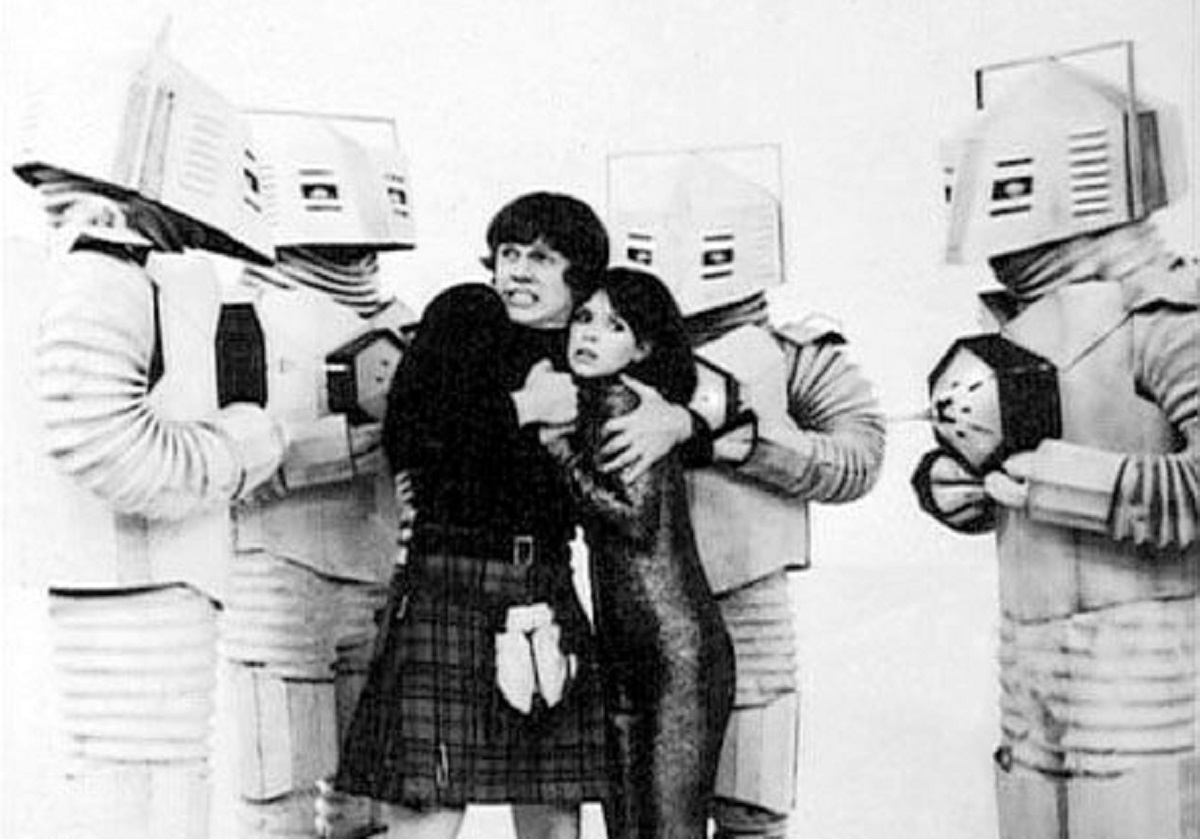
The Mind Robber, we are frequently told, is Doctor Who‘s most crazy far-out psychedelic story of all time ever. We’ve already discussed why this wasn’t the case in our look at series five here, and in any event, the majority of its pseudo-mind expanding qualities were a consequence of last-minute production panic rather than the revelatory visions of Peter Bryant smoking that kerrazy acid. The ‘Characters From Fiction Coming To Life’ storyline, although impressively rendered in bad-trip pop-art visuals, was actually straight out of more straight-laced children’s fiction of a decade earlier, and in fact would not have felt too out of place in one of the earlier William Hartnell stories. Jamie losing his face and temporarily gaining another one came about simply because Frazer Hines was too unwell to attend to the studio sessions. That creepy first episode where they get lost in a white void – presumably the same one that the likes of Tomorrow’s World and Play School later apparently existed in – was more or less an extra episode thrown together as the cameras rolled when The Dominators had one episode taken away for being rubbish. It involved little more than the regular cast, the TARDIS set, a bloody big curtain and some robot costumes pulled out of storage. The White Robots, as they were somewhat prosaically renamed, originally came from a 1967 episode of the BBC2 science-fiction anthology series Out Of The Unknown, in which they had apparently been, erm, Red. Based on Isaac Asimov’s 1941 short story Reason, The Prophet told the story of a group of service robots on a space station who come to worship a power source as a deity after one of their number develops higher levels of reasoning, yet find that – in a twist worthy of Black Mirror if it was in space and stopped going “aaaahhhhhhhhh!” for three minutes – they are still incapable of disobeying the First and Second Laws of Robotics. Although The Prophet had been wiped by the end of the sixties and absolutely nothing survives of it outside a handful of photographs, it’s clear that the play was dominated by that eerily unfuturistic ‘futuristic’ mid-sixties view of space travel, and had a soundtrack – including the celebrated Robot Hymn Ziwzih Ziwzih OO-OO-OO – created by Delia Derbyshire at the exact same moment that she was hanging around London’s most gaudily wall-painted ‘happenings’ with Paul McCartney and Pink Floyd and The Waltham Green East Wapping Carpet Cleaning Rodent And Boggit Extermination Association. As such, The Prophet was way closer to the sounds and indeed lyrical obsessions – come on, that lot wouldn’t bloody shut up about space at first – of The Roundhouse and the UFO Club than Doctor Who itself ever got. Meanwhile, in a neat coincidence, as well as never bloody shutting up about space at first, Pink Floyd also had a song about a scarecrow…
“By The Powers! How On Earth Would They Know My Name?”

So far – the Dalek movies aside (which you can find more about here) – during this look at Doctor Who we’ve studiously avoided covering anything that wasn’t actually seen on screen. This has meant reluctantly giving a wide berth to the annuals, the TV Comic and TV Century 21 strips and The Curse Of The Daleks. So rigidly has this unofficial guideline been adhered to that when it’s come to a missing episode, we’ve relied primarily on the audio recording and taken little to no notice of approximations – no matter how well done – of what they might have looked like. Sometimes, though, something will be just too downright odd to avoid mentioning. Anyone who had just been watching the television episodes would have seen Patrick Troughton spinning away into black and white nothingness at the end of this series – which we’ll be getting round to in a minute – followed by a full-colour Jon Pertwee staggering out of the TARDIS at the start of the next one. Exactly what had happened in between was left as something of a mystery; except that is to anyone reading TV Comic. Possibly acting on guidance from the production team – nobody seems to be entirely sure one way or the other about that – they elected to depict the actual regeneration in The Night Walkers, a three-part strip positing that The Doctor had actually escaped from the Time Lords’ camera lens chicanery at the end of The War Games and managed to spend an unspecified amount of time hiding in plain sight on Earth having conspicuously prominent adventures. This somehow led to him appearing as a panelist on Explain My Mystery, a television show hosted by Neil Morrissey-haired swinging dandy Perry Conway, where he came into contact with a Farmer Glenlock-Hogan who claimed to have seen his scarecrows walking around at night. After the show, a concerned Doctor accompanied him to his farm to investigate, and in a somewhat unexpected turn of events the scarecrows reveal themselves to be ‘Servants of The Time Lords’ sent to corner him and enforce his stealthily-averted regeneration. Even in spite of Glenlock-Hogan’s comically baffling mix of intellectual speech and yokelisms, The Night Walkers is actually a surprisingly bleak, ominous and nightmarishly-rendered tale – especially for a children’s comic – and it would be nice to be able to accept it as a legitimate extension of the series proper. Except that then we would also have to cover Turlough And The Earthlink Dilemma and that is quite simply not going to happen. Anyway, back to what we actually did see on screen…
The War Games Is Better Than It Has Any Right To Be

If there’s been one consistent non-narrative theme with Doctor Who in the sixties, then it’s that the longer stories tend to drag very badly in the middle. If there has been another one, it’s that the historical stories, rightly or wrongly, proved sufficiently comparatively unpopular with viewers to have been more or less phased out even by the time Patrick Troughton took over the lead role. If you really, really want another one on top of that, it’s that when the TARDIS crew wander into the middle of somebody else’s conflict, they invariably end up with frustratingly little to do. So when it comes to a ten – TEN – episode story featuring a wide cast of military types drawn from all corners of Earth history and plonked together to fight each other until all that’s left is one single unbeatable army, you would be quite forgiven for expecting it to be such a chore to watch that even fewer people would have made it through to the conclusion than The Sensorites (and you can find more about that here). This is why it is such a pleasant surprise to find that The War Games is a massively enjoyable edge-of-the-seat epic that never lets up its pace, gives valuable amounts of screentime to the series regulars, and chooses the exact right moment to bring the alien antagonists – and later the Time Lords – into proceedings. While it’s certainly true that a new, younger and more enthusiastic production team were by now more or less in charge and keen to big up the arrival of their all-new all-colour all-singing all-dancing all-Channing series the following year, it’s also almost as if someone somewhere had decided they wanted to see out this first phase of Doctor Who‘s existence in style and with a reminder of just why so many viewers went so wild for it way back in 1963. Speaking of which…
“They’ll Forget Me, Won’t They?”
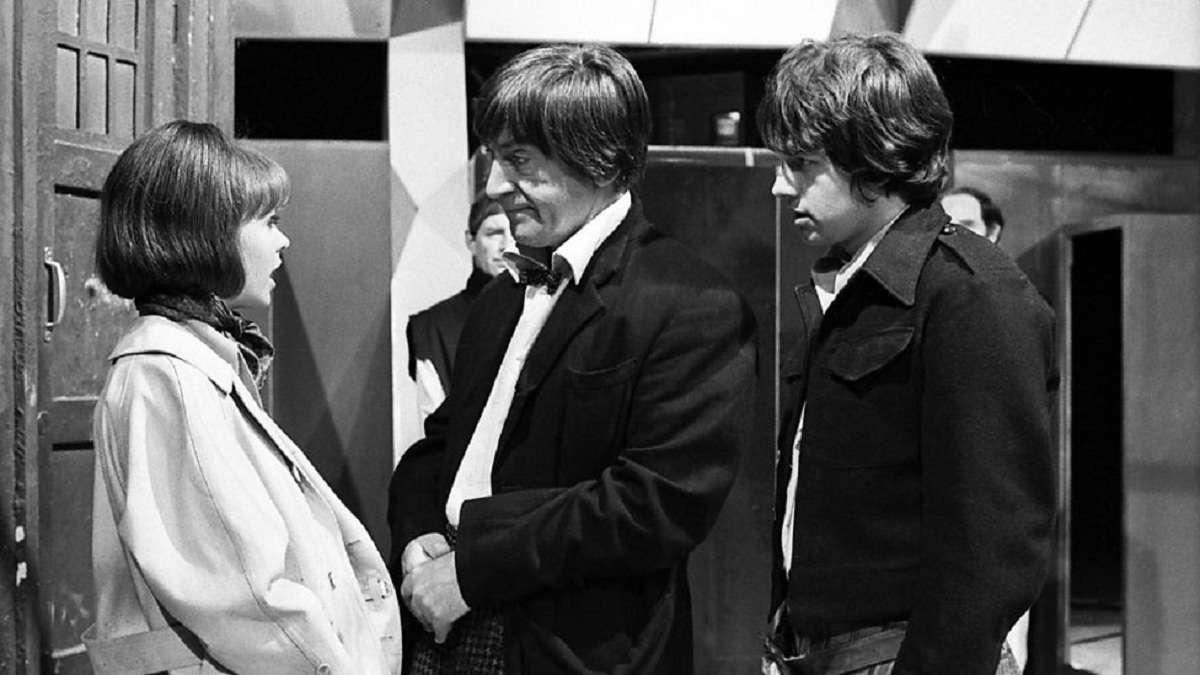
The final two episodes of The War Games, which see The Doctor reduced to pleading with The Time Lords for help in returning all of the soldiers to their proper places in time and space in full awareness that he himself will face a long-anticipated punishment as a result, are just about as good as Doctor Who gets. Played out against a stark, oppressive backdrop that somehow perfectly conveys how The Time Lords are simultaneously both benevolent and callously bureaucratic just by deploying particular shapes and shades, The Doctor’s trial and sentencing – complete with cameo appearances by everyone’s favourite monsters and also The Quarks – still make for compelling viewing. It is difficult not to feel choked up when Patrick Troughton, conveying more emotion with a single sentence than in entire episodes taken up by Amy blubbing about what schools her theoretical children might get into, dejectedly asks “they’ll forget me, won’t they?” as Jamie and Zoe are led away to have their memories wiped before being returned to their own respective place and time. Then there’s the final scene, with The Doctor exasperatedly rejecting the ‘incredible bunch’ of potential choices for a new face and arguing to the last as The Time Lords send him zooming off into nothingness with not a single walking scarecrow in sight. Although it’s not just him spinning away into the past, it’s also black and white television and, more symbolically, the ‘sixties’ itself. If you want to tie them all together, black and white sixties Doctor Who. It’s at this point that I momentarily have to come out of ‘character’ and remark on how sad it feels to be leaving all of this behind; although it can sometimes find itself treated like a small event at the start of a much longer story, sixties Doctor Who clocked up nearly two hundred and sixty episodes – and two feature films – and that’s not even getting started on just how absolutely Beatle-challengingly massive The Daleks and William Hartnell in particular were. It’s also, crucially, the era of the show that I’m most interested in. We started off by chortling at the over-reliance on rope bridges as a plot device, got through all manner of good stories, bad stories and entirely missing stories, celebrated the strong and progressive female characters at the same time as celebrating the big-arsed women placed decoratively around the set, questioned widely held assumptions, pondered on longstanding mysteries, and got away with only mentioning a certain discredited disc jockey twice. Now we’re about to move on to what is more less essentially a brand new series, and more to the point one that we actually know more or less everything about. Yes, even what colour that dragon was.
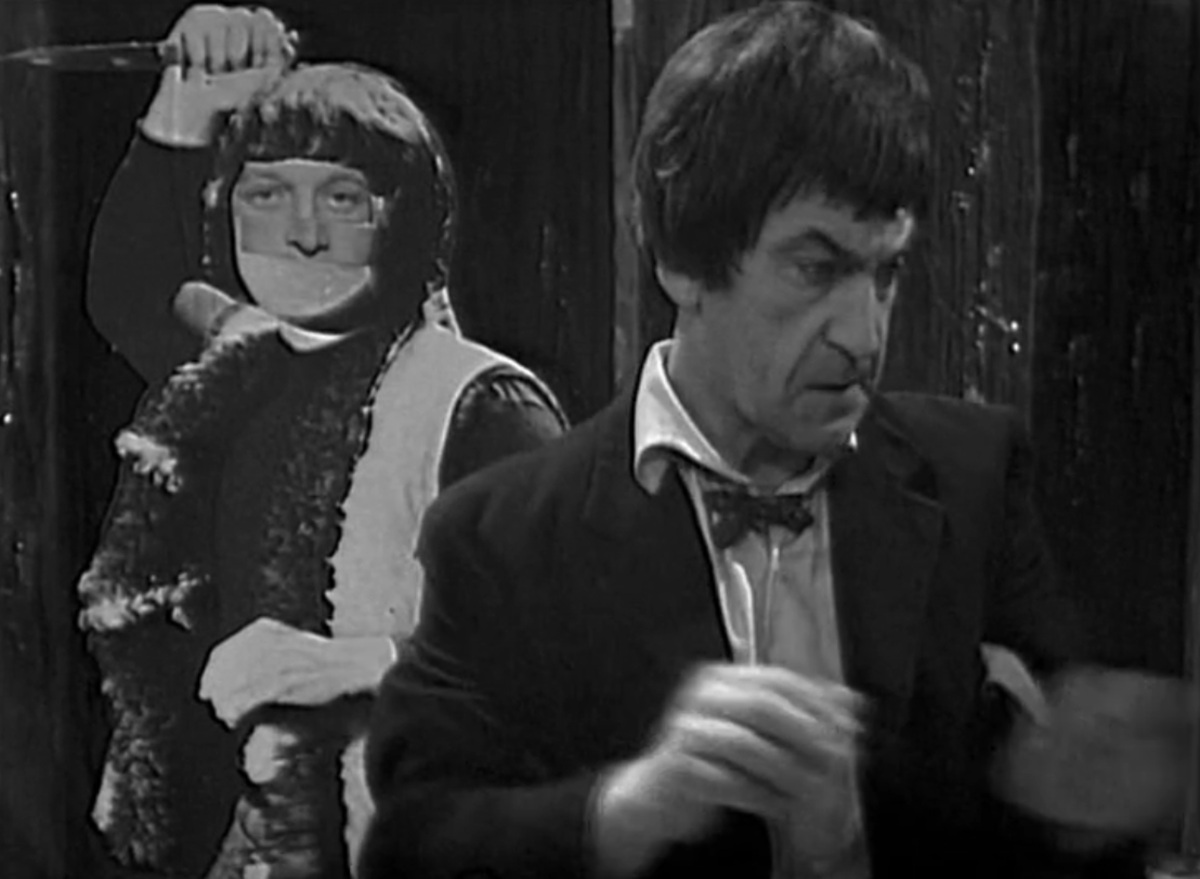
So join us again next time for Channing singing The Days Of Pearly Spencer, aliens with a vendetta against The Bluetones and just how many voices Radio’s ‘Man Of A Thousand Voices’ actually had…
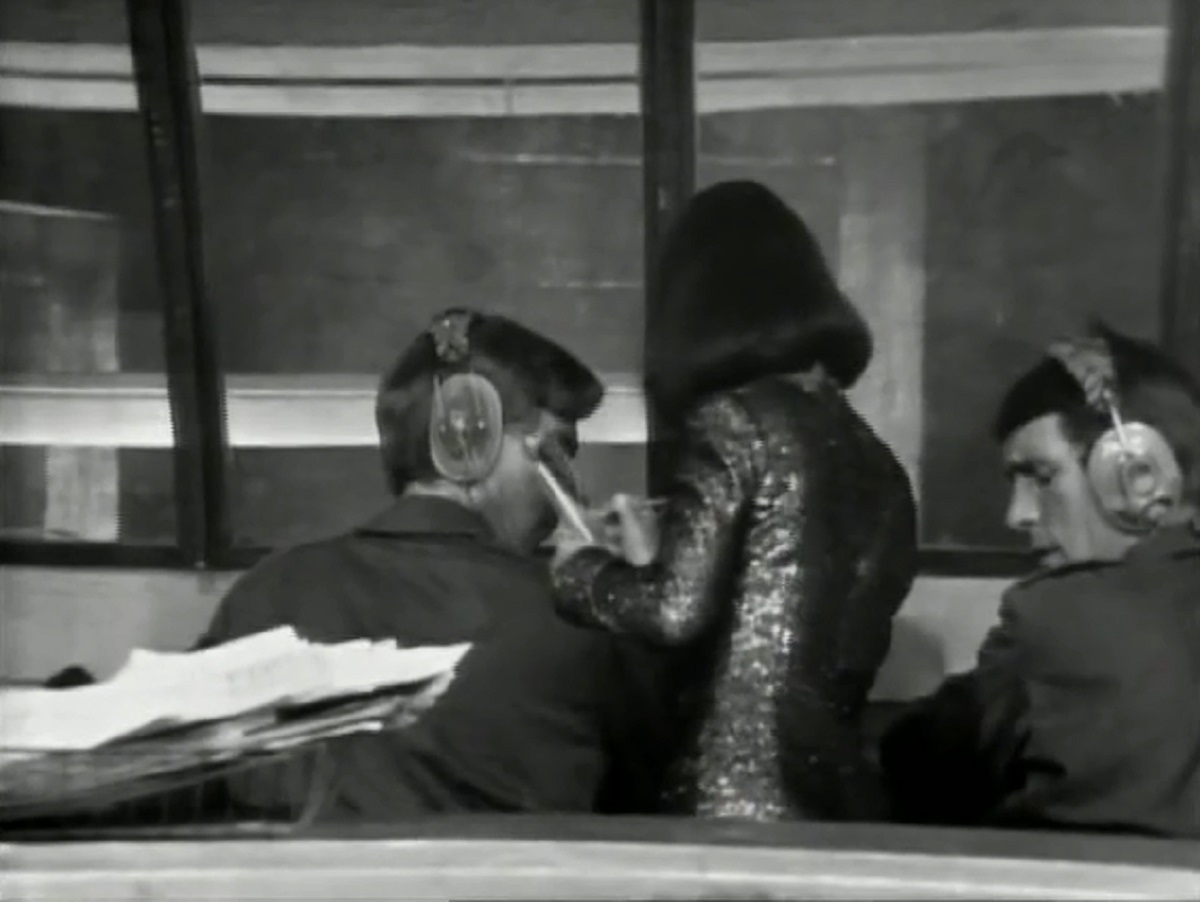
Buy A Book!
You can find an expanded version of It’s Still A Police Box, Why Hasn’t It Changed? looking at the entire sixties run of Doctor Who in Can’t Help Thinking About Me, a collection of columns and features with a personal twist. Can’t Help Thinking About Me is available in paperback here or from the Kindle Store here. You can also find an otherwise unavailable feature on The Space Pirates in Not On Your Telly, available in paperback here or from the Kindle Store here.
Alternately, if you’re just feeling generous, you can buy me a coffee here. Absolutely do not ask Isobel if she minds getting it.
Further Reading
You can find some further thoughts on the lost sixties Doctor Who stories – and why their unavailability makes them that bit more interesting – in The Abandoned Planet here.
Further Listening
You can hear much more of my thoughts about Doctor Who‘s early days and plenty more besides on The Zeitgeist Tapes – the podcast where politics and pop culture collide – here.

© Tim Worthington.
Please don’t copy this only with more italics and exclamation marks.
 Tim Worthington