
In many regards, Doctor Who‘s third series in 1965 and 1966 is its most interesting. It’s also – frustratingly – the least well represented in the archives, with a good deal of the key visual material missing. Bold if often aimless changes of direction, struggles to maintain a strong regular cast, desperation to keep the remnants of ‘Dalekmania’ as an active going concern and reputed behind-the-scenes high level disagreements would all play their part in shaping an often overlooked set of episodes, but many of the most glaring manifestations of the above were recorded over before the sixties were even over and have never surfaced again. Unless there’s been another proverb about keeping an eye on the way the hailstones are hailing or whatever it is.
As a consequence, we have no concrete idea of what some key scenes and characters actually looked like, or even what some characters were actually called. There’s also comparatively little of the series actually left available to watch, and while there are still surviving off-air audio recordings of every lost episode, it is still going to make this particular instalment of It’s Still A Police Box, Why Hasn’t It Changed? – you can find the previous one here, incidentally – something of a challenge – and so, if you will, The Nightmare Begins…
The Drahvins Would Have Loved Twitter
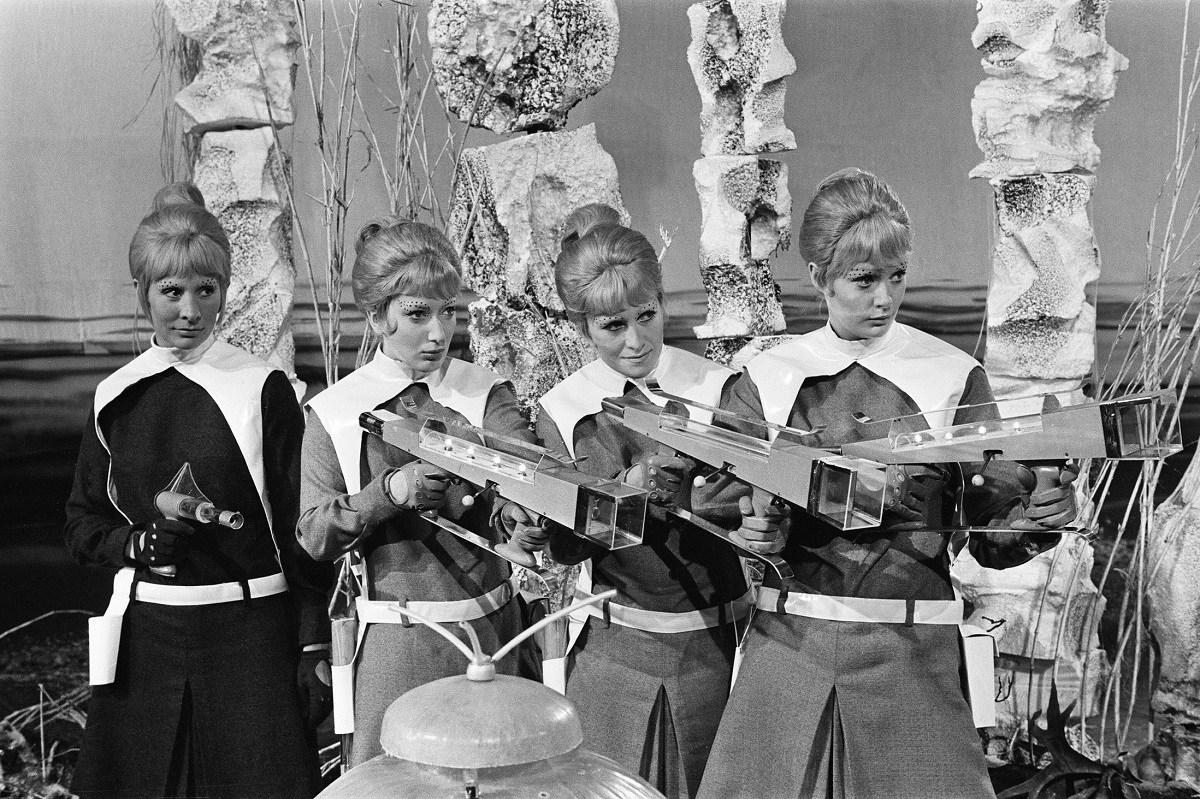
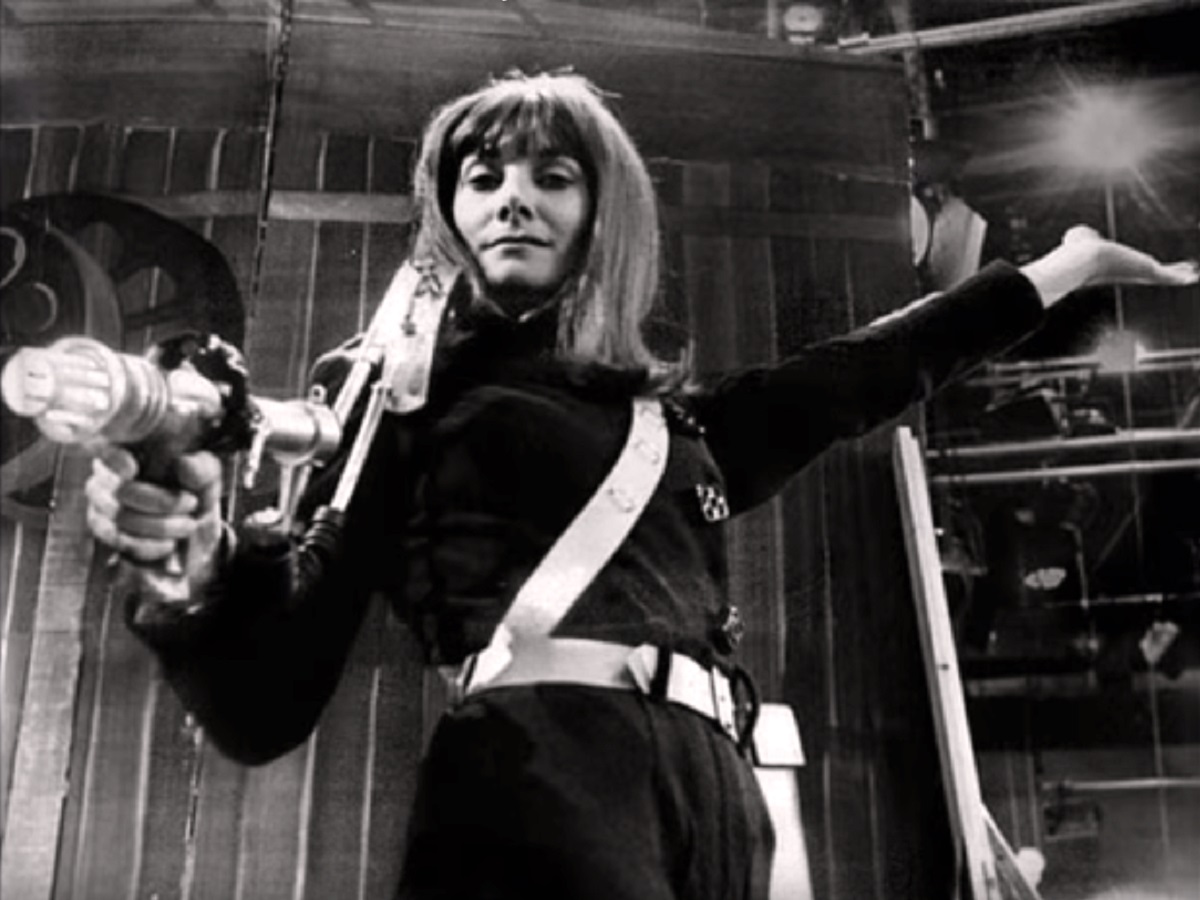
Series Three’s opening story Galaxy 4, one of the most overtly politicised Doctor Who stories there is, sees the TARDIS crew caught up in a battle of wits between bickering spaceshipwrecked factions of glam glittery-eyed statuesque blonde female clones The Drahvins and reclusive walrus-like imposingly-voiced cavernously-eyed monsters The Rills on a planet set to explode in a narratively convenient forty eight hours’ time. You can probably work out for yourself who turned out to be the real ‘monsters’ of the piece. Along the way, there is a good deal of strident-for-the-time debate about the purported pros and cons of a female-led society – not all of which is entirely endorsed by Vicki – the psychological effects of cloning on human behaviour, and the point at which equality itself becomes inequality – alongside, to be fair, mass collective frowning at the wishy-washy passive pacifism that the Rills claim renders them ‘superior’ – and the moral and ethical ramifications that these beliefs and values hold for the Drahvins’ plan to get away from the frustratingly unnamed planet before it takes the decision for them. Given that said plan was more or less composed of slapping a Trigger Warning on the poor old Rills before setting up a Safe Space and then No-Platforming them into the middle of an exploding planet, they’d no doubt have wasted little time in jumping at the opportunity to indulge in a hashtag-strewn argument about which of them was the best at having the plan instead of actually getting on with it. Meanwhile, it’s probably best not to speculate on what Drahvin leader Maaga’s frequently referenced but never clarified ‘special things’ might have been. Incidentally, you can find a look at what else was on television on the same day as the one and only broadcast of Galaxy 4‘s third episode Air Lock here. It’s especially useful if you are planning an evening’s viewing for, erm, 25th September 1965.
“Then There Was A Galaxy Accident”
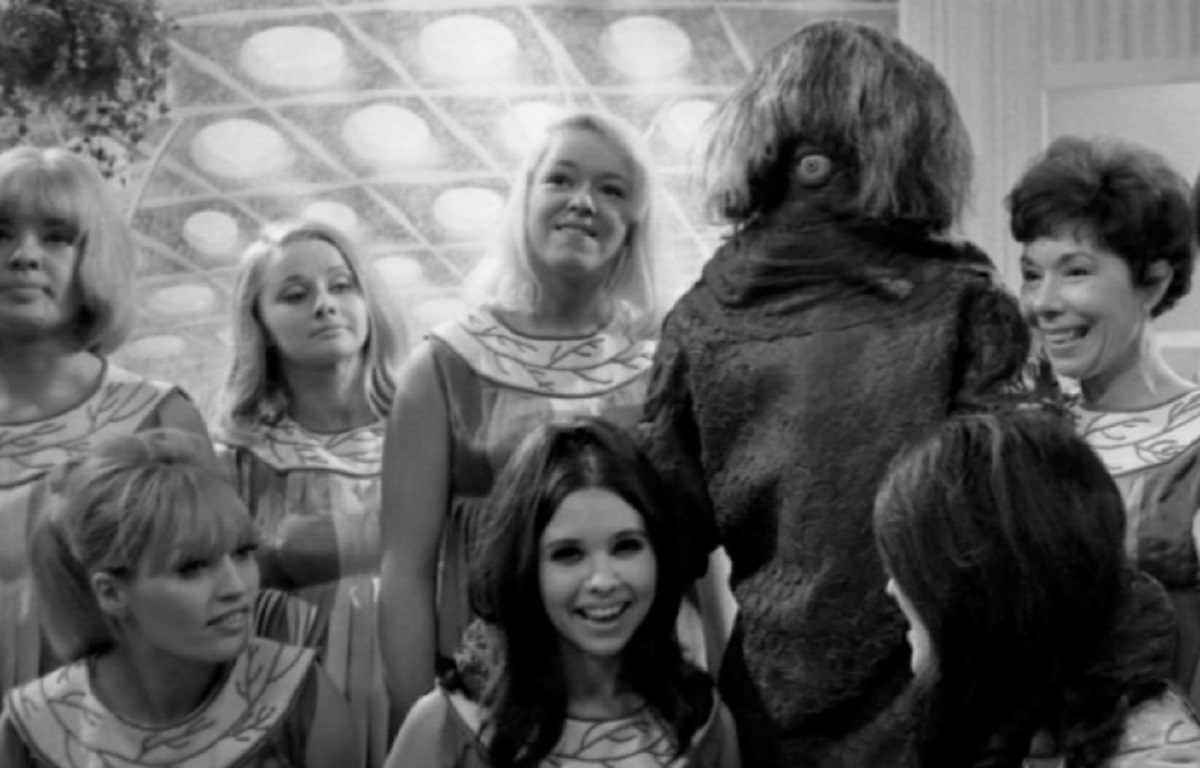
Let’s be blunt about this. The entire history of Doctor Who, from those earliest ‘as live’ recordings in a room that fell off the edge of Lime Grove while nobody was looking right up to the post production over-explaining present day, is essentially awash with jaw-droppingly jarring examples of simultaneously clunkingly unscientific and clunkingly ungrammatical dialogue. It is not really our intention here to point and laugh at such deficiencies – unless it’s The Anti-Matter Monster – but there are nonetheless some instances that simply cannot be allowed to pass without comment. The Ark is not exactly a story known for its understated and naturalistic exchanges – and that’s not even getting started on that Monoid smashing a vase threateningly and then throwing the flowers that were in it to the floor as if ‘underlining’ his point – but there is one particular line of dialogue that elevates all of this almost to the status of an art form. Everything is proceeding reasonably enough when The Doctor questions a friendly Refusian about why their planet is apparently so keen to accept the incoming colonists Human and Monoid alike, until he gets around to the question of how the Refusians came to be invisible. This was, we are informed, due to a ‘Galaxy Accident’. Right, that clears everything up then, thanks. There were probably more scientifically valid explanations in the BBC’s 1956 educational sci-fi drama Space School. The dialogue in The Ark was ostensibly jointly written by Paul Erickson and Lesley Scott, although Erickson later alleged that Scott was simply credited out of courtesy and did not have any actual hands-on involvement in the scripts. Evidently not, as she might well have crossed that line out.
Katarina Could Actually Have Been Quite Good

Let’s get this series’ first major elephant in the room out of the way, then. And it’s not even the actual elephant in The Ark. Given that even proper hardcore researchers remain at stern-faced loggerheads over the issue, it’s unlikely that the debate over whether short-stay regular cast members Sara and Katarina constitute proper ‘companions’ – or, as they were more accurately known at the time, ‘assistants’ – can actually reach a satisfactory resolution. While I do have my own opinion on the matter based on the wider context of television at the time, I elaborated on that in much greater detail here and so will say nothing further for the moment other than that anyone who snorts at the idea of including them probably shouldn’t pass out with excitement over someone who was in about two and a half more recent episodes a couple of minutes later. The main argument made against poor old Katarina as a character – who, it’s worth emphasising for many years was only represented by less than a minute’s worth of footage in which she essentially had no dialogue – was that she slowed down proceedings too much. Hailing from Ancient Troy, Katarina was forever having to have anything and everything and indeed everyone explained to her, which quickly got on the production team’s nerves to the extent that Terry Nation simply noted her final scene in the script as ‘SPEECH HERE TO COVER THE CHARACTER OF THE GIRL’. Then an episode featuring Katarina turned up, but everyone was too busy trying to work out which Delegate was which to notice that she actually seemed to have a lot more potential than anyone had quite understandably assumed. Adrienne Hill gives a solid and likeable performance combining superstition and pre-scientific intellect with a combative nature and a reverential trust in The Doctor – almost like a faint evolutionary echo of Leela – and while she isn’t necessarily used particularly well in that particular episode, it isn’t difficult to see how with a bit of time and work, that could have slotted into the show’s dynamic to good and potentially comic effect. She’d certainly have ended up with a bit more to do than just twisting her ankle. Speaking of which, Sara was a properly badass independent woman who’d made her name in a man’s world and showed more bravery and level-headedness in facing off against an entire Dalek army than The Doctor and Steven combined, so maybe she’s worth ‘allowing’ on that basis alone? I mean, it’s not like the vast majority of Doctor Who fans are huffy chauvinist blowhards or anything. Meanwhile, as we’re on the subject of uppity female regular characters…
Are Dodo’s Outfits Really That Ludicrous?
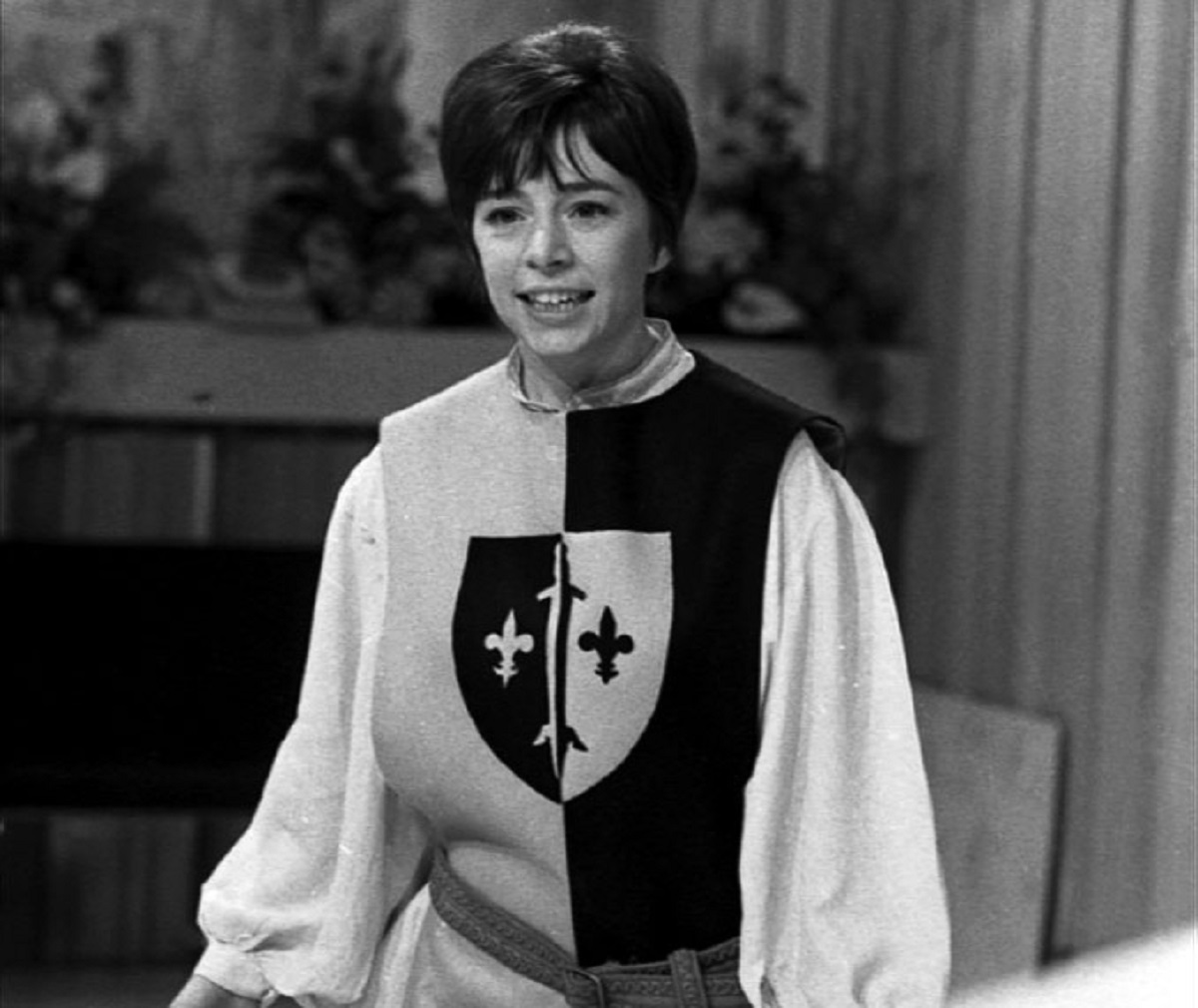
Gobby Mod girl Dodo Chaplet joined the TARDIS crew halfway through series three, but never really managed to endear herself to the viewers and was quietly written out at the end of the run. She hasn’t exactly endeared herself to Doctor Who fans since then either, and comes in for a good deal of disdain and dismissal on account of her inconsistent accent, chipper street-smart attitude, ludicrously contrived backstory and somewhat ‘of their time’ fashion choices. In fairness she wasn’t exactly the most strongly conceived or realised regular character in Doctor Who history, and there is probably more than a degree of weight to all of these criticisms. Apart from the last one, that is. Dodo, so we’re told, was the ultimate Doctor Who fashion victim, given to sporting ludicrous getup that made Capable Caroline from Here We Go Round The Mulberry Bush look underdressed and bore no relation to anything that anyone in the actual real world would ever have been spotted wearing even in the most Carnaby Street-fixated excesses of Swinging London’s heyday. In fact, she wasn’t so much wide of the mark as bang on the Mod target. That pop art two-tone ‘Crusader’ tabard that she’s wearing to such snigger-provokement in The Ark? Keep an eye on Roy Wood the next time BBC Four repeat that clip of The Move doing Fire Brigade on Top Of The Pops. The miniskirt, vest and cap combo covered in psychedelic circles in The Celestial Toymaker? Try finding a mid-sixties magazine shoot where a model isn’t wearing something similar; in fact there are even photos out there of Lulu showing off the same designer’s wares. The Nehru Jacket/Plastic Mac hybrid in The Savages? Seriously, talk of the UFO Club right there. It probably would have gone down pretty well in a similar if entirely fictional club Dodo once visited, too. Other than the fact that…
There Is A Distinct Lack Of ‘Mods’ In The Inferno Club

Series Three was largely characterised by a conscious attempt by incoming producer Innes Lloyd to redirect Doctor Who by shaking off the lingering semi-educative air of ‘improving’ children’s literature and giving it a more contemporary and action-packed edge. This was spelt out in no uncertain terms by The War Machines, a story that combined topical cutting edge mass communication-skewed scientific concerns with getting out and about in ‘Swinging London’, a large proportion of which actually takes place within the capital’s hippest and most happening nightspot The Inferno. Yet while it looks convincingly close to the sort of place that Georgie and her mates would have hung out at in Adam Adamant Lives!, and had the post-Georgie Fame pre-The Pink Floyd Hammond Organ-led jazzy grooves and trendy lingo spot on – although it’s best not to dwell on that reveller that tells The Doctor that “you look like that Disc Jockey!” – the actual clientele have somewhat less of an air of authenticity. Aside from the Op-Art patterns sported by incoming TARDIS traveller Polly and Sharon Tandy-esque club hostess Kitty, and one alarmingly enthusiastically frugging extra with a dandy suit and a Jeff Beck hairstyle, everyone else just looks as though they’re sporting their Sunday best and dancing at a church hall ‘hop’. It certainly does not compare favourably with the contemporaneous club scenes in Blow-Up, put it that way, In effect, and in fairness, they do look exactly in keeping with the manner in which you would get one ‘cool; person in amongst a load of clean-cut youngsters with am-I-doing-this-right? expressions in the average sixties Top Of The Pops audience, which is ‘authenticity’ of a sort but almost certainly not what they were aiming for. Although maybe all of the Mods had scootered off to the seaside for a Bank Holiday punch-up with Sting. Haven’t you got g-nomes to go to?
Hey! That’s The Name Of The Series!

Even aside of any notion of what the regulars at The Tiles Club might have made of it, The War Machines is also notorious for a sequence in which snazzy big WAP-enabled computer WOTAN appears to suggest that The Doctor also goes by the somewhat more contentious handle of ‘Doctor Who’. This one throwaway line has caused more in the way of consternation, hair-splitting and ‘thinkpieces’ than pretty much any other in old money Doctor Who‘s entire twenty six year history. There are those who argue that it proves this is his full name after all, those who try and invent ludicrous He’s Free Is Nelson Mandela-style conceits in order to posit that it’s some form of mishearing of ‘(it is The) Doctor who is required’, and at the most ridiculous extreme the ones that furiously declare that it means The War Machines isn’t ‘canon’. This is one of those moments where you have to take a step back and look at Doctor Who as just another television series. Nobody involved in The War Machines had any idea that anyone would even care about it after what they expected to be its one and only showing, they’d never exactly been averse to playing around with this idea before then (“Eh? Doctor Who? What’s he talking about?”), and with several new individuals coming in on the production side it’s hardly surprising that something like this should have slipped through under the radar. Honestly, you do have to wonder about the sort of person who gets exercised about what was ‘meant’ by something that probably predated even the merest suggestion that it might in fact ‘mean’ anything at all.
D/C? Or Not D/C? That Is The Question

So many question marks over the lost visuals of the last ten minutes of The Massacre alone. No way of knowing for certain which of The Delegates was which and precisely how many episodes of The Daleks’ Master Plan each of them appeared in. Impossible to reliably determine whether those two cricket commentators in the same story actually appeared on screen or not. Yet somehow there’s nothing about those long-lost series three stories that provokes more in the way of humourless debate than the conflicting accounts of what one of them might actually have been called. Actually, yes there is – the same story’s production code. Mission To The Unknown, a one-episode adventure made without the regular cast and as more or less a ‘trailer’ for the forthcoming twelve part The Daleks’ Master Plan, was recorded in tandem with Galaxy 4, or in internal document-ese ‘Story T’, and was duly assigned the story code ‘T/A’. At least that’s what we all thought, until someone went poking around in other internal documents and found that it was occasionally referred to as Dalek Cutaway, and that – shock horror – the production code had been occasionally scribbled as ‘D/C’. Even to the untrained eye it should be obvious that these are a description and a bit of shorthand respectively, and as such could only realistically be counted as the genuine article in a universe where Strange Matter, The Destructors, Enemy Within, Oh Y’Know That One With Chellak and The Final Three Part Story Does Not Have A Title As Yet are also considered official story titles. More to the point, Mission To The Unknown was explicitly stated as the story title by Radio Times, and T/A was used somewhat more soberingly on the release form for wiping the episode in the early seventies; and anyway, Dalek Cutaway sounds stupid. Now, if you’ll excuse me, I really must get out more.
The Gunfighters Is Actually Really Good

Although ‘conventional’, ‘fan’ and ‘wisdom’ are not really words that have any meaning when placed next to each other, conventional fan wisdom has it that The Gunfighters is considered the single worst Doctor Who story ever. It is, apparently, a hammily overplayed comedy short on actual laughs, woefully historically inaccurate, crammed full of time-filling ear-assaulting musical performances, and all in all the main reason why the production team stopped doing those pesky ‘pure’ historical stories – as apparently it’s a legal requirement to refer to them as – altogether. Except that when you actually bother to watch The Gunfighters, it very quickly becomes abundantly clear that it is in fact a rather fun stage farce-like slice of Wild West hokum, where the reluctant and dreadful musical turns are actually part of the storyline, the cast get the chance to play for laughs and seem to enjoy it, and there are subtle but effective hints of ‘adult’ behaviour thrown in for good measure – Dodo for one seems disconcertingly if realistically taken with the opportunity to indulge in drinking and gambling – and anyway, who really cares about getting minor aspects of frontier days folklore very very slightly wrong in the series that gave us The Megabyte Modem? True, The Ballad Of The Last Chance Saloon does become a little wearing after a while, but they’ll dance on the tables and sing you a tune for whatever’s in your wallet and no this joke about fans willingly forking out money for stories they affect to ‘hate’ isn’t really working, is it? Still, at least they can actually hate-watch The Gunfighters…
The Feast Of Steven Is Also Actually (Possibly) Really Good

Conventional fan wisdom also has it that The Feast Of Steven, the episode of Doctor Who that went out on BBC1 on 25th December 1965 featuring the regular cast at points literally sprinting through a series of panto-styled runarounds in the middle of a grimly serious twelve part Dalek epic set in the far future before William Hartnell turns to the camera and toasts the viewers at home, isn’t actually the sort of seasonal silliness that most BBC shows indulged in for Christmas around that time but the result of some sort of momentary desertion of sanity and essentially a fourth wall-breaking aberration that should not under any circumstances be considered alongside the ‘proper’ series. Although it’s difficult to say for certain unless The Eleventh Day Of Christmas brings us Eleven Missing Episode Hunters A-Film Can Waving, chances are that for much the same reasons as above, it was actually an enjoyable fourth wall-breaking bit of seasonal levity; it certainly seems that way from the existing audio recording, although it would admittedly be a stretch to say it looks that way from the few surviving off-air photos. After all it was written by Terry Nation, who’d had years of experience in radio comedy, and featured William Hartnell, who had starred in a number of top-rated television and film comedies before he started going ‘eh?’ a lot, and in any case, why bother getting so stony-faced about The Doctor addressing the audience at home directly with a quick dash of festive well-wishing? It’s almost like it might just be, you know, a bit of entertainment or something. Plus we do know for certain that it was real…
Did The Savages Actually Exist?

There are plenty of Doctor Who stories that everyone forgets about – try recounting all of the post-2005 adventures in order if you don’t believe me – but at least there’s still some tangible evidence that they were actually made and broadcast. Poor old The Savages, however, is not blessed with an overabundance of this. Broadcast once between two stories that were at least memorable albeit for wildly differing reasons, and wiped not long afterwards, The Savages had little about it that would have imprinted itself in anyone’s memory. Nowadays it’s only represented by some unremarkable Telesnaps that frankly could have come from any story, a couple of seconds of blurry off-air cine film of Frederick Jaeger that could frankly just be from any old film he was in, and audio recordings that even people who have listened to them within the previous forty eight hours would probably struggle to tell you very much about. Even some prominent and authoritative episode guides list various crew members as ‘Unknown’, and it’s hard to shake the suspicion that it all might actually just be a massive hoax, slipped into a list of sixties stories by some jolly prankster so long ago that everyone’s just come to believe that they always knew it existed. Still, being unremarkable to the point of nothingness is still better than being Rings Of Akhaten. Oh hang on, we haven’t had any of that They Like Big Butts And They Cannot Lie stuff this time, have we…?

Anyway, join us again next time for ‘Can You Sew Cushions?’, Krail and Krang singing Reet Petite, and whatever NXOZ might actually mean…
Buy A Book!
You can find an expanded version of It’s Still A Police Box, Why Hasn’t It Changed? covering the entire sixties run of Doctor Who in Can’t Help Thinking About Me, a collection of columns and features with a personal twist. Can’t Help Thinking About Me is available in paperback here or from the Kindle Store here.
Alternately, if you’re just feeling generous, you can buy me a coffee here. One strong enough for an all-night gig at The Inferno by The Graham Bond OrganIsation, please.
Further Reading
You can find my very lengthy and entirely correct arguments as to why Sara and Katarina ‘count’ as regular characters in Katarina Amongst The Pigeons here. Yes they do. Stop arguing.
Further Listening
You can find more of my thoughts about what may or may not have happened in the long-lost 1965 Doctor Who Christmas Special The Feast Of Steven in Looks Unfamiliar here.
© Tim Worthington.
Please don’t copy this only with more italics and exclamation marks.
 Tim Worthington