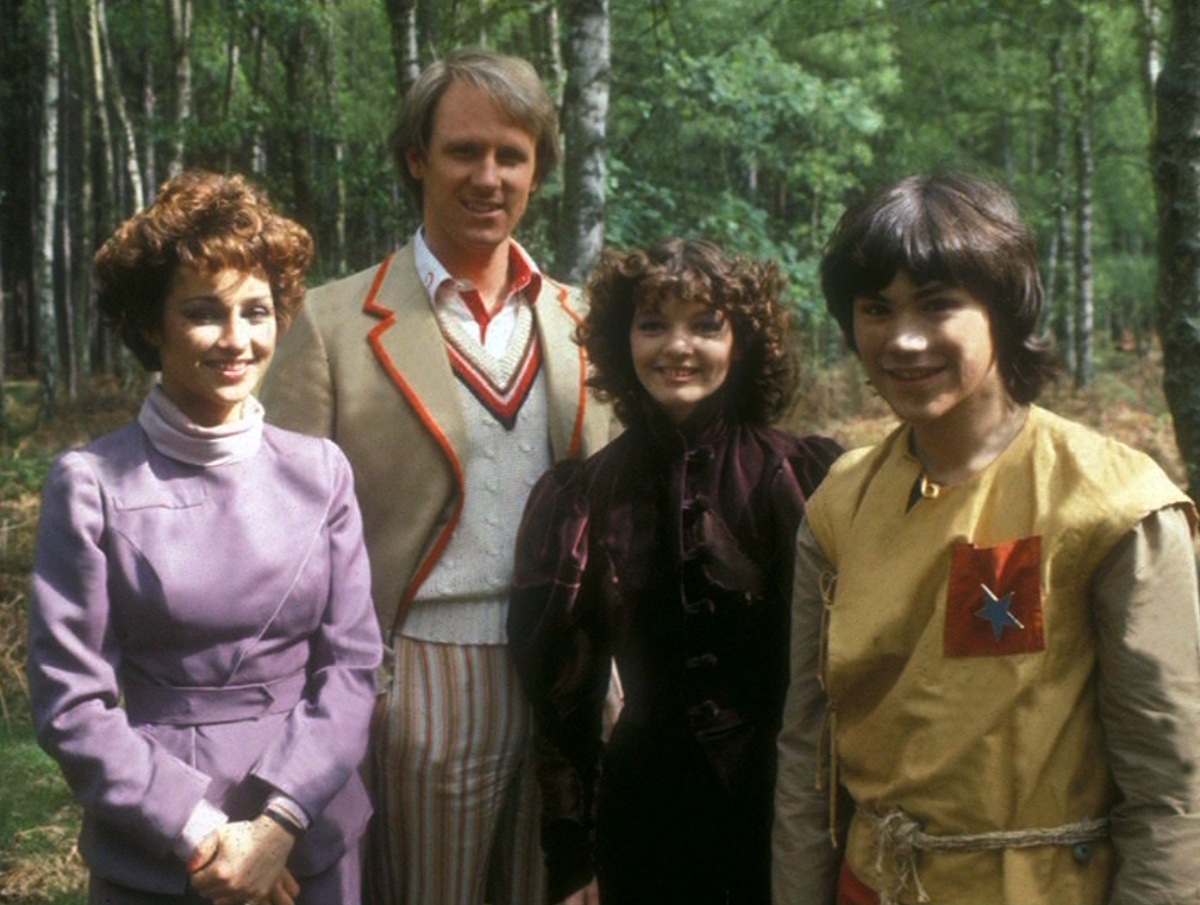
From this distance, and with the changing nature of celebrity, it is difficult to get a sense now of just how big a star Peter Davison was in 1982; in fact, there is a case for arguing that he was the most famous actor yet to assume the lead role in Doctor Who. William Hartnell and Patrick Troughton were both popular character actors, and Hartnell in particular had enjoyed a great deal of public popularity on account of his regular role in The Army Game, but he also held an elevated notion of his art that derided suggestions of ‘celebrity’, whilst the notoriously private Troughton tended to avoid extra-curricular publicity altogether. Jon Pertwee was a household name but primarily as a radio comic with surprisingly little television work to his name, and Doctor Who represented a major step upwards in his public profile; it is perhaps telling that this was the role he would return to more than any other. Tom Baker of course was an acclaimed serious actor who at the time he was cast was working on a building site as he was bored of being offered largely identical roles as historical villains. Initially intending to pursue a career as a singer-songwriter, Peter Davison on the other hand had rocketed to fame virtually overnight in 1977 as one of the leads in the massively popular ITV melodrama Love For Lydia, and went straight over to the BBC as Tristan Farnow in All Creatures Great And Small, a show that was rarely far from the top of the ratings and a role which he would regularly return to right through to 1990; it was also, of course, where Doctor Who producer-in-waiting John Nathan-Turner would first observe his Doctor-in-waiting potential. By the time that he made his debut in Doctor Who he could be regularly seen in hit sitcoms on both channels; BBC1’s gritty brothers on the breadline flatshare antics Sink Or Swim, and ITV’s somewhat lighter ‘househusband’ farce Holding The Fort, now virtually forgotten but once so massive that it inspired an almost equally popular spinoff in Relative Strangers, which in itself is now so forgotten that it is not even acknowledged on Holding The Fort‘s Wikipedia page. Younger ITV viewers would have been familiar with him telling stories with the assistance of magnetic shapes stuck to a tree trunk and getting up to all manner of standard issue late seventies puppets on a black background antics in Once Upon A Time. What was more, thanks to his earlier ambitions, he could be even more regularly heard as the composer of the theme songs from Mixed Blessings, yet another hit ITV sitcom albeit one whose good intentions it is fair to say have worn badly, and the much-loved children’s lunchtime puppet show Button Moon, which incidentally you can find out more about here. The latter was performed in cahoots with his then-wife Sandra Dickinson, and as a couple they made for remarkably good value as joint guests on chat and magazine shows and, unusually, appeared to be actively liked by the tabloid press. Even his cameo appearance alongside Dickinson as ‘The Dish Of The Day’ in BBC2’s adaptation of The Hitchhiker’s Guide To The Galaxy was notable enough to become a news item in its own right. Putting it bluntly, Peter Davison was famous enough to inspire a small legion of television critics to uniformly deride the stunt-casting of the ‘Wet Vet’ before they had seen a single second of his interpretation of The Doctor, and conversely to effectively have his own audience who enthusiastically followed him around the schedules. There can be little doubt that this will have been very much on John Nathan-Turner’s mind when discussions began about moving Doctor Who from its traditional Saturday afternoon slot to weekday evenings.
This was, it has to be said, a decision that makes perfect sense on paper. In practice, however – and much like numerous later attempts at diversions from the popularly accepted timeslot – it inadvertently served to cater for the interests of another less engaged audience at the expense of those that Doctor Who was actually intended for. Certainly the BBC’s viewer correspondence show Points Of View rapidly filled up with complaints from parents whose children were either too young to stay up to see it or were otherwise engaged with after-school activities, including a memorable missive from the father of two cub scouts pleading for it to be moved to a day and time that did not clash with their knot-tying pursuits. Unfortunately, it was just one of many bold decisions made by JNT that never quite managed to come off, from ambitious attempts at cross-platform co-promotion that would prove difficult to accomplish even now let alone in 1982, to a controversial decision to kill off a regular character, to turning down an offer of a Radio Times cover to promote the return of the Cybermen which almost certainly cost the show a huge inrush of viewers to maintain a ‘surprise’ for fans who singularly failed to appreciate it, to two appearances by The Master in risibly unconvincing disguises with Anthony Ainley’s presence in the cast list hidden behind ‘cunning’ anagrams that weren’t. That all said, his insistence on using new writers and cutting edge effects technologies that were sometimes still in development, close alignment with the dawn of the home computing age and above all off-tangent casting against type of a lead actor who proved popular and adept despite the hugely original hoots of critical derision about the fact that he had played a different character in a different programme – and in which iteration of All Creatures Great And Small boozy woman-chasing gadabout Tristan is demonstrably ‘wet’ remains to be clarified – set a rock solid precedent for Doctor Who moving forward which wields a substantial influence to this day. As the eighties progressed Doctor Who‘s fortunes would of course go from bad to worse, and on many occasions John Nathan-Turner would appear to be undermining its presence every inch as much as he was securing its future. A recursion worthy of M.C. Escher’s 1953 lithograph Relativity, a collection of staircases leading into each other in an ageometric loop, a print of which hung on script editor Christopher H. Bidmead’s office wall and caused JNT no little irritation, which amused him to the extent that he deliberately wrote a four-part story inspired by it. Speaking of which…
Why All The Fuss About The ‘Zero Room’?
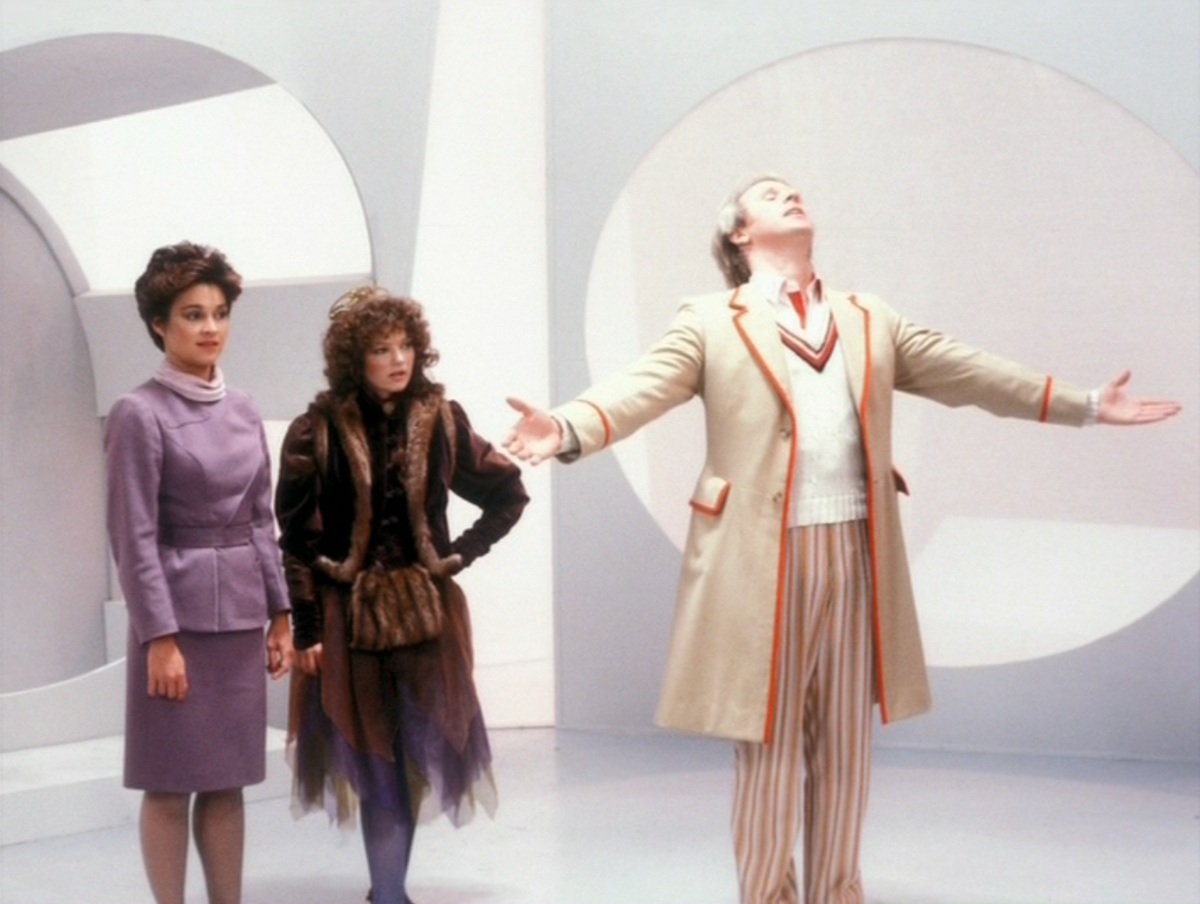
Prior to Castrovalva, depictions of post-regeneration instability in Doctor Who tended to be limited to sporadic waffling about shoes. This time around, however, the production team – in yet another move that possibly made more sense on paper – elected to introduce their new lead actor, who it should not be forgotten was replacing one who had been in the role for seven years, via four whole episodes revolving around a regeneration gone wrong, chiefly denoted by lengthy outbreaks of scarf-unravelling, corridor-wandering and addressing all and sundry as ‘Brigadier’ and ‘Vicki’ in the middle of an already complicated story about The Master strapping Adric to the set from BBC2’s Something Else and forcing him to create a mathematically impossible non-existent society for spectacularly unclear reasons with no evident stated aim but he nonetheless took great effort to wear two translucent trilby hats so nobody would suspect a thing, and also Mergrave saying “I have but one, Sir”. Much is made of the need to reach the ‘Zero Room’, an area of the TARDIS with gigantic roundels and a pinkish tint which facilitates therapeutic isolation from time and space and also apparently minor acts of levitation, considered so vital to the process that when it is jettisoned to avert another not entirely clearly motivated diversion in The Master’s machinations – thanks to Tegan and Nyssa’s quick-thinking reference to an ‘Index File’ that looks unnervingly like a copyright notice from a pre-cert Video Nasty – a ‘Zero Cabinet’ is hastily cobbled together from its remnants to further facilitate The Doctor’s recuperation. Following this, it is scarcely so much as referenced again, with initially wonky regenerations becoming a tediously recurring feature but invariably solved by such protracted and spiritually intensive activities as scoffing Fish Fingers And Custard, playing the spoons on the back of your own neck, pointing at people and saying ‘Smart Lad’ and Not Having Sex With Jackie Tyler. While we’re about it, it’s also worth pointing out that contrary to popular ‘tradition’-toting belief, The Doctor demonstrably retrieves his new costume from the somewhat infrequently-glimpsed TARDIS Games Room rather than the ‘Wardrobe Room’ which wouldn’t even put in an actual on-screen appearance until the next change of lead actor, although there’s much more about that here if you’re interested. After all, it’s not like the then-current resident TARDIS travellers made extensive use of it…
Is That What The Best-Dressed Earth Women Are Wearing These Days?
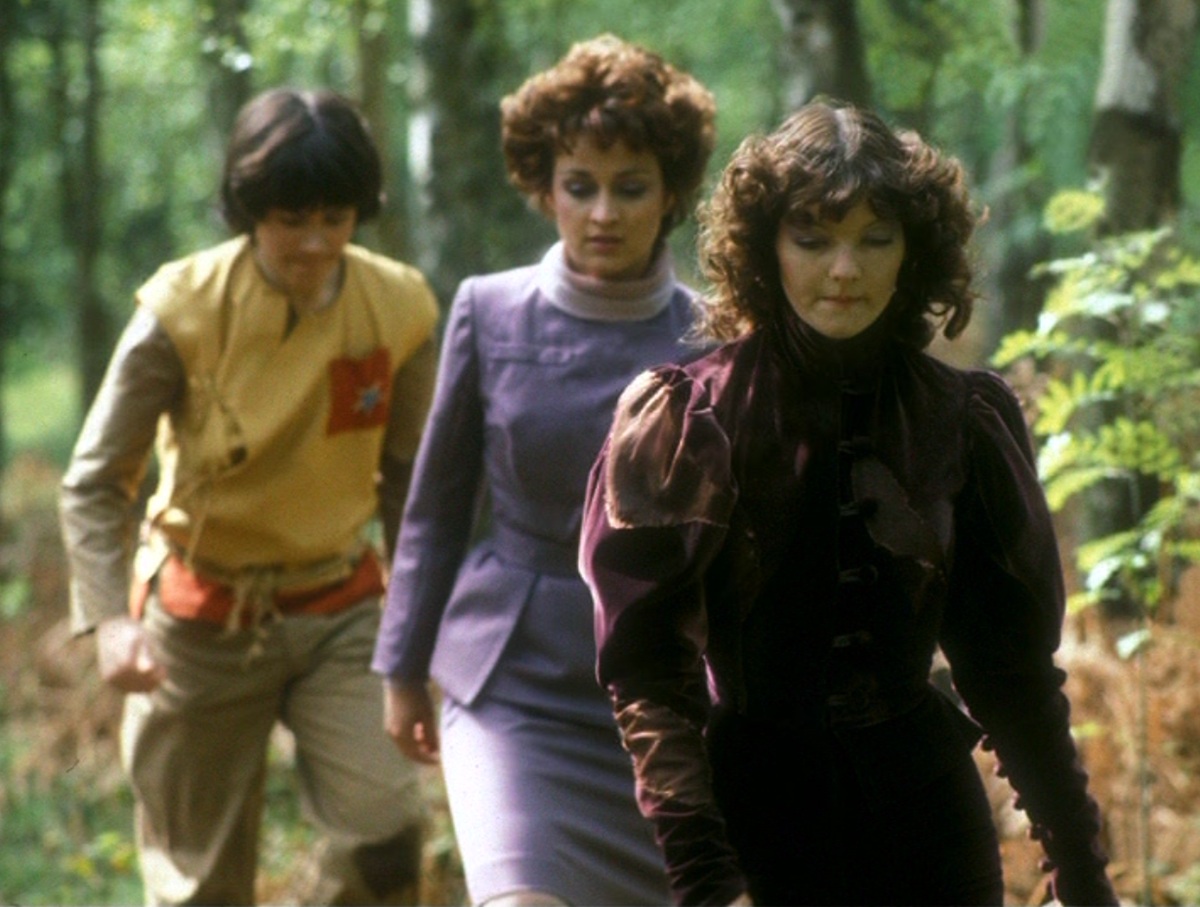
Despite it featuring no larger a configuration than a meagre and negligible ninety five previous episodes of Doctor Who, so many differing theories and explanations have been put forward for the purportedly overstaffed ‘Crowded TARDIS’ that dominated Peter Davison’s inaugural set of adventures – even JNT was inconsistent on the issue – that they are almost in direct inverse proportion to how often the three space-jostling series regulars were permitted to change their clothes. With only few and momentary exceptions, Adric remains resolutely wedged into his not exactly durable-looking Alzarian fatigues, Nyssa doesn’t even get to discard her cumbersome gravity-defying mini-crown and Hamble-density wig until partway through the run, let alone the sub-Jackanory Playhouse velveteen finery which surely cannot have been particularly tolerable under hot studio lights, and Tegan seldom takes an opportunity to change out of an uncomfortable and impractical-looking air steward uniform, even when it has been established with comic inevitability that their latest escapade has taken them as far away from Heathrow as is physically and chronologically possible. Presumably this was with the intention of establishing some sort of merchandising-friendly collection of ‘costumes’, although if that was the case then they only ever really featured in The Doctor Who Pattern Book, which wasn’t released until 1984 and only included Adric’s ‘Tunic’ anyway, and it is worth noting that with the notable exception of Ace’s jacket, the various items of assistant clobber that have attained any degree of iconographic status, from Dodo’s pop-art ensemble to Liz’s floppy hat to Amy’s bumblebee jumper and Amy’s bumblebee jumper and Amy’s bumblebee jumper and Amy’s bumblebee jumper, has managed to do so on the basis of one or at best two appearances. Then again, perhaps we should not have been expecting quite so much attention to sartorial detail when the Doctor is throwing out sarcastic quips about how “some of them even wear safety pins now”. Yes, ‘now’ as in ‘about six years ago’. Anyway, as it transpired, one of them would not have to fret about their wardrobe options for too much longer…
Now He’ll Never Know If He Was Right
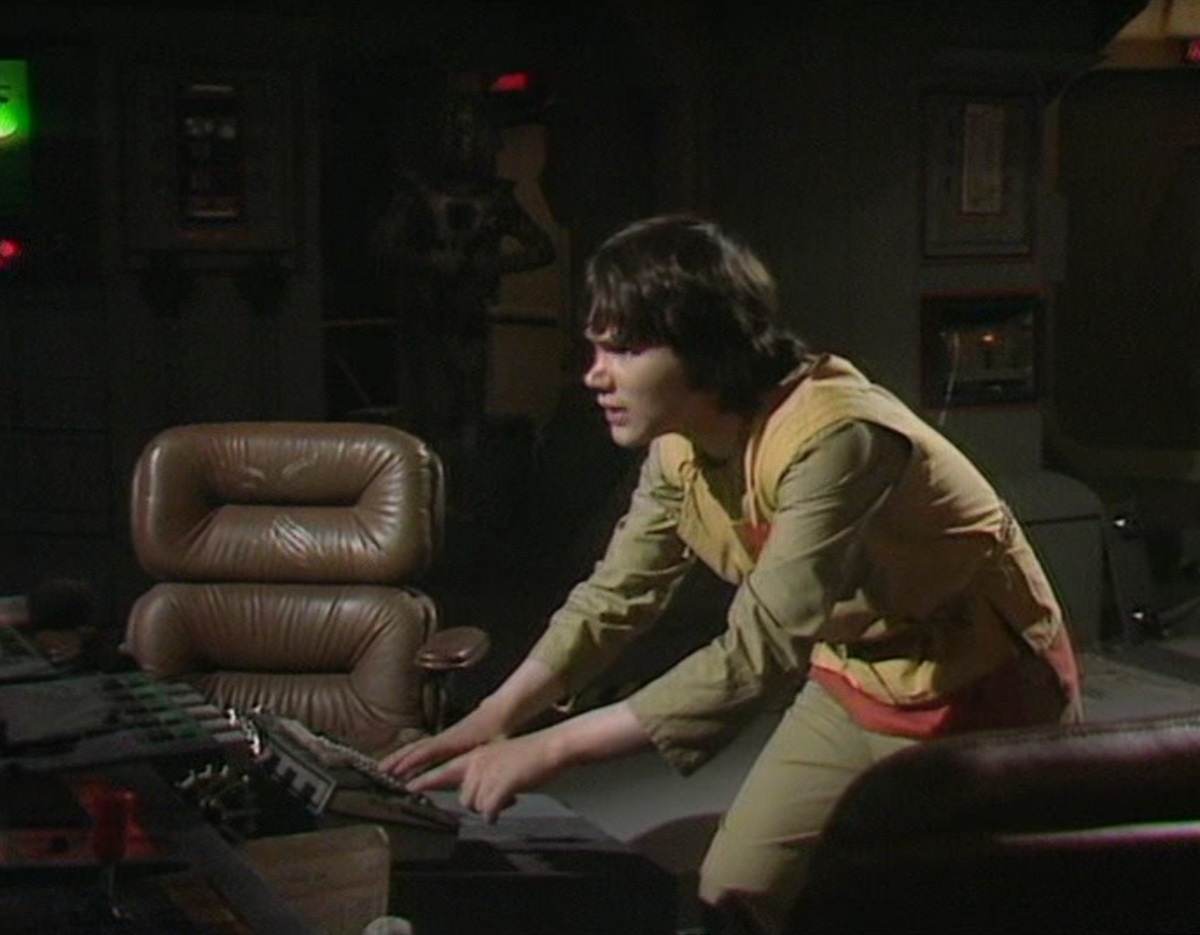
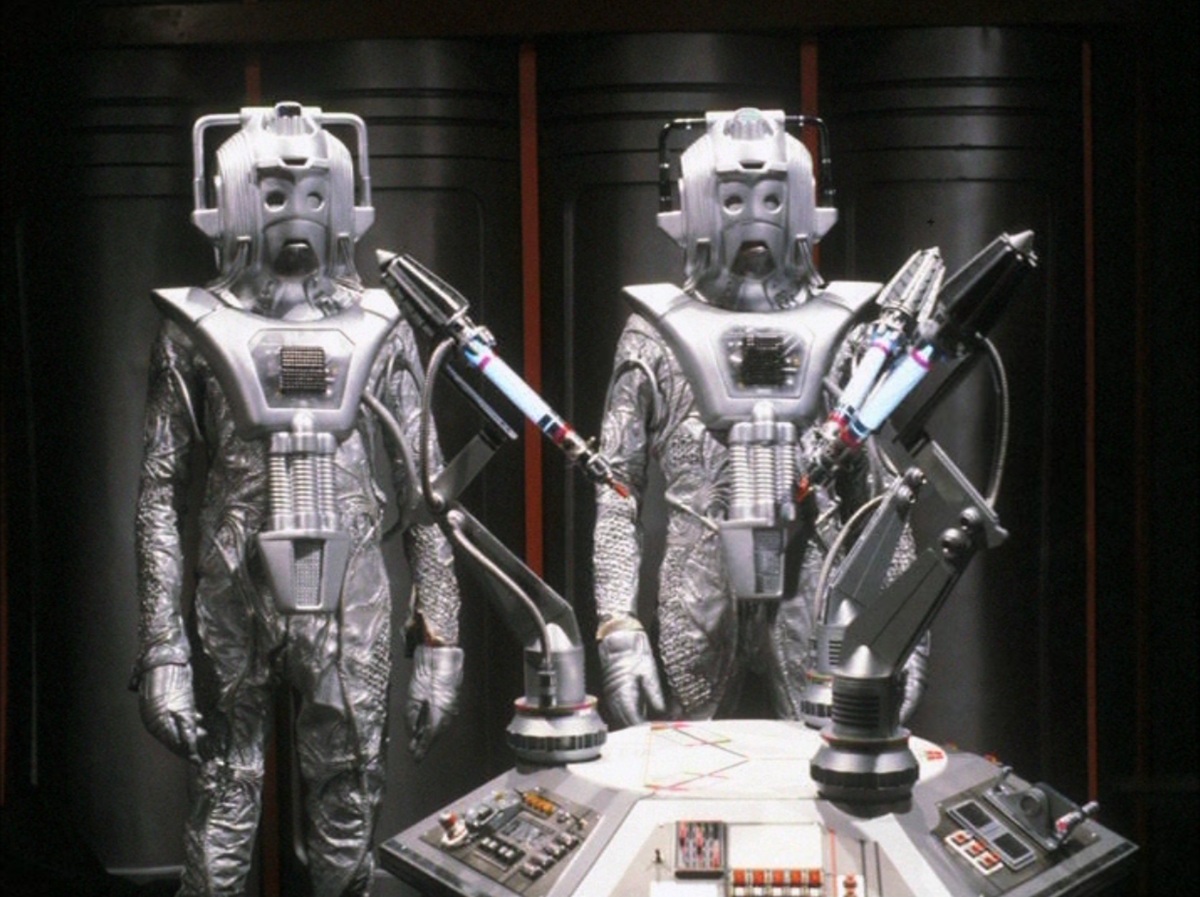
Poor old Adric was never destined to win. Intentionally devised to bring a note of abrasion into a TARDIS that JNT considered all too plot-limitingly harmonious, there is little dispute that he worked incredibly well in his inaugural appearances as an unasked for interloper, throwing The Doctor and Romana off-kilter and baffling K9 with his readiness to throw his lot in with any passing antagonist making patently insincere promise of minor scientific or evolutionary prowess, lending a distinct air of someone who would enthusiastically pay for his own Blue Tick. Behind the scenes, however, matters were even less harmonious still; Tom Baker allegedly told Matthew Waterhouse to ‘piss off’ within seconds of meeting him, while Lalla Ward apparently has trouble remembering his name on commentaries. The views of K9’s less noisy replacement belt drive are sadly not on record but we can probably take a wild guess. He would of course enjoy a considerably more cordial working relationship with his incoming new co-stars, but by this point it was unfortunately Adric who was surplus to narrative requirements, with his disobedience and meddling coming across as spiteful, petty and selfish rather than naive and deluded when placed amongst more sympathetic company. Even so, the decision to write him out seems an unjustly harsh one, especially when his freighter-exploding act of self-sacrifice – though not necessarily for the poor old dinosaurs – demands a degree of poignancy that, albeit through no fault of his own, felt thoroughly unearned. Although it is not without some delicious irony that the sombre silent credit roll over footage of his shattered badge for mathematical excellence was routinely greeted with whoops and cheers at Doctor Who conventions and local groups by teenage boys in apparent entire unawareness of how closely their personality and indeed appearance mirrored that of the stricken Alzarian. Perhaps adding insult to injury, Adric’s fate has somehow come to overshadow what should have proved the most notable aspect of Earthshock – the return of The Cybermen after nigh on a decade, now reinvented for the eighties with a sort of Jump Jet Harrier look presumably informed in equal measure by advancing military-industrial technology and by the bewildering early eighties determination to instruct any passing juvenile male that they were interested in The Red Arrows and The Red Devils and ‘had’ ‘said’ they ‘wanted’ ‘to’ ‘watch’ BBC1’s The Paras. Never mind your ‘spoilers’, JNT really should have gone with that Radio Times cover. Also, no, we’re not getting in to that business with the clip from Revenge Of The Cybermen and the endless Matrix Data Bank debates over whether it was canonically probable. At the time most viewers just said ‘hurrah, a clip of Tom Baker’ and left it at that.
Mind you, at least one TARDIS-crowder was apparently having a slightly better time of it…
Did Tegan Get Some?
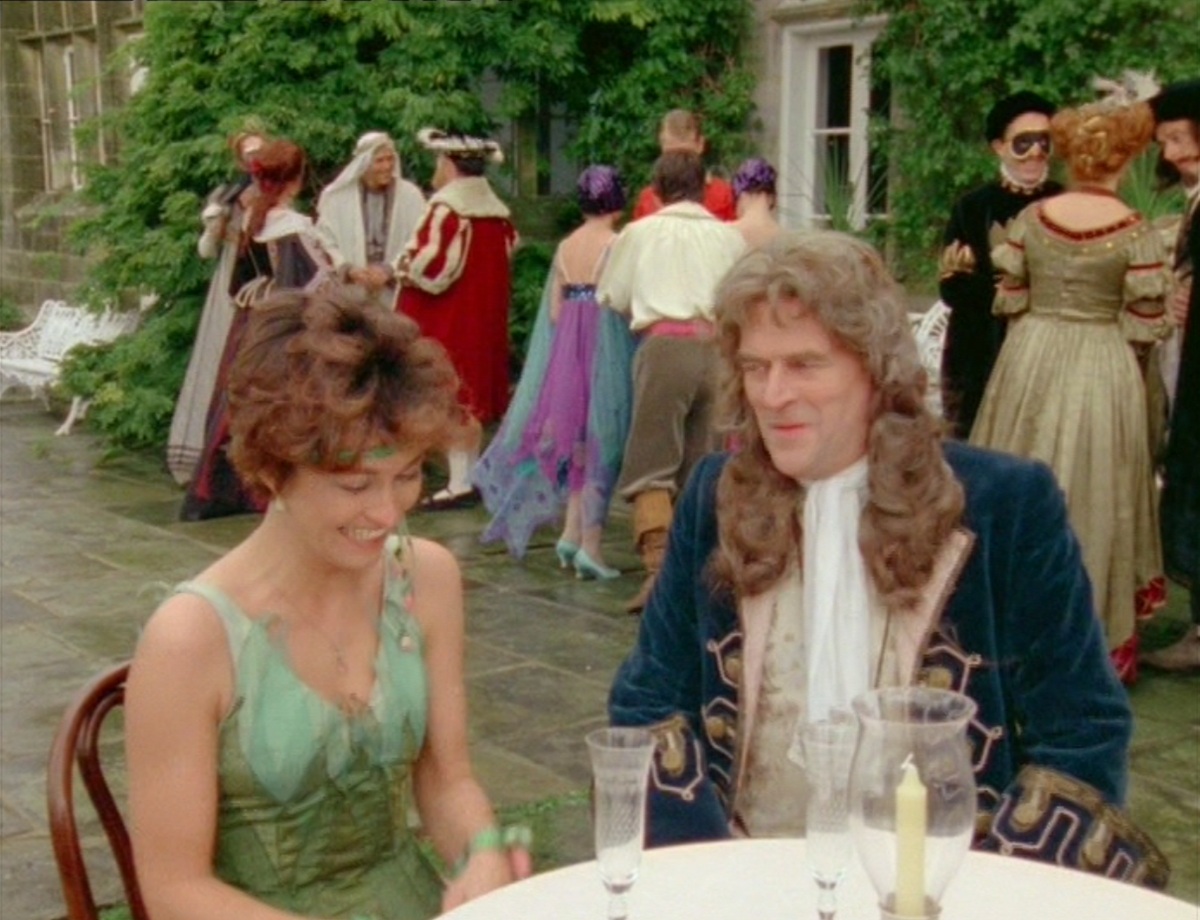
Near the opening of a brief stopover in 1920s Sussex for Margery Allingham-esque unexpected diversion into the long-abandoned realm of ‘pure historical’ for Black Orchid – which it should be noted was part of a wider drive towards quiet and simply rendered modern historical nostalgic drama by the BBC in the early eighties which also included an adaptation of Arthur Ransome’s waterborne do-goodery literary franchise Swallows And Amazons Forever!, a CSO-rendered revival of wartime clothing-averse comic strip heroine Jane, Margaret Kelly-inspired dance troupe travelogue Bluebell, dull ‘zoo vet’ drama One By One and frankly countless others – there is a conspicuous reference to the fact that while Adric and Nyssa are yappily overexcitable adolescents, Tegan is technically a fully grown woman and one who knows her own mind at that. This is, it transpires, a setup for the party that the TARDIS travellers attend at Cranleigh Hall, where the ‘children’ are instructed to stick to orange juice whilst Tegan casually requests a Screwdriver, occasioning her impressed hosts to voice admiration for her worldly-wise sophistication. What is conveyed more in actions than by words, however, is what Tegan gets up to whilst Adric is stuffing his face and Nyssa is doing a ludicrous twenty seven million century long dance with a girl who looks like her but does not act like her in the apparent belief that it will be a delightful ‘wheeze’. On paper, her chat with Chief Constable Sir Robert Muir takes the form of little more than a quick dash of handy plot advancement regarding Nyssa’s time-twin shenanigans; Janet Fielding and Moray Watson, however, elect to deliver their dialogue with a twinkle of relaxed and confident flirting and a seemingly authentic spark of attraction, so subtly and positively rendered that even from this distance it still comes across as charming rather than creepy. Unfortunately, the pace of this plot advancement is such that they will have had scant opportunity to capitalise on their mutual attraction unless they had done it up against the wall round the back of the laundry room, although the final scene does seem to suggest that they have hung around at Cranleigh Hall for several days, affording Tegan ample opportunity to experience a very different kind of long arm of the law. Therefore we can probably conclude that she joins Ian and Barbara and Rose in the surprisingly short list of time-travellers who got to enjoy a dash of recreational sex entirely unrelated to any unfolding drama or narrative path; something that even that bunch of dirty stopouts over at Torchwood Three never quite seemed to manage. After all, most of the actual storyline itself appeared to be taken up with The Doctor firstly playing cricket for about seventy five million hours, and then opting for a rather inconvenient choice of fancy dress costume…
An Assortment Of Magical Tastes
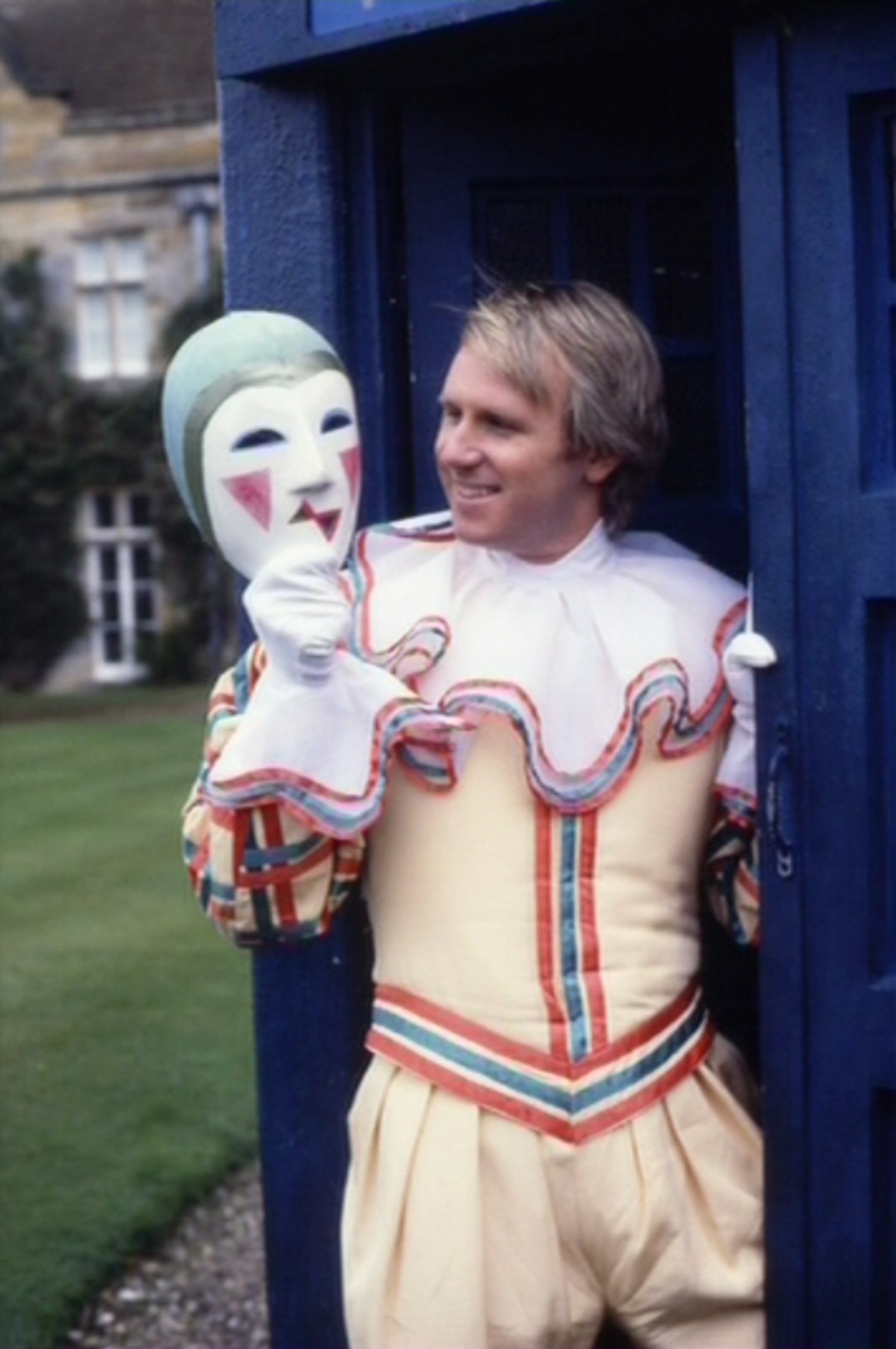
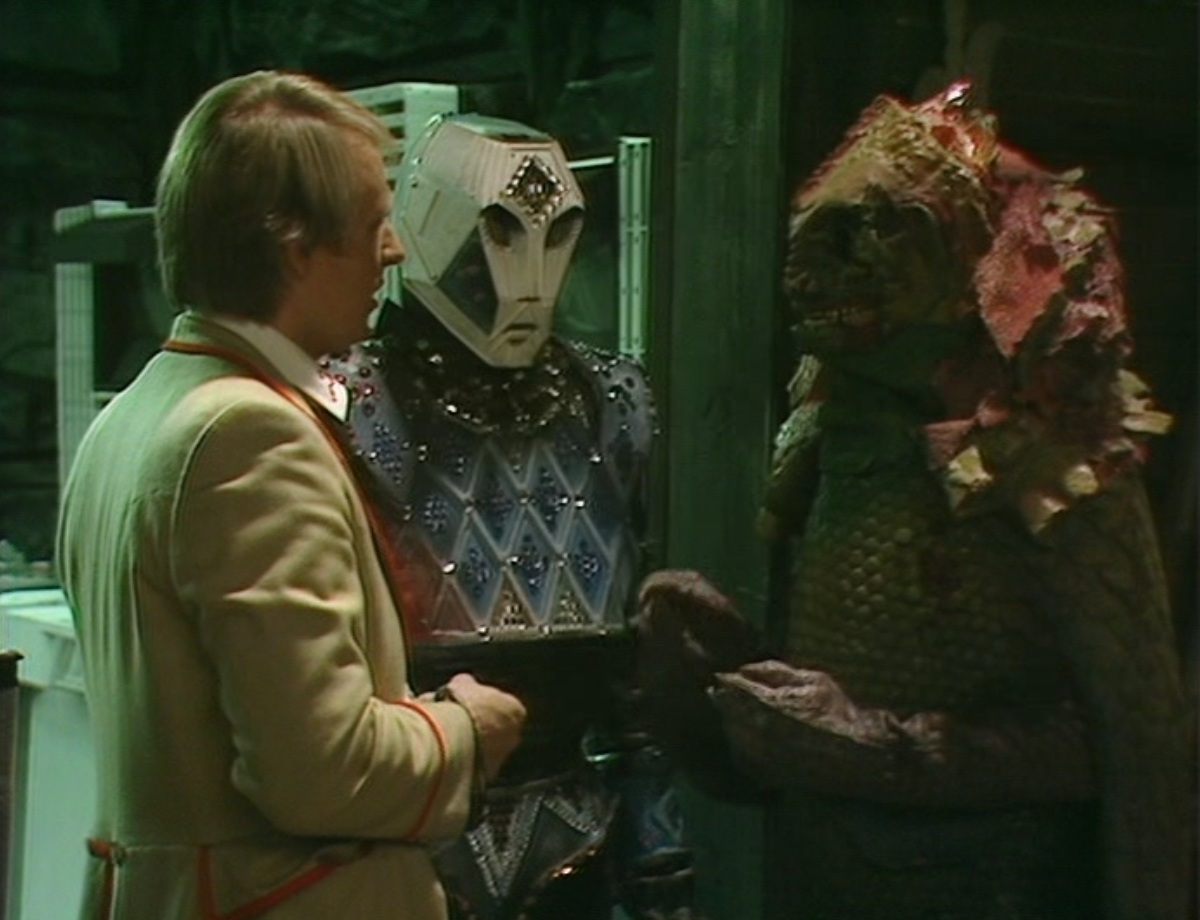
Memorably promoted by a Richard Williams-animated John Hurt-voiced harpsichord-accompanied cartoon Jackanory Playhouse escapee ‘foole’ rhyming their virtues with the sort of spirited bon mots calculated to appeal to the sort of aesthete who congratulates themselves heartily on chortling at the ‘comedy bits’ in Shakespeare plays, Terry’s Harlequin were an ambitious early eighties attempt by York’s longstanding manufacturers of heavy duty chocolate sophistry to expand their consumer base beyond scoffers of zealously concealed to avoid the dreaded entreaty to ‘hand them round’ Chocolate Orange and Neapolitans and indeed those who liked to ‘see the face you love light up’ in a manner that resembled a cutaway in a Mario Bava movie courtesy of the refracted lid of a box of All Gold, and into the less penetrable sub-sector who preferred to go aaaaaaaaahhhhh! at the thought of centres so splendid you’ll thrill with delight. Though scarcely at home to such elevated frippery, we can only assume that JNT was aiming to bag himself a couple of complimentary boxes as this particular run of Doctor Who prominently featured not one but two eyecatching harlequin figures. The Doctor of course dons a conveniently face and apparently also height, voice and we can probably assume odour-concealing harlequin outfit in a full-on ‘tasteful’ eighties Watch Me I’m A Video colour scheme to facilitate his being fingered for an outbreak of country manor murders, while the Terileptils for some reason decided to deck their oddly hindersome android out in the sort of finery that necessitates it to adopt an arguably even more conspicuous gigantic black cloak and cheap Skeletor mask from that bit with streamers in front of it at the newsagents’. Sadly this associative promotion by proxy did little to assist the Harlequin Assortment, and despite the animated merrymaker’s promise of there being too many to remember not one to forget, the little-loved collection of chocolates had vanished from supermarket shelves before The Trial Of A Time Lord even aired. Undaunted, Terry’s went on to reposition their output courtesy of the legendary Pyramint – about which there is much more here – although nobody saw fit to put Sophie Aldred in a fez. Except in long-forgotten Children’s BBC game show Knock Knock, but that’s another story altogether.
King Frog, Ruler Of The Universe
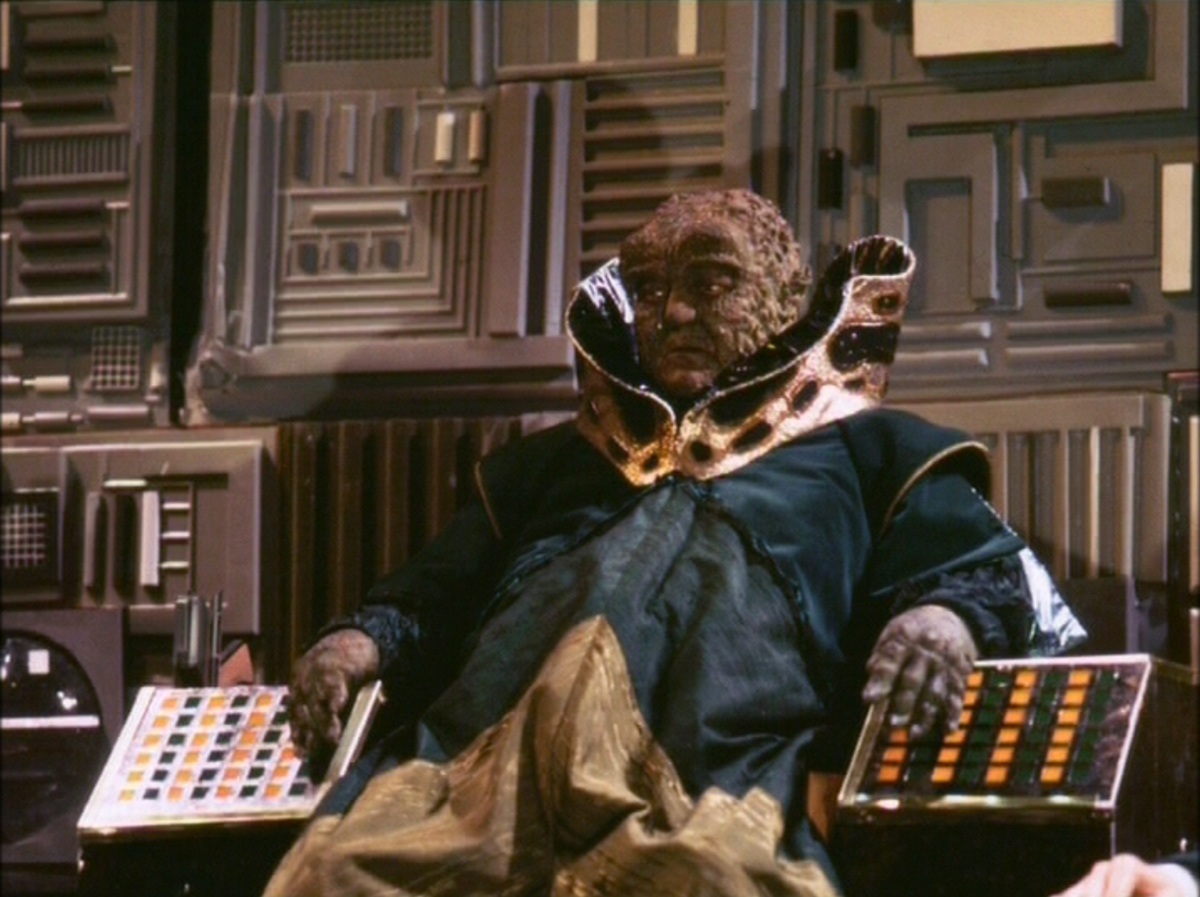
Pushed by an interviewer apparently keen to provoke him into commenting negatively on what had become of Doctor Who since his tenure as showrunner, Russell T. Davies once remarked that while he would always refrain from unreasonably talking up an episode that had not quite worked, he would always exercise equal caution against talking it down too. His reasoning for this, in a remarkable display of generosity, was the thought that there might well be an up and coming actor or inexperienced cameraman who shouldered no responsibility for its shortcomings sitting and watching the episode with their family all around only to see the man at the top high-handedly dismissing it on Doctor Who Confidential. Doctor Who has of course endured more than its fair share of outbursts from individuals both behind and in front of the camera who lacked such an even temper, none of which will be dignified with further acknowledgement here, but there is also a case for arguing that equal undermining was done by those who simply disengaged with the programme full stop; who turned up, did the work, took the money and did not care to be reminded of it. Whatever their motivation for so doing and whoever they may have been – and it has stretched all the way from scriptwriters and guest stars to even one particular lead actor, though we are probably best advised just skirting around that for now – the publicity vacuum that this has created has invariably both said more and achieved less than complaining to Starburst that they did not spend eighty four thousand years at RADA to stand in a gravel pit in a space helmet ever could. Even over and above all of these, however, poor old Stratford Johns’ round of gamely conducted press interviews to promote his forthcoming appearance as Monarch, the primary antagonist of confused and confusing sort of planned invasion-ish saga Four To Doomsday is in a solar system entirely of its own. Doing his best to generate audience interest in his forthcoming appearance as imaginatively named Urbankan overlord Monarch, the well-meaning veteran of a billion Z-Cars spinoffs saw fit to describe the character as ‘King Frog, Ruler of the Universe’. At a time when guffawing at the purported abundance of rubber walls and cardboard monsters in Doctor Who was the stock in trade of every sell by date-averting club comic still somehow doing their one alleged joke very slowly across half an hour every weekday evening, this can hardly have been considered either a constructive pull-quote or an enticement to watch, and while it was almost certainly less than a run of the mill experience having to spend entire days dressed as a cross between Prostetnic Vogon Jeltz and Harold Bishop underneath hot studio lights, you would surely have assumed that this would have made him more engaged with his character rather than less. Still, this was quite possibly the least of Four To Doomsday‘s problems. In any case, there were much better stories to be found elsewhere in this run, some of which even came with an authorship-related mystery attached. What was more, they were very evidently not written by Terence Dudley…
Out In The Garden, There’s Half Of A Heaven
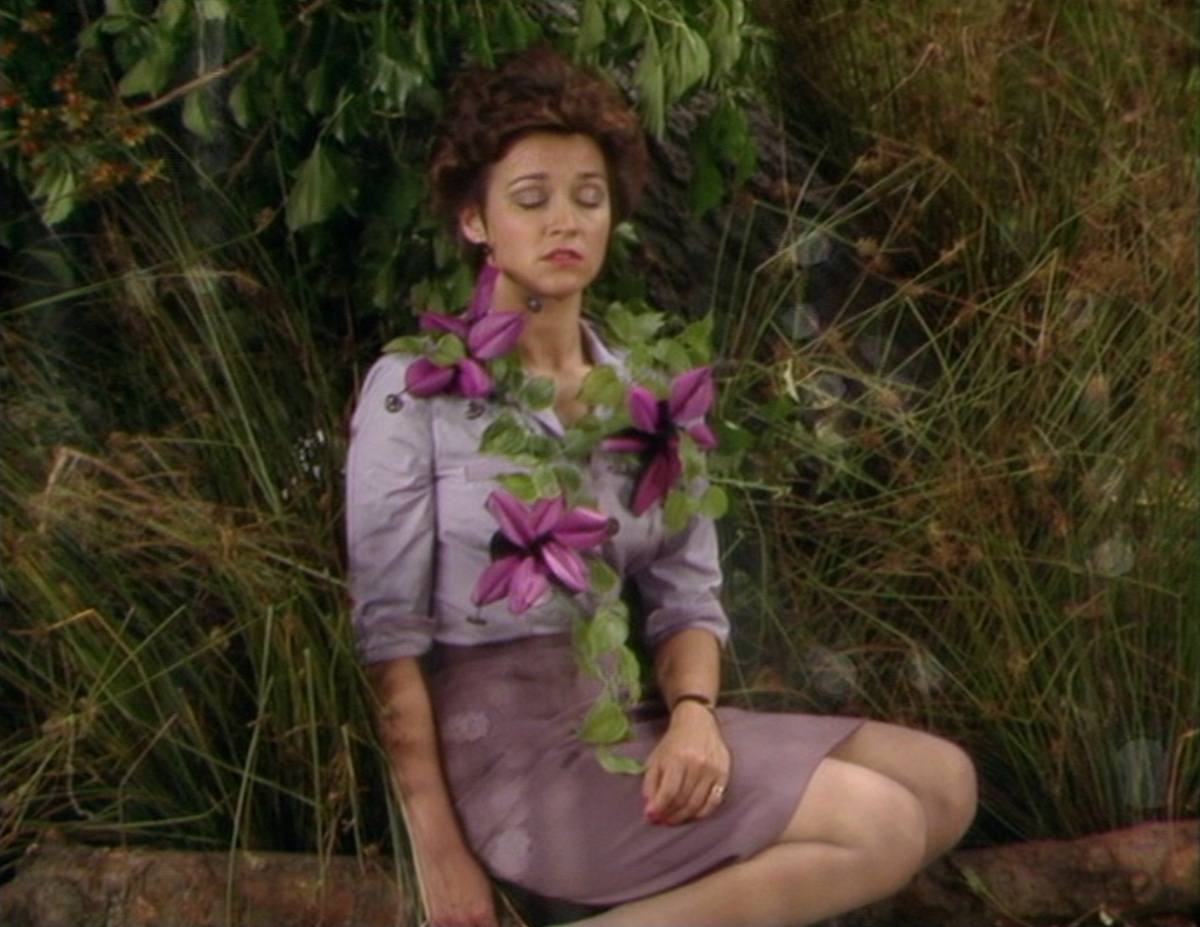
Although it was markedly adrift amongst the preponderance of amphibian royalty and quasi-harlequins, it is fair to say that Kinda would have been an unexpected departure at pretty much any point in Doctor Who‘s history. A story of considerable philosophical depth inspired in no small part by both Buddhist tenets, the theories of Sigmund Freud and Carl Jung and the politicised speculative fiction of Ursual K. Le Guin – albeit, despite what those who are determined to reinforce to us all how ‘clever’ they are for identifying the influences may have to say on the matter, with a solid straightforward narrative that the intended audience could follow with no issues – it explores the distance between self-concept and the transcendent self with assistance from Lou Beale from EastEnders and Reg Hollis from The Bill, and Adric gets stuck in a runaway sort of robot mechanical digger suit thing. While perhaps not quite illuminating the path of Nibbana, it is nonetheless an outstanding effort on almost every level, marked out by startling performances from Simon Rouse as the unhinged and desperate Hindle and Mary Morris and Sarah Prince as Panna and Karuna, two members of the titular Deva Lokan tribe who appear to understand even more about what is transpiring than they are already cryptically alluding to so doing, and while those ‘clever’ commentators might derisively tut at the thought of the massive pink snake used to embody malevolent entity The Mara, it arguably works in the context of the story and in any case, the actual intended viewing audience at the time it was actually bloody made and transmitted will have seen much worse, particularly on Children’s BBC, practically every day. It was also surprisingly ‘adult’ in a sense that dear old Owen and Gwen could never have got their heads around, from the visible chemistry between The Doctor and Nerys Hughes’ Doctor Todd to Janet Fielding’s startling interpretation of a Mara-possessed Tegan, rampaging through the forest with an expression and demeanour that would have simply suggested ‘gone a bit weird’ to younger viewers but very strongly communicated ‘busting to knock boots’ to their parents. Presumably everyone heartily congratulating themselves over their witty reference to ‘The Wet Vet’ was out on all four of those evenings. Also out on one of those evenings, in contrast, was a certain prominent Doctor Who fan from the North West, who would subsequently recount how his attendance at a careers fair and the absence of an available home video recorder had led him to arrange for an audio recording to be made and even in sound only, the cliffhanger with Hindle forcing The Doctor to open the Kinda’s box frightened him in a manner that Doctor Who had not done for many years. Quite whether Kate Bush, who at that time was busily adding overdubs to the tracks that would shortly make up The Dreaming over at Advision Studios, was in or out on the evenings in question is still open to speculation, but for many years a very convincing rumour persisted that she had not just seen Kinda but had actually written it. Quite how and where this got started – and it may well, as anyone involved in the Doctor Who Local Group Newsletter April Fool about an episode of what became The Happiness Patrol being animated which was picked up as fact by reputable news sources can amusedly attest, originally have been a joke that got out of hand – but unusually for Doctor Who-related rumours that verged on exceptionally personal wishful thinking in a manner that it has to be said was distinctly at odds with the themes explored in Kinda, the pieces all seemed to fit. The shadowy and elusive to the point of apparent non-existence credited writer Christopher Bailey had the same initials as ‘Catherine Bush’, who had certainly displayed some inclination towards pursuing narrative screen fiction, and to say that Kinda echoed the spiritual and philosophical themes explored in her music and on The Dreaming in particular would be something of an understatement; not for nothing did Not The Nine O’Clock News send her up with a song glibly namechecking the Gnostic Apocryphon Of John in the original Coptic, Korsakoff’s psychosis theories and the Fibonacci Series. Of course this was ultimately proved to be nothing but a flight of fancy – and it is worth noting that nobody ever suggested that Geoffrey Orme was secretly Wayne Fontana – and the elusive Christopher Bailey eventually emerged, in true Deva Lokan tradition, as an aspirant screenwriter who had enjoyed some success with contributions to Second City Firsts and ITV Playhouse before having a series of later proposed later Doctor Who scripts rejected and electing to concentrate on his career in academia instead, but it really did have a lot of people fooled for a very long time. We do know for certain, however, that Kate Bush was in on 26th May and 2nd June 2007, as she later wrote a letter to Paul Cornell expressing how much she and her son had enjoyed Human Nature and The Family Of Blood, though there’s more about those two particular episodes here. Meanwhile, we will not be mentioning the extensive coverage of the story in Doctor Who: The Unfolding Text, as unlike Kinda, that actually is too dense and complicated to follow; and that’s someone who can write eighteen thousand words about Skiboy talking there. Plus some production decisions, of course, were beyond even John Tulloch and Manuel Alvarado’s semiotic textual analysis…
“Police Boxes went out with Flower Power”
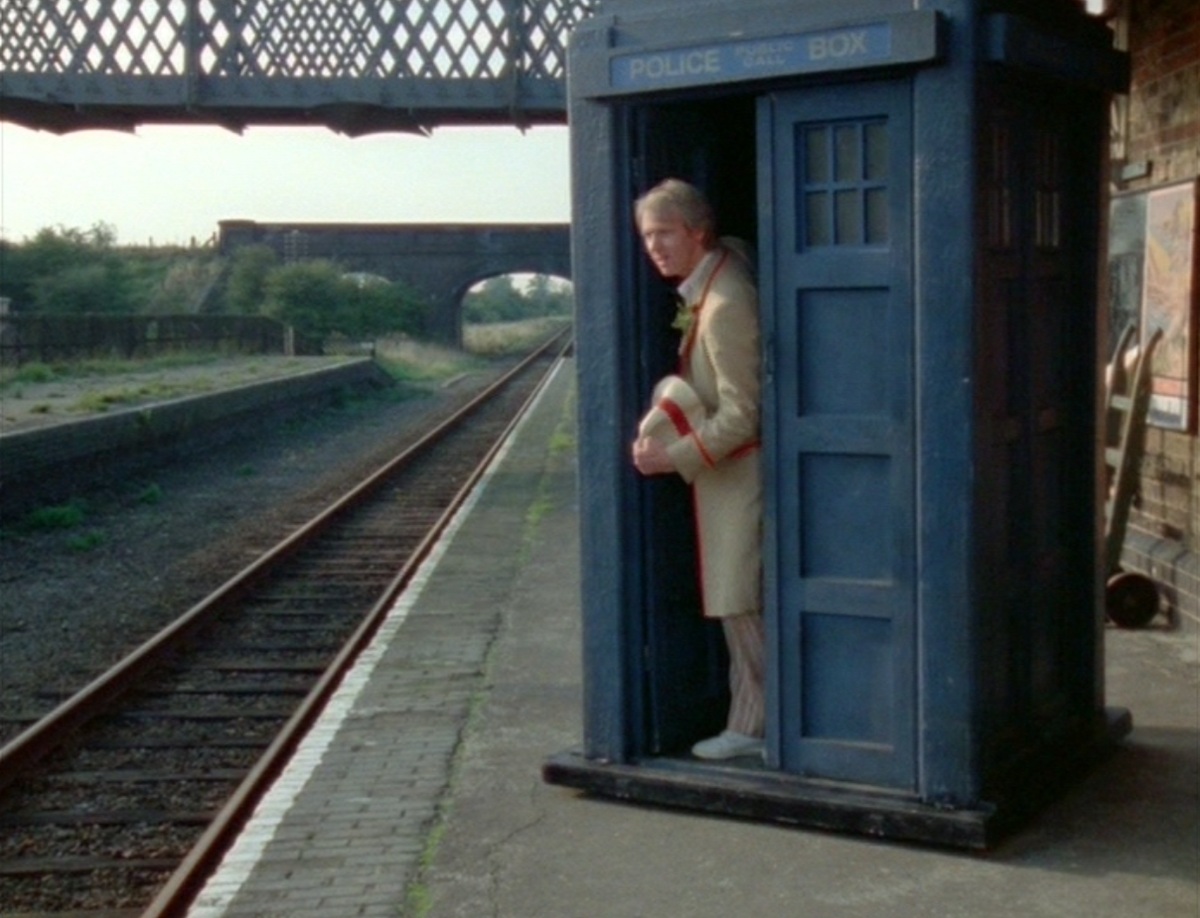
Having already dispensed with the services of the purportedly lazily plot resolution-facilitating Sonic Screwdriver courtesy of an unamused Terileptil, John Nathan-Turner spent much of the rest of 1982 making vague suggestions, doubtless more ‘tantalising’ to him than they ever were to anyone else, that it might also be the right moment to no longer particularly adhere to the Police Box design that the TARDIS had been, well, unchanged from since 23rd November 1963. Quite how serious he genuinely was about this is frankly anyone’s guess – it’s probable that he didn’t even know himself – but it was a contentious issue that would keep resurfacing over the next couple of years and indeed at one point would be briefly enacted. Seemingly setting the groundwork for this, a somewhat conspicuous line even amongst an international airport’s worth of incongruous exchanges in Time-Flight saw Tegan dismissively refer to the notion that “Police Boxes went out with Flower Power”, presumably designed to engender a Chameleon Circuit repair-endorsing chuckle of recognition from the less invested corners of the viewing audience, though quite how well this worked as an observation is another matter. A familiar sight on British streets from 1929, the Metropolitan Police Box was already in the process of being phased out by the early sixties as more sophisticated and more importantly less static modes of communication began to become available; indeed Dinky, arguably the UK’s leading toy manufacturer of the day, had ceased production of their die-cast Police Box before Doctor Who even made it to air. By the early seventies and especially following the rise of the ‘walkie talkie’, they were effectively rendered obsolete. Very much a Stateside phenomenon deeply rooted in resistance to the Vietnam War, ‘Flower Power’ enjoyed little direct germination in UK soil outside of a seven week stretch over the summer of 1967 when Scott McKenzie’s San Francisco (Be Sure To Wear Flowers In Your Hair) replaced The Beatles’ All You Need Is Love at the top of the singles chart; often held up as a six-week extension of this unprecedented embrace of peace of love, Procol Harum’s A White Shade Of Pale was a direct product of the markedly different UK psychedelic scene with a decidedly more downbeat ‘message’, and their more cynical contemporaries were never in a tremendous hurry to take it in any way seriously anyway. The Riot Squad and The Flies threw bags of flour over an influx of trend-chasing hippies at mind expanding mini-festival The 14 Technicolour Dream, Flowers In The Rain by The Move clearly has its tongue every bit as much in its cheek as Fire Brigade and I Can Hear The Grass Grow, while The Crazy World Of Arthur Brown memorably poked fun at those who advocated countering mobs of angry bikers and bullying beach-bound musclemen with a proffered posy on Give Him A Flower. Indeed, arguably few sights underline just how quickly dreams of telekinetically levitating The Pentagon had come and gone in Stevenage New Town than Arthur Brown roaring ‘I AM THE GOD OF HELLFIRE’ into the Top Of The Pops cameras, although to avoid this turning entirely into a discussion of the comings and goings of the ‘Summer Of Love’, you can find much more about that in and of itself here. By the dawn of the seventies, following the rise of more direct forms of protest, the cessation of hostilities in Vietnam and a public denunciation from former figurehead John Lennon, ‘Flower Power’ had all but run out of power in America too. With an exceptionally generous degree of chronological contrivance Tegan’s waspish dismissal could probably just about be adjudged to work, but ultimately it is a flippancy not just distinctly at odds with cultural history but also with – if the volume of complaints addressed on any and every appearance by JNT on a chat show or magazine show is anything to go by – overwhelming public opinion; and yet, staggeringly, this is not the last that we will be hearing about this issue. Meanwhile, there were certain ‘traditions’ that nobody wanted, but they would find they were getting them whether they liked it or not…
“Are You Sure You’re Not Having A Posset?”
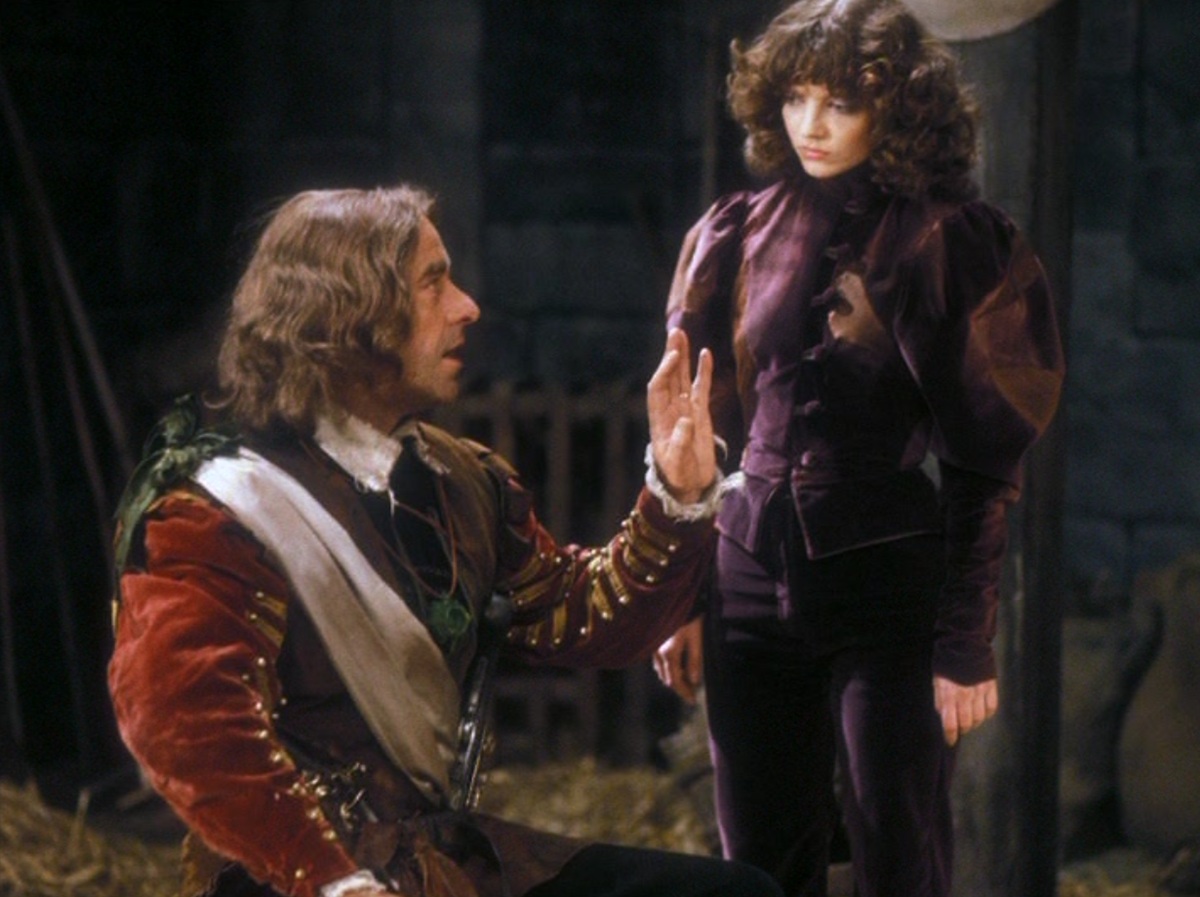
Those readers out there who are familiar with the BBC’s 1984 adaptation of John Masefield’s The Box Of Delights will in turn be all too familiar with a certain scene in which an affable village police inspector, in preference to actually paying any attention to Kay Harker’s urgently addressed mounting evidence of clandestine shenanigans afoot, elects instead to explain to him in great detail and at great length how to make a ‘posset’; if you aren’t familiar with it, then you can find an extensive look at that jarringly narrative-avoidant scene which is both longer than the scene itself and yet somehow still shorter than it, not to mention the story of once meeting someone who had actually been inspired by The Box Of Delights to make and try a posset for themselves and what she thought of it, here. Even in spite of the conspicuously detailed page-hogging presence of the endorsement, preparation and indeed consumption of said ‘posset’ in the original source novel, the incorporation of the entire interminable diversion in the widely-acclaimed adaptation seemed decidedly out of place even in a serial that afforded an entire third of an episode to a sub-We All Stand Together animated interlude in which Herne The Hunter teaches Kay the valuable and often overlooked lesson that it might be an idea to keep an eye out for baddies, which is why it comes as something of an unwelcome surprise to discover that various characters in The Visitation are similarly enthusiastic over the treacly yet powdery-sounding slop confection. Quite who in the BBC decided this was the optimal moment for posset-indoctrination and why is presumably lost to the mists of paperwork, and the question of whether anyone would even want to identify them is a troubling one, but we can only assume that the overwhelming majority of Doctor Who fans subsequently busied themselves with a jorum of hot milk and a grating of nutmeg to the exclusion of pretty much anything else on account of the fact that in a world where a greater volume of individuals than is right or proper will argue relentlessly that some incoherent fan-made ‘vertical drama’ about the Neo-Gallifreyan Fifteenth Doctor in the Twelfth Segment Of Time ‘counts’ as a proper canonical spin-off, not a single one of them has ever expressed the slightest hint of interest in the fact that Terileptil-trouncing thespian slash highwayman Richard Mace had appeared in a string of late seventies BBC Radio 4 comedy thriller dramas with occasional flashes of a sci-fi or supernatural twist which enjoyed considerable popularity with listeners and more importantly are actually quite good. Honestly, it’s almost as though they think Doctor Who was the only programme ever made. In any medium. Still, that does at least mean they are legally required to sit through every last second of a certain story…
It’s Only A Time-Flight Script
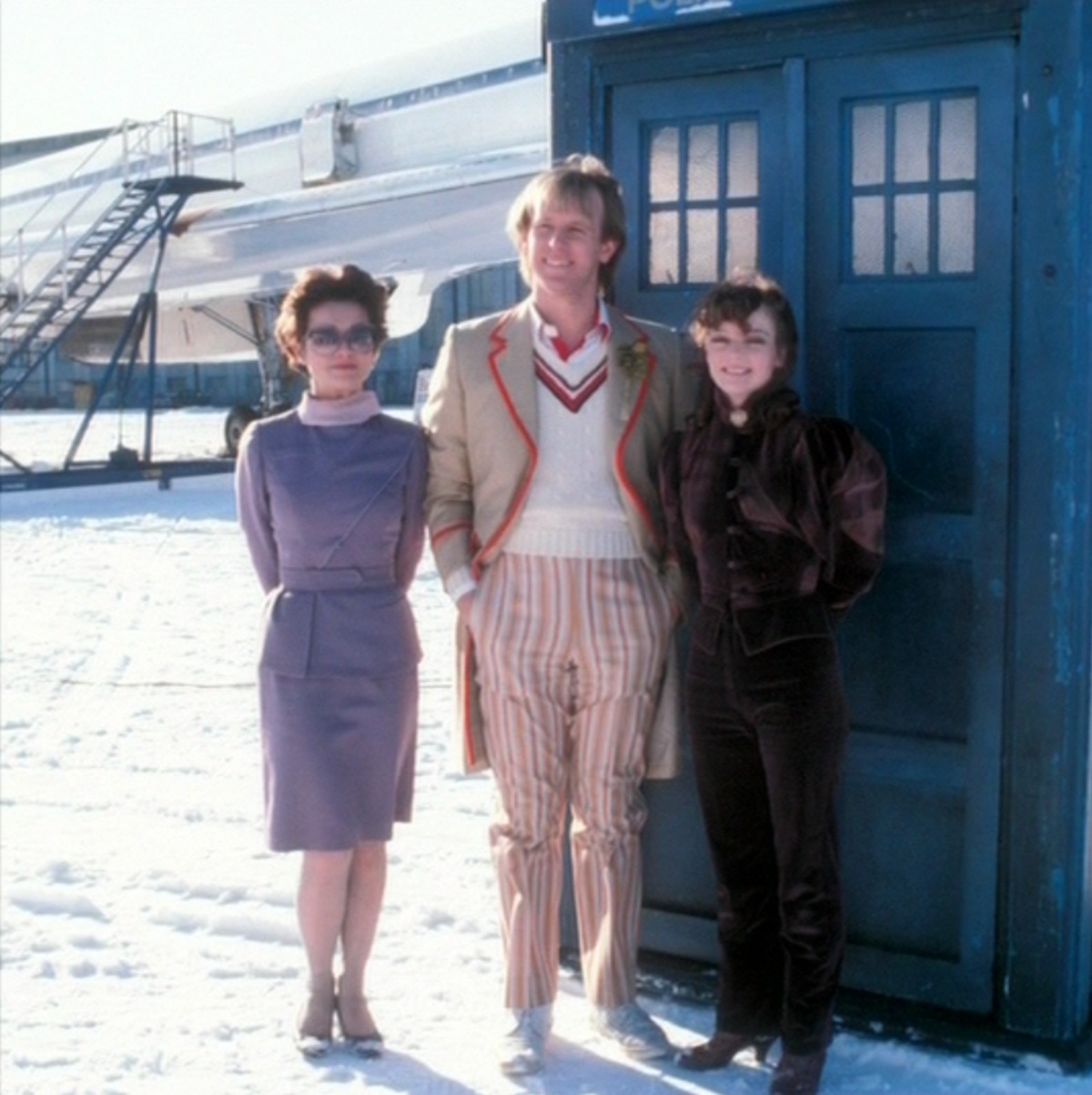
At the conclusion of the ‘Behind The Sofa’ cast commentary on the Blu-ray of Earthshock, Matthew Waterhouse notes with evident satisfaction that the one upside to his rather off-handed treatment was that he did not have to appear in Time-Flight. Discreetly sidestepping the fact that he did appear in Time-Flight, albeit as an hallucination, this is an assessment that it appears few would disagree with him over. A regular fixture in the lowest reaches of ‘Best Story Ever’ polls ever since its broadcast, it stands alone amongst the familiar cadre of number three hundred-nudgers in that nobody ever seems particularly inclined to mount any variety of defence of it. If you have actually sat through it, this might not in fact come as too much of a surprise. Whatever the merits or otherwise of Peter Grimwade’s actual script – and it is worth noting that all of the regular cast seem to consider that on the printed page at least it appeared to have considerable potential – there is no disputing that it is laughably poorly rendered even by Doctor Who‘s lowest standards to the extent that there is no disguising the fact that it was written to order as a story featuring not just Tegan and Concorde – or at least a partial model of one – and another ‘surprise’ appearance by The Master toting the same sort of confusing machinations as previously. There was also, it appears, no disguising Anthony Ainley either, and the even at the time frankly shockingly ignorant and stereotyped persona he assumes behind what appears to be a load of school dessert slapped onto his face is perhaps best not dignified here. Notably, and perhaps out of someone feeling sorry for it, the Wikipedia page for Time-Flight discreetly omits the usual section on ‘Reception’. Yet if anyone ever was minded to put together a list of positive points about Time-Flight, one of them would be rendered in even larger letters than any of the others – Peter Davison. Whatever misgivings he may have expressed in later interviews and indeed on instalments of Behind The Sofa, there is one recurrent theme to Peter Davison’s stories regardless of whether they are let down by the script, the direction, the design, the supporting cast or even in one case the lighting, or even all of the above and more all at once – he is doing his absolute best lift proceedings, and in a generous manner that fully encourages everyone else to try their best with what they have been cursorily given to work with. It doesn’t always work – for example it most definitely does not work with Time-Flight – but in a long-running series where the irritation or boredom or indeed just plain lack of interest of certain other lead actors is sometimes all too evident even when everyone else involved has pulled out all of the stops, this sort of effort on behalf of and indeed attention towards the poor old viewer attempting to sit through twenty five meandering minutes at home really does stand out. Even during his relatively short tenure in the role, however, there was a good deal more heavy lifting still to be done…
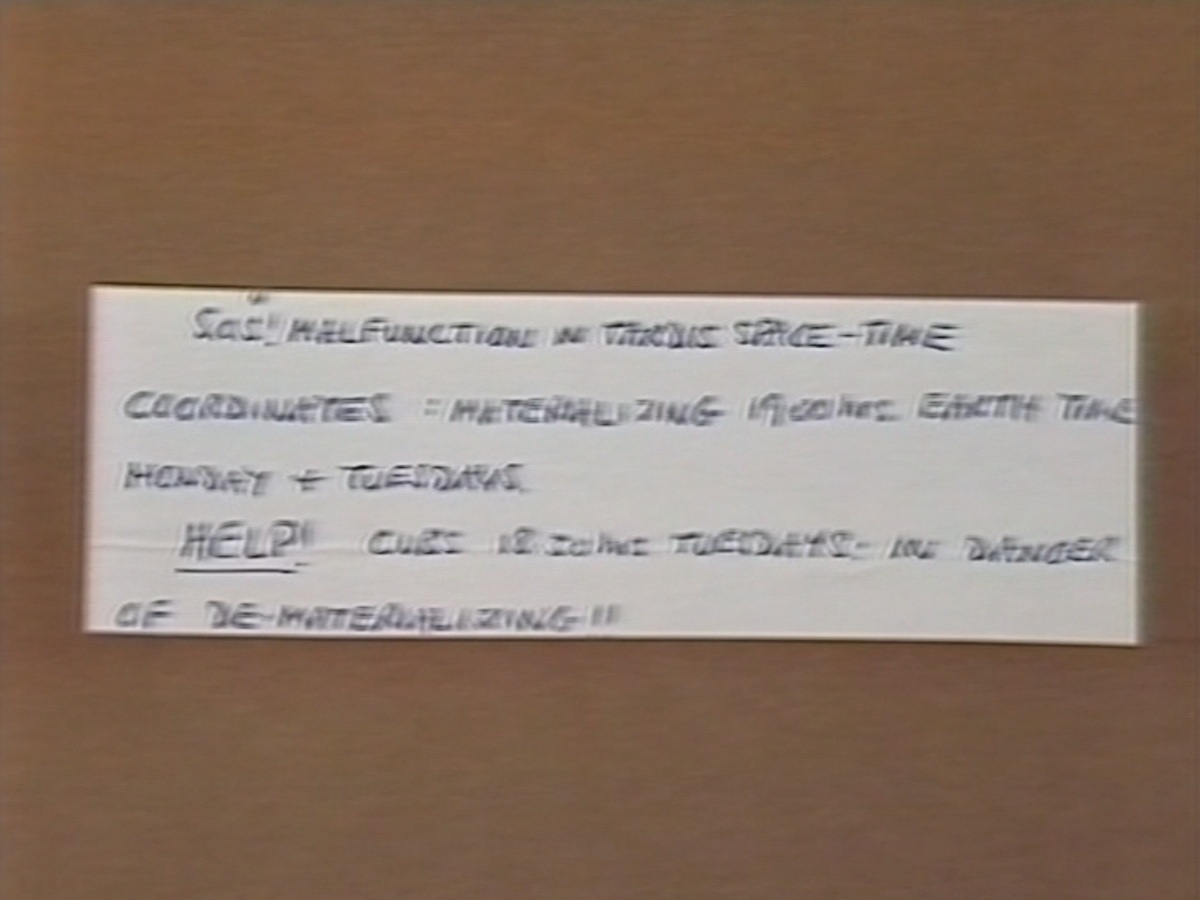
Anyway join us again next time for Antimatter Coconut Squares, Tegan asking for answers and getting a headful of heroin in return and The Black Guardian’s prowess as a contestant on Winner Takes All…
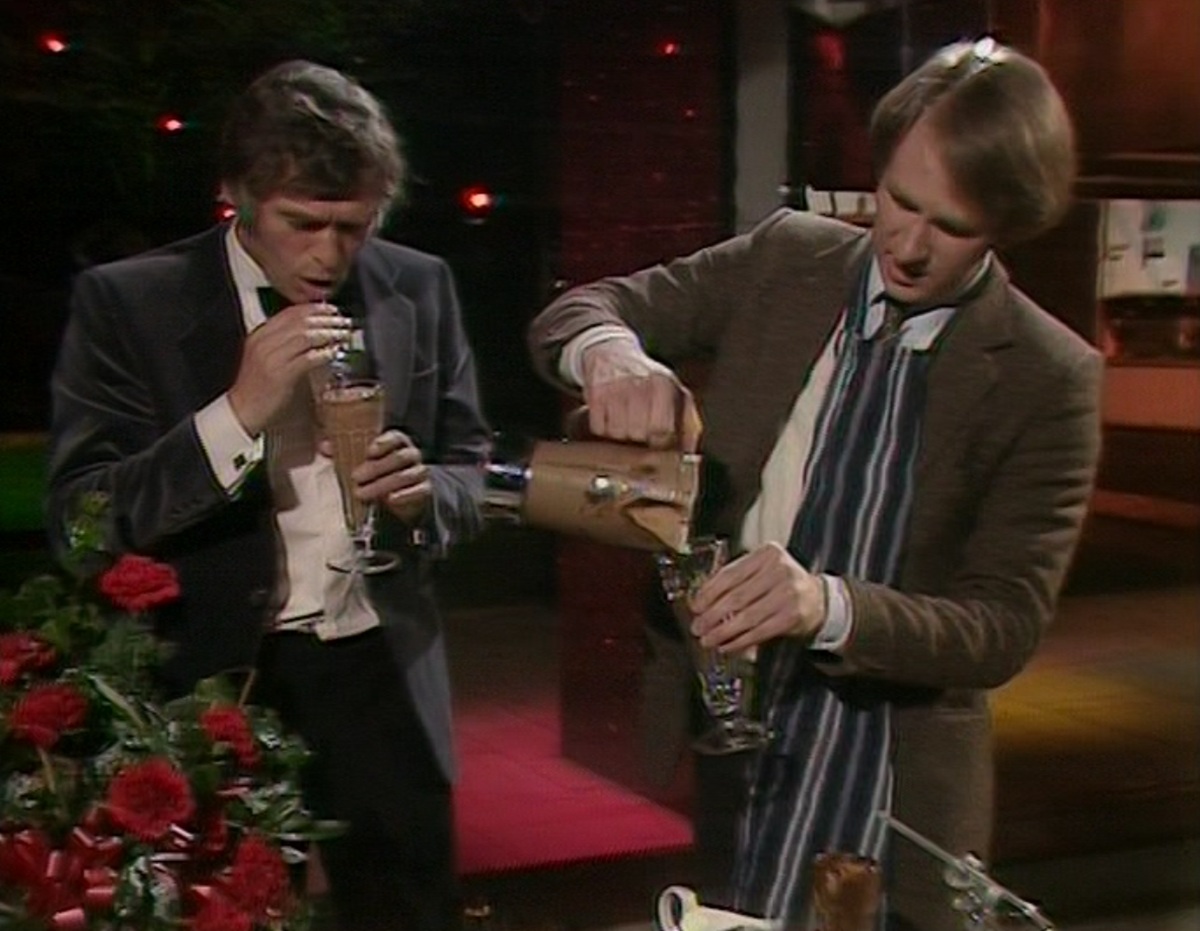
Buy A Book!
There’s lots more about the early eighties Doctor Who theme – and plenty more about tons of other of Doctor Who-related releases besides – in Top Of The Box, the story behind every single released by BBC Records And Tapes. Top Of The Box is available in paperback here or from the Kindle Store here.
Alternately, if you’re just feeling generous, you can buy me a coffee here. Under no circumstances am I having but one, sir.
Further Reading
You can find more about the build-up to Peter Davison’s debut in It’s Still A Police Box, Why Hasn’t It Changed? Part Nineteen – Everything Starts With An E-Space here.
Further Listening
There’s no Richard Mace, but you can find a look at some long-forgotten Doctor Who-associated spin-off side project oddities in Doctor Who And The Looks Unfamiliar here.
© Tim Worthington.
Please don’t copy this only with more italics and exclamation marks.
 Tim Worthington