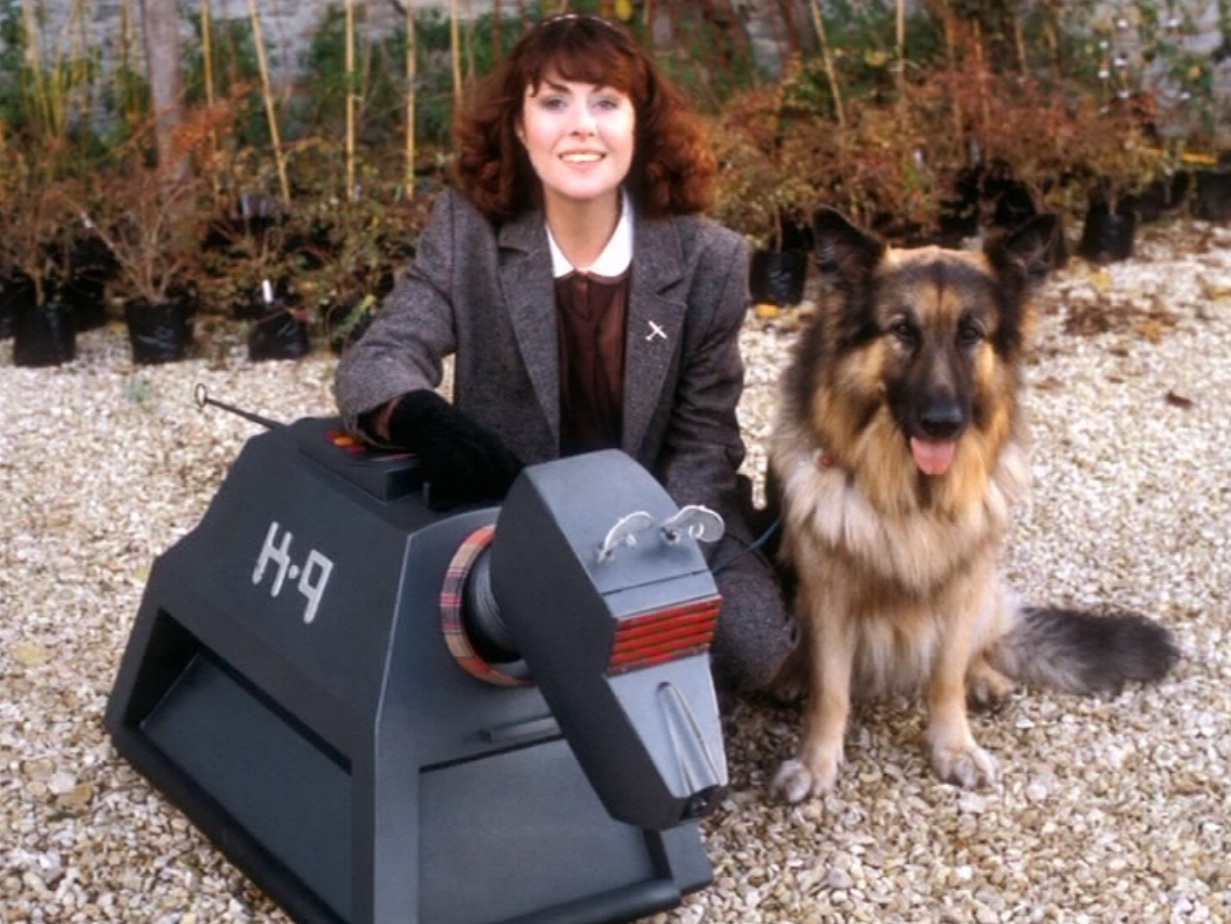
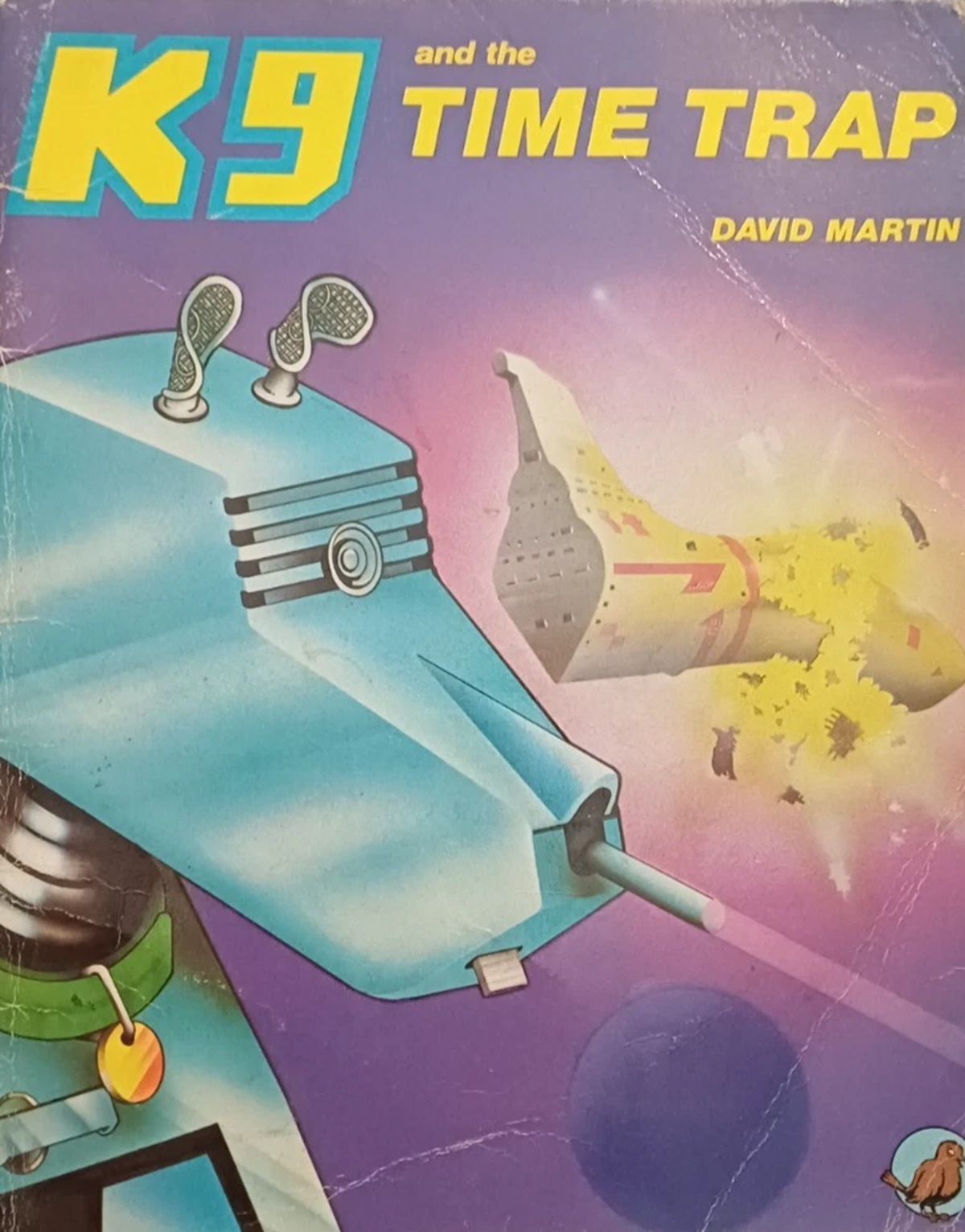
While the John Nathan-Turner shadowing educational showcase A Day With A TV Producer was flamboyantly sitting around on booksellers’ shelves and pointing the way towards Doctor Who‘s future, it was almost certainly being faced down from an adjoining bookcase by a series of smaller books that served as a pertinent reminder that the ambitious new producer was going to find it difficult to fully shake off Doctor Who‘s past. Written by K9’s co-creator Dave Martin, Sparrow Books’ K9 And The Time Trap, K9 And The Beasts Of Vega, K9 And The Zeta Rescue and K9 And The Missing Planet were essentially little more than above average illustrated children’s storybooks relating the further adventures of everyone’s favourite MKII Professor Marius’ Best Friend, but their sheer existence pointed towards a more uncomfortable reality for the Doctor Who production office; namely that the pesky plot-resolving mechanical mutt was more popular – and more emblematic of Doctor Who to the wider public – than anyone had accounted for during JNT’s haste to dispense with his AFFIRMITIVE-affirming services.
At the same time, and with a convoluted recursive loop of irony worthy of the M.C. Escher print hanging on Script Editor Christopher H. Bidmead’s office wall that had been causing him no little irritation, JNT had in fact been looking towards Doctor Who‘s past in the hope of securing its path forwards. Aware that an entire viewing generation had grown up without any real awareness that anyone else had been The Doctor prior to Tom Baker, his initial response to the potential difficulty inherent in getting them to accept a new lead actor was to suggest that The Doctor and indeed the audience should be guided through the transition by a familiar face. When both Elisabeth Sladen and Louise Jameson declined to returned to roles that they had only relatively recently left, however, the production office were forced to change their intended direction – and you can of course find out all about what actually did happen here – but it is clear that the appeal of previous regular cast members to the audience beyond fans who pretended to have enjoyed Meglos was not lost on the ever-opportunistic showman. Thus it was that early in 1981, when with hindsight he should arguably have been concentrating on securing a solid launch for brand new Doctor Peter Davison, JNT proposed the idea for Doctor Who‘s first ever fully-fledged spinoff series – One Girl And Her Dog. Or, as it was later slightly more advisably retitled, K9 And Company.
The loose original concept for K9 And Company hinged around a suggestion that various iterations of the motorised hound could be teamed up with assorted TARDIS-travellers passim, but it would ultimately never get further than Sarah Jane Smith-aligned pilot episode A Girl’s Best Friend, so regrettably audiences were denied the pleasure of seeing Ian Chesterton making weak puns about kennels. On paper, the combination of Sarah Jane and K9 should have worked brilliantly – and indeed it later would both in The Five Doctors and more significantly The Sarah Jane Adventures – but even in spite of a brace of publicity positioning it as a key fixture of the BBC’s Christmas schedules taking in a holly-collared K9 forming part of a festive trailer ‘choir’ alongside such light entertainment luminaries as Noel Edmonds, Floella Benjamin, Jimmy Hill, John Inman and of course Wee Jimmy Krankie, and appearing on Pebble Mill At One sporting a paper crown whilst approving of the revamped post-New Romantic theme music which had previously caused Hinge And Brackett such aesthetic angst, the odds were stacked against K9 And Company from the outset. A series of reshuffles amongst the BBC ‘top brass’ saw to it that a number of executives who had been fully behind the proposed spinoff were replaced by newcomers who it is safe to say were not, and the projected running time was almost halved after studio and location filming dates had already been arranged. For reasons best known to the production team, scriptwriting duties were assigned to Terence Dudley, whose track record included driving away the creators of both Doomwatch and Survivors – effectively, alongside Moonbase 3, the closest there had been to any kind of Doctor Who spinoff up to that point – by insisting on taking the shows as far away from the original intention as was probably possible, directing the interminably dull Meglos for Doctor Who‘s previous run, writing Four To Doomsday for the next run which was to say the least more ‘difficult’ than the first recorded story with a trepidatiously anticipated new lead actor should have been, and bearing an alarming resemblance to a balloon in Radio Times. Most calamatiously of all, it was not only pushed back from 21st to 28th December at the last minute but even then a transmitter failure shut out a sizeable proportion of its potential audience. Despite respectable ratings, K9 would not be enjoying any rank-swelling of his ‘company’, with the singular outing destined to become a risibility-provoking curio remembered only by dedicated afficionados of Doctor Who itself. How little they knew…
All In All You’re Just A/Nother Dog On The Wall
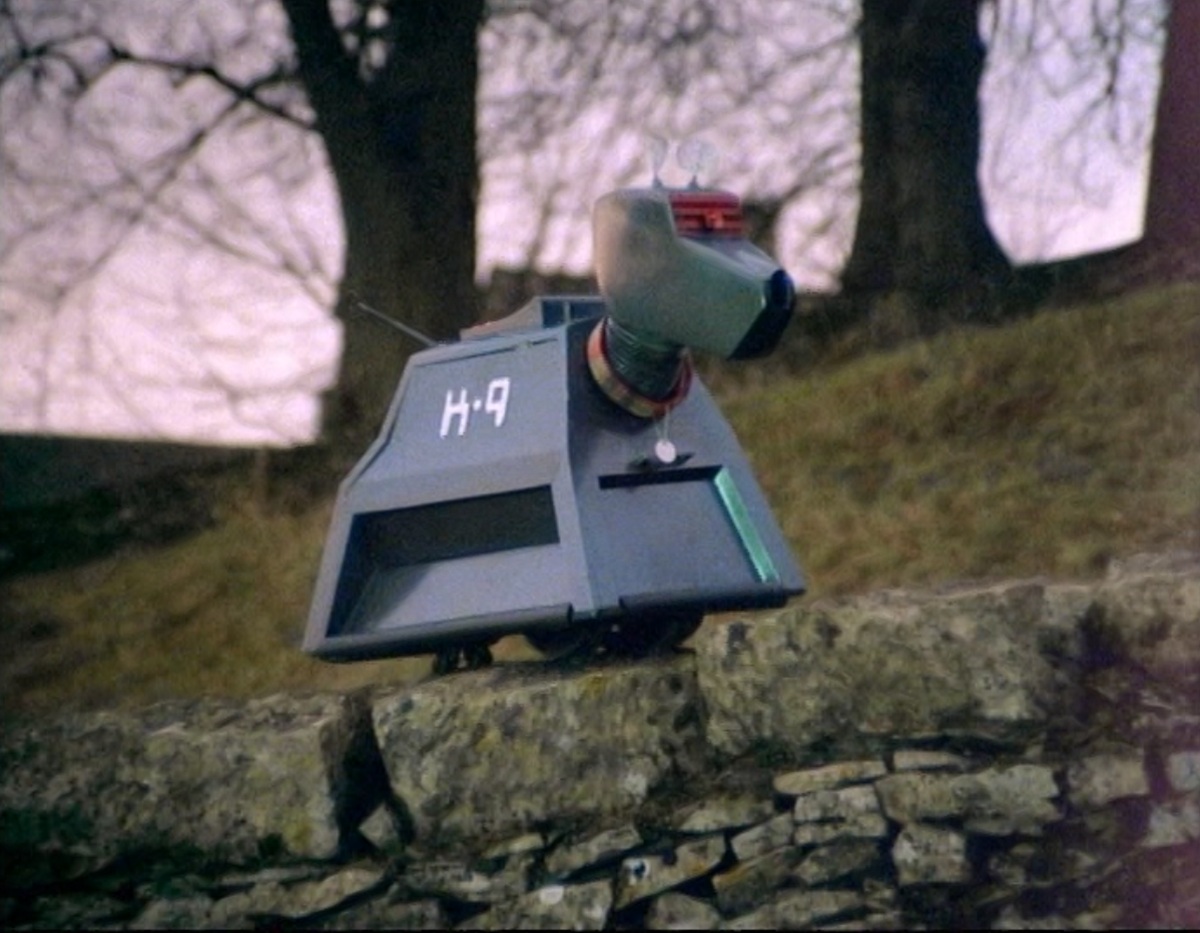
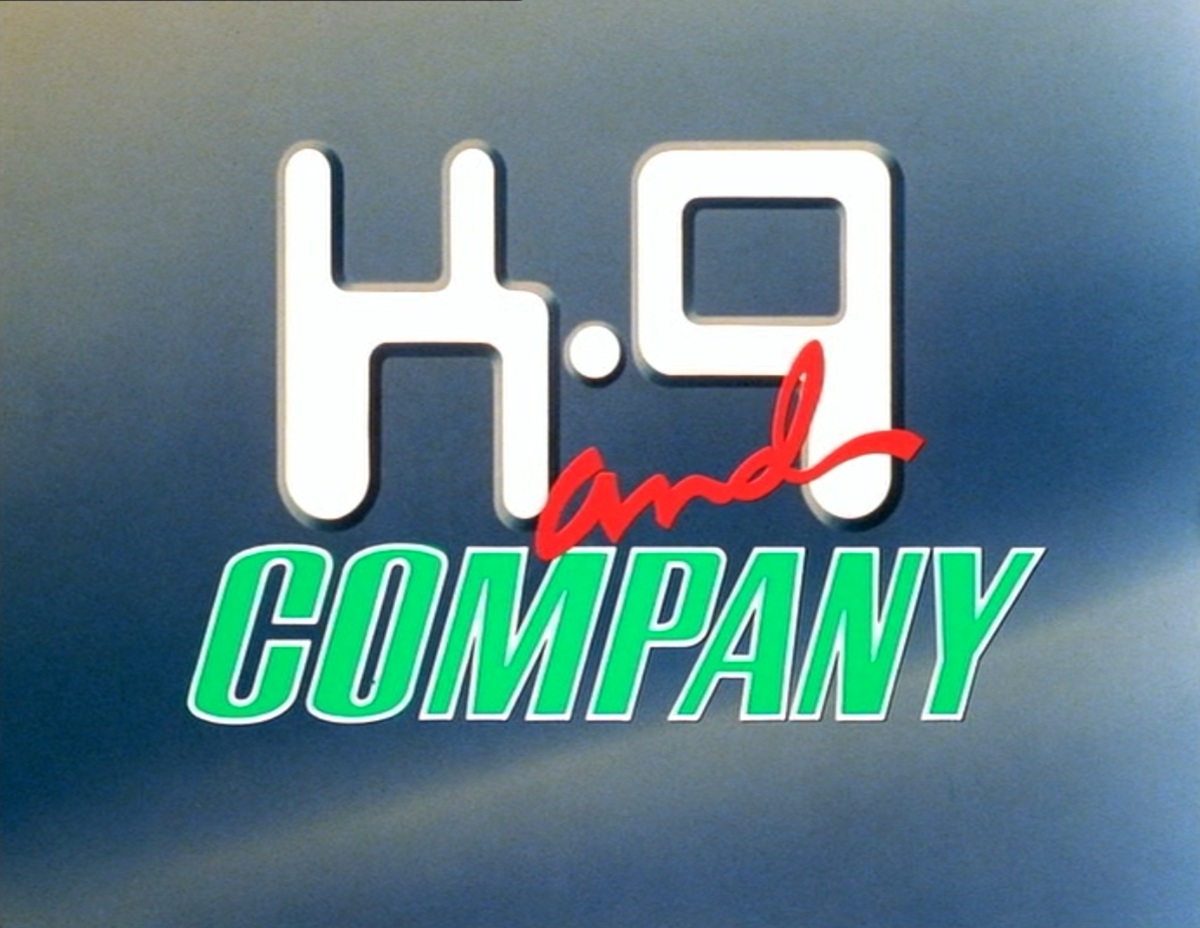
In 2006, The Sarah Jane Adventures kicked off its double-length pilot episode Invasion Of The Bane with twelve seconds of opening titles very deliberately modelled on those of the relaunched Doctor Who, before crossfading straight into a zoom through the solar system as an out-of-vision Sarah Jane wistfully recounted her days spent travelling with The Doctor. A whole quarter of a century earlier, K9 And Company opted instead for over a minute of gobsmackingly repetitive and equally gobsmackingly unspectacular footage that it is difficult to believe that nobody at the time, including JNT, took one look at and made an immediate decision to replace them with something or indeed anything cheap, cheerful and to the point, and more importantly brief. There’s a mock-‘computer’ rendition of K9 in white on green wireframe that it is it is not unreasonable to heavily suggest may have been ‘inspired’ by BBC2’s adaptation of The Hitchhiker’s Guide To The Galaxy earlier that year. There are shots – some of them seem up to three times apiece – of Sarah Jane variously jogging, haring off in a sports car, tapping away at a typewriter and glugging a Sauvignon Blanc on a table outside a village pub and inevitably turning to face the camera with a ‘dramatic’ expression, all of which would have the later unintentional effect of resembling the kind of advert that emphasised the freedom to indulge in everyday pursuits every four weeks while Dr. Alban blared out in the background. Most jarringly banal of all, there is a sequence of staggered zooms in on the two leads sitting on a dry stone wall; Sarah Jane at least just looks like she’s taking a quick mid-jog breather, but K9 – with his cumbersome wheels unsteadily exposed – resembles nothing more dynamic than one of those discreetly dumped outmoded computers now to be found poked into convenient rural corners. Scarcely an enticement, it has to be said, to vouch approval for a putative full series – and that’s not even getting started on the theme music…
Why’s It So Disco?
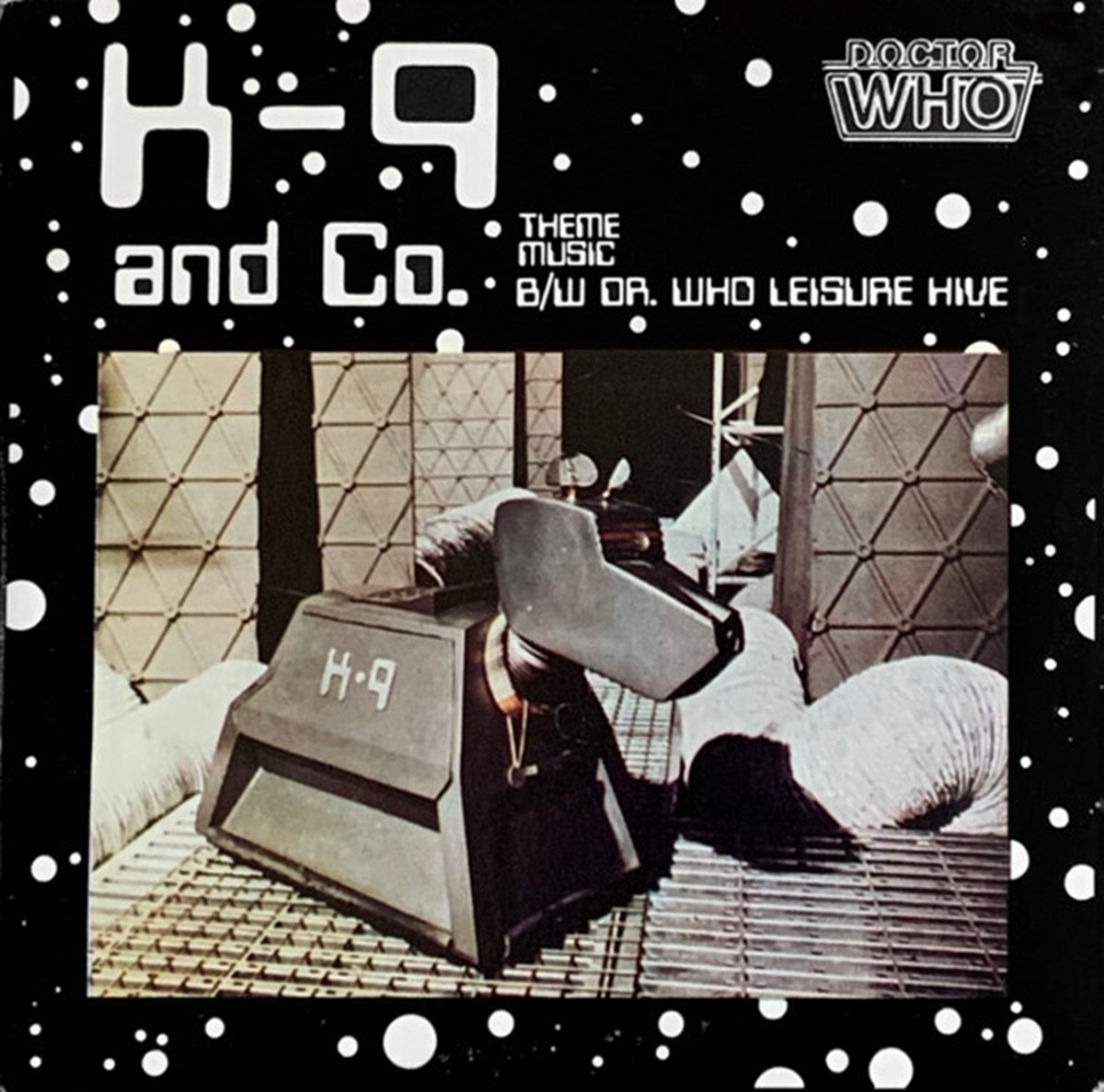
In all due fairness to dance music producer, Doctor Who ‘superfan’ and retainer of off-air recordings extraordinaire Ian Levine and Boomtown Rat/Pogue/Whatever The Singular Of Van Morrison Is by arrangement-providing proxy Fiachra Trench, they had originally composed, recorded and submitted their synthpop-inclined demo for the K9 And Company theme on the understanding that it would be subjected to a more conventional fully orchestrated overhaul. In a move that doubtless seemed like a good idea at the time – if the time in question was two minutes and fifty four seconds – and was almost certainly informed in equal measure by Peter Howell’s overhaul of the Doctor Who theme, economies of scale and the overall ‘Here Comes The Calculator Age’ that the entire production was indolently attempting to align itself with when it could be bothered, JNT elected instead to have Peter Howell record a bolstered version of the original arrangement as it stood, resulting in something that sounded like a frustrated aspirant stadium rock guitarist gatecrashing a Human League instrumental b-side with John Leeson chirruping ‘K9!’ at regular intervals, only sadly not nearly as interesting as any of that might make it sound. In the first of several belief-beggaring examples of a misguided belief that there was phenomenal commercial potential in a special that not only did the BBC not particularly want to make but which the actual act of transmission itself attempted to repel, a cheerfully repetitive full-length version was released as a single both on Levine’s own Solid Gold label and in America via BBC Records And Tapes with some of Howell’s music from The Leisure Hive on the b-side; both of these, alongside Howell’s Doctor Who theme, would find their way onto the BBC Records And Tapes compilation Space Invaded the following year, which incidentally you can find much more about here. In its defence, the K9 And Company theme does at least have a catchy and urgent tune and a considerable degree of eccentric charm, but it is difficult to imagine Tik And Tok performing a routine to it and indeed to imagine very many viewers being compelled to write to Radio Times asking if it was commercially available. Still, perhaps this confused musical jumble that did not seem to suit anyone’s intentions for it was only fitting for a production that was no less self-perplexed in its entirety…
What Was Anyone Actually Doing?
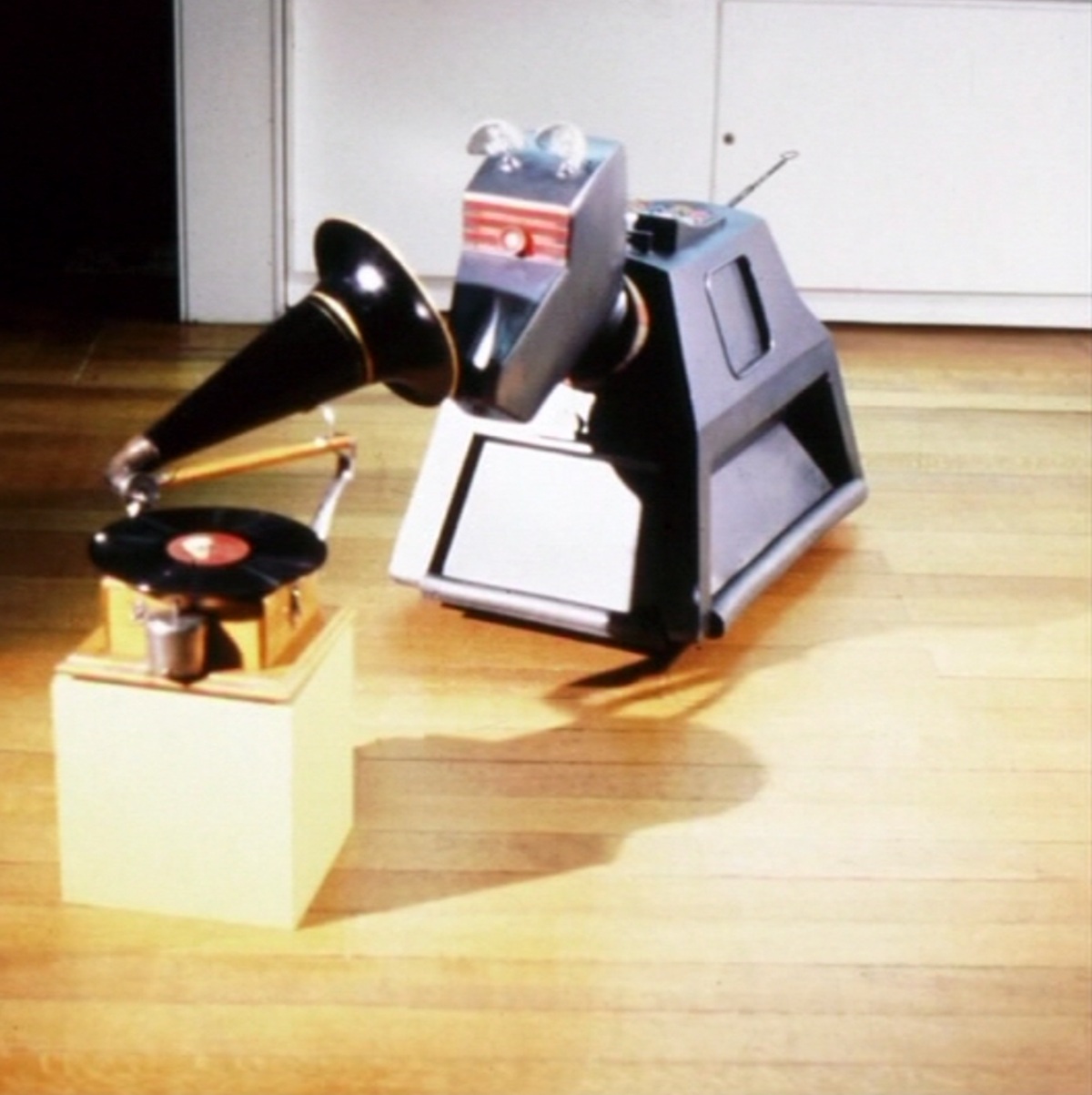
All that anyone ever wanted or needed – or indeed would have expected – of K9 And Company was, essentially, More Doctor Who. A collection of additional extra-curricular adventures starring the still phenomenally popular robot dog, only with no megagalactic scarf although the inattentive would more than likely have assumed and subsequently vigorously insisted that they saw that too regardless. In theory, this could not have been easier and simpler to rattle off the production line; unfortunately, nobody involved seems to have been remotely sure about what kind of programme they wanted to make. Whether this would have remained the case when K9 was seen tumbling across the glen with Jamie McCrimmon is sadly only a matter of speculation, but A Girl’s Best Friend opens by flitting uneasily between a modish attempt at folk horror, admittedly less Tarry-Dan Tarry-Dan Scarey Old Spooky Man than it is Heggerty Haggerty, and the sort of community noseypoking Dotty Old Dear Investigates subgenre that was starting to court popularity courtesy of the likes of Miss Marple and Mapp And Lucia. JNT himself was perhaps ill-advisedly envisaging something more along the lines of The Avengers or Hart To Hart – which may well explain the otherwise bewildering approach of the opening titles – while there is a strong strand of humour of the sort that might more normally have been associated with Timothy Claypole or Charlie Quick, and underpinning it all there is still the LED Checkout meets Tandy TRS-80 technologically up to date overhaul of Doctor Who itself. None of which – unfortunately -ever seem to work in conjunction with each other at any point; there is possibly an extremely tenuous case for arguing that it was some variety of evolutionary forerunner of the supernaturally-tinged weird-out standalone episodes that would come to infiltrate the likes of Juliet Bravo and Bergerac later in the decade, but that would probably test even K9’s artillery of logic gates. In apparently trying to please everyone it inevitably ends up pleasing pretty much nobody, and least of all that hapless share of the audience who had tuned in with no other intention than seeing more of that phenomenally popular friend of other mechanical creatures…
Why Do They Take So Long To Get To K9??
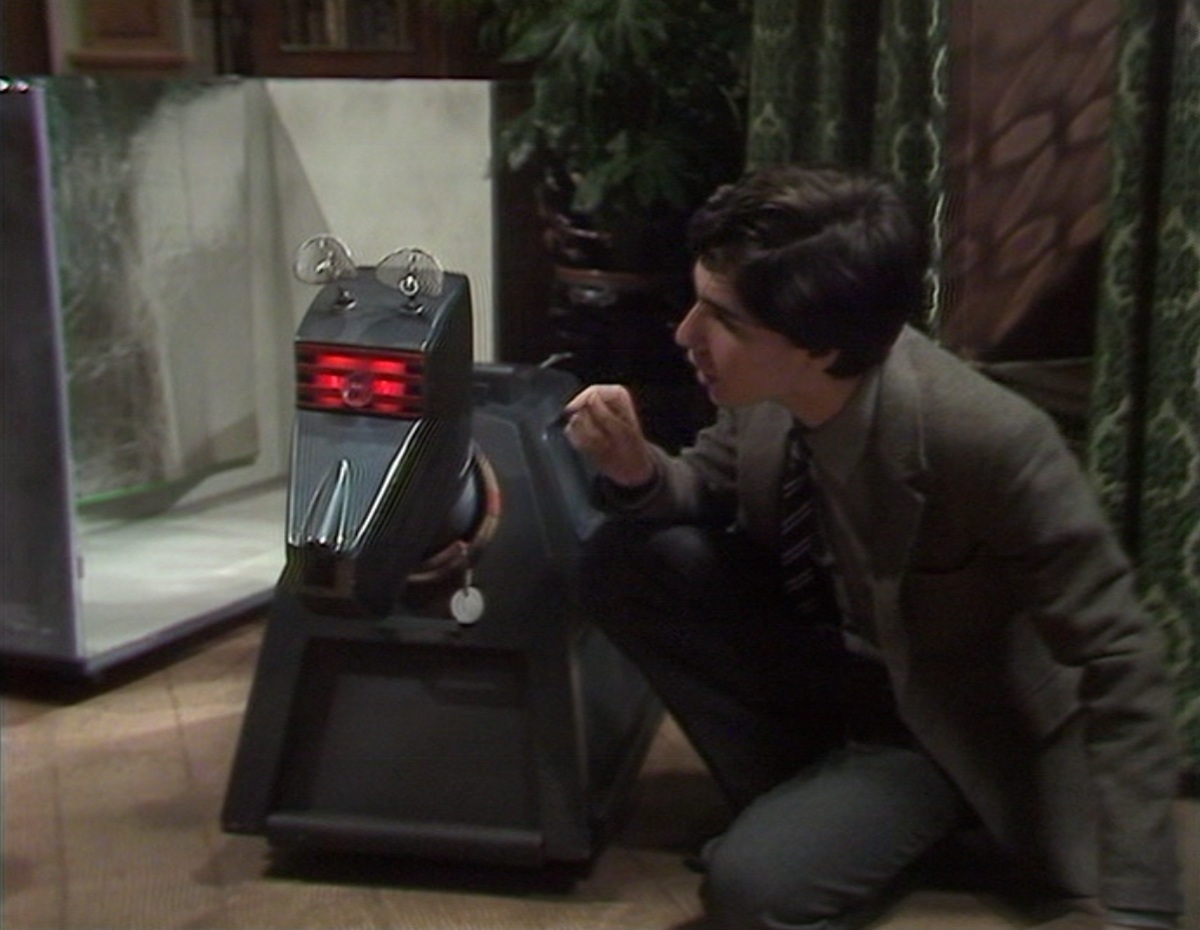
We have already touched on how briskly efficient The Sarah Jane Adventures would later prove in terms of getting straight to the point, and indeed straight to what the overwhelming majority of viewers had actually tuned in to see. Their inaugural teamed-up outing, on the other hand, has a whole five minutes plus of unfamiliar characters failing to introduce themselves properly before we even so much as see Sarah Jane; it is then a further ten minutes before we get to the literally nominal star of the show, and even then there is a good deal of faffing about with him arriving in a cardboard box as if he had reached a Waldo Jeffers level of limit before the audience are finally allowed their fix of full-throttle K9. Even The Five Doctors, despite being almost twice the length and having a small army of characters to reintroduce first, manages to get to them both in a comparatively hasty nine and a half minutes. It is difficult not to sympathise with those excitable younger viewers back in the void between Christmas and New Year in 1982 who had to sit through an avalanche of waffle about that woman in the Post Office and who does and doesn’t run an unspecified business before getting to the main attraction – especially if you actually were one yourself – and even then it’s not like they exactly make straight with the zingers…
A Microchip Distributing Data Through A Motherboard
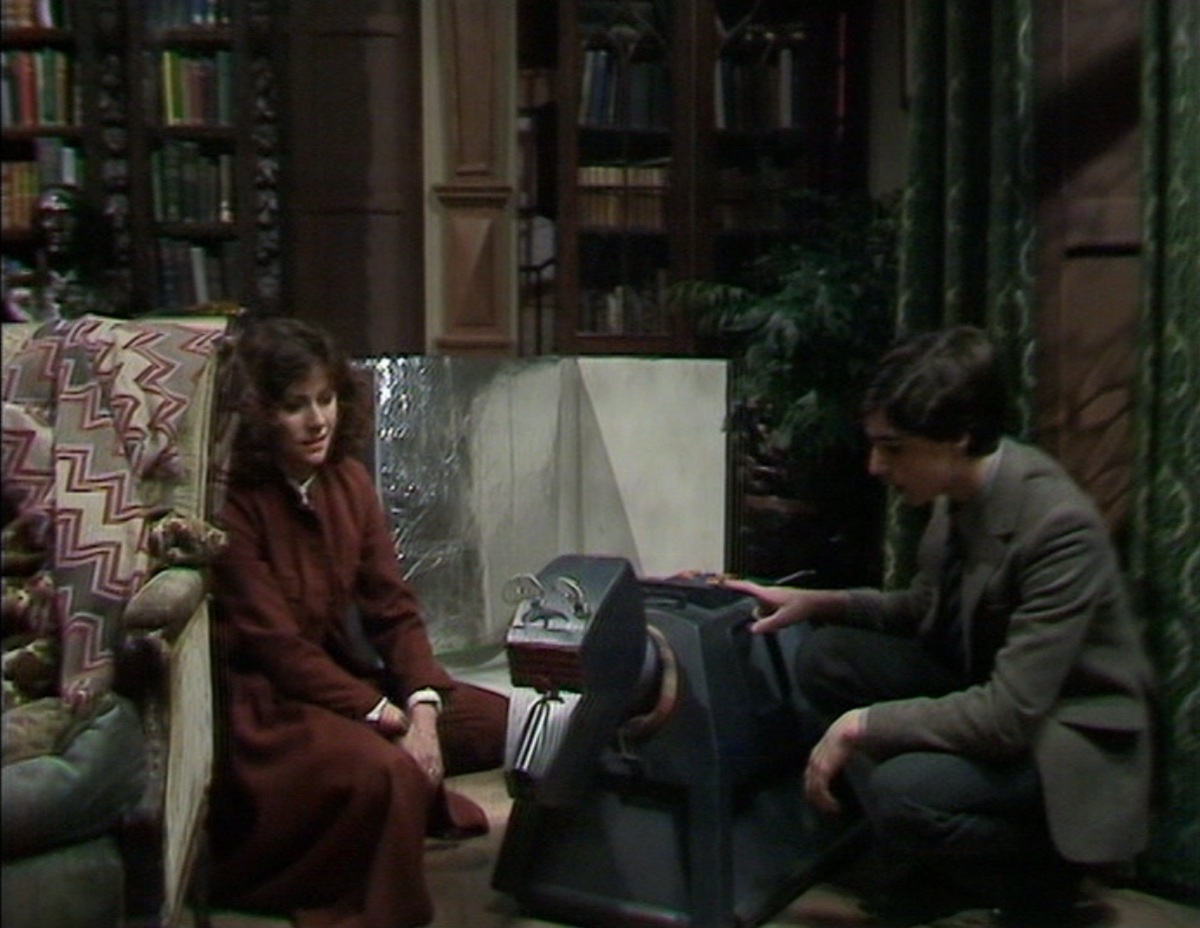
Back in Doctor Who, the technology powering K9 always seemed to sit somewhere between relatively everyday electronic jargon and pseudo-mechanical explanations hammered out on a typewriter by a jobbing scriptwriter with one eye on when the local hostelry threw open its doors. His technical specifications notably included ‘motivational circuits’, a frequency modulator and a photon drive, and indeed on the most recent occasion that viewers had seen him outside of trundling slowly onto magazine shows asking for a plate of oxoric bolts, The Doctor and Romana were lamenting the damage that the Time Winds had occasioned to his ‘memory wafers’. By the time of K9 And Company, however, the emphasis was very much on cutting edge up-to-the-minute microchip revolution-aligned ‘real’ science of the sort that would frequently find itself showcased on TV’s Where There’s Life with Miriam Stoppard and Radio 4’s The Chip Shop, and as such K9’s appearance is heralded – well, after being initially heralded with a wonky echo of the Doctor Who theme that sounds uncannily similar to the notorious arrangement by a conveniently uncredited artist on 1975’s TV Favourites And Other Children’s Songs – by a barrage of technobabble from Sarah Jane’s suspiciously Adric-adjacent sort of semi cousin-ish by proxy Brendan speculating somewhat smugly on K9’s likely componental composition in a manner that suggested he spent his spare time literally consuming back issues of Personal Computer World. Brendan firstly astutely deduces that K9 must be equipped with a Tri-State Bus Driver – “a microchip distributing data throughout a motherboard” as he helpfully explains to Sarah Jane – which is fairness is both a reasonably adequate simplification and a reasonably topical area of microprocessing concern. He also surmises that this will be connected to a UART – Universal Asynchronous Receiver/Transmitter – which at that point at least was technically a peripheral facilitating variable data transmission speeds between devices, but research into its integration with internal circuits had been ongoing since its initial development in the early sixties. There is also talk of a Self-Charging Nuclear Battery – of which even a rough approximation was only credibly developed within the past eighteen months – and a Holographic Memory, of which Brendan remarks “there’s this hunk of crystal and its so microscopic they need a laser beam to scan it”. This, as Robert Robinson would doubtless have been delighted to relay on Ask The Family, has yet to progress beyond prototype stage. So, well, technically, what might on first listen sound like a load of florid technologically improbable gibberish was in actuality not just accurate and contemporary but even forward-thinking, even if it could not quite help K9 to maintain his balance more effectively. Not that many Doctor Who fans have either especially noticed nor cared, though…
Continue Honking, Brendan
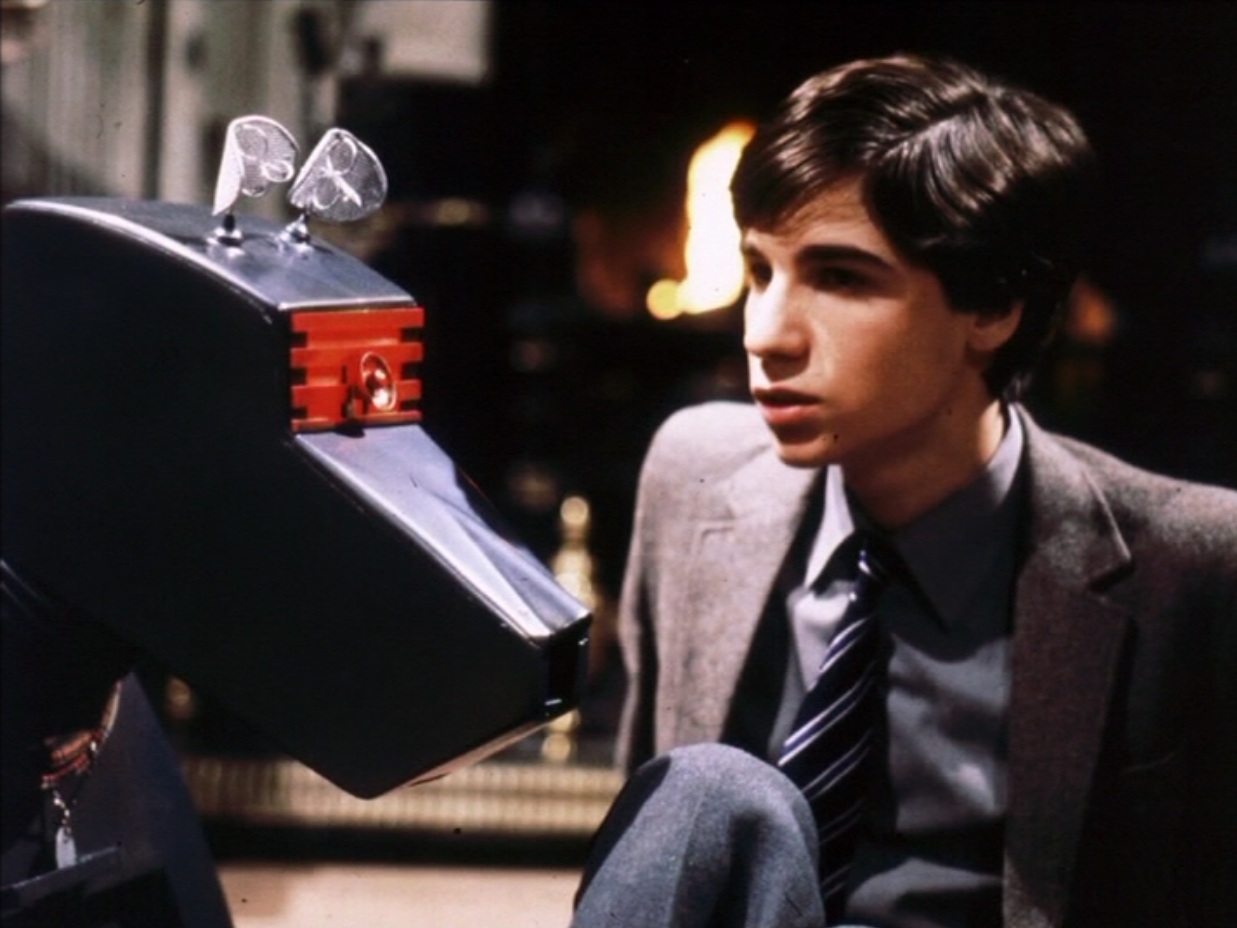
If K9 And Company in and of itself has any form of a legacy at all, it is that its mere existence illuminates both the most positive and negative aspects of Doctor Who fandom. On the one hand, while the rest of the viewing audience might guffaw heartily at the stilted lines and clumsy setups when presented out of context from somebody’s stuttery YouTube upload on a multi-hour clip show – and indeed certain individuals may well have been tempted to suggest those opening titles as a foundation stone of ‘bad’ television on the promise of the shiny Channel 4 dollar only to discover that Katie bastard fucking Hopkins would be amongst those doing the performative snickering and ask for their name to be removed from the credits and swear a solemn oath not to hold Moreton Harwood up to indiscriminate public ridicule ever again – to Doctor Who fans it is our bewilderingly conceived misfire and while we may poke endless fun at it, we still love it not just in spite of but because of its flaws, and woe betide anyone who comes at it with full sneer mode engaged. On the other, one recurring target of said fun-poking is Brendan, who in popularly accepted estimation is not just several leagues below Adric in the awkwardly-acted juvenile irritant stakes but held in even lower regard than the titular antagonists of The Twin Dilemma and any hint of dissent is immediately swamped by guffawing references to the line about him ‘honking’. Admittedly no attempt will be made here to defend the bafflingly conceived and written character, the substantial amount left to be desired in his dialogue and its delivery, and indeed the explication-beggaring honking itself, but nonetheless it needs to be stated with thundering emphasis that none of this is in any capacity poor old Ian Sears’ fault. It is the existential burden of Doctor Who fans that, with only a few venerable exceptions, they are unable to see the career of anyone in fr0nt of the camera, behind the camera, or even nowhere near the camera whatsoever by any other yardstick or through any other prism than their proximity to a certain long-running parade of frock coats; to this end, there is a widespread misconception that the beleaguered Brendan-portrayer was some form of overgrown child actor whose list of credits began and ended with an unloved festive one-off. In fact, even aside from his subsequent enormous success as an editor – including a lengthy engagement as Penn And Teller’s programme-trimmer of choice – Ian Sears was a regular sight on the small screen across the eighties, not just in supporting roles in the likes of Hot Metal, French And Saunders, This Is David Lander and Educating Marmalade but also starring as one of the leads in decidedly un-Brendan BBC ‘Fatcher’s Britain’ youth prospectlessness-fest Johnny Jarvis, essaying a youthful version of the pivotal historical gamechanger for a sizeable chunk of the mega-budgeted King David, donning the speech bubbles as one of Amanda’s many problem page-troubling love interests in S.W.A.L.K. and perhaps most importantly regularly appearing as Eric Swan, a nightwatchman encumbered with an unfortunate tendency towards mid-shift lycanthropy, in Nightingales, a magisterially odd sitcom that could only ever have happened on Channel 4 in the days when Katie Hopkins would not have been allowed anywhere near it. Still, stop honking Brendan lol lol, apparently. Meanwhile, speaking of juvenile cast members…
You’ve Another Five Seconds, Say Something About Being Able To Use A Cup Of Tea
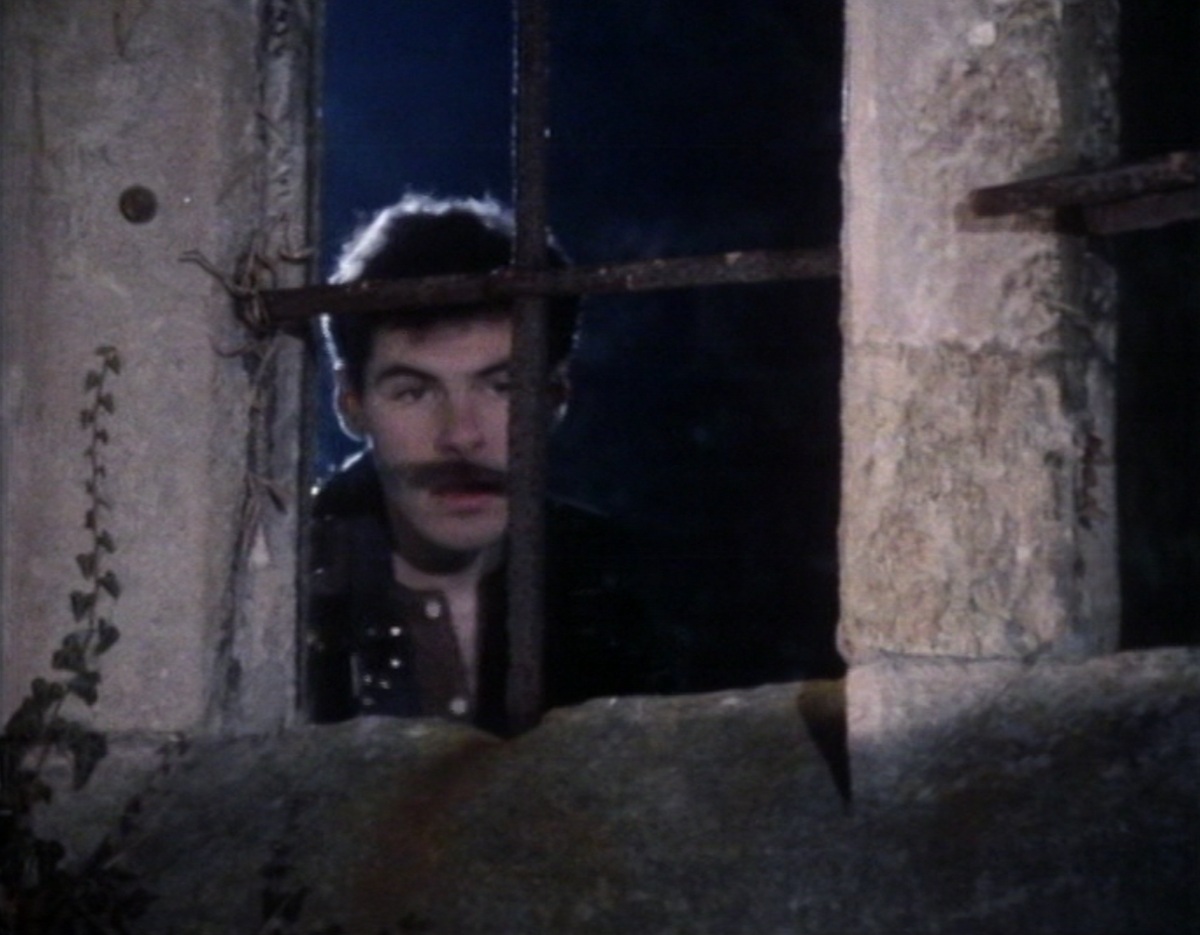
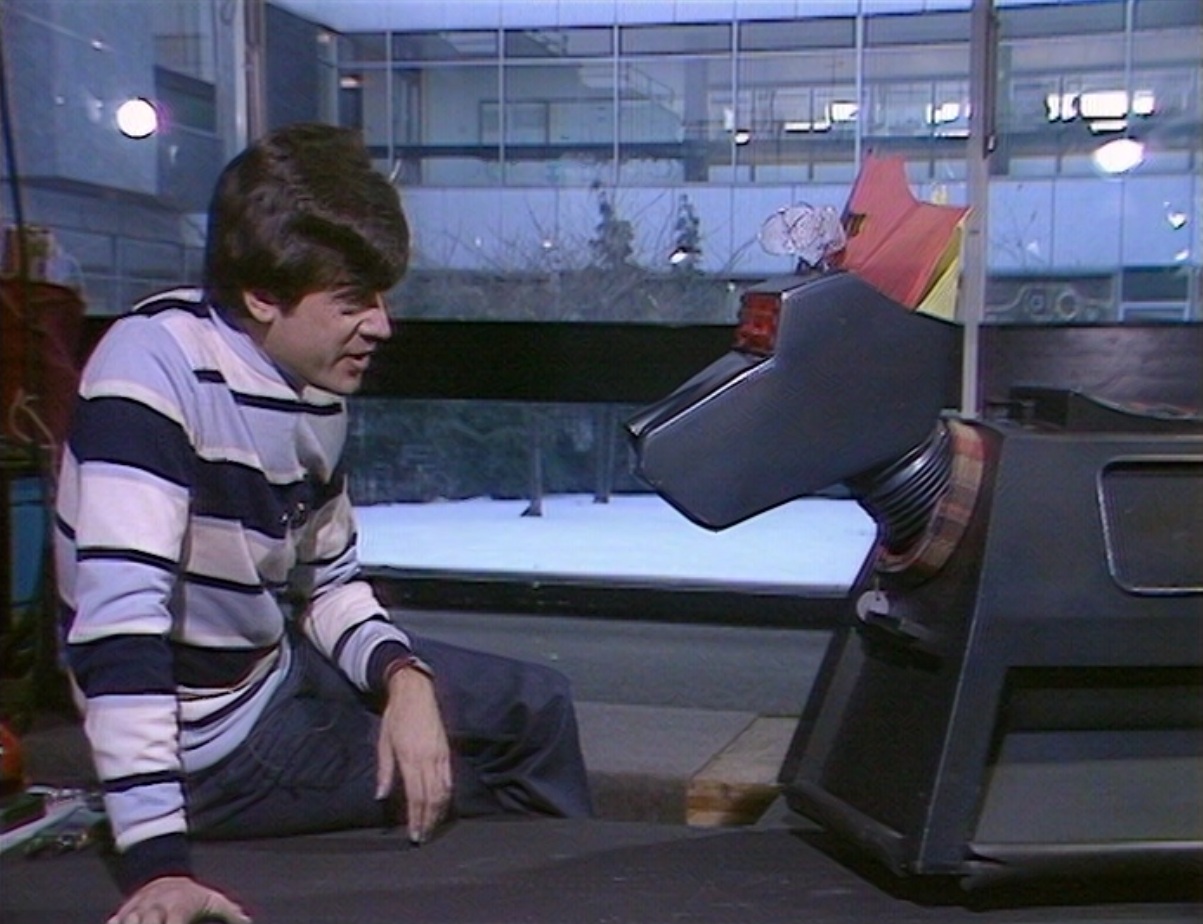
Although occasional aberrations – from green mohicanned squatter ‘Kermit’ in Sorry, I’m A Stranger Here Myself to indeed sundry assorted ‘dole’-consignees in Johnny Jarvis – that at least bore a trace surface resemblance to an actual real life punk rocker would sometimes find their way through, it has to be said that television in the late seventies and early eighties was anarchically overrun by a rampaging mob of what can only be described as a geography teacher’s idea of a ‘punk’. Part B.A. Robertson, part that animated Sid Vicious from The Great Rock’n’Roll Swindle and part everyone that Stewart Lee would later find himself mistaken for a ‘let themselves go’ version of, and with a penchant for slipshod rockabilly quiffs and leather clobber liberally decorated with proto-VERY METAL studs, the semi-articulate tormentors of their less dystopia-addled peers yet inveterate helpers across the road of old ladies could be found pretty much everywhere, whether it was Brookside‘s abrasive co-Korg plonker in Gordon Collins’ synthpop duo Mark Gossage, stand-in Adrian Mole antagonists occasioning him to temporarily put aside his differences with Barry Kent to fight the bigger foe, assorted one-shot Grange Hill ‘nutjobs’ requesting ‘a word’ with Pogo Patterson or their ultimate evolutionary manifestation the original Mark Fowler from EastEnders, or indeed K9 And Company‘s own rebel without a copy of Live At The Roxy Peter Tracey. Initially coerced into doing the bidding of the local coven members courtesy of the threat of a second offence-occasioned stay in one of Willie Whitelaw’s ‘Short Sharp Shock’ bootcamps, Peter’s conscience eventually got the better of him and caused him to attempt to warn off Brendan and Sarah Jane and also fall over a lot for some reason, although for purposes best known to himself he would ultimately neglect to switch sides and elect to join in with the chant-urged ritual shenanigans and win himself that uncoveted one-way ticket to HMP Hollesley Bay regardless. Perhaps he ought to have had a good listen to what they were expecting him to participate in first…
Hecate, Hecate, Ra Ra Ra!
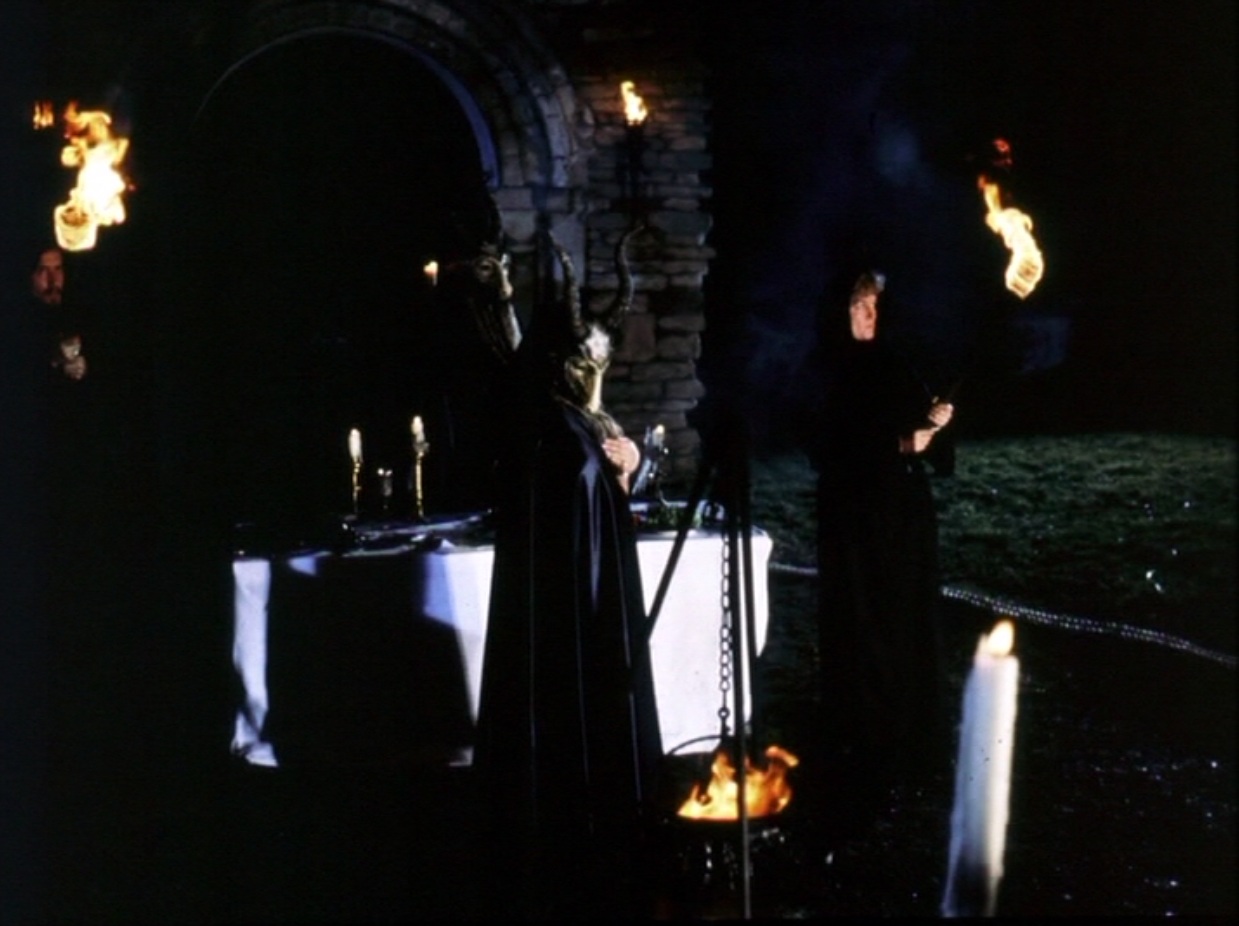
In amongst the expected exhortations to invest in a pre-movie King Cone, Westler’s Hot Dog or bag of Crusader Nuts – contingent of course on whether ‘Crusader’ had ‘any’ – anyone combining their festive celebrations with a quick trip to see E.T. The Extra-Terrestrial and/or Gandhi over the Christmas of 1982 would no doubt have found themselves assailed by what would prove to be a surprisingly enduring sales pitch for the then-cinematically ringfenced Butterkist popcorn. Depicting a content-propulsing bag of Butterkist against a static blue sky reminiscent of the opening caption of The Simpsons, it opened with the unmistakeable ambience of a baseball stadium and a low gravelly voice chanting ‘Butterkist, Butterkist, Ra Ra Ra!’, joined by a second repeating the phrase in a higher and more urgent tone, then by a third with a more melodic off-note lilt, then a fourth as they harmonised on a climactic sign-off of ‘Butterkist – PHEEP – Ra! Ra! Ra!’. The extent to which it encouraged additional sales of the unnecessarily noisily-bagged confection is open to conjecture, especially when it would have necessitated any putative purchaser missing that all-purpose advert for local glaziers where a cartoon woman posed behind a showroom window in a bikini and a cartoon businessman in his suit and tie wolf-whistled as they sprinted to the foyer, but in cementing the refrain into everyday playground parlance it certainly fulfilled its role more than admirably. Its infiltration was evidently not limited to schoolyards either, as while the less reputable denizens of Moreton Harwood are busily preparing for the optimal moment to sacrifice Brendan to appease the gods of being a bit like the plot of The Wicker Man but not quite, they accompany their efforts with a constantly repeated chant of ‘Hecate! Hecate!’ which could not further invite an adjoined ‘Ra Ra Ra!’ if it tried. Mind you, K9 could probably have proved a dab hand at heating popcorn with that energy blast of his, but that was curiously missing from his specifications in an equally curious item of tie-in merchandise…
Once Upon A Time, There Was A Robot…
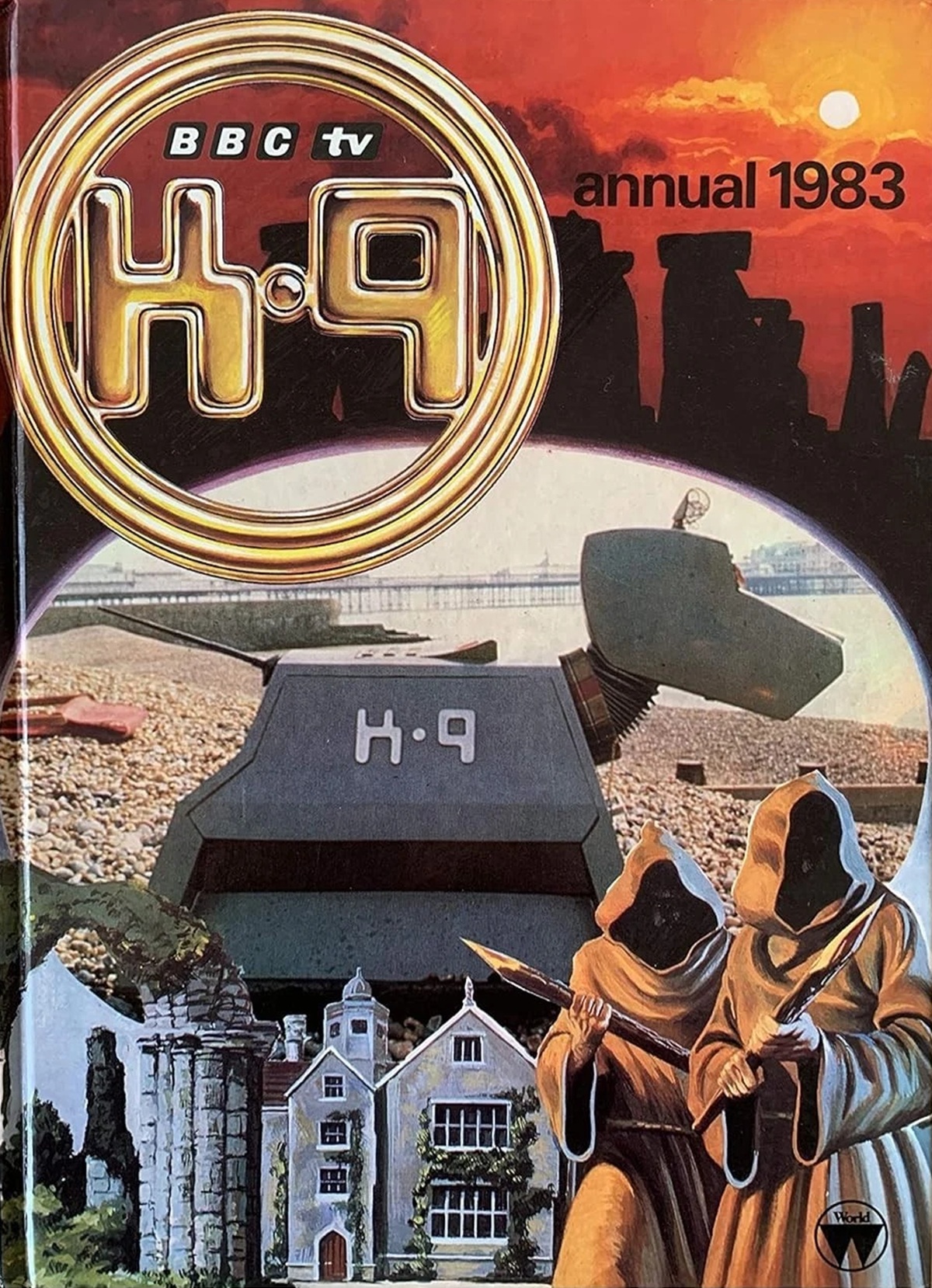
Released to corner the Christmas market an entire year after the broadcast of A Girl’s Best Friend – we can safely assume that JNT had presented them with a somewhat more positive spin on the prospects of an ensuing series – The K9 Annual 1983 was the work of World Distributors, a massively prolific gift book concern who were also responsible for the long-running Doctor Who annual with its reassuringly stolid menu of unrelated features on space and science punctuated by partially intelligible text stories accompanied by half-page attempts at rendering Tom Baker using publicity photographs and tracing paper, and at one point also Terry Nation’s Dalek Annual, which combined reprints of the TV Century 21 strips with new text stories and… something about them doing tricks with the telephone directory? Hopes were probably not high for this somewhat opportunistic yet chronologically adrift effort, but in fact The K9 Annual 1983 and its endearingly dominant theme of Men In Hoods is more enjoyable than it has any right or reason to be. There are tons of surprisingly decent and surprisingly juvenile reader-suitable horror-tinged text stories with splendidly evocative names like The Shroud Of Azaroth, Hound Of Hell and The Curse Of Kambo-Ala – although it surely would not have escaped anyone’s attention that Horror Hotel essentially reused the plot of A Girl’s Best Friend only with a glamorous blonde teenage girl standing in for Brendan and displaying no inclination towards ‘honking’ whatsoever – and a nicely effective introduction to Sarah Jane Smith and K9 that even displays at least a basic awareness of and concern for continuity, even if they do describe him as “a candidate for MENSA if they had openings for metal members”. The standard features on standing stones, unexplained mysteries, UFOs and The Loch Ness Monster seem less incongruous in this content, a detailed history of robots in fiction – bizarre attempts at incorporating Pinocchio and Coppelia into proceedings aside – traces the phenomenon all the way from Jules Verne, Edgar Allen Poe and Karel Capek all the way to The Black Hole and, erm, ‘Rab’ from Logan’s Run, and there is even a thoroughly mathematical look at the science behind must-have Christmas present du jour the Rubik’s Cube, accompanied by smudgy photographs of footballers Emlyn Hughes and Andy Gray looking defeated by their attempts at solving a side, and ‘schoolboy’ David Milburn looking both very pleased with his record-breaking fifty four second cube-solvage and like he ought to have left school several decades ago. Most pertinent, however, is a feature on ‘The Shape Of TV To Come’, which predicts the evolution of satellite and cable broadcasting, the future of ITV and the BBC, the emergence of dedicated channels and even the capacity to send a sort of ‘electronic mail’ through your television with remarkable accuracy. Although somewhat conspicuous by its absence from any of this forecasting of a multichannel future is any suggestion of any further instalments of K9 And Company.
YOU WISH WE A MERR…
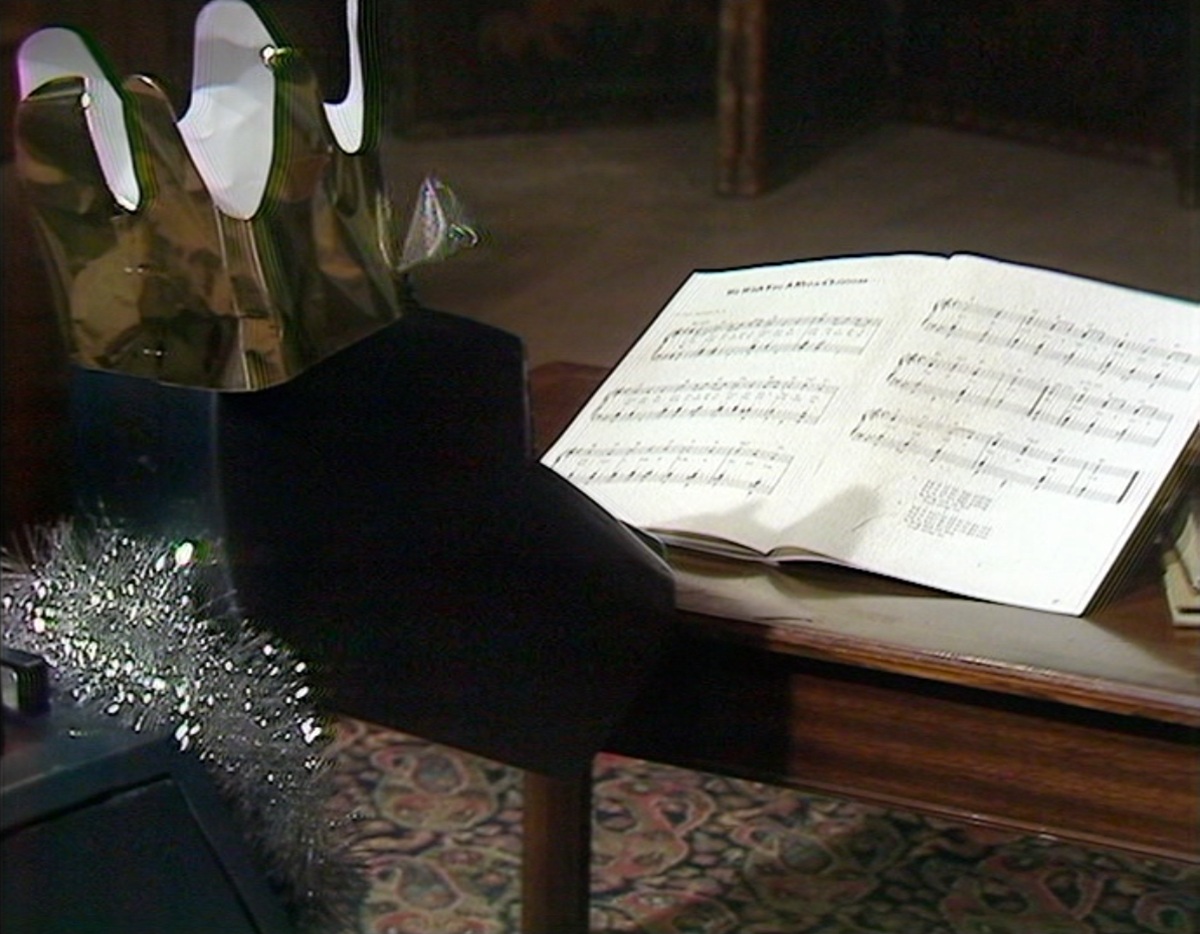
Famously, the first that audiences saw of the brand new Doctor and his brand new-ish team of travelling companions was in the BBC’s ‘Merry Christmas’ trailer for 1981, in which they joined the casts of The Two Ronnies, Tomorrow’s World, Hi-De-Hi!, M*A*S*H, certain now unmentionable gentlemen and even The News in issuing an on-set and in-character festive salutation to viewers, complete with Peter Davison ‘inadvertently’ clocking Matthew Waterhouse in the face. K9, on the other hand, is mysteriously absent from this parade of yuletide highlights, and there is probably more explanation for this within K9 And Company itself than in any amount of ‘memos’ distributed amongst the BBC ‘top brass’. A Girl’s Best Friend concludes with one of those all too common purportedly hilarious moments in which K9 momentarily divests himself of all of the skill, intelligence and reasoning he is called on to almost casually display during the rest of story, stumbling to decipher the lyrics of We Wish You A Merry Christmas from some sheet music left handily lying around. It is very evidently the lyrics he is struggling with too, as he appears to have the musical notation already interpreted and ready to electronically render, and quite how this would square with his putative acceptance into MENSA is quite frankly beyond rationalisation, but it certainly explains why he wasn’t deemed worthy to appear alongside Kenny Everett extending wishes for a dynamite Christmas, a jolly New Year and all those festive things to all and sundry. Oh well, perhaps if we’d ever got that episode where he joined Dodo for a quick rendition of The Ballad Of The Last Chance Saloon…
Anyway join us again next time for a missed opportunity for promoting Terry’s Harlequin, King Frog, Ruler Of The Universe and the thorny question of whether Tegan ‘got’ any…
Buy A Book!
There’s lots more about the K9 And Company theme – and plenty more about tons of other of Doctor Who-related releases besides – in Top Of The Box, the story behind every single released by BBC Records And Tapes. Top Of The Box is available in paperback here or from the Kindle Store here.
Alternately, if you’re just feeling generous, you can buy me a coffee here. Get that sheet music OFF the coffee table, K9. Unless you want a huge mug ring on it.
Further Reading
You can find more about how K9 found himself the subject of such popularity in the first place in It’s Still A Police Box, Why Hasn’t It Changed? Part Sixteen – Marco! Herrick! Terry Lee! Garry Tibbs And Yours Truly! here.
Further Listening
There isn’t too much about K9, but there’s plenty about long-lost cinema adverts in Looks Unfamiliar with Garreth Hirons here.
© Tim Worthington.
Please don’t copy this only with more italics and exclamation marks.
 Tim Worthington