According to bass player Geezer Butler, Black Sabbath essentially apparated into existence in the closing months of 1969 when the struggling Birmingham beat band, unable to find a foothold in a music scene that was literally progressing away from beat music at an almost supernatural speed – even if the music itself was technically getting slower – happened to look out of the window of their rehearsal room and spotted a line of people queueing around the block for the local cinema’s late-night gothic horror double-bill. Their astute summation that punters would form a similarly orderly queue in order to be terrified out of their wits by music rather than movies would prove more than lucrative for Black Sabbath and the vast number of artists who trod solemnly in their wake, but although it is a perfectly understandable assumption to arrive at, the frequently stated assertion that this was the first real meeting at a moonlit crossroads between pop music and the paranormal is not strictly the case. Even aside from the in itself frighteningly proliferate volume of novelty horror-themed rock’n’roll discs, throughout the sixties everyone from Donovan and The Kinks to Julie Driscoll, Brian Auger And The Trinity and The Yardbirds decorated their songs with malevolent dischords and reverb-voiced references to witches, occult rituals and even Count Dracula and Victor Frankenstein and indeed his pedant-adulated ‘Monster’ themselves. What emerged – as also reflected everywhere in sixties popular culture from The Pan Book Of Horror Stores and The Sorcerers to long-lost BBC2 thriller Witch Hunt – was what can only be described as a sort of ‘Light Programme Horror’, in which ancient superstitions and looming terrors ran up against self-consciously modern stylings and production techniques, and it really does seem a little unfair that these flashes of erratic Beatle-jacketed genius are now widely overlooked as mysteriously-inscribed totems of popular cultural jump-scares in favour of everyone reaching straight for Thriller, Ghostwatch and Paul Daniels saying “now nothing can possibly go wrong ladies and gentlemen with this here trick involving the medieval torture device known as the ‘Iron Maiden’ or at least – not a lot”. So to redress the balance slightly, here’s a collection of hit beat discs that probably did not find themselves being played last thing at night on the newly-launched Radio 1, including baroque pop interpretations of macabre short stories, a plethora of hot single witches in YOUR area, Mods zipping to The Marquee via Vespa Broomstick, the BBC Radiophonic Workshop terrifying listeners on disc even more than they were usually allowed to on the radio, and a beloved television celebrity apparently intent on sacrificing a goat, along with some thoughts on the extent and limitation of Sonny Bono’s sense of humour, how Radio’s ‘Man In Black’ worked when you couldn’t actually see what he was wearing, and why the scariest detail about a pop song chronicling the summoning of the forces of darkness is its present day price tag. Incidentally there’s a lot more about the ‘Light Programme Horror’ phenomenon – which is a real phenomenon because I have decided it is – in Keep Left, Swipe Right, available both in paperback and from the Kindle Store here. So stock up on garlic and Holy Water, get the fire burning and cauldron bubbling, and settle in for some of the spookiest records that you never knew existed – and you never know, you might glance across the room to find that your radio isn’t even plugged in…
You can listen to Journey To The Unknown here, and find ornately handwritten background notes on the featured musical selections, as translated from the original ancient cabalistic runes, below…
Harry Robinson – Journey To The Unknown
As memorably heard over footage of an unattended fairground suddenly swinging into full self-operating waltzer-hurtlage at night, the creepily whistle-driven theme music from Journey To The Unknown, Hammer’s now sadly little-seen inappropriate-board-game-inspiring 1968 ITV anthology of tales of abandoned libraries, malevolent binary code and disregarded family curses, which was written and recorded at around roughly the same time as Harry Robinson was orchestrating River Man for Nick Drake. It did not exactly set the template for the smooth transition into the seventies that Hammer had hoped for, but you can find more about what one of the directors who worked on Journey To The Unknown did next – and it really is probably not what you would have expected – here.
Black Widow – Come To The Sabbat
Possibly better known now from its appearance on the legendary CBS sampler album Fill Your Head With Rock – where it was arguably not even as terrifying as the bloke from The Flock’s wildly flailing hair on the front cover – an inappropriately catchy incantation chanted in the hope of summoning a local actress-portrayed scantily clad demonic succubus type in the Mary Whitehouse-condemned stage show of a band who looked and frankly sounded like The Kinks had been cast in a Hammer film. Which to be honest really ought to have happened, even if the film was just retelling the plot – as much as there was one – of Wicked Annabella. Black Widow would continue to court controversy and minor chart incursion into the early seventies, when they disbanded and one of their number went on to initiate a very different kind of terror by forming Showaddywaddy.
Roy Castle – Voodoo Girl
In the days before he became more widely recognised for his persistent attempts at breaking his own tap-dancing trumpet-playing records, Roy Castle was quite the regular in British low budget yet high imagination films of the early sixties, and in one segment of Amicus’ 1965 spine-chiller anthology Dr. Terror’s House Of Horrors he played an inevitably trumpet-toting jazz musician whose proto-Graceland ‘borrowing’ of traditional forbidden rhythms inevitably comes back to literally haunt him. If you think that’s an unexpected celebrity juxtaposition, one of the other segments featured Pop Picking’s own Alan Freeman as a horticulturalist whose grounds are overrun by a rapidly growing vine with a pronounced aversion to pipe smoke. This somewhat jarringly cabaret-styled tie-in outbreak of swooning over a girl who requires a sacrificed goat before she will go on a date with you – possibly not a gambit to try on Bumble – is in fact a vocal version of the somewhat more wild and undisciplined instrumental rave-up that Roy performs with The Tubby Hayes Quintet in the movie itself, which you can find a good deal more about here.
The Bonzo Dog Doo-Dah Band – Boo!
An unreleased single from 1968 with Neil, Vivian and company unconvincingly trying to convince themselves that things that go bump in the night are simply a figment of their own easily spooked imagination complete with wall-walking cameo appearances from famous literary spectres, as purportedly consigned to the vaults when its intended double a-side – a slightly less than reverent cover of Cher’s Bang Bang (My Baby Shot Me Down) – ran into clearance issues, although it’s debatable how comfortable Radio 1 would have been with certain of the lyrics if it had been released. Even if Kenny Everett would almost certainly have been very comfortable with some of them indeed, to the extent that he would probably have played it around fifteen times per hour. Incidentally you can find much more about The Bonzos’ unpredictable escapades at Radio 1 – including, of course, performances of Monster Mash and Look Out, There’s A Monster Coming – in Fun At One here.
At Last The 1948 Show Cast – Witch Restaurant
A quick burst of Hamlet-skewed eaterie-situated palatability-testing comedy of manners, complete with the requisite designation of spookiness from The Lovely Aimi MacDonald, drawn from the surprisingly little-acknowledged album based on John Cleese, Graham Chapman, Tim Brooke-Taylor and Marty Feldman’s once almost entirely lost and now almost entirely extant Python-prefiguring ITV sketch show At Last The 1948 Show. Which of course ran in tandem with Michael Palin, Terry Jones, Eric Idle and Terry Gilliam’s similarly Flying Circus-foreshadowing ITV children’s sketch show Do Not Adjust Your Set, which similarly of course also featured none other than The Bonzo Dog Doo-Dah Band, performing amongst other numbers Monster Mash, Look Out, There’s A Monster Coming and possibly even in one of the now inevitably lost editions Boo!. You can find much more about Do Not Adjust Your Set in The Golden Age Of Children’s TV here.
The Sonics – The Witch
Snarling saxes and door-demolishing drums to the fore as the wildest garage band of the lot rather shamelessly draw ‘inspiration’ from the Batman theme in order to issue due warning of a new girl in town who is going to, ahem, ‘make you itch’. Reputedly while this was being recorded, the studio volume meters were uniformly and consistently in the red and no attempt at reducing the band’s volume was successful in bringing them down, and astonishingly it is not even their most exhilaratingly speaker-testing single; see – and to be honest some of you with a more sensitive ear might prefer to see rather than hear – Psycho, Shot Down, Strychnine and Santa Claus, a turntable-rattling lament for finding your stocking empty on Christmas Day that you can find more about here.
Sharon Tandy – Daughter Of The Moon
The sharply-fringed Mod Girl style icon and Hold On semi-hitmaker joins forces with her fellow fuzz pedal-pounding Carnaby Street shop-hoppers Les Fleur De Lys for an ode to her worryingly enthusiastically vouchsafed broomstick-bothering proclivities – which include, apparently, drinking red wine from a tin – and associated causing of the neighbourhood children to run and hide at the merest suggestion of her lunar-worshipping presence. Not, as they say, entirely in the Cilla Black mould.
The Rattles – The Witch
One of a surprisingly large volume of hard-rocking European prog outfits who unexpectedly scored a stray UK top ten hit at the turn of the seventies – not that you would know that English was not their first language from lyrics like “it must be so bad that the witch does care” – the enduring German ensemble even made it as far as a surprisingly extant Top Of The Pops appearance in which it will probably come as little surprise to learn that lead vocalist Edna Bejerano went all wildly-angled thermal image camera-derived multicoloured during the cackly witch bits, which was handily intercut with footage of an audience who hadn’t quite worked out how to dance to it. There really were more than a few hit singles about witches around at that time, and you can find some further thoughts on the reasons behind this unlikely crooked-hatted chart incursion here.
HP Lovecraft – The White Ship
Howard Phillips Lovecraft’s unremittingly bleak 1919 contribution to The United Amateur about a lighthouse keeper haunted by a phantom shipwreck – or is it? – adapted as an ornate folk rock story-song by a band who not only set several of his celebrated short stories to music but also confusingly adopted his name as theirs, and even more further confusingly still used it as the name of all of their albums. Subsequently issued in the UK as a truncated conclusion-averting single early in 1968 which, with the best will in the world, was scarcely likely to set sail for chart battle with Cinderella Rockefella and Plastic Penny. Incidentally there is a lot more about HP Lovecraft the band in Keep Left, Swipe Right here. You honestly might be quite surprised at how and why they put in an appearance.
White Noise – Black Mass (An Electric Storm In Hell)
Classical musician David Vorhaus and Delia Derbyshire and Brian Hodgson of the BBC Radiophonic Workshop joined oscillator-toting forces to form this hugely influential early electronic rock outfit, whose astonishing 1969 album An Electric Storm featured plenty of blood-curdling moments in amongst all of the dirty phone calls in German and songs about, erm, poorly kept kitchens, including this ominous chant delivered in anticipation of the manifestation of, apparently, a load of tape loops of delay-treated drums and the sound of some banshees falling down a lift shaft. We’ll be hearing plenty more from them in a moment, though.
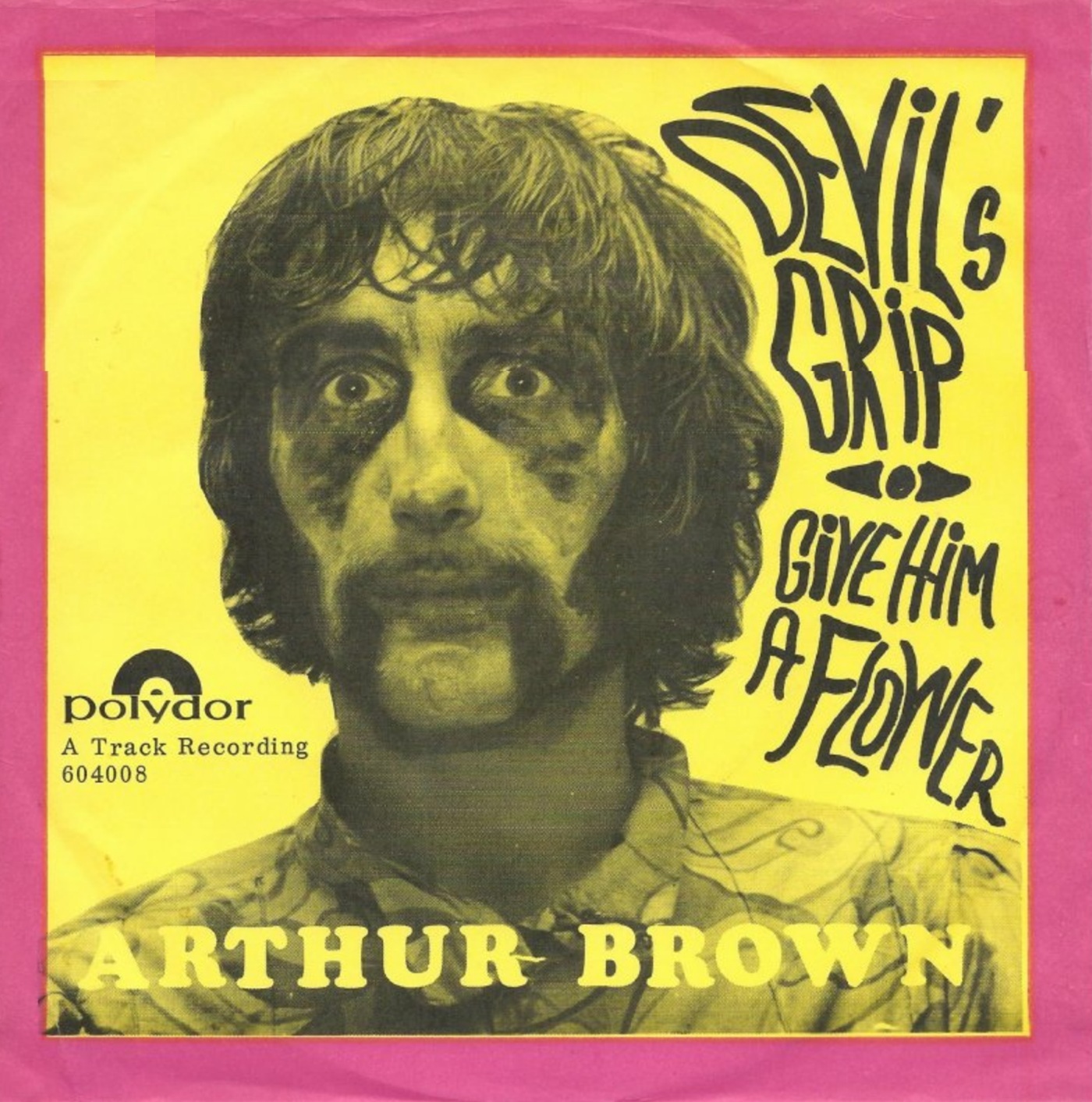
The Crazy World Of Arthur Brown – Devil’s Grip
One of the most significant horror-pop crossovers of the sixties – and one of the most unlikely chart-toppers of that or indeed any decade – The Crazy World Of Arthur Brown’s operatically bellowed heralding of ‘The God Of Hellfire’ inspired a legendary Top Of The Pops appearance characterised by demonic face paint and blazing headgear. They found themselves with slightly less of an opportunity to terrify the studio audience with this considerably less well remembered jazzily eerie tale of taking to the skies and ‘seeing’ the awful inhumanity of The Businessman In His Suit And Tie.
Jason Crest – Black Mass
Having persistently tried and failed to bag themselves a spot on a Fab 208 one-page pinup, the would-be Juliano The Bull hitmakers went for broke and sold their souls and presented their record label with this nightmarishly reverb-drenched backwards-yet-forwards Peter Cushing shouting ‘BACK! BACK I SAY!’=esque Mr. Magister-prefiguring demand that a coven of worshippers of everything that’s vile sling their hook with immediate effect. It will probably come as little surprise to learn that it did not cause them to trouble the pages of Pop Weekly.
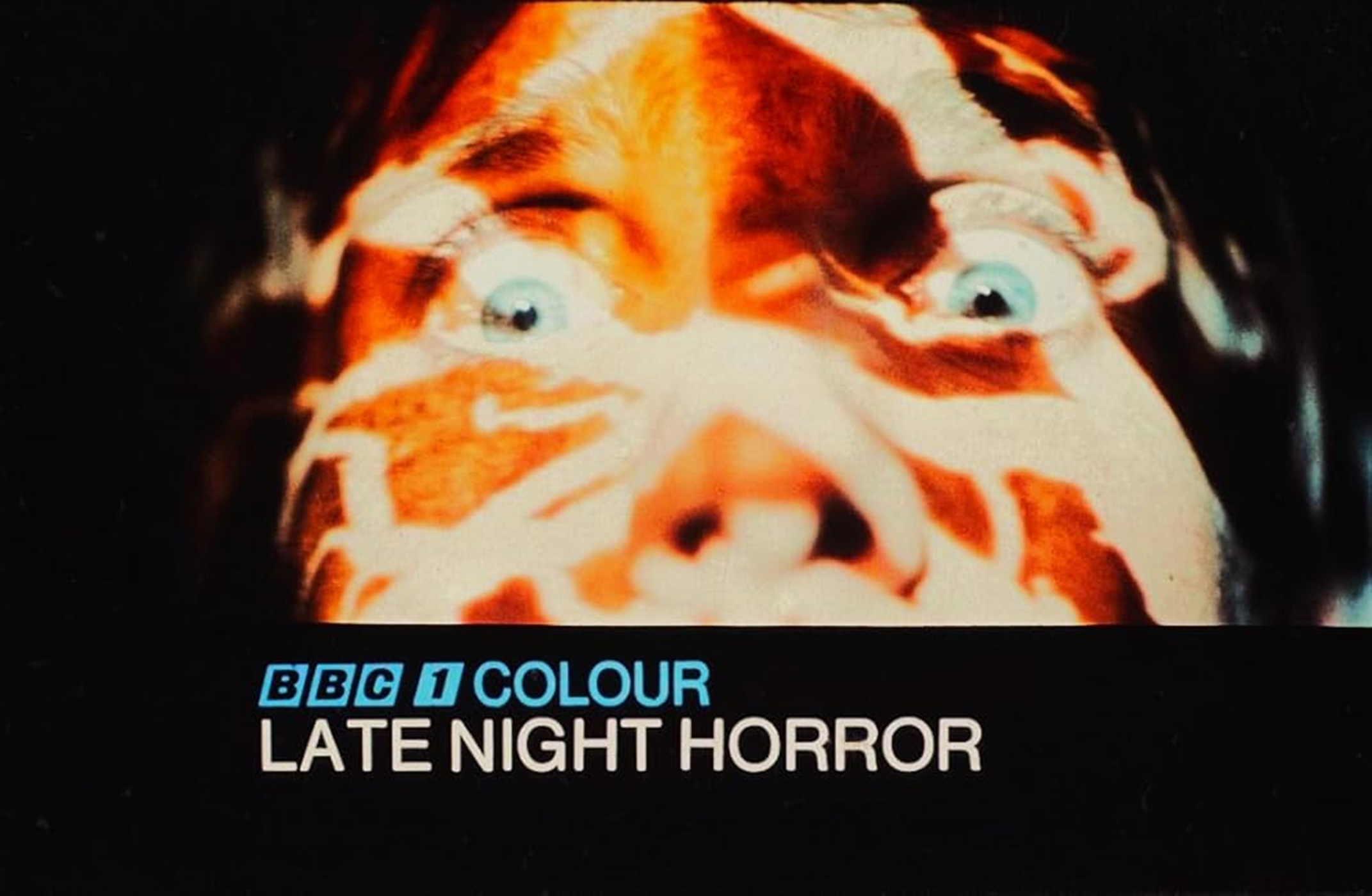
Late Night Horror Trailer
One of frustratingly few surviving remnants of a suitably now lost to legend BBC2 anthology series essentially taking the form of a short story-adapting televisual counterpart to The Pan Book Of Horror, which was eventually taken off the air after a volume of complaints that ultimately proved too substantial for the BBC ‘top brass’ to ignore, but not before it had presented its all too eager audience with such tantalising lost imagery as Michele Dotrice haunted by incessant unseen bells and Donald Sinden and Brenda Bruce taking the title roles in Roald Dahl’s William And Mary. Quite how the complainants missed the title, the timeslot, the continuity slide and indeed this trailer with Radio’s ‘Man In Black’ Valentine Dyall essentially pleading with them not to watch it is an even bigger mystery than the one surrounding Miss Pendleham’s mansion.
White Noise – The Visitation
Essentially an entire edition of Late Night Horror in musical form as David, Delia and Brian decline to spare any available inch of sonic trickery and indeed decline to spare the sensitivities of the listener in sketching out this tale of a young woman visited at night by the essence of her – as seemed to befall so many young lovers in sixties pop songs – motorcycle tragedy-afflicted paramour in a nightmare-structured stop-start tale of fading in and out of perceptibility that is liable to leave anyone listening feeling like they’ve seen the apparition themselves. The temptation to assume that this is an unofficial direct follow-on to Terry by Twinkle is frankly too great to resist. Meanwhile you can find out about how The Beatles crossed paths with white noise and ended up very nearly making their own The Visitation – and for all we know it could be even more petrifying – here.
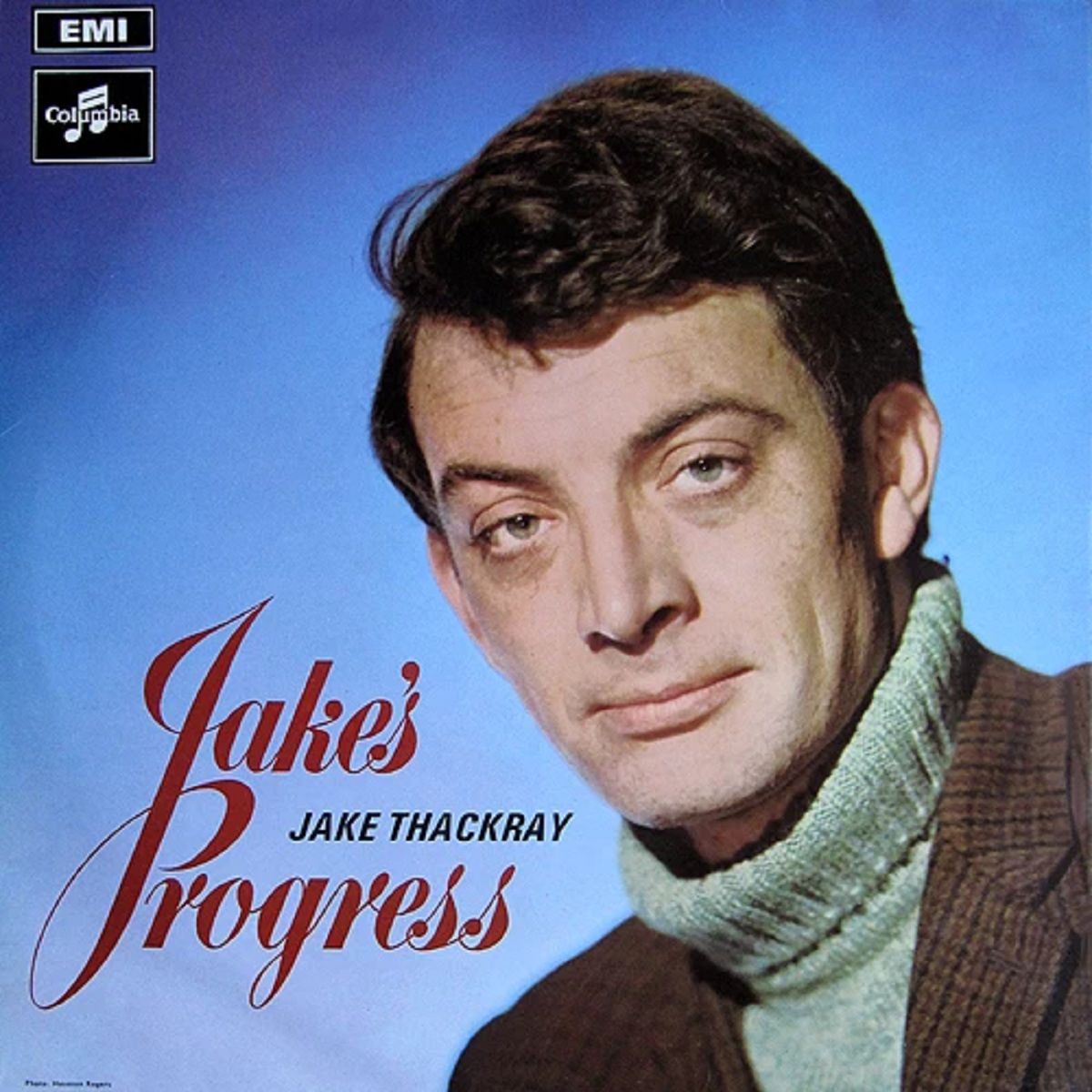
Jake Thackray – The Castleford Ladies’ Magic Circle
The unoutdrollable topical songsmith wryly responds to late sixties rumours of nefarious clandestine suburban witchcraft chicanery with this warning to keep an eye out for housekeeping-strapped would-be sorceress housewives converging in your neighbourhood after dusk, before heading home in time for cocoa and The Epilogue. Presumably rather than, oddly, Late Night Horror. If they’ve all gone, you can find a more detailed and nuanced appreciation of Jake Thackray’s sorely underrated body of work here,
The Crazy World Of Arthur Brown – Give Him A Flower
From the b-side of Devil’s Grip, Arthur makes his feelings on the ‘flower power’ movement abundantly clear as he faces off against some markedly different antagonists to The God Of Hellfire in a series of vignettes set somewhere between that singing amendment’s vision of the future from The Simpsons and the opening frames of a Charles Atlas advert, suggesting a radically different approach to retaliatory action complete with hilariously mock-lazy references to the events of prior verses and a mid-song horticultural diversion into possible inspiration for a certain Monty Python sketch.

Buy A Book!
You can find plenty of further thoughts on the ‘Light Programme Horror’ phenomenon in Keep Left, Swipe Right, available in paperback here or from the Kindle Store here.
Alternately, if you’re just feeling generous, you can buy me a coffee here. If you’ve been paying attention, there’s a good reason to make it coffee and not cocoa…
Further Listening
Bob Fischer and Georgy Jamieson had plenty to say about the overlooked spookiness of yore – and the less sophisticated traditions of Bonfire Night – in Looks Unfamiliar here.
Further Reading
I’m A Stage Illusionist, Nothing More Sinister Than That… is an attempt to figure out exactly how and why so many elements of classic horror found their way into children’s entertainment in the sixties and seventies; you can find it here.
© Tim Worthington.
Please don’t copy this only with more italics and exclamation marks.
 Tim Worthington