
Ironically for a quasi-historical figure who would at the very least have thrown the odd disapproving glance in the general direction of the advertising industry fatcats in their suits and ties, Robin Hood has enjoyed an unexpectedly close and enduring association with peak time weekend afternoon family viewing. One of ITV’s first major hits – first seen on their fourth day of transmission – was Richard Greene’s glen-riding turn in The Adventures Of Robin Hood, which ran to enormous popularity throughout the second half of the fifties – thanks to her simultaneous engagement over on the BBC presenting overlooked Watch With Mother stalwart Picture Book, Maid Marian actor Patricia Driscoll enjoyed a degree of exposure that present day reality television graduates can only dream of, albeit in an age where ‘celebrity’ essentially involved little more than occasionally informing TV Times that she had some cats – with its infamously chirpy parody-friendly theme song that it is a fair bet is now known word for word by considerably more people than have ever seen an episode of the series itself. The Hooded Man would return to commercial television and similar levels of popularity in the early to mid-eighties with Robin Of Sherwood, in which Richard Carpenter upped both the sorcery and the sword ante through emphasis on Herne The Hunter and Nasir respectively whilst never forgetting to throw in a scene at the conclusion of each episode with everyone chortling at a river-dunked Sherriff Of Nottingham, while Michael Praed and/or Jason Connery dominated the pages and more often than not the front cover of Look-In and Clannad’s breathily-intoned theme song now is here-ed its way up the charts, paving the way for that girl in your school who wrote everyone notes using one of those pens with five differently coloured retractable inks to adopt Orinoco Flow as her National Anthem a couple of years later. More recently, the BBC scored an unlikely post-Doctor Who reboot hit with Robin Hood, which ran to an impressive three series and only came to a conclusion because several of the lead cast were keen to move on, but about which apparently nobody can now remember anything whatsoever. Meanwhile we’re probably best not dwelling on an earlier BBC attempt at doing Robin Hood in the ‘Sunday Classics’ family slot with 1975’s The Legend Of Robin Hood, although you can find much more about quite why Mary Whitehouse found herself so exercised by it here. At the end of the sixties, however, ITV – possibly with Dick James singing about calling the greatest archers to a tavern on the green still ringing in their ears – declined to commission yet another mooted Robin Hood reimagining, which had the misfortune to arrive very very slightly ahead of its time and would only quietly sneak out several years after that time had been and gone, and was destined to remain a little-seen and even less cared about curio in the catalogue of one of the most obsessed-over film studios of all.
In retrospect, it is not too difficult to understand why London Weekend Television were so uncertain about Wolfshead – also variously known as Wolfshead: The Legend Of Robin Hood and Wolfshead: The Legend Of Young Robin Hood – back in 1969. With its grimy and decidedly non-leafy settings, brutal authority figures with overtones of religious persecution, barely grudgingly sympathetic ‘merrie’ men – even extending to Lady Marian Fitzwalter – and a proliferation of short and blunt sword fights, arrow-led shootouts and assorted somewhat more thuggish and sadistic methods of ‘encouragement’, the finished pilot may have benefitted from remarkable production values but can hardly have been what they were anticipating, and it would be turned down even more abruptly when subsequently hawked to the American networks. Yet only a couple of years later, not only was this approach very much in vogue but the series to which it is probably most closely comparable, Arthur Of The Britons, found itself broadcast in ITV’s children’s schedules to widespread acclaim. Possibly in response to this, Hammer repositioned the shelved television pilot as a cinematic supporting feature to little attention – there is even some dispute about exactly which films it played alongside – after which it more or less disappeared, only occasionally resurfacing as a shockingly poor print struck for American distribution and then apparently struck with a yard brush dipped in scouring powder. Understandably, few considered it an obscurity worth the effort, and it would attract even less regard than kung-fu slash gangland oddity Shatter. Although one cinemagoer who did sit through it was a certain Richard Carpenter, who would later cite it as a major influence on his own retelling of the exploits of Robin Of Huntingdon and/or Loxley.
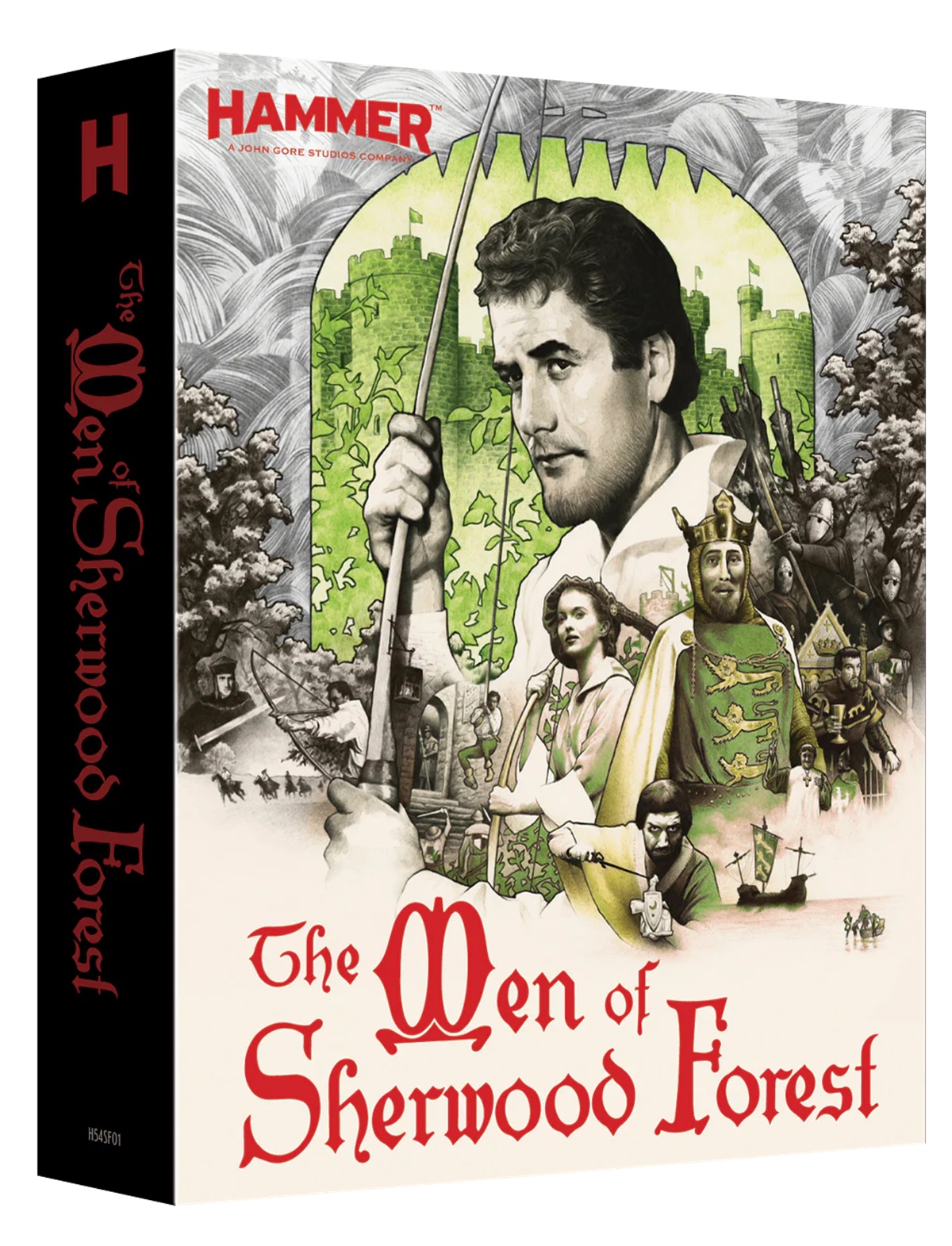
Thankfully, Wolfshead has now been restored from the original elements and you can find it as an extra on Hammer’s brand new Bluray release of The Men Of Sherwood Forest, Val Guest’s decidedly more Lincoln Green-accommodating swashbuckling 1954 family adventure take on the legend of Robin Hood. Not only is it now possible to see Wolfshead in the sort of quality that may actually draw some appreciative attention towards a flawed but fascinating attempt at doing something new and different, you can also watch it with an optional commentary by me exploring the production and release – and disappearance – of and my own personal obsession with this tantalising obscurity and its odd position on the very furthest fringes of several otherwise obsessed over cultural phenomena. There’s also room for plenty of associated contextual trivia including Cliff Richard’s weirdest cinematic outing, UK Gold’s bafflingly eccentric movie scheduling policy, Keith Chegwin’s turn as Robin Hood Junior, the two and a half shelves in your local library devoted to ‘Entertainment/Film And TV’ and just what connects Wolfshead with several titles on the Director Of Public Prosecutions’ official list of ‘Video Nasties’, and some thoughts on why a certain new comedy show over on BBC2 might have had plenty of fun to poke at Wolfshead‘s expense had it been broadcast as planned in 1969. Elsewhere in the box set you’ll also find a booklet with a detailed look at the history of Wolfshead by Andrew Pixley, a transfer of the shockingly poor VHS master if you want some idea of just how much effort has gone in to this restoration, and of course a ton of extras to accompany the splendid The Men Of Sherwood Forest itself, in particular in relation to its unlikely position as Hammer’s first full colour production. It may not so much be robbing from the rich and giving to the poor as it is robbing from the poor quality and giving it a rich restoration – which as dreadful a gag as it may be is more levity than you’ll find in the entirety of the compellingly bleak Wolfshead – but this is yet another impressive release highlighting an under-acknowledged side of Hammer’s output. Plus you get to see ‘all the glory and splendour of stirring adventure!’ in The Men Of Sherwood Forest into the bargain. It’s no wonder ITV ‘borrowed’ the idea for their big launch schedules…
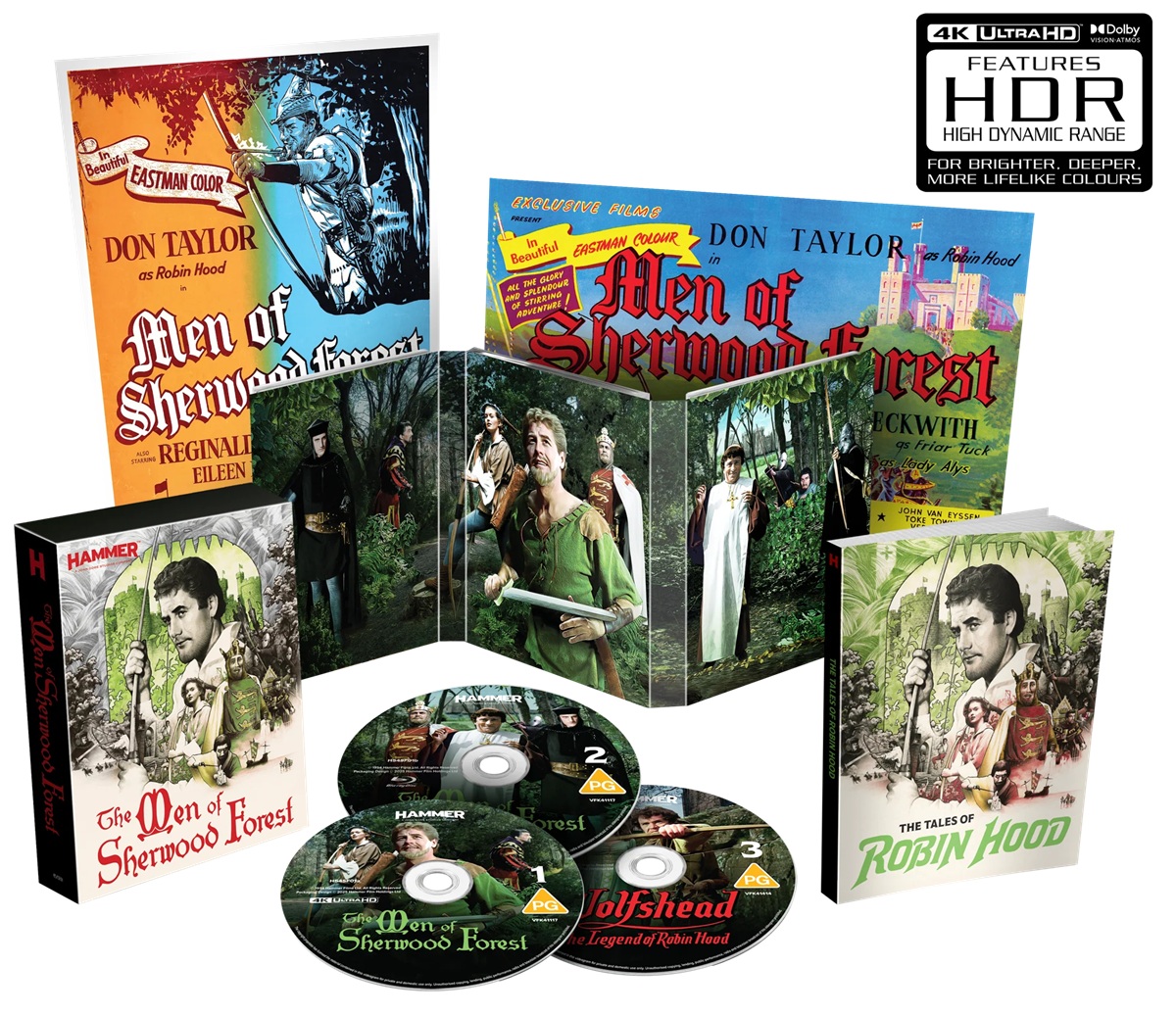
You can find more about the The Men Of Sherwood Forest box set at Hammer’s website here, or on their Instagram feed – which is well worth following anyway – here.
© Tim Worthington.
Please don’t copy this only with more italics and exclamation marks.
 Tim Worthington