
Another recommendation originally written for my non-starting attempt at a recommendation-based mailing list, and while this one certainly attracted more interest than the one about Scarlet Witch: Witches’ Road – which you can now find here if you feel like showing it some – it still wasn’t really quite enough interest to convince me that it was really worth ploughing so much effort into an inconsistently perused weekly mailshot that appeared in some sense to be having its content dictated for me even though the actual purpose of it was pretty much the exact opposite, when it could more easily all go in to new ‘content’ for this site instead. For a start there’s more of a chance of people stumbling across the fantastic edition of It’s Good, Except It Sucks looking at The New Mutants through that route (or you can just head here if you want to do so non-stumblingly). There were still a few further recommendations to come, but by this stage it really was starting to feel distinctly as though the mailing list was surplus to requirements; however if you are still interested in receiving regular additional bits and pieces, including long-lost highlights from the archives, deep dives on fifties and sixties newspaper adverts, occasional audio exclusives and more, then you can find out more about my Patreon here. Anyway, this particular recommendation is for a splendid compilation of highlights from John Barry’s ludicrously overlooked early beat-boom era career in movie and television soundtracks, which places the obvious hits alongside some genuine obscurities – which in some cases had never previously been issued in a digital format – and which might well surprise some listeners on account of sounding closer to The Merseybeats than to James Bond. Meanwhile, if you are the sort of listener who would have noticed the omission of anything from the soundtrack to The Wrong Box, of course, then you can find me talking about how much I love that thrillingly chaotic and overambitious comedy runaround, John Barry soundtrack and all, here.
He may well have scored some of the most important movies of the sixties and some of the most prestigious ones of the seventies and eighties, and although its authorship is disputed to say the least he at the very least created the iconic arrangement for possibly the most famous movie theme there is, and on top of that he not only inspired countless pop and rock artists to claim that they were attempting to emulate his sound but actually worked with some of them and created arguably their best singles in the process, but it has to be said that when it comes to interest in and availability of John Barry’s actual music itself, the record store racks have been as cluttered yet sparsely-appointed as, well, The L-Shaped Room. The splendid The EMI Years series aside, collections of his work have tended to fall into three distinct categories, with barely a hint of retrospective evaluation or career summary between them. The first, and to be fair the most obvious from a commercial point of view, are essentially just collections of James Bond themes with copyright-skating approximations of the opening title imagery on the cover, and with occasional other well-known themes – usually Walkabout – parachuted in to make up the tracklisting when one Bond-bookender proved unavailable due to licencing complications. Then there are those that are nominally tied to some sort of spurious academy salute to the eighty fourth anniversary of ‘films’, performed by an orchestra and a conductor who are all nominally different yet somehow entirely indistinguishable from each other and with a sort of slanted bronze treble clef on a white background on the cover, which exist only to give you some idea of what John Barry’s music might sound like in a form to which it is entirely unsuited and in which you have expressed no interest in hearing it. Then of course there are the ‘best of’ compilations which simply present 1972’s John Barry – The Concert – again mostly composed of slightly less impactfully reorchestrated Bond themes – in a moderately rejigged order. Meanwhile his actual original soundtrack albums tend to get reissued with little fanfare and go out of print astonishingly quickly, and you’ll be lucky to find very much of his beat boom-era chart-chasing material at all. Quite where this leaves anyone looking even for his themes from Juke Box Jury and The Persuaders! – both of which are arguably better known even than some of his Bond themes – or from The Adventurer, which was the only notable feature of a series that essentially involved little more than Gene Barry standing absolutely stock still in the middle of Amsterdam albeit far away enough from the nearest heat source to ensure that his eye-maddeningly synthetic safari suit didn’t melt, is anyone’s guess. Let alone The Lolly Theme from The Amorous Prawn.
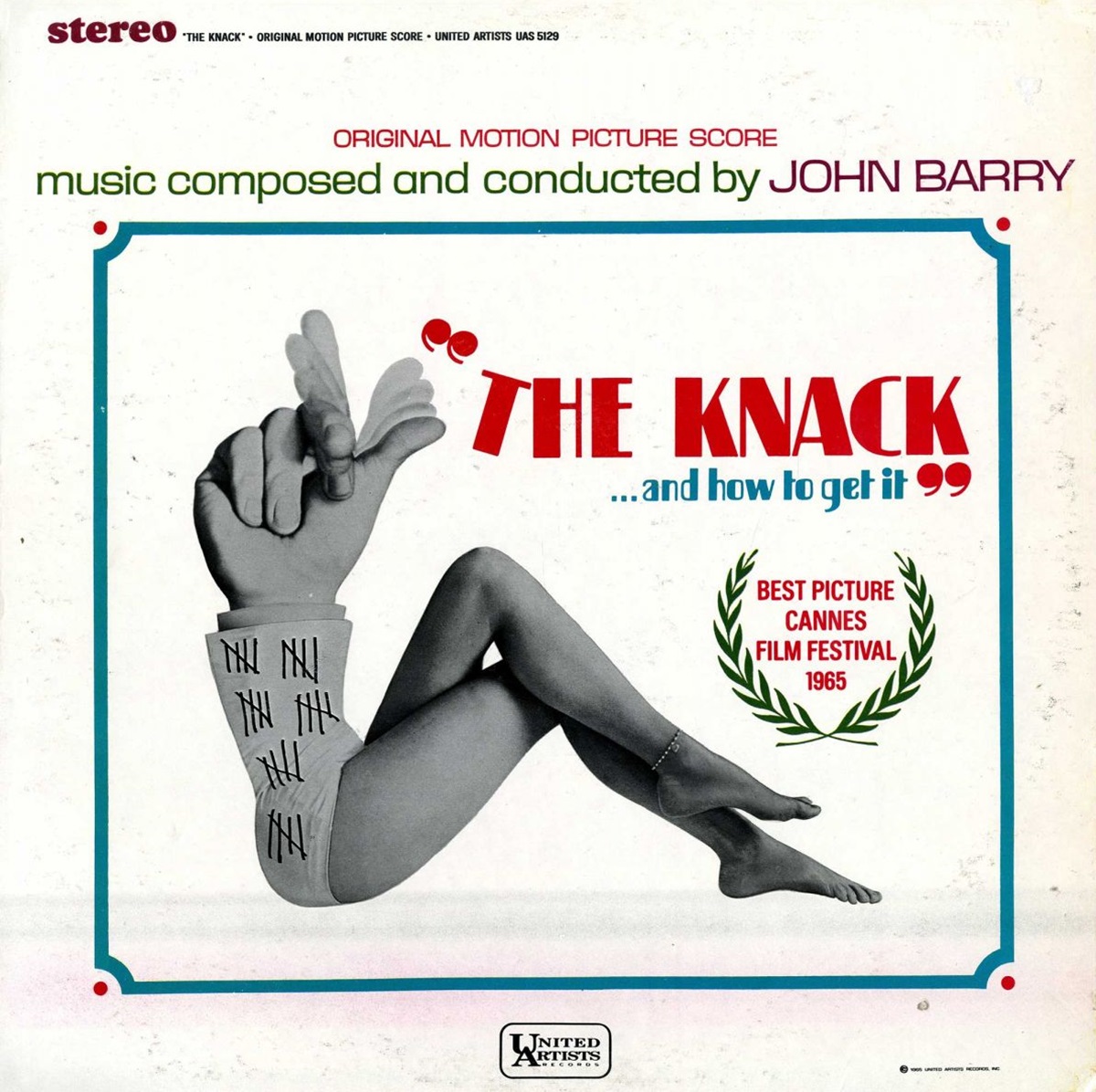
Thankfully Bob Stanley, pop archaeologist and one third of Saint Etienne, has redressed the balance by assembling Something’s Up! – Film, TV And Studio Work 1964-67 – a largely shake and stir averse collection of John Barry’s early jazzy beat-informed single sides. There are a handful of Bond-adjacent numbers – his own lesser-heard interpretations of the main title themes from Goldfinger, Thunderball and You Only Live Twice, recurring incidental theme Mister Kiss Kiss Bang Bang and the Capsule In Space music from You Only Live Twice – but apart from that it’s thrillingly obscure theme singles from thrillingly obscure thriller movies and serials all the way, from the opening waltz from now almost unshowable Swinging London comedy The Knack… And How To Get It to the Mediterranean flourishes that introduced BBC’s long-forgotten Bond-influenced escapades of criminal turned private eye Danny Scipio in Vendetta, the edgy menace of little-seen 1967 Black Power-influenced short Dutchman and the creepy haunting accompaniment to 1966’s notoriously bleak docklands murder mystery Four In The Morning. A Man Alone, the main theme from The IPCRESS File, is an entirely different recording to any of the iterations featured on the actual soundtrack album, and it comes accompanied by its original b-side, Barbara’s Theme, which was written for the film but failed to make the cut and as far as I am aware is making its debut on CD here. Now possibly better remembered for the widely sampled Moogtastic theme from his mid-seventies BBC adaptation that in and of itself nobody remembers, James Bond’s one-time putative big-screen rival Quiller – whose first name was never revealed in a direct counterpoint to Bond’s overuse of his – is represented by the eerie Wednesday’s Child from 1966’s The Quiller Memorandum, while The Girl With The Sun In Her Hair, Barry’s music for a Sunsilk advert as later much used by ‘wacky’ mid-nineties magazine show presenters effecting to be groovy seventies hipsters, appears here in its rarely heard original version which thankfully lacks a lot of the unnecessary ornamentation that was brought in to later re-recordings. There are also two wildly contrasting arrangements of the theme from 1964’s acclaimed collision of kitchen sink drama and fortune-telling claptrap credulity Seance On A Wet Afternoon, although the real standout track is Something’s Up!, rescued from the long-lost soundtrack of The Knack… And How To Get It, which shuffles along on a scorching organ groove and frankly it is little surprise that it was singled out as the title track of this collection.
Although there are some notable diversions such as the mock-Eastern tinge afforded to Chicken Delhi Cold from 1964’s Keith Waterhouse and Willis Hall-scripted Man In The Middle, the ‘home on the range’ harmonica flourishes that decorate the introduction to Marlon Brando vehicle The Chase a whole three years before Midnight Cowboy and the ominous melancholy of wartime drama King Rat, as Something’s Up! itself suggests, this is a collection wedged full of beatnik percussion, clipped reverb-drenched bass guitar, Cold War-evoking balalaika and flutes and huge but brief and effective washes of strings, although it does conclude with the Andy Williams-less rendition of the theme from Born Free, which points the way forwards into a very different future of awards ceremonies, dinner-jacketed academy salutes and, well, all of those compilation albums that were never really what anyone actually wanted. Something’s Up, however, deftly evokes a time when anyone in John Barry’s position would be churning out movie scores by the score, and was then expected to herd an assortment of musicians into a studio to somehow work the main theme into a single-length piece of music and then conjure up a b-side that just about fitted with it, and there are brilliant sleevenotes that explain exactly how, where and why these singles were recorded too. That said, the chase music from The Wrong Box is it has to be said conspicuous by its absence – but perhaps that’s for another volume…

Buy A Book!
You can find much more about many of the sixties movies and television series that John Barry provided the soundtrack for, possibly in some instances without even realising that he had done so, in Keep Left, Swipe Right, available in paperback here or from the Kindle Store here.
Alternately, if you’re just feeling generous, you can buy me a coffee here. You are of course legally required to follow the coffee-making instructions in the opening titles of The IPCRESS FILE to the letter.
Further Reading
You can find a look at a similar Saint Etienne-initiated compilation which features a considerable volume of John Barry’s more festively-themed early pop productions in Christmas Time In London Town here.
Further Listening
It might well not be represented on Something’s Up, but you can find me having a chat about John Barry’s superb score for The Wrong Box – and the splendid comedy star-packed chaotic runaround crime caper movie itself, of course – on Goon Pod here.
© Tim Worthington.
Please don’t copy this only with more italics and exclamation marks.
 Tim Worthington