
On 2nd December 1971, the appropriately named Soviet space probe MARS 3 made the first ever fully successful unmanned landing on Mars and proceeded to send just under two minutes’ worth of blank grey images back to Earth before spluttering to a halt under the impact of an unanticipated dust storm. The orbiter that had launched it, however, continued to transmit what were the first ever clear aerial images of the Martian landscape until contact was lost in July 1972. Patrick Moore would inevitably cover this exciting development in a characteristically animated manner on BBC1’s The Sky At Night, conveniently omitting to mention the fact that earlier in the year, he had also presented an edition devoted to platforming concerns that Mars was ‘approaching’ the Earth; a standpoint that was presumably not in any way connected to any of his personal political alignments whatsoever.
On 10th November 1972 at 4pm, Tiny Clanger sent some musical signals back to BBC1. Billed by Radio Times simply as “There are concerts in the most unlikely places”, The Music Of The Spheres was not quite the final episode of the original iteration of Oliver Postgate and Peter Firmin’s stop-motion animated interplanetary rumination on what sentient lunar pink mice creatures might make of Earth’s societal norms Clangers – you can find more about what was here – but it was the final instalment of the second run of episodes of a much-loved and much-repeated series and actually concluded not just Clangers itself but also a running storyline of sorts.

In the previous week’s The Pipe Organ, Major Clanger’s never especially successful flying machine had finally been repurposed as an emergency soup distribution system courtesy of an engine powered by Blow-Fruit and disassembled and redirected tubing derived from Tiny Clanger’s copper tree-hewn panpipes. Apparently this was a more sensible and practical option than just fitting a new wheel to the overloaded soup trolley. Tiny, who had opened The Pipe Organ by attempting to teach their suitably honking three legged bugle-resembling interstellar near neighbours the Hoots a tune that she had been tinkering with for a couple of weeks already, was understandably none too pleased about this, and once the more lauded revolutionary contraption had inevitably imploded into a counterproductively soup-splattering mess, she once again reconfigured it by incorporating a newly made set of panpipes and the remnants of the antisocial gramophone from The Noise Machine and developed it into the decidedly analogue steam-driven one-stop musical ensemble of the title. Despite their temporary soup deployment issues remaining resolutely unresolved, the other Clangers are moved to applaud this combination of ingenuity and musicality, and even Oliver Postgate is caused to remark that it is “something really useful!”.
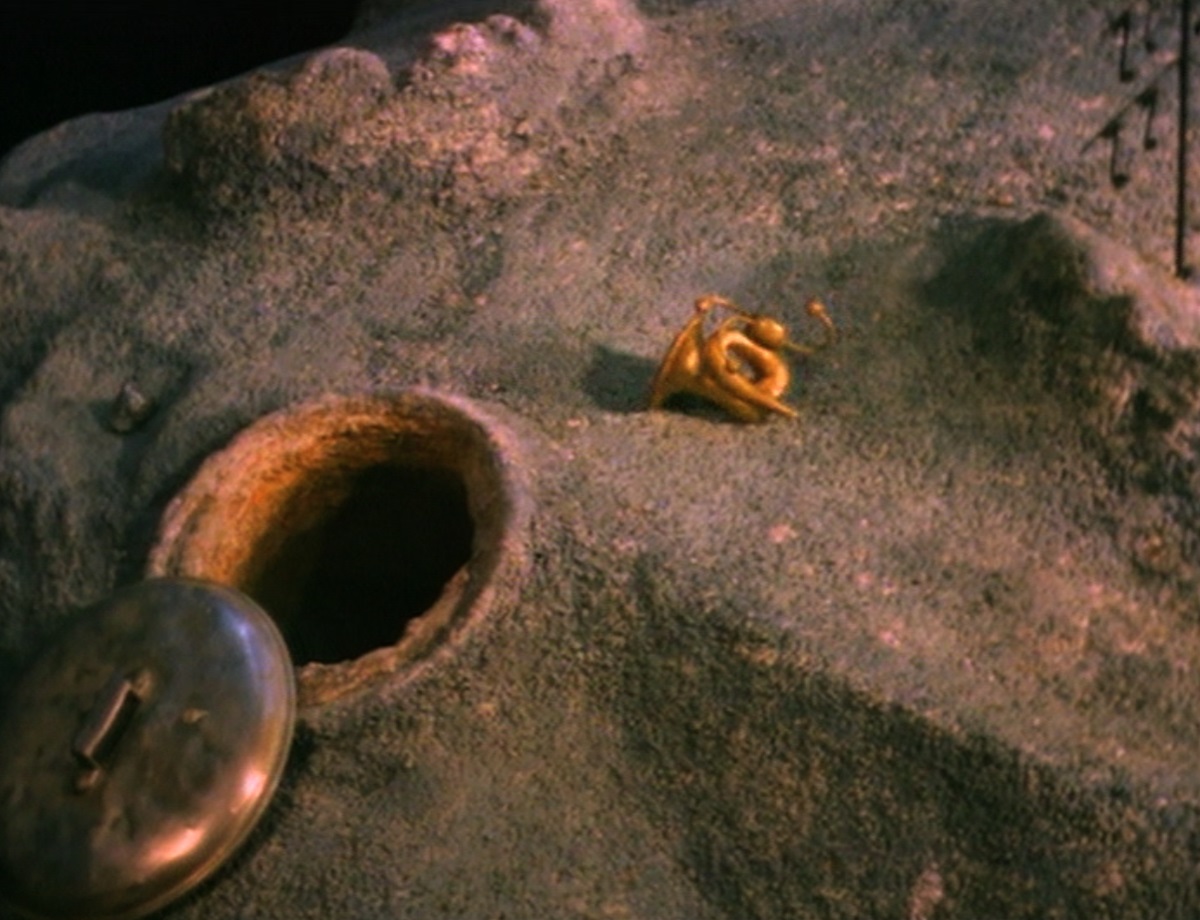
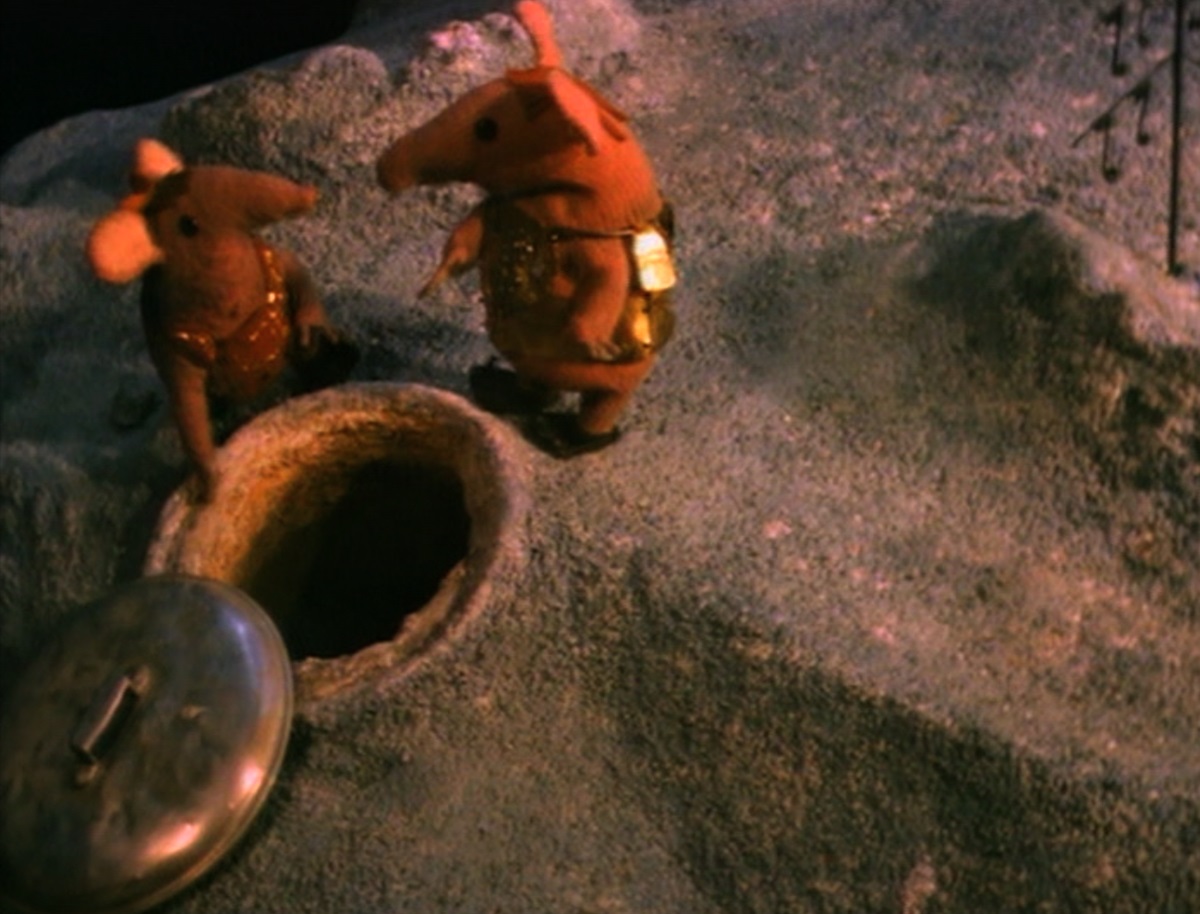
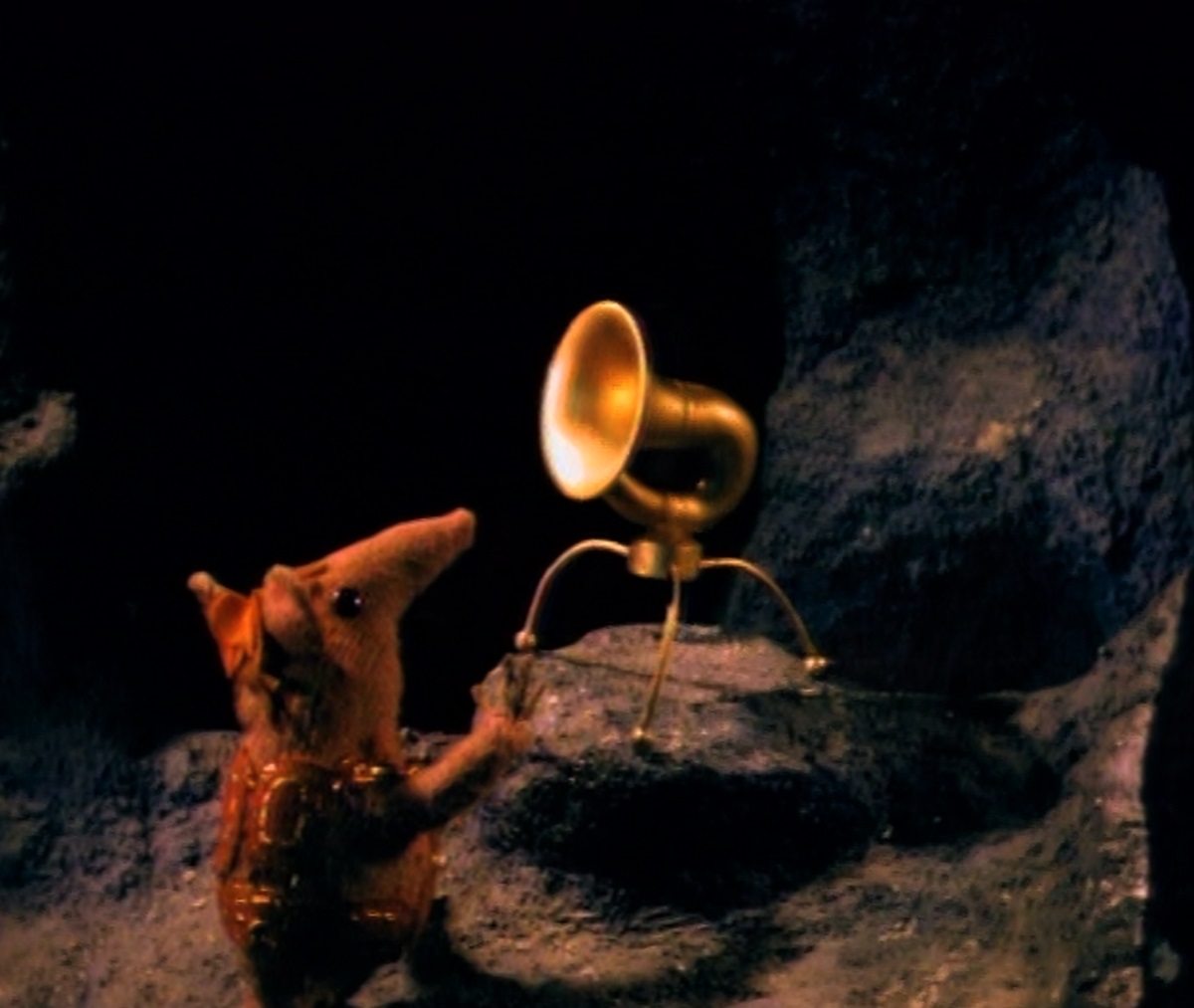

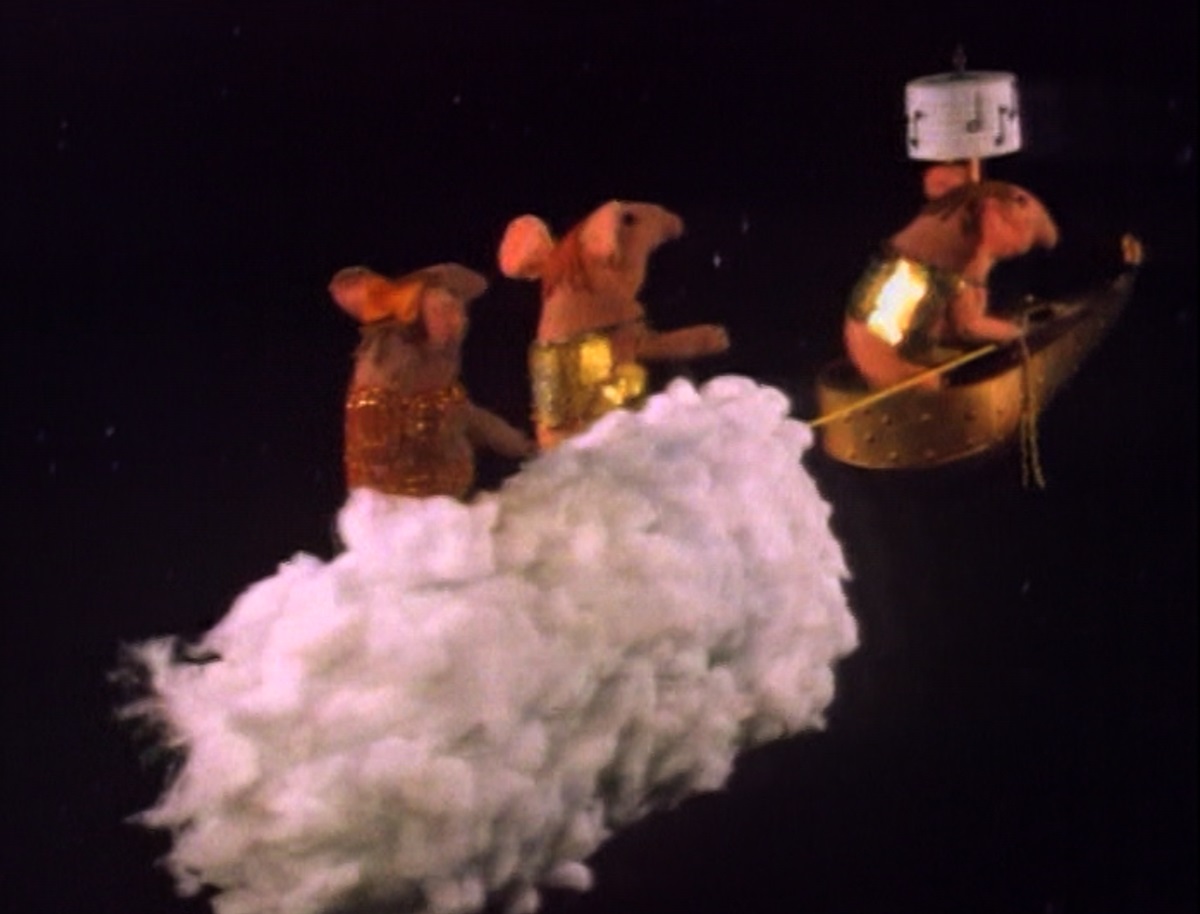
The Music Of The Spheres, meanwhile, opens with Oliver Postgate’s subdued reflection on how “if you look up at the sky at night, and see all the stars and planets against the blackness of the sky, they seem silent and still”, before his cosmological reverie is noisily interrupted by the arrival of a Hoot, which crash lands onto the planet and tumbles straight down below the surface courtesy of a crater which has inconveniently had its bin lid covering left ajar. Small Clanger and Tiny Clanger help the stricken Hoot back up to the surface and use the pipe organ to alert the Hoots’ roving fanfare-prone planet to the stray cornet’s plight. When the pipe organ itself expresses a hydraulic lovelorn desire to join the departing global brass section, the Hoots convey their gratitude to Small and Tiny by taking them to see a literal stellar arrangement of Tiny’s previously tentatively sketched composition, performed by an entire solar system of dancing twinkling stars and spinning instrumental astronomical bodies apparently evolved from unloved leftover ‘Space Race’ junk. For a full three and a half minutes, the nation’s television screens are transformed into a mesmerising cosmic ballet of gleaming repurposed real life scrap that looks and feels somewhere between an attempt to remount the ‘Stargate’ sequence from 2001: A Space Odyssey using sheets of kitchen foil and a three-colour torch and what might have happened if the BBC’s Presentation Department had been asked to produce an insert for Fantasia on an actual negative budget.
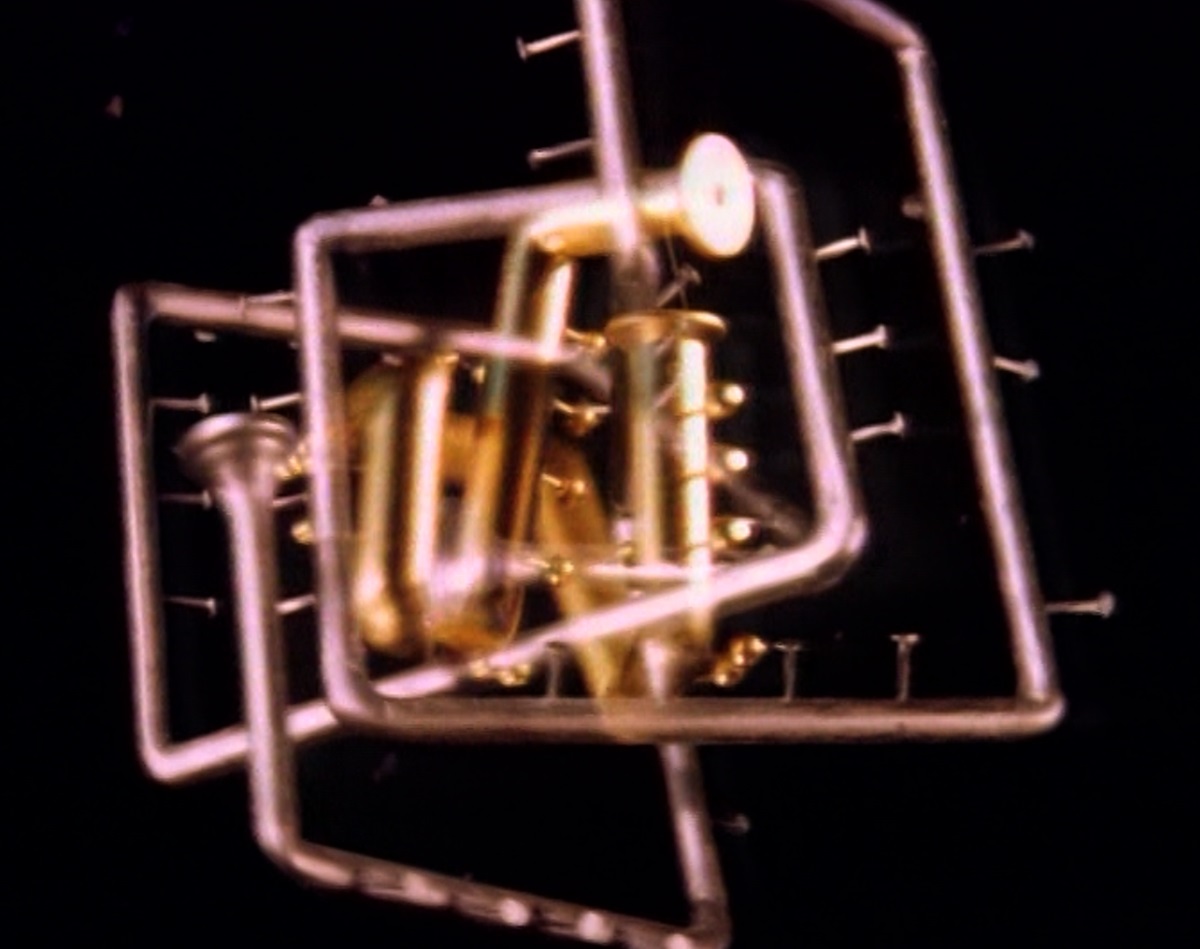
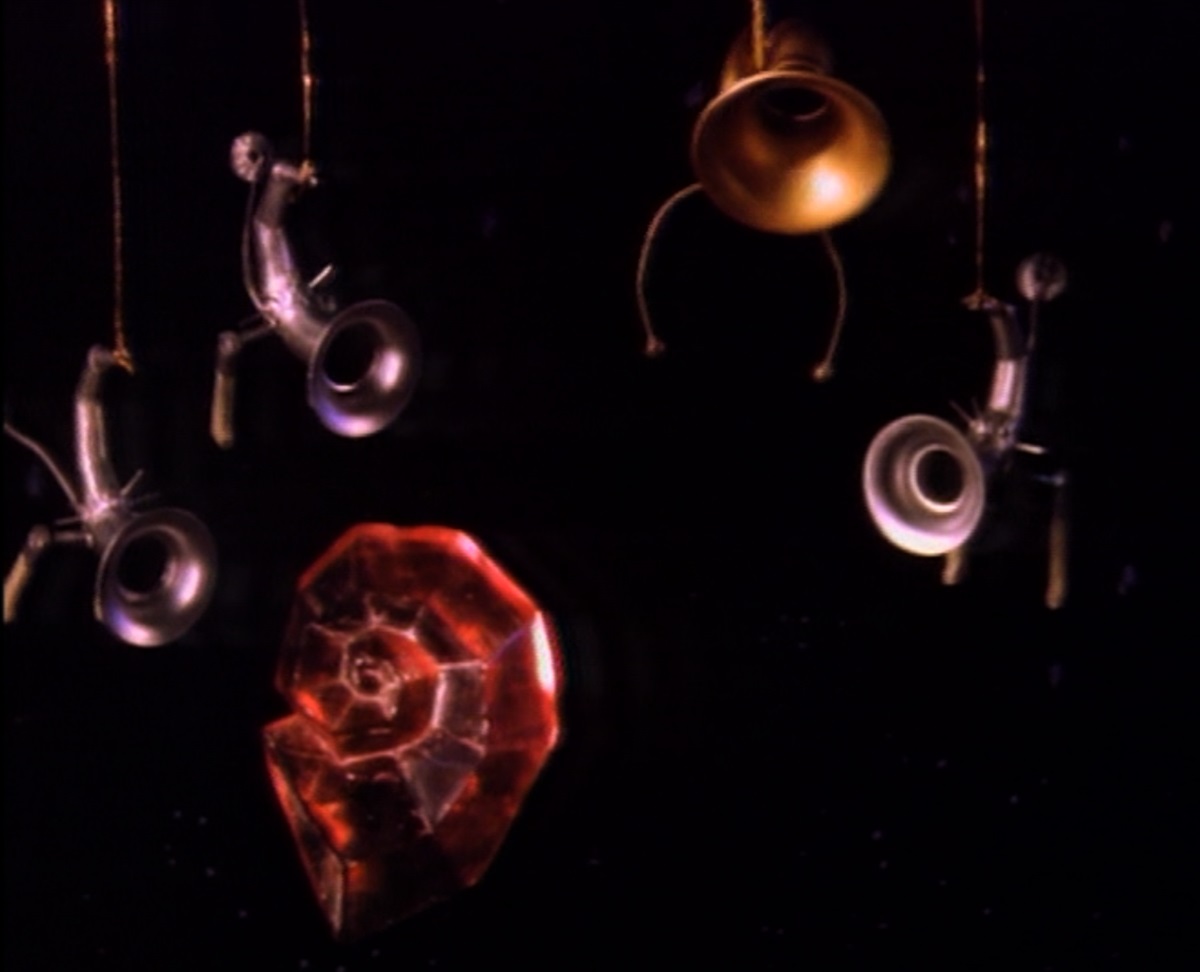


This is, of course, entirely typical of the make-do-and-mend accidental inspired genius of Postgate and Firmin’s home-made productions under the Smallfilms banner, but what really elevates The Music Of The Spheres is the score that accompanies the charmingly low-tech – yet somehow more emotionally rousing than digitally generated imagery – visuals. Working from Postgate’s detailed scene breakdown, regular Smallfilms composer Vernon Elliott – a classical bassoonist who had first encountered Oliver and Peter when he was engaged to provide Ivor The Engine‘s similarly pipe-derived musical expressions of mild sentience – creates a similarly spellbinding ambience through what can only be described as a miniature symphony. Although his gentle and unobtrusive woodwind, brass, percussion and harp settings played a significant role in imbuing other Smallfilms productions with a sense that they were very slightly out of time yet could also be happening right now, for Clangers he managed to combine this with an evocation of the vastness and tranquility of space, arriving at an almost futuristic sound whilst utilising absolutely no electronic instrumentation whatsoever. Although the execution and indeed the entire concept and arguably length of the symphonic orbiting interlude may appear positively if charmingly archaic now, there is no denying that even so far removed from its original context it is still little short of inadvertently spellbinding – an effect on its intended audience that Smallfilms seemed to have an uncanny affinity for; you can find more about a similarly arresting musical diversion in Bagpuss here – and it is difficult to conceive of a more fittingly quietly triumphant conclusion to the series. When the performance ends, the other Clangers arrive in the Music Boat to take Small and Tiny back, as Oliver Postgate’s resumed astronomic philosophical musings have it, “away through the silent emptiness of space to their own planet and green soup for supper”, and it really does sound as though he is congratulating the Clangers, Smallfilms and even the audience directly alike on a job well done. It is frankly staggering to think that all of this originated with a note in the script simply indicating that Tiny Clanger “taps and conducts an enormous music of the spheres”.
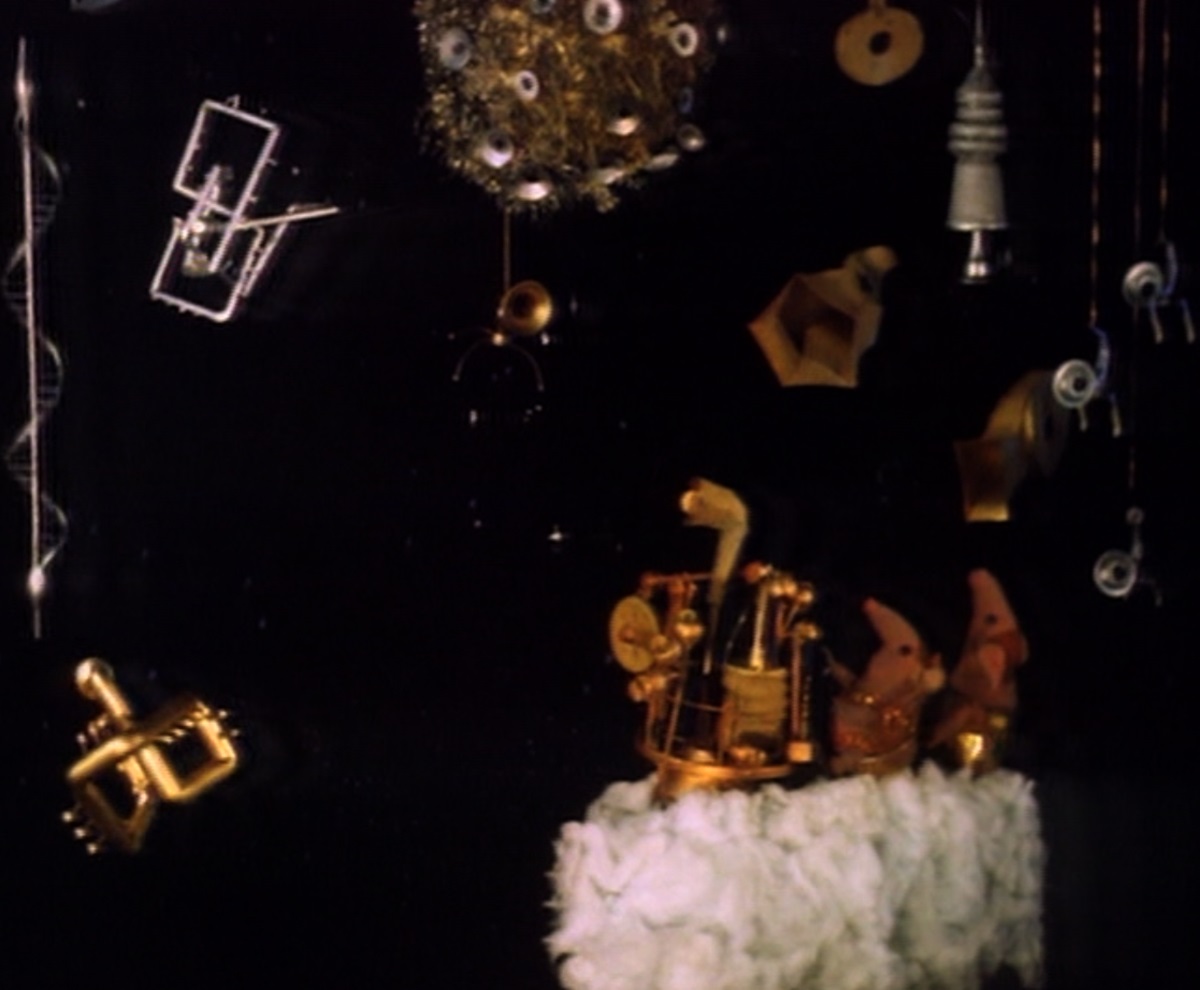
What, though, of the concurrent less successful real world attempts to transmit somewhat less spectacular imagery back to Earth from Mars? As much as The Master may have been fooled into thinking that the Clangers were a legitimate and genuine extension of the ‘Space Race’ in Doctor Who earlier that year – no, really, he did, and there’s more about that peculiar crossover here – there was in all honesty very little similarity between the two scientifically distinct cosmic transmissions. Although that all said, MARS 3 did look uncannily like something that Oliver Postgate and Peter Firmin would have knocked together from scraps of metal and wood to represent a ‘satellite’. Sadly, there is no known record of what sounds it could potentially have contributed to The Music Of The Spheres. Although it is fair to surmise it may not necessarily have been especially tuneful.
Buy A Book!
There’s lots more about the Clangers along with The Magic Roundabout, Roobarb and tons of other much-loved favourites from the pre-news slot in The Golden Age Of Children’s TV, available in all good bookshops and from Waterstones here, Amazon here and directly from Black And White Publishing here.
Alternately, if you’re just feeling generous, you can buy me a coffee here. Please do not try making an espresso using Major Clanger’s soup distribution steam engine thingymajig.
Further Reading
And You And I Would Call Them Dragonflies takes a look at the long hunt for a certain piece of music from a certain episode of Bagpuss; you can find it here. There’s also more about the Clangers’ cameo appearance in Doctor Who in It’s Still A Police Box, Why Hasn’t It Changed? Part Ten: At Home He’s A Torbis here.
Further Listening
You can find me chatting to Emma Burnell and Steve Fielding about Vote For Froglet, the little-seen Clangers Election Special, on The Zeitgeist Tapes here. You can also find Grace Dent’s thoughts on why she loves Bagpuss so much on The Golden Age Of Children’s TV here, as well as Steve O’Brien’s thoughts on Bagpuss here and Mark Griffiths expressing similar affection for Noggin The Nog here and Meryl O’Rourke recalling little-remembered Smallfilms production Sam On Boff’s Island on Looks Unfamiliar here.

© Tim Worthington.
Please don’t copy this only with more italics and exclamation marks.
 Tim Worthington