
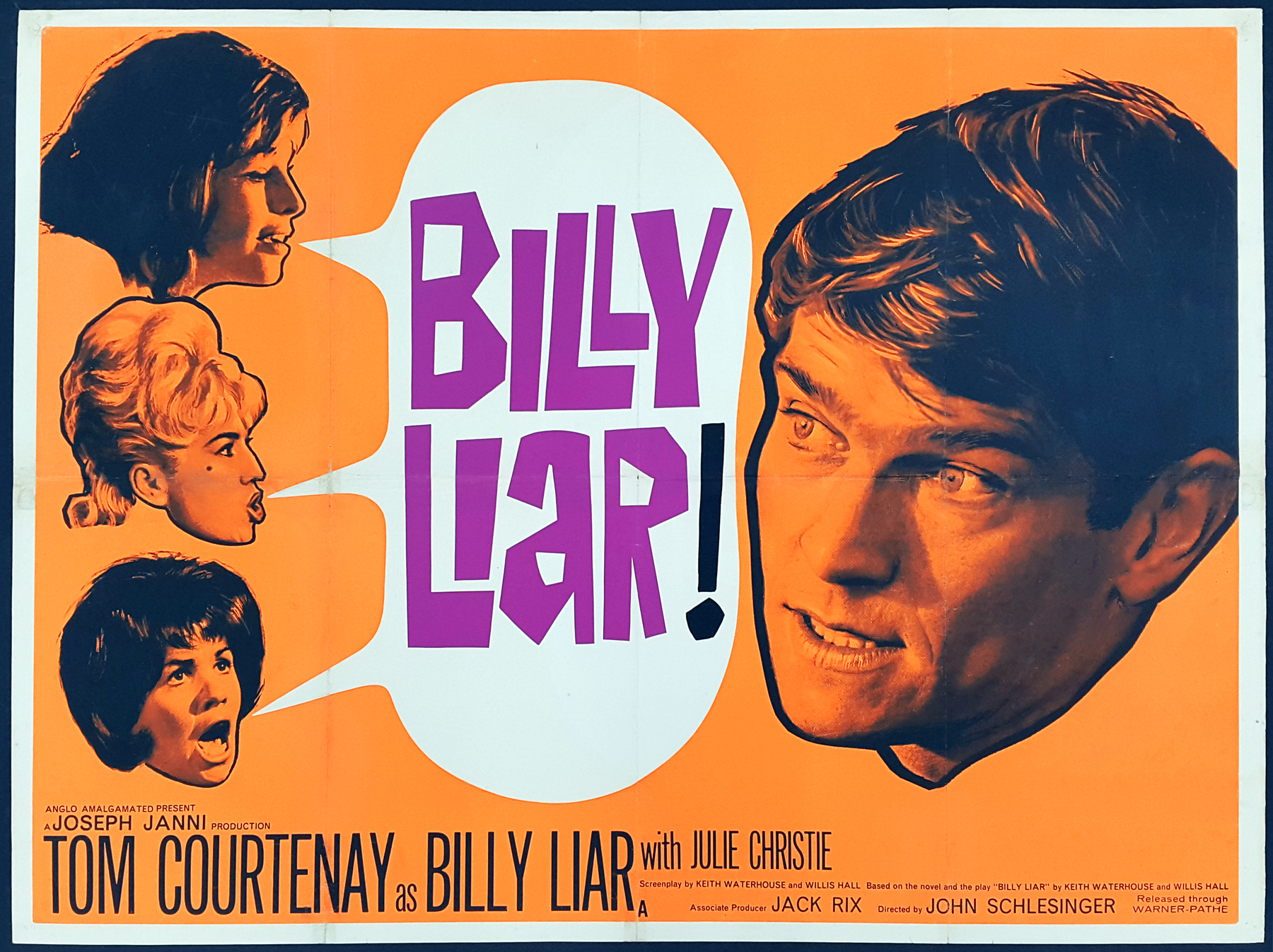
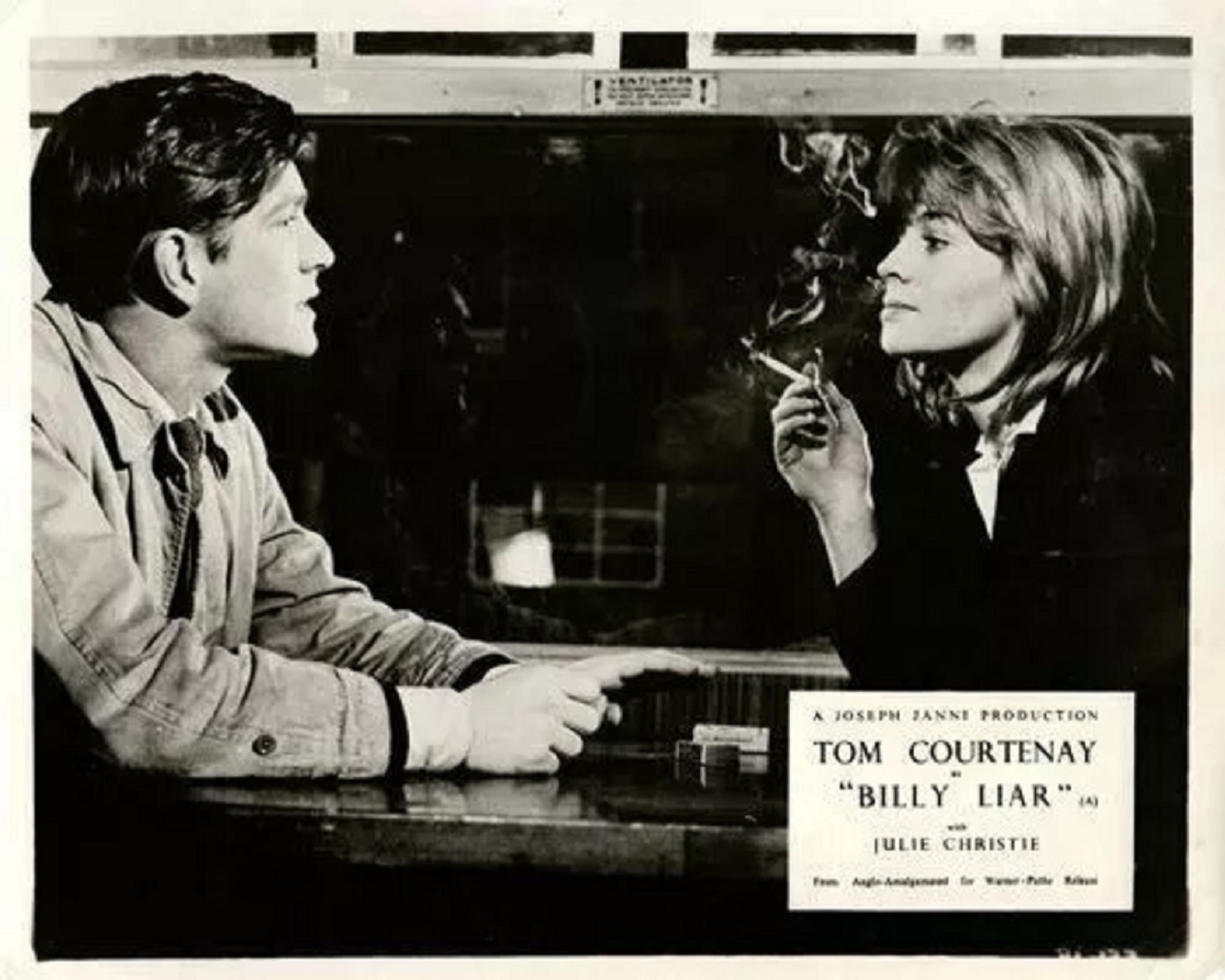
Based on Keith Waterhouse’s 1959 novel of the same name, Billy Liar is a 1963 movie positioned somewhere between a knockabout comedy and kitchen sink drama, set in a post-war industrial Britain that was literally disappearing as the cameras rolled, and starring up-and-coming serious actors Tom Courtenay, Julie Christie, Rodney Bewes and Leonard Rossiter as they were just on the verge of becoming household names. Despite being made in black and white, underscored by modern jazz that would fall out of fashion alarmingly quickly and fixated on teenage obsessions that would be rendered a thing of the past by the rise of the Beatles barely a couple of months later, it met with massive critical and commercial success and attracted a reputation that has never really abated, with a lengthy and pervasive cultural influence stretching all the way from Rodney Bewes’ small-screen success as to all intents and purposes the same character in The Likely Lads through the droll observations of A Hard Day’s Night right the way up to the persistent reissues, reappraisals and revivals on different formats. It also struck a chord with successive generations of musicians and artists, not least in the instance of – staggeringly – Flowered Up, Saint Etienne and Ride all releasing Billy Liar-referencing singles within weeks of each other in 1992. Yet at the same time, it’s a movie that is often referenced but rarely discussed, to the extent that there are still pleasingly ambiguous question marks hanging over numerous open to interpretation on-screen events, and the original soundtrack has never been given an official release in any form.
Originally released as part of the Patreon-only British Comedy-scouring side project Goon Show Film Club – which you can find out more about here – this is a chance for everyone else to hear a chat I had with Goon Pod host Tyler Adams about Billy Liar and why so many people are so devoted to this movie that by all rights ought to be as forgotten and overlooked as One Way Pendulum or The Knack… And How To Get It, but which still finds itself vaulting up critical lists and giving its adherents as much to identify with as it does be alarmed at in equal measure. In a wide-ranging chat about Billy Liar and everything that surrounds it we touch on just why those indie bands were so taken with it and which BBC2 showing they might all have seen, Julie Christie’s astonishing career trajectory and the possible impact that Billy Liar may have had on the BBC’s Cold War-influenced sci-fi serial A For Andromeda, what became of Lizes that never were Pauline Boty and Topsy Jane, where Stamp belongs in the pantheon of annoying ‘office character’ characters, how many films Anglo Amalgamated made in an average fortnight, the wisdom of hiring Godfrey Winn as a youth columnist, whether milk vending machines made it past 31st December 1969 and the overall question of how well the movie reflects the social and cultural upheavals of the early sixties at a time before the words ‘Mersey’ and ‘Beat’ had even stumbled across each other, as well as the most important issue of them all – how to tell all of those fifties radio game shows with three word titles apart from each other. Which, in all honesty, we can’t. There’s even a cameo by The Incredible Hulk. No, really…
Download

Billy Liar (1963) with Tim Worthington – Goon Pod
Buy A Book!
You can find plenty of further thoughts on the long-lost world of British cinema in the early sixties in particular in Keep Left, Swipe Right, available in paperback here or from the Kindle Store here.
Alternately, if you’re just feeling generous, you can buy me a coffee here. Just don’t get off the train to get it…
Further Listening
You can also hear me on Goon Pod talking about Peter Sellers and Sophia Loren’s George Martin-produced comedy album Peter And Sophia here, the 1966 all-star comedy movie The Wrong Box here, and the original The Best Of The Goon Shows LP here. You can find my thoughts on Acker Bilk’s version of the Billy Liar theme – after all, we never got a commercial release of the proper one – here.
Further Reading
You can find much more about Pop Goes The Easel, the BBC Monitor film about Pauline Boty and her Pop Art contemporaries that heavily informed Julie Christie’s portrayal of Liz, in I’ve Always Had Very Vivid Dreams here.
© Tim Worthington.
Please don’t copy this only with more italics and exclamation marks.
 Tim Worthington