
One day late in 1993, Blur’s bassist Alex James bought a handkerchief for frontman Damon Albarn. This wasn’t in any way related to his personal hygiene, however. It was a handkerchief showing a map of the UK’s shipping forecast areas, and there was a suitably mundane yet reassuring story behind it too.
On a demoralising tour of America the previous year, battered by attention swerving towards newer commercial rivals on both sides of the Atlantic and struggling to come up with a second album as EMI essentially kept handing them back their homework and telling them to do it again – not exactly helped by mostly playing in small venues to audiences who even if they turned up didn’t really much care for them anyway – Blur had attempted to stave off homesickness and maintain their sanity during the gruelling cross-state slog by skewing their tour bus entertainment towards a defiantly British slant. Famously this included rotation plays of The Kinks, The Selecter, XTC and other similar outfits who had dominated their teenage years and made them want to make music in the first place, who would in turn inspire their own sudden change of direction and rediscovery of their artistic verve; not that it stopped EMI from writing ‘SEE ME’ on the album sessions a further few times though. More parochially, they had also found themselves fixating on the distinctly non-American reassuring tones of the BBC Radio 4 Shipping Forecast. A fixture of the BBC airwaves since at least 1926, the calm and measured recitation of esoterically-named coastal regions – Viking, North Utsire, South Utsire, Forties, Cromarty, Forth, Tyne, Dogger, Fisher, German Bight, Humber, Thames, Dover, Wight, Portland, Plymouth, Biscay, Trafalgar, Finisterre, Sole, Lundy, Fastnet, Irish Sea, Shannon, Rockall, Malin, Hebrides, Bailey, Fair Isle, Faeroes and Southeast Iceland – and the likelihood of their veering northerly seven poor becoming moderate with occasional rain, traditionally introduced by Ronald Binge’s 1963 library music piece Sailing By, is a much treasured eccentricity of radio broadcasting which most listeners almost don’t notice in the background until one day they realise that they know all of these peculiar names and terms without having the faintest idea of what any of them might mean. Small wonder, then, that it might have given four young musicians stuck in a foreign country that didn’t want them and pining for a home country that didn’t seem to want them either some cause for comfort.
Although the persistently delayed Modern Life Is Rubbish had only just been released, Blur were hard at work on their third album Parklife by late 1993 when Alex presented Damon with that handkerchief as a Christmas present. At that moment, Blur were struggling with a rumbling and ominous track that had been written as a potential conclusion for the new album, which everyone involved considered to be the highlight of the sessions but which Damon had been unable to come up with lyrics for and so looked set to be shelved. In the most unlikely flash of inspiration imaginable, and a couple of late-night walks around a blustery coastline later, he somehow managed to forge that half-familiar list of shipping regions into a gloomy and overcast forecast of vague but definite troubled times, held at bay by that same stoicism and resilience as routinely deployed by a Radio 4 announcer.
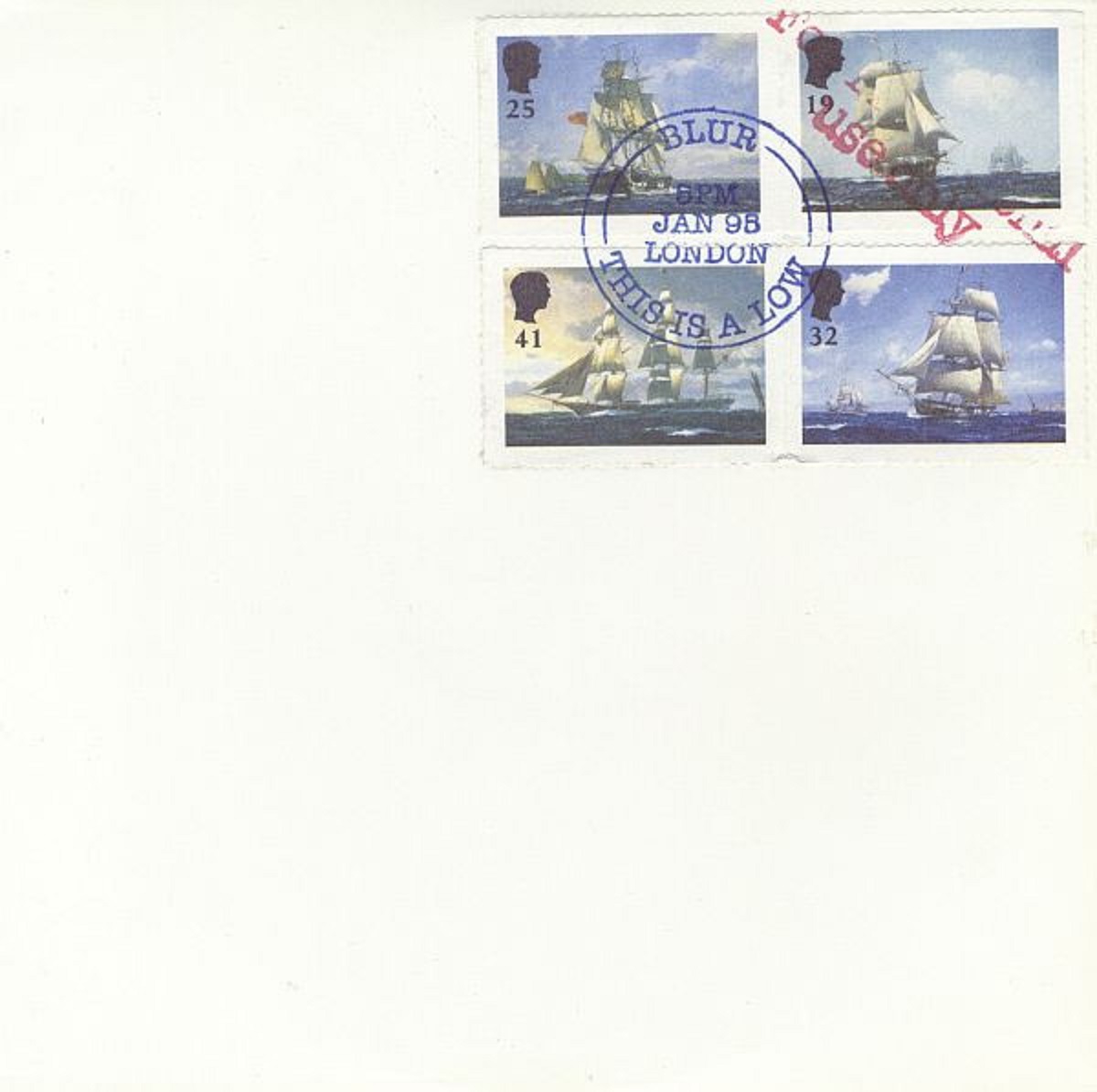
Opening with a foreboding acoustic guitar figure that may as well be phoning the BBC to say that it had heard that there was a hurricane on the way, This Is A Low settles – if that’s the right word – into a half-whispered loping and downbeat verse with a sonar ping echoing in the distance as Damon sets off on a tour of the regions, predicting unsettled social as much as meteorological conditions before a loud and dramatic wash of a chorus reassures the listener that this is indeed a low, but it won’t hurt them. A second verse sees choppier seas on the horizon, causing The Queen to hurl herself off Land’s End in a fit of disconcertion and despair, with the chorus leading in to a howling thrall of multitracked gale force guitar solos from Graham – one recorded with him sitting on top of an amp turned up to full volume for additional impact – that sound less like music than they do a storm-battered fishing boat off Rockall, momentarily lulling into that opening guitar figure before a roaring tidal wave of a two-note echoing squall whistles across the horizon and into an even more emphatic repetition of the chorus, fading away into a protracted Hammond Organ chord and eventually just its motor hum as calm returns to those troubled waters. As well as a stunning performance of an equally stunning song and a spectacular conclusion to an album, This Is A Low is also a fretful and anxious rumination on where the very first stirrings of a renewed fervour for British exceptionalism, isolation and intolerance might ultimately take us, a warning issued in a world where Esther McVey was still a children’s television presenter and society had yet to be blighted by a wider awareness of and indeed wider support for the associated ideology of David Cameron, Suella Braverman, Jacob Rees-Mogg and Nigel Farage. We can only assume that anyone who persists in attempting to blame Britpop for Brexit stopped listening to Parklife after being told that Jubilee’s not like anyone else. Although even that explored more or less the same concerns as This Is A Low so it’s entirely possible that they might have absolutely no idea of what they are talking about whatsoever.
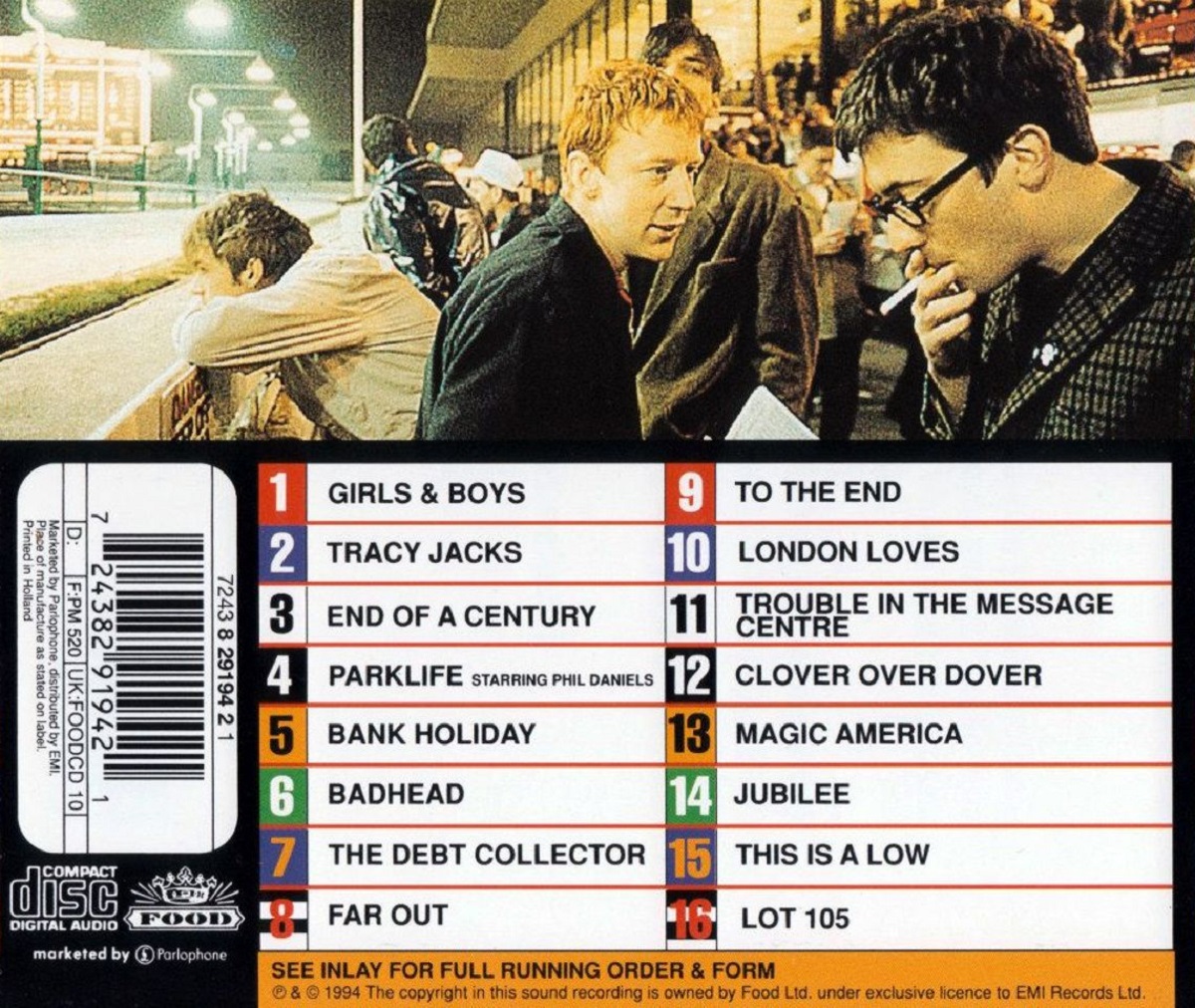
This Is A Low isn’t quite the conclusion of Parklife, though. If you look closely enough at the original album artwork, you can see Damon’s handwritten list for the proposed running order – including a couple of numbers that didn’t make the final cut – with an annotation in red for a ‘gap’ between This Is A Low and Lot 105. Following a full twelve seconds of silence, the familiar sound of the Hammond R-100’s built-in samba rhythm chips into action and skips along behind Damon’s cheerful muzak instrumental as the other members of Blur start adding angular offbeats and finally speed everything up into a frantic punk conga, winding up on the chortled refrain “eighteen times a week, girl, ha ha ha ha ha” – suggested by Graham in wry acknowledgement of the main melody’s ‘resemblance’ to The Beatles’ Eight Days A Week – as the spluttering organ ricochets up the scale as if trying to get away from the ridiculous parade of noise. ‘Lot 105’ was actually the nickname – and originally the auction number – of the organ itself, bought by Damon during the Modern Life Is Rubbish album sessions and extensively used around this time on tracks like Anniversary Waltz and End Of A Century, not to mention taking a fair old hammering in the name of Britpop in the Showtime live video.
Deliberately intended as a mood-lightener following This Is A Low, and likened by Graham to being forcibly ravaged by an intoxicated Barbara Windsor, Lot 105 is somehow simultaneously enormously silly yet entirely serious. Its entire purpose and reason for existing is to end Parklife on an entertainingly upbeat and amusing note after a fairly intense experience, which may well be breaking the mysterious and never defined rules of the ‘classic’ ‘album’ but in all honesty who would want to finish on, well, a low anyway? Like the heavily patched up and held together with sellotape Lot 105 itself, Parklife is an album that wallops together all manner of disjointed diversions in all manner of directions and yet somehow it all makes sense as a whole. A little like, you could say, a certain collection of baffling place names.
Buy A Book!
You can find a massively expanded version of Lot 105, with much more on the history of the Shipping Forecast in popular culture from Saturday Night Fry to Portland Bill, and quite a bit on the story of the Hammond R-100 too, in Keep Left, Swipe Right, available in paperback here or from the Kindle Store here.
Alternately, if you’re just feeling generous, you can buy me a coffee here. Honestly, though, from the look of it if you rested a coffee cup on Lot 105 it would probably just collapse under it.
Further Reading
You can find a look at Blur’s road movie Starshaped and the protracted evolution of Modern Life Is Rubbish in Food Processors Are Great! here, and an attempt to unravel a mystery surrounding the various versions of Modern Life Is Rubbish‘s lead single For Tomorrow in London’s So Nice Back In Your Seamless Rhymes here. There’s also a look at what Pulp were up to around the same time in My Legendary Girlfriend here.
Further Listening
No stranger to a well-placed Hammond Organ and preset samba rhythm himself, there’s a look at The Mike Flowers Pops’ cover version of Wonderwall in Looks Unfamiliar here.

© Tim Worthington.
Please don’t copy this only with more italics and exclamation marks.
 Tim Worthington