
This rumination on the peculiar sense of unease and disquiet and that to varying extents underpinned pretty much all children’s entertainment but children’s television in particular between roughly the tail-end of the sixties and the mid-eighties, whether as deliberately and explicitly as The Georgian House or as innocently and unintentionally as Bagpuss – what has, in effect, come to be referred to as ‘hauntology’ – was originally written as a scene-setting introduction to a book I wrote to accompany the Bluray release of The Singing Ringing Tree. A twisted fairy tale with nightmarish proto-psychedelic overtones made in East Germany in accordance with government propaganda guidelines, and then bought by the BBC, dubbed with a third person narration by an art critic and the repeated relentlessly across two decades, this mind-frazzling and eye-infuriating saga of giant talking fish and princesses turning into green-haired witches is about as definitive an example of the scarcely explicable phenomenon as you are liable to find; unfortunately the Bluray is no longer available but if you’re interested in seeing what all the fuss was about then you might want to try having a rummage around here.
As celebratory as it is of the phenomenon that has come to be known as ‘hauntology’, however, this also has a very intentional message and it’s one that has nothing to do with messages warning about foolhardy juxtapositions of frisbees and substations or even any message sent through a Telex machine by a fourteenth century nobleman’s second eldest son after his father is falsely accused of stealing a bronze keepsake. There are copious references to the other more upbeat and less disturbing examples of children’s entertainment that were around at the same time because, as brilliant as all of these shows may be, it is reductive, misleading and overall just plain less interesting to pretend that they were all that there was; after all, there wasn’t much that was especially ‘hauntological’ about Cheggers Plays Pop, although I’ve little doubt that someone has at some point tried to claim that the four-note end-of-round klaxon was. More to the point, as entertaining as some may well find it to entertain notions that HTV West was at one point crawling with Crowley disciples singing Come To The Sabbat and scoffing Count Dracula’s Deadly Secret ice lollies whilst plotting to indoctrinate the nation’s youth with their Pan Book Of Horror-fuelled macabre agenda, as ever, the probable actual cultural, technological and even administrative reasons behind this are far more fascinating and interesting, not to mention providing a more rational explanation of how this all happened in the first place and how it equally quickly disappeared; an irony that will be lost on those for whom rationality is apparently a four letter word, or indeed a four-note klaxon. Anyway, you can find a vastly expanded version of this, with many more examples and theories and odd recurrences of unsettling clowns, in Keep Left, Swipe Right, available in paperback here or from the Kindle Store here.
There’s a scene in an episode of Ace Of Wands – an early seventies ITV children’s serial about a stage magician who solves often macabre and occult-related mysteries in his spare time – where the central characters are trying to work out what’s behind a series of mysterious and spooky incidents and coincidences in a street market. Mikki, a hippyish stallholder, is convinced that it’s related to the mysterious fate of one of the market’s previous owners. Her more streetwise brother Chas dismisses the idea that the market is under threat from the past and suggests instead that the real threat comes from the future – and someone is after the land to build on it. It’s difficult to think of a more apt if inadvertent summation of the powerful and weird sense of intangible unease that ran through children’s entertainment in the seventies and eighties.
Whether the menace came from science or superstition, or from fission or folklore – and more often than not both, with endless stories taking something as ludicrous as a Norman soldier communicating through a photocopier and making it seem all too chillingly plausible – it was everywhere you looked and sometimes where you didn’t, with the most innocent of dramas underpinned by that same haunting background sense of dislocation. What’s more, even if you didn’t quite know what it was that was bothering you, there was still sense that it could exert its influence on you beyond the covers of a book or the two much more reassuring television programmes that bookended it. It wasn’t confined to children’s entertainment, of course, but it was very much confined to that era. The storyline in The Wire about the vacant row houses – itself a modern tale of folk devils of sorts – disturbed me greatly but I never felt the need to turn the DVDs around on the shelf so they couldn’t ‘get’ me. Around the same time, however, I consciously left the Fire Leap song from The Wicker Man off my iPod as it unnerved me too much.
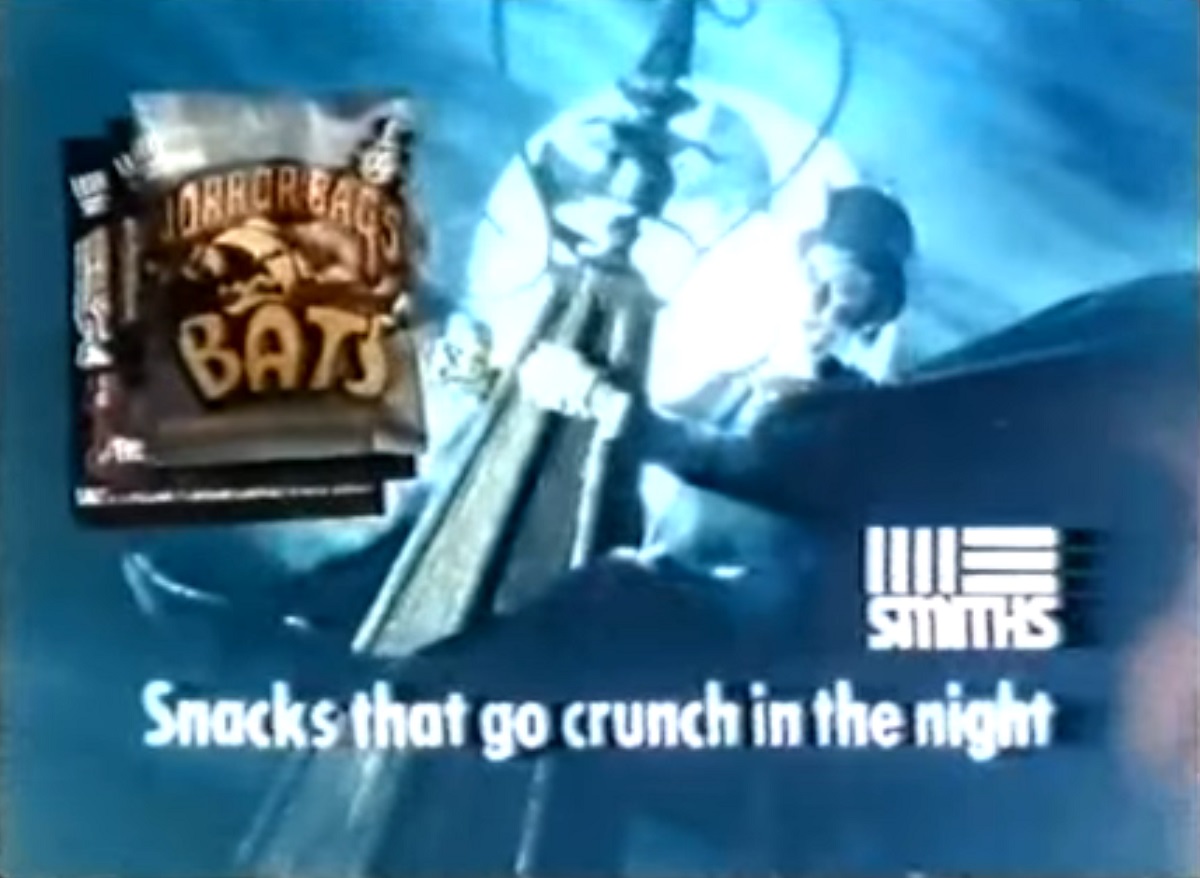
It seems absolutely belief-beggaring now that a range of ice lollies might have been based around graphically rendered characters from the horror tradition, or that a film showing in no uncertain terms what would happen if you played on a farm would be slotted amongst ITV’s jolly school holiday morning programmes, or that a song in a pre-school programme might have included actual Wiccan runes, or even that a girl and a clown locked in an eternal game of noughts and crosses might stare outwards to the sound of slightly wonky music at children too young to know they weren’t going to move for hours at a time. All of this and much much more actually did happen, though, and while the children this was aimed at may have been unsettled, confused, frightened or even in some cases sceptical, crucially, none of them actually seemed to mind.
This wasn’t a stylistic choice, though. It was something that evolved seemingly all around with very little obvious cause or context. So how did that happen? Much as with the ridiculous notion that anyone involved with the making of an even very mildly psychedelically-influenced children’s programme must have been ‘on drugs’, nobody involved with any of these shows was setting out to scare children. Some came from an older tradition of storytelling and were trying to find their way around what was still a relatively ‘new; medium. Many had grown up during one or even two World Wars and will have had very different ideas on what children should and shouldn’t be exposed to as a consequence. Others still were tasked with conveying difficult messages to younger viewers at a time when the idea of communicating with them as people to be engaged on their own level was still considered verboten, and had to resort to abstract allusions or hard-hitting imagery. The majority – including Peggy Miller adapting available and affordable bought-in films from behind the Iron Curtain that met the BBC’s somewhat stricter criteria – were simply working with the resources available to them. One thing is for certain though – all of this combined to create an eerie, creepy ambience that was all around in the seventies and eighties, everywhere from comics and feature films to charity collection boxes and crisps.

This wasn’t the full story, of course, The seventies in particular may now be depicted as somewhere between grainy washed out 16mm film of men with beards shouting outside factories and armies of scarecrows scaling pylons outside a chemical plant pumping discoloured smoke into the atmosphere, but they also played host to some of the loudest, gaudiest and most carefree children’s entertainment imaginable. The eighties similarly weighted bleakness against the excitement of the dawn of the silicon chip and the digital watch, while the biggest selling toy was a brightly coloured cube that asked no more troubling a question of youngsters than how they were going to get that row onto that side. The division between light and shade, however, was more pronounced, and even then it’s difficult to say whether the shade was the oppressive beige of an office where some children were trying to convince an officious man in a suit that they really had seen something strange down at the radio telescope, or the virulent green of some indefinable sugary froth dispensed from the back of the Alpine lorry.
Gradually, the mysterious radar messages from deep inside an abandoned wood began to fade. Analogue technology was replaced by slicker and more friendly-seeming digital equivalents – you only have to look at the handful of ridiculous eighties horror films seeking to exploit this exciting new ‘video age’ world to see how dramatic this change was – and ad-hoc make do and mend fashions gave way to designer palates specifically crafted to enhance moods. More money became available for programme making at a time when planning and efficiency also began to influence the broadcast industry, while a series of notorious incidents finally forced programme makers to accept that they had a responsibility towards the viewers. Most importantly, in terms of children’s television, the hard battles fought by forward thinking shows like Grange Hill – which had its fair share of hard-hitting moments but none of them in any literal sense ‘haunting’; in fact a storyline about a walled-up ghost hoax in the mid-eighties seemed to be specifically poking fun at this – eventually made it acceptable to speak to young viewers on their own terms, with the result that everything leaned far more closely towards their own day to day experiences. Spooky and unsettling elements were still there if you knew where to look, but always as part of a denser and more considered whole – which, to a slightly younger generation, was a whole new ‘golden age’ of their own.

Whether it was a screechy splintery puppet leaping around amongst human actors that couldn’t have been further removed from the popular perception of Pinocchio if they had tried, an unheralded ad break warning about the literally shocking risks of breaking into an electricity substation to get a frisbee back, an ornate out of focus jewellery box rotating to introduce a schools programme, or simply a carved wooden bookend in the shape of a woodpecker, odd moments made for odder memories and it’s little wonder that they would end up shaping the art of many who grew up during that era. You only have to look at the comedy of The League Of Gentlemen, the films of Ben Wheatley, Robin Ince’s Uncanny Hour podcast, Bob Fischer’s Haunted Generation website, Maxine Peake’s Pendle Witch musical project, The Apparition Phase by Will Maclean, the phenomenon – and phenomena – bible Scarred For Life by Stephen Brotherstone and Dave Lawrence and many others for evidence of that. What is genuinely fascinating about all of the above is that they are using that influence to forge something new, rather than simply trying to recreate the past. After all, that Norman soldier would struggle with Instagram filters a bit.
That telling exchange in Ace Of Wands was written by PJ Hammond, who later in the decade was also responsible for Sapphire And Steel, another ITV serial about two mysterious entities who repaired damage to time. One memorable adventure concerned ‘the shape;, which could meld itself with indistinct figures in photographs with terrifying consequences for anyone else in the picture. At the story’s conclusion, Steel coldly warns one of the luckier tenants of the house that the shape had infested to destroy all photographs of herself – and never have one taken again – if she wants to escape its wrath. A stark, unsentimental moment where once again ancient superstitions collide with new technology, which alarmed one young viewer to the extent that he spent a couple of years dodging camera lenses wherever possible. That same youngster later got to interview PJ Hammond, and related this as what he believed to be an amusing anecdote; Peter was clearly taken aback by this and asked the interviewer to convey his apologies to his parents. But I wouldn’t have wanted it any other way.

Buy A Book!
There’s lots more about all of those thrillingly spooky and thoroughly unsuitable children’s serials in The Golden Age Of Children’s TV, available in all good bookshops and from Amazon here, Waterstones here and directly from Black And White Publishing here.
You can find a massively expanded version of I’m A Stage Illusionist, Nothing More Sinister Than That, exploring the phenomenon at greater length and looking at many more television programmes, movies and indeed sweets and crisps, in Keep Left, Swipe Right, available in paperback here or from the Kindle Store here.
Alternately, if you’re just feeling generous, you can buy me a coffee here. That Norman soldier’s just going to have to communicate through the Caffe Nero panini grill thing, isn’t he?
Further Reading
It Was Different Somehow – Something Had Changed is a look at the literary origins of The Owl Service and the startling artwork used for the various paperback and hardback editions; you can find it here. You can also find the story of how ITV once showed a sleazy and nightmarish horror film in a weekday afternoon slot in You’re Weird, Ronald here, and a look at the predominance of witches in children’s television of the late sixties in Must Be All This Talk Of Witches… here.
Further Listening
Scarred For Life authors Stephen Brotherstone and Dave Lawrence joined me on Looks Unfamiliar for a chat about long lost weird adverts and culturally insensitive pop singles here, and on a similarly spooky tangent you can also find Will Maclean on the Zegazoid Chew Bar, The Song And The Story, Look And Read: The King’s Dragon, The Fourth Pan Book Of Horror Stories, The Weekend Book Of Ghosts And Horror and Photographs Of The Unknown here and Joanne Sheppard on Dramarama: The Exorcism Of Amy, Children’s BBC Ghost Story slot Spine Chillers, Blue Peter’s Witch Puppet Make, Monsters Of The Movies by Denis Gifford, Nothing To Be Afraid Of by Jan Mark, Paperhouse, Dekker Toys’ Movie/TV Horror Make-Up Kit and Remus Playkits Identispook here.

© Tim Worthington.
Please don’t copy this only with more italics and exclamation marks.
 Tim Worthington