With the Doctor-trebling festivities of Doctor Who‘s tenth anniversary – which you can find a good deal more about here – over and done with, it should have been straight back to Dudley Simpson-soundtracked business as usual for everyone concerned. Instead – and perhaps inevitably – the mood as the eleventh series approached late in 1973 was a slightly more sobering one, and not just because all of the balloons and streamers and bizarre photoshoots for the Radio Times Doctor Who Tenth Anniversary Special had been packed neatly away in the same way that the original master tapes of Frontier In Space hadn’t. Just as Jon Pertwee’s tenure had begun with an unexpected confluence of enthusiastic, positive and forward-looking influences, what would turn out to be his last series in the role was heralded by a somewhat more muted and introspective – and indeed retrospective – disposition as Doctor Who prepared to enter its second decade on air. Katy Manning’s departure had finally broken up the fondly-recalled cast and crew ‘family’, the tragic news about Roger Delgado – which curtailed plans for a climactic showdown between The Doctor and The Master – had depleted everyone’s enthusiasm and willingness to continue, and Barry Letts and Terrance Dicks not only felt that it was time to start phasing out U.N.I.T from the show but also shared a personal need to move on to fresh creative challenges; in fairness, anyone who has seen their ferociously realistic 1973 depiction of imagined life in a lunar research facility Moonbase 3 will be able to attest to how much they evidently enjoyed heaping an almighty challenge onto themselves. All of this combined with what was arguably a changing internal atmosphere at the BBC, which had long since left the novelty of all-new colour broadcasting behind and was increasingly fixated on the very much Moonbase 3-aligned practicalities and mundanities of paperwork, and even more arguably the experience of working with Patrick Troughton and William Hartnell whose differing post-Doctor Who career experiences can hardly exactly have put a spring in his step, contributed in no small degree towards Jon Pertwee’s decision to move on from the role that he was more or less indivisible from to the general viewing public.
That particular divergence from the established tonal house style wouldn’t entirely have to wait for the end of the series, though. More than possibly informed by the somewhat slightly more downbeat ambience behind the scenes, Jon Pertwee’s final run of Doctor Who was informed by the onset of a much bleaker atmosphere which is generally attributed solely to Tom Baker’s ‘era’ but at the very least has its origins here, setting out its stall from the outset with the brand new visually and literally abrasive ‘time tunnel’ opening title graphics and a much starker credit font – not to mention the arrival of that boringly over-celebrated ‘Diamond Logo’ – all of which looked far less spacey and literary and much more like something drawn from and indeed drawn in the more machination-adjacent corners of factual history. Although they were significantly more prone to unintentional gags than The Daleks, The Cybermen, The Ice Warriors, The Silurians and Sea Devils and The Yeti combined, newly introduced big-hitting adversaries The Sontarans were also in many ways the most brutal of the lot of them; a species dedicated entirely to war and nothing but war, and combining cunning, arrogance, dispassion and racial uniformity where their Doctor-rivalling rivals had often been driven by one of said characteristics to the vehement exclusion of the others. Invasion Of The Dinosaurs and The Monster Of Peladon both actively expressed a concern that the utopian dreams that had dominated the early seventies could not just have a downside but even dark manipulators at work in the shadows with a determination to somehow twist them into the exact opposite, even if so doing benefitted nobody including ultimately them, while Death To The Daleks served early notice of Terry Nation’s concerns about modern reliance on modern technology that would soon find themselves ironically fuelling a certain famously terrifying adult drama serial. Even new series regular Sarah Jane Smith, as much of a breath of fresh air as she may have been, was a more robust, aggressive and assertive character for more robust, aggressive and assertive times; and while she may be more normally associated with Tom Baker’s tenure, like – essentially – Tom Baker’s tenure itself she very much started right here.
It’s also, soberingly, the very last series of Doctor Who that any material was actually ever missing from – the opening episodes of both Death To The Daleks and Invasion Of The Dinosaurs were erased for still unclear reasons; a 625-line videotape copy of the former was later found on a dessert trolley at BBC Pebble Mill or something, while the latter has only been located as a black and white film print which stubbornly insists on allowing the full and free colour recovery of every colour bar one – which is about as much of a decisive if unintended break with Doctor Who‘s first decade as you are pretty much liable to find. Not least when it kicks off with a very different take on the well-worn and long-abandoned concept of the ‘historical’ story…
A Longshank Rascal With A Mighty Nose
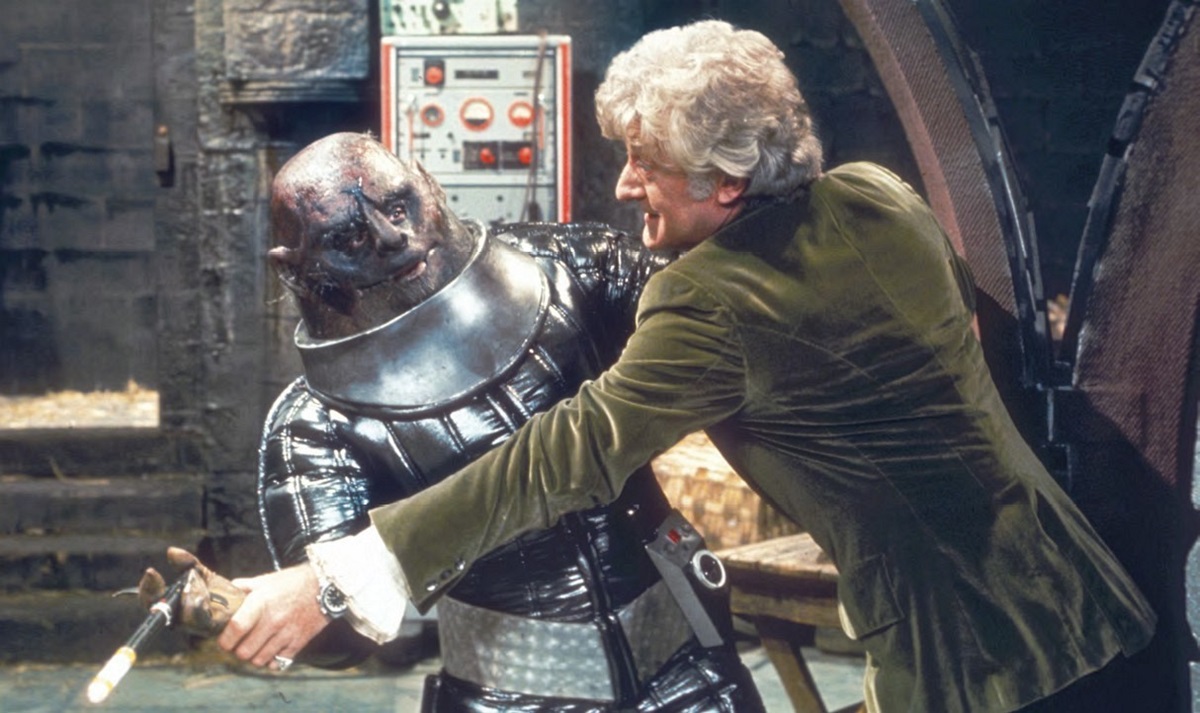
Opening with medieval miscreant and aspirant robber baron Irongron’s extended overblown refusal to countenance the presentation of substandard wine and Commander Jingo Linx of The Fifth Sontaran Space Army Fleet planting an hilariously perfunctory flag to claim Earth on behalf of the Sontaran Empire, The Time Warrior may well have been the first largely historically-set Doctor Who story since The Highlanders back in 1966 – there’s more about that here, incidentally, and frankly no, nobody would really have been counting The Abominable Snowmen as particularly ‘historical’ in the early to mid-seventies – but it cannot really be said to have had tremendously much in common with Polly and Kirsty tipping over a table with some ham on it or whatever it was. Setting up camp somewhere between Arthur Of The Britons and Up The Chastity Belt, it takes the form of a suitably weather-beaten and bawdy – in terms of dialogue and delivery if not actual content – sword-swinging Cloppa Castle-anticipating battle between the hard-of-thinking and the harder-of-thinking, abetted and aided respectively by the scientific intervention of a not exactly Round Britain Quiz-troubling intergalactic thug, with so much actual genuinely amusing humour and indeed literal rapier wit bandied around that it’s a wonder that Jon Pertwee didn’t start reading out that list of ‘hilarious’ mispronunciations of his name that weren’t again. One particularly memorable zinger punctuates Linx’s discussion with Irongron and his harder-than-hard-of-thinking second-in-command Bloodaxe over the somewhat pressing need to capture this pesky and meddlesome yet suspiciously scientifically knowledgeable ‘Doctor’, with the exasperated Sontaran conceding that Irongron’s description of ‘a longshank rascal with a mighty nose’ is indeed how he might appear to human eyes. Although proud veteran of stage farces, Carry On films and The Gay Dog Jon Pertwee will doubtless have laughed along and done a bit of comedy ‘checking nose’ business during rehearsals, it would nonetheless have been interesting to see his mighty-conked reaction on first chancing upon the line in his script; it’s not a description that found its way into those ‘The Changing Face Of Doctor Who’ bits in the Target novels, let’s just put it that way. Though even if Pertwee might not have been quite aware of it at such loftily longshanked heights, it really does seem that historical comedy was in the grey raincloud-sodden air in 1973…
‘Tis Just A Scratch

As deadlines, investments and some contractual ill-advisedness with that berk who later decided he was the ‘Seventh Python’ loomed late in 1973, ‘Monty Python’s Second Film’ as it was then officially titled – and let’s be honest, they almost certainly actually considered calling it that – was still essentially a formless and tenuously-themed collection of largely unfilmable open-ended sort of quasi-sketches nobody had quite thought through, the bulk of which would wind up forming the bulk of the unfairly overlooked fourth series of Monty Python’s Flying Circus the following year. Thankfully, by the time the final draft of the screenplay was delivered on 20th March 1974, they’d realised that there was a little more to those meandering bits and pieces about King Arthur and the Knights Of The Round Table, and Monty Python And The Holy Grail was on the alarmingly unstable rope bridge to its star-studded premiere at the Classic Theatre, Silbury Hill. During this time, it gained a celebrated and much-imitated albeit usually with the least funny lines sequence in which Graham Chapman does battle with John Cleese’s impassable ‘Black Knight’, slowly but consistently depriving him of all his limbs in the face of his utter refusal to concede defeat and cease fighting. Meanwhile, between 15th December 1973 and 5th January 1974, The Time Warrior introduced viewers to an unstoppable robot knight built by Linx for Irongron, thrusting and parrying relentlessly into battle with not even a procession of well-aimed airborne missives from Hal The Archer capable of impeding its progress. Obviously there is no suggestion that the two are in any way related, although it is worth noting that Michael Palin’s diaries are conspicuously empty for more or less the entire duration of The Time Warrior, save for a round-up at the end of December in which he reveals that he has been too preoccupied to keep up with it due to – conveniently enough – the pressure of work on the final draft script of Monty Python And The Holy Grail. Maybe the pair of them should just call it a draw. Anyway, this was also the point at which Monty Python And The Holy Grail gained its brilliantly hilarious opening credits, though you can find much more about them here. Mind you, not all comedy in 1973 was quite so progressive and subversive…
“Here’s A Funny Thing…”

For reasons that are never made altogether entirely clear, Planet Of The Spiders opens with The Doctor and The Brigadier attending a suspiciously ad-hoc variety show audience full of Ronnie Corbett men that almost looks like it might actually just be some chairs flung into a corner of a BBC studio. So much like any actual variety show then, boom boom. They are ostensibly there to observe the suspiciously effective act of mind-reader extraordinaire Professor Herbert Clegg, though first they have to sit through belly-dancing Turkish delight of the East Sherezadi – whom The Brigadier expresses his admiration for in a rare moment of please-stop-talking – and a flatly-accented club comic who takes what seems like the entire episode to tell that joke about Archimedes being a streaker. Although the Ronnie Corbetts are seen to guffaw in a manner that suggests an unseen Ronnie Barker has just made a comment about a policeman taking down someone’s particulars, The Doctor and The Brigadier are visibly unamused by his witticisms, and frankly it is difficult not to side with them. Perhaps he ought to have opened with Wenn ist das Nunstück git und Slotermeyer? Ja! Beiherhund das Oder die Flipperwaldt gersput!. Thankfully we were spared the comedian’s own thoughts on Sherezadi, though he probably should have been grateful that one individual in particular hadn’t joined them for the evening’s entertainment…
I Think He Was Referring To Women’s Lib
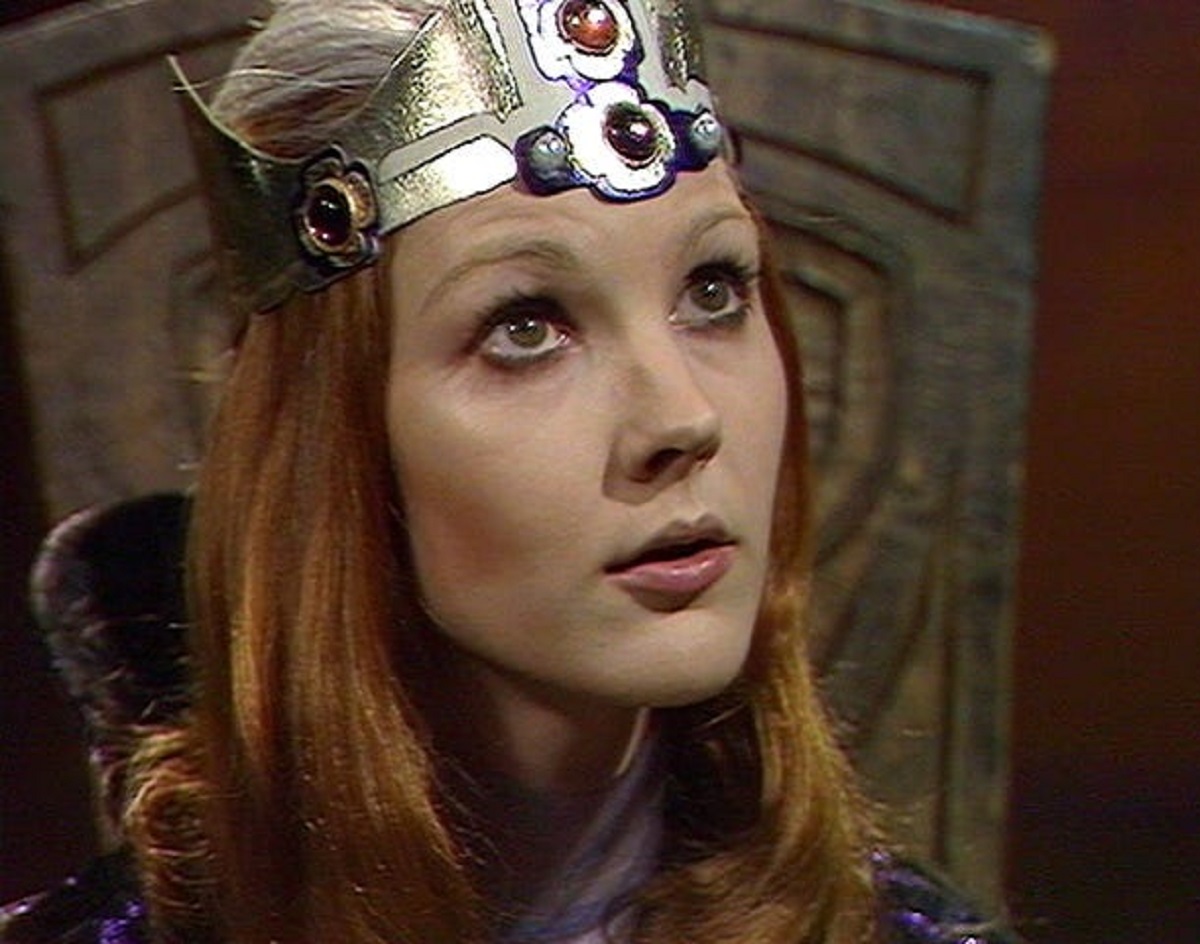
Ostensibly set fifty years after The Curse Of Peladon, The Monster Of Peladon with absolutely no grimly ironic latterday parallels whatsoever revisits the once-promising aspirant entrant to the Galactic Federation and finds that a good deal has gone awry in the interim. The trisilicate miners are facing down the establishment, a rogue faction of Ice Warriors in cahoots with Supergrass-haired Engineer Eckersley are plotting to surreptitiously subvert all those Eurocrats, bureaucrats and other bonkerscrats trying to take away Dave Nice’s Great British Tuesday – still while somehow managing t0 look less like reptilian aliens than Nigel Farage – and old superstitions are on the rise again as lullaby-placated ALF-alike tunnel roamer the great beast Aggedor has been sighted again. Oh and Vega Nexos is threatening to go on strike demanding more ‘lines’. Caught in the middle of all this is purple sequin-fixated incoming monarch Queen Thalira, daughter of the Federation-courting King Peladon, who is being assailed from all sides by mansplainy ‘takes’ on the situation her and her subjects have found themselves manipulated into, without much in the way of support or sage advice even from Alpha Centauri, who technically has two different kinds of ‘splaining’ at his or her disposal. Until, that is, The Queen reels off her frustrations and woes to Sarah Jane Smith, who somewhat forcefully rebukes her with an insistence that “there’s nothing ‘only’ about being a girl”, handily defining the Women’s Liberation movement as “very briefly, it means that we women don’t let men push us around”, and demanding that she has to stand up for herself as “it doesn’t matter why they made you a Queen, the fact is that you are the Queen, so just you jolly well let them know it”. True, it can be read with an implicit air of suggestion that Sarah is demanding someone else take action to her specifications without any active participation or support outside declamatory pep talks on her part, but all the same it’s a simple and blunt assertion of an ideal that still holds an enormous amount of weight now, and what is more is particularly pleasing to witness in the throes of an era when Doctor Who was supposedly all about ‘the man’ telling ‘the girl’ to hand him Bunsen burners for the edification of ‘the dads’ or whatever it was, not least because it leads to Thalira saving the day by, well, biting Eckersley. Possibly not quite what Valerie Solanas had in mind but it’s a start. Still, it possibly wouldn’t have had tremendously much bearing on the lead actor’s manly love of big masculine vehicles…
Ridin’ Along In My Whomobile
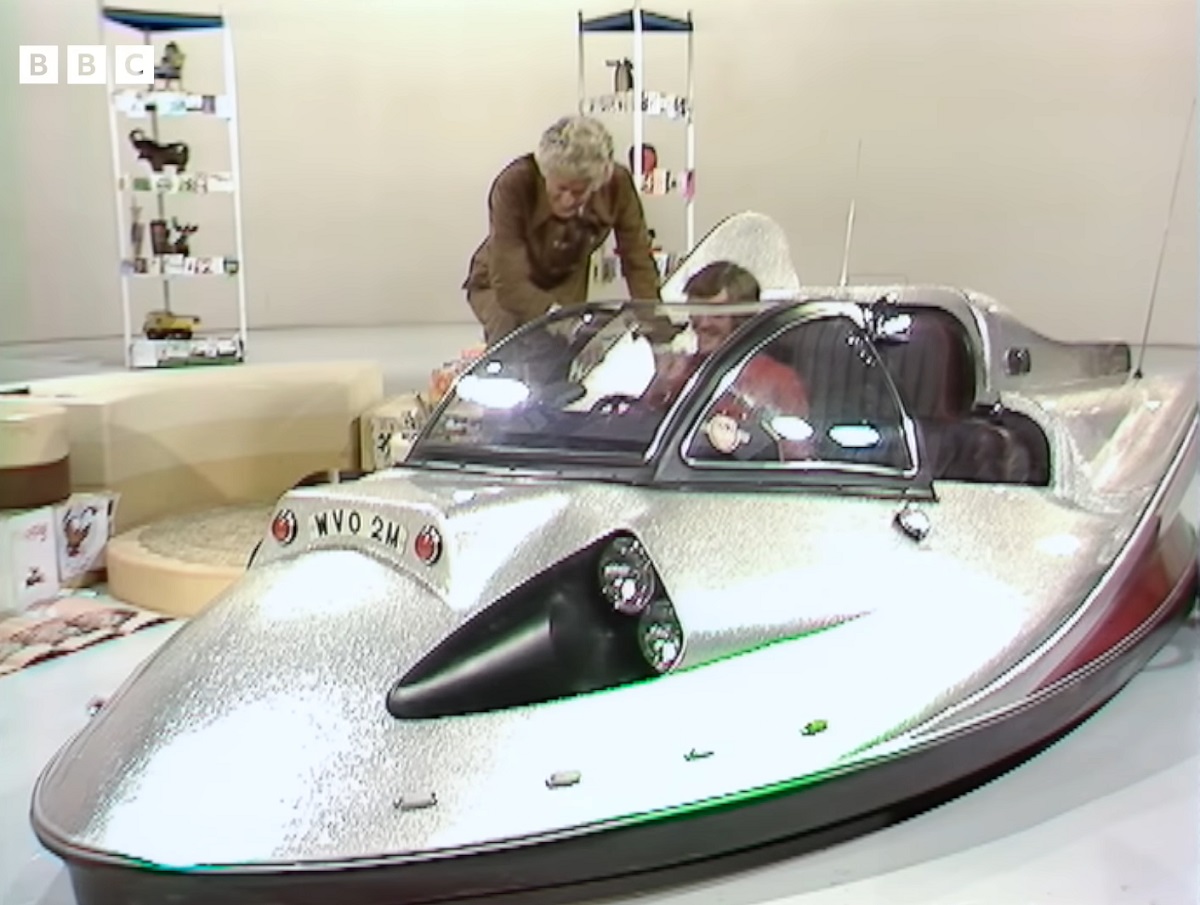
Consistently proving himself adept on-screen at the wheel or equivalent thereof of everything from a vintage car and a milk float to a gyrocopter and a hovercraft, Jon Pertwee’s enthusiasm for unlikely modes of transport and associated IT Bloke From The Office-level boasts about his purported mastery of them were in no way limited to his in-character antics, and in 1973 he boldly went where no vehicular tall-tale spinner had gone before by commissioning a space-age futuristic Car Of Tomorrow from custom automobile constructor Peter Farries. ‘The Alien’, as it was officially known, boasted an entirely non-functional on-board ‘computer’, a just-about functional dashboard-mounted television with an attached aerial which was presumably handy for keeping up with Moonbase 3, and a low-mounted wheel-obscuring trim of such suspension-defiance that it would even have won props from Snoop Dogg doing that arm-wavy ‘conducting’ thing at a bouncing car in a video. Part boat, part Reliant Robin and part Sky-Moo, the hugely impractical reverse park-challenge of an overexpensive indulgence made its debut on an edition of Blue Peter in which Pertwee was grilled by Peter Purves over the not remotely prepared observation that it looked like it was gliding on a cushion of air, to which he responded that it was his ordinary car that he drove every day and it was his house and he lived there and he was at home watching television on a Wednesday. Whether or not Richmond Upon Thames residents were regularly treated to the sight of Pertwee pulling up in The Alien to stock up on Butterscotch Angel Delight and Shake’n’Vac at his local Fine Fare is sadly not known, but under the guise of ‘The Whomobile’ it would make a grand total of two appearances in Doctor Who, skidaddling from a brontosaurus in Invasion Of The Dinosaurs and participating in a dubiously-realised and nigh on episode-long chase in Planet Of The Spiders, subsequent to which it apparently somehow became widely and officially recognised as ‘The Doctor’s Car’, to the extent that there is probably a very angry thread on some forum somewhere full of halfwits snarling that Jodie Whittaker cannot be considered ‘canon’ because she was never seen driving it. Then again, while The Whomobile was and could never be Bessie, it is sometimes difficult to draw a full and absolute distinction between the eccentricities of the character and the extra-curricular wilful oddness of the lead actor, and especially so in Pertwee’s case…
“And Remember – Only Murderers Are Allowed To Lie!”

On paper, Thames Television’s lounge funk-heralded panel show Whodunnit? – in which a quartet of extremely seventies celebrities scoured stiltedly-acted scenes apparently snipped out of a Sunday 7pm ITV drama for clues to help them identify the nominal fictional murderer of the week – was a tremendous idea. On screen, however, it didn’t quite work. Doubtless selected on the basis of his recently-concluded shadowy escapades as secret service agent David Callan, although astute cinemagoers would have soon been questioning why they were being asked to put their deductive trust in someone who couldn’t even spot that the residents of Summerisle were playing him for a literal fool, Edward Woodward hosted the first run in 1973 and proved to be singularly uncomfortable in the role and atmosphere-stiflingly lacking in enthusiasm, barely getting from one end of the sentence to another without deploying a jarring quantity of on-camera erms. They clearly had a winning format if not a winning anchor, though, and for the second run they evidently needed a more flamboyant and outgoing host who if given half the chance would probably claim unprompted to have foiled the South Eastern Railway Great Gold Robbery of 1855 single-handed. Enter Jon Pertwee, habitually sporting an open frilly shirt and medallion and as End Of Part One had it continually treating himself with Teak Oil, and more importantly also well known as the concurrent star of another show with ‘Who’ in the title. There is little doubt that Pertwee’s gurns, stares and exclamations of disbelief were what made Whodunnit? into one of the biggest early evening sensations of the decade, but it also posed something of a logistical conundrum for Doctor Who fans on the basis that he came across as a little, well, Doctorish. It was a question that had never really bothered anyone with regard to the otherwise largely retired William Hartnell and his long history of playing extremely old ‘juvenile’ delinquents and the notoriously out of hours publicity-shy Patrick Troughton and his liking for bewilderingly varied roles, but it was one that would continue to plague fans all the way from Tom Baker boot-hoofing ominously around The Book Tower and Sylvester McCoy furiously gesticulating along to viewers’ narrative suggestions in What’s Your Story? to Jodie Whittaker musing that Gruff Rhys’ new one is alright I s’pose but Hotel Shampoo now there was an album in the 6Music presenter’s chair, especially in the age when there wasn’t any ‘extra’ Doctor Who outside of actual Doctor Who itself – where does the character end and the qualities that the actor brought to the role begin? Could you legitimately consider A Very Peculiar Practice to be a spin-off where The Doctor was posing as, well, another Doctor in the exact same manner as Human Nature/The Family Of Blood? It’s a question that, considering how maniacs babbling about the twelfth segment of time would take the ball and run with it without ever having the wider cultural awareness to vouchsafe a theory about that footballer Peter Capaldi played in Lenin Of The Rovers, is probably best avoided, and to which there is more than likely no real answer anyway. Although you can bet that Pertwee will have claimed to have found one.
Bellal’s Mate’s Mate
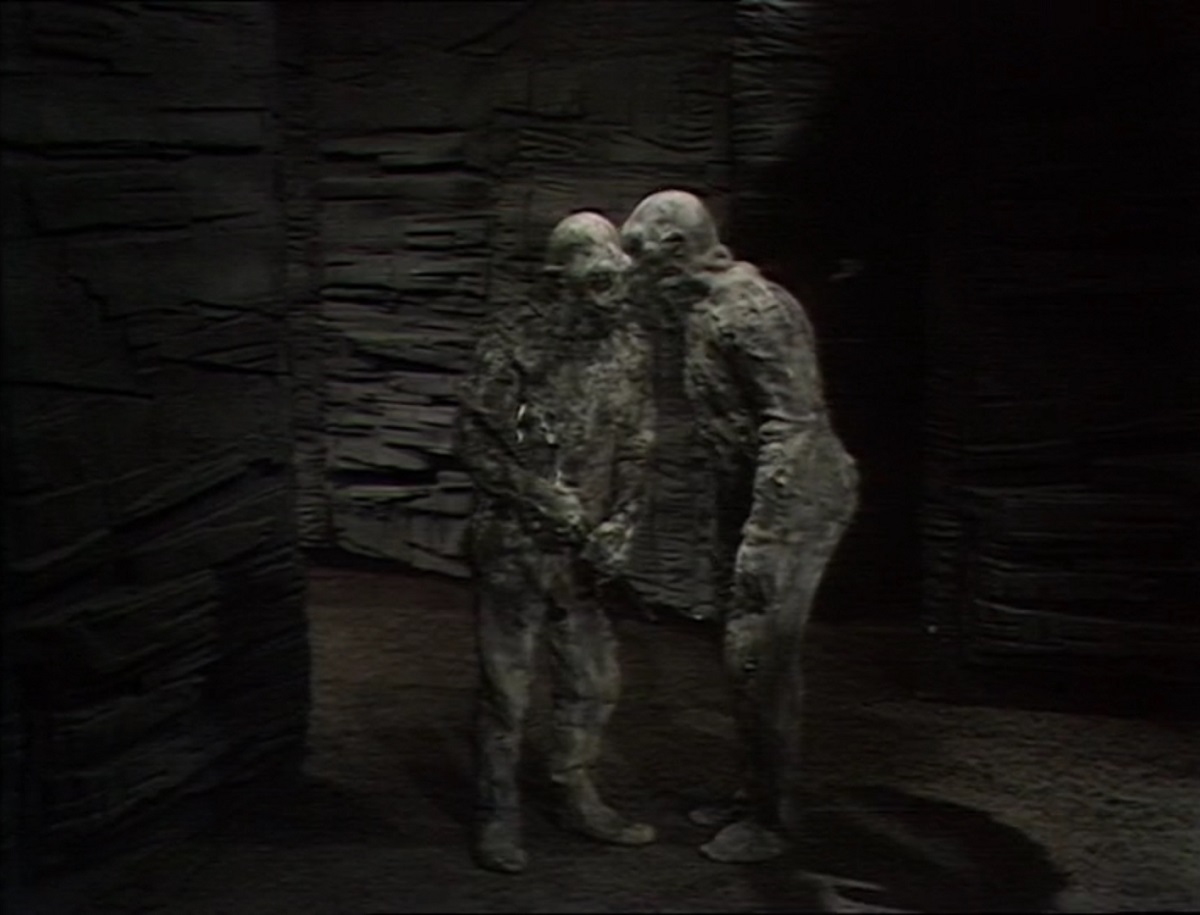
Far from the only satiyyrre of the fossil fuel disputes in this particular run of Doctor Who, and something of a challenge to the tiresomely unshunnable myth that Terry Nation only ever delivered eight page scripts about someone called Tarrant trying to blow up an endless procession of Dalek ‘Cities’ via a tunnel that they had somehow neglected to monitor or secure in any meaningful sense whatsoever, Death To The Daleks finds the recurring antagonists stranded on pointedly-named energy-draining planet Exxilon and having to resort to a kind of MTV Unplugged version of exterminating as the Marine Space Corps do their darnedest to stop them getting their plungers on a ready supply of delicately-named mineral ‘parrinium’. Leading Exxilon’s own not particularly pleased resistance to this incursion is genial and cultured sort of clay Raggerty man Bellal, who is joined halfway through his quest to reach the heart of the Exxilion City first by a second near-identical representative of his tribe warning him, The Doctor and Sarah Jane about “the creatures from the spacecraft – two of them, coming this way!”. Although Gotal is obliquely named as such in the closing credits, and more definitively in the subsequent novelisation, most observers simply missed this and he came to be more commonly and entertainingly referred to as ‘Bellal’s Mate’. What this convenient frame of reference omitted to consider, however, was that they are subsequently joined by a third virtually indistinguishable Exxilon who arrives to inform them that “one of the machine creatures has been destroyed by a probe at the diggings”. Although he was dubbed ‘Jebal’ in the novelisation, presumably for no other reason than paginatory convenience, there is no other indication either on or off-screen that he has any kind of name whatsoever, and therefore logistically he should be uniformly referred to as ‘Bellal’s Mate’s Mate’. You do have to feel for whoever went up to Subway with their group order. Perhaps sensibly, though, Bellal opted to go it alone when it came to traversing the story’s big setpiece obstacle challenge…
Doogy Rev!
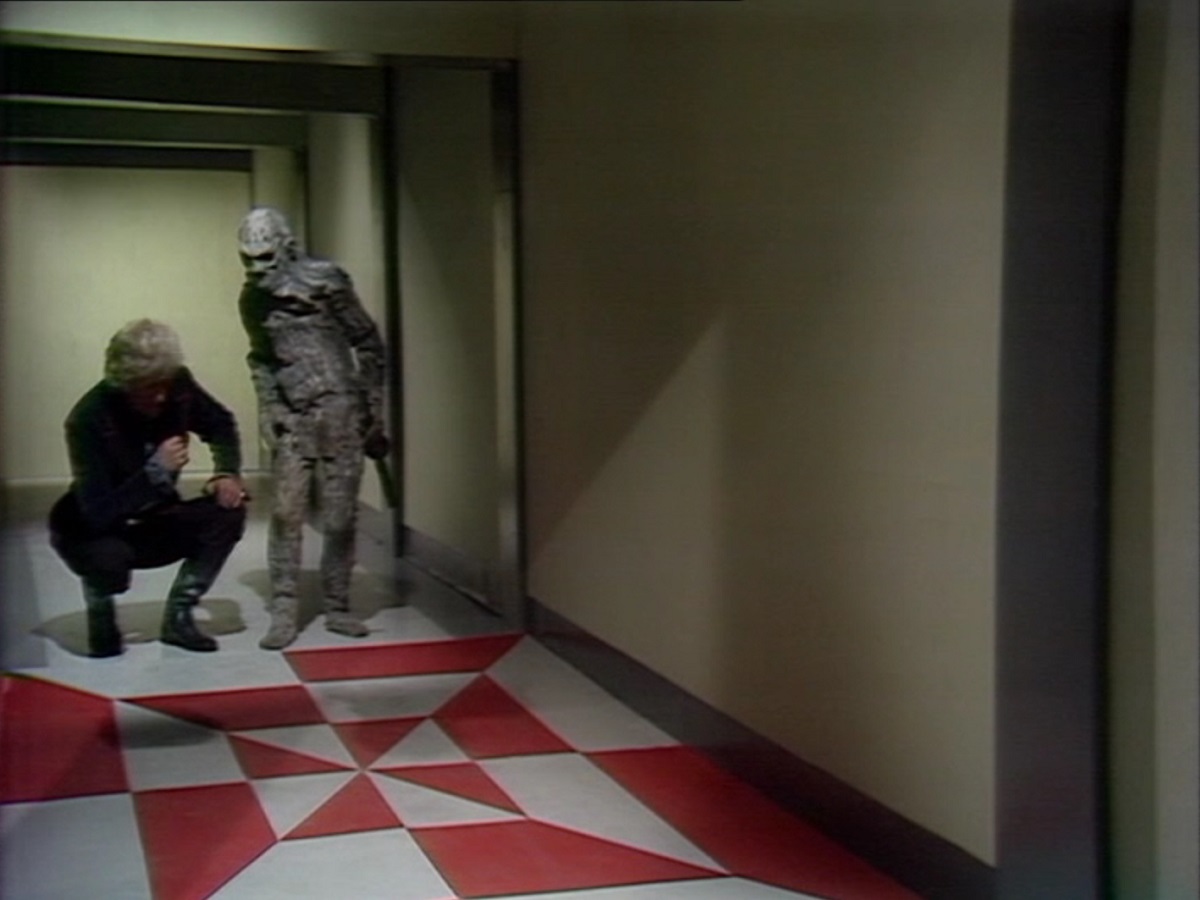
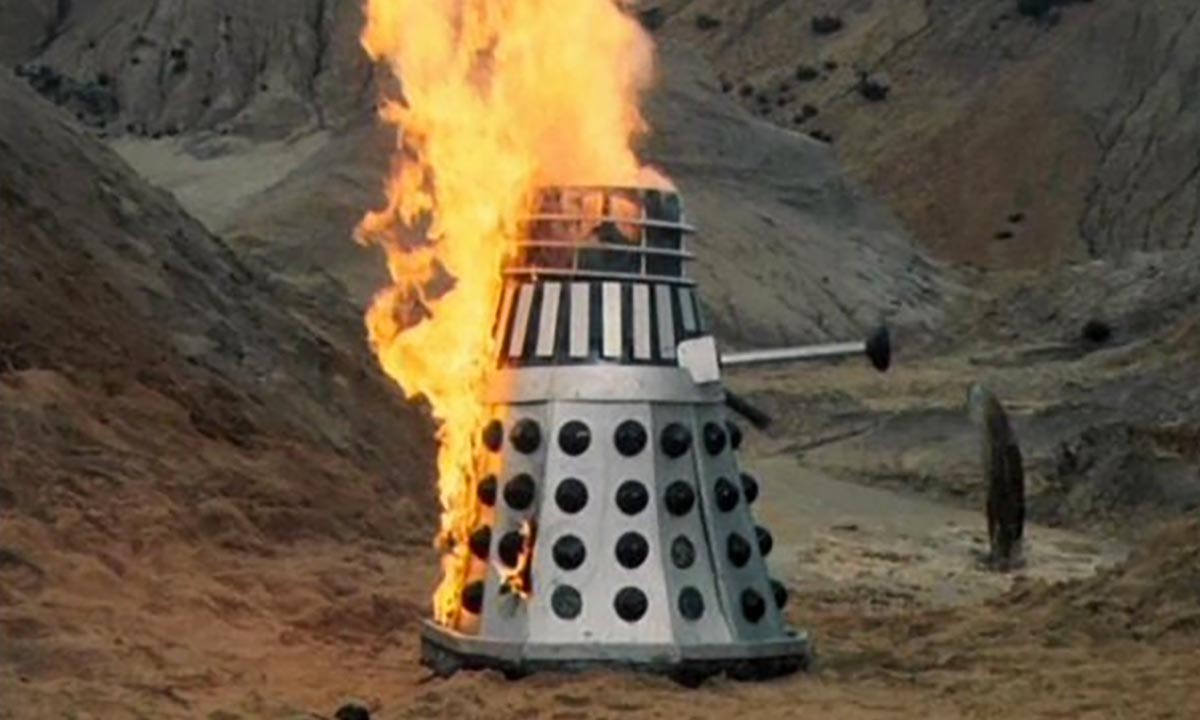
With no small irony upon no small irony, which in itself is no small irony, owing to the threat of industrial action and the time-honoured fear of ‘the plugs’ being ‘pulled’ at the end of the allotted studio session, episode three of Death To The Daleks wound up with a famously underwhelming cliffhanger when, instead of two Daleks barging in a couple of minutes later, the episode ended on The Doctor warning Bellal in a conspicuously overdramatic fashion to stand still in case some lino might ‘get’ them. This is, of course, an electrified trick floor that requires the application of logic, mathematics and, apparently, Venusian Hopscotch to safely navigate, and despite the preposterousness bestowed on it by the credit-interrupted break in action, it is in actuality quite an exciting and certainly a well-acted sequence, especially once the in-bursting Daleks elect to disregard its tessellating hazard markers. So much so, in fact, that you do have to wonder if anyone looking in would later play a part in devising the suspiciously conceptually similar floor-crossing Drogna Game for BBC’s early evening Children’s BBC-adjacent Douglas Adams meets Dungeons And Dragons game show The Adventure Game. They even use coins to calculate safe passage, although sadly no green cheese rolls are evident. Perhaps in a bid to make up for that disparity in underpromised excitement, incidentally, the novelisation of Death To The Daleks somewhat overdelivered with a cover illustration of an elaborately exploding Dalek that, it has to be conceded, did not quite match what was seen on screen, although even that looked positively restrained and subdued next to one of its contemporaries…
KKLAK!
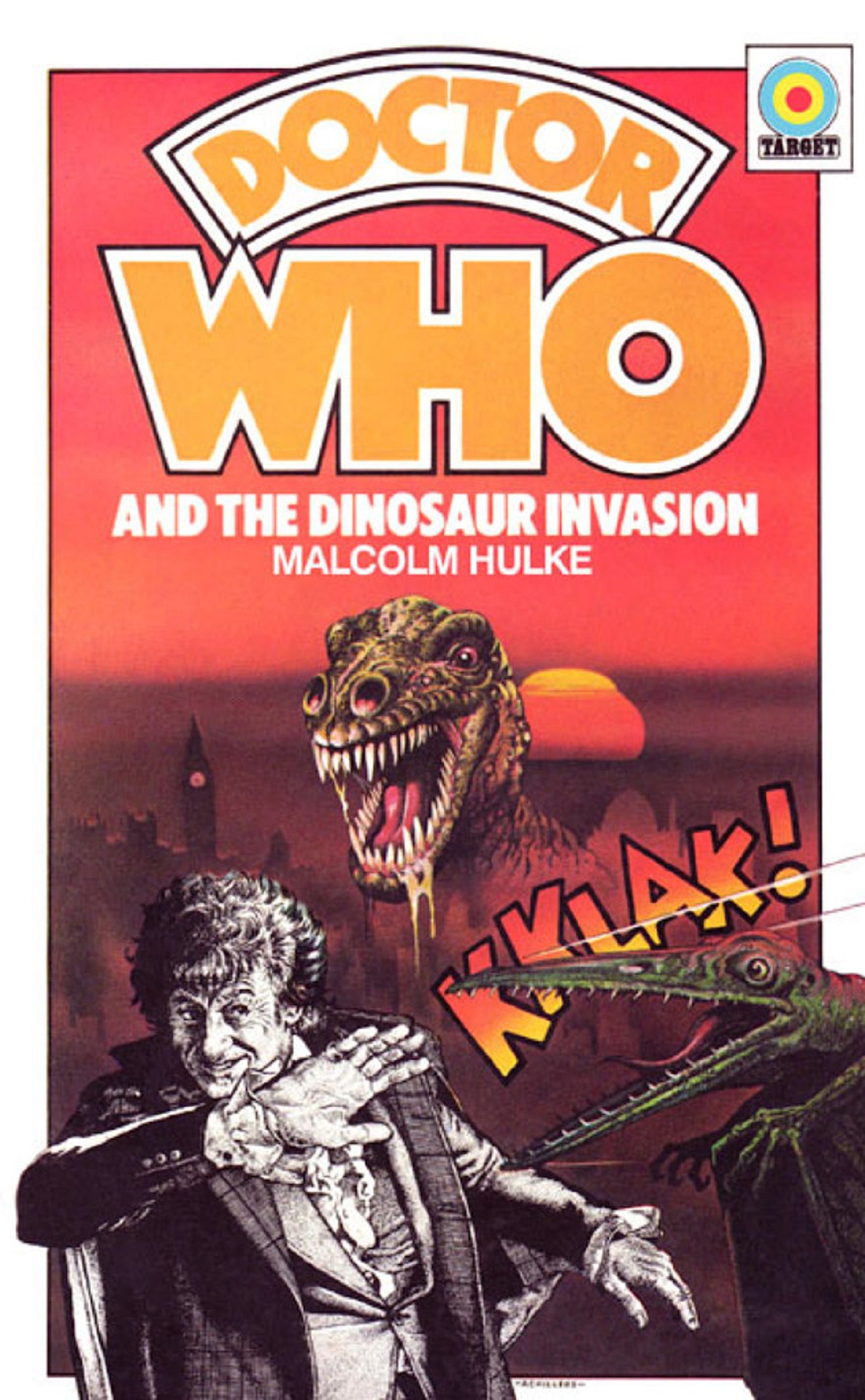
Much like anyone who found themselves drawn towards Operation Golden Age with actual honest and decent intentions, poor old Invasion Of The Dinosaurs has the odds stacked insurmountably against it. You can argue that it’s an impressively directed and daringly bleak parable about nostalgia, military bureaucracy, political populism, the risks of unquestioningly following both the media and those who have all the answers and suspicion of new technology all at the same time all you like, but the Ledumahadi Mafube in the room still remains – it’s the one with the puppet dinosaurs that looked unconvincing and indeed unconvincingly cued in even by 1974 standards, and although you wish they wouldn’t reach straight for it when putting together point-and-laugh clip shows, for once you can’t really altogether entirely blame them. Perhaps that’s part of the reason why when Malcolm Hulke’s even better novelisation rolled around in 1976, Target went out of their way to compensate for the original rendering’s lack of visual impact; not only did they retitle it as the more WH Smith-eyecatch friendly Doctor Who And The Dinosaur Invasion, they also dressed it up in a spectacular Chris Achilléos cover featuring Jon Pertwee against an ominously darkened London skyline being assailed by assorted dinosaurs, including one particular purported Pterodactyl relative causing him to recoil at the sound of its mighty ‘KKLAK!’. Quite how it is managing to make this sound whilst apparently in the process of opening rather than slamming shut its jaws remains something of an evolutionary mystery, and it will no doubt come as little surprise that it was not subsequently adopted as scientific terminology by the Interdisciplinary Centre For Ancient Life at the University Of Manchester. It confused, it bemused, it amused and it provided the title for approximately twenty seven thousand million fanzines, but as nice as it is to be in the slick streamlined days of big budget convincingly dinosaured all-Disney Doctor Who snorting at those suckers who still watch ‘television’ on the ‘BBC’ to get with the times, grandad, you can’t help but feel that it’s a little sad that the wilful left-hand-right-hand that’ll do disregard that once gave us such endearingly charming eccentricities as ‘KKLAK!’ have become extinct. Still, change is precisely what Doctor Who does…
Well, Here We Go Again…
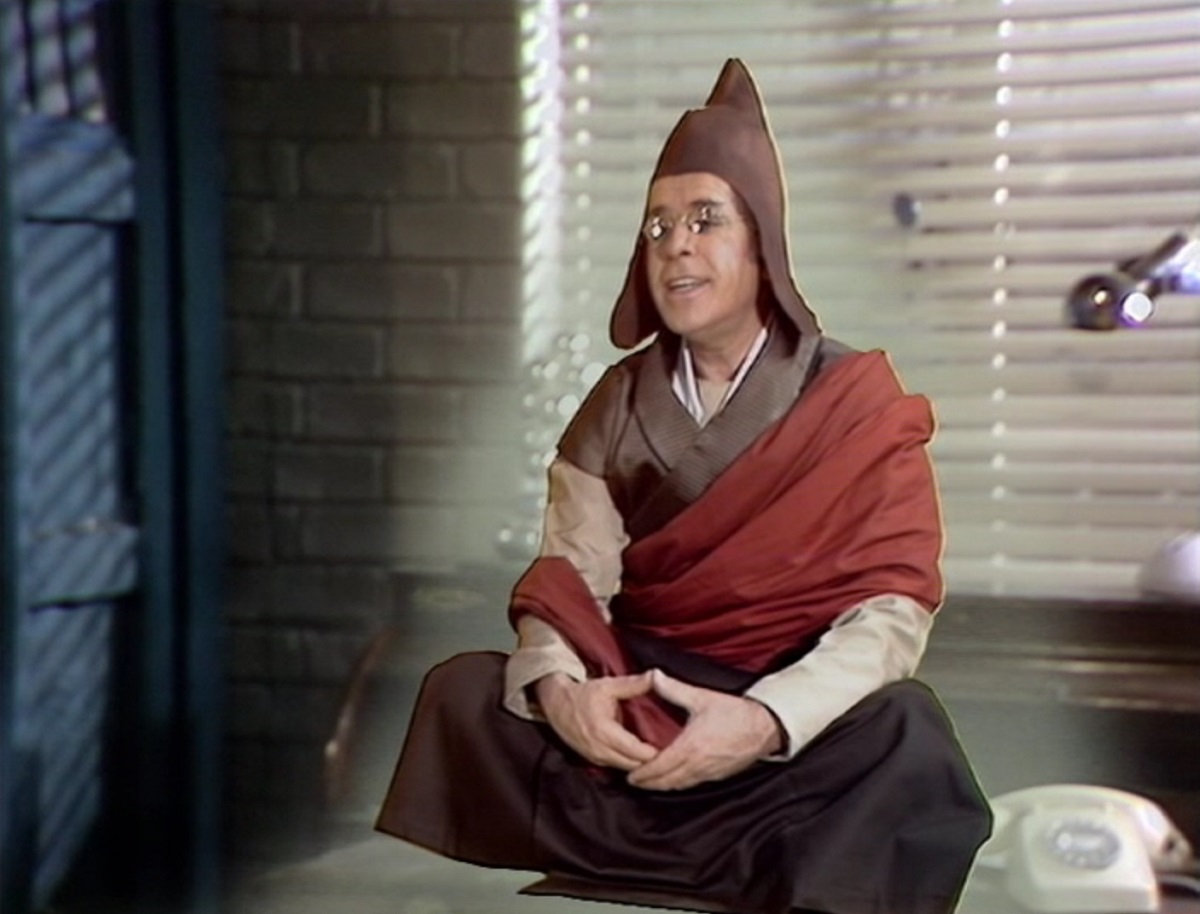
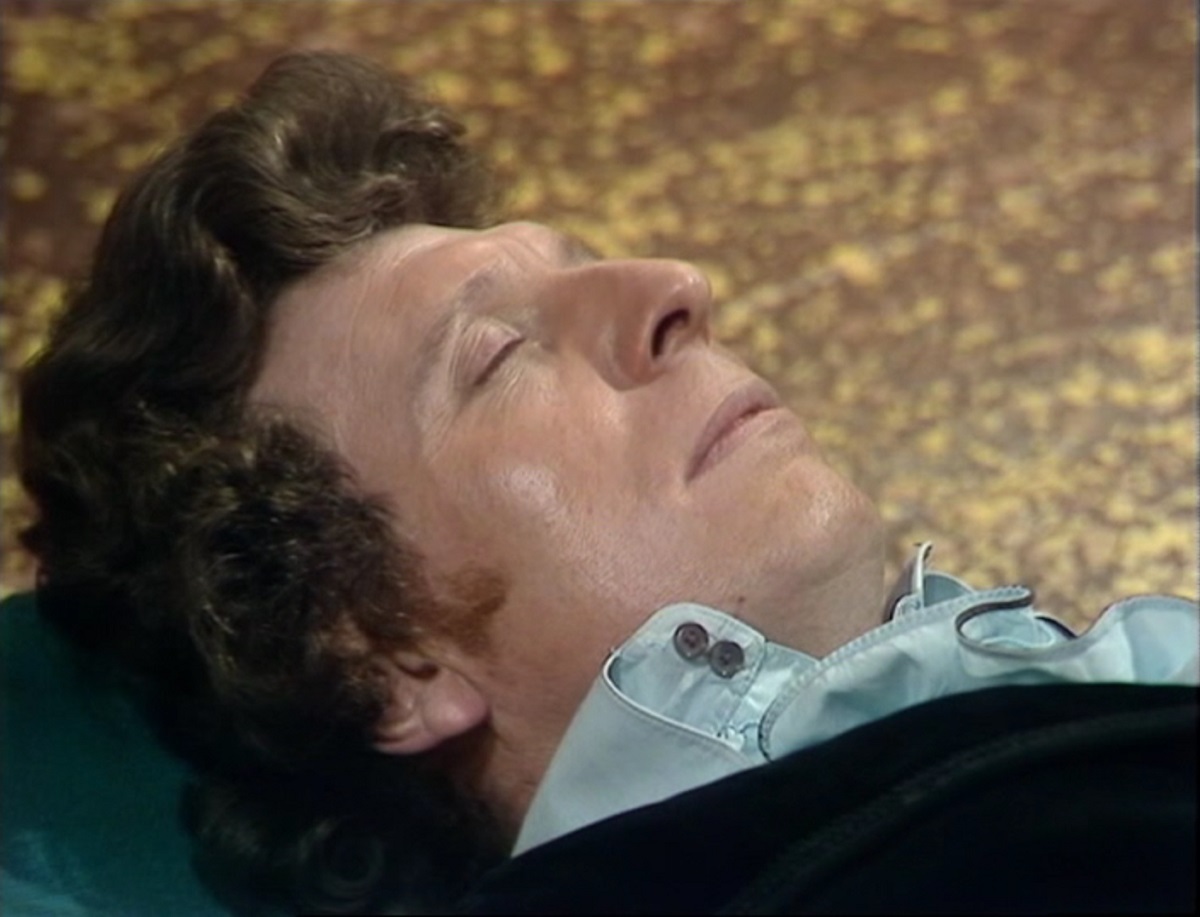
At the conclusion of Planet Of The Spiders, having discovered that this Metebelis III place he’d been blabbering on about visiting for the past seventeen thousand centuries wasn’t exactly suited to his biological wellbeing, The Doctor collapses to the floor in U.N.I.T. HQ and prepares to regenerate, with a little help from his equally incessantly referenced spiritual mentor K’Anpo Rinpoche. Much of what follows, and much to The Brigadier’s starchily-moustached annoyance, is given over to mid-air philosophical musings on the common existential plane between rebirth and renewal and continuity and consistency, before the vision mixer crossfades from mighty nose to mighty nose and Tom Baker – The Fourth Doctor – is suddenly here. It would be easy to write this off as a clumsy if charming manifestation of some of the popular pseudo-scientific preoccupations of the day and the theophilosophical inclinations of one member of the production team in particular, if it wasn’t for the fact that, whether by accident or design, it all turned out a little more profound than that. Jon Pertwee had arrived in Doctor Who in a blaze of colour and action, and indeed more modern philosophical and ecological concerns, yet it remained in essence the same character and the same show, while at the same time becoming an entirely different character in an entirely different show. This is exactly what happened here as well, and while it is impossible to quantify or contextualise in any straightforward logical or rational sense, the second that Tom Baker appears on screen there is a definite inherent underlying shift towards a figuratively and literally darker direction. This could of course be down to how much we know now about what would come next, but it honestly doesn’t seem like this is the case – there is something about his entire physical and artistic approach to the role, even while lying down and not actually saying anything, that changes course as abruptly and decisively as “Aw, brilliant!”. He is fundamentally still The Doctor, but equally fundamentally his own Doctor, yet still connected enough with the established notion of ‘The Doctor’ for a complete and abrupt reinvention to appear both seamless and entirely a casual necessity. If you want to be slightly less profound about it, the more things change, the more they stay the same. It all circles back to continuity. Through try telling that to Bellal and his cliffhanger.

Anyway, join us again next time for Styre getting through to the final on Bullseye, how to tell who is the most startled out of a Vogan and a Cyberman, and some conveniently omitted rope bridges…
Buy A Book!
There’s plenty more about Doctor Who – and about the barely describable eccentricities of early seventies television in general – in Keep Left, Swipe Right, available in paperback here or from the Kindle Store here.
Alternately, if you’re just feeling generous, you can buy me a coffee here. Preferably one so strong it could legitimately be accused of going ‘KKLAK!’.
Further Reading
You can rewind back to the start of Jon Pertwee’s stint as Doctor Who in It’s Still A Police Box, Why Hasn’t it Changed?: There’s A Stahlman, Waiting By Some Pipes here.
Further Listening
There’s tons of further Doctor Who-related chat, including a look back at what it was like to actually go and see Jon Pertwee starring in the ‘laser-effect’ assisted stage musical Doctor Who – The Ultimate Adventure, in Doctor Who And The Looks Unfamiliar here.

© Tim Worthington.
Please don’t copy this only with more italics and exclamation marks.
 Tim Worthington