In the bleak midwinter, long long ago, there was a Christmas album. It was the first of its kind and should have always been regarded as the best of its kind, but the odds were stacked against it from the outset. It was released on 22nd November 1963, and was literally being put out in record shops just as a certain motorcade passed a certain grassy knoll and left nobody in any real mood to tolerate its charming cover art of pop stars leaping out of present boxes and liberal musical trimmings of snowmen, mistletoe and assorted festive foodstuffs in varying degrees of toastedness. It was reissued in 1972 on the back of a wave of belated critical and commercial interest, only with an objectionable atmosphere-dampening stereo mix and one of the worst covers ever inflicted on an album or indeed on the people who had to look at it. Over the years the snow kept calling and friends kept calling yoo-hoo and it would steadily grow in reputation and ubiquity, until just at the point when it was finally starting to be taken seriously as a ‘classic’ album and seasonal radio staple, the producer with his name all over the album title and who narrated its wellwishing closing track – after a lifetime of what could even generously only be described as ‘questionable’ behaviour – did something unspeakable and behaved even more unspeakably when held to account over it, consigning A Christmas Gift To You From Philles Records as it was originally called and in retrospect should probably have stayed as to an awkward cultural limbo where everyone wants to like it but nobody really wants to mention it. To think it once seemed inappropriate and unfair to comment on the fact that on that 1972 cover photo, he looked like the sort of Santa you really wouldn’t want to leave anyone alone with.
Even if nobody in their right mind would especially want to voluntarily listen to Silent Night now, there is an extent to which the album’s uneasy present day status is both unfair and a shame. The Crystals, The Ronettes, Darlene Love and Bob B. Soxx And The Blue Jeans were hardly exactly responsible for their producer’s subsequent actions – in fact it could be argued that certain of their number had suffered enough on account of his behaviour already – as indeed nor was anyone who had previously listened to and enjoyed a thrillingly over-orchestrated collection of what were almost entirely traditional songs and standards; meanwhile, many other rock legends guilty or as good as guilty of equally abhorrent crimes still seem to find their music remaining in widely available circulation because ‘reasons’. The fact that he neither wrote nor sang the overwhelming majority of the album’s contents makes it that much easier – though by no means easy – to separate the art from the artist in this instance, and irrespective of how straightforward it may or may not be to listen to in its own right, A Christmas Gift To You still occupies a significant position in cultural history as arguably the definitive example of a fledgling pop music industry trying to harness the potential mass appeal of the festive season, albeit a festive season of a more innocent time that to a large extent we wouldn’t really recognise any more. There were countless other early attempts at scoring frost-dusted carol-heavy candy cane-striped Christmas hit singles by pop, folk, funk, soul, jazz and easy listening artists in the fifties and sixties – and you can find a good deal more about some of them here – but none of them ever quite came close to this album-length attempt to tap directly into how the listeners thought and felt about the festive season, and while it would be tempting to liken the album’s later fall from grace to finding out Father Christmas doesn’t exist, that wouldn’t necessarily be quite such a bad thing when it came to the Santa on the front of the 1972 reissue.

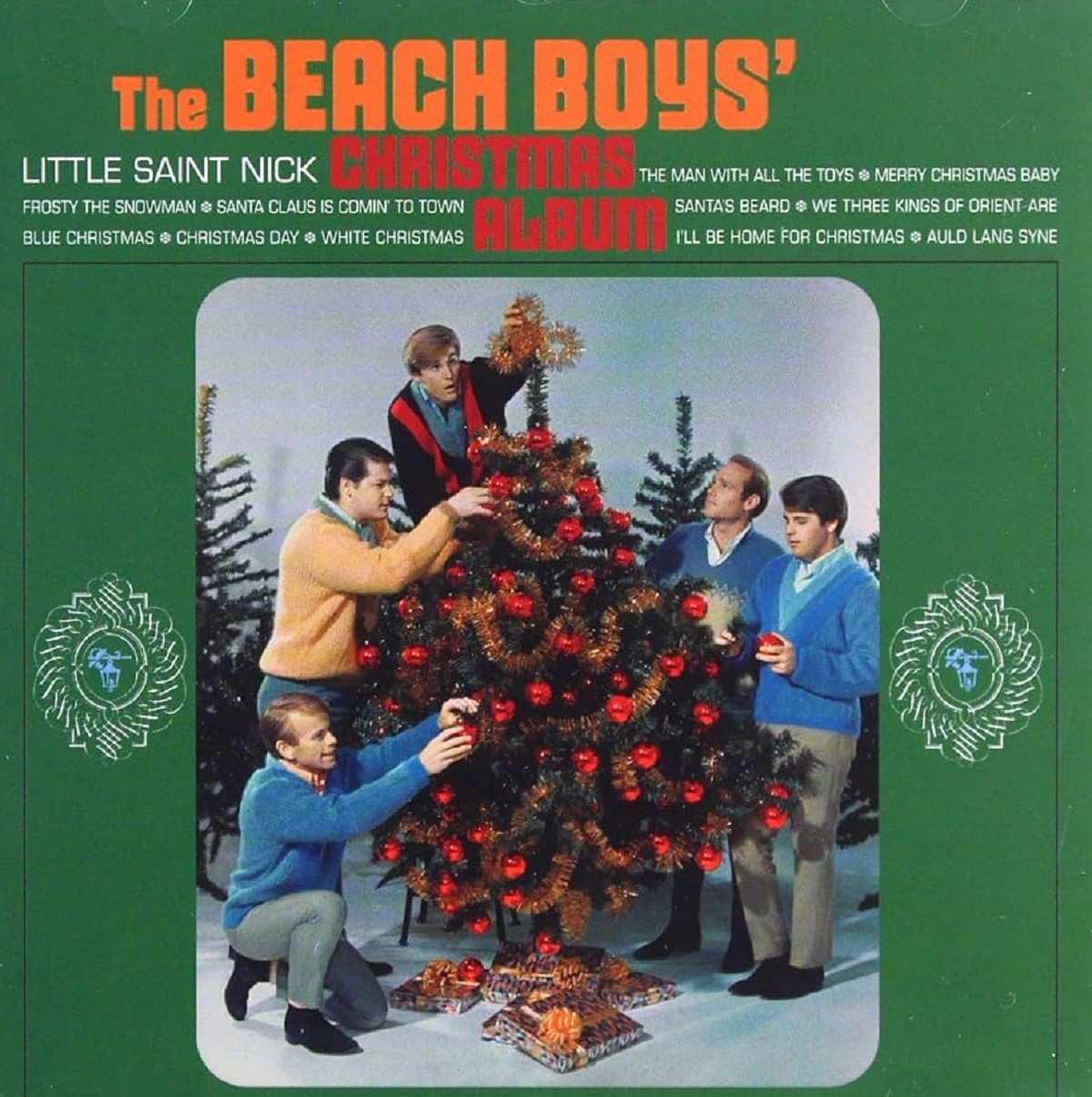
Thankfully, A Christmas Gift To You would meet with a good deal more goodwill when it came to its musical and cultural legacy. While not all of them have exactly managed to follow its template either convincingly or successfully, hundreds upon hundreds of artists both as famous as Rudolph and as forgotten as Comet and Cupid have taken their tinselly gingerbread man-scoffing cues from I Saw Mommy Kissing Santa Claus, Santa Claus Is Coming To Town, The Bells Of Saint Mary’s and basically all of the album apart from Silent Night in the hope of forging their own enduring Christmas standard, and some of them even actually managed to. Presumably having worked through his post-Zapruder angst by writing The Warmth Of The Sun later that same day, Brian Wilson was one of the few who bought and listened to the album and to say he became fixated on it would be something of an understatement; not only did it directly inspire The Beach Boys’ Christmas Album the following year, his obsession with the possibilities suggested by the musical and vocal arrangements would heavily inform both Pet Sounds and the famously unfinished SMiLE (which you can find a lot more about here), which proved that you can only disassemble and reassemble the Wall Of Sound so many times before it just ends up as a pile of bricks. Roy Wood made no secret of his ambition to recapture the sound and ambience, snowman-brought snow and all, on Wizzard’s I Wish It Could Be Christmas Everyday, while John Lennon and Yoko Ono went as far as to hire that original producer for Happy Xmas (War Is Over), but made the crucial mistake of pointing an accusatory finger at anyone who had the temerity to gaze mildly ravenously at a Rowntree Mackintosh Selection Box in Woolworths while there were, like, real issues happening out there in the world when they could have just mentioned reindeer a lot. Its most pronounced, significant and enduring legacy, however, came with a song that – with no small irony – critics have tended to pay very little attention to. Even the ones who’d always quite resented being told off for looking at the toy pages in the Grattan catalogue without John and Yoko’s express written permission.
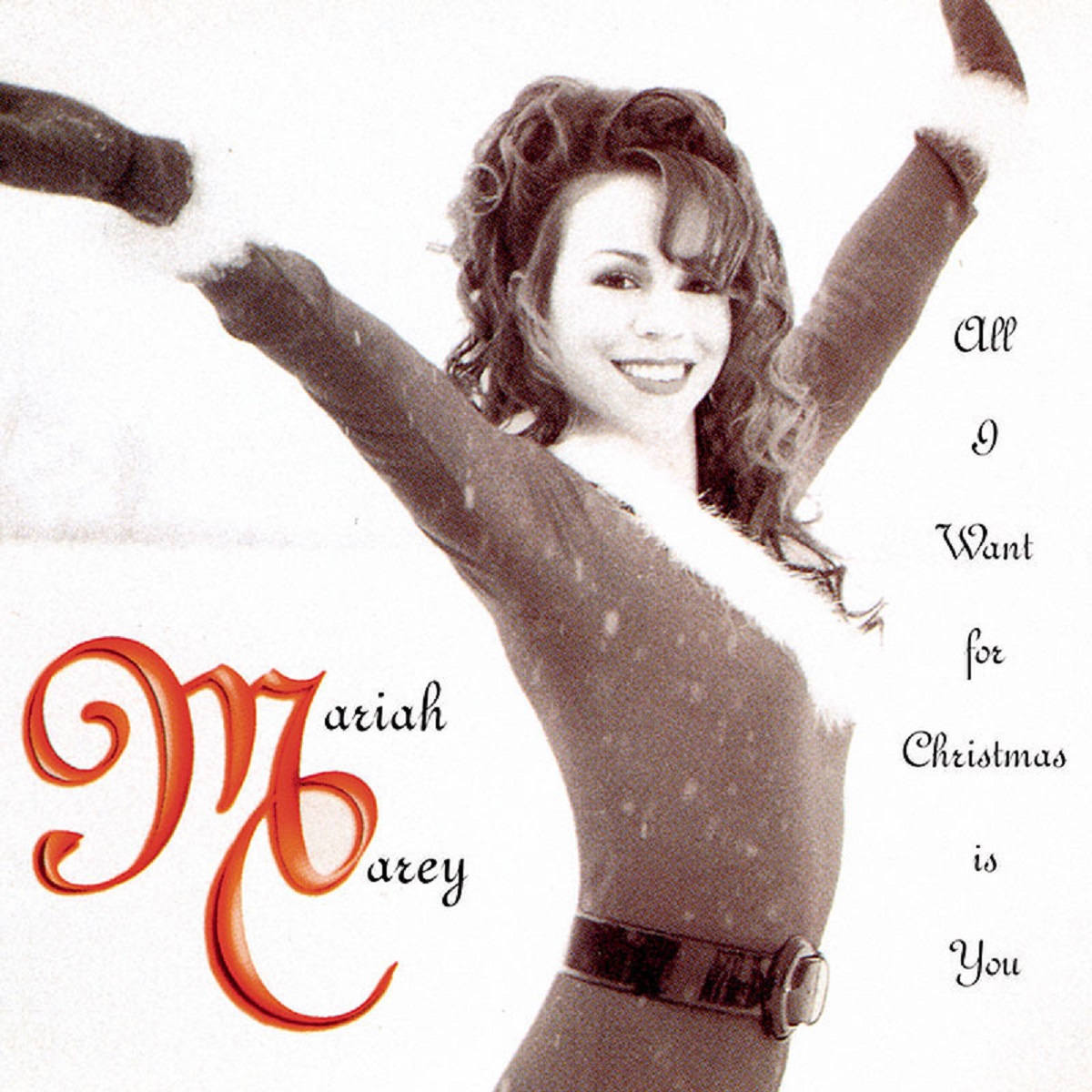
Hot on the heels of her third album Music Box and its two attendant chart-topping singles, Mariah Carey and her regular co-writer Walter Afansieff began composing All I Want For Christmas Is You in the very much not caring about presents underneath the Christmas Tree surroundings of the summer of 1994, initially to a backdrop of considerable record company discouragement. Possibly at least partly informed by wariness over the commercial fate of one particular long player, Columbia were uneasy at the thought of one of their biggest-selling artists doing a Christmas album, which they felt tended to be associated with lazy contractual obligations and desperate attempts to score a novelty hit. In fairness there was good reason for their reticence as nobody had even really managed to score a proper Christmas hit single for quite some time, let alone a full album. Possibly as a consequence of both Do They Know It’s Christmas? by Band Aid and the Band Aid-fundraising Last Christmas by Wham! having tied the festive pop charts back to the much-eulogised charitable real meaning of Christmas in 1984 and the release the following year of the genre-summarising Now – The Christmas Album (which you can hear much more about here) with the unexpected side effect that everybody got heartily fed up with hearing Mud, Wizzard, Slade, Greg Lake, Mike Oldfield and company on a loop everywhere you went very quickly indeed, then unless you count Cliff Richard or Jive Bunny, and frankly there are many good reasons not to, nobody – despite the valiant efforts of Band Aid II, Saint Etienne, The Pogues Featuring Kirsty MacColl and a handful of others – had managed to score a genuine Christmas smash since Shakin’ Stevens with Merry Christmas Everyone in 1985. Over in America, despite the fact that Christmas In Hollis by Run DMC should have been number one for about eight years (an argument explored at length here, incidentally), you had to go even further back to the late seventies and the likes of Paul McCartney’s Wonderful Christmastime and Mary’s Boy Child by Boney M. Meanwhile nobody upon nobody – not even The Beach Boys – had managed to record a Christmas album that was ever really taken seriously as a ‘proper’ part of their discography. Somebody had to break that run of sackfuls of chartbound ashes, though, and it’s a fair bet that when Columbia heard All I Want For Christmas Is You they probably tried to pretend that they’d had a seasonal Mariah Carey album on their Christmas List all along.

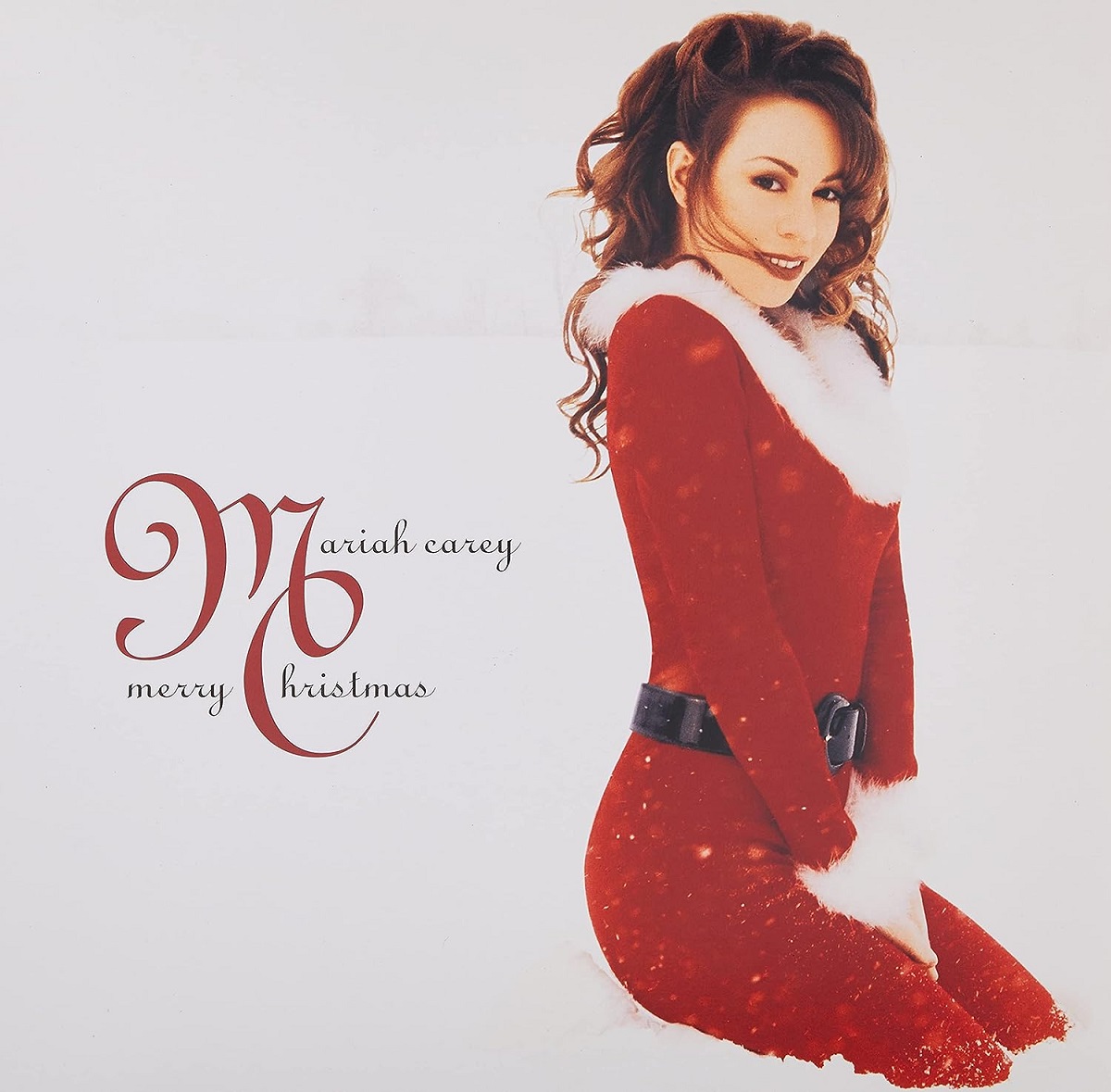
All I Want For Christmas Is You was released in the UK late in November 1994 out of a suspicion that it might take time to build momentum – it made its chart debut at, staggeringly, fifty six – and would steadily climb the charts until it reached number two in Christmas week, kept off only by East 17’s Stay Another Day which it cannot be stated enough times is not a Christmas song. In America, astonishingly, it wasn’t actually released as a single at all, and instead simply distributed to radio stations to promote the album Merry Christmas; as you can imagine, however, it did do ever so slightly well on the airplay charts. It certainly fulfilled its obligations in terms of drawing attention to Merry Christmas, a similarly arranged collection of standards, religious carols, original compositions and a cover of Christmas (Baby Please Come Home) as originally performed by Darlene Love on a certain album from 1963, which became an almost instant international multi-million seller and perhaps more importantly – well, commercial considerations aside – found itself taken seriously as an actual album. Even if one of the songs did later mysteriously disappear from the tracklisting, but you can find out more about what happened there here.
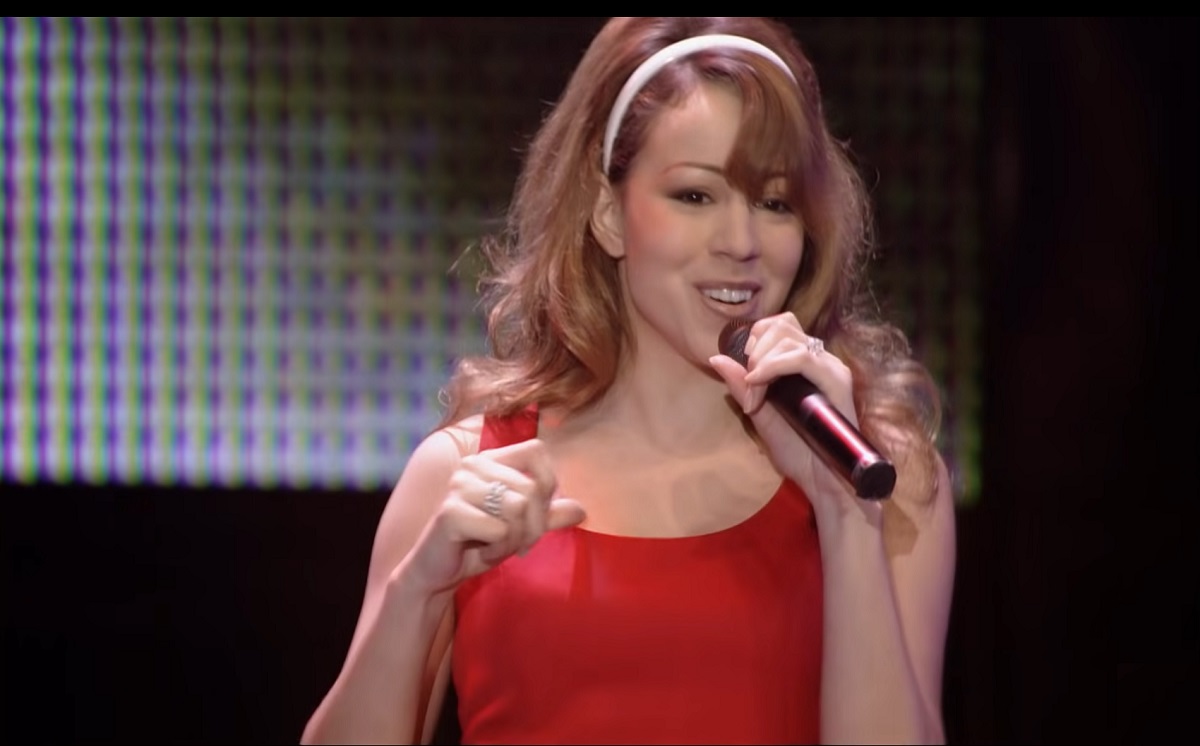
Part gospel, part rock’n’roll and part showtune, All I Want For Christmas Is You is a much cleverer song and arrangement than is ever really given credit for, especially considering that the lyrics are actually an outright rejection of festive cliches including presents and even snow in acknowledgement that none of them can or will make the narrator as happy as her lover simply being there. Even then it’s not entirely clear whether he – or she – is actually there and being contentedly serenaded, or has left and is being dejectedly longed for, or is yet to be ‘arrive’ and there might very well be plans to hang that stocking there up on the fireplace after all, albeit under extremely different circumstances. There is an interpretation for pretty much everyone to relate to in there, and this narrative and musical ambiguity is possibly reflected in the fact that it had three separate promo videos – one capturing a tree-trimming snow-flinging present-shaking Mariah on authentically manky home movie footage, one a deliberate 1964-set black and white pastiche of the sort of pop shows that The Ronettes and The Crystals might well have performed their selections from A Christmas Gift To You on had matters gone very slightly differently, and a live performance in which she is apparently dressed as the girl from BBC Test Card F. It’s unusual for a song to have this much promotional weight thrown behind it – even East 17 could only manage two videos for Stay Another Day – but a surfeit of Mariah Carey is not exactly something to complain about. Although it is perhaps best to leave that there to avoid accusations of having written all of this on the flimsy pretext of fancying her. Shut up, you can’t prove anything.
Although its annual reappearance invariably provokes the inevitable corresponding annual resurgence of very loud declarations to nobody in particular and with a deeply concerning degree of vehemence from people stating that they do not like it because it they do not like it and don’t have to like it if they don’t want to like it – and indeed accusations of ‘just fancying’ Mariah and not genuinely liking it – All I Want For Christmas Is You has not just become the modern standard that Columbia were worried that it wouldn’t but arguably has had an even more significant legacy – it made Christmas-themed pop music a viable commercial concern again. Although let’s not gloss over that line about how “Santa Claus won’t make me happy/with a toy on Christmas Day”. Very evidently the sentiments of someone who never repeatedly asked for – and repeatedly never got – MB Games’ Star Bird.
As for All I Want For Christmas Is You‘s own cultural legacy, Mariah Carey may have created a Christmas song that took its rightful place alongside John And Yoko and Wizzard on the festive playlists, but she somehow omitted to go on to abandon a psychedelic close harmony ‘American Gothic Trip’ that ended up in fragmentary pieces on the studio floor when it just wouldn’t and couldn’t fit together in any coherent sense matching her original vision. She did record a grunge album under a false name though. But that’s another story.
Buy A Book!
You can find an expanded version of I’m Just Gonna Keep On Waiting Underneath The Mistletoe, with much more about Mariah’s secret grunge album and the oddly forgotten catalogue of fifties and sixties Christmas pop songs, in Keep Left, Swipe Right, available in paperback here or from the Kindle Store here.
Alternately, if you’re just feeling generous, you can buy me a coffee here. I just want one for my own. More than you could ever know. Make my wish come true…
Further Reading
You can find out all about what I wanted for Christmas in Dear Father Christmas, I Would Like The Following (In 1986) here.
Further Listening
Why did Mariah’s rendition of God Rest Ye Merry, Gentlemen disappear from Merry Christmas, presumably to the Merry Gentlemen’s ‘dismay’? Find out in Looks Unfamiliar here!

© Tim Worthington.
Please don’t copy this only with more italics and exclamation marks.
 Tim Worthington