
It’s fair to say that 1973 was something of a year of contrasts for Doctor Who. On the one hand, the show celebrated its tenth anniversary in spectacular style with a hugely-fanfared and thrillingly overblown story featuring all three lead actors bickering with exquisite comic timing as they joined forces to take on a figurately and literally intangible menacing legend from Time Lord mythology; not only was a decade on air a landmark that few television shows anywhere in the world had achieved at that point, it was also virtually unheard of for the BBC or indeed ITV to mark any such milestone in anything bar the most cursory and casual manner that they could get away with – and if you don’t believe that, then take a look at just how little attention was paid to the two hundredth edition of Top Of The Pops despite it never exactly needing any variety of an excuse to throw a party here. What was more, The Three Doctors concluded with the Time Lords relenting and allowing The Doctor to resume free and unrestricted travel through all of time and space, finally liberating Doctor Who from the self-imposed narrative restrictions that had left poor old Terrance Dicks wearily chuckling that they were limited to stories featuring alien invasions or mad scientists. With the associated accompanying celebratory publicity including the much-loved Radio Times Doctor Who 10th Anniversary Special, you could hardly accuse anyone involved of not rising to the occasion.
On the other hand, though, there were very definite and troubling signs that even for a reinvigorated and hugely popular series with a well-loved cast and crew who also more significantly loved each other, change was both inevitable and very much on its way. By the end of Series Ten, both Katy Manning and Roger Delgado would no longer be part of Doctor Who for very different reasons, while Barry Letts and Terrance Dicks made effective use of their spare time to write and produce Moonbase 3 – a BBC2 adult drama series looking at the practical, scientific and paperwork-stifled realities of day to day life on a lunar research station in the far flung futuristic year of 2003 – which may not have been a massive success, with Dicks later reflecting that they had probably overdone the realism by design rather than accident, having presumably forgotten all of his own very vocal misgivings about Doctor Who‘s ‘down to Earth’ format over the past three series, but even so it arguably acted as more than a hint that they were keen to try their hand at something new. Even Jon Pertwee by all accounts was having very serious thoughts about moving on, although the public possibly would not have realised this from his more or less in character appearances demonstrating how to use a fold-up caravan and that thing he did for the Co-Op where he went on about how spacemen should jolly well come back to Earth and have some cake or whatever it was. Something new was clearly going to be needed for Series Eleven – but this was Series Ten, and as well as all three Doctors viewers were also treated to out and out comedy with shifty end-of-pier entertainers messing about with time at the behest of stupid grey alien politicians, early eco-terror dressed up as a weirdly garden centre-specific brand of horror, Dalek-driven strategic thriller deep space bleakness and the sheer audacity of somebody somewhere writing a script and then someone else approving it and others still directing and acting in it featuring the very concept of an ‘Icecano’. No wonder The Master read The War Of The Worlds for a little light relief. Incidentally, if you’re enjoying this series of features, you can find a lot more about Doctor Who past and present in Can’t Help Thinking About Me, available in paperback here or from the Kindle Store here. It’s got lots about The Beatles in it, too…
Let’s All Get Up And Play Recorder To A Song That Was A Hit Before Your Mother Was Born
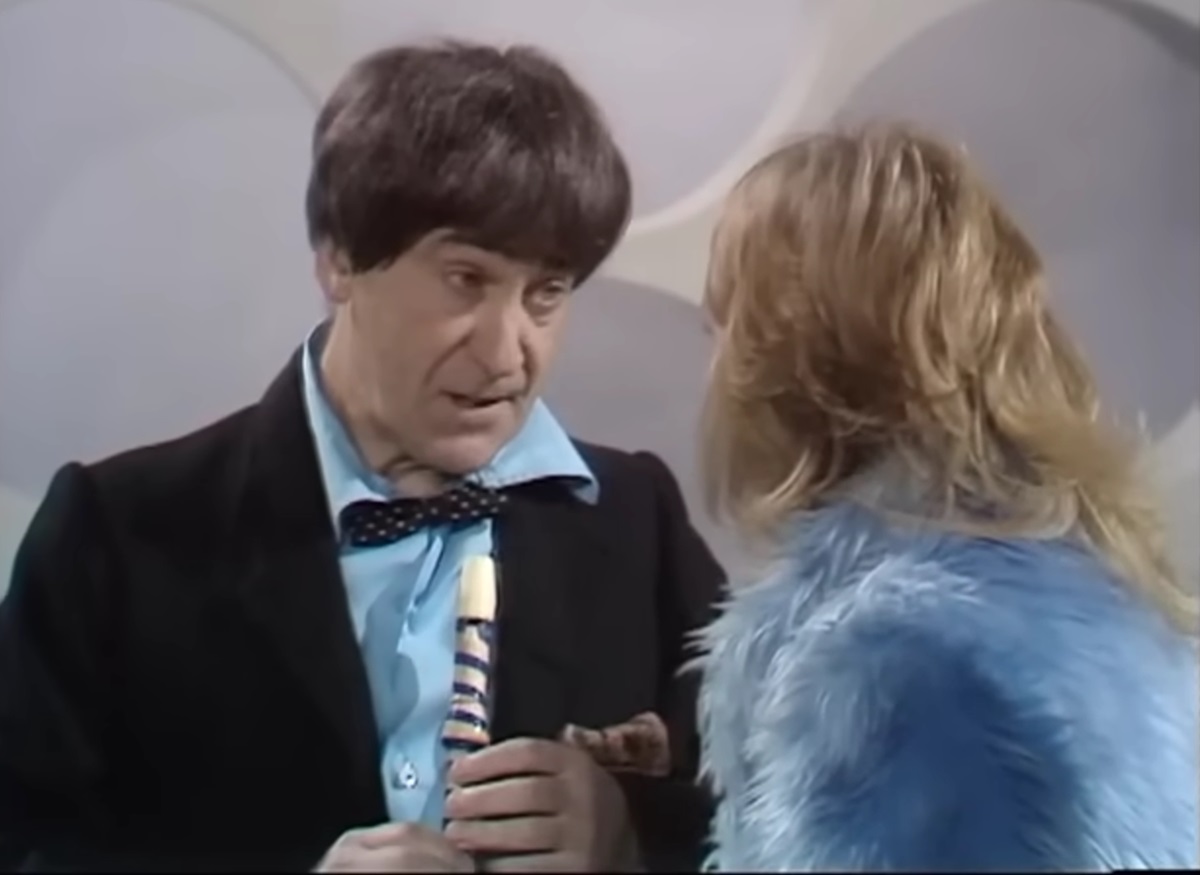
Much like the Stovepipe Hat which was actually a Paris Beau and the loud orange and black check trousers that were reportedly ‘taken in at a rate of an inch a week’ – presumably ending up with the consistency of Spandex by the conclusion of his tenure, the Second Doctor’s recorder has arguably enjoyed greater prominence in spinoff media and retrospective assessment than it ever actually did on screen. Admittedly it was quite often used for mid-rumination fiddling and the intermittent rendition of an utterly unrecognisable ‘tune’ – though more about that here – and very occasionally blowing dust into Professor Zaroff’s face, but it never quite became the all-powerful totemic plot device equally capable of repairing tears in the fabric of time and space and cooking microwave popcorn at fifty paces that it acted as in the Past Doctor Adventures novels until much later. This was almost certainly ultimately down to the recorder’s reappearance in The Three Doctors where it proved crucial in giving serviceable villain Omega the anti-material heave-ho, resulting in him bellowing something that certainly didn’t sound much like “give the letters which thou find’st about me to Edmund, Earl of Gloucester”, but it also played an equally significant role earlier on in the story when he attempts to play along to Jo’s impromptu quotation of I Am The Walrus shortly before dropping it down the side of the TARDIS console, proving right once again that old dramatic adage that if a recorder is tunelessly blown into in the first act it later absolutely must provoke a catastrophic breakdown in the laws of physics. What this singularly fails to explain however is how he does not know how I Am The Walrus goes despite previous explicit confirmation of Beatle conversance, nor indeed why Jo skips an entire verse and a half and most of the chorus in her recitation, but let’s not allow ourselves to get weighed down with trivia here. Or if you will, sit you down, father, and rest you. Or in Omega’s universe, e burres stigano. Anyway, speaking of musical experimentation…
Who At Any Point Thought The ‘Delaware’ Theme Was A Good Idea?

Launched in 1971 by Electronic Music Studios – a synthesiser development team formed by Peter Zinovieff, Tristram Cary and David Cockerell – the EMS Synthi 100 was one of the very first digital musical instruments, combining two monophonic keyboards for a polyphonic effect and boasting an early in-built sequencer. Costing the equivalent of almost ten thousand pounds now, taking up the width of an entire studio wall and ideally requiring more than one operator, very few pop and rock artists apart from Stevie Wonder are known to have used one and it was mainly employed for classical and soundtrack work – including by Malcolm Clarke to create the notorious screeching semi-melodic masonry drill accompaniment to The Sea Devils as you can find out much more about here. With Zinovieff having previously been in Unit Delta Plus with Delia Derbyshire and Brian Hodgson – who you can also find more about here – and Cary having contributed to Doctor Who since the very first Dalek story, EMS had always had a close relationship with the BBC Radiophonic Workshop, who had made particularly heavy use of their earlier and smaller Pink Floyd-favoured effort the VCS-3, so it was little wonder that they would somehow manage to conjure up the funding to acquire a Synthi 100 of their own, affectionately nicknamed the ‘Delaware’ after the location of the studio where they had no option but to situate it. Then in 1973, someone had the bright idea of reworking the Doctor Who theme music on it. With Brian, Delia and Paddy Kingsland manning assorted voltage regulators, a new arrangement was put together that, with the best will in the world, sounded like how everyone who doesn’t watch Doctor Who imagines that the Doctor Who theme music sounds, and in an ill-advised outbreak of excitement over its ‘new’-ness it was dubbed onto the new series before someone eventually saw sense and had the existing arrangement dubbed back on. The blarbling trebly sinus-infuriating ‘Delaware’ version did end up being transmitted on a trailer for The Three Doctors, though, and also found its way onto earlier edits of episode two of Carnival Of Monsters and episode five of Frontier In Space that were accidentally sent to Australia in error. Quite how it ever got even to that stage however is something of a mystery, as frankly they should have taken one listen to the resultant recording and realised that it would later send entire convention screening rooms into fits of incredulous laughter. Yes, even when it was heard as appended to the intentionally less than serious Carnival Of Monsters…
Has Vorg Literally Raided The Contents Of A Stationery Cupboard?

If you’ve seen Stewart Lee’s 2011 show Carpet Remnant World, then you’ll have seen the routine about the Office World Man with his typewriter for a head, staplers for hands and Dymo label non-adhesive backing strip eye bacteria, and the ensuing debate with himself about whether this works more or less well than any more conventional observational comic material based on whatever you have randomly caught sight of in major high street retail park chains. Carnival Of Monsters‘ polari-spouting interplanetary showman slash conman with a ‘Miniscope’ full of Cybermen looking too closely into the camera lens while apparently seemingly unable to remember which direction they were originally intending to go in Vorg may not have quite gone that far, but he had evidently attempted to conduct some variety of scam involving unwanted overstocked office supplies that nobody else had been able to sell at some point as for no otherwise readily explainable reason, his generic wacky carnival worker getup complete with revolving bowtie is liberally decorated with oversized hole punch ring binder reinforcers, in a variety of colours to boot which indicates either he had originally intended to flog them at a profit to one of those sort of offices where certain memos have to be ‘on green’ and woe betide anyone who accidentally does one ‘on light blue’ or else that he’d been attacked with someone’s school craft project card representation of a packet of Fruit Polos. What is more, he is purportedly sporting a translucent plastic bowler hat, but in all honesty it looks more like one of those things you got in offices where it was always in the exact same position on the same one person’s desk but you could never work out what it was or what it was for and while it confidently displayed a cheerful ‘handwriting’ font message about how ‘You Know Where You Are If You Leave It Up To Us – Martin Mann For All Your Unspecified Office Needs’ but not a single hint of a clue about what those actually might be as a maelstrom of collections for someone coming back after getting married after they’ve already had a collection for their engagement and their wedding and bought-in workplace catering sandwiches that have maybe a cursory amount of cucumber in them at best between two slices of bread that you can actually see getting drier in real time before your eyes and someone’s home-made carrot cake that you get shade for not wanting any of for at least four and a half weeks and people spoilering the latest episode of what you’re currently watching before you even have an opportunity to jam your fingers in your ears shouting SHUT UP SHUT UP SHUT UP and all the while Jacob Rees piss-bastarding Mogg drones on in a voice like cold liver sausage pate that needs its hard drive checking about how he doesn’t consider a job being done at home to be a job or being done and Jake Berry MP does his ‘woke-ing from home’ joke again and then does it again twelve seconds later when nobody laughed and still nobody laughed again swirls around and around and around and around and around until you can quite frankly understand exactly why someone would choose to spend their working day travelling from planet to planet charging hapless aliens an extortionate amount to gawp at a passenger liner and an Ogron and good luck to them frankly. Meanwhile judging from the fact that it’s debatable whether she is actually wearing pretty much anything at all, Vorg’s equally shifty tap dance-prone associate Shirna had probably been looking towards the adjacent car park for inspiration. Still, at least she’d have been beach ready…
Did Omega’s Anti-Matter Universe Actually Look Anything Like Cromer?

Situated just north of Norwich on the Norfolk coast, the crab fishing community of Cromer – which purportedly took its name from, erm, the local crows – was first officially recorded as a place name in the Fourteenth Century and by the early 1800s had become a massively popular holiday resort, with visitors flocking to see shows at the Pavilion Theatre, marvel at mechanical attractions on the pier and partake in the occasional round of novelty golf. With the arrival of widely available and cheaply affordable international travel and the associated rise of Travel Agents and their glossy brochures that could be used to jack up a street sweeper despite containing about two and a half pages of actual information, Cromer’s appeal as a holiday destination had inevitably started to wane slightly by 1973, but archive photos from the local press still capture a packed beach crammed with holidaymakers – many of whom look not unlike background U.N.I.T. soldiers – participating in organised fun and games in front of a surprisingly clean-looking sea for the time, suggesting that those weird little shops about six feet away from the beachfront where you can buy buckets, spades, fingerprint-prone sunglasses and ‘postermags’ for pop stars who ceased trading eighteen months ago were not about to go out of business just yet. Which makes it all the more surprising that when Brigadier Alistair Gordon Lethbridge-Stewart – who as it will later be established actually has strong family connections to the area – catches sight of a keyed-in deserted expanse of sand and water in Omega’s domain that somehow manages to look both sinus-assaultingly gaudily bright and overlit and greyly bleak and miserable at the same time, he confidently asserts that he is ‘fairly sure’ that it is Cromer, somehow even going as far to postulate that the visibly entirely abandoned for miles around locale is about to be flooded by idle layabout vacationeers looking for somewhere to stake their windbreak into and break out the unpalatably gritty unedifyingly compacted sandwiches. Quite how the greatest military mind of modern times managed to convince himself of this is a mystery to say the least, but in fairness he may have had his thoughts on something else entirely…
Why Was The Brigadier So Obsessed With Beef?
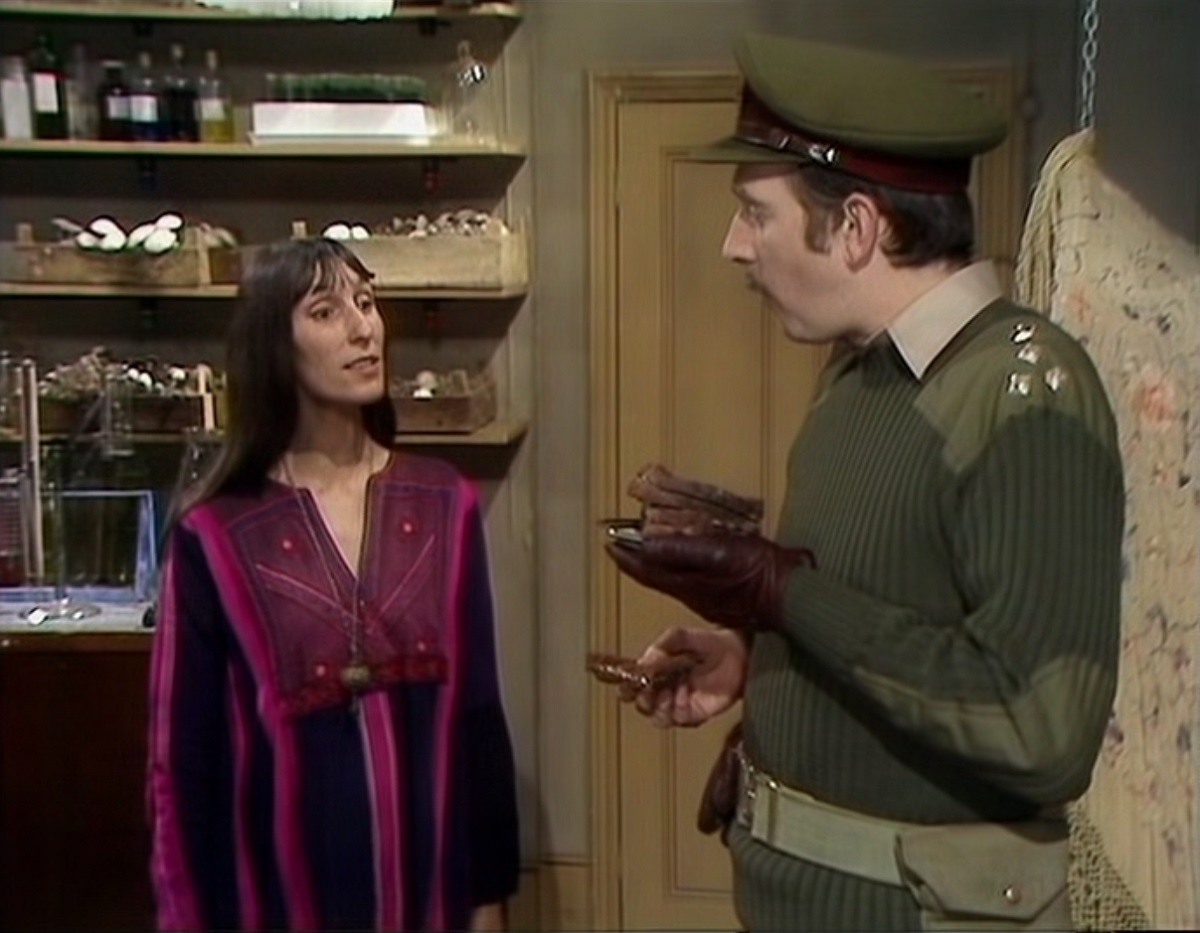
On straightforward face value, you could arguably regard the determination of the commune full of disillusioned dropout scientists with a penchant for someone who dresses down’s idea of dressing down in The Green Death to identify a quasi-mythical fungus that could facilitate a global breakthrough to peace, harmony and spiritual enlightenment with some degree of incense-scented suspicion. As it transpires, however, their intentions are entirely non-hallucinogenic and their early attempts at synthesising replicas of ‘problematic’ foodstuffs using sustainable and ethical proteins are generally considered a promising success; not to mention decades ahead of their time, although they probably would still have added some drivel to the packaging about eensy teensy raindrops and having a super duper wuper day if any of it had reached mass market status. Their efforts do however only win the most grudging form of approval from The Brigadier, who was hoping for some real actual It’s A Man’s Life In The Cardiff Rooms, Libya beef as opposed to something that looks, tastes and smells indistinguishable from the genuine article. What’s more, he wants it for breakfast. Not in a roll, not as part of an even more unpalatable version of a ‘full English’, just beef. On its own. The military mind remains as ever a mystery, but fortunately if anyone needed it, there’s a very reliable and not at all hokey and thrown together method of getting to the root of whatever he was actually really thinking…
This CD Will Have Sixty Minutes Of The Sound Effect And Nothing Else On It
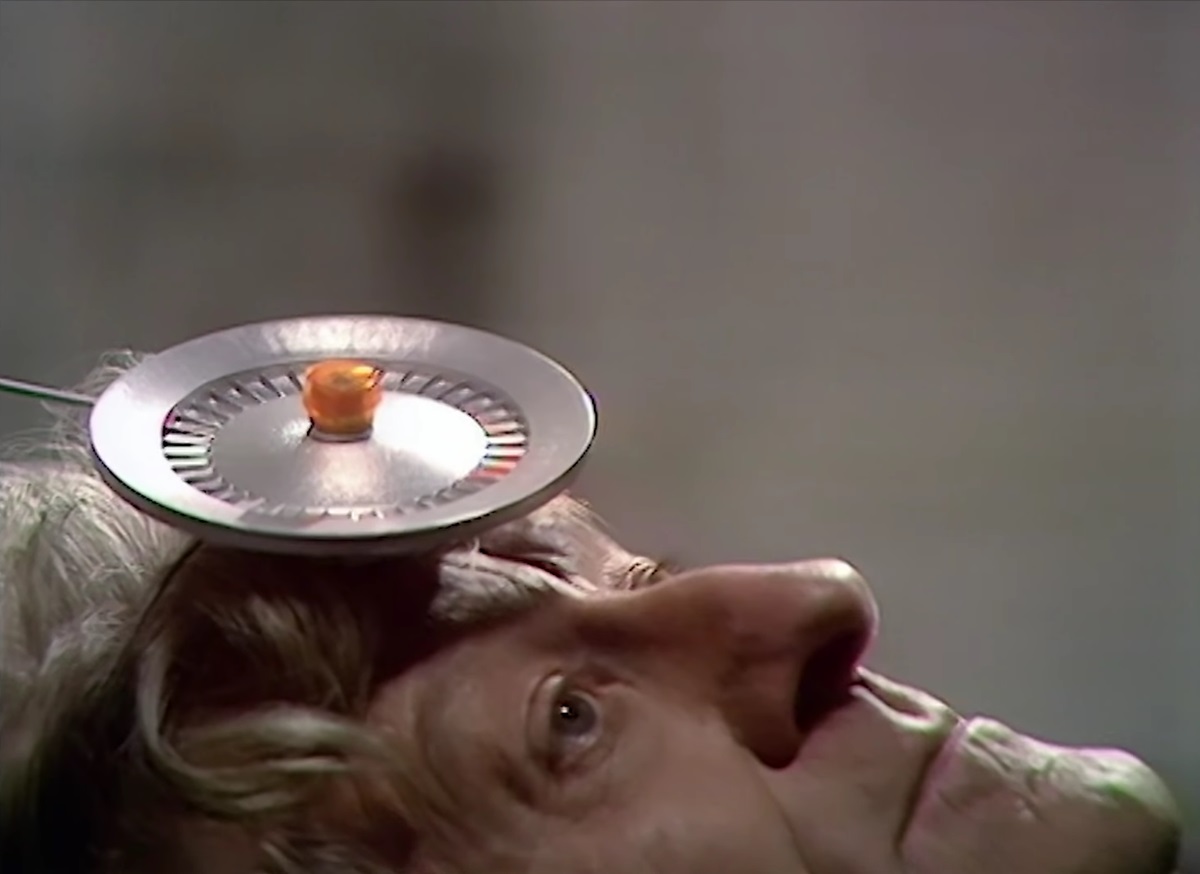
After its potential deployment has been discussed across around five million scenes beforehand, affording time for a ‘comic’ anecdote that sounds suspiciously like Jon Pertwee might have taken it upon himself to make it even more ‘comic’ in rehearsals, the Mind Probe is finally deployed by the Earth delegation in episode three of Frontier In Space in a bid to determine what The Doctor’s involvement in this Draconia business really is. This however only results in The Doctor making the much-dreaded Mind Probe explode by thinking about some Ogrons, and when you actually see it on screen it is not difficult to understand why. The ‘Mind Probe’ appears to be nothing more than a novelty toy roulette wheel very cursorily given a quick and slapdash blast of silver spray paint in the hope that probably everyone would notice but who cares, it’s lunch soon, and while it’s exactly the sort of prop that would give Noel Edmonds an opportunity for a witticism or two when he went on one of his many visits to meet the ‘backroom boys’, the frequent extreme close-ups throw its shameless It’ll Do Because It’s Doctor Who-ness into remarkably sharp relief. Honestly, there were better props back in 1963, albeit including some that absolutely nobody wanted to see make a comeback…
There Are Still Too Many Fucking Rope Bridges
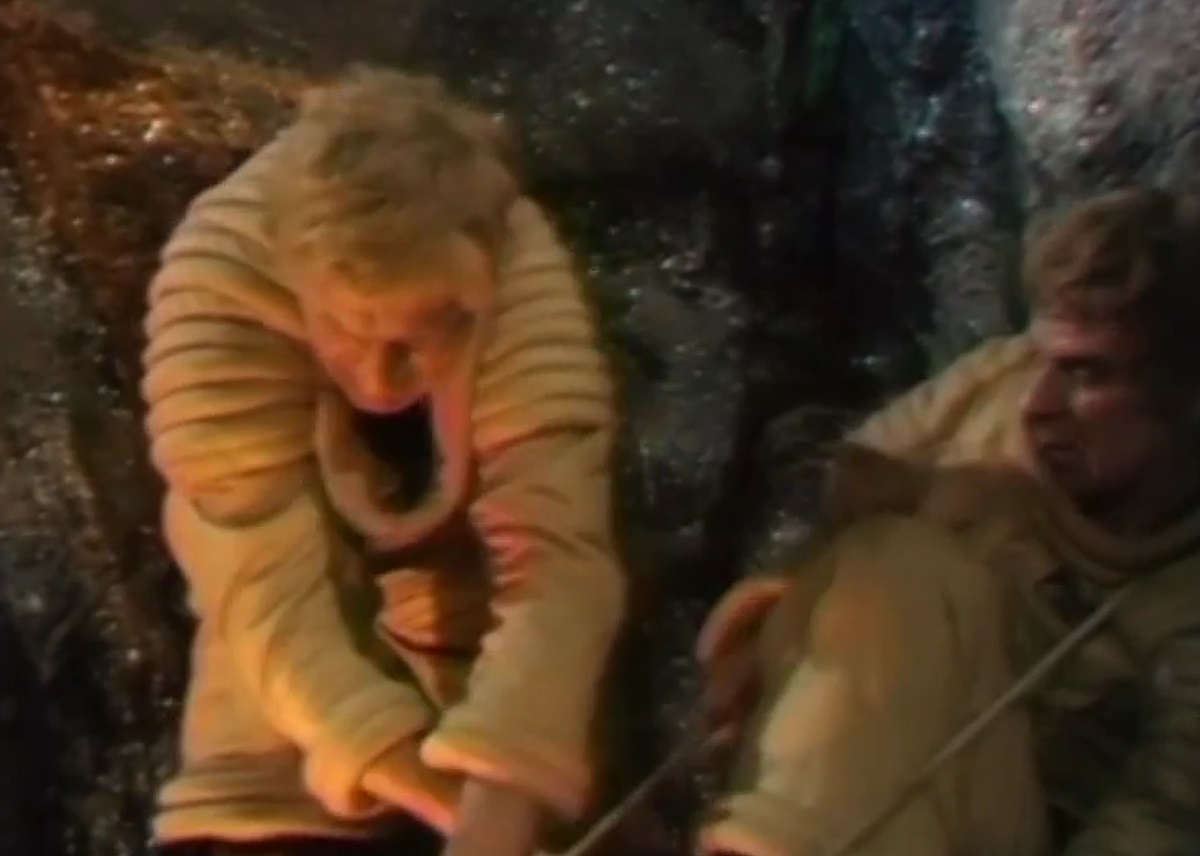
After The Master just sort of loses interest and wanders off at the end of episode six – presumably hightailing it in a bid to catch the following Monday’s episode of Clangers; unfortunately for him it was The Adventures Of Sir Prancelot that week – Frontier In Space famously leads directly into Planet Of The Daleks as The Doctor and Jo help a narky squadron of Thals to prevent the Daleks from attaining the power of invisibility – which, given that they were always boasting of their invincibility, was almost an open invitation for confusion. This is of course an inspired idea with plenty of story potential, and admittedly it is for the first couple and last couple of episodes. In between, however, Terry Nation takes us right back to the glory days of Dalekmania courtesy of a big old load of dissembled series regulars and Thals wandering around in what are not supposed to be tunnels but are being used as them whether structural engineering likes it or not with only the five billion perilous crossings over a perilous drop with only the brilliant preposterousness of the Icecano to distract viewers from recalling William Russell and his ‘teetering’ acting. The Doctor probably didn’t have this in mind when he cautioned Taron and company at the conclusion that “When you get back to Skaro, you’ll all be national heroes – everybody will want to hear about your adventures… so be careful how you tell that story, will you?”, but honestly, perhaps he should have done.
Madam Pertweeova Rides Again
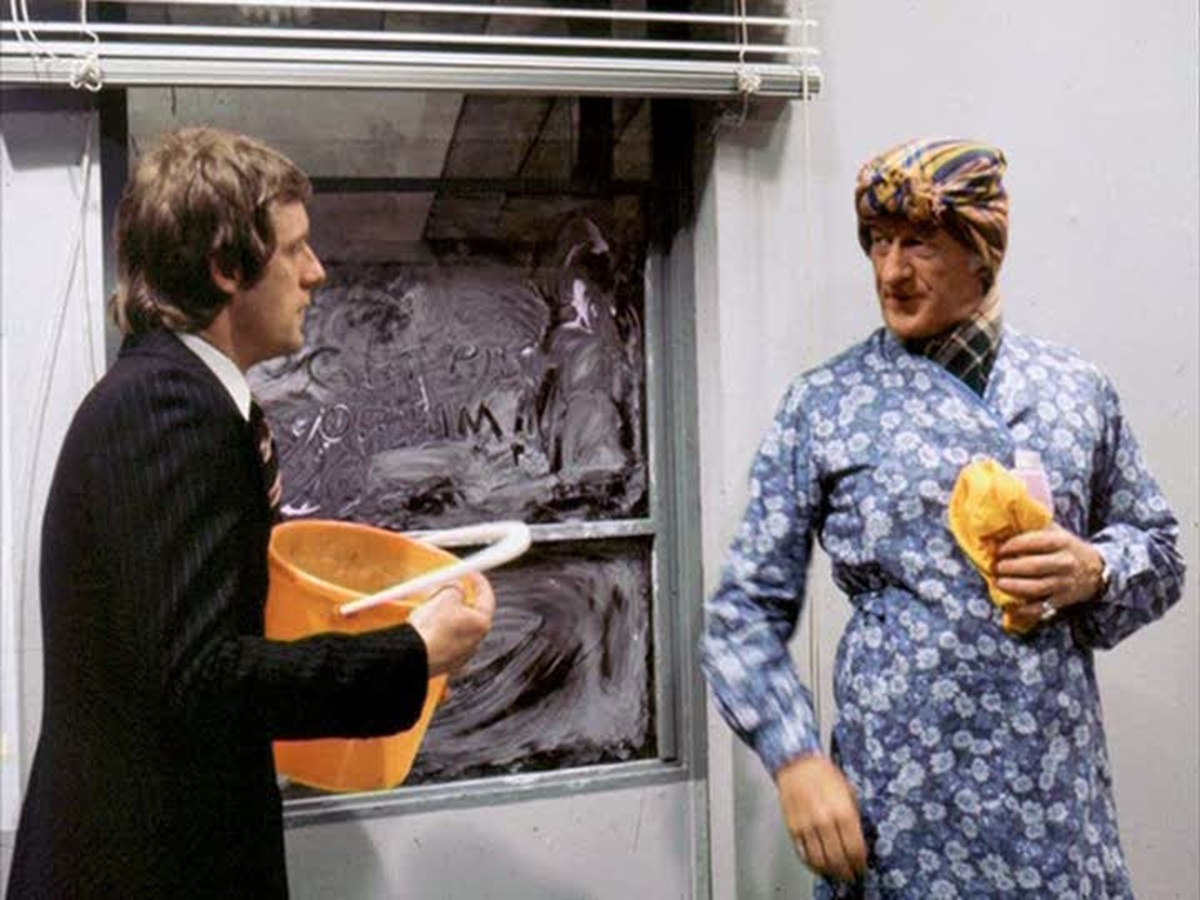
No doubt in recognition of his reputation as Radio’s ‘Man Of A Thousand Voices’, The Green Death affords Jon Pertwee no less than two opportunities to disguise himself as music hall archetypes in a bid to attain illicit access to the less accessible corridors of Global Chemicals PLC, and to suggest that he relishes these unlikely diversions would be an understatement to say the least. Firstly he manages to give the barrier-manning security blokes the slip by adopting the guise of a worryingly Pat Mustard-adjacent milkman talking in what can only be described as a ‘Welsh’ – evidently voice number one thousand and one – variant of that character he did in Waterlogged Spa who said “I puts ’em in the lettery box!” or whatever it was, cunningly establishing his authentic credentials by pointing out that he has occasionally delivered milk while it has been raining. Then when he hears an alert that some unauthorised buffoon waving a gaggle of silver tops has conned his way in by affecting to have a thing for ‘strapping’ Rosie at The Red Dragon, he quickly dives into a storecupboard and emerges as an approximation of a cleaner that can only be described as a cross between Old Mother Riley and a Coronation Street background character gone feral, proving himself adept with sud-based espionage in the process and also indulging in some flirting with Mike Yates that we are probably best not dwelling on. As much as Pertwee may have been prone to showing off his variety skills even when expressly ordered not to by a global accord from all recognised nation states, shoehorning two panto walk-ons into the same scene in the same episode really does seem a bit much. Still, it appears that the viewers were far more exercised by certain other matters…
The Reason I’m Writin’…
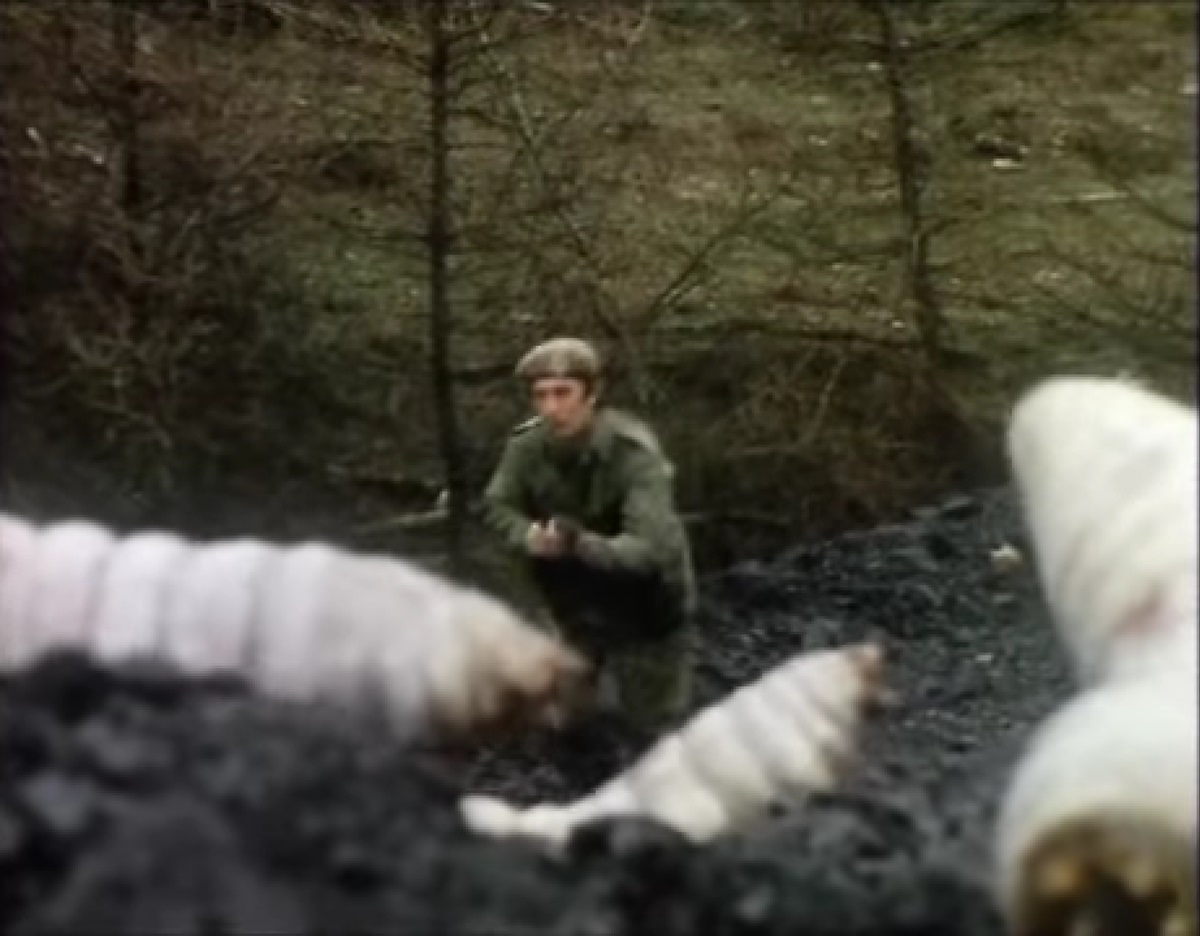
The Green Death is one of that select band of stories that appear to have been the cause of several thousand ‘anecdotes’ that had cast and crew rolling on the studio floor in hysterics time and time again but which it has to be said lost something in the later retelling, whether it was the one about about not wanting to cast ‘Katy’s fella’ but then realising they’d cast ‘Katy’s fella’ or the onlooker who mistook Jon Pertwee for a real milkman despite evidently never having encountered an actual real life one at any point ever whatsoever, but few Doctor Who-related tales of behind-the-scenes chortles have ever come close for sheer audacity, pointlessness and general incomprehensibility as the one about a letter sent in by a certain overly pedantic viewer. When The Doctor advises The Brigadier that he is wasting ammo by opening fire on the ‘dratted caterpillars’, he underlines this point by alluding their “thick chitinous plates protecting the whole body surface”, with Pertwee advised on set to pronounce ‘chit’ to rhyme with ‘grit’. Shortly after transmission, a missive arrived addressed to Barry Letts – not Jon Pertwee – chidingly asserting that “the reason I’m writin’ is how to say chitin’“. Even sidestepping the fact that it must have been a remarkably quiet week for that letter to become something to be talked about rather than screwed up and used for waste paper bin target practice, there’s also the small matter of who in their right mind felt this was a worthwhile use of their time and stationery, although you could arguably congratulate them for somehow managing to straddle all of the worst disparate qualities of viewer correspondence all at once – nitpicking, smugness, disgruntlement over something that doesn’t actually matter in the context of the actual programme itself let alone the wider scheme of things and above all am unassailable belief that they are a world-class wit. Did it honestly warrant that response? It’s not like they blew up a church or anything. For a start, they did something very different and unexplosive indeed at the end of this particular series…
“Congratulations Jo – Not Before Time!”
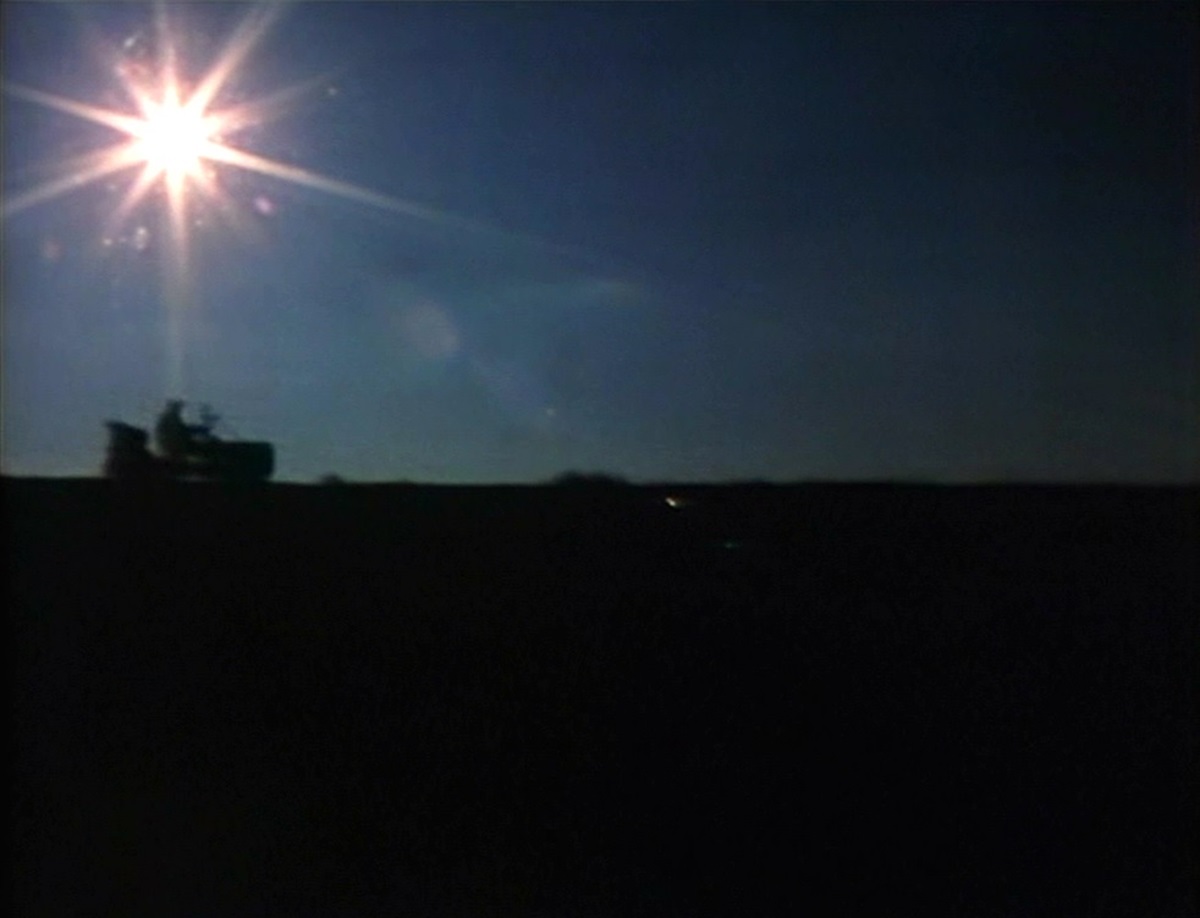
Although she was one of the most famous and popular faces on television throughout the early seventies, by 1973 Katy Manning was keen to move on to new challenges – which would turn out to include presenting an arts and crafts ‘how to’ show for BBC1 and playing a hippy anarchist in politician-blackmailing cahoots with Derek Griffiths in the legendary ‘racy’ comedy film Don’t Just Lie There, Say Something! – and the logical response on the part of the production team was to take the opportunity to write Jo Grant and her ‘fella’ out at the conclusion of The Green Death and indeed the conclusion of the series. In the years that followed its broadcast, but when it was crucially still not available to see again, that bittersweet final scene – The Doctor quietly sidling out while everyone else is toasting their intended nuptials at a small soiree backed by library music from a cash-strapped The Pretty Things under an assumed name and tearfully driving off in Bessie – was sobbingly talked up in retrospective assessments to the extent that anyone who had never seen it would have visualised a slow and lingering close-up on Pertwee’s bravely if not very well disguised exit followed by an extreme close-up Brands Hatch-esque zoom off into the distance and across the horizon. Instead it’s all very muted and you only see him vaguely wandering off and then very slowly trundling across the screen way off into the distance and in almost complete darkness, and while it’s hardly fair to suggest that the memory cheated as such, it is nonetheless a salutary lesson that you should not necessarily trust your own imagined interpretations in the absence of inaccessible visuals. Isn’t that right, ‘Hjbuj’? Honestly, it’s no wonder we later got entire episodes devoted to Amy and Rory crying about what schools their theoretical children might get into while The Doctor occasionally got to deliver the odd line about how if there’s something screwdrivery and sonic then we point the Sonic Screwdriver at it. Which, incidentally, is firmly established in this series as only working on electronic locks. Perhaps they should have pointed it at some beef instead?

Anyway, join us again next time for Eckersley’s Britpop style tips, Bellal being forced to walk home across space with John Craven and Olaf Prot’s favourite episode of Doctor Who…

Buy A Book!
You can find an expanded version of It’s Still A Police Box, Why Hasn’t It Changed? looking at the entire sixties run of Doctor Who in Can’t Help Thinking About Me, a collection of columns and features with a personal twist. Can’t Help Thinking About Me is available in paperback here or from the Kindle Store here.
Alternately, if you’re just feeling generous, you can buy me a coffee here. Without any bloody beef in it, no matter what The Brigadier says. I mean that’s just Oxo!
Further Reading
You can find some further musings on the 1972 series of Doctor Who in It’s Still A Police Box, Why Hasn’t it Changed? here.
Further Listening
You can hear much more of my thoughts about Doctor Who‘s struggles to stay on the right side of the right side of everything in The Zeitgeist Tapes – the podcast where politics and pop culture collide – here.

© Tim Worthington.
Please don’t copy this only with more italics and exclamation marks.
 Tim Worthington