If Doctor Who‘s big bold full colour reinvention with extra additional Silurians in 1970 had succeeded in reuniting the show with a huge and receptive audience – and you can find much more about that here – then series eight in 1971 was where this reinvigoration really hit its stride. Newly installed production team Barry Letts and Terrance Dicks may have found a frequent cause of exasperation in the all too restrictive Earth-exiled format that they had been landed with – Dicks more than once later wearily noting that it left them with only two possible storylines; alien invasion or mad scientist – but their ingenuity in thinking and working around these limitations was exactly the creative imperative that was needed. Not only did they somehow manage to forge near-future interplanetary industrial-political wordy chicanery and occultish folk horror creepiness into the new run of stories without breaking their own not exactly self-imposed ‘rules’, they also introduced The Master, a recurring antagonist who could either serve as the primary agitator or an exceptionally reluctant ally depending on where – and even in one story when – the narrative took them. Admittedly he was a mad scientist and usually at the forefront of alien invasions, but few were arguing with him. Or indeed would argue with him.
Meanwhile, the arrival of hotpanted hard-of-scientific-deduction new sidekick Jo Grant and the liberal application of brand spanking new image-combining effect Colour Separation Overlay – which notoriously sometimes inadvertently generated what can even only be generously described as ‘cartoonish’ results but nonetheless served to lend everything a bright and distinctive visual flavour – both very much reflected the jubilantly gaudy excesses of the early seventies and more to the point must have looked ever so slightly impressive on your newly delivered colour television. Even if they did mainly just use CSO for making poachers glow mysteriously. Everyone involved was working at the absolute height of Doctor Who‘s potential while evidently thoroughly enjoying themselves, and as such it is little wonder that those who were there at the time rigorously insisted on telling everyone who wasn’t for years afterwards that Doctor Who was never quite as good again. They would say that, of course – but in this particular instance, it was not without good reason. Incidentally, you can find a lot more about Doctor Who past and present in Can’t Help Thinking About Me, available in paperback here or from the Kindle Store here.
“I Am Usually Referred To As The Master…”

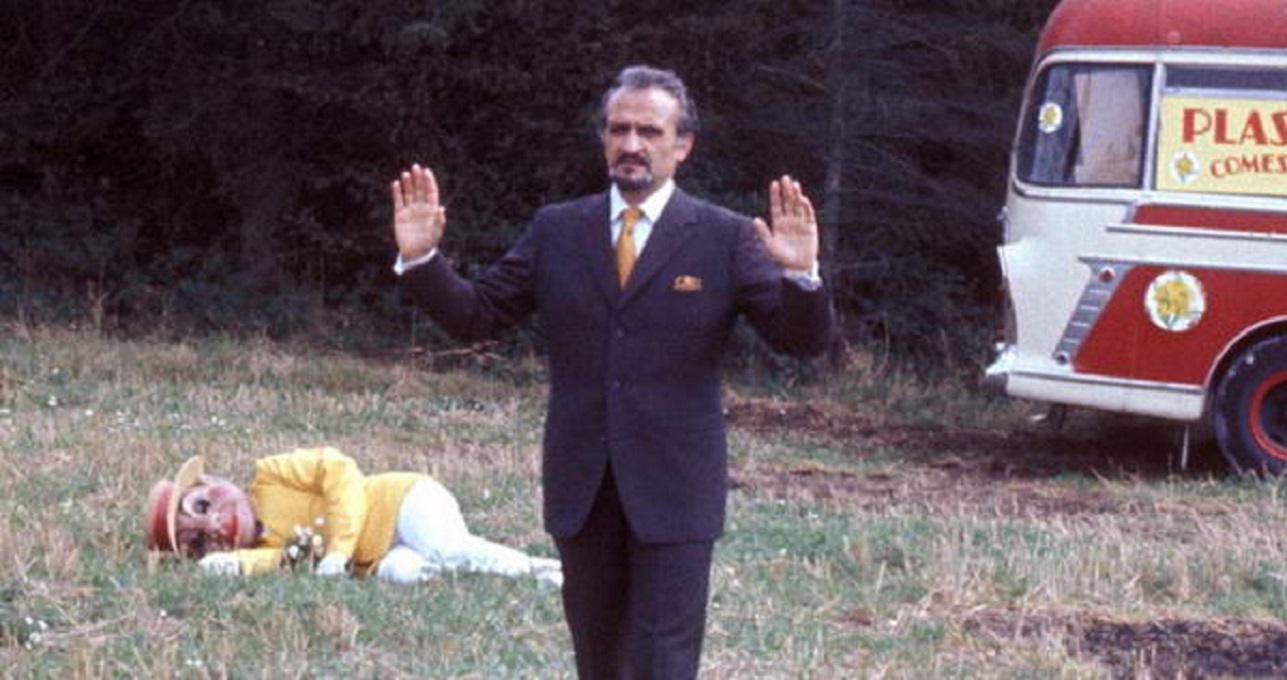
Looking over their run on Doctor Who as a whole, it’s fair to say that Barry Letts and Terrance Dicks were not exactly short on ingenuity, and their solution to the unwanted inherited problem of only being able to have stories that involved an alien invasion or a mad scientist was arguably their most ingenious move of all – they created a character who was to all intents and purposes both at once. Intended simultaneously as The Doctor’s counterpart to Sherlock Holmes’ recurring nemesis Professor James Moriarty and as a villain who was possibly a little more relatable for viewers than poor old Okdel, The Master was established as a particularly vindictive and nihilistic fellow fugitive Time Lord – and it’s worth remembering that The Time Lords themselves had only been introduced in a hardly exactly self-covering with glory appearance a little over a year previously, and the only other one we had seen before that could only even be generously described as a ‘scamp’, so that’s a fairly high set bar already – who had escaped from some sort of Time Chokey with the intention of getting up to unspecified ne’er-do-welling on Earth, as The Doctor was memorably cautioned about by a mid-air Time Lord apparently attempting to pass himself off as the Bradford And Bingley logo. In fairness, it could be argued that given that he had escaped from their custody and they were responding to this apparent urgency by washing their hands of the matter and leaving technical fellow prisoner The Doctor to deal with the situation, they weren’t really that much in moral higher standing themselves. Letts and Dicks’ masterstroke, however was in casting the former’s erstwhile acting colleague Roger Delgado in the role; a respected actor and a familiar face to television audiences from guest roles, Delgado immediately dominated the role – by all accounts in absolute contrast with his personal character – with a charm, guile and malevolence and a sense that he was always one step ahead of everyone including himself that must have left a fair few impressionable youngsters concerned that he might actually be able to hypnotise them through the television screen. His debut appearance at the opening of Terror Of The Autons, intimidating the braggishly thuggish Luigi Rossini – or indeed Lew Russell – into stunned obedient silence with a few curtly stated facts is one of Doctor Who‘s most arresting moments and it is testament to Delgado’s immensely charismatic brilliance that, reputedly, local youngsters had to be bribed into booing The Master at the conclusion of The Daemons. What’s more he wasn’t the only major recurring figure in Doctor Who history to make his debut in that story…
“I Didn’t Say I Passed…”

Poor old Josephine ‘Jo’ Grant. Brought in as a deliberate counterpoint to Liz Shaw who had been adjudged ‘too intelligent’ for Doctor Who‘s viewing audience – and there is an argument to be made that considering that Derrick Sherwin had fought for years to bring in the character via experiments with Ann Travers and Isobel Watkins, the idea of having a regular character whom The Doctor could communicate with on a more scientific level was discarded a little too casually and decisively – she was conceived from the outset as scatterbrained fashion-conscious eye candy positioned to ask insultingly obvious questions on ‘behalf’ of the audience and, with tiresome inevitability, to quicken the pulses of ‘the dads’, whose character profile necessitated that she had been a little ‘liberal’ over her qualifications and that her well-connected uncle had pulled strings to get her into UNIT, and indeed Katy Manning was reputedly cast at least partly on account of her absent-mindedly having blustered into the wrong room for an audition in a classic Bialytsock-evoking That’s Our Jo Grant! moment. In the view of the general public, the snippier critics and even a sizeable proportion of fans, Jo would come to represent the ultimate evolutionary manifestation of the Doctor Who ‘girl’ as someone who pelted up and down corridors wearing a skirt that was essentially little more than a belt and whose dialogue was almost exclusively asking for an explanation of what lino is. Or at least that’s half the story. Whatever other intentions may have been, well, intended – if not necessarily well intended – it is also more than true that Jo is consistently depicted as liberated, independent, witty, willing to argue with men (“on the contrary sir, he happens to be a genius”), rioting prisoners and big massive demon goat things alike, capable of working out before anyone else that a horde of primitives are descended from an incredibly advanced race, intuitive, deductive and loyal, almost as if she – and indeed her creators – have been done a huge disservice for the sake of condescending convenience. Even her presumably less than extensive espionage training is frequently – if clumsily – deployed to significant narrative effect. Although it did sometimes lead to some frankly baffling moments…
“I’ve Got A Good Mind To Call For Help!”

In Episode Two of Terror Of The Autons, The Doctor finds himself in a spot of bother while scouring Rossini’s Circus for the errant Professor Philips and alighting upon a horsebox that looks and sounds suspiciously like it might be a renegade Time Lord’s TARDIS. Cornered and apprehended on account of asking too many questions – one – he is bundled into a caravan by the circus’ shifty proprietor and the rather too strong for his own good strongman and tied to a chair. Batting away their rather threateningly loaded questions – apparently a commensurate response to someone else asking ‘too many’ – with flippancy and sardonic dressings-down, he catches sight of Jo through a window and enacts a cunning subterfugal ruse to make his escape by calling for help long enough to distract them and afford her sufficient opportunity to sneak up and incapacitate his captors. This however he elects to preface with an announcement that he has “a good mind to call for help”, followed by several desperately unconcerned repetitions of the word ‘help’ in a voice – presumably one of those ‘thousand’ Jon Pertwee was famed for on the radio – that the presenters of Radio 4’s PM would have considered a touch subdued and understated. If anything this should probably have aroused even more suspicion, although in fairness it probably wasn’t too difficult to get one over on Lew Russell and his internationally known company. Some adversaries, however, clearly weighed more heavily on The Doctor’s mind…
What Was So Terrifying About Koquillion?

In The Mind Of Evil, The Master infiltrates Stangmoor Prison posing as the disconcertingly The Burkiss Way-adjacent Dr. Emil Keller – inventor of the Keller Machine, a device that purports to reconditions dangerous prisoners by removing negative associations from their subconscious – with the convoluted aim of disrupting a peace conference and absconding with a quantity of nerve gas in a volume that causes Sergeant Benton to do that thing where he talks into his walkie-talkie in a sort of ‘concerned’ manner under his arm. The only problem – admittedly not exactly a problem from The Master’s perspective – is that it exposes the subject to imagery of their greatest fear at what can be manipulated towards a dangerous degree; inevitably this is eventually used on The Doctor, occasioning Jon Pertwee to do ‘fear’ while visualising a series of images of what appear to be past adversaries falling down a lift shaft filled with Tizer. As well as the expected and entirely reasonable Dalek, Cyberman, Ice Warrior and Silurian, and in addition to the just about arguably understandable Zarbi and War Machine, the scrolling roll-call of ne’er-do-wells also includes Koquillion, the spiky-collared man in disguise as a malevolent vacuum cleaner attachment who posed a scarcely convincing threat in two episodes in 1964 and whom it is worth noting the First Doctor did not seem to be even remotely taken in by at any point whatsoever. Quite what had happened in the intervening years to cause the erstwhile ‘Bennett’ to loom so much more menacingly in The Doctor’s memory is sadly unclear, but this was far from the only plausibility-challenging interaction with the Keller Machine…
“It’s A New Machine They’re Testing, Jerry…”
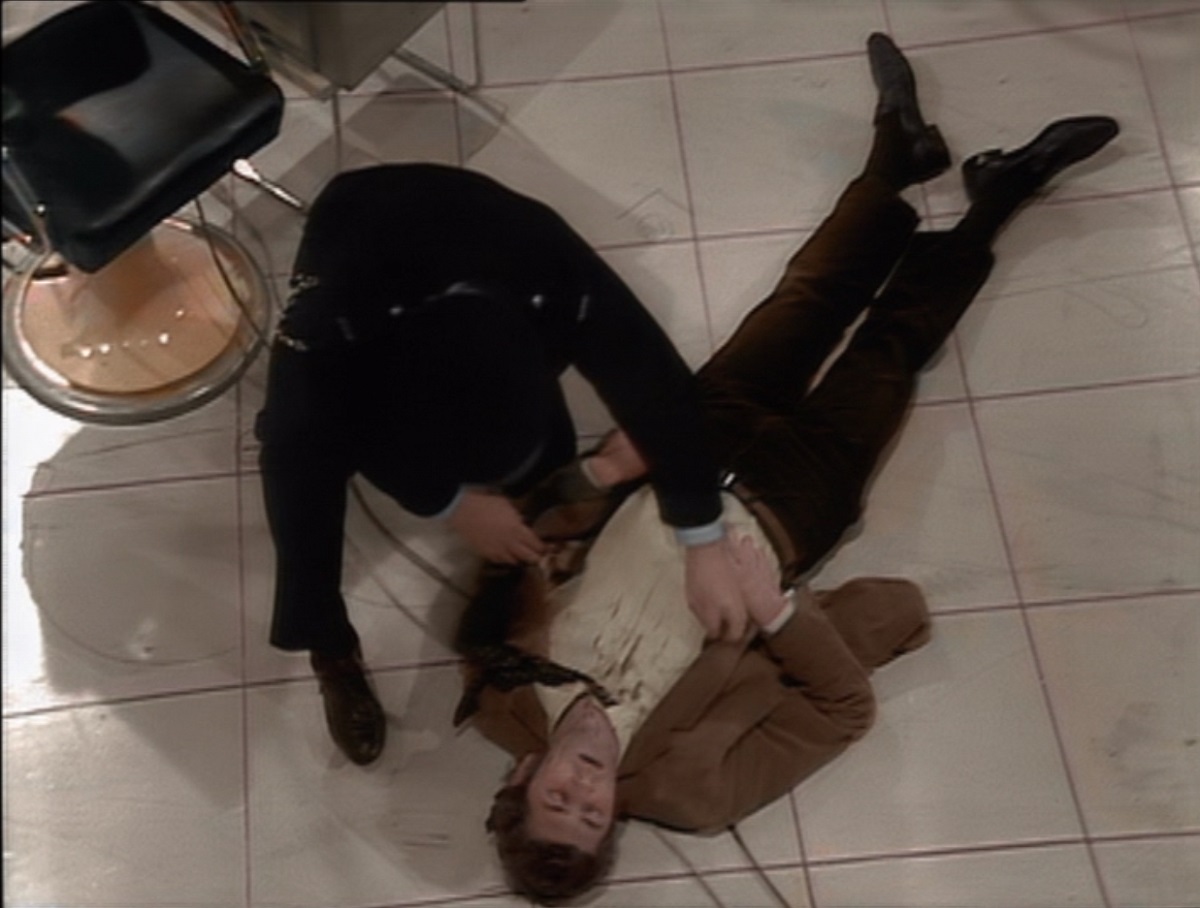
The very first demonstration of the Keller Machine, conducted on habitual criminal who accepts arrest as an occupational hazard George Patrick Barnham for the not particularly reassured benefit of The Doctor and Jo, is nonetheless roundly considered a resounding success; or at least it is until medical researcher Arthur Linwood collapses shortly afterwards, apparently consumed by fear of ‘certain animals’. Well they say he’s Arthur Linwood – in all honesty he bears more than a passing resemblance to one Cosmo Kramer of Upper West Side Manhattan, who – doubtless with Bob Sacamano and/or Lomez in tow – is exactly the sort of individual who would have inveigled his way into a top secret research project out of meddlesome nosiness and then ostentatiously collapsed in response to the most mundane or trivial in-laboratory activity imaginable. We don’t get to see whether he crashed to the floor shouting ‘Giddyup!’, or whether his visions were actually of Regis and Kathy Lee, or indeed whether he shared Professor Kettering’s nightmarish vision of a large body of water and this reminded him of Calvin Klein stealing his idea for a perfume that smelt like the beach, but all signs really do point towards this being a covert infiltration by Elaine Benes’ frustration-occasioning hipster doofus associate. Some things, however, didn’t need a Keller Machine to engender terror in their subjects…
Did Anybody Have That ‘Troll Doll’?
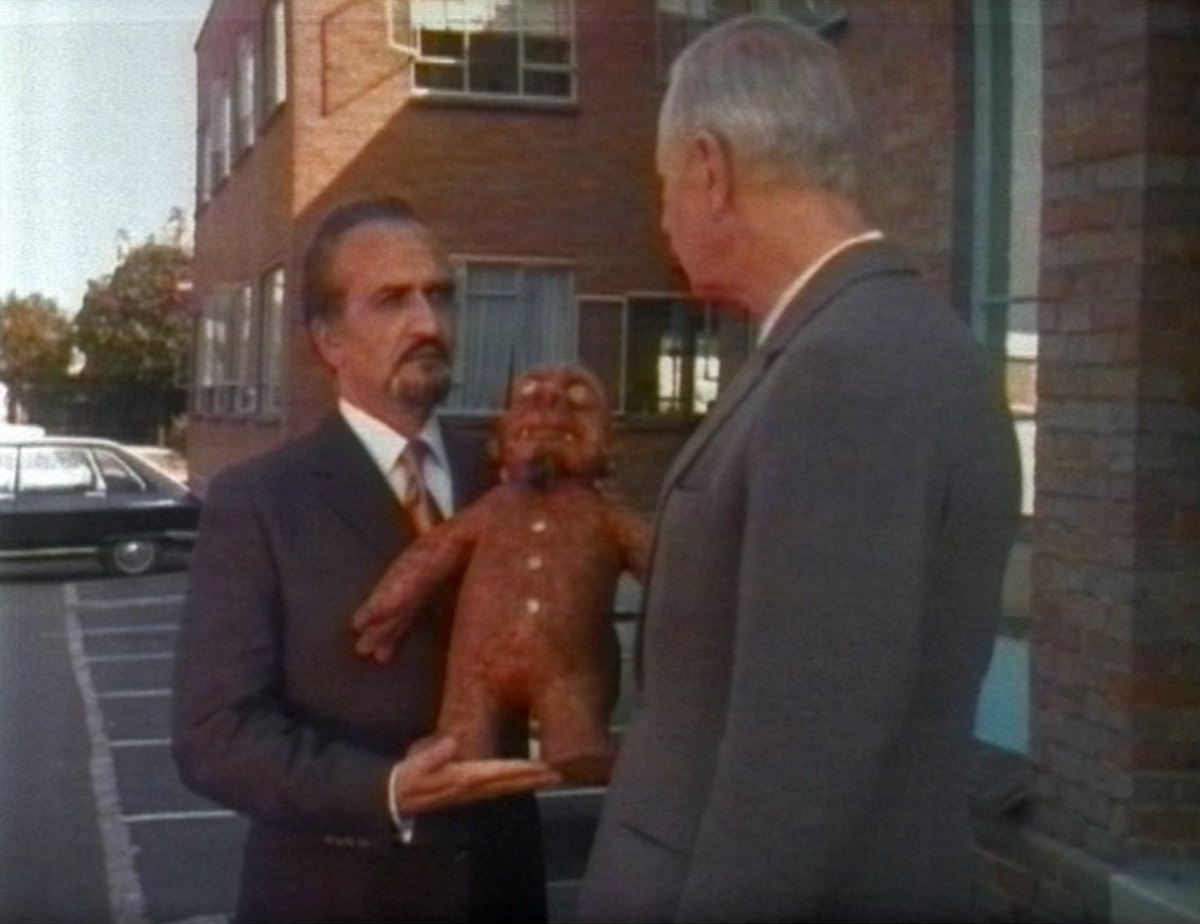
Presumably having taken absolutely no precautionary measures whatsoever following the previous year’s more or less identical chain of events at their primary industrial rival Auto Plastics, even despite them having more or less exactly the same name, Terror Of The Autons sees Farrel Autoplastics infiltrated by ‘Colonel Masters’ at the behest of the Nestene Consciousness, shifting their production lines over to constricting inflatable armchairs, antisocial telephone cables, plastic daffodils with a not exactly neat line in respiratory impairment as distributed by a new line of Autons with a controversial ‘Bill And Ben’ makeover, and a certain murderously inclined heat-activated troll doll designed to get the troublesome company bigwigs decisively out of the way. This creepy little so and so, it is fair to say, caused even more trouble than it had been intended to at the time, with the production office besieged with complaints from besieged parents and Terrance Dicks recurringly recounting with a chortle that every viewing child had subsequently refused to go to bed in case “their teddy bears grew fangs”, a quip he would adhere to relentlessly despite the complete absence of anything resembling a teddy bear or even arguably fangs in the story. In fairness to Terrance, however, he may well have deployed this peculiar diversionary shorthand on account of the fact that the troublesome troll doll appears to have had no actual real life counterparts whatsoever. Some will point to the craze for ‘troll dolls’ that looked entirely different and were an entirely different size, and unaccountably exercised fans on forums may insist at enormous length that they had a troll doll exactly like that before linking to an image of a toy that looks nothing remotely like it, but there is no evidence of anything even closely resembling that malevolent proto-Boglin being on sale at any point and perhaps thankfully nobody saw fit to cash in with their own vaguely approximated mass-produced replicas. Meanwhile, complicating matters still further, you cannot help but notice that the Farrels’ rather unconvincingly shoddy lounge has been knocked together using one of the flats more regularly deployed as the Round Window in Play School. It’s unfortunate that Hamble wasn’t closer to hand as she could almost certainly have seen off the Troll Doll and indeed the entire Nestene Consciousness all by herself.

Flippin’ Like A Pancake, Poppin’ Like An Interplanetary Mining Corp
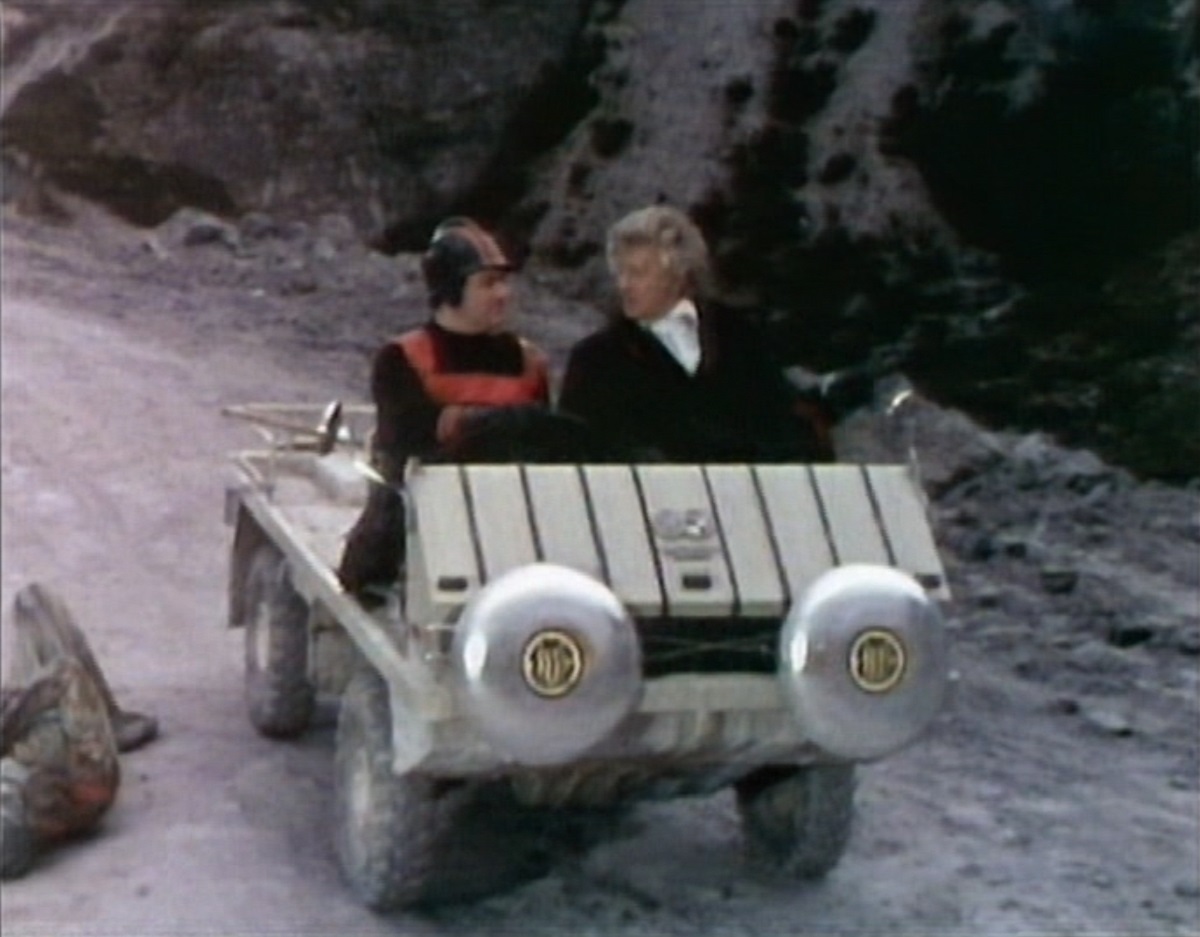
On Saturday 10th April 1971, viewers got to see Doctor Who‘s first visit to an actual alien planet since June 1969, although anyone who had tuned in earlier that day would have got to see something even more mindblowingly out of this world. Retitled from The Banana Splits Adventure Hour due to the BBC’s running time-depleting lack of adverts, Hanna-Barbera’s The Banana Splits originally ran for thirty one deeply perplexing instalments between 1968 and 1970 and involved little more than garage psych pop group in huge cartoony animal costumes Bingo, Fleegle, Drooper and Snorky indulging in groan-inducing puns and Tati-esque slapstick antics as redrawn by Roy Lichtenstein before introducing cheapo animated offcuts The Three Musketeers, The Arabian Knights and Micro-Ventures along with live action serial Danger Island that was in no way and to no extent ‘borrowed’ by Lost to any extent that would ever stand up in court, honest; if nothing else they could always point to the fact that Danger Island had an actual proper ending and was therefore demonstrably different. In its suitably reconfigured with a blunt pair of scissors BBC edit form – and there’s more about the history of this strange phenomenon here – The Banana Splits was a Saturday Morning mainstay well into the eighties, always with the now little-seen first series opening titles featuring additional footage of them ‘meeting’ the public, larking around on beachfront exercise equipment and haring around in their heavily enviable ‘Banana Buggies’. It must have caused a significant proportion of the shared viewing audience considerable amusement, then, when The Doctor and the IMC operatives were seen traversing Uxarieus over hill and highway in what as to all intents and purposes a Banana Buggy in all but name as if it was the most futuristic mode of transport imaginable. Incidentally – and tacitly sidestepping the other BBC Saturday mainstay that is given an unfortunate accidental namecheck by Jo – while there is no reliable record of which episode of The Banana Splits was shown that day, it looks like it was the one where they sing You Had Your Chance and The Show Must Go On, Drooper sees off The Sour Grapes Bunch with a skunk, Mu-Tang captures Lesley, The Arabian Knights have to retrieve some stolen jewels, The Three Musketeers unmask a conman posing as a ghost, and the name of the club is officially changed from The Banana Splits Club to The Banana Splits Club. You don’t get THAT with your Production Subtitles. Siiiiiiiiiiize of an Archives/Fact File!
“I Don’t Want To Set The World On Fire…”
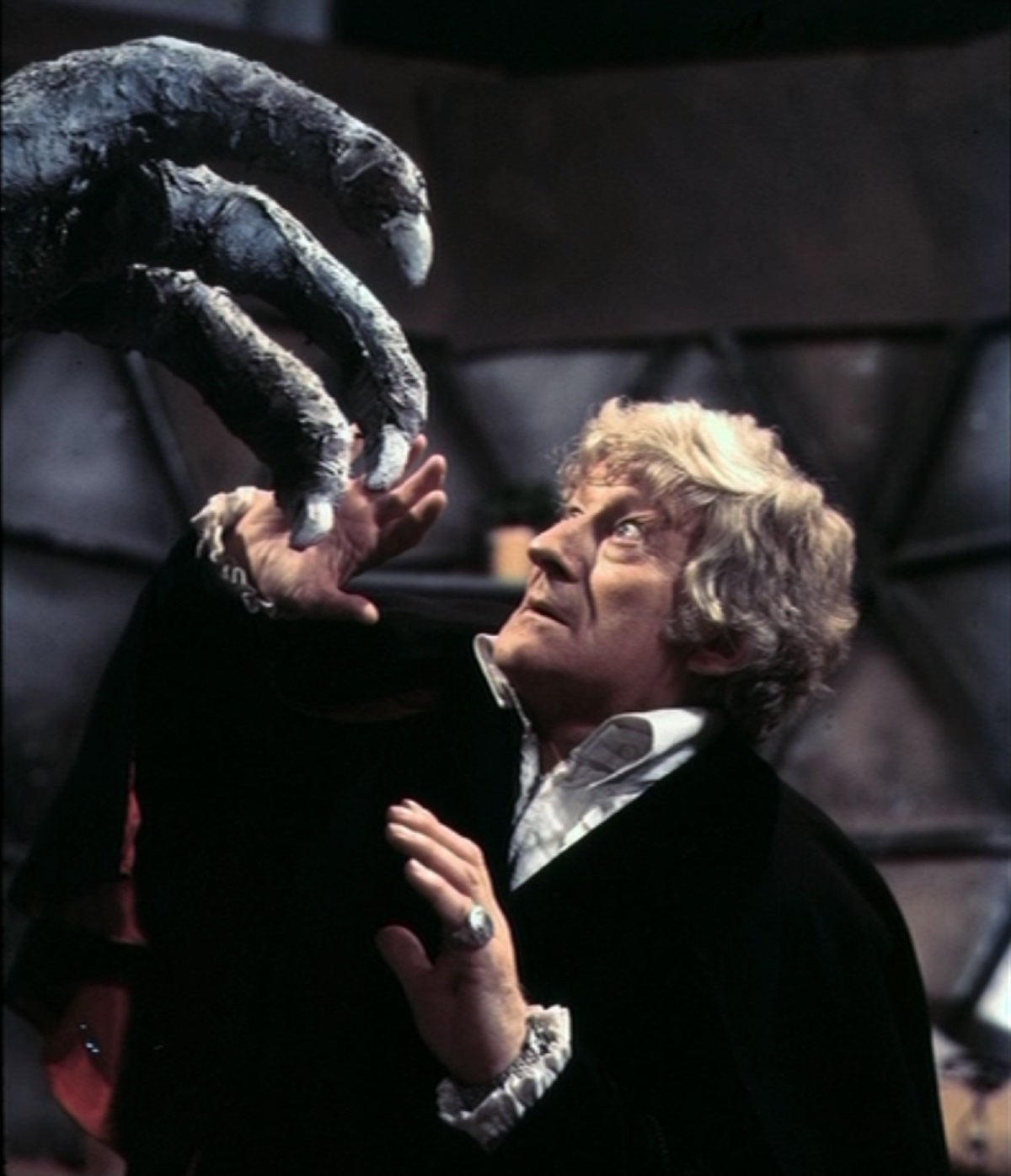
Speaking of Colony In Space, this most unassuming of stories nonetheless accidentally gave rise to one of the rarest mass-produced items of Doctor Who merchandise of all. Personality Posters UK of Crawford Street, London had added to their range of rolled-up sheets of glossy A1 in a sort of cardboard box halfway along the right hand wall of your local newsagents with a poster showing The Doctor being confronted by the IMC Robot; in a surprising move, Jon Pertwee personally asked for the poster to be withdrawn as he did not much care for the expression on his face in the shot, and it was summarily replaced with one of him confidently initiating hand-to-hand combat with a Sea Devil. This was in fact just one of many such behind-the-scenes stories that admittedly on face value and in the typical limited frame of fan reference looked as though they smacked of an untempered high and mighty sense of self-opinion, which in tandem with Pertwee’s liking for perpetually recycled entertaining tall tales and amusing showbiz anecdotes that weren’t, and the in all fairness genuinely exasperating insistence of anyone who was working on Doctor Who in the early seventies that the show had never been as good before or since they and their cast and crew ‘family’ were working on it, at one point led to a surge of resentment and disinterest towards TV’s Saniel Peewit from The Little Green Man and his tenure as The Doctor. While this was arguably and to a degree understandable and inevitable, it would abate quickly enough – largely through the sheer hard work on Pertwee’s part that he was always doing by default anyway; arguably Doctor Who never had a better for want to a better term ‘brand ambassador’, especially during the years when the general public couldn’t have cared less – but in the longer term it does appear to have undermined his standing slightly. Although Pertwee is far from being the time-honoured ‘forgotten Doctor’, it is also true that his frilly-shirted lab beaker explosion antics are no longer as emblematic of Doctor Who as they once were, which is a tremendous shame and injustice and this particular run of episodes is evidence enough as to why. Terrance Dicks once suggested there are two types of actor to play The Doctor – those who approach the part as a persona and those who were already walking around as that persona without realising it – and Jon Pertwee was unarguably the latter from the moment he turned up to his first photocall wearing his own clothes which essentially became his actual costume. Establishment yet anti-establishment, camp yet masculine, ruthless yet empathetic, all of Pertwee’s personal characteristics and arguably even his personal politics infuse his approach to the role, and you would be hard pushed to find many better moments in Doctor Who than his questioning the motives and intentions of everyone present at the Keller Machine demonstration, railing against the politician running on an ‘England For The English’ ticket (“Good heavens, man!”), his sympathetic attitude towards Chin Lee and indeed pulling an expression he didn’t quite approve of at the IMC Robot. It’s no wonder The Ghosts Of N-Space went to Number One in the Hit Parade.
Could Anything Else Be ‘Colour Recovered’?

Anyone who has squinted through The Claws Of Axos and its ocularly-troubling combination of bright golden space aliens, glowing poachers, throbbing multicoloured spaceship walls and Jo’s purple thigh-length boots and miniskirts might be forgiven for thinking that it is actually possible to have too much colour, but at one point, only three out of the twenty five episodes of series eight of Doctor Who existed on their original colour videotape. The others all still did technically exist as well, but only as black and white film prints made for overseas sales; given that in 1971 the BBC had only just launched a full-ish colour television service, you could hardly expect other nations who had only recently launched a television service full stop to follow suit with indecent haste. In fact, across the entirety of Jon Pertwee’s stint as Doctor Who, a whopping sixty six out of one hundred and twenty eight transmitted episodes were only held by the BBC as monochrome prints, with the original colour videotapes having long since been bulk-erased and recorded over with Whoops Baghdad. Once they realised that it might actually be quite useful to have complete stories in a consistent and saleable format and started looking for them, some otherwise monochrome instalments turned up on the lower definition pale-hued 525-line NTSC colour videotape format, slashing that total by nearly half; and the associated line definition total by a sixth, of course, but at least they had them again. Further on, fiddly video signal jiggery-pokery made it possible to combine the high quality image from some of the black and white prints with the colour signal from some miraculously surviving low-quality off-air home recordings made in America in the early seventies, resulting in what were as close to full colour copies as we were going to get, leaving only thirteen episodes without the slightest hint of a chrominance component between them. Or at least that’s what we all thought. Until one day when a fan watching a black and white episode noticed that Jon Pertwee’s jacket was a suspicious shade of red, kickstarting an astonishingly rapid process which resulted in the development of software that could – and just think about the staggering improbability of this for a second – extract the colour signal – or ‘Chroma Dots’ – from a black and white image, and while there might well be some out there who would scoff that the importance, significance or overall bloody well done mate-ness of it, I’m going to say that I can’t quite see Succession inspiring its adherents to pull off something quite so logistically and technologically astonishing out of nothing more than sheer love for the series. This, however, is in itself something of a double-edged luminance signal, as the very fact that it was developed for Doctor Who and because of Doctor Who has meant that there has been very little cause or enthusiasm for practical application of the Colour Recovery Process elsewhere – and yet there is so much that could benefit from it. For starters, how about the handful of episodes of The Goodies and Paul Temple that have been ‘Pertwified’, or the entirety of early seventies spooky ITV children’s series Escape Into Night? Then there’s Tim Buckley doing Happy Time and Morning Glory and on Late Night Line-Up, in what was originally one of BBC2’s earliest colour broadcasts? There’s Chroma Dots all over Pickettywitch doing That Same Old Feeling on Top Of The Pops, along with presumably many other performances from the era; you can always just stop recovering the colour whenever that Scrawny Old Bastard shows up. Basically, if you know what Chroma Dots look like, you’ll spot them everywhere – well, usually on a BBC Four on a Friday evening – and there’s honestly very little better that you can do than to bring a little more colour into the world. Although we should probably also take all the colour out of Better Call Saul for a laugh while we’re at it.
Did Anybody REALLY Think They’d Blown Up A Church In The Daemons?

Whatever everyone’s collective view of all those recollections about the Pertwee-era ‘family’ may or may not be now, the one immutable fact that remains is that they would invariably conclude with an affectionate account of just how much fun they all had making The Daemons. This is of course both entirely understandable and entirely fair; there is something magical – well magickal – about that five part series closing adventure combining ancient superstition, the dark arts, modern rationality and a leaping gargoyle blasting sparks out of its fingers, with a script that seems designed to give everyone involved their own concurrent leading moments and their enjoyment really does come across in the performances, the direction and pretty much everything else. Not everyone had quite such a good time with it, however. The Daemons concludes with St. Michael’s Aldbourne exploding as The Reverend Magister’s plans erupt in disarray, and according to a great many of those anecdotes, one viewer was so taken in by the corresponding model effects work that they wrote to the BBC to complain about a church being destroyed in the name of Saturday evening family entertainment. By all accounts this genuinely did happen, but whether the letter-writer actually genuinely believed in what they were complaining about is another question. Unless they were so utterly out of touch with reality that they were in the less than sensitive parlance of the day risking a visit from some nice young men in white coats with a giant net, then it must have been obvious to anyone in at least partial possession of their senses that no broadcaster in their right mind would have blown up an actual church, and certainly the amount of time and effort and indeed expenditure involved in writing a letter, addressing an envelope, buying a stamp and walking to the postbox provides more than adequate scope for getting past your initial knee-jerk outrage and arriving at a more measured and rational conclusion. Far be it from anyone around here suggest that it is more than possible that they believed that the BBC had destroyed a church because they wanted to believe that the BBC had destroyed a church as it confirmed all of their tedious suppositions about overpaid actors, lefty producers and overall adherence to whatever they called ‘woke’ in those days, but… well I don’t know how to end that sentence. Science, Miss Hawthorne, not sorcery.
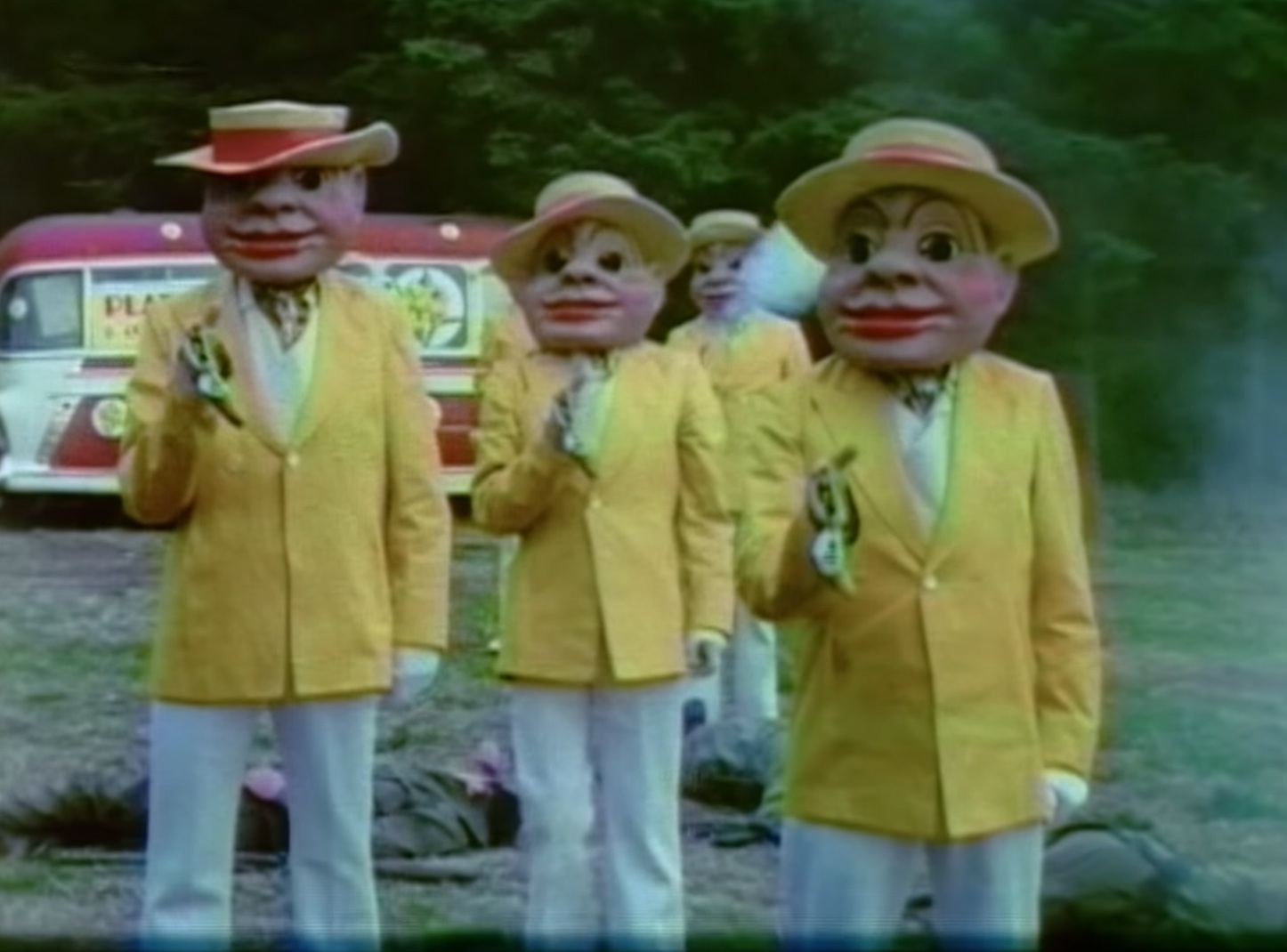
Anyway, join us again next time for Arcturus’ stolen Ritz Cheese Sandwiches, The Sea Devils going up against The Wilf Ray Orchestra and absolutely no untoward remarks about Ingrid Pitt whatsoever honest…

Buy A Book!
You can find an expanded version of It’s Still A Police Box, Why Hasn’t It Changed? looking at the entire sixties run of Doctor Who in Can’t Help Thinking About Me, a collection of columns and features with a personal twist. Can’t Help Thinking About Me is available in paperback here or from the Kindle Store here.
Alternately, if you’re just feeling generous, you can buy me a coffee here. In one of those massive IMC mugs, please. Get the robot to bring it. He doesn’t seem to do much else.
Further Reading
You can find some thoughts on Jon Pertwee’s debut series of Doctor Who in It’s Still A Police Box, Why Hasn’t it Changed?: There’s A Stahlman, Waiting By Some Pipes here, as well as more about those BBC edits of The Banana Splits in Take A Giant Step here.
Further Listening
You can hear me explaining why I would replace tonight’s BBC1 schedule with wall-to-wall The Banana Splits on Perfect Night In here.

© Tim Worthington.
Please don’t copy this only with more italics and exclamation marks.
 Tim Worthington