
Well it happened, years ago. When you lived on… well, it wasn’t Stanhope Road, but that did make us laugh every time we went past Stanhope Street.
We’d listen to The Evening Session, several hours after we came home from school. You were ten years older – than your younger sister – and you had boys in your room. Well, boy, singular. This particular evening was in June 1992, and Mark Goodier was live on BBC Radio 1, introducing session tracks by a band called Pulp.
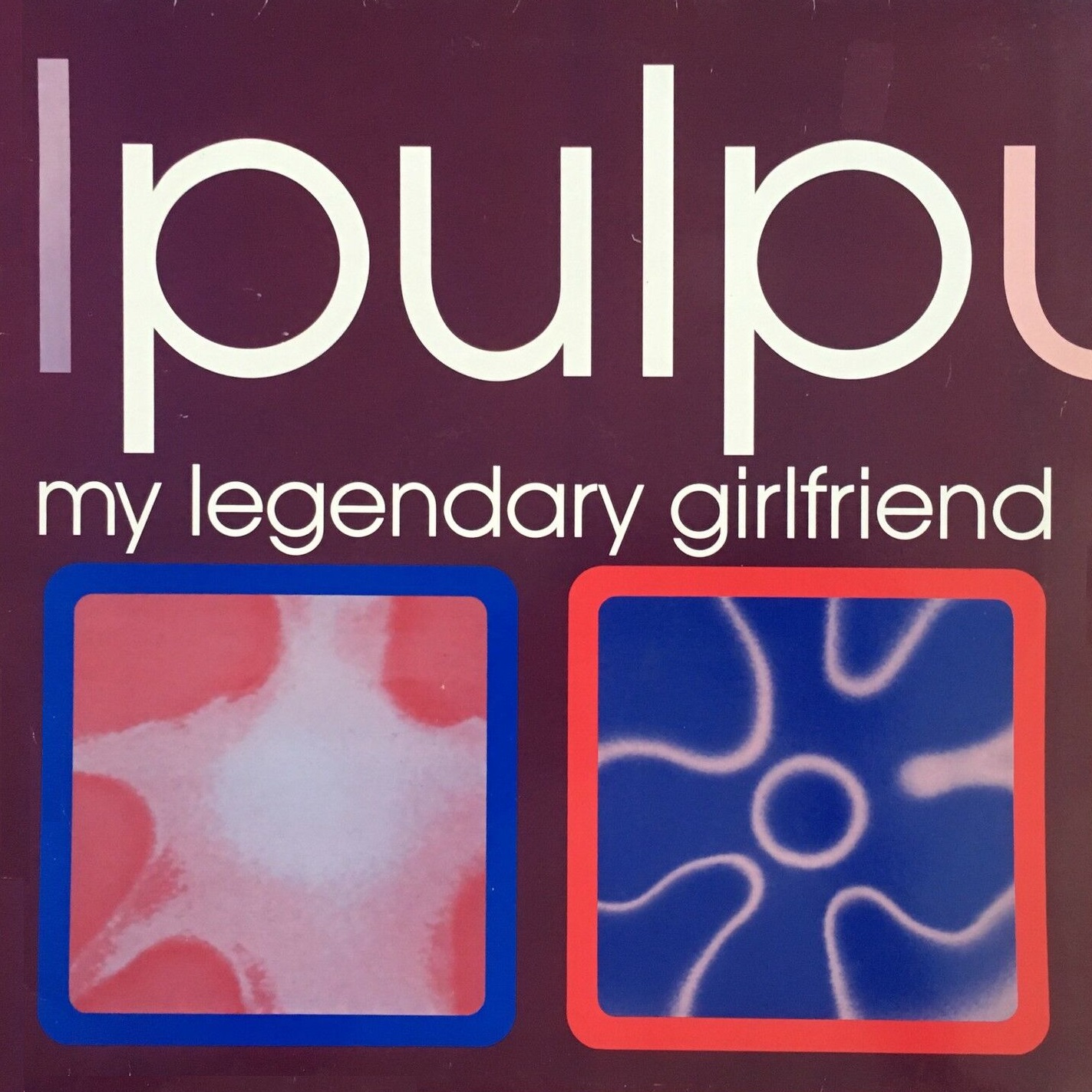
We both knew who Pulp were – if not exactly very much about them – as despite not having attracted a great deal of attention on its release the previous September, My Legendary Girlfriend had made Number Thirty One in the NME‘s Singles Of The Year for 1991, leading to a flurry of excitement amongst aspirant indie kids asking each other if anyone knew what this record with the brilliant title actually was. In a list dominated by Primal Scream, The KLF, Blur, Teenage Fanclub, Saint Etienne, My Bloody Valentine, Massive Attack, Electronic, Nirvana, REM, Manic Street Preachers and a just about still any good Morrissey, any single that had managed to climb that high entirely on its own merits, beating acts that we had actually heard of like Stereolab and Curve in the process, had to have been good, surely?
Well, we weren’t going to find out just yet, because they didn’t do My Legendary Girlfriend in this session. Instead they took the opportunity to showcase some equally exciting and intriguing new numbers that -crucially – we could actually hear for ourselves; Live On, Your Sister’s Clothes, She’s A Lady and most strikingly Babies. To be blunt, ‘strikingly’ is putting it mildly. It wasn’t just the music – as brilliant and indeed striking as it was, pulsating along on a wash of anachronistic keyboard sounds somewhere between the theme from a seventies ITV lunchtime children’s show and the theme from a seventies movie that children should not have been allowed anywhere near, hinting at and drawing you into a vision of the decade that was both gaudy and multicoloured and sleazy and desaturated at the same time and which probably never actually existed but felt like it had done only nobody wanted to admit to it. It was the lyrics, and the wild unfolding and perverted in both senses narrative that left us wondering in those more innocent times whether you were actually ‘allowed’ to say that. Like an outrageous celebrity interview on The Word or a savagely pointed comment on Have I Got News For You, it seemed to step dangerously outside the unspoken consensus that there were certain limits that were not to be – as laughable as it might seem now – tested lightly. So much so, in fact, that it left us momentarily speechless, as indeed did the uncomfortable awkwardness that it had provoked for reasons we were maybe not quite as amenable to the idea of expressing as Jarvis Cocker and company, and most importantly the overall unexpected fabulousness of the song itself. It was, as they say, quite a moment, albeit one that seemed to go on for several thousand millennia. I have no idea of what record broke the loadedly silent tension, but in all honesty it would be difficult for pretty much anyone to notice the next song played after the first time they heard Babies.

More astonishingly still, it wasn’t even Pulp’s next single. That was the thrillingly sexually charged O.U. (Gone, Gone) later in June, which very nearly had Babies as the b-side before everyone saw sense and realised it was too good to throw away so casually, even in the middle of the clamour of excitement about Suede’s debut single coming equipped with two b-sides that were better than most other bands’ a-sides. Babies would instead follow in October – by which time even Smash Hits were sitting up and taking notice – with the nigh on ten minute ode to prowling dirty and run-down streets with an urge to get some and get it quickly Sheffield: Sex City as a b-side; a song which opened with a monologue about hearing other people’s lovemaking through a network of open windows on a balmy summer night, pounded pavements and shop doorways on a day when even the heat itself was in heat, and climaxed – literally – with a couple calling out “where are you?” – “I’m here!” to each other. By this time, though, we weren’t shocked or stunned into silence. We knew this world only too well – the same world as the video for Babies, which somehow looked like a glossy ITV pop show, a low budget early seventies German ‘adult’ comedy film and a filmed insert from You And Me all at once – and if it had previously felt like you just couldn’t say these things, Jarvis Cocker had just gone ahead and said them and somehow changed everything. In retrospect, it’s not difficult to see how he would end up ‘saying’ something even more unsayable at a certain awards ceremony only a short while later. As for that mounting call and response refrain, let us just say that it was easily imitable and leave it at that.

All of this was also very much true of Razzmatazz, which followed in February and whether by accident or design shared its name with a glossy ITV pop show, and came accompanied by the equally remarkable narrative suite Stacks, Inside Susan and 59 Lyndhurst Grove which followed the same character from excitable teenage mischief through to unhappily married boredom and a yearning to find that fire inside herself again. A fire that was very much in evidence when we went to see Pulp live a week later, playing a joint show with Saint Etienne whose own equally invigorating from a thematically different but very much aligned retro-futuristic direction So Tough had only come out three days beforehand; barely enough time to be able to remember which song was which, although more than enough time to have got into a debate about whether that sampled laugh was Professor Yaffle or not. Pulp closed that show that night with Babies – with O.U. (Gone, Gone) as the encore, something that it is difficult to imagine happening only a matter of months later – and as we stepped out into the bracing spring air, drifting into the general direction of the train station, you stopped, smiled that gigantic smile and said “…something’s happening, isn’t it?”. It really, really was, though we had no way of knowing just how big it was going to get.

Pulp themselves were already getting pretty big, though, and before the year was out they were signed to Island and Babies – along with Razzmatazz, O.U. (Gone, Gone), Sheffield: Sex City, Stacks, Inside Susan, 59 Lyndhurst Grove and the similarly unshabby Styloroc: Nites Of Suburbia and Space – found its way onto Intro: The Gift Recordings, a compilation of tracks from those three singles intended as a relaunch and reintroduction for a wider audience. Intro: The Gift Recordings was never quite considered a ‘proper’ album – to the extent that Jarvis felt moved to append the lyric booklet with an instruction not to read it while actually listening to the songs – but with all of those tracks assembled together in a carefully thought-out order it sounded and still sounds little short of astonishing, with a thematic flow that certain of their later Britpop contemporaries never quite bothered to aspire towards, and it crackles with energy, originality and invention and an invitation to join them on whatever weird idiosyncratic musical and cultural journey they were embarking on. Their music would become increasingly more polished, challenging and adventurous but somehow at the same time Pulp never quite sounded this raw and hungry again.
Something was happening, and bigger singles, bigger albums, bigger concerts and bigger moments were all ahead, but it all has to start somewhere. It’s just that it usually starts with a record you’ve actually heard.
Buy A Book!
You can find an expanded version of My Legendary Girlfriend, with much more on the oddly early seventies-tinged build-up to Britpop and Pulp’s peculiar pre-fame career on the fringes of pop music in Keep Left, Swipe Right, available in paperback here or from the Kindle Store here.
There’s much more about the thrill of the early nineties indie scene and the excitement of Britpop waiting to happen in Higher Than The Sun, the story of Foxbase Alpha, Loveless, Screamadelica and Bandwagonesque and how Creation Records took on the world and nearly won. Higher Than The Sun is available in paperback here or from the Kindle Store here.
Alternately, if you’re just feeling generous, you can buy me a coffee here. Make sure you don’t lose her number if you get one from the all-night garage.
Further Reading
Shine Like Stars. And you did.
Further Listening
There’s more about the 1991 Christmas NME – and My Legendary Girlfriend – in Looks Unfamiliar with Grace Dent here.

© Tim Worthington.
Please don’t copy this only with more italics and exclamation marks.
 Tim Worthington