
Doctor Who‘s fifth series in 1967-68 probably seemed pretty much like just another day at the office for more or less everyone involved. A well established successful ongoing series that had survived a potentially hazardous change of lead actor, it was nonetheless no more or less significant than any other television show of the time, especially now that ‘Dalekmania’ was beginning to abate. It was hugely popular Saturday evening science fiction thrills all the way, but Doctor Who was also being churned out week in, week out, and in some regards had actually fallen into something of a pattern itself, becoming famously – for both the right and the wrong reasons – over-reliant on a ‘Base Under Siege’ narrative model.
It must have come as something of a surprise to all concerned, then, when fans later started to hail this series as the unmatchable high watermark of all things Doctor Who, and not without good reason. Largely erased shortly after broadcast – in fact at one point, only three episodes out of the entire run were known to still exist – all that remained were eerie-looking photos, moody off-air audios, novelisations that hinted at tense and thought-provoking stories, and the memories of those who had actually seen the now thoroughly intangible ‘Monster Season’, presumably so named to distinguish it from all of those other series with absolutely no monsters in them whatsoever – when it was originally transmitted; odd now to think that it was only a little over fifteen years old at that point. The Daleks may have departed for Hollywood but in their place came two Cybermen stories, two Yeti stories, the Ice Warriors, Patrick Troughton playing a dual role, and some seaweed with ideas above its station. It really didn’t get much more exciting – or at least exciting-sounding – than that.
Then of course huge swathes of it turned up and everything got turned on its head. Some stories turned out to not quite live up to the bold claims that had been made for them. Others, forgotten and ignored, turned out to be utterly fantastic. Everyone else looked on in bafflement and pointed out that they’re all good and what are any of you lot on about? Still, the fact remains that few elements in the entire Doctor Who ‘universe’ have fallen as far and as quickly from favour as Series Five, and on past form, chances are that we’re not exactly going to be doing very much to help to restore its reputation here. We’ll do our best, though, and what better place to start than with the fearsome metal man from beyond the stars whose popularity with the viewing public so memorably dominated this series…?
Why Is The Servo Robot So Famous?
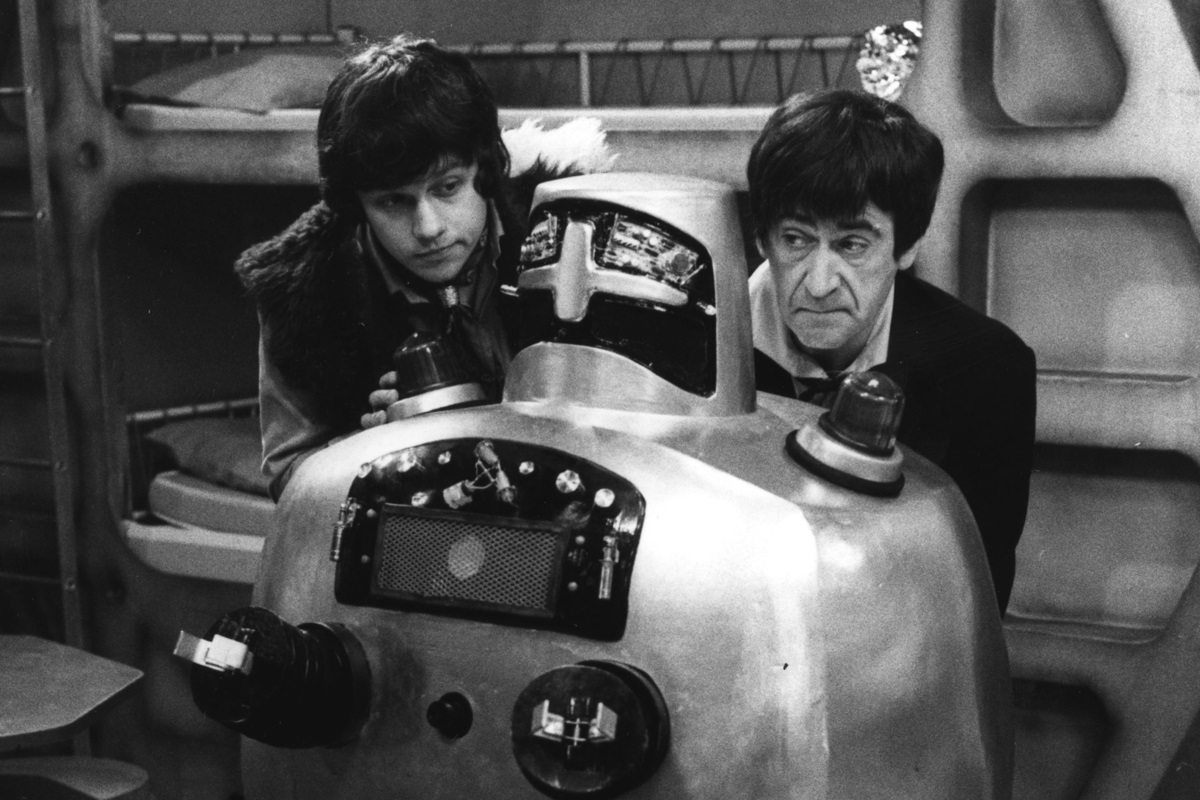
More of an annoyance than an antagonist, The Servo Robot – the lumbering aftershave-shaped bipedal custodian of abandoned rocket The Silver Carrier in Series Five closer The Wheel In Space – is only seen in one episode, and even then gets blown apart in spectacular fashion in a textbook display of previously unmentioned gadget we’ve just got from the TARDIS technobabble. It is merely one of a long line of underwhelmingly designed yet at the same time oddly futuristic robots in sixties Doctor Who. It doesn’t even appear anywhere in the two existing episodes from the story, spectacularly blown apart or otherwise. So how come, in that case, it’s by far the most widely-recognisable visual element of the story, if not the entirety of Series Five? Incoming TARDIS traveller Zoe makes her first appearance in this story, and the Cybermen and the Cybermats have both had memorably sleek redesigns, but ask the average fan what they think of first when you mention The Wheel In Space and they will almost certainly say The Servo Robot. They’d struggle to tell you what contentious X-Ray Laser-powering mineral Bernalium, foxy Russian scientist Tanya Lernov or even The Wheel itself looked like, but they could describe The Servo Robot in unnecessarily intricate detail without even trying. Quite how this has come about is something of a mystery. You can’t blame publicity photos as there are actually substantially more of The Cybermen and Zoe, not to mention that Cybermat that print fanzines were forever using to fill awkward bits of landscape-format space. You can’t point towards the scale blueprints in The Doctor Who Technical Manual as nobody ever really understood quite what that was for. You can’t even blame the Telesnaps – of which more in a moment – as it seems that with unerring accuracy, John Cura once again failed to capture any aspect of any of the actual key moments in the first episode. We can only assume, then, that it either did something visually astonishing that wasn’t in the script and wasn’t picked up on the soundtrack, or else that there was some never-recorded outbreak of ‘Servomania’, inspiring an avalanche of tie-in merchandise that was all completely obliterated and forcibly wiped from people’s memories shortly afterwards. That said, some viewers most likely had their minds on other things…
They Like Big Boobs And They Cannot Lie

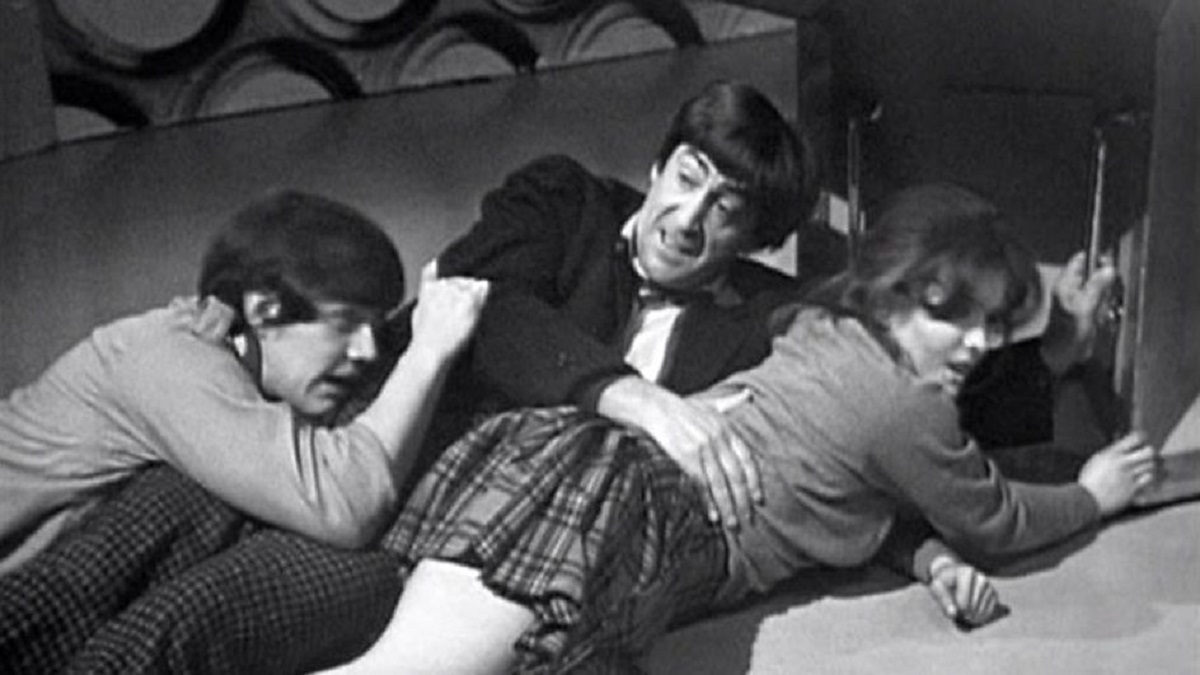
In the previous instalments, we’ve had plenty to say on the black and white era cameramen’s pervy fixation with focusing in on female cast members with sizeable backsides. Presumably this was as much as the hot and bothered gentlemen felt that they could reasonably get away with at the time, but this would all dramatically change with the arrival of Deborah Watling as Victoria. She was, lest we forget, the first assistant that the production team explicitly stated was there to get ‘The Dads’ watching, and presumably in a complete and fortunate coincidence brought with her a frankly unignorable frontage. Although plunging necklines were still some distance away from acceptability, the costume designers nonetheless went out of their way to stick her in tight dresses and sweaters; the effect that this had on ‘The Dads’ doesn’t bear thinking about. There’s even a couple of lines that are delivered in a manner that suggest the rest of the cast are having a bit of knocker-heavy innuendo amusement with the entirely innocent script, not to mention someone more or less telling her that her tits are ‘getting in the way’ in The Tomb Of The Cybermen. Meanwhile, the fact that Victoria could only have been supposed to be fifteen at most is probably best sidestepped for now. Anyway, the long and short of it is that that the cameramen were seemingly in competition with each other to pan and tilt for the best angle on the thankfully very much overage Ms. Watling, although certain shots do suggest that old habits really did die hard…
Eagerly Pursuing All The Latest Fads And Trends, ‘Cause He’s A Dedicated Follower Of Fashion
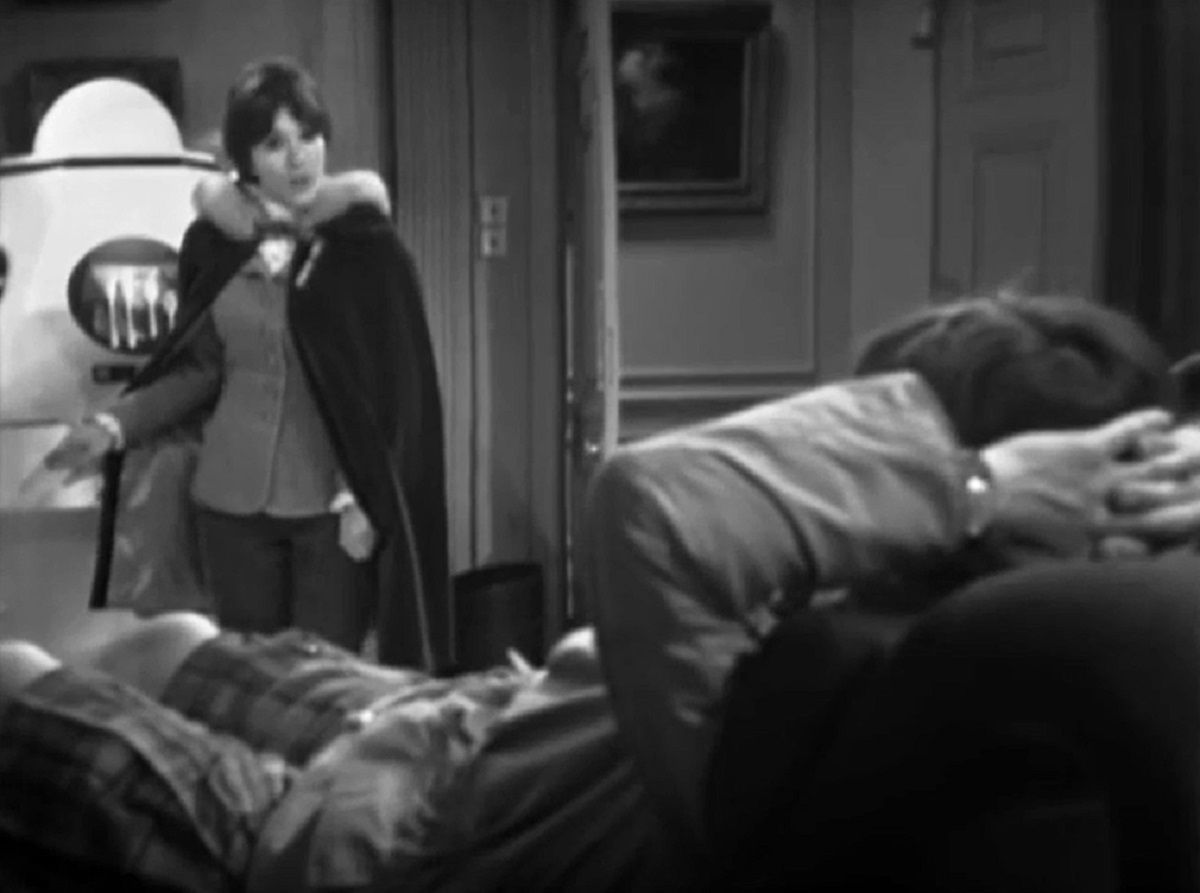
Also paying close attention to certain aspects of Victoria’s wardrobe, if the first episode of The Ice Warriors is anything to go by, was her travelling companion Jamie McCrimmon. In a textbook ‘nice intention, shame about the execution’ move for Doctor Who at the time, not to mention somewhat impractically for a research station in the middle of an icy tundra, Miss Garrett and her fellow climate-saving clever-clogs female technicians are given to walking around Brittanicus Base in Mary Quant-style two-tone minidresses of such alarming brevity that they would have finished higher than their underwear had they actually been wearing any, which a slightly racier than conventional strand of logic dictates that they can’t have. Needless to say, Jamie has observed this and is not exactly upset about the matter. Presumably speaking for ‘The Dads’ everywhere, he adopts a louche, relaxed pose on a sort of bendy ‘futuristic’ couch thing and asks Victoria if she had noticed what ‘those lassies’ were wearing. Apparently having temporarily forgotten her own predilection for dramatically short skirts, Victoria replies that yes she had, and she thinks they should have more self-respect, and shame on Jamie for taking such an active interest in the subject. Unfazed by this, Jamie breezily asks if Victoria sees herself wearing anything similar, which invites an even more stern rebuke and an announcement that she will now change the subject, which is promptly done for her in an appalling display of Ice Warriorsplaining when Varga chooses that exact moment to lumber out from behind a curtain. There’s probably an interesting thesis to be written looking at how despite its cake-and-eat-it general failure to ‘do’ feminism from a modern perspective, this and other examples from sixties Doctor Who were actually quite striking and daring in their actual context and it’s a shame that they have since been overshadowed by later less enlightened tangents, but the real pressing question is who decided Jamie should be offering his views on fashion and design and indeed why. Was his week-in-week-out uniform of shapeless jumper and kilt masking a secret obsession with the tripped-out stylings of I Was Lord Kitchener’s Valet and Granny Takes A Trip? Was he frequently invited onto A Whole Scene Going to talk about shift dresses and the plastic raincoat revolution? Did he indeed flit from shop to shop just like a butterfly? Sadly, we may never know, though there are some vagaries of mid-sixties fashion we can be somewhat more certain of…
The Abominable Snowmen Was The Most ‘Psychedelic’ Doctor Who Story

Every so often, you’ll find a BBC Four documentary about ‘the sixties’ taking a slight detour into talk of when Doctor Who ‘went’ ‘psychedelic’. This, it is generally agreed, was when all those storybook characters came to life and everyone wandered around in a white void in The Mind Robber. Or when all those toys came to life and everyone – well, The Toymaker and an invisible Doctor – wandered around in a white void in The Celestial Toymaker. Or, at an absolute push, when you had those giant butterfly men like everyone sees when they’ve been smoking acid in The Web Planet. Yet while all of those stories, and indeed numerous others that never get mentioned, certainly chime with the visual and thematic motifs of UK-slanted psychedelia, were they actually that intentionally ‘psychedelic’, or just the rewritten-at-the-last-minute work of career-minded scriptwriters who were careful only ever to reach for the bottle marked The Ones That Mother Gives You? If you’ve learned your psychedelia from Dave Clark Five records, then yes, it’s probably true that you do just need a couple of mindbending colours and Victoriana references and away you go. The real pioneers and practitioners of the movement, though, were on more of a spiritual quest with their I Ching and their getting it together in the country and it’s a fair bet that more than a few of them will have found some fundamental wisdom in the inaugural appearance of an entity rather appropriately known as The Great Intelligence. The Abominable Snowmen might not look much like the cover of The Psychedelic Sounds Of The 13th Floor Elevators, but it’s set in a remote part of Tibet – and filmed, incidentally, on pastoral Welsh hillsides – dominated by devotional Buddhist monks with a big stone temple who dole out sparse fragments of wisdom and enlightenment whenever the script permits them to. Despite being set in the thirties, there’s still a dash of a Victorian-Edwardian pre-technological atmosphere about The Abominable Snowmen on account of the presence of beardy academic Professor Travers, and the whole story is shot through with a transcendental ambience that suggests that all movement really had been accomplished in six stages, and the seventh had indeed brought return. Mind you, we’ve only got one episode and a handful of clips to base this on, but we do at least know what the other episodes sounded and indeed looked like…
What Happened To All The Other Telesnaps?

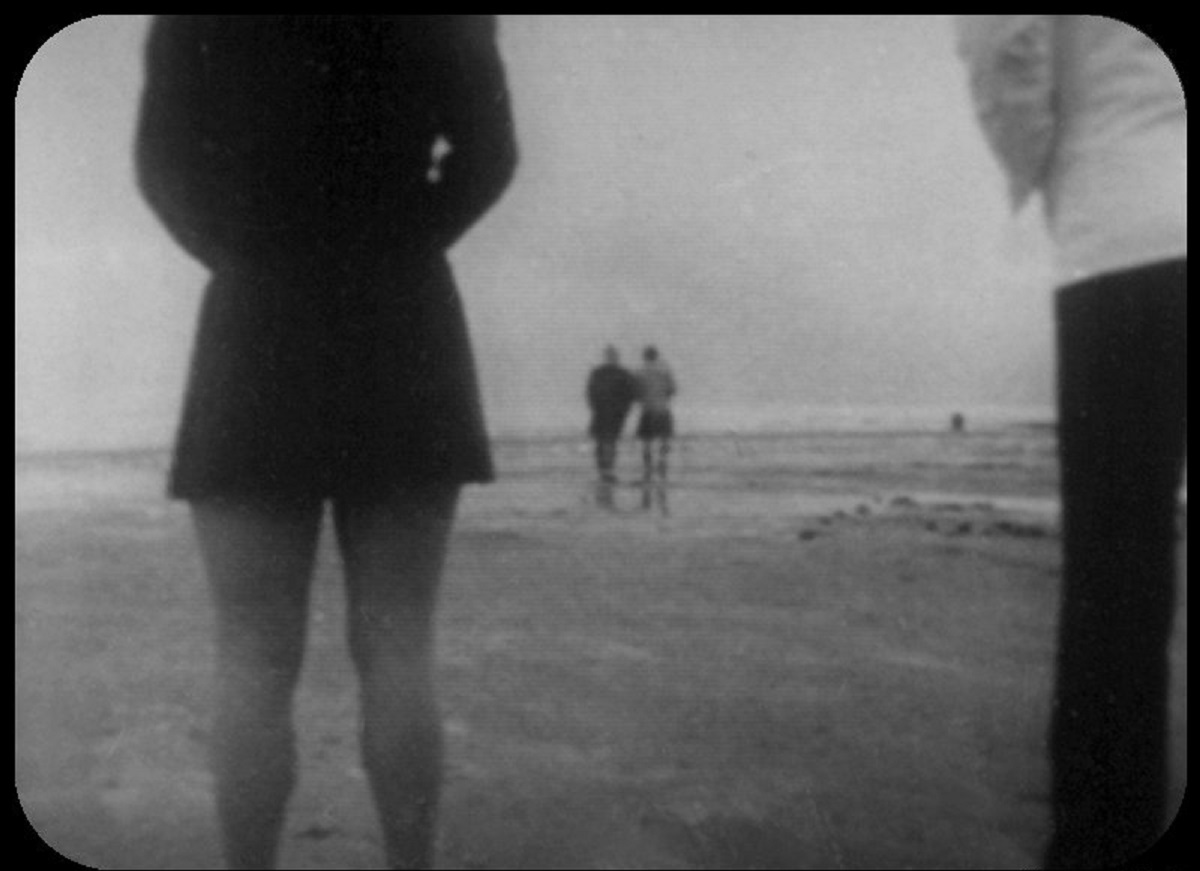
If you’ve ever read anything about missing episodes of sixties Doctor Who, you’ll no doubt have seen dozens upon dozens of funny blurry little television-shaped images depicting the long-wiped onscreen action. These are ‘Telesnaps’, taken by a photographer named John Cura who specialised in providing commissioned off-screen images for actors and production staff alike who would otherwise have had no record of their television work in the pre-home video age. There are surviving Telesnaps for the vast majority of lost Doctor Who episodes, and a very faint half-rubbed-out pencilled-in question mark over whether there might be some out there for some of the other ones too, but it wasn’t just strong>Doctor Who that he, well, ‘Telesnapped’. This was a popular and profitable business – successful enough for him to be profiled in a magazine article headed by some bikinied lovelies beneath the headline ‘This Is How John Cura Does It’ – and he spent all day and every day photographing pretty much anything and everything that appeared on all three television channels. You might very occasionally chance upon a Telesnap from another programme like Z Cars or some thing with Carole Ann Ford in, but if there were so many then how come aren’t we all struggling to escape from beneath a daily avalanche of Telesnaps? Unfortunately, it is credibly reported that the Cura family disposed of their boxes and boxes and boxes of negatives, contact sheets and enlargements after offering them to the BBC, only to allegedly be informed by someone behind a desk that they were ‘moving forwards, not backwards’, doubtless at the exact moment that an overused BBC Schools show transmission spool snapped on air and began rewinding at high speed. That was only one set of copies, though; he had taken the Telesnaps for a reason, and that reason was that someone had asked for and paid for copies. There must be billions upon billions of them out there, stuffed into corners in attics the length and breadth of the nation and bearing the only known visual record of long-lost editions of The Wednesday Play, and United!, and Adam Adamant Lives!, and Top Of The Pops, and Theatre 625, and Where Was Spring?, and Sara And Hoppity, and Quick Before They Catch Us, and Sugarball The Little Jungle Boy, and Witch Hunt, and R.3, and Vendetta, and Armchair Theatre, and The Tennis Elbow Foot Game and that thing with that Barry Bucknell and the whole bloody lot of them. Of course, there might even be a shed somewhere with actual film prints of all of the above and more in. You never know. I mean it’s not like anything similar has turned up from anywhere recently. Keep watching the hailstones! Apparently.
The Enemy Of The World’s Enemy Is Not My Friend
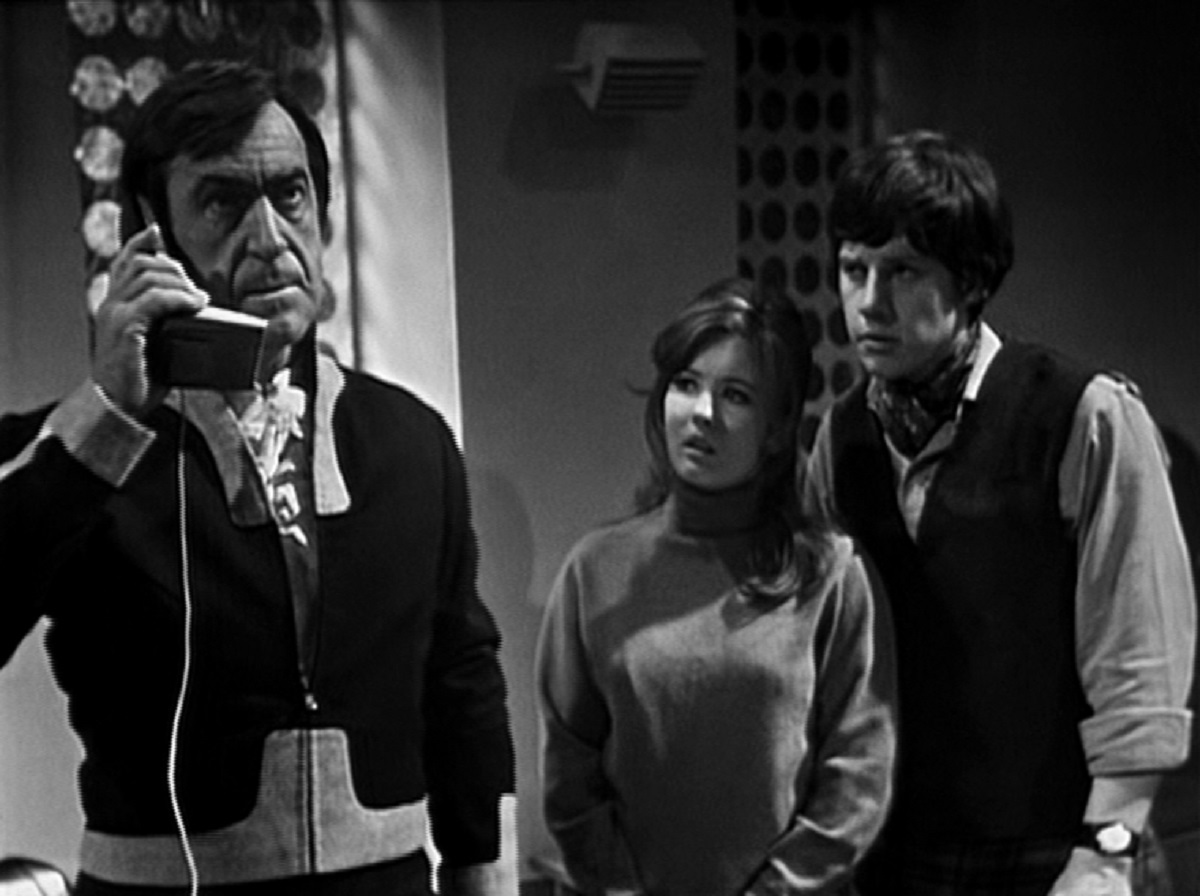
Poor old The Enemy Of The World. Marooned without a monster in the middle of ‘Monster Season’, and represented only by a lone dialogue-and-long-pause-heavy mid-story episode, it was the one that everyone always forgot about. All that anyone ever really knew about it was that Patrick Troughton played a ‘dual role’ as ‘the villainous Salamander’, and that there were some swear words in the tie-in novel. Or at least that’s what we used to think. Then the rest of the story was found in Nigeria, alongside most of The Web Of Fear and nothing else at all whatsoever no honestly guv Spitting Image would never feature such a puppet and was on holiday when it wasn’t made, and we finally got to enjoy The Enemy Of The World full and in its proper context for the first time since 1967 slash 1968. Happily, ‘enjoy’ was the operative word; director and later series producer Barry Letts had always gone out of his way to stress that the surviving third episode was the ‘filler’ one and the rest of it was far more tense and exciting fare, and thankfully he was proved absolutely right. With its bleak location work, hi-tech Cold War thriller overtones and a towering dual performance from Patrick Troughton, The Enemy Of The World vaulted from obscurity into everyone’s top ten favourite stories literally – thanks to the midnight release on iTunes – overnight. Well, almost everyone’s. The double-edged sword of the Internet Age, frustratingly, has exposed us to an endless procession of tiresome contrarians all clamouring to be the first to naysay the consensus and furiously stamp on any hint of anything approaching positivity and generally just do whatever it takes to boost up their forum ‘star rating’, with the sheer shamelessness of the exact same sort of individual who might well, say, write eighty seven thousand million words on why Time And The Rani is good, not bad like you thought. It was slow? You turned off after three minutes? It lacked the classic production values of the classic gothic Holmesian deux ex machina back-to-basics base-under-siege classics like The Pyramids Of Mars, The Deadly Assassin, The Brain Of Morbius and Time-Flight? Well, that was worth putting out there. Lizanne Henderson is probably quaking in her academic boots as we speak. Seriously, nobody’s asking you to fall into line and call it your favourite story ever of all time through venomously gritted teeth, but can’t you put a bit more effort into the supposed reasons why it isn’t; and maybe, just maybe, emphasise some of the positives as well? Honestly, lord help us when the story that there’s no surviving episodes from at all finally turns up…
Why Did Victoria Stay In 1968?

By now, we should be well used to Doctor Who assistants being written out of the series in a cursory, convenient and logic-defying fashion. There’s Susan and Vicki electing to marry men from the wrong end of history that they’ve only just met, Katarina catapulting herself off into the icy wastes of space – yes, she does ‘count’, and there’s more about that here if you want to argue – and Dodo liking the Pie Pie so much that she decides to stay in Shrewsbury. Yet there’s something about Victoria’s departure at the end of Fury From The Deep that makes it that disconcerting bit more puzzling than all of the others. Despite having previously been perfectly happy whizzing about in time and space with Jamie and The Doctor, she suddenly decides with next to no prior indication to stay behind in contemporary North Sea Oil Rig with drill-manning married couple Frank and Maggie Harris. Quite how the prim and proper 1860s teenager coped with free love, Enoch Powell and The Walham Green East Wapping Carpet Cleaning Rodent And Boggit Extermination Association is frankly anybody’s guess, as indeed is exactly why she wanted to. Then again, maybe someone who once pitched a rejected New Series Adventures novel where The Doctor and Donna went to the 1969 Isle Of Wight Festival and bumped into Victoria and were helped to defeat the story’s antagonist by Viv Stanshall and Keith Moon would say that. Let’s not even mention the Torchwood one where there was an Inspiral Carpets t-shirt in a Victorian explorer’s private collection of artefacts. Anyway…
What Did The Other Things In The Tardis Toolkit Actually Do??

Fury From The Deep may indeed mark Victoria’s final appearance, but it also plays host to the debut of a somewhat more enduring Doctor Who mainstay – The Sonic Screwdriver. Although it is difficult to say for certain on the basis of just an audio recording and some particularly unclear Telesnaps, it appears that The Doctor actually produces it from some form of early variant on the infrequently glimpsed Tardis Toolbox. While it was the Sonic Screwdriver that would last the distance, we did also later get occasional glimpses of the other impractical-looking devices stored alongside it, though quite what actual purpose or technical application any of them might conceivably have had is something of a mystery. According to that bible of all things bewildering yet accurately measured for no good reason The Doctor Who Technical Manual, these included a Universal Detector, a Neutron Ram, a Stalos Gyro, a Magnetic Clamp, a Moog Drone Clamp, a Master Drone Clamp, an Influx Booster Stabiliser, a Pen Torch and that all-important multi-purpose Laser. While it would be difficult to refute the usefulness of the latter two, quite what everything else did was never made entirely clear. The Neutron Ram was used to locate Omega in Arc Of Infinity and made a fleeting cameo appearance in the Paul McGann Movie, the Magnetic and Moog Drone Clamps were used in conjunction with the Stalos Gyro to do some, erm, clamping – and presumably by extension gyroing – in Earthshock, and apart from that, well, they just sort of sat there. You could probably put forward a decent argument that this was an enormous missed opportunity, and that the toolbox was basically a ready-made Thomas Salter Toys playset that never was, but they’d have had to decide what the other bits and pieces actually did first. Small wonder, then, that one of the first things Russell T. Davies did was to replace them all with a big Whac-A-Mole mallet. Mind you, we’re really only guessing as to whether an actual toolbox was even seen in Fury From The Deep. Some things from the ‘Monster Season’, though, we can be far more certain about…
“++YOU WILL BE THE FIRST ” – “++AND YOU WILL BE THE NEXT”

Of all of the ‘Monster Season’ escapades, The Tomb Of The Cybermen‘s reputation has taken the biggest retroactive hammering. Back when nobody could actually see or hear it, it looked and sounded like the most amazing story – if not the most amazing example of television full stop – ever made, an assumption lent extra weight by tantalising evidence of the controversy caused by the Half-Cyberman On Cyberman fight scene towards the end of the last episode. Once the complete The Tomb Of The Cybermen turned up, of course, it turned out to have been just another Doctor Who story after all, with many key moments including that viewer-enraging punch-up not quite living up to the awestruck and indeed awe-inspiring recollections and descriptions. Although we’d better not mention the ‘memories’ of a certain fan who prominently ‘recalled’ scenes that turned out not to appear in the actual episodes at all, and then turned out not to have been born until 1970. All the same it’s important to bear in mind that it’s still a very very good just another Doctor Who story, and the fact that it didn’t quite match up to cliché-driven over-adulation in absentia is hardly the fault of Morris Barry and company struggling to get an ambitious narrative onto battered videotape in a cramped studio back in 1967. With one glaring exception. When The Cyber Controller is outlining his plan to cyberneticise the cornered experts and send them back to Earth as a first wave of ‘colonists’, he points at duplicitous expedition-funder Eric Klieg and informs him that “YOU-WILL-BE-THE-FIRST”. Which is all very well and good except for the fact that one of his subordinates then points at Professor Parry and states “AND-YOU-WILL-BE-THE-NEXT”. There then follows an extended pause – presumably where two of the others were supposed to say “AND-YOU-WILL-BE-THE-ONE-AFTER-THAT” and “WE’LL-DO-YOU-A-WEEK-ON-THURSDAY” but forgot – and then, and only then, do the assembled company remember that they’re supposed to be struggling with each other. It’s slightly difficult to mount a spirited defence of the story’s relentless pace and eerie atmosphere when you’ve got something that jarring and stalling slap bang in the middle of it. Still, there were certain other characters in Series Five that were both the first and the next in a somewhat more positive context. Yes that will make sense. Honest.
“…So I Became A Scientist”
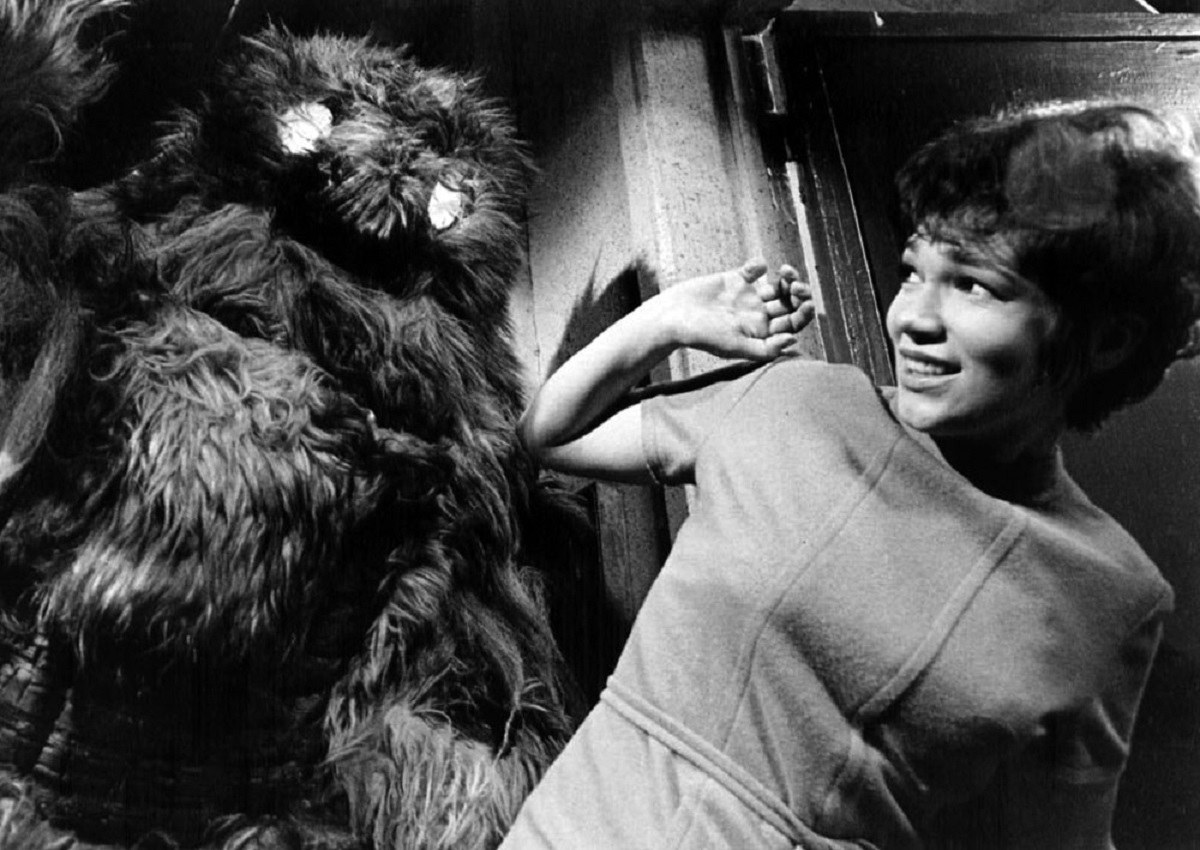
The Web Of Fear boasted the return of both The Yeti, now wandering around the London Underground with Malibu Stacy’s new hat or something, and Professor Travers, now in the throes of Swinging London but more concerned with the fact that one of the Yeti Activation Spheres he had kept as a souvenir has simply rolled out of his laboratory of its own accord. It also featured the debut appearances of both a prototype U.N.I.T. and The Brigadier, wearing the tape inlay card from ZX Spectrum game Chequered Flag as a hat for some reason, but meanwhile poor old Anne Travers gets overlooked almost completely. While not the first strong female character in Doctor Who by any stretch of the imagination, she’s certainly the first to enjoy this level of prominence while remaining a grounded, naturalistic, rational and intelligent one without wandering into any silly damsel in distress antics and without any need for excuses about coming from another planet or from the future. Without any fanfare or hamfisted hoo-hah about skirt length, ‘Women’s Lib’ had arrived in Doctor Who, as those two soldiers who asked her “what’s a nice girl like you doing in a job like this?” found out to their embarrassment; “Well, when I was a little girl I thought I’d like to be a scientist… so I became a scientist”. It’s a shame that Tina Packer’s stage commitments prevented Anne from being kept on as U.N.I.T.’s regular scientific consultant, as she no doubt would have been, but she paved the way for so many other characters that followed, and that’s something to be pleased about. Though it would be some time before the ‘Monster Season’-era cameramen realised this…

Anyway, join us again next time for Grace Slick singing Ziwzih Ziwzih OO-OO-OO, The Ice Warriors inventing Noddy Holder, and the unanswerable question of just how many centuries those film trims from The Space Pirates actually last for…
Buy A Book!
You can find an expanded version of It’s Still A Police Box, Why Hasn’t It Changed? covering the entire sixties run of Doctor Who in Can’t Help Thinking About Me, a collection of columns and features with a personal twist. Can’t Help Thinking About Me is available in paperback here or from the Kindle Store here.
Alternately, if you’re just feeling generous, you can buy me a coffee here. Tell the barista your name is ‘++YOU-WILL-BE-THE-FIRST‘.
Further Reading
You can find some further thoughts on the lost sixties Doctor Who stories – and why their tantalising unavailability makes them just that degree more interesting – in The Abandoned Planet here.
Further Listening
You can find many further thoughts about Doctor Who‘s earliest days and much more besides in Doctor Who And The Looks Unfamiliar here.

© Tim Worthington.
Please don’t copy this only with more italics and exclamation marks.
 Tim Worthington