This overview of the story of The Singing Ringing Tree – an East German children’s serial that ostensibly resembled a fairy tale only with nightmarish undertones, overtones and pretty any and every other conceivable variety of tone in between and looked not unlike what might happen if a powerful ‘bad’ hallucinogen was accidentally lost in a tin of Cadbury’s Roses, which was shown relentlessly in dubbed form by the BBC and terrified as many younger viewers as it enthralled – was originally written as a syndicated press feature to promote the Bluray release of the serial, which included a book by me about the fascinating story behind The Princess’ capitalism-denouncing quest to outwit that lightning-summoning character in the eye-infuriatingly refractive jumpsuit. This was by necessity a much shorter and much sillier version of events, aimed at the sort of potential punters who had clearer memories of The Fast Show‘s Ton Singingen Ringingen Blingingen Plingingen Tingingen Plikingen Plonkingen Boinging Triee than of the actual The Singing Ringing Tree itself; unfortunately the Bluray is no longer available, but if you’re interested in seeing all of this recounted in a less short and indeed less silly manner then you might want to try investing in a copy of The Golden Age Of Children’s TV. You can also find much more about many other weird imported children’s serials and how the BBC ‘reworked’ them for less Continental audiences including Belle And Sebastian, The White Horses, The Flashing Blade and The Adventures Of Robinson Crusoe in Keep Left, Swipe Right, available in paperback here or from the Kindle Store here. Anyway, here’s my very own ‘BBC Presentation’ of that determinedly press-friendly history…
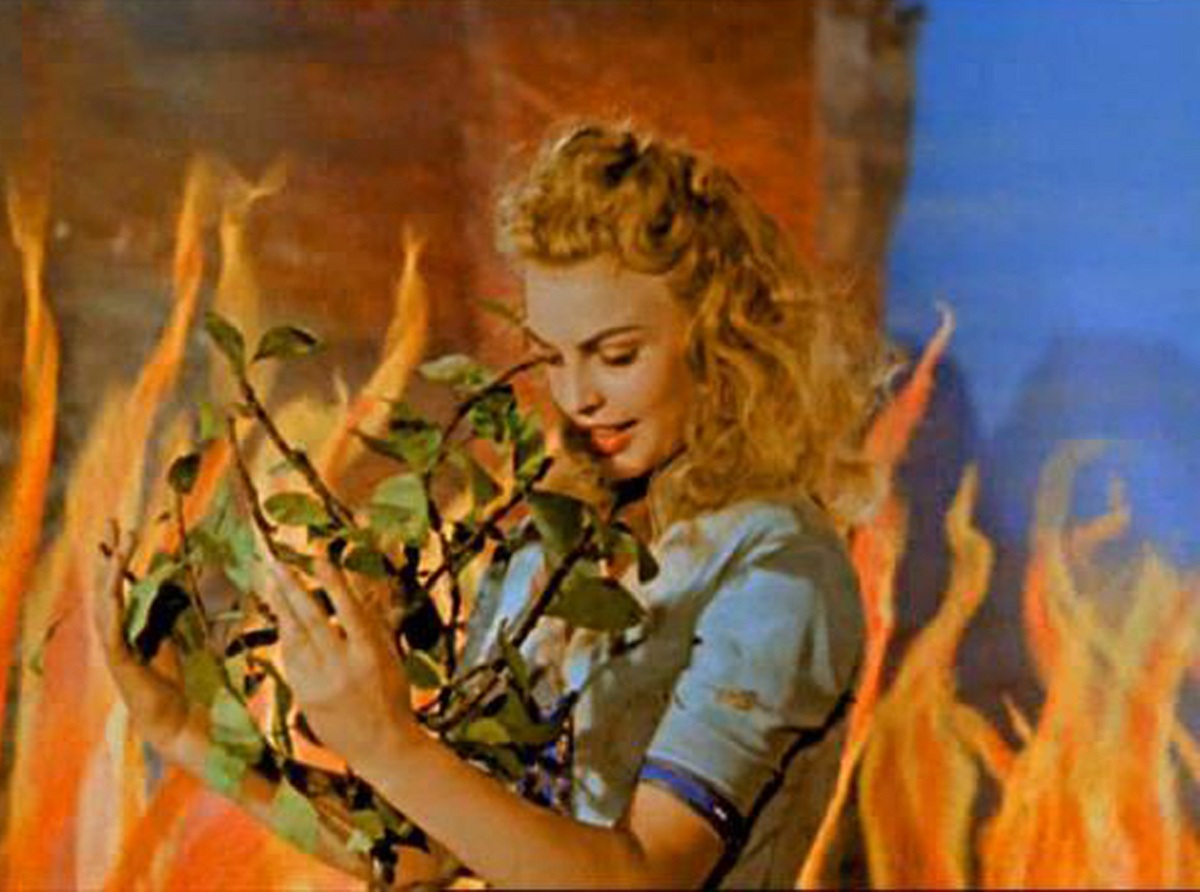
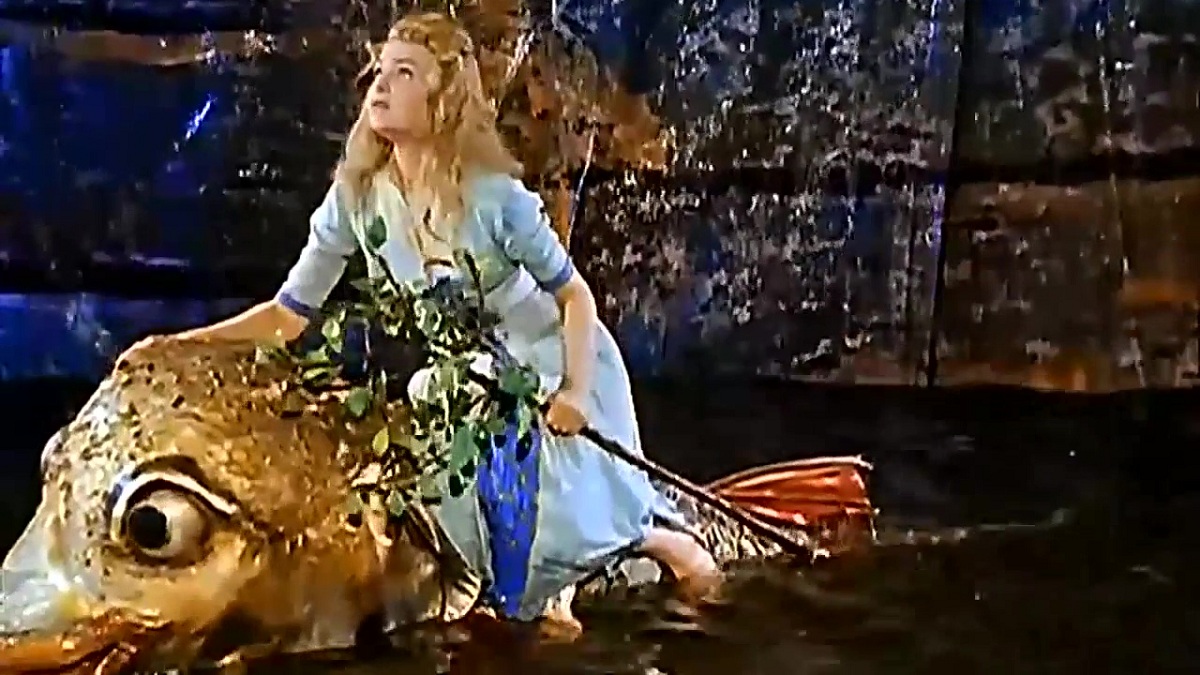
Once upon a time, a prince journeyed many miles and for many days, to seek the hand of a beautiful princess in a far-off land. This wasn’t an especially straightforward task, as she wanted him to bring her a fabled and elusive magical plant before she would even think about marrying him. What’s more, the custodian of this courting gift wasn’t going to make it easy for them, and threw magical spells, extreme weather conditions and every camera effect in the book at them, while several generations of younger viewers dived behind the sofa – after checking that there wasn’t a giant talking fish there first. This was The Singing Ringing Tree, and it was every bit as strange as it sounds.
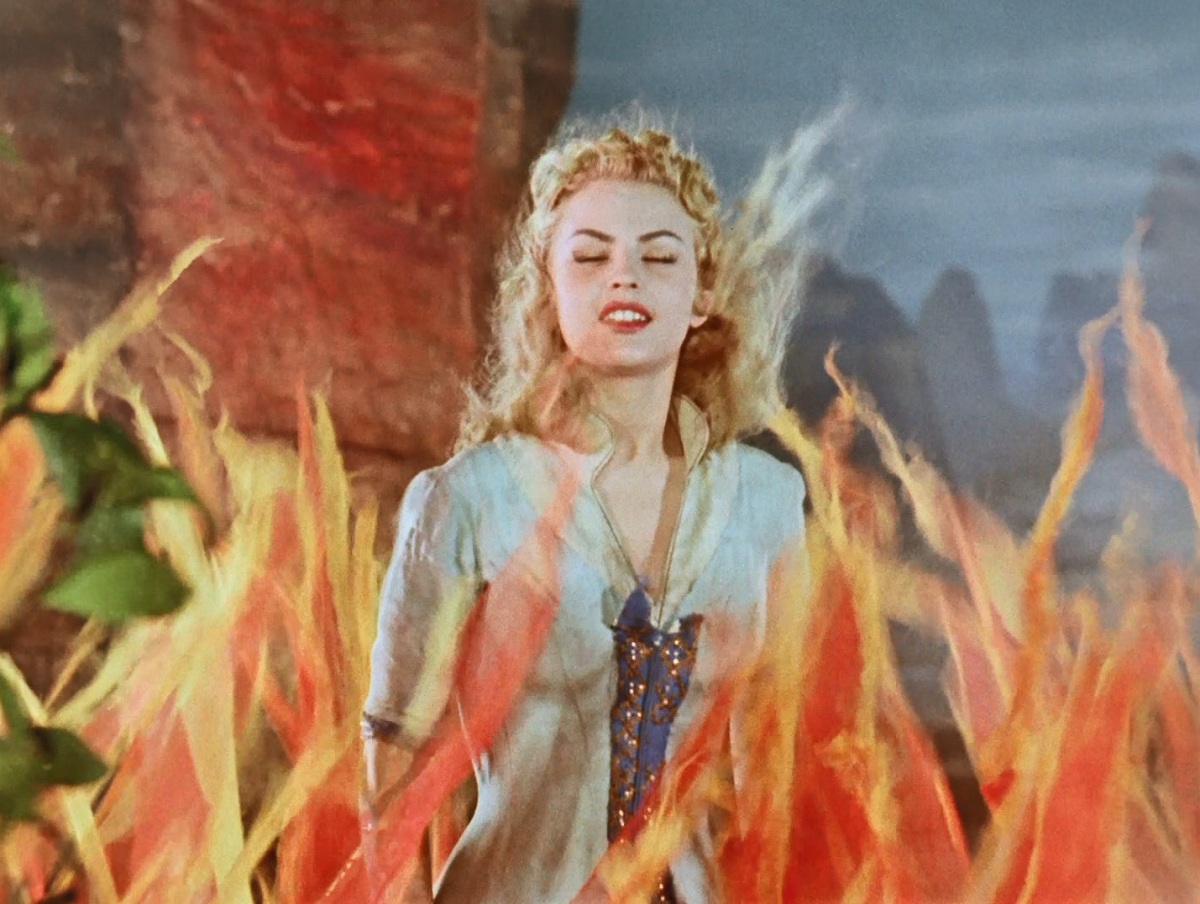
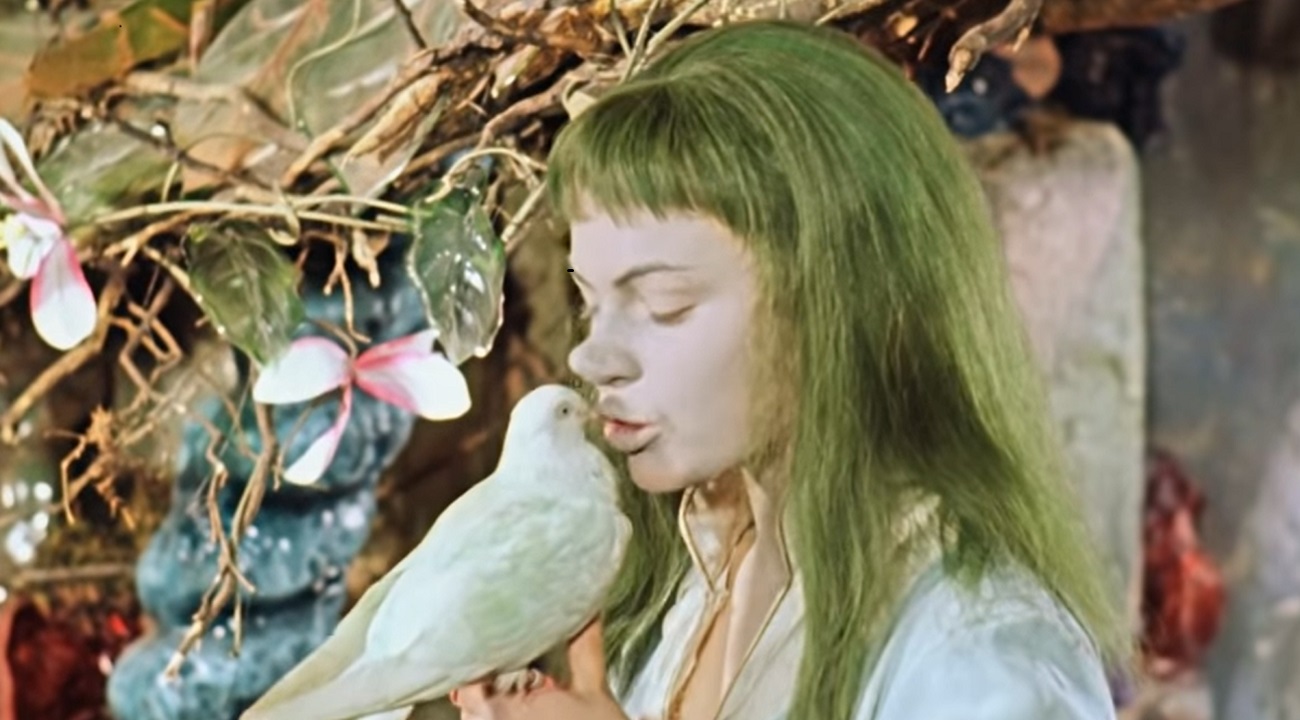
Boasting gaudy colours that made it look as though it had been shot through a pile of Quality Street wrappers, mind-frazzling visual effects and alarming interludes including the lead characters being transformed into a bear and a green-haired witch, The Singing Ringing Tree was closer to a nightmare than a fairytale and quite unlike anything else the BBC inflicted on its younger audiences. It looked like an abstract expressionist film and sounded like an avuncular lecture on how the spoils of the bourgeois system will only lead to rack and ruin. None of which is at all surprising when you consider that The Singing Ringing Tree wasn’t actually originally a BBC production, and had its origins in the more artistically and politically off-kilter long lost world of the Eastern Bloc.
Loosely inspired by Hurleburlebutz by The Brothers Grimm, Das Singende, Klingende Bäumchen was produced in 1957 by DEFA, the state-owned studio of the German Democratic Republic, better known to the rest of the world as East Germany. DEFA’s output was, however, a lot more varied and entertaining than that sounds, ranging from zany youth comedies to taut police thrillers and always made with audience enjoyment in mind; as long as it promoted good social values – if not always socialism as such – everyone was happy. Shot on the same soundstage as Fritz Lang’s groundbreaking 1927 sci-fi epic Metropolis, Das Singende, Klingende Bäumchen was intended as a straightforward family film for the Christmas market and did quite well, but was to enjoy – if that’s the right word – a much less straightforward legacy.
In 1964, BBC Family Department producer Peggy Miller – a former wartime translator with wide experiencing in negotiating and adapting films from overseas broadcasters – began work on a new children’s strand under the banner title Tales From Europe. Although some of these would come from closer to home, the majority of serials that found their way into Tales From Europe originated from the Eastern Bloc, where substantial subsidies were available to anyone willing to make improving entertainment for younger audiences. As a result they tended to have higher production values and a pleasingly exotic feel and – most significantly – could fill a lot of airtime for very little cost. It is hardly surprising that Das Singende, Klingende Bäumchen caught Miller’s eye – and possibly haunted her dreams – and along with such esoteric fare as Polish stick-whittling derring-do The Scouts And The Motor Car and the epic cross-Russia trek by The Boy And The Pelican, The Singing Ringing Tree as it was appropriately renamed was added to the first batch of Tales From Europe later that year.
Miller elected to edit The Singing Ringing Tree into three episodes, adding new credits and recaps and narration – patched directly over the top of the original German language soundtrack – from Tony Bilbow, presenter of highbrow BBC2 arts show Late Night Line-Up and himself more than familiar with European cinema. This also had the unintentional effect of creating two extremely sinister cliffhangers through a sheer fluke of timing. At half past five on 19th November 1964, The Singing Ringing Tree made its very appearance on BBC1, and children’s television would never be quite the same again.

Although most of the other serials shown as part of Tales From Europe – which would continue as a strand through to 1969 – were repeated a couple of times, they soon faded into hazy if densely symbolic memories about a pelican’s triumphant arrival in Moscow. The Singing Ringing Tree was different. Almost from its first broadcast it seemed to strike a chord with viewers – doubtless a very similar one to the discordant sting that accompanied the diminutive villain’s bursts of dark magic – and it would in fact outlast Tales From Europe itself by over a decade. November 1969 saw the first broadcast in its own right and indeed in colour, and it began to rotate in the schedules with several more memorable dubbed imported serials, notably French swashbuckling costume drama with a galloping pop theme song The Flashing Blade (1969), existential boy and dog mountain wanderings that later gave an indie band both their name and their aesthetic Belle And Sebastian (1967, also from France), equine-fancying coming of age drama – and accompanying hit theme single – The White Horses (1968) from Yugoslavia, and an atmospheric French/German adaptation of The Adventures Of Robinson Crusoe (1965) with a celebrated ambient orchestral soundtrack. The Singing Ringing Tree would in turn outlast most of these as well, with its final outing on the BBC taking place over the summer of 1980.
In Germany, Das Singende, Klingende Bäumchen had come and gone on its original cinematic release, and had long since slipped into the outer reaches of the festive television schedules. For lead actors Christel Bodenstein and Eckart Dux, it was simply an early success in long and varied careers, and they were later surprised to learn that it had such a profound and enduring impact on successive generations of BBC viewers. It’s not difficult to see why it did. At a time when global popular culture was much less accessible than it would later become, any programme that showed an authentic glimpse of an exciting and different way of doing things – no matter how much it had been reworked for Western audiences – was always going to capture the imagination simply by virtue of being so different from what was around it; the rapturous reception to and fond and vivid memories of the BBC’s broadcasts of The Magic Roundabout (1965-77), Barnaby (1973), Monkey (1979) and Battle Of The Planets (1979) are evidence enough of that.
It was also far, far weirder than anything the BBC themselves had to offer – and despite what many comedy sketches might have to say on the matter, they were no slouches when it came to jumping on the post-Pop Art psychedelically-patterned bandwagon in children’s television in particular – and the hardly subtle political undertones made for a distinct change in an era when it was unusual enough to see a drama series where the lead character lived in a block of flats. It was frightening enough to traumatise some, and visually arresting enough to fascinate and inspire others. It essayed an interesting and certainly rare for the time role reversal where the Prince, while brave and loyal, was shown to be idealistic and ineffectual while the Princess, though initally spoilt and high-handed, emerged as resourceful and fearless, and more than willing to roll her ornate sleeves up and take on their tormentor.
It played up to some fears about life behind the Iron Curtain – in fact, it sits more comfortably alongside other more directly Cold War-inspired dubbed children’s serials shown by the BBC like Oscar, Kina And The Laser from Spain (1981), The Secret Of Steel City from Czechoslovakia (1981) and The Legend Of Tim Tyler from West Germany (1988) than anything shown under the Tales From Europe banner – while hinting that maybe artistic expression wasn’t under quite such tight controls after all. It was, quite simply, the darkest and most twisted – and certainly the most eye-assaulting – fairytale that most children had ever witnessed.
Needless to say there was a happy ending – of sorts – but once The Singing Ringing Tree quietly disappeared from the schedules, it became little more than a troubling collective memory. There was the odd mention in quiz shows like Telly Addicts, and occasional photos of The Princess in newspaper features about children’s television, but like all television programmes before the home entertainment boom, it seemed destined to remain little more than a blur of flashes of loud colours, loud noises and loud shudders from the audience. It was precisely those wild visuals, though – combined with the political slant – that would see it return to prominence.
With the fall of the Berlin Wall in 1989 – which of course saw DEFA dissolved in a reunified Germany, although its former studios continue to thrive, regularly used by Quentin Tarantino, Marvel and Eon Productions amongst others – and the associated effect across Eastern Europe, critics began to take a look back at the few glimpses of life behind the Iron Curtain that had found their way to Western audiences. Needless to say, this peculiar serial, as memory-searing as it was visually searing, was at the forefront of many of their minds. Suddenly The Singing Ringing Tree was being discussed as a major work of art in its own right, and the original feature-length version became a regular sight at film festivals.
The BBC hadn’t owned the rights to their episodic version, though, and when it was withdrawn from the schedules, those edited prints that had been pressed into service so many times were apparently discarded; whether this was by the BBC themselves or after they had been returned to the distributors is unclear. Nobody had really expected them to be of any further use; fortunately, a complete copy of Tony Bilbow’s narration was located deep inside a BBC film vault, although any further traces of Peggy Miller’s presentation have proved as elusive as the Singing Ringing Tree itself. With the narration synched up to the beautifully restored visuals from the original negative, The Singing Ringing Tree might not have looked quite the same as it did to any of those children watching during the school holidays all those years ago, but you can bet that they were just as dazzled and/or terrified all over again. Now it’s available on Bluray, looking more lavish and hallucinatory than ever, and you might want to check just how traumatised your friends and family were before opting for it as a stocking filler.
At the end of The Singing Ringing Tree, reunited and safely restored to their usual photogenic selves, The Prince and The Princess decide to abandon the plant that had caused their ordeal in the first place, leaving it where it is “so that if anyone else found it, it would bring happiness to them as well”. Try telling that to any child of the sixties and seventies.
There was also an optional boxout regarding a certain sendup of The Singing Ringing Tree…
Chanel 9, the state broadcaster of Republicca Democratia Militaria, was arguably better known for its ‘Neus’ and performances by Mikki Disco than for its children’s programmes. On 29th December 1997, however, BBC2 sketch show The Fast Show introduced viewers to Ton Singingen Ringingen Blingingen Plingingen Tingingen Plikingen Plonkingen Boinging Triee, a razor-sharp parody of The Singing Ringing Tree. With gibberish ‘European’ dialogue, blasts of harsh tones that started playing Gary Numan’s Cars and an hilarious guest appearance by Warrick Davis, the sketch accurately captured the look and feel of the serial – closely pastiching the sets and costumes and even emulating the look of the original film stock. Importantly, though, it wasn’t a sketch that you would have needed to have seen The Singing Ringing Tree to ‘get’ – it did what The Fast Show always did brilliantly and took a shared memory and experience and used it as the basis for a shareable joke. Everyone knew the sort of programme that it was sending up, and it’s a fair bet that most of the studio audience having outlandish hysterics even by The Fast Show’s usual standards had never seen The Singing Ringing Tree. Unlike many jokes about old children’s television, it’s as affectionate as it is savage, and absolutely nails the essence of the show without ridiculing it. Even people who were frightened of The Singing Ringing Tree would get a laugh out of it. Probably.
Buy A Book!
There’s lots more about The Singing Ringing Tree along with The Flashing Blade, Belle And Sebastian, The White Horses, The Adventures Of Robinson Crusoe and tons of other thrillingly exotic dubbed imported children’s drama serials in The Golden Age Of Children’s TV, available in all good bookshops and from Amazon here, Waterstones here and directly from Black And White Publishing here.
You can find much more about The Singing Ringing Tree and its similarly inclined BBC-dubbed imported children’s serial contemporaries including The Adventures Of Robinson Crusoe, The White Horses, The Flashing Blade and Belle And Sebastian in Keep Left, Swipe Right, available in paperback here or from the Kindle Store here.
Alternately, if you’re just feeling generous, you can buy me a coffee here. No, you don’t have to send a Prince who’s turned into a bear out for one. He’s got enough to be getting on with.
Further Reading
You’ve Got To Fight For What You Want is a look at the story behind The Singing Ringing Tree‘s swashbuckling dubbed contemporary The Flashing Blade; you can find it here. Wrapped Up In Books takes a similar look at the story of Belle And Sebastian – the television series and the band – and you can find it here.
Further Listening
You can join Looks Unfamiliar on secret undercover expeditions into the mysterious world of dubbed children’s serials from behind the Iron Curtain with Andy Lewis on The Secret Of Steel City here and Martin Ruddock on The Legend Of Tim Tyler here.
© Tim Worthington.
Please don’t copy this only with more italics and exclamation marks.
 Tim Worthington