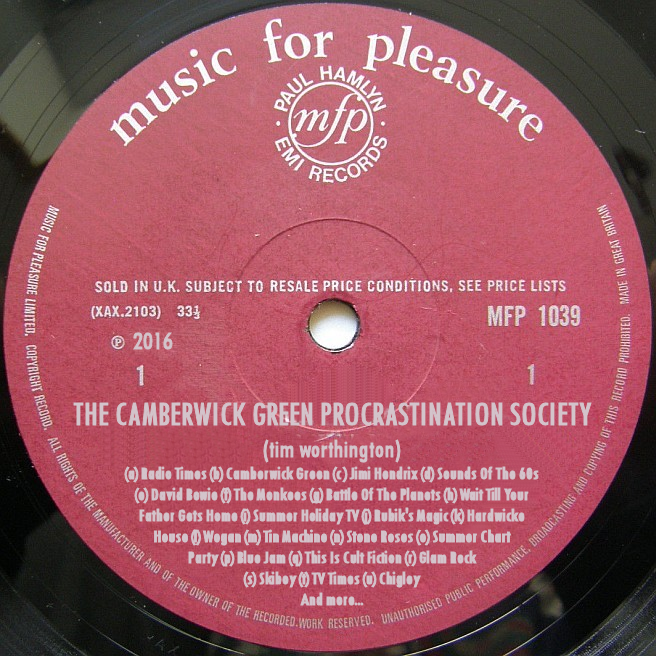

You really wouldn’t have to look very far through the archives – ironically – to get a sense of just how much of what I do is driven by, whether intentionally or subconsciously, a fascination with the huge swathes of UK-made television stretching into the early eighties that no longer exists in any form. From widely lamented losses like The Beatles on Juke Box Jury and The Madhouse On Castle Street all the way to the episode of Playboard where they did a full cast dramatisation of that A Squash And A Squeeze song from Play School that it’s possible that not even Hedge and Mo remember, so many thousands upon thousands of hours of programming were shown mostly just the once and then seemingly lost forever. This is, you may not be unsurprised to learn, the cause of much misdirected outrage, whether it emanates from a spectacularly uninformed broadsheet columnist somehow contriving to imply that Blackadder The Three Goes Third has been ‘wiped’ too, pop obsessives who cannot understand why nobody had the foresight to maintain a complete record of all television and radio appearances by Freddie And The Dreamers from the get-go or fist-waving men on forums who appear to take the fact that something of relatively little consequence they have neither seen not have any especial vested interest in was cleared for non-retention over half a century ago as an unpardonable personal slight, but the reality is as ever somewhat more mundane than that. It was, essentially, just how it was at the time. There may admittedly have been some in retrospect possibly ill-judged causes for shifts in policy and attitude towards archival television material, whether it was the transition to colour broadcasting, the transition to digital videotape, a failed safety inspection, a legal intervention by a maligned party or a disgruntled creator or rights holder or most predominantly of all an ITV production company changing hands with a new influx of ‘money men’ rubbing their hands excitedly in the wings, but these incidences only stand out because they are notable stories surrounding what at the time was in absolutely no way a notable process whatsoever. With little if any facility, need or even arguably public appetite for their reappearance, the overwhelming majority of television programmes broadcast between the late fifties and the early eighties were considered to have been and gone the moment that the continuity announcer piped up afterwards and you would be astonished at how many publications from the seventies in particular, from The Making Of Doctor Who to Fab 208 going behind the scenes at Top Of The Pops, make casual reference to tapes being wiped and reused with nobody really apparently either noticing nor caring. Of course, it wasn’t long before Peter Cook and Dudley Moore gave a furious interview about not being able to locate some Not Only… But Also… sketches broadcast less than five years earlier and home video and the attendant potential for fresh revenue began to loom overpricedly on the horizon, but the simple fact of the matter was that reusing videotape was just standard everyday practice and nobody really saw much value – either artistically or literally – in any of it otherwise. What was more, for certain perpetually underfunded concerns like the BBC Children’s Department, releasing tapes for reuse brought in a much-needed stream of additional funding and while ambitious dramas may have been considered worth keeping hold of, weekly magazine shows that by necessity were out of date within days were very much not and you can find some fascinating elaboration from Richard Marson on how this worked in relation to Jackanory and Multi-Coloured Swap Shop in particular – and conversely why so much of Blue Peter still survives – here.
With the benefit for want of a better word of hindsight we can of course choose to get unaccountably angry about something that there is not much that anyone can materially do to change, but even that has to be weighed against the fact that so much of it is seemingly quite possibly not quite as lost as everyone once understandably assumed. If you had asked me the day before Pink Floyd’s Top Of The Pops debut, The Kinks unveiling The Kinks Are The Village Green Preservation Society in full colour late at night on BBC2, the remaining four instalments of The Complete And Utter History Of Britain, Graham Chapman’s solo sketch show Out Of The Trees, a full episode of Doctor Who featuring Katarina and a gaggle of Wigan Casino dancers terrifying the Top Of The Pops studio audience with their Northern Soul moves turned up, I would honestly have said that in my not exactly uninformed opinion, the chances of any of them existing anywhere and in any form was so slight as to be as good as impossible. Yet here we are. Locating this material may be difficult in the first place, and rescuing it from poorly-stored outmoded formats may be increasingly more difficult still, but we really do now have a surprising amount of once ‘lost’ television available at a click on a link. There’s hope for Barnaby Spoot And The Exploding Whoopee Cushion yet.
That’s all very well and good, you may well be asking yourself – or indeed asking an imaginary ‘…anyone?’ on an archive television forum – but what have you personally done to advance this cause? Well I can and do take some very quiet pride in the fact that that I have been directly involved in locating some lost television shows, including one of the examples highlighted above, and it may mostly be minor and inconsequential material stumbled across more or less entirely by chance, but personally I would rather that than swan around demanding that the BBC abandon its ‘woke’ agenda with immediate effect on the basis that I had found a couple of episodes of Doctor Who. It may not be something that I discuss very often, mainly because with the best will in the world the shows in question scarcely ever warrant discussion, but nonetheless you can find an account of one particular discovery and what happened when a disconcerting number of men on forums decided that it was not ‘worthy’ of being found in this collection of highlights from an altogether different archive, as well as – as coincidence would have it – a look at BBC Records And Tapes’ early children’s releases which include a couple of shows that essentially now only ‘exist’ on vinyl, a chat with Justin Lewis about amongst other things a couple of possibly mostly lost children’s shows, a look back at the uncelebrated corners of the career of David Bowie which admittedly neglects to mention his long-lost early television appearances both as an actor and a pop musician but does at least confirm where you can find much more about them, and a collection of highlights from Looks Unfamiliar which also incorporates a discussion about politics in Doctor Who which touches on how much of the public perception of the black and white era being wall to wall browned-up white actors doing that head from side-to-side thing while asking ‘the girl’ to make ‘the tea’ is founded on the apparent contents of episodes that conveniently no longer exist while those that do are full of Bechdel-passing conversations and minority actors in prominent and respectable roles, which is a tad inconvenient for anyone complaining that casting Jodie Whittaker was pandering to the ‘pc brigade : (‘ but there you go. Incidentally if you would like to help fund my relentless hunt for the missing editions of Noel Edmonds’ Lucky Numbers then you can buy me a coffee here. Anyway, anyone seen a representative of the Society For The Prevention Of Cruelty To Long-Haired Young Men?

Back in January 2016, we were probably only really at the very dawn of far too many people thinking they have to be the very first in there with an offensive, unfunny, scaremongering, naive, self-important, self-righteous or attention-seekingly dismissive ‘take’ – or, with increasing frequency, more often than not all of the above at once – but even so, the response to the unexpected news about David Bowie sank to tedious depths within minutes as seemingly everyone vied to be the best at bringing up that incident where he went a bit politically dubiously off the rails in the mid-seventies whilst conveniently ignoring the decades of retractions and refutations that followed, asserting that nobody could possibly quite understand Pallas Athena with quite the intensity that they did and vigorously confirm that they did not like Tin Machine. As someone who has always believed that you should be able to laugh at something you love, and who has friends who can trainspot about Bowie to an almost terrifying extent but still never waste an opportunity to put on the standard comedy accent and enquire “TELL US WHEN THE GIG IS!”, I honestly found all of this difficult to both navigate and understand, and my response was to write this look at the more comical and inconsequential ways in which David Bowie had impacted on my consciousness, all the way from Grange Hill‘s Ziggy Greaves to Gene Hunt from Life On Mars. If nothing else, it was an excuse to go on about the incongruous use of Art Decade as the theme music for Sunday afternoon BBC2 grimfest States Of Mind with some actual proper context for once. Not something that tends to exercise individuals debating where the Berlin ‘Trilogy’ starts and ends, all told. You can find the original version of The World Of David Bowie here and an expanded version with many further Bowie columnist-averted diversions and jokes about Lou Reed’s sunny demeanour in Keep Left, Swipe Right here.
Looks Unfamiliar: Justin Lewis – It Sounds Like Regional Sweep

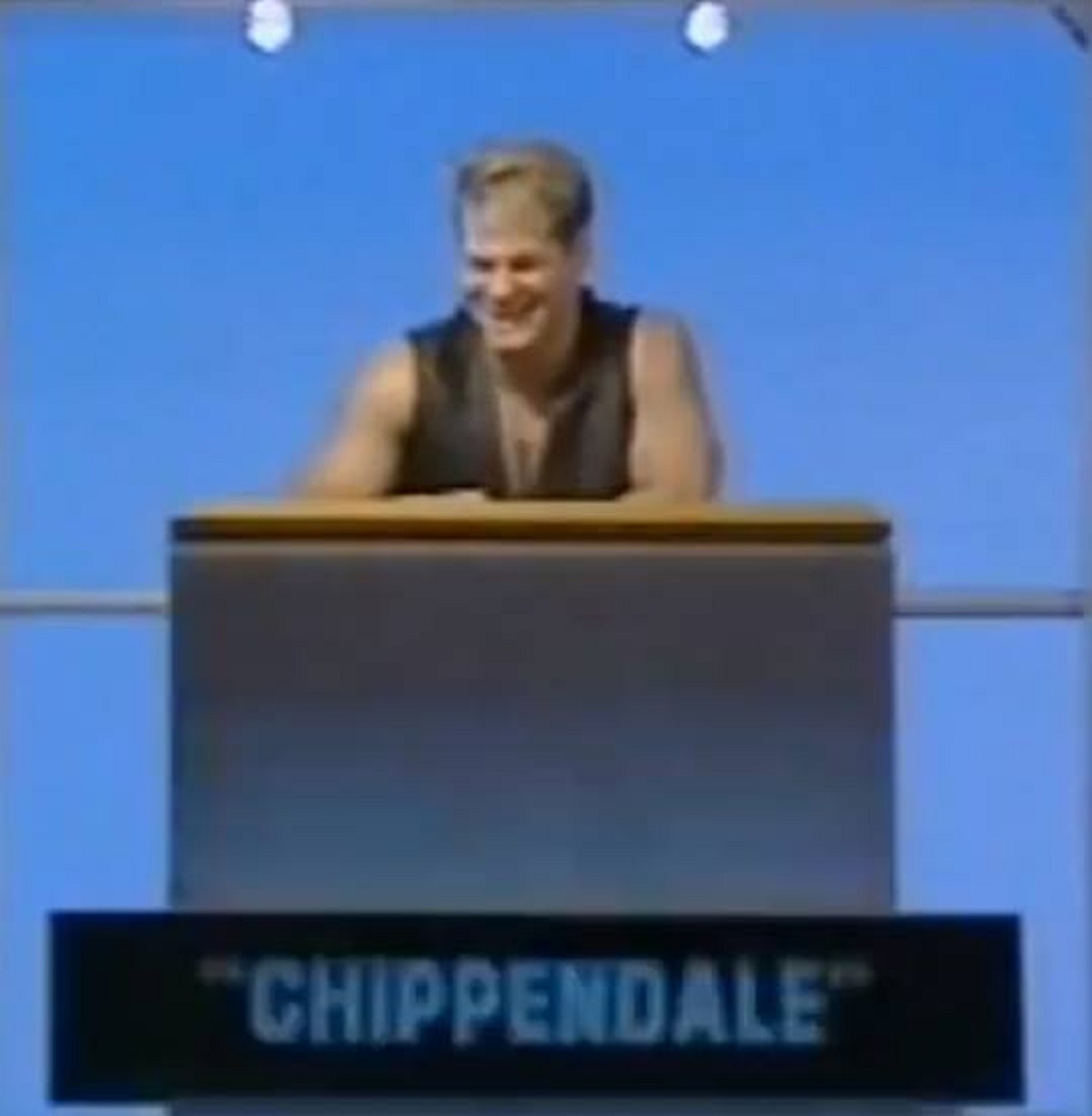
Yet another guest who initially resisted overtures to appear on Looks Unfamiliar under a overly modestly mistaken belief that they would not be quite good enough on it, Justin instantly became one of the most popular guests with listeners, not least on account of his impassioned defence tempered with reasonable criticism of Terence Trent D’Arby’s notorious second album Neither Fish Nor Flesh. More or less ignored on its release and widely deployed both as a punchline and as shorthand for artistic arrogance ever since, as Justin attests it is an album full of strong moments but nobody seemed to be willing or able to tell him where or when to stop, which makes for a somewhat confusing and patience-testing listen but as Justin concluded in one of my absolute favourite Looks Unfamiliar moments – and one of those unexpected flashes of resonance that makes the entire enterprise worth pursuing – “he had a go, and you can’t say fairer than that”. Elsewhere matters got more enjoyably parochial with Justin’s reminiscences of Welsh language children’s television including that much-feared ‘Regional Sweep’ and live Radio 4 sketch comedy, not to mention an indispensable anecdote about the occasion when several representatives of The Chippendales appeared on the early nineties revival of Celebrity Squares. You can find the full show here and the chat about Neither Fish Nor Flesh in a collection of Looks Unfamiliar highlights here.

At this point, I was still insisting even to people who hadn’t actually asked me that there would not under any circumstances be a sequel to Top Of The Box looking at the hundreds of albums released by BBC Records And Tapes, as it was an endeavour that even in terms of cataloguing them by title alone I considered an act of utter descent into chaos and madness. Nonetheless, there were still certain aspects of that chaos and madness that held a certain degree of interest for me, not least the two dozen or so long players issued under the younger viewer-orientated ‘Roundabout’ imprint in the extremely early seventies. Not only did this encompass a number of programmes that could be considered personal obsessions including Play School, Mary, Mungo And Midge, Jackanory, Play Away and inevitably The Magic Roundabout along with the apparent lone appearance in any available form of the theme from The Adventures Of Sir Prancelot, the assembled catalogue also features an unexpectedly eclectic mix of funk, folk, angular spoken word excursions and Radiophonic Workshop edge-squaring, to the extent that it transpired that several of the albums had been heavily sampled by numerous esoterically-inclined dance music artists without anyone really noticing. There was also, of course, the tantalising mystery of what those conspicuous gaps in the catalogue might once have been assigned to, which remain mostly as elusive as ever but I can now confirm that one of them did belong to an assembled but never released Bagpuss album, the master tape of which is presumably still languishing in Emily’s shop window. Although I enjoyed putting this together greatly, it really was ultimately only ever intended as a way of drawing attention to the first volume of Top Of The Box with no thought afforded whatsoever to exploring the actual stories behind this handful of records. Clearly something was already leading me in an ultimately unavoidable direction, though. You can find Listen With Hamble here and the full story behind every album released with the ‘Roundabout’ imprint – and some that weren’t – in Top Of The Box Vol. 2 here.
The Best Of Looks Unfamiliar: They’re Not Goosestepping Down The Street Shouting Heil The Kandyman

Another collection of highlights from Looks Unfamiliar, this time featuring Martin Belam on the Laurel And Hardy cartoon, Jenny Morrill on The Just Seventeen Yearbook, Jack Kibble-White on Don’t Give Up Your Day Job by Richard Digance, Tim Worthington on Secrets From The School Underground, Ben Baker on Looks Familiar, John Rain on Hello Mum and Phil Norman on The Country Life Christmas Box. The ‘extra’ on this occasion was me on The Zeitgeist Tapes talking to Emma Burnell and Steve Fielding about the depiction of politics in Doctor Who, which has already been covered in some depth in Through The Square Window so once again there is little to add here. Anyway, you can find the full show, early rebuttals of ‘NOT MY DOCTOR’ cement-heads and all, here.
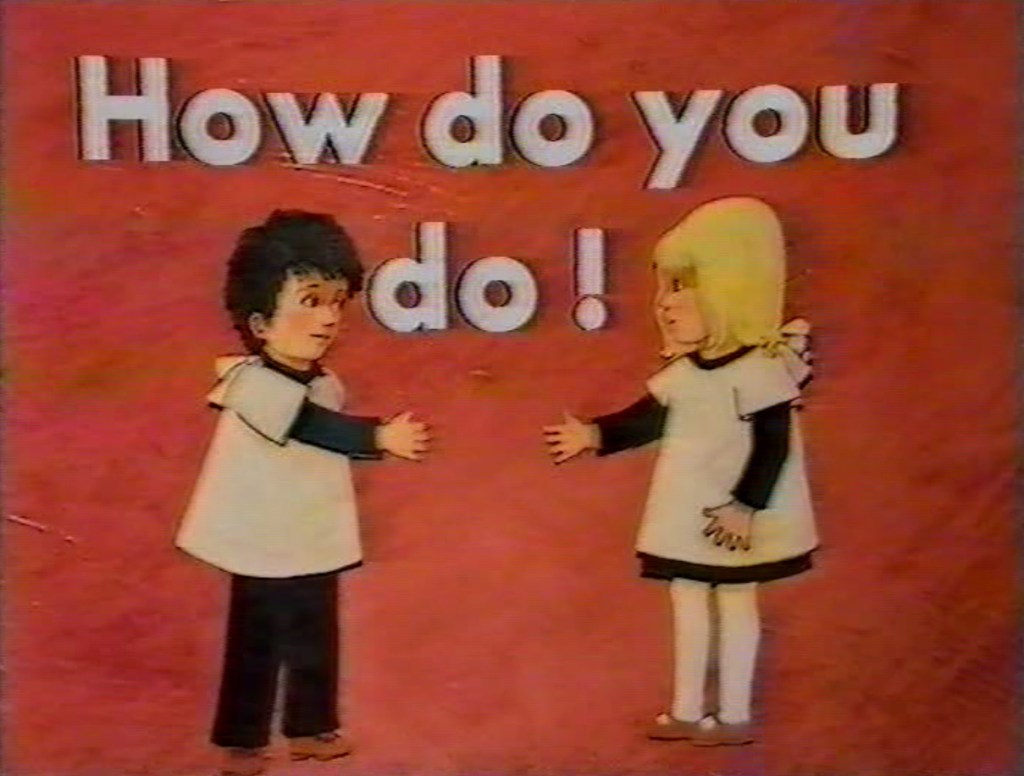
It all started so innocently. There I was speaking to Greg Knowles, Carmen Munro’s percussion-tapping co-presenter on little-remembered mid-seventies BBC counting games and tales of Miss King And Her Class lunchtime fingersnap festival How Do You Do!, as part of an ongoing research project into the history of the Watch With Mother timeslot – still ongoing, to be honest, although a lot of said research did find its way into The Golden Age Of Children’s TV – when I remembered that six of the thirteen episodes that were once so frequently repeated now no longer resided in the BBC’s archives, and happened to mention this to Greg who responded that he had at least some of them as off-air video recordings from the time. Eventually we managed to establish that he still had three episodes that otherwise apparently no longer existed anywhere else, and moves were quickly made to get them transferred to a digital format and returned to the sort of people who know what to do with them. Unfortunately, I then made the mistake of obliquely mentioning this on social media as I had mistakenly assumed that the thought of pretty much any ‘lost’ television being rediscovered might present a note of welcome brightness in amongst all the shouting and bigotry and memes. Within seconds, some clueless dullard had decided that I had evidently recovered some missing Doctor Who and began wild speculation on what it ‘must’ be, eventually alighting courtesy of a logical deduction that frankly eluded me on the assumption that it had to be an episode of The Power Of The Daleks. This inevitably very quickly and feverishly spread on to Doctor Who forums, provoking an angry backlash when I issued a polite denial and an even angrier backlash when I revealed what it actually was, drawing comments to the effect that I had wasted my and everyone else’s time by returning something to the archives that didn’t ‘matter’. Frankly if I had somehow also discovered an episode of The Power Of The Daleks I would have gleefully shredded it in spite at that point, and that’s before we have even got started on the unsettling passive-aggressive emails from complete strangers demanding that I sent them copies at my own expense forthwith because archive television. Still, on reflection I have nothing but fond memories of what it actually originally was that I set out to do in the first place, particularly appearing as a guest on Bob Fischer’s afternoon BBC Radio Tees show to discuss the find to an apparently rapt audience – if by any remote chance anyone managed to record this, we’d both love to hear it again – and this original announcement feature which I would like to to think retains a charm that was almost certainly indicative of my delight at having found the three errant instalments. I’m not quite sure how many Doctor Who fans shared in that, however. You can find the original version of One! Two! How Do You Do! here and an expanded version with more on how this also led to me recovering a lost edition of Over The Moon along with a documentary short that Greg had been trying to locate for decades in Can’t Help Thinking About Me here.

Not that it really has very much at all to do with any of the above other than the fact that certain tracks on Screamadelica keep sounding uncannily like they more rightfully belong on a Play Away album, but if you like a bit of early nineties pre-Britpop indie then you will find plenty to enjoy in Higher Than The Sun, available in paperback here or from the Kindle Store here.
Mystery Link! If you want to just go straight to a surprise page completely unrelated to any of the above, click here.
© Tim Worthington.
Please don’t copy this only with more italics and exclamation marks.
 Tim Worthington