
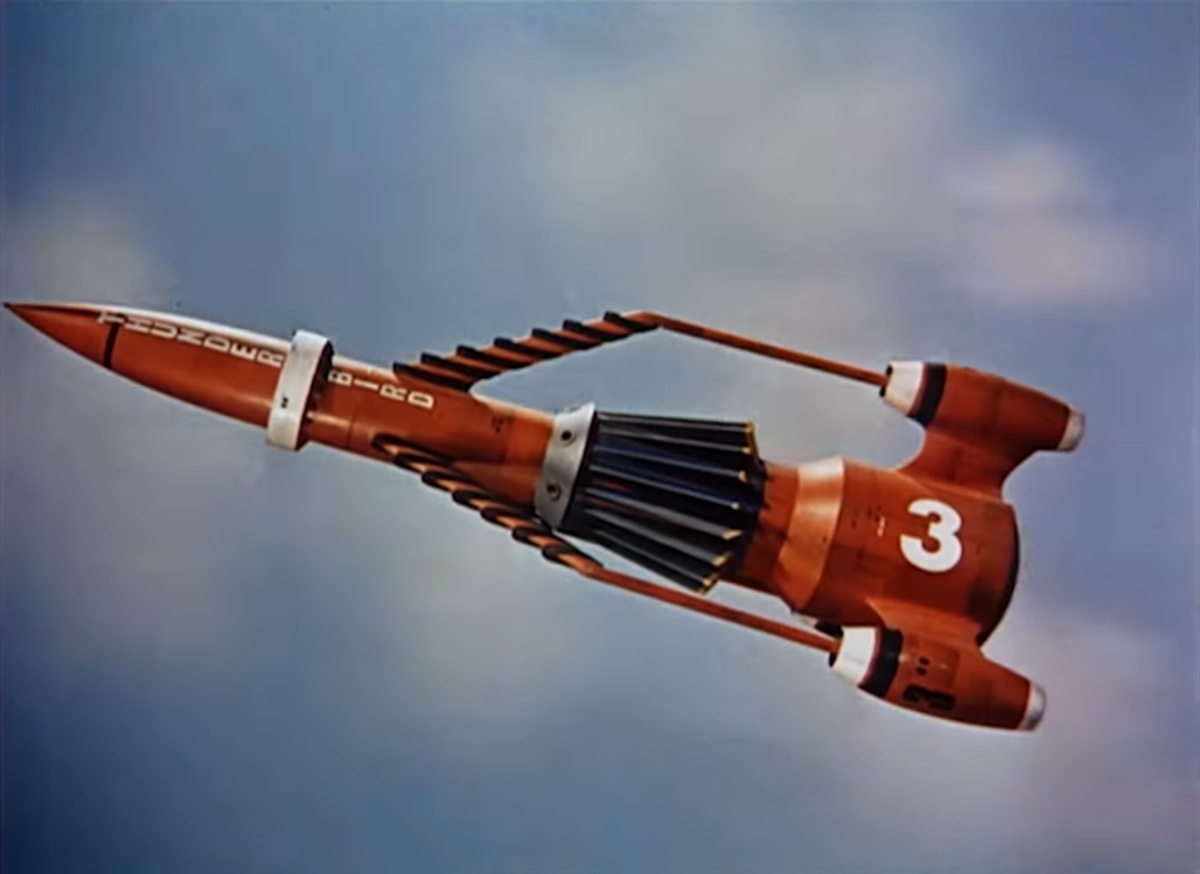
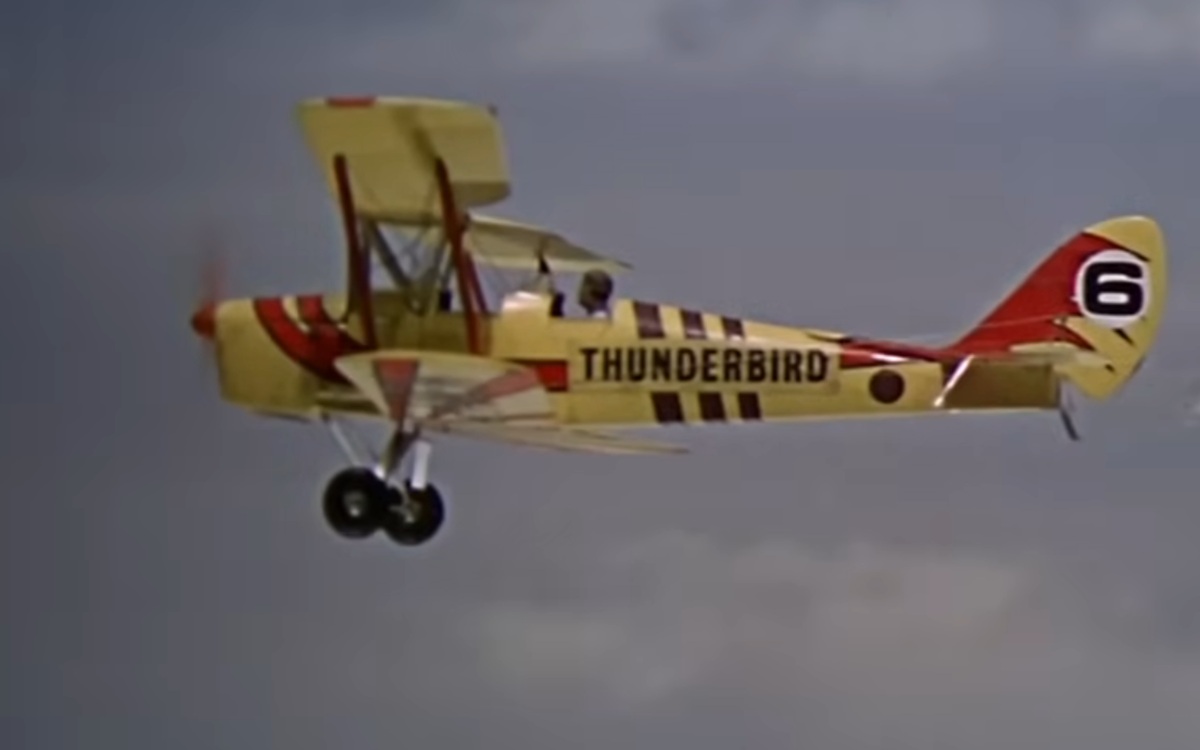
Ignoring the biplane introduced as ‘Thunderbird 6’ in an hilarious gag that wasn’t in the widely unacknowledged if actually not that bad film of the same name, and Thunderbird 11 which according to Fist Of Fun was a locked cupboard ‘piloted’ by one Ian Tracy, it’s fair to say that poor old Thunderbird 5 is by far the least popular of International Rescue’s squadron of remarkable disaster relief vehicles. Stuck out in near-space orbit, rarely participating in any actual rescue activity outside of monitoring transmissions that are mostly already known about anyway, and helmed by the it has to be said ever so slightly ‘character development’-deficient Adam Faith-visaged John Tracy, it is sometimes difficult to avoid the suspicion that it was introduced simply to prevent the opening countdown from commencing with ‘4’. Yet at the same time, there is no denying the atmospheric-shifting impact whenever it appears on screen, hovering in the disconcertingly blueish emptiness of the outskirts of the Kármán Line and accompanied by that eerie whooshing ethereal variant of the Thunderbirds theme, and indeed the degree of variety that contributes towards what could otherwise easily have become an extremely formulaic show, providing the opportunity for episodes like Sun Probe, The Impostors and Ricochet to take place partially or even wholly in space with occasional glimpses of that weird rickety saucepan robot Brains built. The popular vote may invariably go to Thunderbird 2 and its procession of ‘pods’ full of extremely specific mechanical gimmicks, but it’s a fair bet that the more cosmically-inclined cerebral end of the viewing audience routinely wondered why they never got to see more of the impractically-designed space station apparently stationed in permanent geosynchronous orbit above the Pacific Ocean without nobody ever noticing it.
In many regards, Thunderbirds itself is similarly loved and unloved at the same time. It is the most successful of Gerry and Sylvia Anderson’s ‘Supermarionation’ shows by a long distance, but it is also – at least in terms of its current day standing – regarded as the least quirky and distinguished by a similarly lengthy interval. Thunderbirds lacks the menacing undertone and clandestine interplanetary political allegory of Captain Scarlet And The Mysterons, the sub-aquatic panorama and mermaid-fuelled simmering jealousy-riven love triangle of Stingray, the beat boom-tinged exploratory space heroism of Fireball XL5 and the sheer wilfullop oddlyfido of The Secret Service. Unlike Four Feather Falls and Supercar, it is too well known for those who are determined to appear ‘interesting’ to implausibly claim that it is their favourite. It can’t even rival Joe 90 in the theme tune later becoming an in-demand floor filler on the Northern Soul scene to the incandescent disdain of ‘purists’ stakes; you’d probably find it easier to dance to Parker – Well Done! to be honest. A tendency to be used as contextless shorthand for a specific and often patronising strain of ‘nostalgia’ and a regrettable inability to avoid attracting immediate knee-jerk second hand jokes that weren’t even jokes to begin with about how you can ‘see’ the ‘strings’ – although how else puppets are supposed to be operated has never quite been clarified – have scarcely helped its cause. More to the point, when you are talking about a cultural phenomenon where a ‘rave’ version of the theme music performed by one ‘MC Parker’ and those blokes who used to run around at the Edinburgh Festival with Thunderbird 5 on their heads or whatever it was genuinely felt like they were refreshingly likeable and affectionate rather than tedious sneering embarrassments, you can see how back to front everything to do with Thunderbirds has got. Lady Penelope Creighton-Ward and company sit there all too prominently in the centre of it all, yet everyone is far more excited about Supermarionation’s outer reaches. Almost like an ironic and almost literal reversal of Thunderbird 5’s predicament, although John was probably too preoccupied with flipping through radio signals interspersed with bits of the Formula 5 music from Fireball XL5 to ruminate on this too deeply.
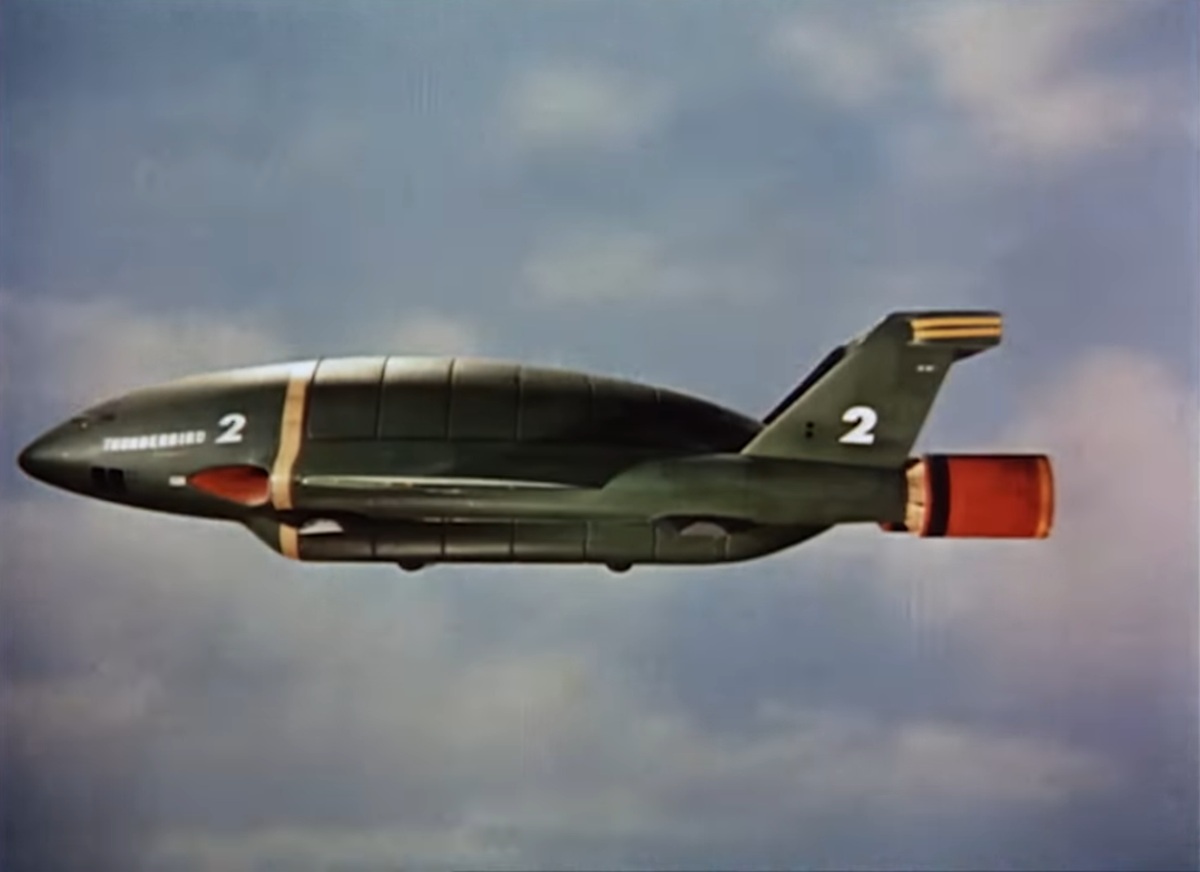
Yet at the same time, it’s Thunderbirds that just keeps coming back and almost by accident rather than design – the one occasion on which a deliberate and contrived push was made, for the underwhelming Anderson-disowned movie in 2004, pretty much met with the exact opposite response – and finding new generations of fans, most infamously in the early nineties when the runaway success of an almost casual repeat run led to aisle-demolishing run-up-to-Christmas parental punch-ups over the last remaining Tracy Island in Woolworths, Blue Peter attempting to quell the violence courtesy of Anthea Turner demonstrating how to make a temporary stopgap Tracy Island from the contents of your recycling bin which generated a flood of viewer correspondence leading to a mailed-out fact sheet and a rush-released VHS version which then both too found themselves outstripped by demand, and a lone child spotting an issue of the revived Thunderbirds comic in WH Smith and quietly singing “they never even fly/never even fly/[pa pa-p-pa paaaaaa] – The Thunderbirds” to themselves in an alarmingly convincing pastiche of Barry Gray. For my part, I had no hesitation in singling out Thunderbirds as the Supermarionation show most worthy of its own chapter in The Golden Age Of Children’s TV, but you can find out more about that here. Now – finally – the entire series has been restored from the original elements and is about to be released on Bluray, and if the response to the brand spanking new remastered prints of Trapped In The Sky and Terror In New York City that have been given a limited cinematic release to promote the new set is anything to go by, a whole new audience is out there waiting to discover the edge-of-the-seat thrills of the adventures of Scott, Virgil, Alan, Gordon and John. Although sadly for fans of The Collings And Herrin Podcast, ‘Tibs’ does not appear in either episode.
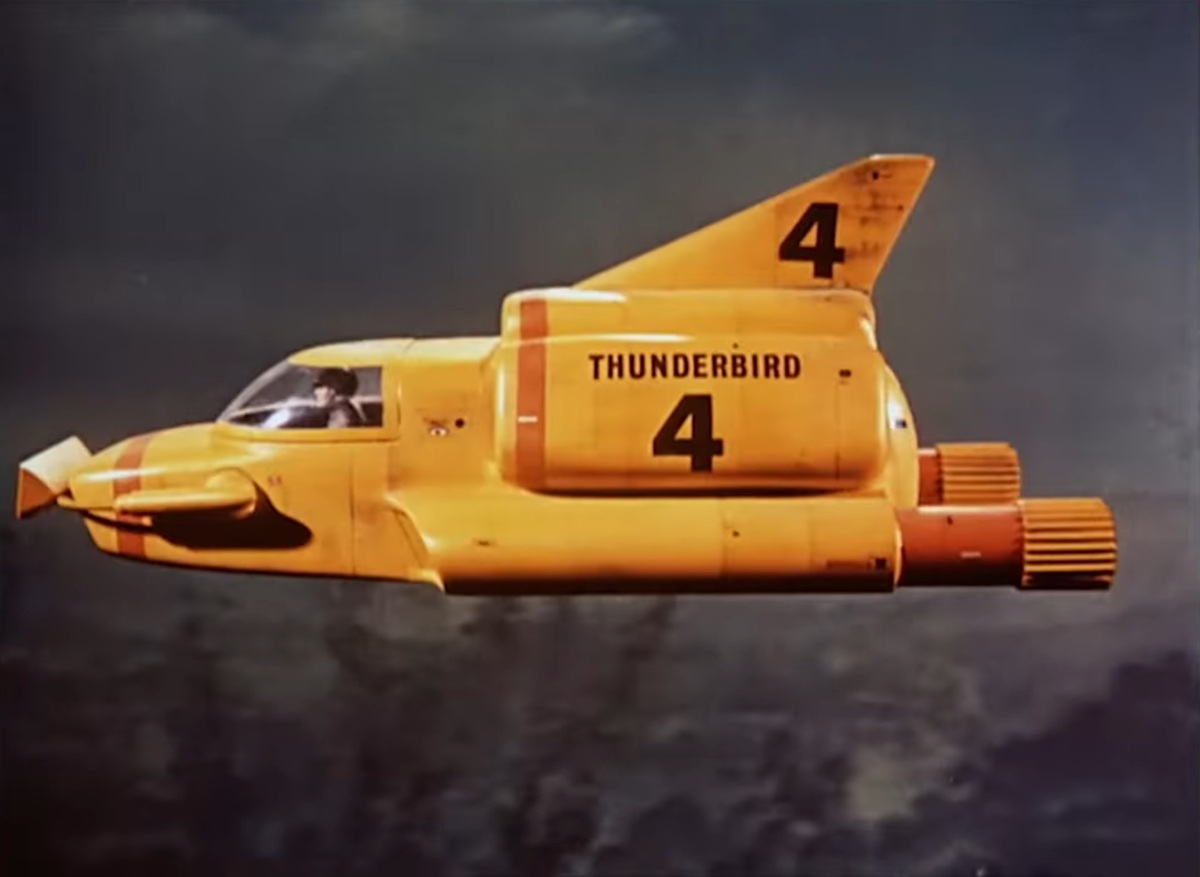
Thunderbirds was not made for the big screen, so it is surprising to see how well it stands up to such intense magnification; all the more surprising when you consider that Thunderbirds Are Go and Thunderbird Six, for which the puppets, props and sets were remade to suit the technical demands of full frame widescreen Techniscope, notoriously did not manage to look quite so convincing. No space is wasted in any scene or shot, and although the five Thunderbird vehicles were always going to look impressive whatever format they were viewed in, everything else from huge buildings to hidden intercoms – well, maybe apart from the car parked outside Fulmer Finance – looks incredibly convincing for a television programme that infamously provokes such hilarity concerning ‘strings’. This is not simply down to the skill involved in actually making the models, but also the convincingly authentic degree of wear and tear and general grime judiciously applied to them – even some of the Thunderbird craft are not quite as ‘gleaming’ as the average ‘nostalgia’ feature about them might suggest – and it all looks a good deal more believable than it has any right to; certainly you can get a vivid sense of exactly what caused Lew Grade, on being shown a finished edit of Trapped In The Sky, to leap up from his chair shouting “this isn’t a television series, it’s a feature film”. Meanwhile, although we do not get to see nearly enough of Lady Penelope, the two episodes presented here do at least underline that Thunderbirds was considerably more varied as a format than it is ever really given credit for. Gordon Tracy gets a rare opportunity to take the lead in the partially submerged Terror In New York City, and the presence of International Rescue-obsessed ‘supervillain’ The Hood in Trapped In The Sky serves as a reminder that there was always a weird quasi-supernatural element lurking ominously in the background; it is also a remarkable coincidence that Thunderbirds and Help!, with which it shares certain now possibly moderately culturally insensitive elements, were in production at the same time in studios a relatively short distance from each other.
While she does not exactly get given a great deal to do, it is also notable how present Tin-Tin is throughout both episodes, and again serves as a reminder that while Lady Penelope obviously got the pink Rolls Royce’s share of the male-outsmarting storylines and action, there were indeed some episodes where she got to put her lab skills to significant use, and that she isn’t quite as stereotyped as certain commentators would have us all believe either. Possibly more presciently than anyone would have realised at the time, both episodes revolve heavily around the Tracy Brothers’ inflexibly enforced ‘no photographs’ rule, although the casual references verging on endorsement to needing a quick smoke do feel a little wryly jarring from this distance. If there is one issue with the remastered versions, then it’s the surround sound mix. It does not really enhance the visuals in any way or even suit them as well as the original mono audio would have done if cleaned up effectively, and although this may well be confined to the episodes in question or even to the versions of them used for the cinema screenings, there were some decidedly odd mixing decisions, not least Lady Penelope appearing to summon Parker with an entirely silent bell. The Bluray, however, will at least have the option to select the presumably effectively cleaned up original audio track, so unless you are particularly keen to ‘hear’ Jeremiah Tuttle chugging his Model T Ford across your living room, then this is honestly a minor issue. If nothing else, at least it puts Barry Gray’s outstanding music literally front and centre.
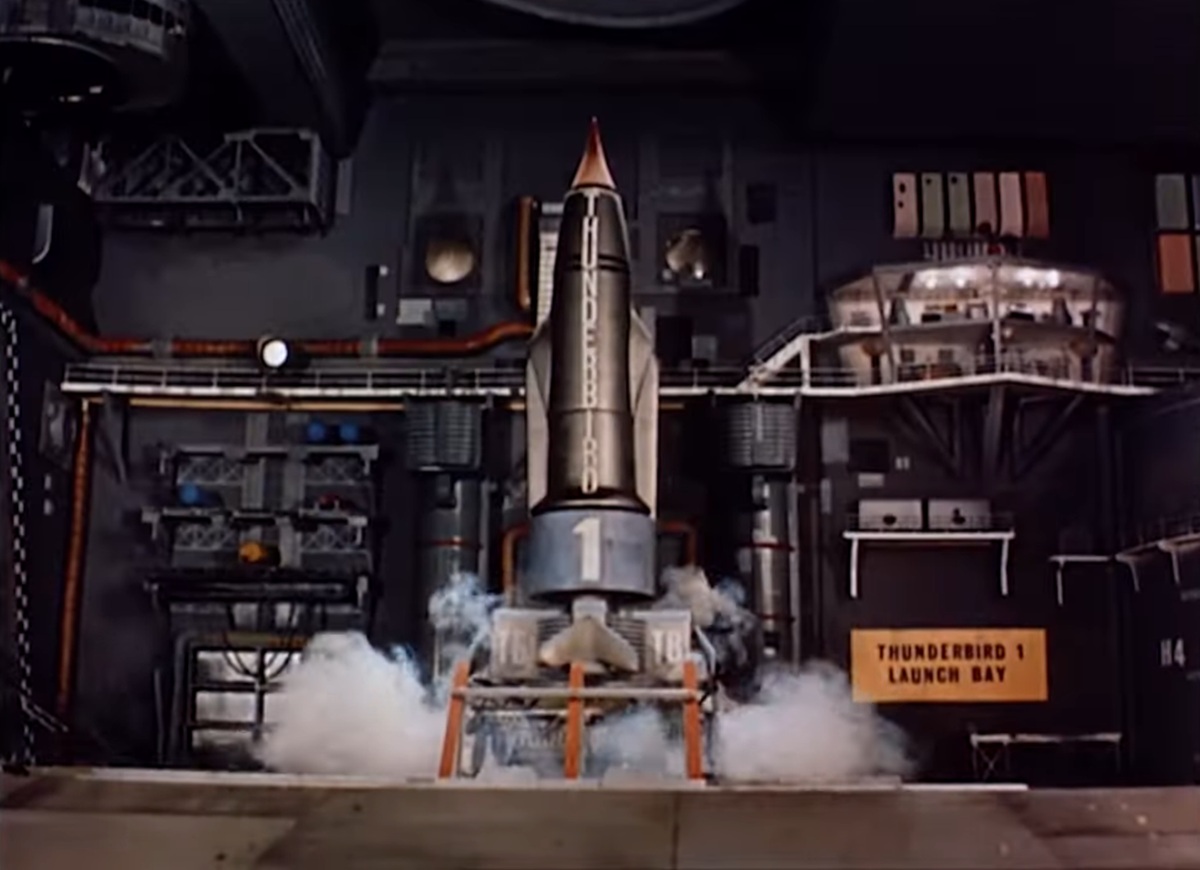
The music – and yes, Trapped In The Sky does indeed have the original little-used arrangement of the theme tune reinstated – is just one of the reasons why, despite having been repeatedly re-edited, poorly transferred, subjected to the whim of whatever ‘Super Space Theatre’ was exactly and subjected to possibly more painfully unfunny ‘comedy’ redubs that nobody asked for than any other television programme, Thunderbirds continues to captivate new audiences and inspire renewed affection in older ones. At its heart it is an ingenious idea ingeniously rendered – and one that Sylvia does not get nearly enough credit for, incidentally; although it is quite possible that someone not a million miles away may have had more to say about that here – and there is a delicious irony to the fact that its essentially handmade nature has caused it to age far better than many ostensibly more technically sophisticated efforts have managed to. Brains would have been proud. Quite what poor old John Tracy, stuck out there eavesdropping on the cinematic re-release in Thunderbird 5 would have made of it, though, is sadly something we have no way of knowing. Mostly because he would probably only have been allowed to react off-screen.
Buy A Book!
There’s lots more about Thunderbirds, Captain Scarlet And The Mysterons, Stingray, Joe 90 and all of the other Supermarionation shows, not to mention tons of other much-loved puppet favourites that are not exactly first in the queue for 4K restoration, in The Golden Age Of Children’s TV, available in all good bookshops and from Waterstones here, Amazon here, from the Kindle Store here and directly from Black And White Publishing here.
You can also find the curious story behind little-seen Supermarionation misfire The Secret Service in Well At Least It’s Free here, and more about the music from Captain Scarlet And The Mysterons and Stingray in Keep Left, Swipe Right here.
Alternately, if you’re just feeling generous, you can buy me a coffee here. Well it’s better that than the tobacco everyone seems to demand every three seconds in Thunderbirds.
Further Reading
I’m Certain To Fall I Know takes an exasperated look at the hapless, hopeless love triangle at the heart of Stingray; you can find it here. We Know That You Can Hear Us, Earthmen… takes a similar look at the thrills of first discovering Supermarionation and the chills of first discovering The Mysterons Theme and you can find it here, and there’s also a complete guide to all of the numerous and various Supermarionation theme singles in We’ve Got A Hot One For You! here.
Further Listening
You can listen to me having a bit of a chat about Gerry and Sylvia Anderson’s various shows and their significance to the story of The Golden Age Of Children’s TV in Looks Unfamiliar here. Mic Wright also joined us for a chat about the nineties revival of the Thunderbirds comic here.
© Tim Worthington.
Please don’t copy this only with more italics and exclamation marks.
 Tim Worthington