This was originally intended as the second part of a series of festively-appropriate features looking at Christmas-themed editions of ITV children’s programmes that in their tinself-festooned way stood out even amongst the dazzle of wrapping paper and limitless supermarket own-brand cola and artificial Christmas Trees with clown decorations, but the word ‘intended’ is rather significant here. Firstly, this isn’t the actual Christmas edition of magazine show Magpie that I actually do remember vividly, which apparently no longer exists. While hundreds of editions of Magpie probably aren’t the most significant loss to the archives by anyone’s standards, I’m always reminded of when one of my friends had a business meeting with Mick Robertson himself and took the opportunity to mention an item from the show that he remembered fondly, only for Mick to sigh wistfully and remark that “there’s not too many of them left now”. In any case, I would have loved to have been able to write about the Vox Pop Santas here; and indeed to just watch them again to be honest.
It also ended up being the second in a series of two, as a sudden unseasonal influx of commissioned work coincided with a very unseasonal turn in world news at the end of a fairly rotten year, though you can read more about that here. Anyway, the upshot of this was that the more or less finished pieces on Chorlton And The Wheelies and The Ghosts Of Motley Hall were quietly shelved. Instead of publishing them the following December, I took the decision to hold them back for what eventually became Can’t Help Thinking About Me, in which you can now find both of them along with a massively extended version of this Magpie feature. Can’t Help Thinking About Me is available in paperback here or from the Kindle Store here, and is the ideal any time of year gift for that Children’s ITV obsessive in your life.
Looking back at this now, I’m both impressed that Magpie deliberately strove to present a modern inclusive take on Christmas rather than the rarefied and unconvincing Victoriana that was usually rampant elsewhere, and moderately less impressed that I was fixated so heavily on Jenny’s admittedly mesmerising trousers. Oh well, it was Christmas.
Over Christmas in 1995, BBC Radio 4 broadcast a documentary series called Trumpton Riots, which took a light-hearted yet in-depth at Children’s Television of the sixties and seventies. Val Or Sue? John Or Tommy?, broadcast on 28th December, focused on Blue Peter and its one-time ITV counterpart Magpie, and in particular on the intense rivalry that existed between the shows, their presenters and even their viewers.
This was a rivalry that did not seem to have to any degree abated. Regrettably, with the conspicuously generous exception of John Noakes, the Blue Peter presenters who were interviewed did themselves absolutely no favours, scarcely wasting an opportunity to patronise their trendier competitors and pour scorn on the perceived comparative intelligence level of their viewers. The Magpie team, on the other hand, still seemed only too aware that they were dealing with an audience that weren’t properly catered for elsewhere and fought their corner with a frequently revealing passion. Mick Robertson was audibly hurt by former Blue Peter editor Biddy Baxter deriding Magpie as ’embarrassing’ and ‘a mess’, caustically countering “well… messy Magpie… sterile Blue Peter“. Tommy Boyd, while refreshingly candid about his own view of Magpie‘s shortcomings, denounced Blue Peter as the opposition rather than the enemy, as their more important battles were with the ‘suits’ on the upper floors. Susan Stranks recalled that even an overture towards arranging a social event with said ‘opposition’ was frostily rebuffed, and all of them shrugged and alluded to possible boardroom power struggles while admitting that nobody ever actually told any of them when or why Magpie had been cancelled.
Nowadays, you’re almost guaranteed to see a good deal of Blue Peter around Christmas, whether in clip form or – increasingly – full shows. Their yearly traditions of home-made Advent Crowns, last-show-before-Christmas sign-offs and shoddily-wrapped presents for the show’s pets have long since become a cornerstone of seasonal nostalgia. You’ll struggle ever to find any corresponding representation or even mention of Magpie, though, and there is a very good reason for this; out of just eighty four full surviving broadcast quality editions, only one of them is a fully snow-through-dashing Christmas edition. There is apparently no particular apparent reason why this one should have survived other than pure chance, but even so it’s nice that it does as there isn’t really otherwise very much evidence out there of how Magpie attempted to lure the Yuletide audience away from its more formal counterpart. Even TV Times simply promised “more fun and facts on a seasonal note with Jenny, Doug and Mick” for the edition broadcast at 4:45pm on 24th December 1976. Which, in the unlikely event that you haven’t worked it out already, is the Christmas edition of Magpie that actually does still exist.
So, how did Magpie celebrate Christmas? Was it an unruly riot of knocking over Christmas Trees while a social worker looked on ‘understandingly’? Did Mick Robertson treat us to one of his Festive-themed faux-Glam Rock numbers? Did their Advent Crown actually catch fire live on air? Well, there’s only one way to find out…
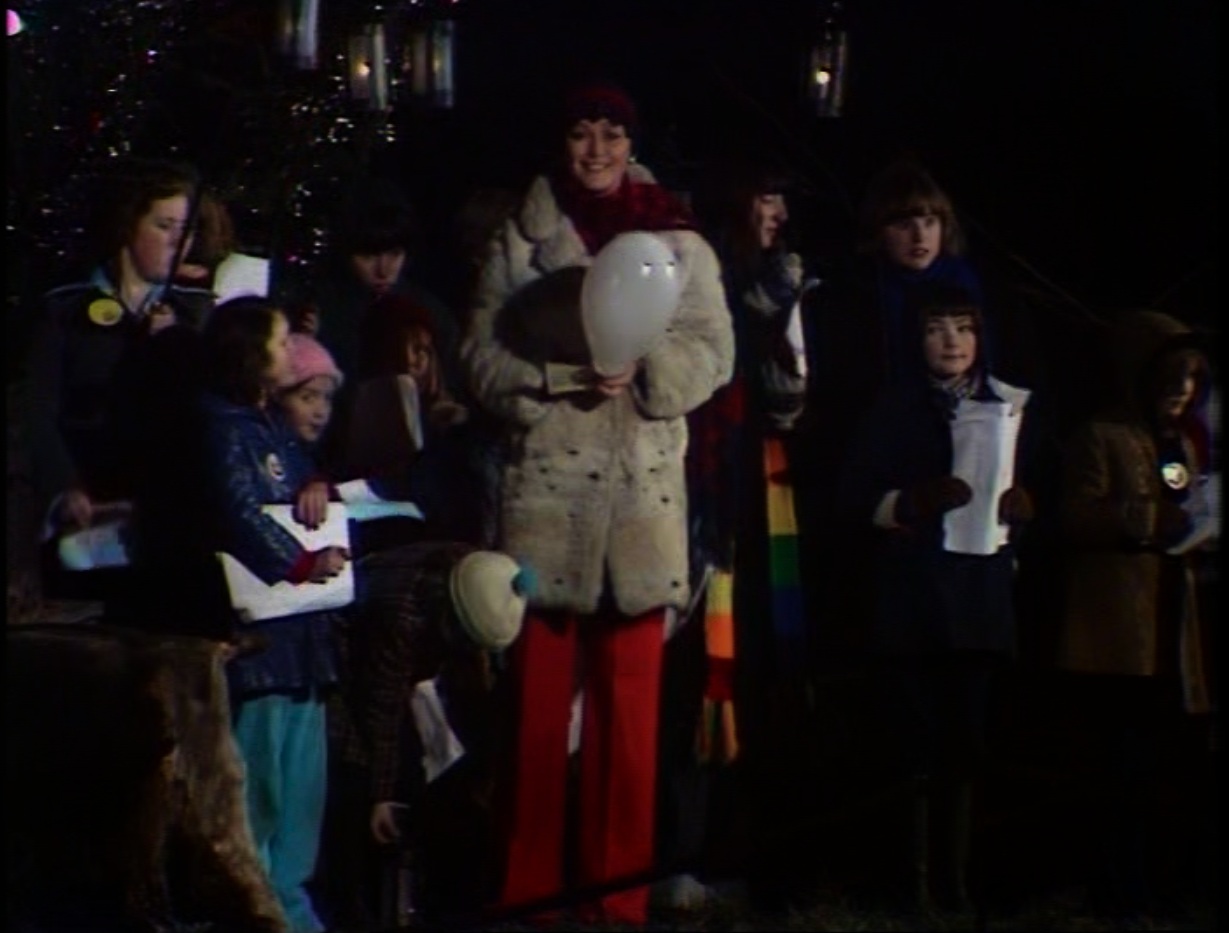
Rather than the expected opening titles accompanied by The Spencer Davis Group’s Hammond-hammering – which must have been starting to sound a little old hat by 1976 – this edition opens with a slow pan across a darkened fairy-lit Teddington Lock while some unruly-looking dockside youngsters chirrup Ding Dong Merrily On High. Somehow managing to make herself heard above a container load of ambient noise, a very much over-cautiously wrapped up warm Jenny Hanley admits that they’d hoped it would be snowing during this introduction, but here they all are standing next to the official Outside Broadcast Christmas Tree and they’ll be making the best of it regardless. Jenny gives a quick rundown of what viewers can expect to see in this festive edition, starting with…

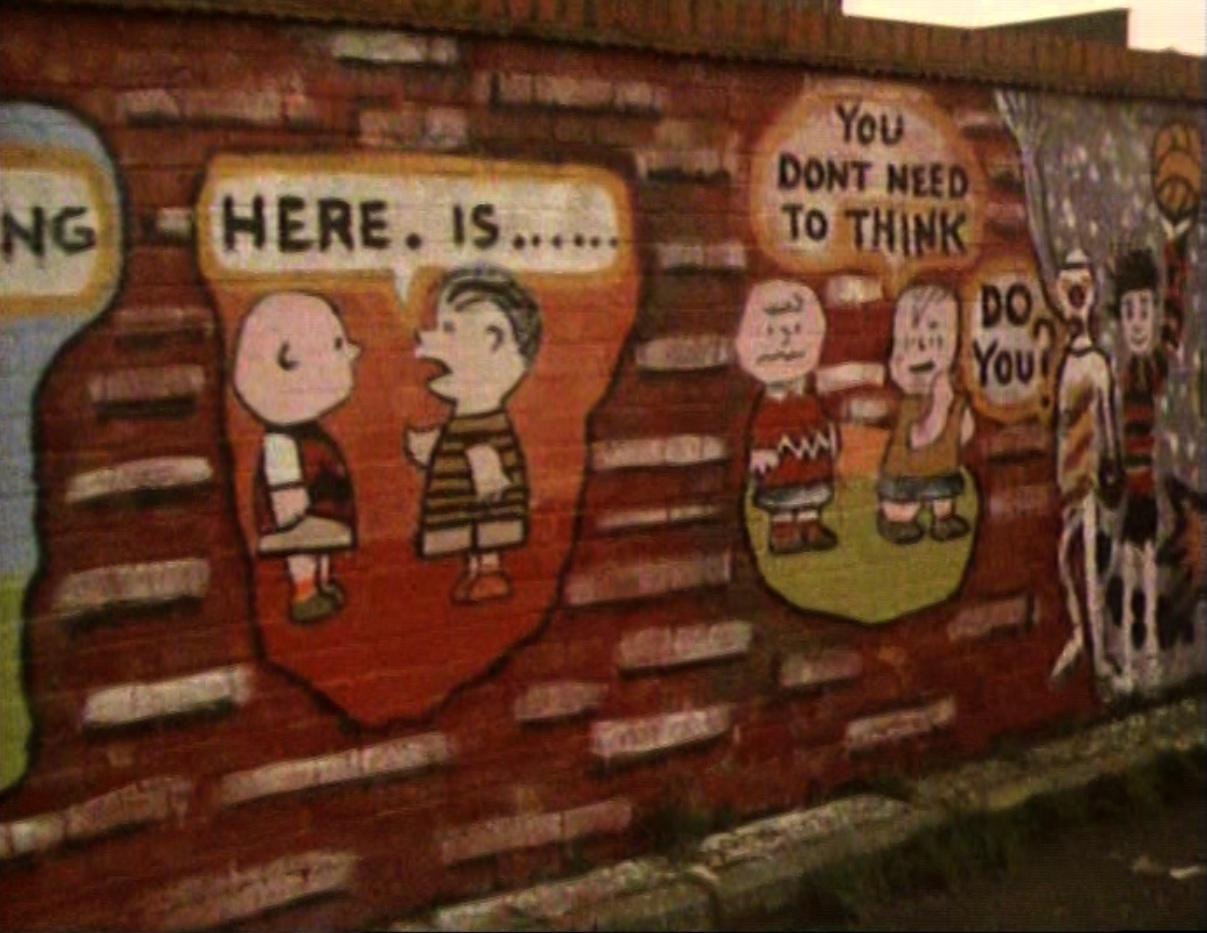
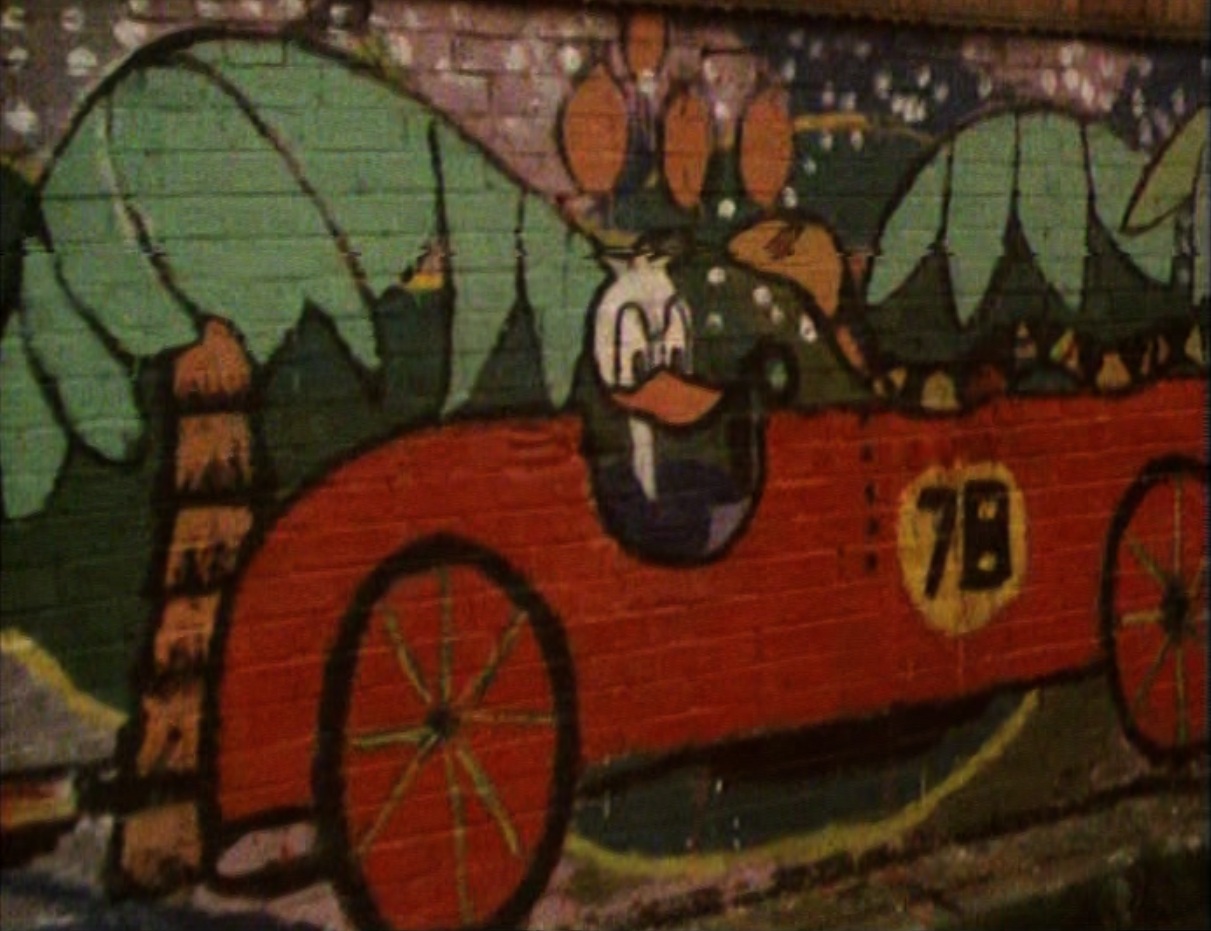
Sporting a truly remarkable oversized woolly hat, Mick Robertson is in Luton and on grainy ITN News-esque 16mm film stock to report on an outbreak of legitimate state-sanctioned graffiti. In true post-Whole Earth Catalog pre-punk fashion, this was at the instigation of Philip Hartigan, a former ‘Prog Painter’ who had worked with both Andy Warhol and British Rail and once had his collar felt for painting a ‘disrespectful’ pound sign over the entrance to The Roundhouse. Sensing that he had more in common with kids scrawling ‘MICK MOPASH 73’ on the side of bridges than others might have assumed, Philip and his collective The Fine Heart Squad launched an initiative to harness both the creative impulse and the apolitical dissatisfaction of juvenile scrawlers by arranging for them to literally brighten up derelict and disused walls.
Mick has a brief chat with Philip’s colleague Peter Carey, who explains the team’s aims and reveals that they involve local residents in the scheme, using their suggestions of what they would like to see around them to work out a ‘theme’. What the people of Luton would like to see around them, apparently, is a bunch of inaccurately yet enthusiastically rendered approximations of copyright-busting D.C. Thomson/Charles M. Shulz/Walt Disney characters driving cars. Mick joins in with the lab-coated ethnically-diverse collection of legal wall-defacers, risking existential oblivion by adding himself into the montage of cartoon characters, and it’s back to the studio.


An entire broadcast setup away from excessive woollen headgear, Jenny is in the suitably festively-adorned studio sporting a dazzling spangly strawberry-themed Alkasura jacket and oh my good lord a flattering pair of loud orange pants. We’ll be coming back to them. She’s also sporting a full complement of Mr. Ali Bayan/People Of Restricted Seriousness novelty facial adornments as, with the most cursory of attempts at a Groucho Marx vocal inflection, she is busy trying out some of her unashamedly worst wall-themed gags on the camera crew. There’s a pun about ‘Bri-ckasso’, a Knock Knock joke with the punchline ‘wall who do you think?’, and something about ‘what’s a wallweigh?’ that doesn’t quite make any sense at all.
A now hatless Mick joins Jenny in anticipation of reeling off a couple of wall-centric Music Hall two-handers, but before they can deliver so much as a feedline they are interrupted by ‘Judge Rae’, who reads out a selection of fun-curtailing historical laws that had never actually been repealed, including Henry VIII’s 1541 Unlawful Games Act and its bizarre Charles I-sponsored amendment that permitted leaping as long as it did not come accompanied by singing. At the time, this kind of cursory throwaway entertainment-driven smash-and-grab approach to history was no doubt widely viewed as empty-headed reductivism of the worst kind and with absolutely no perceived educational merit whatsoever; yet it’s in examples like this – while being very much a product of the seventies – that you can see the first stirrings of what would eventually evolve into Horrible Histories, Absolute Genius With Dick And Dom and all of those other shows which dispense with Making Learning Fun in favour of Making Fun Learning and probably engage and excite more young minds than the fourteen millionth Blue Peter retelling of the story of The Stone Of Scone ever quite managed to.


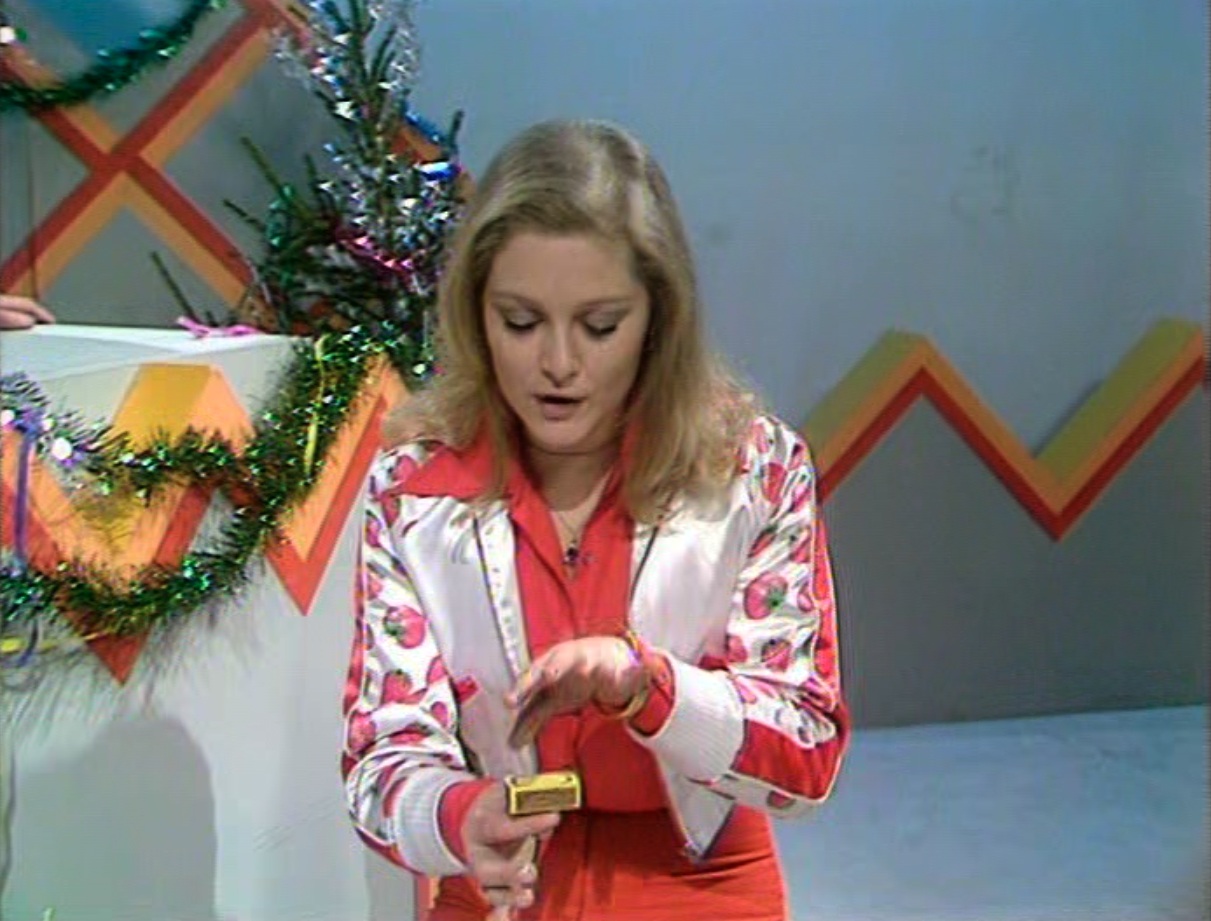
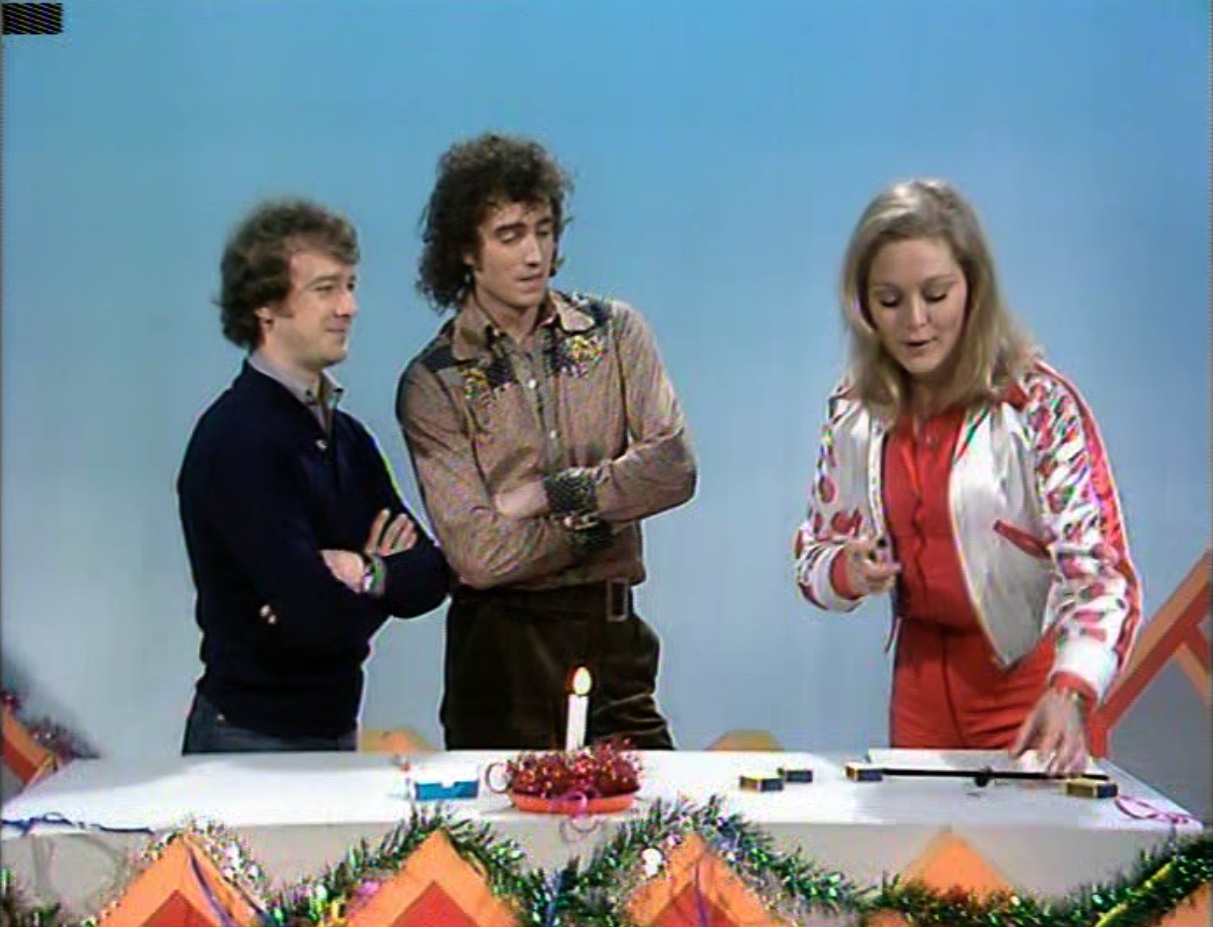
Musing that “it’s a bit strong when people won’t let you have a laugh at Christmas”, Mick and Jenny race for the safety of the ‘make’ area, where they are free to show the viewers some magic tricks without magisterial interjections; of course, as is entirely coincidentally and not at all in any way deliberately evidenced above, the real magic on display here is Jenny’s astonishing trouserage, but that’s by the by. Together they rattle through how to make an empty matchbox sound full, followed by how to make a matchbox land picture side up on command, upon which Doug arrives to demonstrate the old ‘stick a pin in a balloon without bursting it’ routine. After doing so, he tries to usher the bunch of balloons quietly off set only to find that they keep hovering back into vision, provoking some really quite amusing improvised comedy reactions from the trio. Then finally Jenny gets her Derren Brown on by convincing the other two that she can telepathically implant a word into their minds. No spoilers, but it works.
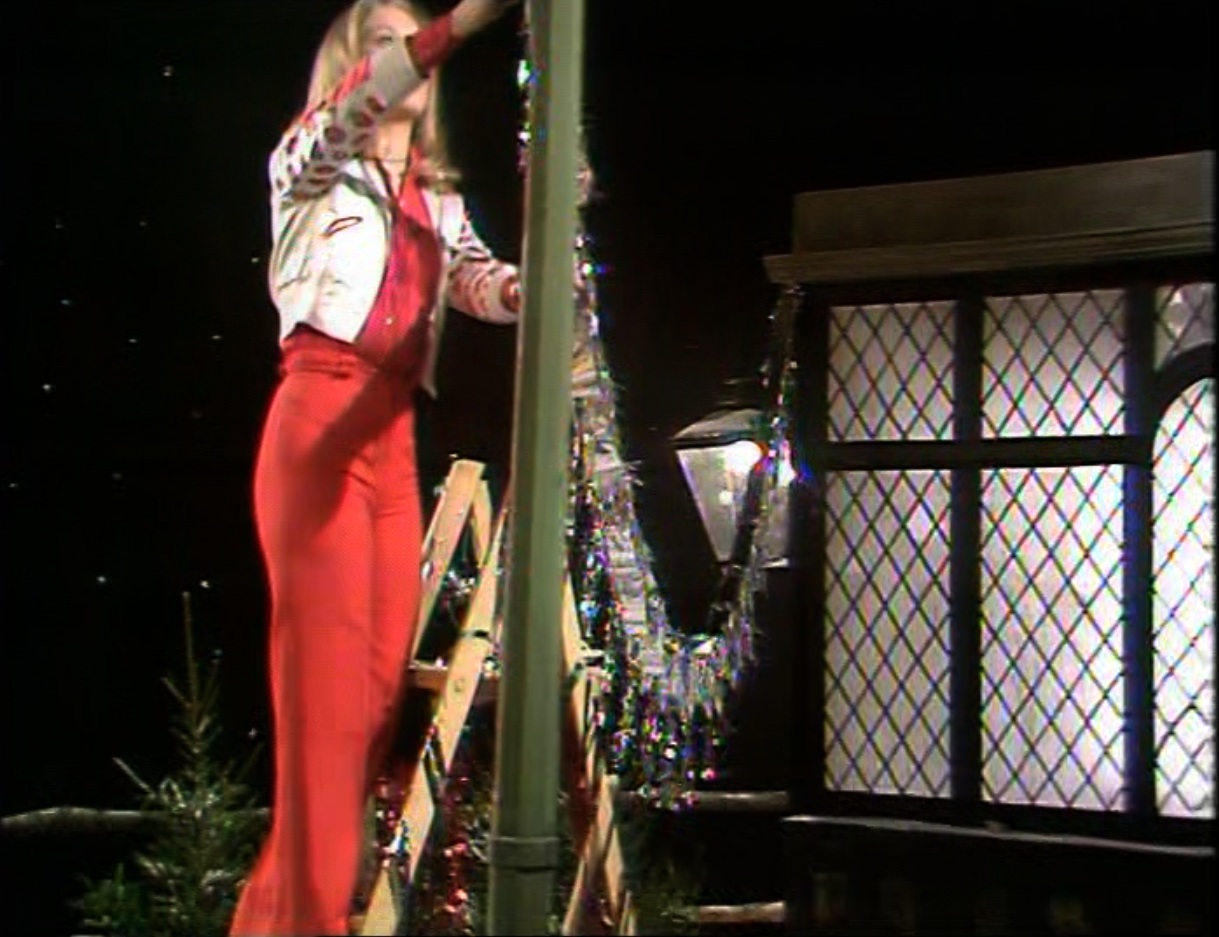

It doesn’t seem to work, however, on Judge Rae, who berates Jenny for hanging tinsel in contravention of Oliver Cromwell’s 1643 act banning the public display of ‘monuments of superstition’. Cromwell also it transpires effectively outlawed the consumption of mince pies, and in 1647 very nearly managed to ban Christmas outright, presumably little discussed now as it would almost certainly cause a outbreak of neurological short-circuitry in today’s shower of Caps Lock-shouting ‘patriots’. Mick makes some wry observations on what a hit Cromwell must have been at parties, adding that all of this talk of sour-faced fun-curtailment is driving him up the wall. You can probably guess what that was leading into; except that the film takes an absolute ice age to cue in, leading to a couple of seconds of awkward silence, followed by Mick chuckling to the production team in true ‘Moss Staples has been to Ireland where he don’ dis’ tradition.

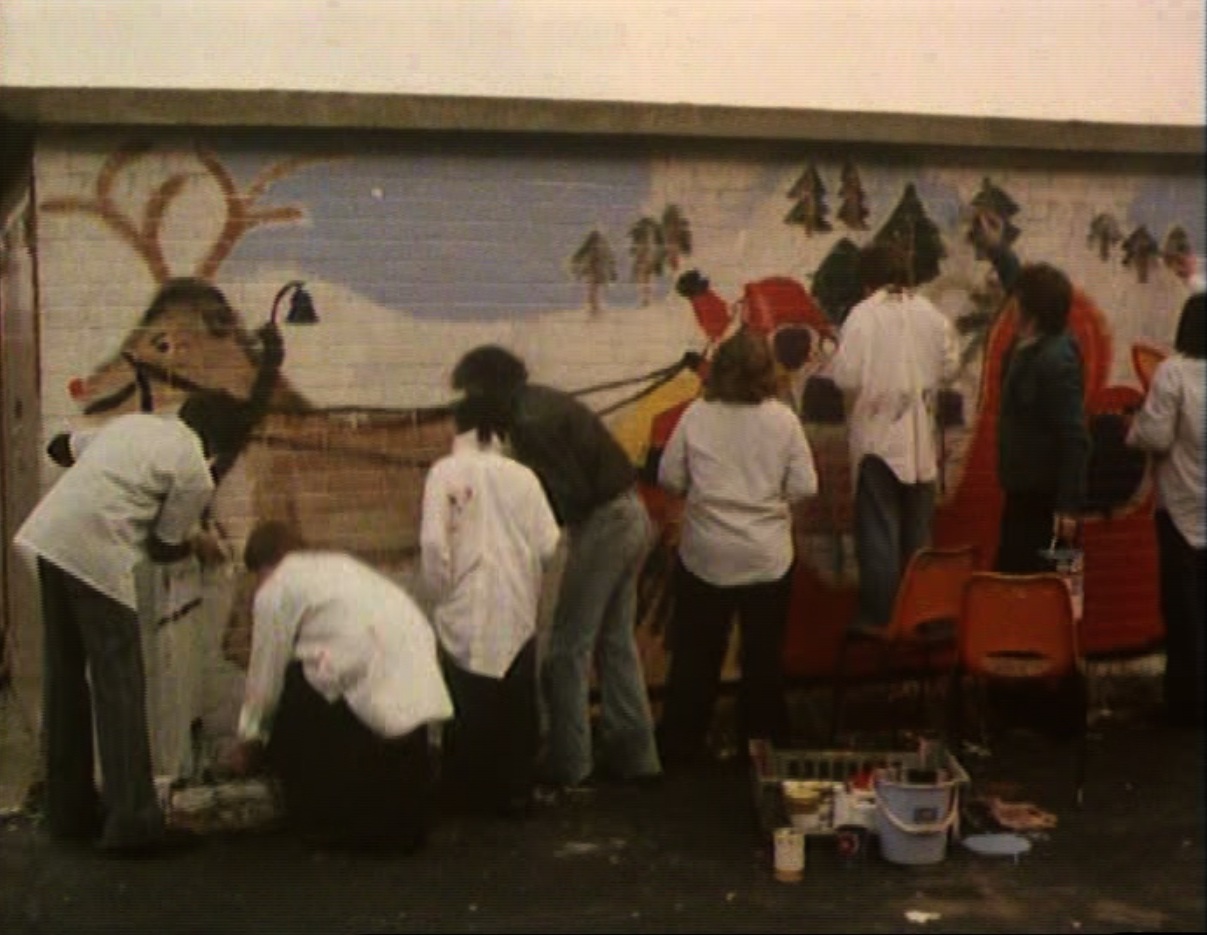
Back at Luton, we get some speeded up film of Mick and company setting to work on a blank wall to the accompaniment of a funked-up take on Good King Wenceslas. They seem to be painting houses, and indeed there’s some amusing camera trickery showing the kids ‘walking’ in and out of the doors to Mick’s comic bafflement. At the conclusion, the camera pulls out and we get to see that it’s an actually very well done Christmas scene complete with oversized Santa. You can scoff at trendy do-gooders all you like, but the fact remains that some probably neither impeccably-behaved nor academically-inclined youngsters did and enjoyed doing this instead of tightrope walking over railways, retrieving frisbees from substations, or going out in pursuit of unspecified ne’er-do-well-isms while a badly aligned caption asks if you know where your lad’s going tonight, and maybe some of them were even inspired into pursuing a more artistic or socially benevolent career path as a consequence. Frankly, that’s something that we could do with a lot more of right now.
You had to take your socially progressive views where you could find them in the seventies, though, and Magpie immediately undermines all of this good work with a spot of casual stereotyping. Back in the studio, Judge Rae is trying to stop Jenny and Mick from giving each other presents in contravention of Charles I’s 1906 Prevention Of Corruption Act, which they point out is unfortunate as they had some presents there for him too – some ‘Mature’ Haggis, a book called 100 Ways To Save Money, and a copy of Kenneth McKellar’s Greatest Hits. So desperate is the not even particualrly jings-adjacently named Douglas Rae to get his hands on this modern day equivalent of McGold, Frankincense and Myrrh that he abandons all notions of national pride and sheepishly admits that this particular act has since been repealed. “Is there a law against painting walls at Christmas”, asks Mick? Well, yes and no.
In our final visit to Luton, Mick chats to some of the youngsters about why they enjoy the scheme and what benefits they think it brings to the area, and there are also a couple of outtakey bits showing hasty painting mistakes and accidental clothing splatterage. Mick ends the piece with a direct address to camera, reminding viewers at home that if they want to have a go themselves, they’ll need to get permission from “whoever owns the wall”. He also, showing commendable awareness of exactly who his audience are, gives practical tips on how to contact the local authorities to make sure it’s all above board and properly organised, and indeed to see if they can suggest a suitable location themselves. All of which is a far cry from getting discounted entry to National Trust buildings.


Outside, the choir are sprinting through The Holly And The Ivy and Jenny is releasing balloons, with noticeably greater success than Doug enjoyed earlier. These are, she hurriedly informs us, special Magpie balloons, and if you find one then you should write in straight away in the hope of winning some as yet unspecified New Year prize, but in the meantime it’s over to the Thames Television lobby where Doug is presenting an update on the show’s Christmas appeal total. This is measured via a stripy line running across the reception walls and up the stairs, and they had been hoping to have reached the oddly specific total of £30,355.29 by this edition. In fact they’d actually reached £38,905.19, and the unexpected additional eight thousand five hundred and forty nine pounds and nine pence has been ploughed into renovating a care home. Their new aim for the first show of 1977 is £42,499.19 which, as Doug points out, will allow them to ‘get cracking’ on central heating for it too. At the risk of sounding like a Channel 4 clip show, it’s worth pointing out that this was little more than a fortnight after these studios had reverberated to the sound of The Sex Pistols saying ‘BARSTARD’ at Bill Grundy. Significantly, you can easily imagine Mick and Jenny not necessarily approving of the language but certainly having some sympathy for their cause. You could never really have said this of any Blue Peter presenter.
Over at the lock, Mick has now joined Jenny and the carollers, and enlists their help in very loudly and stiltedly reading out letters from some of the viewers who’ve donated to the appeal, including one who had sent in all of his birthday money. There’s just enough time for a still-in-studio Doug to give a reading of A Visit From St. Nicholas with the assistance of cardboard props and sound effects, and a multihanded linked-up goodbye until next year from the various broadcast locations, before the credits roll over the undisciplined choir thundering through I Saw Three Ships (Come Sailing In), and that’s how Magpie ‘did’ Christmas Eve.

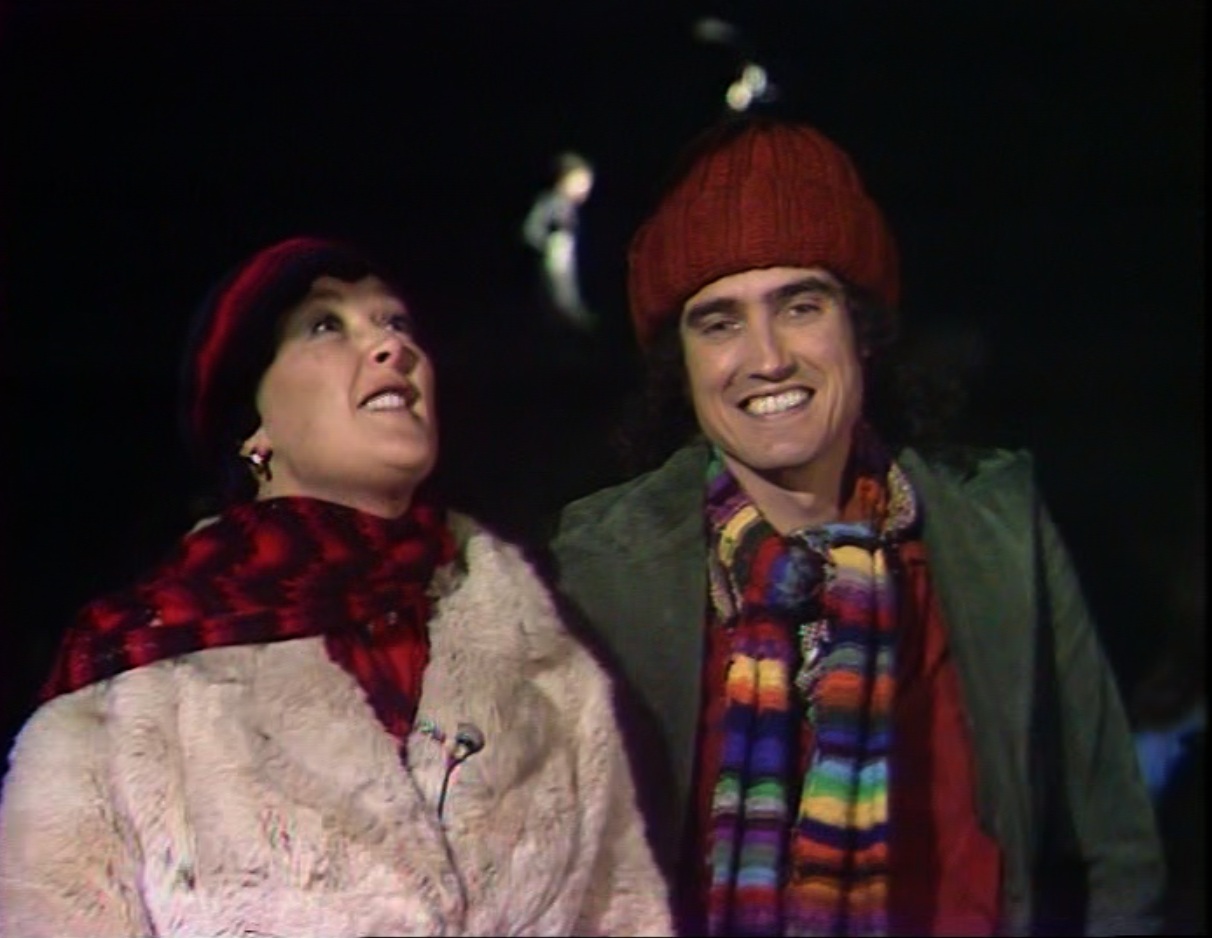
On this evidence at least, Magpie wasn’t quite as much a bought-from-the-market knock-off of Blue Peter as popular opinion might suggest. The basic format may be similar, but the presenters themselves are more relaxed and informal, and closer to acting as the viewers’ ‘friends’ than to being aspirant junior school teachers getting in a bit of practice when you could have been watching The Robonic Stooges instead. They clearly relish the challenge of live or at the very least ‘as live’ television, and aren’t afraid to acknowledge and have a bit of a laugh when things don’t go quite to plan. Also, crucially, while the format may be almost litigiously similar, the actual structure isn’t, and there’s a surprising quick-changing pace to proceedings that could almost convince you that modern youngsters could quite happily watch this. Mick’s hat may prove something of a barrier to that, though.
All in all, it’s a shame that Magpie has such a low reputation and indeed that there’s so little left of it. It ran for over a decade, and if Tommy Boyd is to believed, might have gone on longer if it wasn’t for certain executives looking for that next rung on the career ladder. Indeed, from Mick’s own Freetime to Toksvig to Kellyvision to Do It! to Ace Reports/CBTV (which you can hear much more about here) to whatever that one was with that girl with the red hair and polka-dot top who made a sub-Stock Aitken Waterman pop record in one edition, Children’s ITV would spend the next decade endlessly remaking Magpie in all but name. As for that technique of having the camera crew join in on the studio bits, though, did any somewhat more well regarded Thames productions use that as a key device in the late seventies? No. Definitely not…

Buy A Book!
There’s lots more about Magpie and Blue Peter along with tons of other magazine shows that didn’t exactly get to enter into the rivalry in The Golden Age Of Children’s TV, available in all good bookshops and from Waterstones here, Amazon here, from the Kindle Store here and directly from Black And White Publishing here.
You can find an extended version of Christmas With Children’s ITV: Magpie, Christmas Eve 1970 alongside features on festive editions of Bod, Watch, Rentaghost, Quincy’s Quest, The Ghosts Of Motley Hall, Play School and Chorlton And The Wheelies in Can’t Help Thinking About Me, a collection of columns and features with a personal twist. Can’t Help Thinking About Me is available in paperback here or from the Kindle Store here.
Alternately, if you’re just feeling generous, you can buy me a coffee here. I mean you’d have bought Jenny one if she looked that cold on the outside broadcast bits.
Further Reading
You can find out how BBC2’s Play School played up the Christmas Eve excitement in 1970 here.
Further Listening
Gary Bainbridge joined me on Looks Unfamiliar for a chat about Magpie‘s ‘updated’ replacement Ace Reports here, while Hilary Machell sang the praises of Ace Reports‘ successor CBTV here.

© Tim Worthington.
Please don’t copy this only with more italics and exclamation marks.
 Tim Worthington